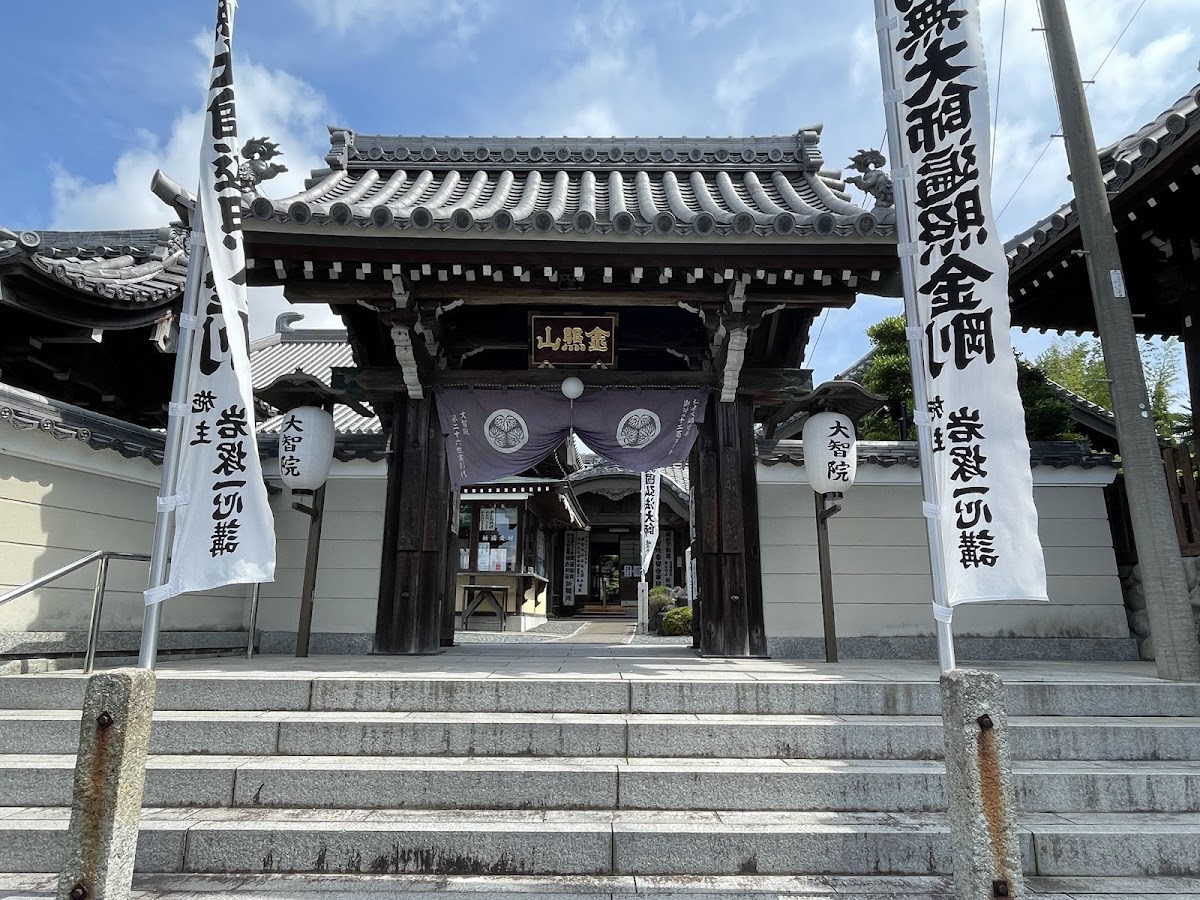
Daichiin Temple (Megane Kobo) Complete Guide | The Charm and Visiting Information of a Historic Temple in Chita City, Aichi Prefecture
Located in Chita City, Aichi Prefecture, Daichiin Temple is a Shingon sect Chizan school temple affectionately known as “Megane Kobo.” With numerous attractions, including the “Shindai Daishi” statue of Kobo Daishi wearing glasses and a camphor tree over a thousand years old, it is a renowned temple that attracts deep devotion not only from locals but also from pilgrims on the Chita Shikoku 88 Temple Pilgrimage.
This article comprehensively introduces information you should know before visiting Daichiin Temple, including its history, cultural assets, points of interest, and access methods.
Overview of Daichiin Temple
Daichiin Temple’s official name is “Kinshozan Kiyomizu-dera Daichiin,” and it belongs to the Shingon sect Chizan school. The principal image is the Bodhisattva Kannon, and the statue in front of it is the Bodhisattva Hayagriva.
Basic Information
- Mountain Name: Kinshozan
- Temple Name: Daichiin
- Sect: Shingon-shu Chizan-ha
- Principal Image: Sho Kannon Bodhisattva
- Front Image: Batō Kannon Bodhisattva
- Founder: Prince Shōtoku
- Pilgrimage Site: 71st Temple of the Chita Shikoku Eighty-Eight Sacred Sites
- Address: 1-196 Minami Kasuya Honmachi, Chita City, Aichi Prefecture
- Phone Number: 0569-42-0909
As one of the Chita Shikoku pilgrimage sites, Daichiin Temple, visited by many pilgrims, has a long history as a center of faith in the region.
History of Daichiin Temple
Founding and Prince Shōtoku
Daichiin Temple is said to have been founded by Prince Shōtoku. Prince Shōtoku was a member of the imperial family during the Asuka period and is known for his dedication to the flourishing of Buddhism. Many temples associated with Prince Shōtoku exist throughout Japan, and Daichi-in Temple is one of them, having attracted worshippers since ancient times.
Connection to Shingon Buddhism
Daichi-in Temple, belonging to the Chizan branch of the Shingon sect, has contributed to the development of local Buddhist culture as a temple that transmits the teachings of Kūkai (Kūkai). The Chita Peninsula has many Shingon temples, and the Chita Shikoku Pilgrimage was also formed based on the worship of Kūkai.
Role as part of the Chita Shikoku Pilgrimage
The Chita Shikoku Eighty-Eight Temple Pilgrimage is a pilgrimage route said to have been established during the Bunka era (1804-1818). Daichi-in Temple, as the 71st temple, has welcomed many pilgrims from the Edo period to the present day. Pilgrimages are deeply rooted in the religious lives of the local people, and Daichi-in Temple is one of its important centers.
The Legend of the Substitute Kobo Daishi (Glasses Kobo)
The most distinctive feature of Daichi-in Temple is the statue of Kobo Daishi wearing glasses, known as “Substitute Kobo.” This statue, affectionately called “Glasses Kobo,” has a moving legend associated with it.
The Origin of the Substitute Kobo Daishi
Long ago, a blind worshipper visited Daichi-in Temple and prayed fervently to the statue of Kobo Daishi. Miraculously, his sight was restored. However, at the same time the worshipper’s eyes were healed, the statue’s eyes were damaged.
The worshipper, grateful to the statue for being damaged in his place, is said to have placed his own glasses on the statue before leaving. Since then, this statue of Kobo Daishi has been called “Substitute Kobo” or “Glasses Kobo,” and has become a place of worship for people seeking healing from eye diseases.
Current Beliefs
Even today, worshippers from all over Japan visit the temple to pray for good eye health. Many people pray before the Shindai Daishi statue, seeking healing from eye diseases and restoring their eyesight. It’s also a common practice for locals to visit the temple after getting new glasses.
The Shindai Daishi, as a symbol of Daichi-in Temple, conveys the temple’s history and faith to the present day.
Highlights and Cultural Assets on the Temple Grounds
Besides the Shindai Daishi, there are many other points of interest on the grounds of Daichi-in Temple.
The Thousand-Year-Old Camphor Tree
On the west side of the temple grounds stands a massive camphor tree, estimated to be over a thousand years old. This tree is designated as a protected tree by Chita City and is a symbolic presence at Daichi-in Temple.
According to legend, this tree was planted by Yaobikuni. Yaobikuni is a legendary nun who, after eating mermaid flesh, became immortal and lived to be 800 years old. Legends of Yaobikuni (a legendary nun) are found throughout Japan, and the camphor tree at Daichi-in Temple is one such example.
This thousand-year-old camphor tree boasts an incredibly thick trunk and a magnificent display of spreading branches and leaves. Changing its appearance with the seasons, the tree evokes a sense of nature’s power and the weight of history in visitors.
Main Hall and Principal Image
The main hall houses the principal image, the Holy Kannon Bodhisattva. The Holy Kannon Bodhisattva is revered as a compassionate bodhisattva who relieves the suffering of all people. The Hayagriva Bodhisattva is also enshrined as a secondary image, attracting particularly devotion from those involved with horses and animals.
The architectural style of the main hall and its solemn interior are characteristic of Shingon Buddhist temples. Spending time praying in the quiet temple grounds will be a precious moment of peace.
Chita City Designated Cultural Properties
Daichi-in Temple possesses several cultural properties designated by Chita City. In addition to the aforementioned large camphor tree, the temple’s treasures, including Buddhist statues and ancient documents, are also valuable historical materials that convey the region’s history.
These cultural assets demonstrate that Daichi-in is not merely a place of worship, but an important facility that preserves the history and culture of the Chita region.
Atmosphere of the Temple Grounds
The grounds of Daichi-in are characterized by a tranquil and peaceful atmosphere. Despite being located in a residential area, stepping onto the grounds feels like entering a different world.
The flowers and trees within the grounds, which change their appearance with each season, are also a highlight. Especially during the fresh greenery of spring and the vibrant autumn foliage, one can enjoy the harmony between the beauty of nature and the temple architecture.
Etiquette and Manners for Visiting
When visiting Daichi-in, it is important to observe basic temple etiquette and manners.
Basic Procedure for Visiting
- A Bow at the Temple Gate: Before entering the temple grounds, bow at the temple gate. This shows respect for entering the realm of Buddha.
- Purification at the Water Basin: If there is a water basin, purify your hands and mouth. Wash your left hand, then your right hand, and finally rinse your mouth with your left hand.
- Worship at the Main Hall: Quietly join your hands in front of the main hall and offer your prayers with sincerity. In Shingon Buddhism, it is common to offer a monetary donation, then join your hands in prayer and chant “Namu Daishi Henjo Kongo.”
- Worship at the Substitute Daishi: After visiting the main hall, join your hands in front of the Substitute Daishi and pray for eye health and the safety of your family.
- Exploring the Temple Grounds: Quietly observe the points of interest within the temple grounds, such as the large camphor tree.
- Bow at the Temple Gate: When leaving the temple grounds, turn back and bow at the temple gate.
About Goshuin (Temple Seals)
At Daichiin Temple, you can receive Goshuin (temple seals) for the Chita Shikoku Pilgrimage. Goshuin are cherished as proof of your visit and as a record of your pilgrimage.
When receiving a Goshuin, please note the following:
- Always complete your prayers before receiving the Goshuin.
- Prepare your Goshuincho (stamp book).
- Request the Goshuin using polite language.
- Prepare the Goshuin fee (usually around 300 yen).
- Wait quietly while the Goshuin is being written.
Photography Etiquette
Photography is generally permitted on the temple grounds, but please observe the following etiquette:
- Check beforehand, as photography is often prohibited inside the main hall.
- Be considerate of other visitors who are praying.
- Maintain silence and avoid speaking loudly.
- Check beforehand if using a tripod.
Access and Transportation
We will guide you on how to access Daichiin Temple.
Access by Public Transportation
By Train and Bus:
- Get off at Shinmaiko Station on the Meitetsu Tokoname Line.
- Take the Chita Bus bound for Minami-Kasuga Honmachi from the station.
- Get off at the Minami-Kasuga Honmachi bus stop and walk for about 5 minutes.
By Taxi:
Approximately 10 minutes by taxi from Shinmaiko Station.
Access by Car
From Nagoya:
- Head south on National Route 155 towards Chita city center.
- Look for the Minami-Kasuga Honmachi intersection.
Parking:
There is a parking lot for visitors on the temple grounds. However, space is limited, so we recommend using public transportation during busy times.
Nearby Tourist Attractions
When visiting Daichiin Temple, why not also visit some of the nearby tourist attractions?
- Other temples of the Chita Shikoku Pilgrimage: Temples 70 and 72 are also relatively close by.
- Shinmaiko Beach: A leisure spot with a beautiful coastline.
- Chita City Historical and Folk Museum: A facility where you can learn about the history and culture of the Chita region.
Annual Events and Festivals
Daichiin Temple holds various events throughout the year.
Main Annual Events
First three days of the New Year: The temple is bustling with worshippers for the first shrine visit of the year. Many people visit to pray for good health and protection from illness in the new year.
Setsubun Festival: A Setsubun memorial service is held around February 3rd. Events such as bean-throwing may also be held.
Spring and Autumn Equinox: During the equinox period, many parishioners and worshippers visit to pay respects to their ancestors.
Kobo Daishi Memorial Service: A memorial service is held around the 21st day of the 3rd month of the lunar calendar (April in the Gregorian calendar), which is the anniversary of Kobo Daishi’s death.
Chita Shikoku Pilgrimage Events: We also participate in joint memorial services and pilgrimage events held throughout the Chita Shikoku Pilgrimage.
Precautions for Event Participation
Events and ceremonies are expected to be more crowded than usual. We recommend visiting with plenty of time to spare. Also, the parking lot may be full, so please consider using public transportation.
Cultural Significance of Daichiin Temple
As a Center of Local Faith
Daichiin Temple has long been deeply connected to the local community, serving as a center of faith for the Minami-Kasuga district of Chita City and the surrounding areas. Through the danka (parishioner) system, it plays a role in supporting community bonds by being involved in the weddings, funerals, and annual events of local residents.
Significance of the Chita Shikoku Pilgrimage
The Chita Shikoku 88 Temple Pilgrimage is a pilgrimage route modeled after the Shikoku 88 Temple Pilgrimage. It was developed to allow people who find it difficult to travel to Shikoku to receive similar blessings in a more accessible location.
The Chita Shikoku Pilgrimage, including Daichi-in Temple, plays an important role in preserving and transmitting the region’s Buddhist culture. Even today, people continue to visit the temples on foot, by bicycle, or by car.
Characteristics of the Eye Disease Healing Faith
The belief in healing eye diseases through the practice of Shindai Daishi is a unique characteristic of Daichi-in Temple. In modern society, the use of computers and smartphones has led to an increase in people suffering from eye health problems. Daichi-in Temple is supported by many people because its traditional faith addresses these modern concerns.
Voices and Experiences of Visitors
Various impressions have been received from people who have visited Daichi-in Temple.
“I was able to visit the temple in a quiet and peaceful atmosphere, feeling at peace. Praying for good eye health before the statue of Shindai Daishi lightened my heart.” (Woman in her 50s)
“I visited as part of the Chita Shikoku Pilgrimage. The thousand-year-old camphor tree had an overwhelming presence, and I felt the power of nature.” (Man in his 60s)
“I visited because I was interested in the legend of Kobo Daishi with glasses. Seeing the statue of Kobo Daishi actually wearing glasses, I felt the warmth of faith.” (Woman in her 40s)
“While receiving a temple stamp, I was able to listen to the head priest’s stories and learn deeply about the temple’s history.” (Man in his 30s)
These comments show that Daichiin Temple is cherished by many people and serves as a spiritual haven.
Attire and Items to Bring When Visiting
Regarding Attire
Daichiin Temple, like most temples, does not have a specific dress code. However, please keep the following points in mind:
- Aim for clean and presentable attire.
- Avoid clothing that exposes too much skin.
- Shoes that are easy to put on and take off are convenient.
- Take precautions against the sun in summer and warm clothing in winter.
Checklist of Items to Bring
- Goshuincho (stamp book): Essential if you are doing the Chita Shikoku Pilgrimage.
- Offering: It’s convenient to have small change.
- Goshuin (stamp) fee: Usually around 300 yen.
- Camera: If you want to record the beautiful scenery of the temple grounds.
- Drinks: Hydration is especially important in summer.
- Rain gear: Bring an umbrella or raincoat on days with unpredictable weather.
Dining and Rest Spots Near Daichiin Temple
Here are some restaurants and rest spots near the temple that you can visit after your visit.
Local Specialties of Chita City
The Chita Peninsula is surrounded by the sea, offering a wealth of fresh seafood. The Chita area also boasts the following local specialties:
- Chita Tsukudani: Tsukudani (simmered seafood) made with local ingredients is a regional specialty.
- Fresh Seafood Dishes: Seafood caught at local fishing ports.
- Chita Beef: A brand of beef raised locally.
Cafes and Rest Areas
Around Daichiin Temple, you’ll find cafes and Japanese confectionery shops beloved by locals. Enjoying a cup of tea before or after your visit is highly recommended.
Best Time to Visit Daichiin Temple
Daichiin Temple is open year-round, but each season offers its own unique charm.
Spring (March-May)
The fresh greenery is beautiful, and the pleasant weather makes it ideal for visiting. The temple grounds are especially vibrant during cherry blossom season.
Summer (June-August)
The lush green of the large camphor tree provides cool shade. However, heat protection is essential.
Autumn (September-November)
During the autumn foliage season, the trees on the temple grounds change color, offering a beautiful landscape. The weather is mild, making it a pleasant time to visit.
Winter (December-February)
The air is clear, making for a refreshing visit. While it gets crowded during the first three days of the New Year, it’s ideal for New Year’s prayers.
Summary: The Charm and Significance of Visiting Daichiin Temple
Daichiin Temple in Chita City, Aichi Prefecture, is a fascinating temple with a rich history, including the beloved “Megane Kobo” (Glasses Kobo), a thousand-year-old camphor tree, and its status as the 71st temple on the Chita Shikoku Pilgrimage.
Daichi-in Temple, with its belief in healing eye diseases, its role as a temple deeply rooted in the community, and its tranquil atmosphere, offers peace and healing to visitors. Visited by many as part of the Chita Shikoku Pilgrimage or as a place to pray for eye health, Daichi-in continues to exist as a place of unwavering faith even today.
It is relatively easy to access by public transportation, and there are other tourist attractions nearby, making it a recommended stop as part of a Chita Peninsula sightseeing trip.
With its long history said to have been founded by Prince Shotoku, its fervent devotion to Kobo Daishi, and its cultural assets preserved by the local people, Daichi-in Temple, where all these elements harmonize, is a truly worthwhile temple to visit.
We encourage you to visit Daichi-in Temple and experience its history, faith, and the peaceful atmosphere of its grounds. As you clasp your hands together before the statue of Shinryo Daishi and gaze up at the thousand-year-old camphor tree, you will surely experience profound emotion.