Katori Shrine (Chiba Prefecture) Complete Guide | History, Highlights, Access, and Goshuin Information – A Thorough Explanation
What is Katori Shrine?
Katori Shrine (Katori Jingu) is the head shrine of approximately 400 Katori shrines nationwide, located in Katori, Katori City, Chiba Prefecture. Along with Kashima Shrine and Ikisu Shrine in Ibaraki Prefecture, it is known as one of the “Three Shrines of Eastern Japan” and attracts many worshippers as a representative ancient shrine of the Kanto region.
As the Ichinomiya (first-ranked shrine) of Shimosa Province, it has received deep reverence from the imperial court and samurai families since ancient times. Even today, it is a representative shrine of Chiba Prefecture, attracting many worshippers during the New Year’s visit and throughout the year.
Deity of Katori Shrine
The deity enshrined at Katori Shrine is Futsunushi-no-Okami. Known in Japanese mythology as a warrior god who played an active role in the transfer of the land, he is believed to offer a wide range of blessings, including those related to martial arts, competition, traffic safety, and matchmaking.
Futsunushi-no-Okami, along with Takemikazuchi-no-Okami of Kashima Shrine, is a deity who, at the command of Amaterasu-Omikami, pacified Ashihara-no-Nakatsukuni (the Central Land of Reed Plains). Therefore, he has long been revered as a god of war, attracting the faith of samurai families, and even today, many visitors come to pray for good fortune in competitions and careers.
History of Katori Shrine
Founding and History
Katori Shrine is said to have been founded during the reign of Emperor Jimmu (around 660 BC). It is mentioned in ancient texts such as the *Nihon Shoki* and *Kogo Shūi*, and is a prestigious shrine that has received the reverence of the imperial court since ancient times.
In the *Engishiki Jinmyōchō*, compiled during the Heian period, it is listed as a “Myōjin Taisha” (a major shrine), and was considered the most prestigious shrine as the Ichinomiya (first-ranked shrine) of Shimōsa Province. From the Middle Ages onward, it attracted the faith of samurai families, and it is said that many warlords, including Minamoto no Yoritomo, visited the shrine.
The Title of “Jingu”
Among the numerous shrines throughout Japan, only a few hold the title of “Jingu.” Katori Jingu, along with Ise Jingu and Kashima Jingu, is a historically significant shrine that has long been referred to as “Jingu.”
During the Meiji era, it was designated a Kanpei Taisha (Grand Imperial Shrine), and currently, as a Beppyo Jinja (Special Shrine) of the Association of Shinto Shrines, it is one of the leading shrines in the Kanto region.
Connection with the Tokugawa Shogunate
During the Edo period, it received generous protection from the Tokugawa Shogunate. In 1700 (Genroku 13), the current main hall was constructed by Tokugawa Tsunayoshi, the 5th Shogun. This main hall is designated as a National Important Cultural Property, a masterpiece of early Edo period shrine architecture.
Highlights of Katori Shrine
Main Hall (Important Cultural Property)
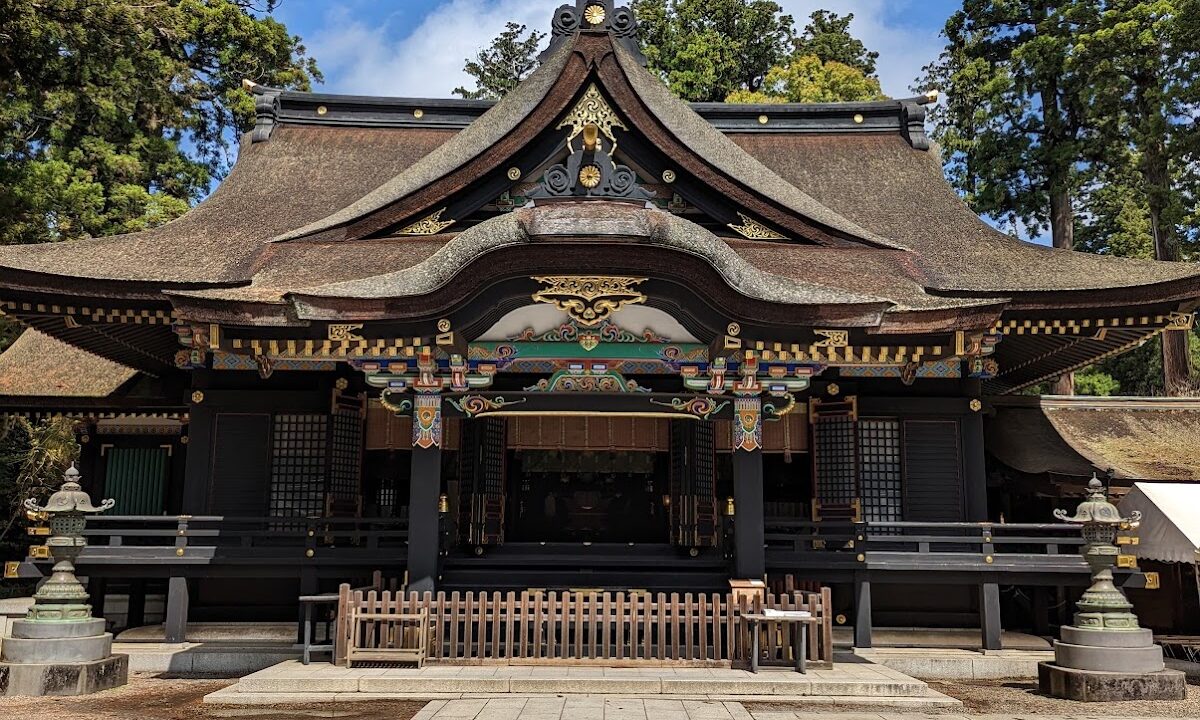
The main hall, built in 1700 by Tokugawa Tsunayoshi, is designated as a National Important Cultural Property. This black lacquered, Gongen-zukuri style shrine building retains many characteristics of early Edo period shrine architecture.
The meticulously crafted carvings and decorations demonstrate the highest level of craftsmanship of the time. In particular, the beautiful curves of the roof and its imposing presence captivate visitors.
Tower Gate
The tower gate, also built in 1700, is a beautiful vermilion-painted gate. The plaque above it was inscribed by Admiral Togo Heihachiro, a hero of the Russo-Japanese War, and its powerful brushstrokes are striking.
Passing through the tower gate, one can feel the solemn atmosphere of an entrance to a sacred area. Cherry blossoms in spring and autumn leaves adorn the tower gate, allowing visitors to enjoy the beautiful scenery of each season. ### Former Worship Hall (Currently the Prayer Hall)
The building currently used as the Prayer Hall is the former worship hall, built in 1700 (Genroku 13) along with the main shrine. It is designated as a tangible cultural property of Chiba Prefecture and is a valuable structure that preserves the architectural style of the Edo period.
Inner Shrine
Nearby in the forest, a short distance from the main shrine, the Inner Shrine is a sacred spot enveloped in a tranquil atmosphere. It is said to enshrine the fierce spirit (aramitama) of Futsunushi-no-Okami and is popular as a place where one can feel a stronger power.
The path to the Inner Shrine is surrounded by giant trees, creating a mystical atmosphere, allowing visitors to enjoy a forest bath while praying.
Keystone (Kanameishi)
Within the grounds of Katori Shrine lies the “Keystone,” believed to quell earthquakes. It is said to extend deep into the earth and, along with the Keystone of Kashima Shrine, is believed to hold down the head and tail of a giant catfish.
The Kanameishi (Keystone) is believed to offer protection against earthquakes and is a power spot visited by many worshippers. While only a small portion of the stone itself is visible above ground, its mystical legend attracts people.
The Sacred Cedar
Within the shrine grounds stands a sacred cedar tree, said to be over 1000 years old. Designated a Chiba Prefecture Natural Monument, its immense size exudes an overwhelming presence.
Standing before the sacred tree, one can feel the life force and sacred energy accumulated over many years.
Katori Forest
The Katori Forest surrounding the grounds of Katori Shrine is also designated a Chiba Prefecture Natural Monument. A primeval forest primarily composed of evergreen broad-leaved trees such as Castanopsis sieboldii and Machilus thunbergii, it is a valuable natural forest in the Kanto region.
Because the entire forest has been protected as a sacred area, its ancient natural state remains intact. Enjoying the changing seasons while visiting is one of the charms of Katori Shrine.
Sakurababa
Along the approach to the shrine, “Sakurababa” is lined with many cherry trees, creating a beautiful tunnel of cherry blossoms in spring. During cherry blossom season, many visitors come to enjoy the scenery, where the solemn atmosphere of the shrine harmonizes with the splendor of the cherry blossoms.
Treasure Hall
The Katori Shrine Treasure Hall houses many valuable cultural artifacts, including the national treasure “Kaiju Budokyo” (Sea Beast and Grape Mirror). Visitors can view ancient documents, swords, armor, and other items that tell the story of Katori Shrine’s long history.
Basic Information on the Treasure Hall
- Opening Hours: 9:00 AM – 4:30 PM
- Admission Fee: Adults 300 yen, Elementary and Junior High School Students 100 yen
- Closed: Open daily (Temporary closures may occur for exhibit changes, etc.)
What is the Eastern Japan Three Shrines Pilgrimage?
Katori Shrine, along with Kashima Shrine and Ikisu Shrine in Ibaraki Prefecture, is one of the “Eastern Japan Three Shrines.” Since the Edo period, the “Eastern Japan Three Shrines Pilgrimage,” which involves visiting these three shrines, has been a popular alternative to visiting Ise Shrine in the Kanto region.
It is believed that visiting all three shrines brings powerful blessings, and even today, many worshippers undertake this pilgrimage. Because the shrines are relatively close to each other, it is possible to visit them all in one day.
Location of the Eastern Japan Three Shrines
- Katori Shrine (Katori City, Chiba Prefecture): Dedicated to Futsunushi-no-Okami
- Kashima Shrine (Kashima City, Ibaraki Prefecture): Dedicated to Takemikazuchi-no-Okami
- Ikisu Shrine (Kamisu City, Ibaraki Prefecture): Dedicated to Kunado-no-Kami
The three shrines are located in a triangular arrangement, and are approximately 30 minutes to 1 hour apart by car.
Goshuin (Shrine Seal) Information
Multiple goshuin can be obtained at Katori Shrine.
Types of Goshuin (Shrine Seals)
- Katori Shrine Goshuin: The basic goshuin available at the main shrine.
- Okumiya Goshuin: The goshuin available at the Okumiya (inner shrine).
- Kanameishi Goshuin: The goshuin available at the Kanameishi (foundation stone).
Goshuin are available at the shrine office. The offering fee is 300 yen each.
Goshuincho (Shrine Seal Books)
Katori Shrine also offers original goshuincho. There are several types, from traditional to modern designs.
Annual Events and Festivals
Katori Shrine holds various festivals and events throughout the year.
Main Annual Events
- January 1st: New Year’s Day Festival (First Shrine Visit of the Year)
- February 3rd: Setsubun Festival
- April 14th: Rice Planting Festival
- July 31st: Great Purification Ceremony
- September 1st: Divine Procession Festival (Grand Festival Held Once Every 12 Years)
- November 23rd: Harvest Festival
- December 31st: Great Purification Ceremony and New Year’s Eve Festival
Rice Planting Festival
The Rice Planting Festival, held annually on April 14th, is a traditional festival praying for a bountiful harvest. Shinto priests and shrine maidens, dressed in Heian period attire, perform rice planting rituals. Many worshippers visit this ancient and elegant festival.
Shikinen Taisai (Grand Festival)
Held once every 12 years, in the Year of the Horse, the Shikinen Taisai is the largest festival at Katori Shrine. The “Shinko-sai” procession, in which the portable shrine crosses the Tone River, is a magnificent event attracting hundreds of thousands of worshippers. The next festival is scheduled for 2026.
Access Information
Access by Train
From JR Narita Line Sawara Station
- Taxi: Approximately 10 minutes
- Local Bus: Take the Kantetsu Green Bus bound for “Katori Jingu” (approximately 15 minutes), get off at “Katori Jingu” bus stop, and walk 5 minutes.
- Walking: Approximately 30 minutes (approximately 2.5 km)
From Keisei Electric Railway Sawara Station
- Same access method as JR Sawara Station
Access by Car
Higashi-Kanto Expressway
- Approximately 2 minutes from Sawara-Katori IC (approximately 1.5 km)
- Approximately 15 minutes from Daiei IC
National Route 51
- Approximately 10 minutes from Sawara town center
Parking
There are several free parking lots at Katori Jingu Shrine.
- Parking Lot 1: Approximately 100 cars
- Parking Lot 2: Approximately 50 cars
- Temporary Parking Lot: Open during peak times such as New Year’s Day
The shrine gets extremely crowded during the New Year’s Day period (December 31st to January 3rd) and major festivals. Early morning visits and the use of public transportation are recommended.
Basic Information
Katori Shrine
- Address: 1697-1 Katori, Katori City, Chiba Prefecture
- Phone Number: 0478-57-3211
- Visiting Hours: Grounds are freely accessible (Shrine office: 8:30 AM – 5:00 PM)
- Closed Days: Open daily
- Admission Fee: Free (Treasure Hall requires a fee)
- Official Website: https://katori-jingu.or.jp/
Nearby Tourist Attractions
Sawara Townscape
Located about 10 minutes by car from Katori Shrine, the Sawara district preserves a historical townscape that retains the atmosphere of the Edo period. Designated as an Important Preservation District for Groups of Traditional Buildings, it offers a charming landscape along the Ono River.
With many attractions such as the Ino Tadataka Memorial Museum and Toyohashi Bridge, it’s recommended to visit Sawara in conjunction with Katori Shrine.
Sawara Townscape, located about 10 minutes by car from Katori Shrine, preserves a historical townscape that retains the atmosphere of the Edo period. It has been designated as an Important Preservation District for Groups of Traditional Buildings, and you can enjoy the picturesque scenery along the Ono River.
There are many sights to see, including the Ino Tadataka Memorial Museum and Toyohashi Bridge, making it a recommended visit in conjunction with Katori Shrine.
Suigo Sawara Iris Park
The Suigo Sawara Iris Park, where approximately 1.5 million irises bloom in June, is located about a 15-minute drive from Katori Shrine. You can also enjoy boat tours and fully appreciate the scenery unique to the waterside region.
Nearby Gourmet Information
Sawara Local Cuisine
In the Sawara area around Katori Shrine, river fish dishes caught in the Tone River and Ono River are a specialty. You can enjoy gourmet food unique to the waterside region, such as eel and carp dishes.
Restaurants along the Katori Shrine Approach
Around the approach to the shrine, there are restaurants such as soba noodle shops and sweet shops where you can stop by after visiting the shrine. You can enjoy dishes made with local ingredients.
Nearby Accommodations
Hotels in the Sawara Area
The Sawara area around Katori Shrine offers a variety of accommodations, from business hotels to renovated traditional houses.
Main Accommodations
- HOTEL HOUSEN Hotel Hosen
- Sawara Merchant Town Hotel NIPPONIA
- Various Business Hotels
Enjoy a leisurely visit to Katori Shrine and sightseeing in Sawara while staying in a historic townscape.
Hot Spring Facilities
There are also day-trip hot spring facilities nearby, where you can relax and unwind after your visit to the shrine.
Manners and Points for Visiting a Shrine
Proper Way to Visit a Shrine
- Bow before passing through the torii gate: This is a courtesy before entering the sacred area.
- Avoid walking in the center of the path: The center is considered the path of the gods.
- Purify yourself at the water basin: Purify your left hand, right hand, and mouth in that order.
- Two bows, two claps, one bow: This is the basic way to visit a shrine.
Best Season to Visit
Katori Shrine is beautiful in every season, but the best times to visit are:
- Spring (late March to early April): The cherry blossoms are beautiful. The rice planting festival is also a must-see.
- Early Summer (May): The fresh greenery is beautiful, and the weather is pleasant.
- Autumn (November): The autumn leaves are magnificent. Shichi-Go-San Season
- New Year’s Visit (January 1st-3rd): Bustling with many worshippers
Estimated Time Required
If you only visit the shrine grounds, it takes about 30 minutes to 1 hour. Including a visit to the Treasure Hall and the Inner Shrine, it takes about 1.5 to 2 hours.
Benefits of Katori Shrine
The enshrined deity of Katori Shrine, Futsunushi-no-Okami, is known as a god of war and is believed to offer the following benefits:
- Luck in Competitions and Career: Powerful protection as a god of war
- Traffic Safety: Protection for safe travels
- Matchmaking: Benefits for finding a good partner
- Protection from Evil and Disaster: Protection from various calamities
- Family Safety: Protection for the peace and well-being of family members
It is especially recommended to visit when starting something new, facing a competition, or at a turning point in life.
Summary
Katori Shrine is a representative ancient shrine of Chiba Prefecture and boasts a long history and prestige as the head shrine of approximately 400 Katori shrines nationwide. It enshrines Futsunushi-no-Okami, the god of war, and attracts many worshippers seeking blessings for success in competitions and careers.
It offers numerous attractions, including important cultural properties such as the main hall and gate built in 1700 (Genroku 13), a 1000-year-old sacred tree, and a mystical foundation stone. It is also a popular stop on the Eastern Japan Three Shrines pilgrimage, and visiting it along with Kashima Shrine and Ikisu Shrine is highly recommended.
Combining a visit with sightseeing in the surrounding area, such as the historical townscape of Sawara and the natural beauty of the waterside area, will make for a more fulfilling trip. When visiting Katori City in Chiba Prefecture, be sure to visit Katori Shrine and experience its history and power.