Complete Guide to Todaijin Shrine (Chiba Prefecture): A Thorough Explanation of History, Deities, Festivals, and Access
Todaijin Shrine, also known as Todaisha, is a historic shrine located in Miyamoto, Tono-cho, Katori-gun, Chiba Prefecture. It boasts a long history dating back to the reign of Emperor Keiko, and in the Middle Ages, it was revered as the principal shrine of the 33 villages of Tono-cho. This article provides a comprehensive explanation of Todaijin Shrine’s history, deities, annual events, and practical information for visitors.
Basic Information on Todaijin Shrine (Todaisha)
Todaijin Shrine is located at 406 Miyamoto, Tono-cho, Katori-gun, Chiba Prefecture, and its former rank was Prefectural Shrine. While its official name is “Todaisha,” it has been affectionately known by several names in the region, including “Todaijin,” “Ojin-sama,” and “Tamago Daimyojin.”
Basic Data
- Location: 406 Miyamoto, Tono-cho, Katori-gun, Chiba Prefecture
- Former Shrine Rank: Prefectural Shrine
- Main Deity: Tamayorihime-no-Mikoto
- Enshrined Deity: Ugayafukiaezu-no-Mikoto
- Other Names: Higashi-Daisha, Tamago Daimyojin, Sosha Myojin, Sosha Tamago Daimyojin, Ojin Gongen
Located in the southeastern part of the Miyamoto settlement, approximately 2km southwest of JR Narita Line’s Shimosa-Tachibana Station. While it is located along Prefectural Road 267, this is behind the shrine, so access via the main approach is recommended.
History: A history dating back to the reign of Emperor Keiko
Founding Legend
The founding of Higashi-Daisha is said to date back to the reign of Emperor Keiko. According to the Nihon Shoki (Chronicles of Japan), during Emperor Keiko’s tour of eastern Japan, he ordered Kasuga-no-Omi-no-Mikoto to construct a shrine, enshrining Tamayorihime-no-Mikoto as the guardian deity of the eastern sea.
Tamayorihime-no-Mikoto is a deity known as the daughter of the sea god and the mother of Emperor Jimmu. The fact that Higashi-no-Okami is enshrined in a region close to the sea, and that the ritual of the sea procession (described later) is a tradition, is deeply connected to this sea god worship.
Development in the Middle Ages
In the Middle Ages, Higashi-no-Okami played an important role as the guardian deity of the 33 villages of Higashi-no-Sho. Its alternative names, “Sosha” and “Sosha Myojin,” indicate its status as the guardian deity of the entire region.
It received deep reverence from the Higashi clan, who were the local lords of Higashi-no-Sho, as well as from samurai families, who donated land and constructed shrine buildings. It occupied a politically and religiously important position as the center of regional faith.
The Title of “Tamago Daimyojin”
In 1102 (Kowa 4), Emperor Horikawa bestowed upon the shrine the title of “Tamago Daimyojin.” The character “Tama” (玉) in this title is extremely fitting for a shrine associated with the sea god and dedicated to Tamayorihime-no-Mikoto.
The reverence received from the imperial court speaks to the high status of Higashi-no-Okami. Even today, it is affectionately called “Tamago-sama” by locals.
From the Early Modern Period to the Present
During the Edo period, it was also known as “Ojin Gongen.” Under the Meiji-era shrine ranking system, it was ranked as a prefectural shrine, recognized as one of the most prestigious shrines in Chiba Prefecture.
From the Meiji era until the end of World War II, it maintained its status as a prefectural shrine and continued to function as a core of local faith. Currently, it belongs to the Association of Shinto Shrines and is carefully preserved as an important cultural property and place of worship in Higashi-no-Sho Town.
Deities Enshrined: Tamayorihime-no-Mikoto and Ugayafukiaezu-no-Mikoto
Main Deity: Tamayorihime-no-Mikoto
Tamayorihime-no-Mikoto is the daughter of the sea god (Watatsumi) and the consort of Yamasachihiko (Hikohodemi-no-Mikoto). She plays an important role in Japanese mythology and is one of the ancestral deities of the Imperial family, being the mother of Emperor Jimmu.
The name “Tamayori” means “a vessel for a divine spirit,” and she is a deity with a miko-like character that connects gods and humans. As the daughter of the sea god, she is believed to bestow divine blessings for maritime safety, fishing prosperity, and protection from water-related disasters.
Enshrined Deity: Ugayafukiaezu-no-Mikoto
Ugayafukiaezu-no-Mikoto is the son of Yamasachihiko and Tamayorihime-no-Mikoto and the father of Emperor Jimmu. Enshrined alongside her mother goddess, Tamayorihime-no-Mikoto, this deity brings together important gods in the imperial lineage.
The name originates from the fact that she was born before her mother had finished thatching the roof of the birthing hut with cormorant feathers. This deity also has a deep connection to the sea and is a symbolic deity of the sea god worship at Higashi-Ōkami Shrine.
Annual Events: Traditional Festivals and Rituals
Chōshi Ōkami Kōsai (Hamashita)
The most famous festival at Higashi-Ōkami Shrine is the “Hamashita” (Hamashita) during the Chōshi Ōkami Kōsai. This is a large-scale procession held once every few years, in which the portable shrine is carried to the shores of Chōshi and enters the sea in a magnificent ritual.
The sight of the portable shrine entering the sea is breathtaking and a distinctive festival unique to Higashi-Ōkami Shrine, which enshrines the sea god. It embodies gratitude to the sea god, prayers for maritime safety, and a bountiful catch.
The procession of the portable shrine travels a considerable distance from Higashino-cho to Choshi City. Along the way, many parishioners and spectators welcome the portable shrine, making it a major event involving the entire community.
Autumn Grand Festival and Yabusame Ritual
During the Autumn Grand Festival, the traditional Yabusame ritual is performed. This ancient ritual, in which archers shoot at targets from horseback, conveys the history of Higashi-Okami, which was deeply revered by the samurai class.
Yabusame is a ritual praying for a bountiful harvest and the expulsion of evil spirits, and it is believed that a successful hit will bring a good harvest. Even today, it remains a popular event attracting many worshippers and tourists.
Other Annual Events
Higashi-Okami holds various festivals and events throughout the year.
- New Year’s Day Festival: Prayers for peace in the new year
- Spring Festival: A festival celebrating the arrival of spring
- Summer Purification Ceremony: A Shinto ritual to purify oneself of the impurities accumulated over the past six months
- Autumn Grand Festival: The most important festival of the year
- Niiname-sai Festival: A harvest festival offering the new harvest to the gods
- Year-End Purification Ceremony: A purification ceremony to cleanse oneself of the impurities accumulated over the year
These festivals are closely intertwined with the rhythm of life for the local people and are important events that mark the changing seasons.
Highlights of the Shrine Grounds
Shrine Buildings
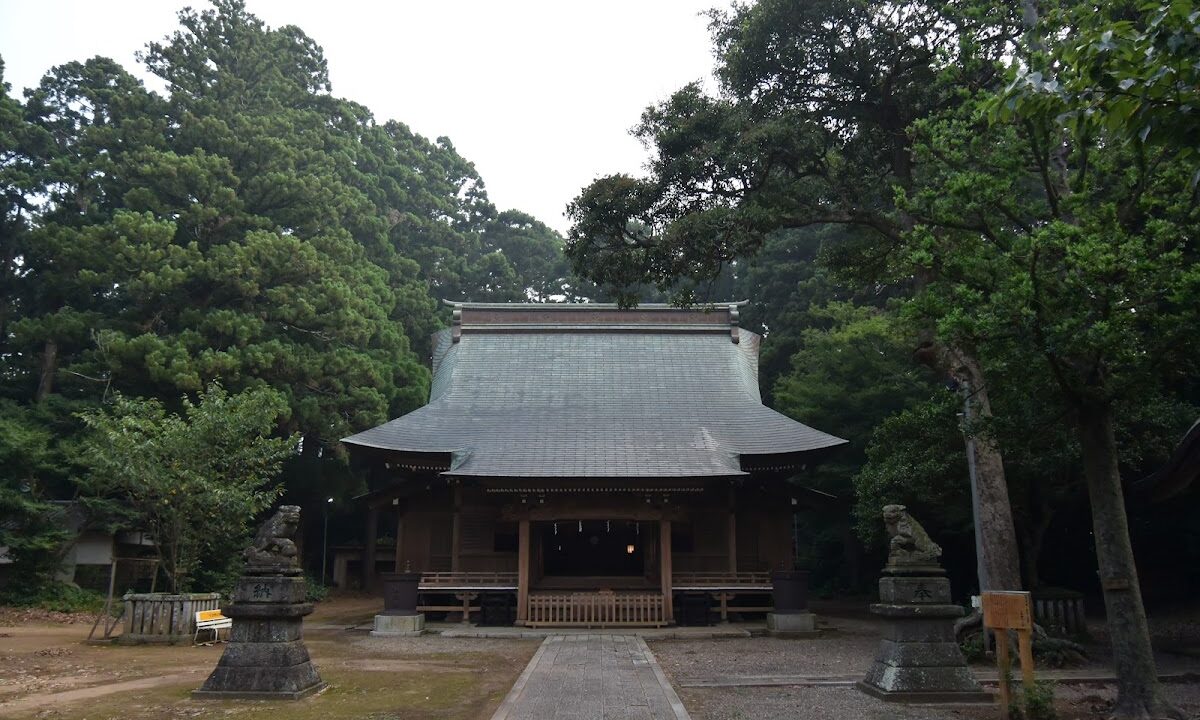
The shrine buildings of Higashi-Okami Shrine have a majestic presence that conveys the weight of history. The main hall is protected by a protective structure, and the worship hall is a magnificent building that welcomes worshippers.
The style and decoration of the shrine buildings reflect the status of a prefectural shrine. The meticulously crafted carvings and architectural techniques speak to the high level of skill of the craftsmen. ### Shrine Precincts
Several subsidiary shrines surround the main shrine, each embodying local beliefs. Visiting these subsidiary shrines as well allows for a deeper understanding of the faith of Higashi-Okami.
Sacred Trees and Natural Environment
Sacred trees, estimated to be hundreds of years old, stand tall within the shrine grounds, creating a sacred atmosphere. Surrounded by ancient trees, the grounds offer a tranquil space far removed from the hustle and bustle of the city.
The changing scenery of the grounds with each season allows visitors to feel the passage of time. The beauty of the grounds is particularly striking during the seasons of fresh greenery and autumn leaves.
Goshuin (Shrine Seals) and Other Items
Goshuin (Shrine Seals)
Higashi-Okami offers Goshuin. These are traditional Goshuin featuring the calligraphy of “Higashi-Okami” or “Higashi-Okami” with the shrine’s seal.
Many visitors receive a Goshuin (temple/shrine stamp) as a memento of their visit and as proof of their connection to the shrine. The Goshuin can be stamped in your Goshuincho (stamp book) at the shrine office.
Amulets and Souvenirs
As befits a shrine dedicated to the sea god, amulets for maritime safety and traffic safety are popular. Amulets for various divine blessings, such as family safety, protection from evil, and academic success, are also available.
Tamayorihime-no-Mikoto is also worshipped as a goddess of safe childbirth and child-rearing, so many visitors come for prayers for safe delivery and for the first shrine visit of a newborn. A wide variety of related souvenirs are available.
Access
Access by Train
Nearest Station: JR Narita Line “Shimosa-Tachibana Station”
The shrine is approximately 2km southwest of Shimosa-Tachibana Station, about a 25-minute walk. The route from the station is relatively flat, but due to the distance, you may want to consider taking a taxi.
If taking a taxi, it will take about 5 minutes from the station.
Access by Car
Main Road: Along Prefectural Road 267
Approximately 30 minutes from the Higashi-Kanto Expressway “Daiei IC” or approximately 25 minutes from the “Sawara-Katori IC”.
There is ample parking for visitors on the shrine grounds. Temporary parking is also available during major festivals, but congestion is expected, so it is recommended to visit with plenty of time to spare.
Car Navigation Settings: You can search for “406 Miyamoto, Higashi-no-cho, Katori-gun, Chiba Prefecture” or “Higashi-Taisha”.
Points to Note
Prefectural Road 267 is the back of the shrine. Formal worship is conducted from the main approach, so first-time visitors should pay attention to the signs.
Nearby Attractions
Historical Spots in Higashi-no-cho
Besides Higashi-no-Okami, Higashi-no-cho has many other historical sites. Visiting historical sites related to the Higashi clan of the medieval period and the natural scenery along the Tone River will allow you to gain a deeper understanding of the region’s history and culture. ### Connection to Choshi City
Choshi City, where the portable shrine is carried in the Choshi Grand Shrine Festival, has deep ties to Higashi-Okami Shrine. It boasts numerous tourist attractions unique to a seaside town, such as Choshi Fishing Port and Inubosaki Lighthouse.
Plans combining a visit to Higashi-Okami Shrine with sightseeing in Choshi are popular. With many restaurants serving fresh seafood, it’s an ideal area to explore in a single day.
Manners and Etiquette for Visiting Shrines
Basic Shrine Visiting Etiquette
The basic etiquette for visiting a shrine is to bow before passing through the torii gate, purify your hands and mouth at the water basin, and perform “two bows, two claps, one bow” in front of the main hall.
Higashi-Okami Shrine is a highly prestigious shrine, so it’s important to visit with reverence. Be quiet within the shrine grounds and remember to be considerate of other visitors.
Regarding Photography
Photography is generally permitted within the shrine grounds, but may be prohibited inside the shrine buildings or during religious ceremonies. Please check before taking photos or follow the signs.
When photographing sacred objects such as sacred trees or shrine buildings, it is important to do so with respect.
Attire
While casual attire is acceptable for worship, overly casual or revealing clothing should be avoided. Especially when receiving formal prayers, proper attire is desirable.
Cultural Value of Higashi-Ōkami
Center of Regional Faith
Higashi-Ōkami has functioned as the center of faith in the Tōshō region for over a thousand years. Its role as a principal shrine was an important element in strengthening the bonds of the local community.
Even today, Higashi-Ōkami remains a spiritual anchor for the local people, and its festivals serve as an opportunity to reaffirm their regional identity.
Tradition of Sea God Worship
With Tamayorihime-no-Mikoto as its principal deity, Higashi-Ōkami, which preserves the ritual of a sea procession, is a valuable example of Japanese sea god worship that continues to this day.
In Japanese culture, which is based on coexistence with the sea, the worship of the sea god was closely intertwined with daily life. The rituals of Higashi-Ōkami can be considered a cultural heritage that carries on this traditional form of worship to the present day.
Connections with Samurai Culture
The Yabusame (mounted archery) ritual and the reverence from samurai families, including the Higashi clan, demonstrate that Higashi-Ōkami was deeply connected to samurai culture.
The history of the shrine, including the legend of Emperor Keikō, the bestowal of titles from the imperial court, and the patronage of samurai families, indicates that Higashi-Ōkami was not merely a local shrine, but occupied an important position within a broader cultural and political context.
Summary: The Significance of Visiting Higashi-Ōkami
Higashi-Ōkami (Higashi-Ōsha), located in Tōshō-machi, Katori-gun, Chiba Prefecture, is a valuable shrine that preserves a history dating back to the time of Emperor Keikō and the tradition of sea god worship.
With Tamayorihime-no-Mikoto as its principal deity, the shrine prays for maritime safety and abundant catches. In the Middle Ages, it served as the central shrine of the 33 villages of Higashi-no-Sho, playing a vital role in regional faith. It received deep reverence from the imperial court and samurai families, even being granted the title of “Tamago Daimyojin” by Emperor Horikawa.
Traditional festivals, such as the sea procession of the Choshi Daishinkosai and the Yabusame (mounted archery) ritual of the Autumn Grand Festival, are still preserved today, serving as a spiritual anchor for the local people.
Located approximately 2km from Shimosa-Tachibana Station on the JR Narita Line, and easily accessible by car along Prefectural Road 267, the shrine also has ample parking.
This shrine is worth visiting for a variety of purposes, including those interested in Chiba Prefecture’s history and culture, sea god worship, or simply seeking tranquility in a peaceful setting. Be sure to visit Higashi-no-Okami Shrine in conjunction with sightseeing in Higashi-no-Sho Town and Choshi City.
At this ancient site of worship, you can have a valuable experience connecting with traditional Japanese culture and spirituality.