Yatsurugi Hachiman Shrine (Kisarazu City, Chiba Prefecture) Complete Guide | The Guardian Shrine of Kanto’s Three Great Mikoshi and Kisarazu Bayashi
Located in the heart of Kisarazu City, Chiba Prefecture, Yatsurugi Hachiman Shrine, affectionately known as “Hachiman-sama,” is the guardian shrine of Kisarazu. This ancient shrine is steeped in the legend of Yamato Takeru no Mikoto and Ototachibana-hime. Every July, its grand festival features a magnificent portable shrine, considered one of the “Three Great Mikoshi of Kanto,” and the Kisarazu Bayashi, designated as a Chiba Prefecture Intangible Cultural Property, adorning the streets.
This article comprehensively covers information useful for visitors, including the history of Yatsurugi Hachiman Shrine, its enshrined deities, highlights of the grounds, details of the grand festival, information on Goshuin (shrine stamps), and access methods.
History and Origins of Yatsurugi Hachiman Shrine
Origin of its Founding and the Legend of Yamato Takeru
The exact founding date of Yatsurugi Hachiman Shrine is unclear, but it is a historical shrine that has long been revered as “the god of Yatsurugi in Yatsurugi Village.” Its origins can be traced back to Yamato Takeru’s eastern expedition.
According to the Kojiki and Nihon Shoki, when Yamato Takeru was pacifying the eastern provinces, he attempted to cross from Hashirimizu (present-day Yokosuka City, Kanagawa Prefecture) to Kazusa Province (present-day Chiba Prefecture). The sea became turbulent, preventing his ship from proceeding. At that time, his consort, Ototachibana-hime, who was accompanying him, said, “I will throw myself into the sea to appease the sea god’s anger,” and tragically threw herself into the rough waves, calming the sea.
It is said that Yatsurugi Hachiman Shrine was founded to enshrine this Ototachibana-hime. It is said that the shrine originated when Prince Yamato Takeru safely arrived in Kazusa Province thanks to the sacrifice of Princess Ototachibana, and built a shrine to repay her kindness.
The Enshrinement of Hachiman and the Changes in the Shrine’s Name
In the Middle Ages, Hachiman (Homudawake-no-Mikoto), who was worshipped as the guardian deity of samurai families, was enshrined together with the shrine, and it came to be called “Yatsurugi Hachiman-gu.” From this period, the ancient shrine dedicated to Princess Ototachibana and the Hachiman faith merged, and the current form of Yatsurugi Hachiman Shrine was established.
The Reverence of Minamoto no Yoritomo and Tokugawa Ieyasu
During the Kamakura period, it is said that Minamoto no Yoritomo donated land to the shrine and constructed the shrine buildings upon the establishment of the Kamakura Shogunate. Yoritomo protected influential shrines throughout the country to enhance the legitimacy of the samurai government, and Yatsurugi Hachiman Shrine was considered one of them.
Furthermore, in 1591 (Tensho 19), the shrine received a shuinjo (official document granting land) of 3 koku from Tokugawa Ieyasu. This protection from the Edo shogunate established Hachiken Hachiman Shrine as a central shrine in the Kisarazu region.
Developments since the Modern Era
In 1871 (Meiji 4), it was ranked as a local shrine and became the spiritual pillar of the region as the guardian shrine of Kisarazu City. Even after World War II, it continued to attract the fervent faith of local residents and is still affectionately known as “Hachiman-sama” by the citizens of Kisarazu today.
Deities and Divine Virtues
Hachiken Hachiman Shrine enshrines the following five deities:
Main Deity
Honda-wake-no-mikoto
Hachiman-shin, the deified form of Emperor Ojin, the 15th emperor. Revered by samurai families as a god of military fortune and victory, and widely worshipped as a guardian deity of protection against misfortune, traffic safety, and business prosperity.
Yamato Takeru no Mikoto
A heroic god, son of the 12th Emperor Keiko, who achieved the pacification of the eastern provinces. A symbol of courage and martial prowess, he is revered as a god of good fortune and victory.
Ototachibana-hime no Mikoto
The consort of Yamato Takeru no Mikoto, a goddess of selflessness who sacrificed herself to appease the wrath of the sea god. She is worshipped as a guardian deity of matchmaking, family safety, and maritime safety.
Okinagatarashi-hime no Mikoto
Also known as Empress Jingu. The mother of Emperor Ojin, she is revered as a goddess of safe childbirth, child-rearing, and protection of women.
Tamayori-hime no Mikoto
The mother goddess of Emperor Jimmu. It is worshipped as a god of safe childbirth, fertility, and matchmaking.
Divine Virtues
Due to these enshrined deities, the following divine virtues are believed to be bestowed at Hachiken Hachiman Shrine:
- Protection from evil and misfortune
- Traffic safety
- Business prosperity
- Success in examinations and academic achievement
- Victory and good fortune
- Matchmaking and good relationships
- Family safety
- Safe childbirth and conception
- Maritime safety
Highlights of the Shrine Grounds
Shrine Buildings
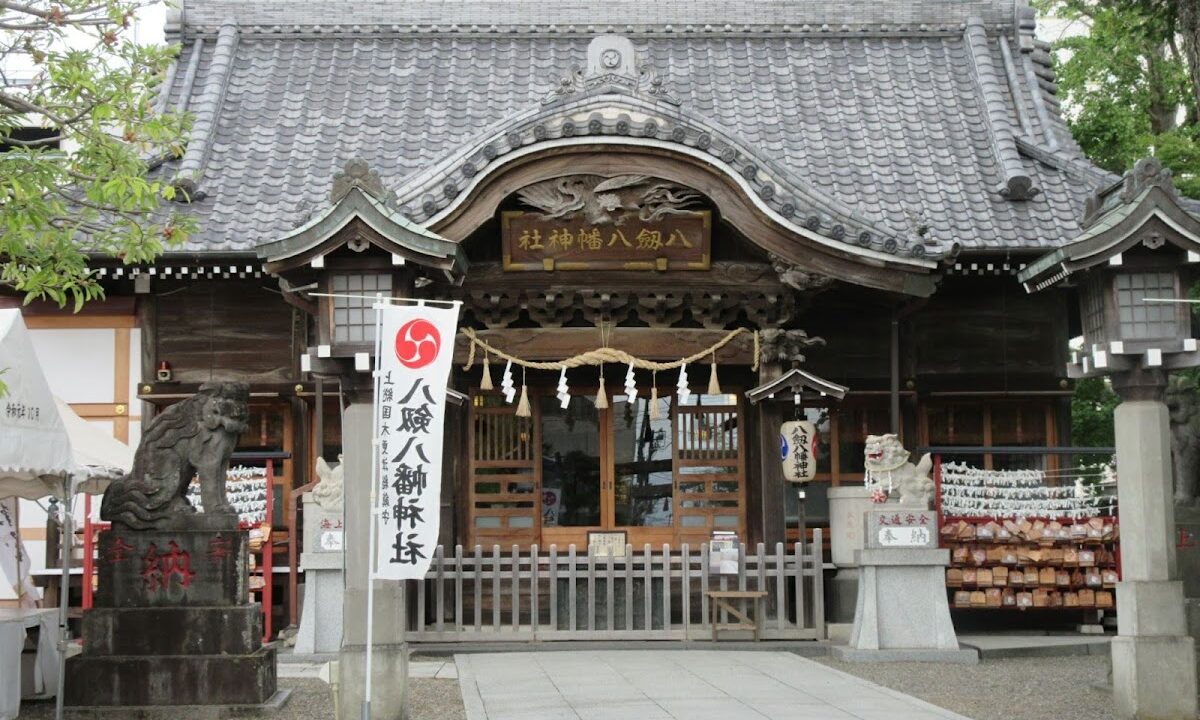
Located in a prime location about a 3-minute walk from the west exit of Kisarazu Station, the grounds of Hachiken Hachiman Shrine maintain a tranquil atmosphere despite being in an urban area. The magnificent worship hall and main shrine welcome visitors, giving a sense of its status as the guardian shrine of Kisarazu.
Subsidiary Shrines
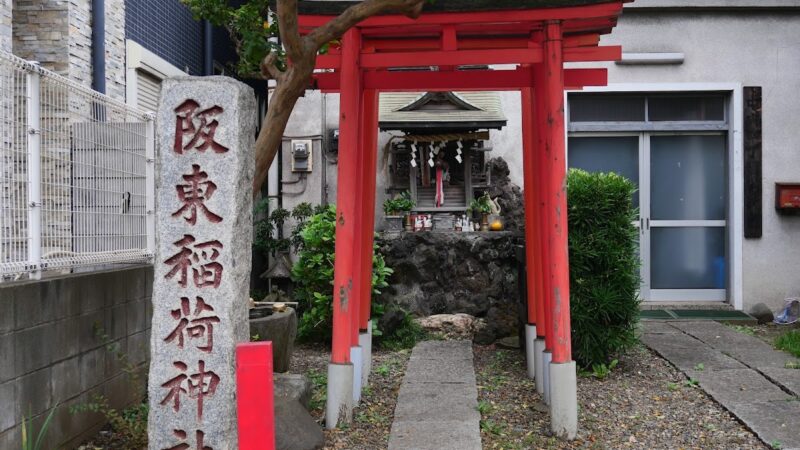
To the right of the shrine grounds is a small shrine with a striking bright red torii gate. Here, the deities Mitsumine-no-Okami, Ontake-no-Okami, and Inari-no-Okami are enshrined, each believed to bestow blessings of good fortune, business prosperity, and abundant harvests, respectively.
Mizuhiki Decorations
Beautiful cord decorations called “Mizuhiki decorations” are displayed on the shrine grounds. These preserve traditional decorative techniques and delight the eyes of visitors.
Sacred Tree
Within the shrine grounds stands a sacred tree, bearing witness to a long history. It is cherished by local residents as a sacred tree that has watched over the development of Kisarazu.
Yatsurugi Hachiman Shrine Annual Festival | Kanto’s Three Great Mikoshi and Kisarazu Bayashi
Overview of the Annual Festival
The main highlight of Yatsurugi Hachiman Shrine is the annual festival, held every year from the second Friday to Sunday of July. This festival is the largest festival in Kisarazu City and is known for its procession of a large portable shrine, considered one of the “Three Great Portable Shrines of the Kanto Region,” and for the “Kisarazu Bayashi,” a musical performance designated as an Intangible Cultural Property of Chiba Prefecture.
One of the Three Great Portable Shrines of the Kanto Region | The Large Portable Shrine of Hachiken Hachiman Shrine
The highlight of the festival is undoubtedly the procession of the magnificent portable shrine. This shrine, a historical artifact created in 1850 (Kaei 3), is known as the “Largest Portable Shrine in the Kanto Region” and one of the “Three Great Portable Shrines of the Kanto Region.”
The sacred object is enshrined in the portable shrine, and strong young men from each town vigorously carry it on their shoulders, parading through the town. The shouts of “Wasshoi! Wasshoi!” from the bearers and the sight of the heavy shrine swaying are breathtaking, bringing the festival to its climax.
The portable shrine is incredibly heavy, requiring dozens of people to carry it. Its impressive presence continues to captivate many spectators.
Chiba Prefecture Intangible Cultural Property “Kisarazu Bayashi”
Another highlight of the festival is the “Kisarazu Bayashi.” This traditional festival music is designated as an intangible cultural property of Chiba Prefecture, and its lively performance, featuring flutes, drums, and gongs, enlivens the festival.
Kisarazu Bayashi is a traditional performing art passed down from the Edo period, characterized by its unique rhythm and melody. Each neighborhood association has its own musical group, and the competition between them is another highlight.
Festival Schedule and Highlights
The annual festival usually follows the schedule below:
- Friday: Eve of the Festival, procession of floats and stalls from each neighborhood
- Saturday: Main Festival, preparation for the procession of the large portable shrine, competition of Kisarazu-bayashi music
- Sunday: Procession of the large portable shrine, the highlight of the festival
On Sunday, the procession of the large portable shrine takes place from morning until evening, visiting various locations throughout the city, and culminating in its return to the shrine. The enthusiasm and excitement of the bearers during the return to the shrine is the climax of the festival and attracts many spectators.
Goshuin (Shrine Seal) Information
Yatsurugi Hachiman Shrine offers Goshuin (shrine seals).
Regular Goshuin
A regular Goshuin is available, which can be directly inscribed in your Goshuincho (shrine seal book). The offering fee is 500 yen. The powerful ink writing and red seal make it a memorable souvenir of your visit.
Issuance Hours
Goshuin (temple/shrine stamps) are issued during the shrine office’s opening hours. We recommend checking before your visit. Limited edition goshuin may be available during special periods such as the annual festival.
Access Information
Basic Information
- Address: 1-6-15 Fujimi, Kisarazu City, Chiba Prefecture 292-0831
- Phone Number: 0438-23-8881
- Nearest Station: JR Uchibo Line, Kisarazu Station
Access by Train
Approximately 3 minutes on foot from JR Uchibo Line, Kisarazu Station
Exit the west exit of Kisarazu Station and walk straight down the street in front of the station. After turning a sharp curve, you will immediately see the torii gate of Hachiken Hachiman Shrine. It is very close to the station and extremely easy to access.
From Tokyo, take the JR Sobu Line Rapid or Yokosuka Line to Kisarazu Station (approximately 1 hour and 10 minutes from Tokyo Station, or approximately 1 hour from Shinagawa Station).
Access by Car
Via Tateyama Expressway
- Approximately 10 minutes from Kisarazu North Interchange
- Approximately 15 minutes from Kisarazu South Interchange
Via Tokyo Bay Aqua-Line
- Approximately 15 minutes from Kisarazu Kaneda Interchange
Using the Aqua-Line, access is possible in approximately 30 minutes from Kawasaki City, Kanagawa Prefecture. It’s a popular and pleasant driving route across Tokyo Bay.
Parking
There are parking spaces for visitors around the shrine, but the number is limited. During the annual festival, traffic restrictions are in place and parking lots become crowded, so using public transportation is recommended.
Nearby Tourist Attractions
Kisarazu City Center
Yatsurugi Hachiman Shrine is located very close to Kisarazu Station, allowing you to enjoy a stroll through Kisarazu city center after your visit. The shopping street is lined with local restaurants and souvenir shops, offering a taste of Kisarazu’s atmosphere.
Otayama Park
An observation spot offering panoramic views of Kisarazu city. Known as a famous cherry blossom viewing spot, it’s bustling with visitors in spring. It’s about a 10-minute drive from Yatsurugi Hachiman Shrine.
Kisarazu Port
A port facing Tokyo Bay, it features a market and restaurants selling fresh seafood. Enjoy the bounty of Kisarazu’s sea.
Mitsui Outlet Park Kisarazu
A large outlet mall located right next to the Kisarazu Kaneda Interchange on the Tokyo Bay Aqua-Line. Enjoy shopping and dining.
Manners and Precautions for Visiting the Shrine
Proper Way to Visit the Shrine
- Bow before passing through the torii gate.
- Cleanse your hands and mouth at the water basin.
- Bow twice, clap twice, and bow once in front of the main hall.
- Make your wish quietly in your heart.
Photography
Photography is generally permitted on the shrine grounds, but consideration should be given to avoid disturbing other visitors or during religious ceremonies. Photography inside the shrine buildings may be prohibited; please check the notices.
Precautions During the Annual Festival
The shrine will be crowded during the annual festival. Traffic restrictions may also be in place in some areas, so it is recommended to check the latest information in advance. Remember to stay hydrated to prevent heatstroke.
Annual Events and Festivals
Yatsurugi Hachiman Shrine holds various festivals and events throughout the year.
Main Annual Events
- January 1st: Saitansai (New Year’s Festival)
- February 3rd: Setsubun Festival (Bean-throwing Ceremony)
- Second Friday to Sunday of July: Goreisai (Largeest Festival)
- November: Shichi-Go-San (Seven-Five-Three Festival)
- December 31st: Oharai-shiki (Great Purification Ceremony), Joya-sai (New Year’s Eve Festival)
The detailed dates of these festivals may vary from year to year, so it is recommended to check with the shrine before visiting.
Yatsurugi Hachiman Shrine and the Legend of the Path of Light
Interestingly, Yatsurugi Hachiman Shrine is associated with a mystical phenomenon called the “Path of Light.” It is said to be located on a “ley line,” a straight line formed by the sunlight rising from the Pacific Ocean on the spring and autumn equinoxes, stretching from Tamasaki Shrine in Ichinomiya Town, Chiba Prefecture, to Izumo Taisha in Shimane Prefecture.
This path of light is said to pass through Mount Fuji, the Imperial Palace, and Meiji Jingu Shrine, and is attracting attention as a path of faith that has continued since ancient times. Some believe that Yatsurugi Hachiman Shrine is also part of this mystical path of light and possesses special spiritual energy.
Summary
Yatsurugi Hachiman Shrine is a historical shrine steeped in the legend of Yamato Takeru and Ototachibana-hime, and is deeply revered by the local residents as the guardian shrine of Kisarazu City. Its magnificent portable shrine, considered one of the three largest in the Kanto region, and the Kisarazu Bayashi (a Chiba Prefecture Intangible Cultural Property), adorn the annual festival, which is Kisarazu City’s largest festival and attracts many people every year.
In addition to its convenient location, approximately a 3-minute walk from JR Kisarazu Station, the shrine offers a variety of divine blessings, including protection from evil, traffic safety, business prosperity, and success in examinations, attracting many worshippers throughout the year.
When you visit Kisarazu, be sure to pay your respects at Hachiken Hachiman Shrine and offer a peaceful prayer in a space steeped in long history and tradition. In particular, during the annual festival in July, you will have a rare opportunity to experience one of the largest portable shrines in the Kanto region and traditional festival music.