Tsurumine Hachimangu Shrine (Ichihara City, Chiba Prefecture) Complete Guide | History, Goshuin (Shrine Seal), and Kagura Information of the Kanto Three Cranes
Tsurumine Hachimangu Shrine, located in Nakatakane, Ichihara City, Chiba Prefecture, is a historic shrine with a history dating back to the Kamakura period. Widely known as one of the “Kanto Three Cranes,” along with Tsurugaoka Hachimangu Shrine in Kamakura and Tsurugaya Hachimangu Shrine in Tateyama, it attracts many worshippers seeking protection from evil and misfortune. This article comprehensively introduces useful information for visitors, including the history of Tsurumine Hachimangu Shrine, highlights of the grounds, goshuin information, and Kagura (traditional dance and music), which is a prefecturally designated intangible cultural property.
Basic Information about Tsurumine Hachimangu Shrine
Location and Access
Address: 1223-1 Nakatakane, Ichihara City, Chiba Prefecture
Phone Number: 0436-95-3595
Access by Car:
- Approximately 10 minutes from the Ken-O Expressway “Ichihara Tsurumai IC”
- Approximately 15 minutes from the Tateyama Expressway “Ichihara IC”
- Parking available
Access by Public Transportation:
- Take a bus from the JR Uchibo Line “Goi Station”
- Approximately 30 minutes on foot from the Kominato Railway “Kazusa Tsurumai Station”
Deities and Divine Virtues
Tsurumine Hachimangu Shrine enshrines three deities central to Hachiman worship.
- Honda-wake no Mikoto: The divine name of Emperor Ojin. God of military fortune, victory, and career advancement
- Okinagatarashihime no Mikoto: Empress Jingu. God of safe childbirth, child-rearing, and protection from evil
- Tamayorihime no Mikoto: Daughter of the sea god. God of matchmaking and family safety
These enshrined deities are believed to offer a wide range of blessings, including protection from evil, protection from all directions, family safety, business prosperity, and safe childbirth.
History and Origins of Tsurumine Hachimangu Shrine
Founding and Invitation during the Kamakura Period
Tsurumine Hachimangu Shrine is said to have been founded in Kenji 3 (1277). A divided spirit was invited from Usa Hachimangu Shrine in Buzen Province, Kyushu (present-day Usa City, Oita Prefecture), and it was founded as Tsurumine Hachimangu Shrine. This period coincides with the mid-Kamakura period, a time when the threat of the Mongol invasions persisted, and the faith in Hachiman, the god of war, was on the rise.
Usa Hachiman Shrine is the head shrine of all Hachiman shrines nationwide, and the fact that Tsurumine Hachiman Shrine was directly established there speaks to its importance in this region.
Reverence of Feudal Lords in the Edo Period
During the Edo period, the shrine received deep reverence from successive feudal lords, including the Sekiyado feudal lord, Kuze Yamato-no-kami, and the former lords, the Abe clan. Records show that the feudal lords continued to send representatives to the shrine until 1867 (Keio 3), demonstrating the spread of faith beyond the local area.
The Sekiyado feudal lord ruled an area spanning present-day Chiba, Ibaraki, and Saitama prefectures, and the fact that his lord continued to send representatives to Tsurumine Hachiman Shrine in Ichihara, far away, is proof of the shrine’s high status.
Status as one of the “Three Cranes of Kanto”
Tsurumine Hachimangu Shrine is affectionately known as one of the “Three Cranes of Kanto” along with the following three shrines:
- Tsurugaoka Hachimangu Shrine (Kamakura City, Kanagawa Prefecture) – A symbol of Kamakura, founded by Minamoto no Yoritomo
- Tsurugaya Hachimangu Shrine (Tateyama City, Chiba Prefecture) – The principal guardian shrine of Awa Province
- Tsurumine Hachimangu Shrine (Ichihara City, Chiba Prefecture) – A powerful Hachiman shrine of Kazusa Province
All three shrines bear the character “Tsuru” (crane) in their names and have long been centers of Hachiman worship, attracting the faith of their respective regions.
History since the Modern Era
Under the Meiji era’s shrine ranking system, it was ranked as a village shrine and positioned as the guardian shrine of the region. Even after the war, it has remained a center of faith for the local people, and various festivals and events have been passed down.
Highlights of the Shrine Grounds
Shrine Buildings and Architecture
The shrine buildings of Tsurumine Hachimangu Shrine preserve the traditional Hachiman-zukuri architectural style. The majestic appearance of the main hall, worship hall, and offering hall, integrated into one structure, evokes a solemn atmosphere for visitors.
The shrine grounds are surrounded by lush greenery, allowing visitors to enjoy the scenery of each season. The grounds are particularly beautiful during the fresh greenery of spring and the vibrant autumn foliage.
Approach and Torii Gate
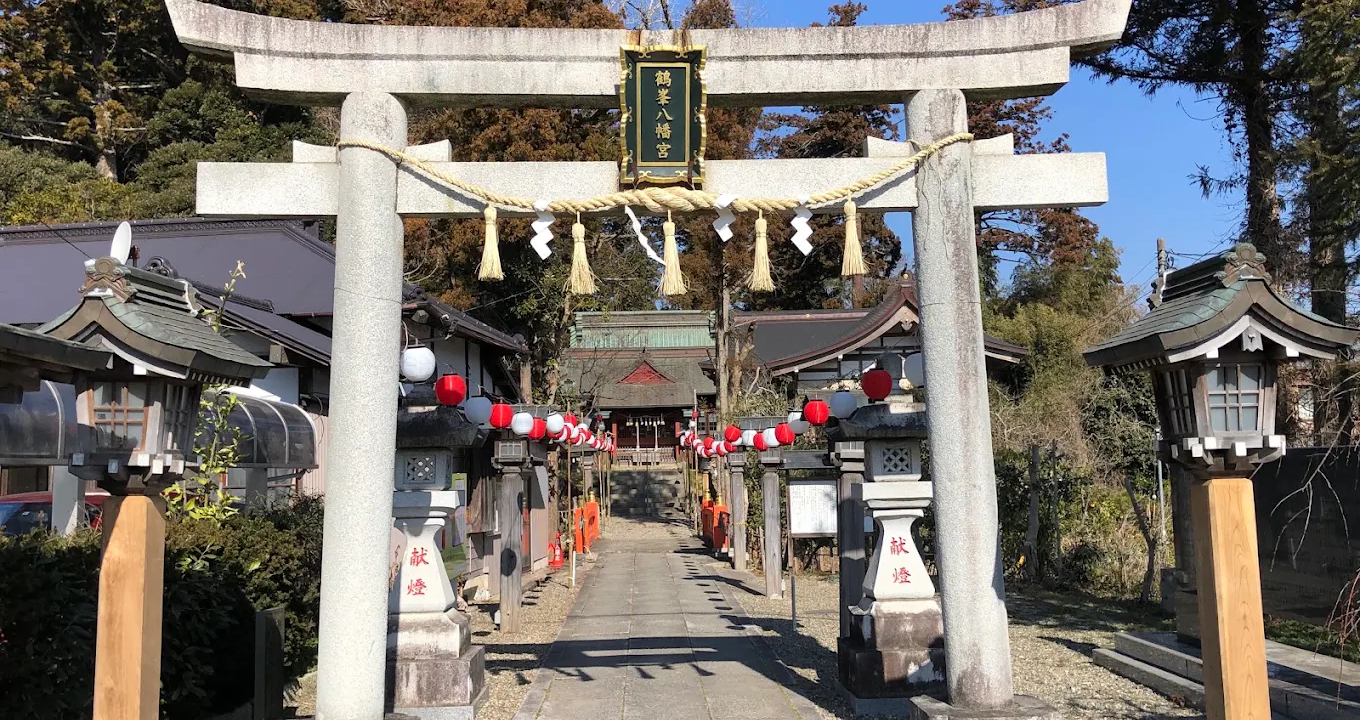
As you proceed along the long approach, a magnificent torii gate welcomes visitors. Passing through the torii gate and climbing the stone steps leads to the shrine buildings. Walking along this approach is a precious time to shift your mind from everyday life to a sacred space.
Subsidiary Shrines and Auxiliary Shrines
Several subsidiary shrines are enshrined around the main hall. These auxiliary shrines also attract local devotion and are believed to offer unique blessings.
Prefectural Designated Intangible Cultural Property: Tsurumine Hachiman Kagura
The Tradition of the Twelve-Seat Kagura
The greatest cultural feature of Tsurumine Hachiman Shrine is the “Tsurumine Hachiman Kagura,” designated as a Chiba Prefecture Intangible Folk Cultural Property. Officially called “Twelve-Seat Kagura,” it was registered as a Chiba Prefecture Intangible Folk Cultural Property on April 28, 1964 (Showa 39).
This Kagura is a valuable folk performing art that has been passed down through generations by the local people, while maintaining its ancient and elegant form.
Content and Performances of the Kagura
As the name suggests, the Twelve-Seat Kagura consists of twelve performances. Each performance has a story based on myths and legends, and embodies the meaning of offering to the gods and praying for a bountiful harvest and good health.
Kagura is a form of dance performed by masked dancers accompanied by traditional Japanese instruments such as flutes and drums. The movements, costumes, and masks faithfully adhere to ancient forms, transporting viewers to a world of mythology.
Performance at the Autumn Festival
The Kagura of Tsurumine Hachiman Shrine is performed annually at the autumn festival. Held on the third Sunday of October each year, the festival attracts many worshippers and cultural heritage enthusiasts who come to appreciate the traditional Kagura.
This Kagura, preserved by a local preservation society, is not merely a performance art, but an important cultural heritage linking the region’s identity and faith.
Annual Events and Festivals
Main Annual Events
Tsurumine Hachiman Shrine holds various festivals and events throughout the year.
January
- New Year’s Day Festival (January 1st): A festival celebrating the New Year
- Dondo-yaki: Burning of New Year’s decorations and amulets
February
- Setsubun Festival: Exorcism of evil spirits through bean-throwing
- Kinensai Festival: A grand spring festival praying for a bountiful harvest
October
- Grand Autumn Festival: Dedication of the Twelve-Seat Kagura
- Mikoshi Procession: A procession of portable shrines (mikoshi) through the community
November
- Shichi-Go-San Festival: Celebrating the growth of children
- Niiname-sai Festival: A festival giving thanks for the harvest
Highlights of the Autumn Festival
The Grand Autumn Festival in October is the most important festival at Tsurumine Hachimangu Shrine. In addition to the dedication of the Twelve-Seat Kagura, a prefecturally designated intangible cultural property, the entire community is enveloped in a festive atmosphere with a mikoshi procession and numerous stalls.
The portable shrine parades through the parish area, and Shinto rituals are performed at various locations. This festival is an important opportunity to strengthen the bonds of the local community, and parishioners living far away often return home to participate.
Prayers and Blessings
Prayers for Protection from Misfortune and Eight Directions
Tsurumine Hachimangu Shrine is known as the “guardian deity for protection from misfortune and eight directions,” and places particular emphasis on the following prayers.
Exorcism Prayer:
- Protection from misfortune during unlucky years (Men: 25, 42, 61 / Women: 19, 33, 37)
- Prayers for the year before, during, and after the unlucky year
Protection from All Directions Prayer:
- Protection from misfortune during years of bad luck
- Prayers to ward off misfortune related to directions
Prayers for Life Rituals
First Shrine Visit (Omiyamairi):
Prayers for the healthy growth of a baby around one month old. The formal date is the 31st day after birth for boys and the 32nd day for girls, but this can be adjusted according to the mother and child’s health and the weather.
Shichi-Go-San Visit:
Celebrating the growth of children aged 3, 5, and 7, and praying for their future health and happiness. The busiest time is around November 15th, but we accept requests from October to early December.
Prayer for Safe Childbirth:
We pray for the health and safe delivery of both mother and child, primarily on the Day of the Dog.
Other Prayers:
- Family Safety
- Business Prosperity
- Traffic Safety
- Examination Success
- Recovery from Illness
- Good Marriage Prayers
Prayer Reception
Prayers require advance reservations. Please call (0436-95-3595) to discuss your desired date and time and make a reservation. Same-day reservations are possible, but there may be a waiting time.
The offering fee varies depending on the prayer, but generally starts from 5,000 yen.
Goshuin (Shrine Seal) Information
Goshuin Issuance
Tsurumine Hachimangu Shrine offers goshuin to visitors. Goshuin are considered important as proof of worship and as a way to forge a connection with the shrine.
Granting Hours: Normally 9:00 AM to 4:00 PM (Hours may change during festivals)
Offering Fee: Approximately 300-500 yen
Goshuin (temple/shrine stamps) are available at the shrine office. You can bring your own goshuincho (stamp book) or purchase one from our shrine.
Goshuin Design
The goshuin of Tsurumine Hachimangu Shrine features the shrine’s name written in ink and stamped in red. A distinctive feature is the seal indicating it is one of the “Three Cranes of Kanto.” Limited edition goshuin may be given depending on the season or festival.
Etiquette for Receiving Goshuin
Goshuin are not merely commemorative stamps, but proof of your visit. Please observe the following etiquette.
- First, visit the main shrine and then receive your Goshuin (shrine stamp).
- Open your Goshuincho (stamp book) and hand it over.
- Wait quietly while the stamp is being written.
- Offer your first offering with gratitude.
Amulets and Gifts
Various Amulets
Tsurumine Hachimangu Shrine offers a variety of amulets.
- Exorcism Amulet: Wards off misfortune during the unlucky year.
- Protection from All Directions Amulet: Protects against misfortune from all directions.
- Health Amulet: For recovery from illness and longevity.
- Academic Success Amulet: For passing exams and achieving academic success.
- Traffic Safety Amulet: For safe driving of cars and bicycles.
- Safe Childbirth Amulet: For the health of mother and child and a safe delivery.
- Matchmaking Amulet: For successful relationships and marital harmony.
Demon-Repelling Arrows and Rakes
Demon-repelling arrows are given out during the New Year, and rakes are given out during the autumn festival. These are popular as lucky charms for family safety and business prosperity.
Amulets (Shinto Talismans)
We also offer Shinto amulets to be placed on your household altar. Even if you don’t have an altar, you can place them in a clean place facing south or east.
Manners and Etiquette for Worship
Basic Worship Etiquette
- Passing Through the Torii Gate: Bow before passing through the gate.
- Purifying at the Water Basin: Purify your left hand, right hand, and mouth in that order.
- Walking the Path: The center is the path for the gods, so walk along the sides.
- Etiquette in Front of the Main Hall: Two bows, two claps, one bow
- Bow deeply twice
- Clap twice
- Pray with all your heart
- Bow deeply once
Regarding Attire
For regular visits, casual clothing is fine, but please keep the following in mind when receiving a prayer service.
- Clean and presentable attire
- Modest clothing
- Avoid sandals and flip-flops
- Formal attire is recommended for Shichi-Go-San and Omiyamairi (baby’s first shrine visit)
Nearby Tourist Attractions
Highlights of Ichihara City
When visiting Tsurumine Hachimangu Shrine, we recommend also visiting the surrounding tourist attractions.
Kominato Railway: A retro local line including Kazusa-Tsurumai Station, the nearest station to Tsurumine Hachimangu Shrine. It’s famous for its tunnels of rapeseed blossoms and cherry blossoms in spring.
Yoro Valley: A valley known for its beautiful autumn foliage. Hiking trails and hot springs are also available.
Chibanian (Chiba Section): A geologically important geological formation. A period in Earth’s history was named “Chibanian.”
Ichihara Elephant Kingdom: A zoo where you can interact with elephants. The elephant show is popular.
Nearby Shrines and Temples
Takataki Shrine: An ancient shrine in Ichihara City. Known for its blessings in matchmaking.
Iikagaoka Hachimangu Shrine: The main guardian shrine of Ichihara City. Characterized by its magnificent shrine building.
Frequently Asked Questions about Tsurumine Hachimangu Shrine
Is there parking?
Yes, there is free parking for visitors on the shrine grounds. Normally, there is ample space, but it may get crowded during busy periods such as New Year’s and the autumn festival.
Can I have my Goshuin (shrine stamp) mailed?
Basically, Goshuin are proof of worship, so please receive them in person. If you live far away or have special circumstances, please consult the shrine office.
Is it possible to visit with a pet?
We ask that you refrain from bringing pets onto the shrine grounds out of consideration for other visitors. However, it may be possible to bring them to the approach to the shrine if you are carrying them or keeping them in a cage. Please inquire in advance for details.
Do you perform wedding ceremonies?
We also perform Shinto wedding ceremonies. You can have a traditional Shinto ceremony in a solemn atmosphere. Please contact the shrine office as soon as possible for dates and details.
Is photography allowed?
Photography is generally permitted on the shrine grounds. However, please refrain from taking photos during prayers or in a way that disturbs other worshippers. Also, please follow the instructions regarding photography during events such as Kagura (sacred dance).
The History of Ichihara City and Tsurumine Hachimangu Shrine
Its Position in Kazusa Province
Ichihara City was formerly the central region of Kazusa Province. Kazusa Province is located in the central part of present-day Chiba Prefecture and was an important region from ancient to medieval times.
Tsurumine Hachimangu Shrine, as a powerful Hachiman shrine in Kazusa Province, attracted the reverence of samurai and feudal lords. Especially after the Kamakura period, as Hachiman worship spread as the guardian deity of samurai, the importance of our shrine increased. ### As a Center of Local Faith
For the people of the Nakatakane district and surrounding areas, Tsurumine Hachimangu Shrine was not merely a shrine, but a center of faith closely intertwined with their lives.
In the era when agriculture was the main industry, festivals praying for bountiful harvests were held on a grand scale, and the dedication of Kagura (sacred dance and music) developed as part of these celebrations. Even today, it is carefully preserved by the local people and passed down to future generations.
Value as a Cultural Asset
Cultural Significance of the Twelve-Seat Kagura
The Kagura of Tsurumine Hachimangu Shrine (Twelve-Seat Kagura) is highly regarded as a Chiba Prefecture-designated Intangible Folk Cultural Property for the following reasons:
- Preservation of Ancient Forms: Faithfully passing down the form of Kagura that has continued since the Middle Ages.
- Regional Characteristics: Embodying the unique Kagura culture of the Kazusa region.
- Succession System: Reliable transmission by local preservation societies.
- Performing Arts Value: The completeness of the performance as a comprehensive art form, including dance, music, costumes, and masks.
Efforts for Preservation and Succession
The following efforts are being made in the region to preserve and pass on Kagura:
- Regular practice sessions by preservation societies
- Transmission of techniques to younger generations
- Creation of documentary videos
- Collaboration with school education
- Public performances for dissemination
Through these efforts, this valuable cultural asset is being reliably passed on to future generations.
Faith and Modern Society
The Role of Shrines in Modern Society
In modern society, Tsurumine Hachimangu Shrine is not merely a historical building, but plays an important role as a spiritual center for people.
Community Center:
Through festivals and events, it serves as a place where local residents gather and interact. In today’s society, characterized by increasing nuclear families and urbanization, such community hubs are invaluable.
Peace of Mind:
The tranquil shrine grounds provide a place of solace away from the hustle and bustle of daily life, attracting many visitors.
Preservation of Traditional Culture:
The shrine plays a vital role in preserving and passing on traditional culture, including Kagura (sacred dance and music), to future generations.
Value as a Tourism Resource
As one of the “Three Cranes of Kanto” and possessing Kagura designated as a prefectural cultural property, its tourism value is increasing. The popularity of Goshuin (shrine stamps) and power spots has led to a rise in visitors from distant areas.
From the perspective of regional revitalization, Tsurumine Hachimangu Shrine plays an important role and is attracting attention as part of a tourist route combined with the Kominato Railway and Yoro Valley.
Guidelines for Visiting Shrines
Significance of Shrine Visits
Shrine visits are not merely for sightseeing or making wishes. They have the following significance:
- Gratitude: Express gratitude for daily peace and blessings.
- Self-Reflection: Find peace of mind in the tranquil shrine grounds.
- Renewing Resolve: Set new goals and vows.
- Forging Connections: Cherish your connections with the gods and with other people.
Prayer Etiquette
When praying during your visit, please follow these steps with sincerity:
- First, silently state your name and address.
- Express your gratitude for daily blessings.
- State your specific wish.
- Vow to strive for your wish to be granted.
It is said that the gods support those who strive. It’s important not only to ask for something, but also to resolve to improve yourself.
Summary
Tsurumine Hachimangu Shrine is a historical and traditional shrine located in Ichihara City, Chiba Prefecture. Since its founding in 1277, it has attracted the faith of the local community for over 700 years and is widely known as one of the “Three Tsuru Shrines of Kanto.” As a guardian deity for warding off evil and protection from all directions, Tsurumine Hachimangu Shrine attracts many worshippers and is a place of worship for important life events such as baby’s first shrine visit, Shichi-Go-San (a traditional rite of passage for children), and exorcisms. The Twelve-Seat Kagura, a prefecturally designated intangible folk cultural property, is a source of local pride and is carefully preserved as a valuable cultural heritage.
The tranquil grounds, surrounded by abundant nature, are ideal for calming the mind and reflecting on oneself. When visiting Ichihara City, be sure to visit Tsurumine Hachimangu Shrine and experience its history, tradition, and sacred atmosphere.
Receiving a Goshuin (shrine stamp), an amulet, and forging a connection with the deities will surely enrich your experience. During the autumn festival, you can enjoy the traditional Kagura and experience the local culture.
Tsurumine Hachimangu Shrine is a vital place that connects the community and its people, from the past to the present and into the future.