
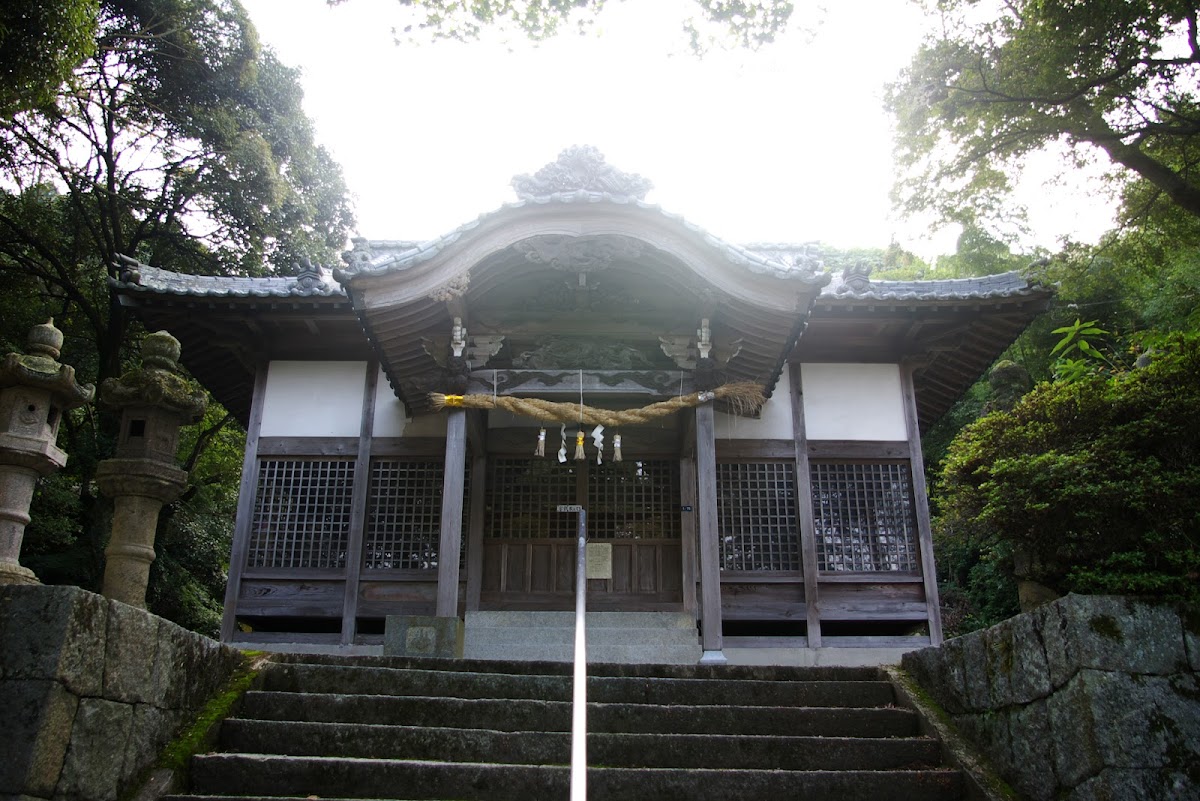
Complete Guide to Ikeō Shrine (Niihama City, Ehime Prefecture)
Ikeō Shrine, located in Ajima, Niihama City, Ehime Prefecture, is a historical shrine that attracts the faith of the local community. This article provides a comprehensive introduction to Ikeō Shrine, from detailed information about the shrine to the shrine culture of Niihama City and nearby places of worship.
Basic Information about Ikeō Shrine
Ikeō Shrine is located at 191 Ajima-kō, Niihama City, Ehime Prefecture, and has long been cherished as a center of faith for local residents.
Location and Contact Information
- Address: 191 Ajima-kō, Niihama City, Ehime Prefecture 792-0896
- Corporate Code: 1500005004473
- Affiliation: Under the jurisdiction of the Ehime Prefectural Shrine Association
There are multiple shrines named Ikeō Shrine throughout Japan, ranking 1,297th nationwide (4 shrines). In Ehime Prefecture, the Ikeō Shrine located in Niihama City is a representative example.
Origin of the Name of Ikeō Shrine
The name “Ikeō” is thought to originate from the worship of water deities and gods associated with ponds. Since ancient times, water has been the most important resource for agriculture, and the worship of gods who protect ponds and water sources can be seen throughout Japan. It is presumed that in the Ajima district of Niihama City, a belief in the prosperity of water resources and agriculture was deeply rooted.
History and Deities of Ikeō Shrine
Historical Background
Niihama City has long developed as a mining and industrial city known for the Besshi Copper Mine, but it was also a region where agriculture and fishing flourished. The Ajima district, where Ikeō Shrine is located, is situated on the coast of Niihama City, in a naturally rich environment surrounded by the sea and mountains.
From the Edo period to the Meiji period, this region relied on agriculture and fishing for its livelihood, and Ikeō Shrine was worshipped as the guardian deity of the region. As a shrine that has walked hand in hand with the history of the region, it is still cherished by the local people today.
About the Deities Enshrined
The deities enshrined at Ikeō Shrine are believed to be gods with characteristics of water and agriculture. Generally, shrines bearing the name “Ikeō” often enshrine the following deities:
- Mizuhanome-no-kami: Goddess who governs water
- Mitsuhanome-no-kami: A god widely worshipped as a water deity
- Ōyamatsumi-no-kami: God of mountains and protector of water sources
These deities are believed to have divine virtues such as securing agricultural water, praying for bountiful harvests, and protecting against water-related disasters.
How to Access Ikeō Shrine
Access by Public Transportation
Ikeō Shrine can be accessed from the center of Niihama City via the following route.
If using the JR Yosan Line:
- Get off at JR Niihama Station.
- From the station, take a bus or taxi towards Ajima.
- Travel time: Approximately 15-20 minutes.
Niihama Station is a major station where express trains also stop. It is approximately 40 minutes from Matsuyama City by express train and approximately 10 minutes from Saijo City.
Access by Car
If using the expressway:
- Approximately 10km from the Matsuyama Expressway “Niihama IC,” about 15 minutes by car.
- Take National Route 11 towards Ajima.
Parking Information:
Due to the size of the shrine, parking space may be limited. It is recommended to check the surrounding traffic conditions and available parking spaces in advance before visiting.
The Shrine Culture of Niihama City and the Role of Ikeō Shrine
Number and Characteristics of Shrines in Niihama City
Niihama City has a total of 30 shrines, making it one of the areas with the highest density of shrines in Ehime Prefecture. These shrines each have different histories and beliefs, and serve as spiritual pillars for the citizens.
Major Shrines in Niihama City
- Ichinomiya Shrine (Ichinomiya-cho): One of Niihama City’s representative shrines
- Kuroshima Shrine (Kuroshima): Revered as the guardian deity of the sea
- Funaki Shrine: A shrine deeply connected to local industries
- Mishima Shrine: A shrine dedicated to Oyamatsumi-no-kami
- Munakata Shrine: A shrine where prayers are offered for the safety of maritime traffic
- Yamashiro Shrine: A center of faith in the mountainous region
- Urawatari Shrine: Deeply revered by those involved in the fishing industry
- Shintaka Shrine: A shrine that has grown alongside the development of the region
- Okitama Shrine: Affectionately known for its auspicious name
- Ninai Shrine: Revered as the guardian deity of logistics and commerce
Among these shrines, Ikeō Shrine, as the tutelary deity of the Ajima district, enjoys a deep-rooted community faith.
Characteristics of the Ajima District
The Ajima district is located on the coast of Niihama City, a scenic area facing the Seto Inland Sea. Historically, fishing and agriculture have flourished here, and the community is characterized by strong ties. Ikeō Shrine has served as a spiritual pillar of this region, playing a central role in festivals and local events.
Annual Events and Festivals of Ikeō Shrine
Annual Grand Festival
Like many shrines, Ikeō Shrine is believed to hold an annual grand festival. This is the most important festival for the shrine, where gratitude is expressed to the enshrined deity and prayers are offered for the peace and prosperity of the community.
In Niihama City, many shrines hold their annual grand festivals in the autumn (September-October), expressing gratitude for a bountiful harvest and praying for a good harvest in the following year. Local residents participate in large numbers, and sometimes the festival includes a procession of portable shrines and devotional performances.
Monthly Festivals and Daily Beliefs
Besides the annual grand festival, monthly festivals and prayer ceremonies at significant milestones are likely to be held. Local residents visit shrines to offer prayers to the gods at various life milestones and everyday occasions, such as New Year’s visits, Shichi-Go-San (a traditional rite of passage for children), exorcisms, and prayers for safety.
History and Industry of Niihama City
Besshi Copper Mine and the Development of Niihama
The Besshi Copper Mine is indispensable when discussing Niihama City. Opened in 1691 (Genroku 4), the Besshi Copper Mine operated for approximately 280 years, supporting Japan’s modernization.
Known as the birthplace of the Sumitomo Group, Niihama rapidly developed as a mining and industrial city alongside the development of the copper mine. The Besshiyama area has shrines such as Yamashiro Shrine, which attracted the faith of mine workers and local residents.
From Industrial City to Diverse City
Currently, Niihama City is known as an industrial city with thriving manufacturing industries such as chemical and machinery industries. However, it is also a city with a rich natural environment and historical and cultural assets. The 30 shrines scattered throughout the city reflect this diverse regional character.
Shrine Worship in Ehime Prefecture and Ikeō Shrine
Distribution of Shrines in Ehime Prefecture
Ehime Prefecture as a whole has approximately 1,250 shrines, making it the prefecture with the most shrines among the four prefectures of Shikoku. Matsuyama City, the prefectural capital, has the most shrines, followed by Saijo City, Imabari City, and Niihama City, among others.
Number of Shrines in Major Municipalities
- Matsuyama City: Approximately 200 shrines
- Saijo City: Approximately 150 shrines
- Imabari City: Approximately 140 shrines
- Niihama City: 30 shrines
- Yawatahama City: Approximately 60 shrines
The number of shrines in Niihama City (30) is an appropriate distribution for the size of the city, with shrines well-balanced throughout the region.
Role of the Ehime Prefectural Shrine Association
The Ehime Prefectural Shrine Association is located at 1954-2 Minamikata, Toon City, and is the organization that oversees shrines within the prefecture. Many shrines in the prefecture, including Ikeō Shrine, belong to the Association and receive support in areas such as priest training, guidance on rituals, and shrine maintenance.
The Association also provides a shrine search function, allowing users to check detailed information such as addresses, maps, and enshrined deities.
Attractions Around Ikeō Shrine
Tourist Spots in Niihama City
When visiting Ikeō Shrine, we recommend also visiting other tourist spots in Niihama City.
Minepia Besshi
This theme park allows you to learn about the history of the Besshi Copper Mine, with extensive exhibits on mine tunnels and copper mine-related displays. It has high value as an industrial heritage site and is a representative tourist facility of Niihama City.
Besshi Copper Mine Memorial Museum
This museum provides detailed information about the history and technology of the Besshi Copper Mine. It displays mine models, mining tools, and everyday items from that time.
Other Shrines in Niihama City
- Ichinomiya Shrine: One of the largest shrines in the city, boasting a magnificent main hall.
- Kuroshima Shrine: Located near the coast, it offers prayers for safety at sea.
- Funaki Shrine: A historical shrine that preserves local cultural assets.
The Charm of the Ajima District
The Ajima district is a quiet area facing the Seto Inland Sea, attractive for its beautiful coastline and tranquil scenery. It’s close to the center of Niihama City, and loved by residents for its combination of urban convenience and abundant nature.
A stroll around Ikeō Shrine will allow you to experience the local history, culture, and the lives of its people firsthand.
Manners and Etiquette for Shrine Visits
Basic Shrine Visit Etiquette
When visiting Ikeō Shrine, please observe the following basic shrine visit etiquette.
How to Pass Through a Torii Gate
- Bow before passing through the torii gate.
- Walk along the edge of the path, as the center is the path for the gods.
- Be quiet and reverent within the shrine grounds.
How to Wash Your Hands at the Water Basin
- Take the ladle with your right hand and wash your left hand.
- Switch the ladle to your left hand and wash your right hand.
- Switch the ladle back to your right hand, receive water in your left hand, and rinse your mouth.
- Finally, stand the ladle upright to wash the handle.
How to Worship at the Main Hall
- Stand in front of the offering box and bow slightly.
- Gently place your offering in the box.
- If there is a bell, ring it.
- Perform the two bows, two claps, and one bow ritual (bowing deeply twice, clapping twice, and bowing deeply once).
- Recite your prayer silently.
Clothing and Items to Bring When Visiting
No special clothing is required, but clean and modest attire that reflects the sacred nature of the place is desirable. Even in summer, avoid excessive exposure, and in winter, take proper precautions against the cold.
Useful items to bring include small change for offerings, a goshuincho (stamp book) if you plan to receive a goshuin (stamp), and a camera (be mindful of areas where photography is prohibited).
Ujigami and Ikeō Shrine
What is Ujigami Worship?
Ujigami refers to a deity that protects a specific region (parish area), and is worshipped by the people living in that region (parishioners). Ikeō Shrine has been deeply involved in the lives of local residents as the ujigami of the Ajima district.
The Importance of Finding Your Ujigami
In modern times, many people move away from their hometowns, and an increasing number of people don’t know which shrine is their ujigami. Generally, it’s customary to visit the ujigami of the area where you currently live, but the connection to the ujigami of your hometown is also considered important.
The Ehime Prefectural Shrine Association website provides a function to search for your ujigami shrine by address, making it easy to find out who your ujigami is. For those living in or originally from the Ajima district of Niihama City, Ikeō Shrine holds a special place in their hearts.
Regional Shrine Information in Niihama City
Shrines in Niihama City have distinct characteristics depending on the region, each with its own history and beliefs.
Shrines in the Urban Area
- Ichinomiya-cho: Ichinomiya Shrine
- Yakumo-cho: Shrine dedicated to the local guardian deity
- Izumiike-cho: Shrine associated with water-related beliefs
- Izumimiya-cho: Shrine located in an ancient settlement
- Isoura-cho: Shrine attracting worshippers from the coastal area
- Utaka-cho: Shrine serving as the center of the local community
Shrines in the Coastal Area
- Ajima: Ikeō Shrine (the subject of this article)
- Kuroshima: Kuroshima Shrine
- Other Shrines in Coastal Areas
Coastal shrines often strongly emphasize beliefs related to maritime safety and abundant catches.
Shrines in Mountainous Areas
- Besshiyama: Yamashiro Shrine, Mishima Shrine, etc.
- Oshoin: A shrine that has walked hand in hand with the history of the region
- Toyama-cho: A shrine dedicated to the mountain god
In mountainous areas, prayers have been offered for mountain safety, prosperity in forestry, and protection of water sources.
Comparison with Shrines in Other Areas of Ehime Prefecture
Shrines in Matsuyama City
Matsuyama City, the prefectural capital, has approximately 200 shrines, including many large shrines such as Isaniwa Shrine, Tsubaki Shrine, and Gokoku Shrine. It is a popular tourist destination and a popular spot for collecting Goshuin (shrine stamps).
Shrines in Saijo City
Saijo City is known as the “City of Water,” and is home to numerous historical shrines, including Ishizuchi Shrine. As a center of Ishizuchi Mountain worship, it is a region with a strong emphasis on mountain worship.
Shrines in Yawatahama City
Yawatahama City is located at the base of the Sadamisaki Peninsula and has developed as a key point for maritime traffic. Many shrines, such as Suwa Shrine, enshrine sea gods and attract the faith of those involved in the fishing industry.
Shrine Visits in the Digital Age
Utilization of QR Codes
In recent years, many shrines have been using QR codes to provide information. By scanning a QR code with a smartphone, you can easily check detailed information about the shrine, the origin of the enshrined deity, and the schedule of annual events.
When visiting Ikeō Shrine, using your smartphone will allow you to understand the shrine more deeply.
Online Shrine Search
The Ehime Prefectural Shrine Association and various shrine information websites offer keyword search functions, allowing you to search for your desired shrine by shrine name, address, enshrined deity, etc. Gathering information before your visit will allow for a more meaningful shrine visit experience.
Divine Virtues and Faith of Ikeō Shrine
Divine Virtues as a Water Deity
As the enshrined deity of Ikeō Shrine is a water deity, the following divine virtues are believed to be present:
- Agricultural Prosperity: Securing agricultural water, prayers for a bountiful harvest
- Safety in Daily Life: Protection from floods, blessings of water for daily life
- Purifying Power: Cleansing of mind and body, protection from evil
- Source of Life: Gratitude for the blessings of water that nourishes life
As a Guardian Deity of the Region
As the local guardian deity, Ikeō Shrine plays a role in protecting the peace and development of the entire Ajima district. Through local festivals and events, it also functions as a place to deepen the bonds among residents and strengthen community ties.
Recommended Time of Visit and Season
Visiting Throughout the Year
While the shrine can be visited at any time of year, each season offers its own unique charm.
Spring (March-May)
This is the season of fresh greenery, with the trees in the shrine grounds budding, allowing visitors to pray in a refreshing atmosphere. Many people visit to pray for safety in the new year or for success in exams.
Summer (June-August)
This is the season when many summer festivals and annual festivals are held. It’s a time to feel the vibrancy of the community and experience the lively atmosphere of the shrine.
Autumn (September-November)
This is the harvest season, a time to offer thanks for a bountiful harvest. Many shrines boast beautiful autumn foliage, allowing for a peaceful and tranquil visit.
Winter (December-February)
This is the time for Hatsumode (first shrine visit of the year), with many visitors coming to express gratitude for the past year and pray for the new year. The quiet winter atmosphere of the shrine grounds is even more sacred.
Culture of Niihama City and the Role of Shrines
Taikodai Culture and Shrines
Niihama City is famous for its magnificent and ornate floats called “Taikodai,” and the “Niihama Taiko Festival,” held every autumn, is considered one of the three major festivals of Shikoku. Shrines in each district play a central role in this Taikodai culture, often serving as the starting or ending point of the festival.
Ikeō Shrine may also be deeply connected to the Taikodai culture of the Ajima district, playing an important role in the transmission of local traditional culture.
Community Hubs
In modern society, shrines serve not only as places of worship but also as community hubs. Through festivals, cleaning activities, and annual events, they become places for intergenerational exchange, strengthening community bonds.
Summary: The Value and Significance of Ikeō Shrine
Ikeō Shrine is a community-oriented shrine located in the Ajima district of Niihama City, Ehime Prefecture. As one of only four “Ikeō Shrines” in Japan, it possesses a unique history and faith, and has served as a spiritual pillar for the local residents.
Niihama City has 30 shrines, each reflecting the characteristics of its region and attracting diverse beliefs. Among them, Ikeō Shrine is believed to have served as the tutelary deity of the Ajima district, playing a role in water deity worship and as a guardian deity of agriculture and fishing.
In Niihama City, which combines the aspects of an industrial city symbolized by the history of the Besshi Copper Mine with a region blessed with a rich natural environment, local shrines like Ikeō Shrine are indispensable for the transmission of traditional culture and the maintenance of local communities.
When visiting, you can gain a deeper experience by not only offering prayers but also reflecting on the historical and cultural background of the shrine. If you have the opportunity to visit Ehime Prefecture, be sure to visit Ikeō Shrine in Niihama City and other local shrines to experience the faith culture of the Seto Inland Sea region.


