Complete Guide to Okunomiya Yasharyu Shrine | The Mystery of Yashagaike Pond and the Legend of Rainmaking
What is Okunomiya Yasharyu Shrine?
Okunomiya Yasharyu Shrine is a mystical shrine located on the border between Gifu and Fukui prefectures. Situated on the shore of Yashagaike Pond at an altitude of 1,099 meters, it enshrines Yashahime, known as the dragon goddess who brings rain.
The area around Yashagaike Pond has a unique geographical condition where the prefectural border is not clearly defined, making it a rare place that can be said to belong to both Ibigawa Town (formerly Bannai Village) in Ibi District, Gifu Prefecture, and Minamiechizen Town in Nanjo District, Fukui Prefecture. This shrine is positioned as an Okunomiya (inner shrine) of the main shrine, Yashado (Honmiya Yasharyu Shrine) located in Kobe Town, Anpachi District, Gifu Prefecture.
Geographical Location and Characteristics
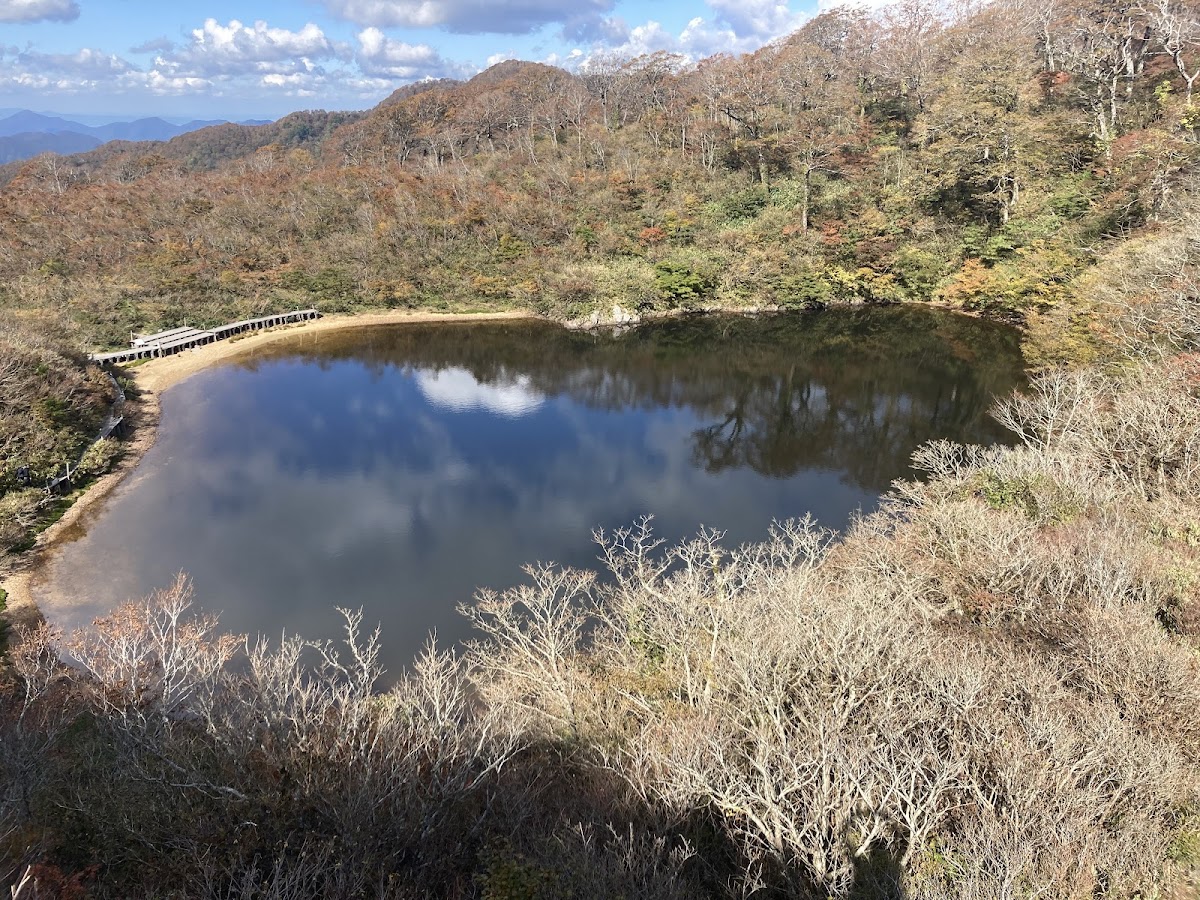
Yashagaike Pond is a mountain pond with a circumference of approximately 300 meters, located in the saddle between Mt. Sanshugatake and Mt. Yashagaikeyama. This pond, situated at a high altitude and surrounded by mountains, possesses a mystical atmosphere. The pond’s water never dries up throughout the year, and it has been revered as a sacred site for rain prayers since ancient times.
The Okumiya Yasharyu Shrine is a small shrine built on the shore of this pond, making it a sacred place for hikers and worshippers. The surrounding natural environment is rich, surrounded by primeval forests of beech and oak trees, allowing visitors to enjoy beautiful scenery throughout the seasons.
Legend and History of Yashagaike Pond
Origin of the Rain-Praying Legend
The foundation of the faith at Okumiya Yasharyu Shrine is the ancient legend of Yashagaike Pond. This legend is widely known as a rain-praying story passed down in the Mino region.
According to legend, when Mino Province was struck by a severe drought, a village girl was offered as a human sacrifice to the dragon god of the pond. The girl, known as Yashahime, threw herself into the pond and transformed into a dragon, settling there and since then, she has been granting people’s prayers for rain.
This legend became widely known throughout Japan through Izumi Kyoka’s play “Yasha-ga-ike” (Yasha Pond), and is highly regarded as a literary work. Izumi Kyoka, a writer from Kanazawa, left behind many works based on legends from the Hokuriku region, and the Yasha-ga-ike legend is one of his most representative works.
History of the Shrine’s Founding
The history of Okumiya Yasha-ryu Shrine dates back to the early Edo period. In 1647 (Shoho 4), Toda Ujitsune, the first lord of the Ogaki Domain, learned of the legend of Yasha-ga-ike while devoting himself to flood control projects, and was deeply impressed.
Toda Ujitsune is known as a benevolent ruler who dedicated himself to flood control projects in the western Mino region. He undertook various flood control projects to alleviate the suffering of his people from floods. He believed that the belief in the rain-making dragon god of the Yashagaike legend symbolized the importance of flood control and water resource management, and thus decided to establish a shrine.
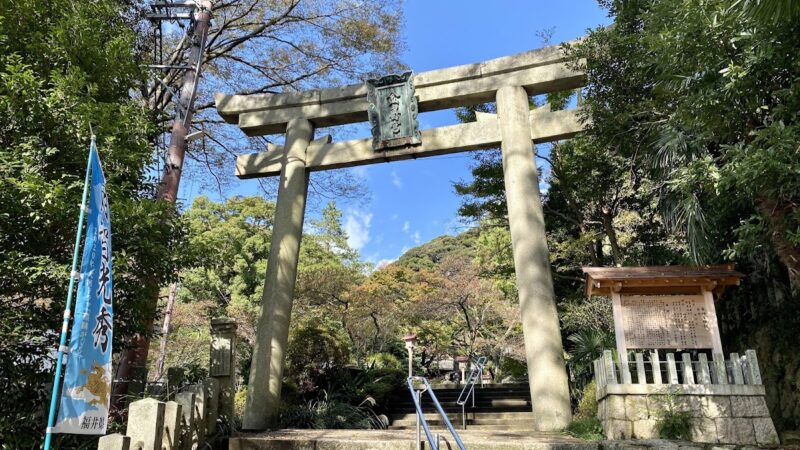
Initially, Toda Ujitsune built the Yasharyu Shrine as a village shrine on the shore of the “Hair-Washing Pond” (Oarai Pond), where Princess Yasha is said to have washed her hair. This is the present-day Honmiya Yasharyu Shrine in Kobe-cho, Anpachi-gun, Gifu Prefecture. Later, an inner shrine was built on the shore of Yashagaike Pond, and the worship of the Yasharyu god continued at both the main shrine and the inner shrine.
Relationship with the Ogaki Domain
Throughout the Edo period, the Okumiya Yasharyu Shrine received deep reverence from the Ogaki Domain. The lord and samurai regularly visited the shrine to pray for rain and flood control. Records show that, especially during years of drought, the entire domain held rain-making ceremonies.
For the Ogaki domain, water was the most important resource supporting the lives of its people and agricultural production. In the western Mino region, where rivers such as the Ibi River and Nagara River flow, both floods and droughts were serious problems, making Yasha-ryujin a special figure as a god of flood control and a dragon god of rain.
Deity and Benefits
Yasha-ryujin (Yasha-hime)
The deity enshrined at the Okumiya Yasha-ryu Shrine is Yasha-ryujin, or Yasha-hime, who transformed into a dragon. In legend, she is depicted as a being who changed from human to dragon, and is worshipped as a goddess who controls water.
Yasha-hime is recounted as a compassionate being who sacrificed herself to save people, and her selfless spirit has touched the hearts of many. As a dragon goddess, Yasha-hime not only possesses the power to bring rain, but is also worshipped as a goddess of flood control, protecting people from floods.
Main Benefits
The benefits believed to be obtained by visiting Okumiya Yasharyu Shrine include the following:
Rain Prayer
The most famous benefit is rain prayer. Since ancient times, many people have visited this shrine during droughts to pray for rain. It is a particularly important object of worship for agricultural workers and those involved with water resources.
Flood Control and Protection from Water Disasters
In addition to bringing rain, the shrine is also deeply revered as a god of flood control, protecting against water-related disasters. It is believed to offer protection from water-related disasters such as river floods and inundations.
Matchmaking and Romantic Success
The legend of Princess Yashahime includes an aspect of her sacrificing herself for her lover, and therefore, it is believed to offer benefits for romantic success and matchmaking.
Good Fortune and Protection from Evil
The dragon god has been considered a symbol of good fortune since ancient times, and benefits for protection from evil and improved luck can also be expected.
Natural Environment of Yashagaike Pond
Habitat of the Yashagen-goro Beetle
Yashagaike Pond is a biologically significant location as the only habitat of the Yashagen-goro beetle, a species designated as endangered. The Yashagen-goro beetle is an aquatic insect approximately 15 millimeters in length and is known to be endemic to Yashagaike Pond.
This rare insect has not been confirmed to exist anywhere other than Yashagaike Pond since its discovery in the 1930s, and is designated as Critically Endangered (CR) on the Ministry of the Environment’s Red List. Therefore, the area around Yashagaike Pond is considered important from a nature conservation perspective, and environmental conservation efforts are underway.
Seasonal Scenery
The area around Yashagaike Pond offers beautiful natural scenery throughout the four seasons.
Spring (April-June)
With the melting snow, new greenery sprouts, and the young leaves of beech and oak trees are beautiful. The contrast between the remaining snow and the new greenery is magnificent, making it a popular time for hikers.
Summer (July-August)
The pond, enveloped in deep green, exudes a mystical atmosphere. Alpine plants bloom in abundance, making it the perfect season for nature observation. However, temperatures are high and insects are numerous, so precautions are necessary.
Autumn (September-November)
The autumn foliage season is particularly beautiful, attracting many hikers. Beech and maple trees turn red and yellow, and the reflection of the autumn leaves on the pond’s surface is a spectacular sight. In late autumn, fallen leaves cover the hiking trails, creating a unique atmosphere.
Winter (December-March)
Deep snow makes it difficult for general hikers to visit during this season. The pond freezes over, revealing the harsh winter landscape shrouded in silence.
Hiking Routes and Access
Route from Gifu Prefecture
The route from Ibigawa Town, Gifu Prefecture is the most common hiking trail. A hiking trail is maintained from the Sakauchi-Kawakami area, approximately 3.5 kilometers one way, taking about 2 hours to ascend and about 1 hour 30 minutes to descend.
Access to the Trailhead
- By Car: Approximately 1 hour 30 minutes from the Meishin Expressway “Ogaki IC” via National Route 417 and Prefectural Route 255. There is a parking lot near the trailhead.
- By Public Transportation: Take the Ibigawa Town Community Bus from JR Tokaido Main Line “Ogaki Station”. However, the number of buses is limited, so it is necessary to check the timetable in advance.
Trail Characteristics
The route on the Gifu Prefecture side is a relatively well-maintained hiking trail, but there are some steep sections, so caution is advised for beginner hikers. There are several points of interest along the way, and you can enjoy an exhilarating hike through the primeval forest.
Route from the Fukui Prefecture Side
There is also a route from Minamiechizen Town, Fukui Prefecture, but it is somewhat steeper than the Gifu Prefecture side and is a course for experienced hikers. The one-way distance is approximately 4 kilometers, and the estimated time for the ascent is about 2 hours and 30 minutes.
Access to the Trailhead
- By car: Approximately 40 minutes from the Hokuriku Expressway “Imajo IC” via National Route 365 and Prefectural Route 207.
- By public transport: Taking a taxi from JR Hokuriku Main Line “Imajo Station” is convenient.
Precautions for Hiking
Equipment and Preparation
- Hiking boots, rain gear, and warm clothing are essential. Even in summer, cold weather precautions are necessary due to the unpredictable weather.
- Bring plenty of water and food. There are no shops or water sources on the mountain.
- Carry a map and compass (or GPS) and confirm the route in advance.
Safety Measures
- Avoid solo hiking; hike in groups whenever possible.
- Submit a hiking plan and inform family and friends of your destination.
- This area has been reported to have bear sightings, so take precautions such as using bear bells.
Manners and Environmental Protection
- Please be careful not to pollute the pond water, as it is a habitat for the Yashagengoro beetle.
- Please take all your trash with you.
- Collecting plants or capturing animals is strictly prohibited.
Relationship with Honmiya Yasharyu Shrine
Honmiya in Kobe Town
Yasharyu Shrine (Yashado), located in Kobe Town, Anpachi District, Gifu Prefecture, is positioned as the main shrine of Okumiya Yasharyu Shrine. This is the village shrine, located in a more accessible location for more visitors.
The main shrine was founded in 1647 by Toda Ujitsune and built on the shore of the “Hair-Washing Pond” (Oarai Pond), where Princess Yasha is said to have washed her hair. It continues to attract the faith of local people, and a festival is held there every year.
Roles of the Main Shrine and Okumiya
The main shrine and Okumiya each have different roles. The main shrine functions as a place for daily worship and prayer, and is the center of faith for the local community. Meanwhile, the inner shrine (Okumiya) is located on the sacred grounds of Yashagaike Pond, and is considered an even more sacred place, visited by people with special wishes.
Once a year, a pilgrimage climb from the main shrine to the inner shrine takes place, demonstrating the continued connection between the two shrines.
Nearby Attractions
Sanshugatake
Sanshugatake (elevation 1,292 meters), towering north of Yashagaike Pond, is a mountain often climbed in conjunction with Yashagaike Pond. The summit can be reached in about an hour’s climb from the pond, offering panoramic views of the Hakusan mountain range and Mount Ibuki.
Yashagaikeyama
Yashagaikeyama (elevation 1,191 meters), located south of Yashagaike Pond, is also a popular peak for hikers. It is on the opposite side of the pond from Sanshugatake, and it is possible to hike both mountains via a route that circles the pond.
Tourist Attractions in Ibigawa Town
In addition to your hike to Okumiya Yasharyu Shrine, why not visit other tourist attractions in Ibigawa Town?
- Tanigumi-san Kegonji Temple: An ancient temple known as the 33rd temple of the Saigoku Thirty-Three Kannon Pilgrimage.
- Ibikyo Gorge: Enjoy the beautiful gorge scenery created by the Ibigawa River.
- Yokozoji Temple: A treasure trove of cultural properties, known as the “Shosoin of Mino.”
Etiquette and Manners for Worship
Basic Principles of Shrine Worship
Okumiya Yasharyu Shrine is a small shrine in the mountains, but please observe basic etiquette when visiting.
- Bow before entering the shrine grounds.
- Even if there is no water basin for purification, cleanse your mind before worshiping.
- Offer your donation and worship using the two bows, two claps, and one bow ritual. 4. Silently recite your wish.
- After praying, turn around and bow before leaving the torii gate.
Guidelines for Mountain Worship
Yashagaike Pond has been revered as a sacred site since ancient times. Please pray quietly with reverence for nature. Refrain from shouting or disrespectful behavior.
Izumi Kyoka and the Legend of Yashagaike Pond
The Play “Yashagaike Pond”
Izumi Kyoka, a literary giant of the Meiji era, published the play “Yashagaike Pond” in 1913 (Taisho 2). This work is based on the legend of Yashagaike Pond and is depicted in a fantastical and beautiful style.
The story revolves around the interaction between an old bell-ringer who serves the dragon god of the pond and a traveling scholar who visits the village. It depicts faith in the dragon god, human desires, and the relationship between nature and humanity, and is one of Izumi Kyoka’s representative works.
Influence as a Literary Work
Izumi Kyoka’s “Yasha-ga-ike” (Yasha Pond) has been performed numerous times as a play, spreading the legend of Yasha-ga-ike to many people. This work brought national recognition to the Okumiya Yasha-ryu Shrine and Yasha-ga-ike Pond, attracting literary and theater enthusiasts.
Even today, people interested in Izumi Kyoka’s works visit Yasha-ga-ike Pond, the setting of his story, making it a place with a unique charm where literature and faith are intertwined.
Annual Events and Festivals
Rain-Praying Festival
Traditionally, a rain-praying festival was held during drought years. While regular festivals are no longer held, small-scale prayers by local residents continue.
Hiking Season
The hiking season to Yasha-ga-ike Pond runs from May, after the snow melts, until early November. Many hikers visit, especially during the autumn foliage season (mid-October to early November). During this time, local hiking groups sometimes hold hiking events.
Nearby Related Shrines
Yasharyu Shrine (Bannai-Kawakami, Ibigawa Town)
Besides the Okumiya (inner shrine), there is also a Yasharyu Shrine in the Bannai-Kawakami area of Ibigawa Town. Located near the trailhead, it is a popular shrine for those praying for safety before climbing and for general worship. Founded by Toda Ujitsune, it is a historical shrine and a center of local faith.
Other Shrines Dedicated to Dragon God Worship
There are many other shrines dedicated to dragon gods within Gifu Prefecture. In the Mino region, which has a deep connection with water, beliefs in flood control and rainmaking are prevalent, and dragon shrines and water shrines are located throughout the area.
Okumiya Yasharyu Shrine in Modern Times
Inheritance of Faith
Even in modern times, faith in Okumiya Yasharyu Shrine is preserved by the local people. While the shrine’s existence has become more widely known due to the increase in hikers, many people understand the original meaning of the faith and visit with respect.
Environmental Conservation Activities
As a habitat for the Yashagengoro beetle, environmental conservation of Yashagaike Pond is a crucial issue. Local governments, environmental protection groups, and mountaineering groups are cooperating to continue activities to protect the pond’s environment. Hikers are also urged to observe proper etiquette, and efforts are underway to protect both nature and religious significance.
Value as a Tourism Resource
Okumiya Yasharyu Shrine and Yashagaike Pond are important tourist resources in Ibigawa Town. This place, with its unique charm blending nature, history, literature, and faith, attracts people with diverse interests.
The region is working towards sustainable tourism, protecting the natural environment while conveying the charm of Yashagaike Pond to visitors.
Summary
Okumiya Yasharyu Shrine is a mystical shrine situated on the shores of Yashagaike Pond, at an altitude of 1,099 meters, on the border between Gifu and Fukui Prefectures. This shrine, dedicated to Yashahime, the dragon goddess known for bringing rain, was founded in 1647 during the early Edo period by Toda Ujitsune, the lord of the Ogaki domain.
The legend of Yashagaike Pond is a rain-making story that has been passed down in the Mino region since ancient times, and became known nationwide through a play by Izumi Kyoka. Even today, people visit for various reasons, including those seeking blessings for rain and flood control, those who enjoy mountain climbing, and those who want to visit the setting of literature.
Yashagaike Pond is also important as the only habitat of the endangered Yashagen-goro beetle, making it a valuable place from a nature conservation perspective. With its beautiful scenery throughout the seasons and mystical atmosphere, Okumiya Yasharyu Shrine leaves a deep impression on visitors.
When visiting the shrine or climbing the mountain, it is important to remember to show respect for nature and consideration for this sacred place, and to observe proper etiquette. By visiting both the main shrine, Yasharyu Shrine in Kobe-cho, and this shrine, you will be able to experience the legend of Yashagaike Pond and the world of dragon god worship more deeply.