Complete Guide to Shinozaki Hachiman Shrine (Fukuoka Prefecture) | History, Blessings, Access, and Highlights Explained in Detail
Shinozaki Hachiman Shrine, located in Shinozaki, Kokurakita-ku, Kitakyushu City, Fukuoka Prefecture, is a historic shrine that has long been cherished by the local community. This article provides detailed information useful for those considering a visit, including the history of Shinozaki Hachiman Shrine, its enshrined deities, blessings, highlights within the grounds, annual events, and access methods.
What is Shinozaki Hachiman Shrine?
Shinozaki Hachiman Shrine is located in Shinozaki 1-chome, Kokurakita-ku, Kitakyushu City, Fukuoka Prefecture, and has long been revered as the local guardian deity. Although it stands quietly in a residential area, its history is ancient, and it plays a central role in the local community.
There are said to be approximately 44,000 Hachiman shrines nationwide, making it the most numerous type of shrine in Japan. Shinozaki Hachiman Shrine is one of them, enshrining Emperor Ojin as its main deity.
History of Shinozaki Hachiman Shrine
Origin of Founding
While there are various theories regarding the exact founding date of Shinozaki Hachiman Shrine, local tradition suggests it existed before the Edo period. The place name Shinozaki is said to originate from the abundance of bamboo (shino-dake) that once grew in this area, and the shrine’s history is deeply intertwined with the local history.
Changes Since the Meiji Era
Despite experiencing turning points in Japanese history, such as the Meiji-era separation of Shinto and Buddhism and the wartime destruction of the Showa era, the shrine has been preserved through the faith of the local people. During the post-war reconstruction period, the shrine buildings were restored with the cooperation of local residents, resulting in its current appearance.
Connection with the Community
As the guardian deity of the Shinozaki district, Shinozaki Hachiman Shrine has been closely intertwined with the lives of the people who have lived in this area for generations. The custom of visiting the shrine at important life events such as childbirth, Shichi-Go-San (a traditional rite of passage for children), exorcism, and weddings continues to this day.
Deities and Benefits
Main Deity
The main deity of Shinozaki Hachiman Shrine is Emperor Ōjin. Emperor Ōjin was the 15th Emperor of Japan and is worshipped as Hachiman-sama at Hachiman shrines throughout Japan. He is a deity who, while possessing characteristics of a war god, is also believed to have contributed to the development of culture and industry.
Enshrined Deities
Like many Hachiman shrines, the following deities are likely enshrined at Shinozaki Hachiman Shrine:
- Empress Jingu: Mother of Emperor Ojin
- Hime Okami: One of the three Munakata goddesses
Benefits
Shinozaki Hachiman Shrine is believed to offer the following benefits:
- Good Fortune and Victory: As Emperor Ojin is revered as a god of war, this is believed to bring good fortune in competitions such as exams and matches.
- Protection from Misfortune and Disaster: As a guardian deity of the region, it protects against various calamities.
- Family Safety: For the health and peaceful lives of the family.
- Child-rearing and Safe Childbirth: As Empress Jingu is known as a goddess of safe childbirth.
- Business Prosperity: As a deity that watches over the development of local industries.
- Traffic Safety: In today’s car-dependent society, this is believed to bring safety.
Highlights of the Shrine Grounds
Shrine Buildings
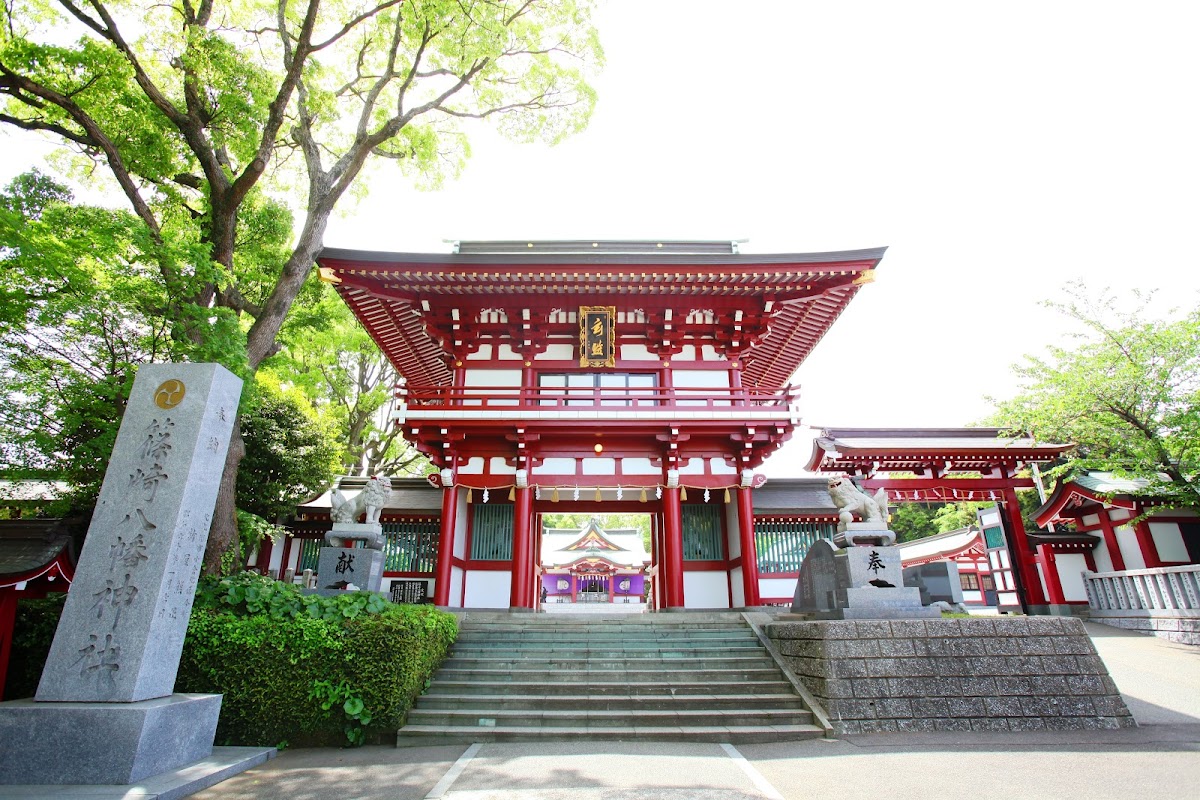
The shrine buildings of Shinozaki Hachiman Shrine, while being a familiar size for a local shrine, are meticulously maintained. Both the main hall and the worship hall retain the traditional style of shrine architecture, quietly welcoming visitors.
Torii Gate
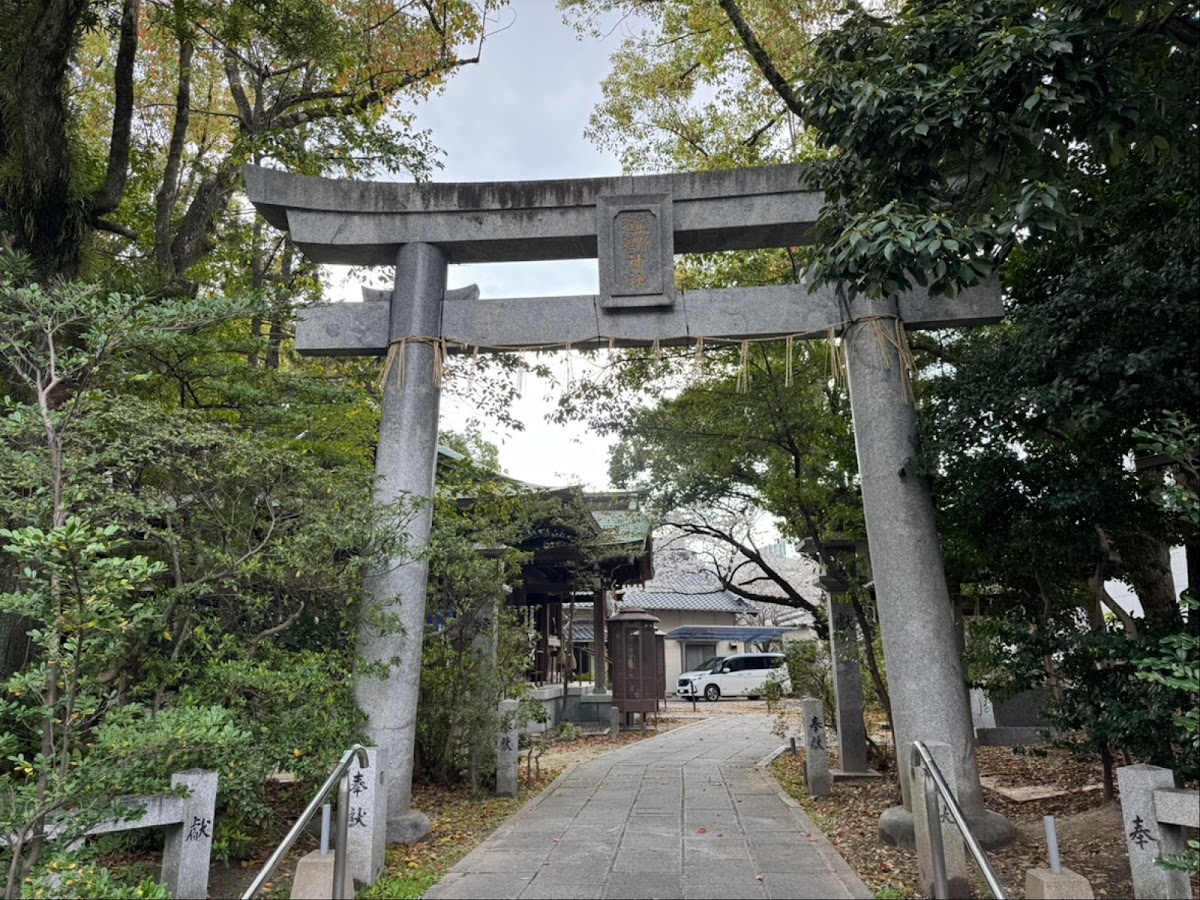
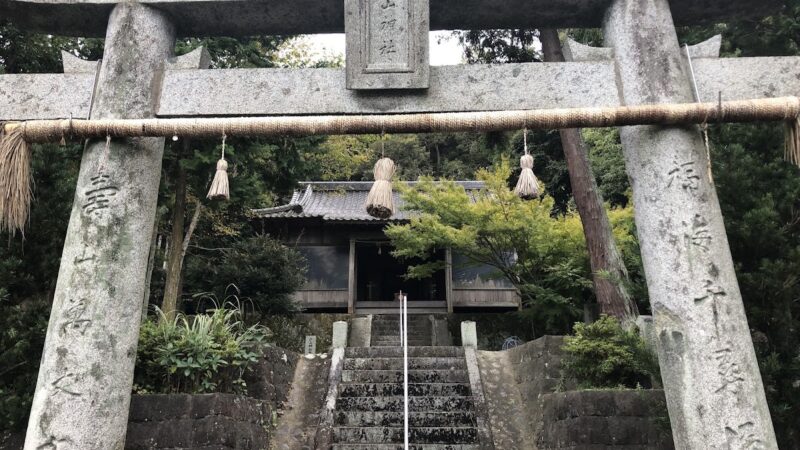
A torii gate stands at the entrance to the shrine, marking the entry into the sacred area. It is customary to bow before passing through the torii gate.
Water Basin
As you proceed along the approach to the shrine, you will find a water basin. It is proper etiquette to purify your hands and mouth here before praying. The proper way to perform the ritual hand-washing is as follows:
- Hold the ladle in your right hand and wash your left hand.
- Switch the ladle to your left hand and wash your right hand.
- Switch the ladle back to your right hand, receive water in your left hand, and rinse your mouth.
- Wash your left hand once more.
- Hold the ladle upright, wash the handle, and return it to its original position.
Komainu (Guardian Dogs)
A pair of komainu are placed in front of the shrine building. Komainu are guardian beasts protecting the shrine; the one on the right has its mouth open (“A-gyo”), and the one on the left has its mouth closed (“Un-gyo”).
Shrine Precincts
Besides the main shrine, there may be small shrines within the precincts where various deities are enshrined. It is believed that visiting these shrines will bring even more blessings.
Sacred Trees
There are magnificent, ancient trees within the precincts, some of which are specially revered as sacred trees. Sacred trees are believed to be inhabited by gods, and it is thought that touching them can grant one power.
How to Worship and Manners
Correct Worship Etiquette
The basic way to worship at a shrine is “two bows, two claps, one bow”:
- Stand in front of the offering box and bow slightly.
- Gently place your offering in the box.
- If there is a bell, ring it.
- Bow deeply twice (two bows).
- Clap your hands twice at chest height (two claps).
- With your hands clasped together, silently recite your wish.
- Bow deeply once (one bow).
Attire for Worship
For everyday worship, no special attire is required, but please note the following:
- Wear clean clothing.
- Avoid overly revealing clothing.
- Remove hats and sunglasses before passing through the torii gate.
- If receiving a prayer, more formal attire is preferable.
Photography Manners
Photography is generally permitted on the shrine grounds, but please observe the following manners:
- Photography inside the main shrine is often prohibited.
- Be considerate of other worshippers.
- Remember that this is a sacred place and take photos with moderation.
- Check in advance if using a tripod is permitted.
Annual Events and Festivals
Shinozaki Hachiman Shrine holds various Shinto rituals and festivals throughout the year.
Main Annual Events
January
- Hatsumode (January 1st-3rd): The most important event for praying for happiness in the new year
- Saitansai (January 1st): The first festival of the new year
February
- Setsubunsai (around February 3rd): Driving away evil spirits and inviting good fortune by scattering beans
- Kigensai (February 11th): A festival celebrating the founding of the nation
March
- Spring Grand Festival: A festival celebrating the arrival of spring
May
- Tango no Sekku (Boys’ Festival): Praying for the healthy growth of children
July/August
- Natsukoshi no Oharae (June 30th or July 31st): Purifying oneself of the impurities accumulated over the past six months
- Natsu Matsuri (Summer Festival): A lively festival where people from the community gather
September/October
- Autumn Grand Festival: One of the most important festivals of the year
November
- Shichi-Go-San Pilgrimage: A celebration of children’s growth and prayers for their future health
- Niiname-sai (November 23rd): A festival of gratitude for the harvest
December
- Great Purification Ceremony (December 31st): A ceremony to purify and cleanse away the impurities of the year
- New Year’s Eve Festival: A festival marking the end of the year
Highlights of the Autumn Grand Festival
The Autumn Grand Festival is a particularly important festival among the annual events of Shinozaki Hachiman Shrine. The entire community is enveloped in a festive atmosphere, with portable shrines parading through the streets and stalls lining the streets. It is an important opportunity to reaffirm the unity of the community and offer gratitude to the gods.
Goshuin (Shrine Seals) and Gifts
Goshuin (Shrine Seals)
Goshuin can be obtained at Shinozaki Hachiman Shrine. Goshuin (temple/shrine stamps) are popular as proof of worship and as a way to preserve a tangible record of one’s connection with the deities.
Points to note when receiving a Goshuin (temple/shrine stamp):
- Receive it after completing your prayers
- Prepare a Goshuincho (stamp book) (if you don’t have one, you may be able to receive a pre-written one)
- Prepare a donation (around 300-500 yen)
- Visit during the shrine office’s opening hours
- Request using polite language
Amulets and Souvenirs
Shinozaki Hachiman Shrine offers a variety of amulets and souvenirs:
- Traffic Safety Amulet: For the safety of cars and bicycles
- Academic Success Amulet: Popular with students and those taking exams
- Exorcism Amulet: For those in their unlucky year or for protection from misfortune
- Health Amulet: For the health of your family
- Safe Childbirth Amulet: For pregnant women
- Matchmaking Amulet: For those wishing for a good match
- Sacred Talisman (Ofuda): To be enshrined on the household altar
Access Information
Location
〒802-0064 1-chome, Shinozaki, Kokurakita-ku, Kitakyushu City, Fukuoka Prefecture
Access by Train
Using the JR Kagoshima Main Line:
- Approximately 15-20 minutes on foot from JR Minami-Kokura Station
- Buses are also available from JR Kokura Station
Using the Kitakyushu Monorail:
- Accessible on foot from the nearest station
Access by Bus
Using Nishitetsu Bus:
- Get off at the Shinozaki bus stop and walk for a few minutes
- Multiple bus routes operate from Kokura Station
Access by Car
Using the Expressway:
- Approximately 15 minutes from Kokura-Higashi IC on the Kyushu Expressway
- Approximately 10 minutes from Adachi IC on the Kitakyushu Urban Expressway
Car Navigation Settings:
- Search for “Shinozaki Hachiman Shrine”
- Or search for the address “1-chome, Shinozaki, Kokurakita-ku, Kitakyushu City”
Parking
While some shrines have parking spaces for visitors, the number of spaces is limited. During busy periods such as New Year’s Day or the annual festival, we recommend using public transportation. There are also coin-operated parking lots nearby.
Nearby Attractions and Tourist Spots
Kokura Castle
Located about a 10-minute drive from Shinozaki Hachiman Shrine, Kokura Castle is a representative tourist spot in Kitakyushu City. Built in 1602 by Hosokawa Tadaoki, this famous castle features a restored keep that is popular with both locals and tourists.
Kokura Castle Garden
Adjacent to Kokura Castle is a Japanese garden where you can enjoy a shoin (study hall) that recreates the lifestyle of a daimyo (feudal lord) during the Edo period, as well as beautiful gardens. It’s a relaxing spot where you can enjoy the scenery of each season.
Riverwalk Kitakyushu
A multi-purpose commercial complex located in the heart of Kokura, offering shopping, restaurants, a movie theater, and more. Convenient for meals and shopping after visiting the shrine.
Tanga Market
A traditional market affectionately known as “Kitakyushu’s kitchen.” Fresh seafood, vegetables, and prepared foods are on display, allowing you to experience local food culture.
Best Time of Day for Visiting
Recommended Time of Visit
Spring (March-May):
During cherry blossom season, the temple grounds and surrounding areas are beautiful, and you can visit in refreshing weather.
Autumn (September-November):
The autumn foliage is beautiful, and the Autumn Grand Festival is held, creating a special atmosphere.
New Year’s Visit (January 1st-3rd):
This is the most important time to pray for happiness in the new year, but crowds are expected.
Recommended Time of Day
Early Morning:
- Fewer people, allowing for a quiet visit
- A refreshing atmosphere for peace of mind
- Suitable for photography
Weekday Mornings:
- Relatively uncrowded, allowing for a leisurely visit
- Easier to obtain Goshuin (temple/shrine stamps) and amulets
Times to Avoid:
- During the New Year’s visit period (especially the morning of New Year’s Day)
- On the day of the annual festival
- Weekend afternoons (e.g., Shichi-Go-San season)
Prayers for Shichi-Go-San, Exorcism, and Safe Childbirth
Shichi-Go-San Visit
Shichi-Go-San is an important event celebrating a child’s growth and praying for their future health.
Age:
- Boys: 3 and 5 years old
- Girls: 3 and 7 years old
Timing:
- While November 15th is the official date, many families visit between October and November.
- Recently, more people are visiting in September and December.
Attire:
- Boys: Haori and Hakama or Western-style clothing
- Girls: Kimono or Western-style clothing
- Semi-formal attire is desirable for parents.
Exorcism (Prayer for Protection Against Misfortune)
The unlucky year is considered a turning point in life, and it is said that misfortunes are more likely to occur.
Years of Misfortune:
- Men: 25, 42 (major year of misfortune), 61
- Women: 19, 33 (major year of misfortune), 37, 61
- Caution is advised during the three years of the year before, during, and after the year of misfortune.
Timing:
- Generally received between January 1st and Setsubun (around February 3rd)
- Accepted throughout the year
Prayer for Safe Childbirth
It is a traditional custom to pray for a safe childbirth on the Day of the Dog in the fifth month of pregnancy.
Timing:
- The best time is the Day of the Dog in the fifth month of pregnancy.
- You can adjust the date according to your physical condition.
Items to Bring:
- Bringing a maternity belt (sarashi) may allow for a prayer to be performed.
- Offering fee
How to Apply for Prayer
- Make a reservation by phone in advance (especially on auspicious days and holidays, as it can get crowded).
- On the day, fill out the application form at the shrine office.
- Pay the offering fee (5,000 yen or more is common).
- Go to the main shrine at the designated time.
- The Shinto priest will recite prayers and offer a sacred branch.
- Receive a talisman or amulet.
The Charm of Shinozaki Hachiman Shrine
Warmth Rooted in the Community
The greatest charm of Shinozaki Hachiman Shrine is its warm, community-rooted atmosphere. Unlike large tourist shrines, it is a shrine deeply integrated into the lives of local people, creating a friendly and approachable atmosphere.
A Quiet and Peaceful Worship Environment
Despite being located in a residential area, the shrine grounds maintain a quiet and peaceful atmosphere. It’s a precious space where you can escape the hustle and bustle, calm your mind, and connect with the gods.
Easy Access
Its convenient location, easily accessible from the center of Kitakyushu City, makes it ideal for regular visits. You can easily stop by while shopping or running errands.
A Touch of Local History
This shrine has walked hand in hand with the history of the Shinozaki area, allowing visitors to experience the local history and culture through their worship.
Precautions When Visiting the Shrine
Basic Manners
- Bow before passing through the torii gate
- Walk along the sides of the path, as the center is the path for the gods
- Do not speak loudly
- Take your trash with you
- Refrain from bringing pets (except for guide dogs, etc.)
Clothing and Appearance
- Dress cleanly
- Avoid excessive exposure
- Avoid sandals or flip-flops (if receiving prayers)
Photography
- Photography inside the main hall is generally prohibited
- Be considerate so as not to include other worshippers in your photos
- Refrain from using flash photography
- Be mindful of the location and situation when posting on social media
When Visiting with Children
- Keep an eye on children to prevent them from running around
- Teach them to worship quietly
- Change diapers in designated areas
- Check in advance whether a nursing room is available
The Future of Shinozaki Hachiman Shrine
Shinozaki Hachiman Shrine, as the guardian shrine of the region, will continue to walk alongside the people of the area. Even amidst declining birth rates, an aging population, and urbanization, its role as the core of the community and a spiritual anchor is becoming increasingly important.
To protect the shrine and pass it on to future generations, the cooperation and understanding of local residents are essential. It is important for each individual to start with what they can do, such as participating in festivals and cleaning activities, and making regular visits.
Summary
Shinozaki Hachiman Shrine is a community-based Hachiman shrine located in Kokurakita Ward, Kitakyushu City, Fukuoka Prefecture. It enshrines Emperor Ojin as its main deity and is believed to offer various blessings, including good fortune, protection from evil, family safety, and safe childbirth.
The shrine grounds have a quiet and peaceful atmosphere, allowing one to escape the hustle and bustle of everyday life and find peace of mind. Various Shinto rituals and festivals are held throughout the year, closely intertwined with the lives of the local people.
With excellent access, it’s within walking distance of JR Minami-Kokura Station and easily accessible by car. For important life events such as New Year’s visits, Shichi-Go-San (a traditional Japanese rite of passage for children), exorcisms, and prayers for safe childbirth, why not visit Shinozaki Hachiman Shrine and receive divine protection?
Shinozaki Hachiman Shrine offers a peaceful place to pray while feeling the history and culture of the region. When you visit Kitakyushu, be sure to stop by. It’s sure to be a heartwarming experience.