Kifune Shrine (Nakatsuhara, Kawara-machi, Fukuoka Prefecture) | Complete Guide to History, Deities, and Access
Kifune Shrine, located in Nakatsuhara, Kawara-machi, Tagawa-gun, Fukuoka Prefecture, is a historic shrine that has long been cherished by the local community. This article provides a detailed introduction to Kifune Shrine, including its history, enshrined deities, blessings, highlights within the grounds, and access information for visitors.
Overview and Basic Information of Kifune Shrine
Kifune Shrine is located in Nakatsuhara, Kawara-machi, Tagawa-gun, Fukuoka Prefecture, and has long been revered as the local guardian deity. Kawara-machi is located in the northeastern part of Fukuoka Prefecture, in the Chikuhō region, a naturally rich area surrounded by limestone mountains.
Basic Data
- Location: Nakatsuhara, Kawara-machi, Tagawa-gun, Fukuoka Prefecture
- Deity Enshrined: Takaokami-no-kami
- Shrine Rank: Village Shrine
- Annual Festival Day: Autumn Grand Festival (Details vary by region)
History and Origins of Kifune Shrine
Roots of Kifune Faith
The name Kifune Shrine originates from the Kifune faith, which has Kifune Shrine in Kyoto as its head shrine. Kifune Shrine is known as the god of water, and branch shrines were established throughout Japan. Kifune Shrine in Nakatsuhara, Kawara-machi, is one of the shrines that follows this Kifune faith.
Nakatsuhara District and Kifune Shrine
Nakatsuhara district is one of the historical settlements in Kawara-machi, where life has traditionally revolved around agriculture. Kifune Shrine, dedicated to the god of water, was an important place for local residents, serving as a site for praying for agricultural water and abundant harvests.
The Chikuhō region prospered from the coal industry from the Edo period through the Meiji, Taisho, and Showa eras, but the Nakatsuhara district was primarily agricultural, and Kifune Shrine has a history of being worshipped as the guardian deity of agriculture.
Changes in Shrine Architecture
Like many small shrines in various regions, Kifune Shrine has undergone repairs and renovations over time. While detailed records of when the current shrine was built are sometimes unavailable, it is certain that it has been carefully preserved by the local people.
Deities and Blessings
Takaokami-no-kami
The main deity enshrined at Kifune Shrine is Takaokami-no-kami. This deity is a dragon god who controls water and appears in Japanese mythology, mentioned in the Kojiki and Nihon Shoki. Takaokami is said to be one of the gods born from the blood of Kagutsuchi, the god of fire, when Izanagi-no-Mikoto slew him.
The character “龗” means dragon, and Takaokami has been worshipped as a water god residing on mountaintops and a god who governs the water sources of valleys. In shrines of the Kifune Shrine lineage, Kuraokami is sometimes enshrined alongside Takaokami.
Benefits
The main benefits you can expect at Kifune Shrine are as follows:
- Abundant Harvest and Agricultural Prosperity: As the god of water, he controls rain and water, which are essential for the growth of crops.
- Protection from Water-Related Disasters: Protection from floods and water-related disasters.
- Matchmaking: A benefit common to all Kifune faith.
- Business Prosperity: Wishing for business to flow smoothly like water.
- Good Fortune and Prosperity: Purifying one’s luck like pure water.
Especially in Nakatsuhara, an agricultural area, there is a strong belief in the importance of moderate rainfall and abundant water sources, and it is thought that prayers for rain were offered during droughts.
Highlights of the Shrine Grounds
Shrine Building
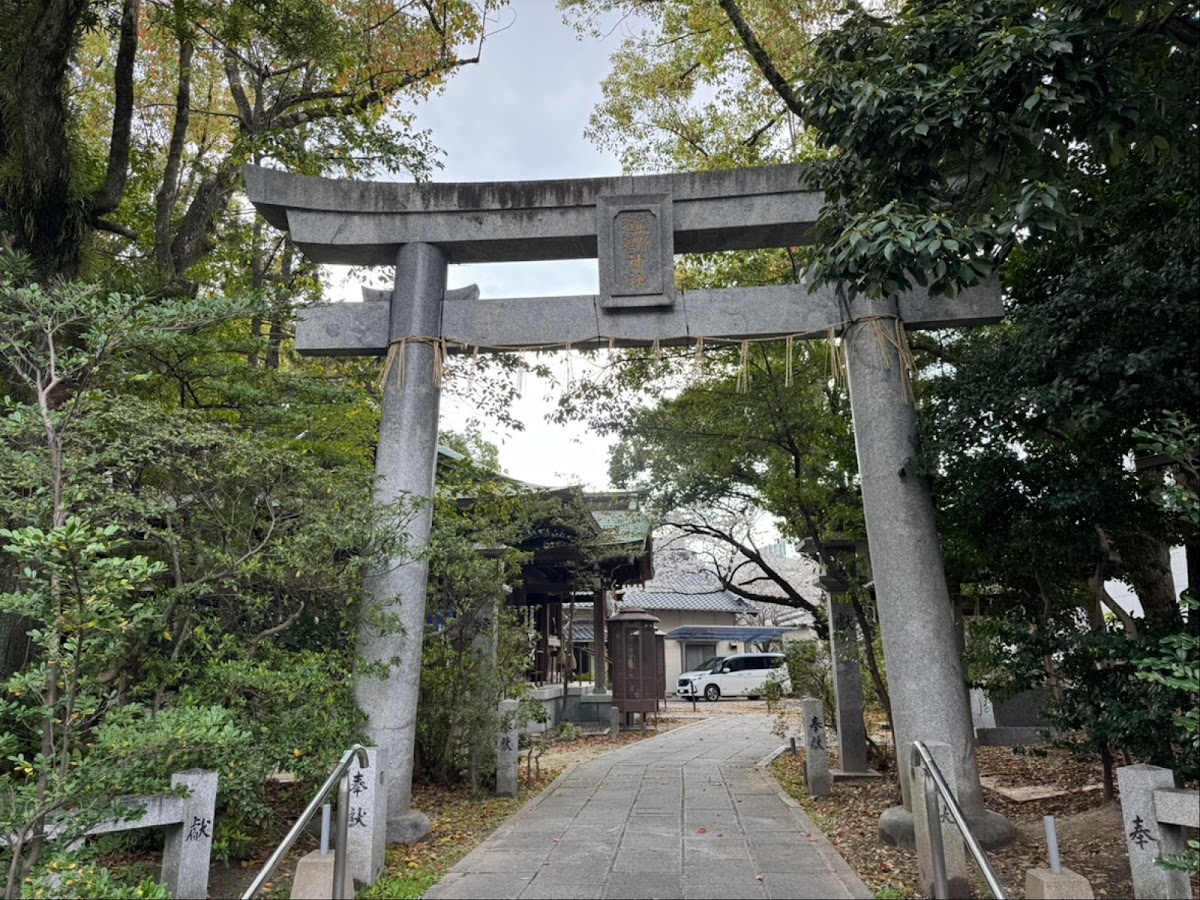
The shrine building of Kifune Shrine is a simple structure typical of small local shrines. While there are no extravagant decorations, it is a warm space imbued with the faith of the local people.
Natural Environment of the Shrine Grounds
Kawara Town is a naturally rich area surrounded by limestone mountains, and the area around Kifune Shrine is also enveloped in greenery. One of its charms is being able to enjoy the changing natural scenery with each season while visiting the shrine.
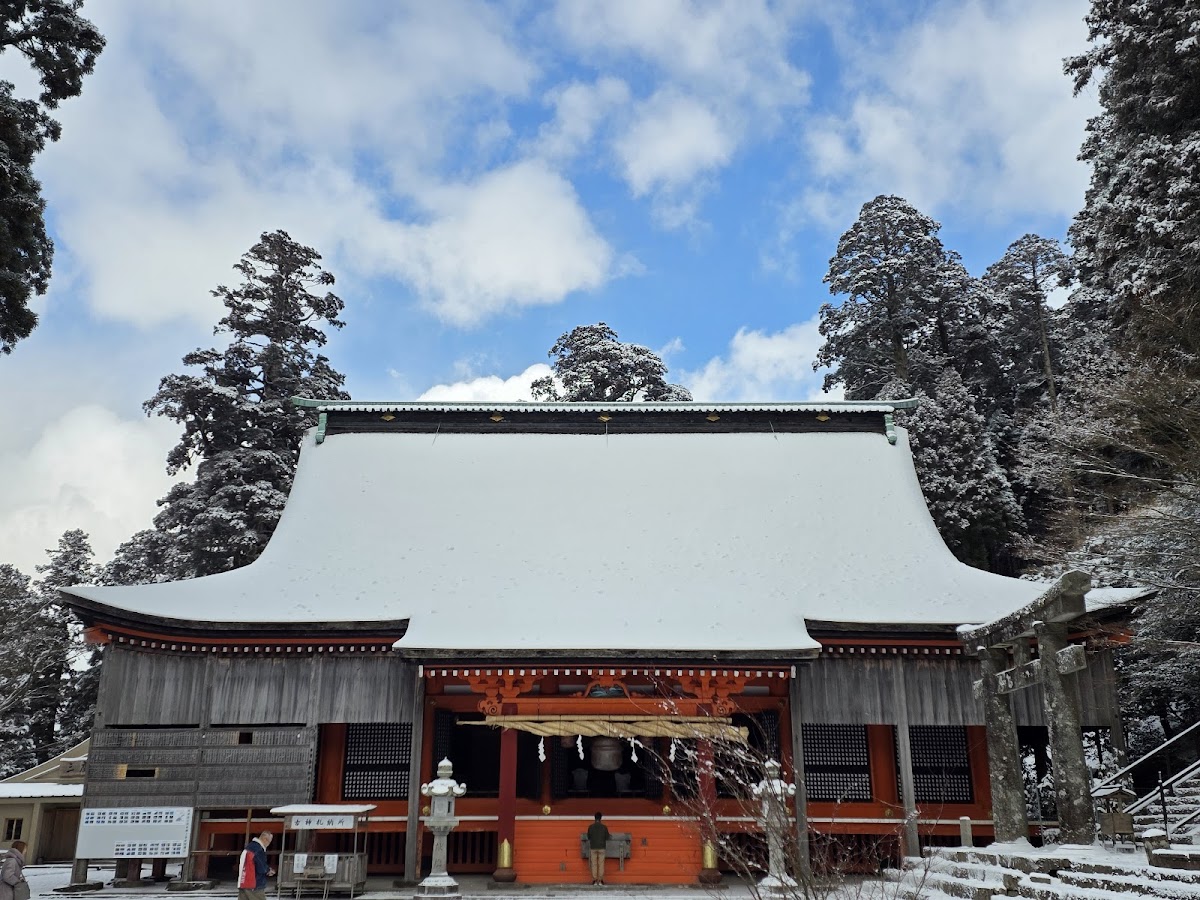
In spring, there is fresh greenery; in summer, deep green; in autumn, vibrant autumn leaves; and in winter, a tranquil atmosphere awaits visitors—each season reveals its own unique beauty.
Stone Steps and Approach
Like many Kifune-type shrines, it is often located near a water source, and the structure may involve climbing stone steps or an approach to reach the main hall. Walking along this approach itself evokes a sense of transition from everyday life to a sacred space.
Annual Events and Festivals
Annual Festival (Autumn Grand Festival)
The most important festival at Kifune Shrine is the annual festival. Like many local shrines, it is generally held to coincide with the autumn harvest season. At this festival, gratitude is given for the year’s abundant harvest, and prayers are offered for a bountiful harvest in the coming year.
Local people gather for religious ceremonies, and it also serves as an opportunity to deepen the bonds of the local community.
Daily Worship
Besides the annual festival, local people visit the shrine regularly. Especially before the busy farming season and when people have prayers related to the weather, devout worshippers can be seen.
History and Cultural Background of Kawara Town
Overview of Kawara Town
Kawara Town is located in the northeastern part of Fukuoka Prefecture, in Tagawa District. The town’s name originates from the fact that Kawara Shrine (a Shikinaisha shrine located at the foot of Mt. Kawara) has been located in this area since ancient times, and the place name “Kawara” became established.
Mt. Kawara and the Limestone Mountains
Mt. Kawara is a defining feature of Kawara Town. This mountain, consisting of Ichinodake, Ninodake, and Sannodake, has been an object of worship since ancient times. It is also known as a source of high-quality limestone, which contributed to the development of the cement industry.
Mount Ichinodake has been significantly eroded by mining, resulting in its unique mountain shape. The water system produced by these limestone mountains has supported agriculture in Kawara Town, including the Nakatsuhara area.
History of Chikuhō
The Chikuhō region, including Kawara Town, once flourished as one of Japan’s leading coal mining areas. From the Meiji era to the Showa era, many coal mines operated, supporting Japan’s modernization.
After the closure of the coal mines, the region was forced to change its industrial structure, but efforts to preserve agriculture and local traditional culture have continued. Local shrines like Kifune Shrine have played a central role in the community throughout this history.
Access Information
Access by Public Transportation
By Train/Bus:
- Get off at Kawara Station on the JR Hitahikosan Line
- From Kawara Station, head towards Nakatsuhara (on foot or by taxi)
*Public transportation is limited, so it is recommended to check the timetable in advance.
Access by Car
From Fukuoka City:
- Approximately 40 minutes from the Kokura Minami Interchange on the Kyushu Expressway via National Route 322.
- Alternatively, take the urban expressway via National Route 201 to National Route 322.
From Kitakyushu City:
- Approximately 30 minutes south on National Route 322 towards Kawara Town.
Parking:
Depending on the size of the shrine, there may not be a dedicated parking lot. When parking on the street, please be careful not to obstruct local traffic.
Points to Note When Visiting
- As this is a small local shrine, the shrine office may not always be staffed.
- If you wish to receive a Goshuin (shrine stamp), please check in advance.
- When passing through private property in the area, please observe proper etiquette when visiting.
- Due to the rich natural environment, insect repellent and appropriate clothing for the season are recommended.
Nearby Tourist Attractions
Kawara Shrine
This is a representative shrine of Kawara Town and a Shikinaisha (a shrine listed in the Engishiki Jinmyocho, a historical record of shrines). It considers Mount Kawara as its sacred object and has attracted worshippers since ancient times. Known as a source of copper and iron, it is a historical shrine with deep ties to immigrants from Silla.
Mount Kawara
A symbol of Kawara, consisting of Ichinodake, Ninodake, and Sannodake. The eroded form of Ichinodake, in particular, creates a unique landscape that tells the story of its industrial history. Hiking trails are also maintained, allowing visitors to enjoy hiking.
Michi-no-Eki Kawara (Roadside Station Kawara)
A facility where you can purchase Kawara Town’s specialty products and fresh local agricultural produce. It can be used for rest and meals, and is convenient as a base for sightseeing.
Chikuhō Coal Mining Heritage
Centered around Tagawa City, facilities and historical remains that tell the history of coal mining in the Chikuhō region are scattered throughout the area. At the Tagawa City Coal and History Museum, you can learn about the history of coal mining and life at that time.
Manners and Etiquette for Visiting Shrines
Basic Etiquette for Visiting Shrines
- Bow Before the Torii Gate: Before entering the sacred area, bow before the torii gate.
- Walking Along the Path: The center of the path is considered the path of the gods, so walk along the sides.
- Purification at the Water Basin: If there is a water basin, purify your hands and mouth.
- Worship at the Main Hall: Two bows, two claps, and one bow is the basic ritual.
Guidelines for Visiting Local Shrines
When visiting small local shrines, please pay attention to the following points:
- Be Quiet: Respect that this is a place of worship for the local people and worship quietly.
- Be Clean: Always take your trash with you and keep the shrine grounds clean.
- Photography: When taking photographs, be considerate of other worshippers and local residents.
- Respect Private Property: If the path to the shrine passes through private property, extra care is required.
Kifune Faith and the Water God
Water God Faith in Japan
Japan is a country blessed with abundant water, and since ancient times, water has been revered as the source of life. Adequate rain and clean water are essential for agriculture, and the belief in water gods can be seen throughout the country.
History of Kifune Shrine
Kifune Shrine in Kyoto is known as the head shrine of all shrines dedicated to the water god. Its founding is very ancient, and it was already revered by the imperial court during the Heian period. It is particularly known for prayers for rain and for stopping rain, and there was a custom of offering black horses during droughts and white horses during prolonged rain.
Kifune Shrines Nationwide
The belief in Kifune Shrine spread throughout Japan, and Kifune shrines and Kifune shrines were established in various locations. In each region, they are cherished by local people as guardians of water and agriculture.
The Kifune Shrine in Nakatsuhara, Kawara Town, is also thought to have been established within the context of the spread of Kifune worship, as a deity protecting the region’s water sources and agriculture.
The Role of Shrines in Local Communities
The Bond Between Shrines and the Community
In Japanese local communities, shrines have played a role far beyond that of mere religious institutions. They have served as places where local people gather and cooperate through festivals, becoming a core element of regional identity.
The Kifune Shrine in the Nakatsuhara area is also thought to have played such a role. Through events such as annual festivals, intergenerational exchanges are fostered, and local traditions and culture are passed down.
Depopulation and the Maintenance of Shrines
In recent years, many rural areas in Japan have experienced depopulation and an aging population. Kawara Town is no exception, with a continuing population decline. In this situation, the maintenance and management of small local shrines has become a major challenge.
However, thanks to the efforts of local people, many shrines continue to be preserved. Through dedicated activities such as cleaning and the continuation of festivals, shrines continue to be a spiritual anchor for the community today.
Tourism and Regional Revitalization
In recent years, visiting shrines and collecting Goshuin (shrine stamps) has become popular, drawing attention to small, local shrines. This increased interest can serve as an opportunity to re-examine local history and culture, potentially leading to regional revitalization.
When visiting Kifune Shrine, a deeper experience will be gained by reflecting not just on it as a tourist spot, but also on the region’s history and the faith of its people.
Summary
Kifune Shrine, located in Nakatsuhara, Kawara-machi, Tagawa-gun, Fukuoka Prefecture, is the local guardian shrine dedicated to Takaokami-no-kami, the god of water. Following the tradition of Kifune faith, with Kyoto’s Kifune Shrine as its head shrine, it has attracted the faith of local people, primarily those involved in agriculture.
It is believed to offer blessings for abundant harvests, protection from water-related disasters, and matchmaking, making it a particularly important place of worship in Nakatsuhara, an agricultural region. Surrounded by the rich natural beauty of Kawara-machi, the shrine grounds display different expressions throughout the seasons, providing tranquility to visitors.
Kawara Town is a fascinating region where limestone mountains intersect with the history of the Chikuhō region. Along with your visit to Kifune Shrine, why not also explore other nearby attractions such as Kawara Shrine, Mount Kawara, and the Chikuhō coal mining heritage sites?
When visiting small local shrines, please respect the beliefs and traditions of the local people and observe proper etiquette. Kifune Shrine is a valuable place that conveys the history and culture of the region to the present day, and will surely share the charm of the area with visitors.