Entoku-ji Temple (Yamaoka-cho, Ena City, Gifu Prefecture): A Thorough Explanation of its History and Highlights
Entoku-ji Temple (Entoku Zen Temple), located in Kamite-mukai, Yamaoka-cho, Ena City, Gifu Prefecture, is a Zen Buddhist temple that conveys the history and culture of the region to the present day. Yamaoka-cho, located in the central-western part of Ena City, between Misato-cho and Akechi-cho, is nationally known as a production area for fine agar-agar. However, Entoku-ji Temple, nestled in this quiet town, is known as a historical temple that has been carefully preserved by the local people.
This article will provide a detailed explanation of Entoku-ji Temple, including its historical background, architectural features, surrounding cultural properties, and access methods.
Basic Information on Entoku-ji Temple
Entoku-ji Temple (Entoku Zen Temple) is a Zen Buddhist temple located in Kamite-mukai, Yamaoka-cho, Ena City, Gifu Prefecture. Located in the former Yamaoka-cho area before its merger with Meiji-mura, it has been a center of faith for the local residents for many years.
Location and Access
Location: Kamitemukai, Yamaoka-cho, Ena City, Gifu Prefecture
Nearest Station: Approximately 12 minutes on foot from Yamaoka Station on the Akechi Railway
Yamaoka Station is on the Akechi Railway. Access is via a transfer from Ena Station to the Akechi Railway. The temple is within walking distance from the station, allowing visitors to stroll through the quiet streets of Yamaoka-cho.
Access by Car: Approximately 20 minutes from the Ena Interchange on the Chuo Expressway. It is close to the center of Yamaoka-cho, and parking is available nearby.
History of Entoku-ji Temple
Background of Founding
While detailed records of the exact founding date of Entoku-ji Temple are unavailable, historical documents from Ena County indicate that this area flourished as part of the Toyama Manor in Ena County from the late Heian period to the late Sengoku period. It was under the control of the Toyama clan, who were local administrators based at Iwamura Castle, and it is believed that many temples were built during this period.
The “Yamaoka Town History: General History Volume” contains a description of Entoku-ji Temple, noting its important role as a local Zen Buddhist temple.
The Toyama Clan and Temple Culture in the Ena Region
Besides Entoku-ji Temple, Ena City has other important temples associated with the Toyama clan. In particular, Daien-ji Temple (also known as Daibuchi-ji Temple) is a renowned Rinzai Zen temple founded by Mineo Soichi, and it flourished under the patronage of the Toyama clan.
Mineo Soichi was invited by the Kono clan, a powerful family in Yuzuki Castle in Iyo Province (present-day Matsuyama City, Ehime Prefecture), to stay at Daitsu-ji Temple in Kono-go before returning to Daien-ji Temple, making a significant contribution to the development of Zen Buddhist culture in this region. After Omushi Sōshin, a Dharma successor of Mineō Sōichi, came to Kōno-gō in Iyo Province, Getsuan Sōkō visited Daitsūji Temple in Kōno-gō to see Omushi Sōshin, demonstrating the extensive network of temples in the Ena region.
Within this flourishing Zen Buddhist culture of the region, Entoku-ji Temple is thought to have functioned as a center of local faith.
From the Edo Period to the Modern Era
During the Edo period, Yamaoka-machi was under the control of the Iwamura Domain and developed under the influence of the castle town of Iwamura. It is presumed that Entoku-ji Temple was established as a local parishioner temple during this period, taking on a form close to its current state.
Despite undergoing many changes, such as the anti-Buddhist movement of the Meiji era and administrative boundary changes due to mergers in the Showa era, Entoku-ji Temple has continued to be preserved by the local people.
Architecture and Grounds of Entoku-ji Temple
Characteristics of Temple Architecture
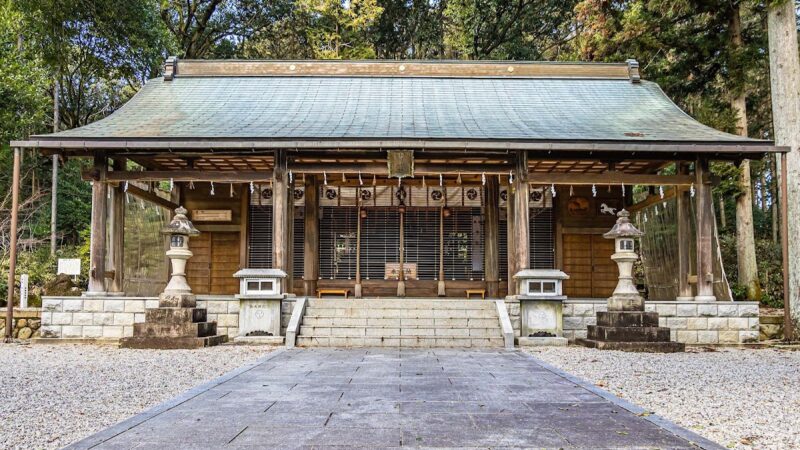
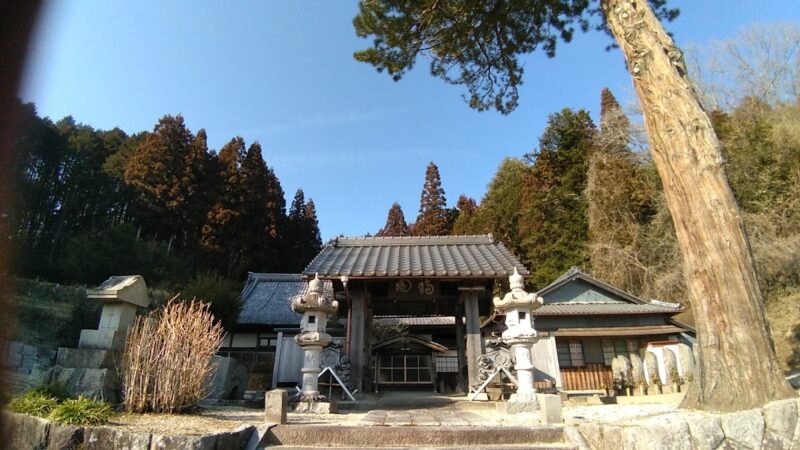
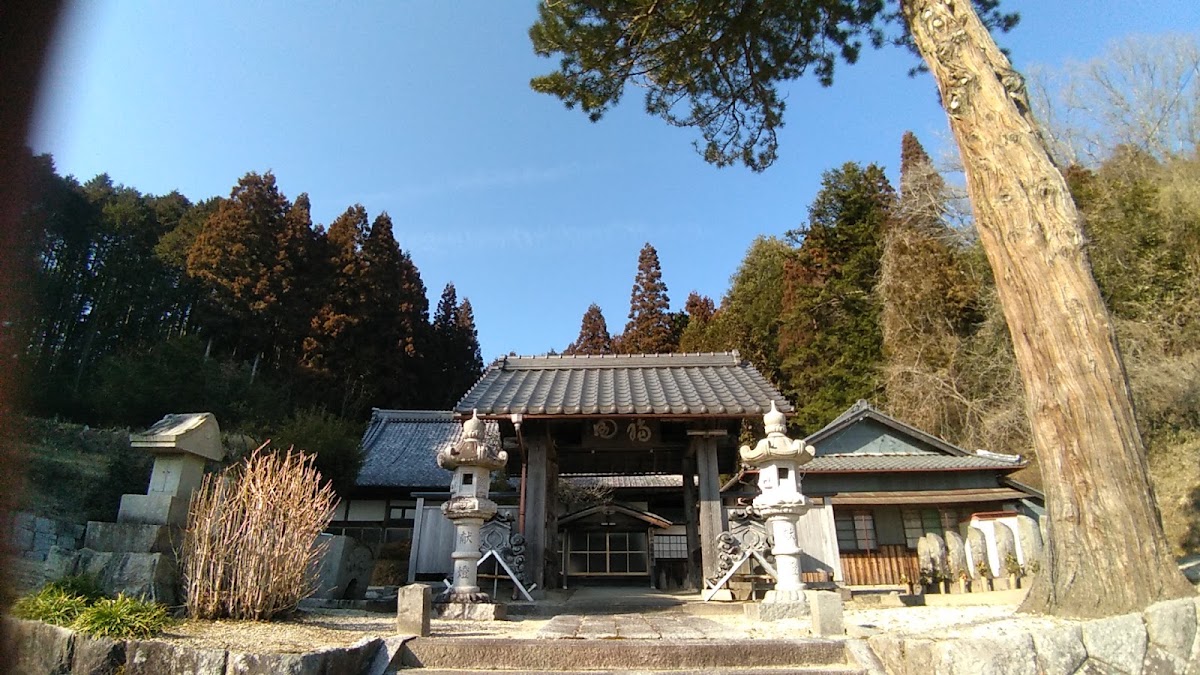
Entoku-ji Temple possesses a simple and dignified appearance, typical of Zen Buddhist temples. Although this temple is managed by another temple, it is well-maintained by local residents, and the grounds are kept clean.
While not large in scale, the temple grounds, including the Hojo (abbot’s quarters) and Kuri (monk’s quarters), maintain the traditional style characteristic of Zen Buddhist temples.
Highlights of the Temple Grounds
The temple grounds are enveloped in a tranquil atmosphere, offering peace of mind to visitors. Located in the naturally rich environment of Yamaoka Town, visitors can enjoy the changing scenery of the four seasons.
Especially in winter, the sight of thin agar-agar, a specialty of Yamaoka Town, being sun-dried can be seen in the surrounding area, making it a winter tradition in Yamaoka. When visiting Entoku-ji Temple, you can also enjoy the scenery of this traditional local industry.
History and Culture of Yamaoka Town
Overview of Yamaoka Town
Yamaoka Town is located in the central-western part of Ena City, between Misato Town to the north and Akechi Town to the south. On October 25, 2004, Ena City, Iwamura Town, Yamaoka Town, Akechi Town, Kushihara Village, and Kamiyahagi Town merged to form the new Ena City. While Yamaoka Town ceased to exist as a separate municipality after the merger, it remains a designated town name within Ena City.
The Home of Thin Agar-Agar
Yamaoka Town enjoys a climate with relatively many sunny winter days and significant temperature differences between day and night, making it the top producer of thin agar-agar in Japan. Its market share reaches approximately 90%, and agar-agar products such as agar-agar ramen and Cool Sky are popular souvenirs and gifts.
The sight of vast stretches of agar-agar drying in the early winter mornings is a unique spectacle of Yamaoka Town, attracting many photography enthusiasts and tourists.
Tourist Spots in Yamaoka Town
Giant Waterwheel “Grandma’s Market Yamaoka”
This waterwheel, the second largest in Japan with a diameter of 24 meters, is a symbol of Yamaoka Town. The Grandma’s Market sells local agricultural products and agar-agar products, serving as a community hub.
Iwakura Forest
In 1999, the first Iwakura (sacred rock) Summit was held in Yamaoka Town. The forest, where sacred rocks (Iwakura) that have been objects of worship since ancient times remain, is also attracting attention as a power spot.
Manshoji Temple
This ancient temple, said to have been founded in the early Heian period, is known as a winter tradition. As another important temple in Yamaoka Town, it supports local faith along with Entokuji Temple.
Temple Culture of Ena City and Entokuji Temple
Major Temples of Ena City
Besides Entokuji Temple, Ena City has many other historically important temples.
Daienji Temple (Ena City)
This is a temple of the Rinzai sect, Myoshinji school, and a famous temple founded by Mineo Soichi. The principal image at Tokuju-ji Temple in Inuyama City, Aichi Prefecture, is a wooden statue of the Holy Kannon Bodhisattva with crystal eyes, said to be the work of Tankei. There is a tradition that it was the principal image of the main gate of Daibuchi-ji Temple in Iwamura, Mino Province, and it is believed that Daibuchi-ji is a misidentification of Daien-ji Temple.
Daien-ji Temple preserves valuable historical materials such as records of successive abbots, sub-temples, and the Ten Scenic Spots, making it an important temple for studying Zen Buddhist culture in the Ena region.
Temples of Iwamura Town
Iwamura Town is a castle town that retains the atmosphere of the Edo period, with many temples scattered throughout. It developed as a castle town of Iwamura Castle, known for its beautiful stone walls, and temple architecture was developed as part of the castle town culture.
Inheritance of Zen Buddhist Culture
Zen Buddhist temples in Ena City, including Entoku-ji Temple, have functioned as centers of the region’s spiritual culture. They play a role in conveying Zen teachings to local residents through Zen meditation sessions and Dharma talks.
Even today, although managed by another temple, the temple is maintained and managed through the cooperation of local people, and it functions as a place that strengthens the bonds of the local community.
Access to Entoku-ji Temple and surrounding sightseeing
Detailed access information
Using public transportation
- Get off at Ena Station on the JR Chuo Main Line
- Transfer to the Akechi Railway and get off at Yamaoka Station (approx. 20 minutes)
- Approximately 12 minutes on foot from Yamaoka Station
The Akechi Railway is a local line connecting Ena Station to Akechi Station, and its charm lies in the scenic rural landscape you can enjoy while traveling.
If traveling by car
- Approximately 20 minutes from Ena IC on the Chuo Expressway via National Route 257
- Enter “Kamimukae, Yamaoka-cho, Ena City” into your car navigation system
- It’s easy to find if you use the Yamaoka Promotion Office (1228-1 Kamikame, Yamaoka-cho, Ena City, Gifu Prefecture 509-7692) as a landmark.
Nearby Tourist Attractions
Grandma’s Market Yamaoka
A few minutes’ drive from Entoku-ji Temple, you can purchase fresh local vegetables and agar products. The giant waterwheel is a must-see.
Iwamura Castle Ruins and Castle Town
Approximately 15 minutes’ drive from Entoku-ji Temple. Known as one of Japan’s three great mountain castles, you can enjoy beautiful stone walls and a spectacular view reminiscent of a castle in the sky. The castle town retains its old streetscape, making it a pleasant place to stroll.
Ena Gorge
A representative scenic spot of Ena City, where you can enjoy the beauty of the gorge in every season. A sightseeing boat cruise is also recommended. In December 2024, the Oi Dam celebrated its 100th anniversary, making it a historically significant location as Japan’s first dam built for power generation.
Rural Landscape of Tomita District
A rural landscape, praised as “Japan’s best rural landscape,” unfolds, offering a soothing and relaxing view.
Accommodation in Yamaoka Town
Cottage Shakunage
This cottage accommodates up to 26 people, allowing guests to enjoy the tranquil mountain scenery and the changing seasons. Ideal for families, this accommodation focuses on “the healing power of nature.”
Points to Note When Visiting Entoku-ji Temple
Manners for Visiting Temple
Entoku-ji Temple is managed by another temple, but it is carefully maintained by local residents. Please observe the following points when visiting the temple:
- Visit quietly within the temple grounds.
- Take photographs responsibly.
- Take all your trash with you.
- Be considerate of noise, as this is also a living space for local residents.
Best Time to Visit
Entoku-ji Temple is open year-round, but the following times are especially recommended:
Winter (December-February)
You can see the agar-agar drying process, a specialty of Yamaoka-cho. The sight of the vast expanse of drying agar-agar in the crisp morning air is breathtaking.
Spring (March-May)
The season of fresh greenery, with the temple grounds enveloped in beautiful green.
Autumn (October-November)
The season of autumn leaves, with the quiet temple grounds bathed in the colors of autumn.
Historical Background of Yamaoka Town
The Era of Toyama Manor
From the late Heian period to the end of the Sengoku period, the area including Yamaoka Town was part of Toyama Manor in Ena District. This region developed as the territory of the Toyama clan, who were local administrators based at Iwamura Castle.
The Toyama clan, a powerful samurai group in Mino Province, maintained their influence from the Kamakura period to the Sengoku period, protecting many temples and shrines. Entoku-ji Temple may have also been developed under the influence of the Toyama clan during this period.
Modern Development
Since the Meiji era, Yamaoka Town has developed as a production area for fine agar-agar. The agar-agar industry, utilizing the unique climate conditions of the region, became an important industry supporting the local economy, and even today boasts the highest production volume in Japan.
Although Yamaoka Town became part of Ena City in 2004 due to the Heisei-era municipal mergers, its unique culture and traditions are still carefully preserved.
Modern Development ## Tourism in Ena City and Entoku-ji Temple
The Charms of Ena City
Ena City is known as a “town full of charm, woven from abundant nature and history, boasting beautiful mountains and clear waters.” It offers a variety of attractions, including local specialties such as chestnut paste (kurikinton) and a wealth of outdoor experiences.
When visiting Entoku-ji Temple, enjoying sightseeing throughout Ena City will allow you to gain a deeper understanding of the local culture.
Connection with the Community
Entoku-ji Temple is a temple protected by the local people. Visitors are warmly welcomed as members of the community, but at the same time, they are expected to respect the local way of life and culture.
The Yamaoka Tourism Association (Yamaoka Branch of the Ena City Tourism Association) provides local tourism information, allowing you to learn more about the sights of Yamaoka Town, including Entoku-ji Temple.
Yamaoka Tourism Association
1228-1 Kamitemukai, Yamaoka-cho, Ena City, Gifu Prefecture 509-7692
Located within the Yamaoka Promotion Office, Ena City Hall
TEL: 0573-56-2111
FAX: 0573-56-2621
Summary
Entoku-ji Temple (Entoku Zen Temple) is a historic Zen Buddhist temple located in Yamaoka-cho, Ena City, Gifu Prefecture. Although not large in scale, it has been carefully preserved by the local people and has functioned as a center of regional faith and culture.
Yamaoka-cho is nationally known as a production area for fine agar-agar, and the sight of agar-agar drying in winter is a local tradition. When visiting Entoku-ji Temple, you can have a more fulfilling experience by also enjoying the local traditional industries, culture, and surrounding tourist spots.
Its convenient access, approximately a 12-minute walk from Yamaoka Station on the Akechi Railway, is also appealing, allowing you to enjoy a stroll while admiring the peaceful rural scenery. Why not spend some quiet time at Entoku-ji Temple while enjoying the rich nature, history, and unique local food culture of Ena City?
Entoku-ji Temple, where the warmth of the local people and the culture cultivated over a long history breathe life into, is a precious place that conveys to visitors the true essence of a regional Japanese temple and offers peace of mind.