Complete Guide to Ogaki Betsuin Kaisenji Temple (Gifu Prefecture) | History, Access, Perpetual Memorial Services, and Highlights Explained in Detail
Ogaki Betsuin Kaisenji Temple, a majestic temple located in the heart of Ogaki City, Gifu Prefecture, is a historic temple that has been affectionately known as “Ogaki Gobo” or “Ogaki no Gobosan” by the local people as a branch temple of the Shinshu Otani sect (Higashi Honganji sect).
This article provides a comprehensive explanation of Ogaki Betsuin Kaisenji Temple, from its historical background and highlights within the temple grounds to access information, perpetual memorial services, and ossuary information, for anyone interested in temples throughout Japan.
About Ogaki Betsuin Kaisenji Temple
Basic Information
Official Name: Shinshu Otani-ha Ogaki Betsuin Kaisenji Temple
Location: 11 Tenma-cho, Ogaki City, Gifu Prefecture
Sect: Shinshu Otani-ha (a sect of Jodo Shinshu Buddhism with Higashi Honganji Temple as its head temple)
Common Names: Ogaki Betsuin, Kaisenji, Ogaki Gobo, Ogaki no Gobosan
Corporate Number: 3200005004535
Ogaki Betsuin Kaisenji Temple is a branch temple of the Shinshu Otani-ha sect, which considers Higashi Honganji Temple in Kyoto as its head temple. A branch temple refers to an important temple established in various regions as an outpost of the head temple, and functions as a base for missionary activities.
Origin of the Name “Kaisenji”
The word “Kaisen” is a Buddhist term meaning “to open and clarify.” This temple name represents the mission of widely opening up the teachings of Jodo Shinshu Buddhism and making them clear to people. Among all the Shinshu Otani sect temples nationwide, this Ogaki branch temple is the only one with the name “Kaisenji,” making it a rare and valuable existence.
History of Ogaki Branch Kaisenji
Founding and Separation of Honganji
The history of Ogaki Branch Kaisenji begins with the separation of Honganji in 1602 (Keicho 7). In that year, Honganji split into East and West, establishing Higashi Honganji (Shinshu Otani sect) and Nishi Honganji (Jodo Shinshu Honganji sect).
Influenced by Tokugawa Ieyasu’s religious policies, the Higashi Honganji sect, centered around Abbot Kyonyo, expanded its influence by establishing branch temples throughout the country. Ogaki Betsuin was established as part of this initiative and has developed into a central base for the Shinshu Otani sect in the Mino region.
From the Edo Period to the Present
Throughout the Edo period, Ogaki Betsuin flourished as a center of local faith, partly due to its geographical location as a castle town of the Ogaki domain. Ogaki was a crucial transportation hub connecting the Tokaido and Nakasendo roads, and a place where many followers gathered.
Despite the impact of the anti-Buddhist movement after the Meiji Restoration, the temple has continued to uphold its traditions with the support of local believers, and has a history of over 400 years to this day. Having overcome war damage and natural disasters, and undergone several restorations, the magnificent temple complex of today is maintained.
Highlights of the Temple Grounds and Architecture
The Magnificent Main Hall
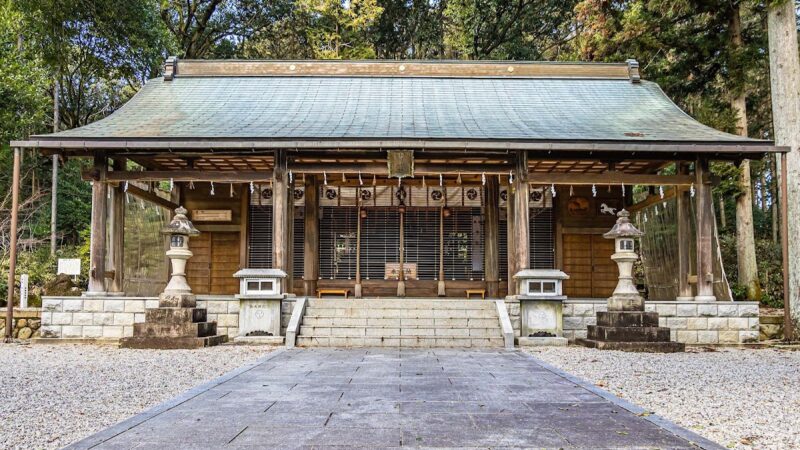
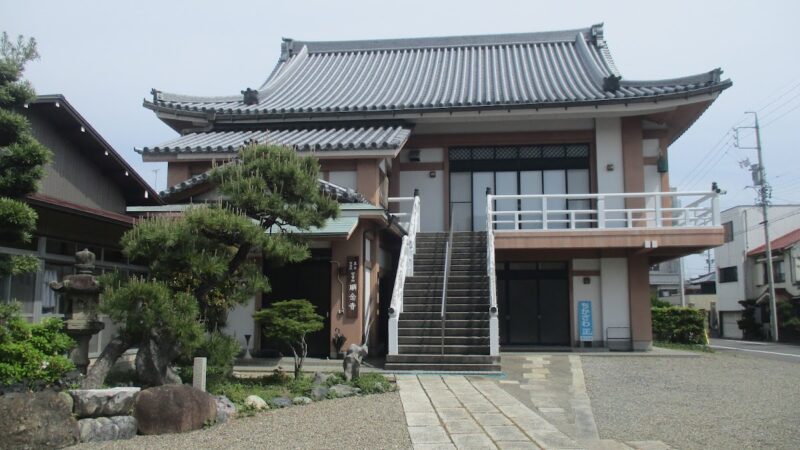
The first thing that overwhelms visitors to Ogaki Betsuin Kaisenji is its huge main hall. Despite being located in the heart of the city, the main hall exudes an overwhelming presence that dominates the surrounding buildings, conveying the beauty of the imposing wooden architecture characteristic of Shinshu Buddhist temples.
Inside the main hall, the principal image, Amida Buddha, is enshrined, and the solemn inner sanctuary instills a sense of reverence in worshippers. The golden, gleaming inner sanctuary, a characteristic of the Shinshu Otani sect, inherits the style of Higashi Honganji Temple in Kyoto.
Temple Gate and Grounds Layout
Upon entering the grounds, a magnificent temple gate greets worshippers. Following traditional temple architectural styles, the gate signifies the temple’s status as a branch temple.
The grounds are neatly arranged, with the main hall at the center, surrounded by the priest’s quarters, guest hall, and ossuary. Despite its urban location, the grounds maintain a tranquil atmosphere, providing a space where worshippers can quietly offer their prayers.
Bell Tower and Bell
A bell tower stands on the grounds, and the sound of the bell resonates throughout the city of Ogaki morning and evening. This temple bell has been cherished by the local people as a sound that marks the time and also soothes the soul.
Access and Surrounding Information
Access by Train
Ogaki Betsuin Kaisenji Temple is conveniently located within walking distance of Ogaki Station.
Nearest Station: JR Tokaido Main Line, Tarumi Railway Tarumi Line, Kintetsu Yoro Line “Ogaki Station”
Travel Time: Approximately 10 minutes on foot from the South Exit of Ogaki Station
Ogaki Station is a major station on the Tokaido Main Line, easily accessible from both Nagoya and Gifu. The path from the station to the temple is flat and well-marked, so even first-time visitors can arrive without getting lost.
Access by Car
Expressway: Approximately 15 minutes from the Meishin Expressway “Ogaki IC”
Parking: There is a parking lot for visitors on the temple grounds (spaces are limited, so the use of public transportation is recommended during events).
Easily accessible by car from surrounding areas such as Aichi, Mie, and Shiga prefectures, it is an important base for the Shinshu Otani sect in the Tokai region, attracting visitors from a wide area.
Nearby Tourist Attractions
Ogaki City is known as the “City of Water” and boasts numerous historical and cultural attractions, including Ogaki Castle and the Oku no Hosomichi Musubi no Chi Memorial Museum. Visiting these tourist spots in conjunction with a visit to Ogaki Betsuin will allow you to gain a deeper understanding of Ogaki’s history and culture.
About Perpetual Memorial Services and Columbariums
Features of Perpetual Memorial Graves
Ogaki Betsuin Kaisenji Temple offers perpetual memorial graves to meet modern needs. Perpetual memorial services are a form of memorial service where the temple takes responsibility for performing perpetual memorial services. This is chosen by those who have no successors to their graves or who do not wish to burden their descendants.
Types of Perpetual Memorial Graves:
- Individual Graves: The remains are individually interred for a certain period (usually until the 13th or 33rd anniversary of death), after which they are interred together.
- Communal Graves: The remains are interred together with others from the beginning, which helps to reduce costs.
Use of the Columbarium
Ogaki Betsuin Temple has a modern columbarium, providing an indoor environment where visitors can pay their respects regardless of the weather. The columbarium is kept clean and well-maintained, ensuring comfortable visits throughout the year.
Costs and Consultation
If you are considering perpetual memorial services or using the columbarium, you should consult with the temple beforehand. Costs vary depending on the plan and format chosen, but the general range is several hundred thousand to over one million yen.
Consultation Desk: Ogaki Betsuin Kaisenji Temple Office
Consultation Method: Telephone or in-person visit (advance reservation recommended)
Our services are utilized not only by followers from Gifu Prefecture, but also from all over the Tokai region, including Aichi, Shizuoka, Mie, and Nagano Prefectures, and from all over Japan, from Hokkaido to Kyushu.
Annual Events and Memorial Services
Major Annual Events
At Ogaki Betsuin Kaisenji Temple, various memorial services and events are held throughout the year in accordance with the traditions of the Shinshu Otani sect.
Spring Memorial Service (Spring Equinox): Held during the spring equinox in March, attracting many followers.
Birthday Celebration (Gotan-e): A memorial service celebrating the birth of Shinran Shonin, held grandly in May.
Obon Memorial Service: The Obon festival is held in August, attracting many worshippers to pay respects to their ancestors. Autumn Memorial Service (Autumn Equinox): Held during the autumn equinox period in September.
Hoonko (Memorial Service): The most important memorial service commemorating the anniversary of Shinran Shonin’s death, held from late November to early December.
During these events, messengers may be dispatched from the head temple, demonstrating the temple’s status as a branch temple.
Daily Worship and Dharma Talks
In addition to annual events, regular Dharma talks and Buddhist lectures are held, providing opportunities for local residents to engage with Buddhism. There are learning opportunities at various levels, from introductory courses for beginners to in-depth training sessions.
The Role of the Shinshu Otani School and Ogaki Branch Temple
What is the Shinshu Otani School?
The Shinshu Otani School is a branch of Jodo Shinshu Buddhism, with Shinran Shonin as its founder, and its head temple is the Shinshu Honbyo (Higashi Honganji) in Kyoto. The teachings are based on the principle that by chanting “Namu Amida Butsu,” everyone will be equally saved by the power of Amida Buddha’s original vow.
With approximately 8,900 temples nationwide, it is one of the largest Buddhist organizations in Japan. Temples are spread throughout Japan, from Hokkaido in the north to Kyushu in the south, and activities are deeply rooted in local communities.
Role of Branch Temples
Branch temples serve as outposts of the head temple, playing a central role in missionary activities in their respective regions. The Ogaki Branch Temple, with its diocese encompassing a wide area from western Gifu Prefecture to eastern Aichi Prefecture, fulfills the following roles:
- Center for Educational Activities: Holding Dharma talks and training sessions
- Training of Priests: Training and education of missionaries
- Support for Followers: Guidance and consultation for temples and followers
- Social Activities: Activities contributing to the local community
Manners and Precautions When Visiting Ogaki Betsuin
Manners for Visiting
We will introduce basic manners when visiting a temple of the Shinshu Otani sect.
Attire: No special attire is required, but clean and subdued clothing is desirable. For attending memorial services, semi-formal attire or dark-colored clothing is appropriate.
How to Visit:
- Bow at the temple gate before entering the grounds.
- Remove your shoes before entering the main hall.
- Join your hands in prayer before the main image and recite the Nembutsu, “Namu Amida Butsu.”
- Please note that clapping your hands is not done in Shin Buddhism.
- Bow again before leaving the grounds.
Photography
Photography of the temple grounds and building exteriors is generally permitted, but permission may be required for photography of the interior of the main hall or of Buddha statues. Always check with the temple office beforehand. Also, it is considered good manners to refrain from photography during religious services.
Visiting Hours and Inquiries
Opening Hours: The temple is usually open during the day, but this may change depending on events and religious services.
Admission Fee: Generally free, but a donation may be requested during special events.
Inquiries: It is recommended to check by phone before visiting.
Temple Culture in Ogaki City and Ogaki Betsuin
Buddhist Temples in Ogaki City
Ogaki City, Gifu Prefecture, has 246 Buddhist temples, including Ogaki Betsuin Kaisenji Temple. This is a very large number relative to the population size, indicating that Ogaki has long been a region with a thriving Buddhist culture.
While temples of the Shinshu Otani sect make up the majority, temples of various other sects, such as Jodo, Soto, and Rinzai, coexist, forming a diverse Buddhist culture.
Connection with the Local Community
Ogaki Betsuin has functioned not only as a religious facility but also as a cultural and spiritual center for the local community.
- Educational Activities: Early childhood education through the operation of kindergartens and daycare centers
- Cultural Activities: Holding concerts and lectures
- Social Welfare: Support for the elderly and participation in community welfare activities
- Disaster Relief: Providing shelters and support activities during disasters
Through these activities, “Ogaki no Gobosan” has become a spiritual anchor for the people of the region.
Visiting Nearby Shinshu Temples
Shinshu Otani-ha Temples in Gifu Prefecture
When visiting Ogaki Betsuin, you can gain a deeper understanding of Shinshu culture by visiting other Shinshu Otani-ha temples in Gifu Prefecture.
Gifu Prefecture has numerous Shinshu Otani-ha temples, each with its own history and characteristics. Temples serving as bases for followers are scattered throughout the prefecture, including Gifu City, Kakamigahara City, Seki City, and Minokamo City.
Branch Temples in the Tokai Region
The Shinshu Otani sect has several branch temples in the Tokai region, each playing a central role in its respective area.
- Nagoya Branch Temple (Nagoya City, Aichi Prefecture): The largest branch temple in the Tokai region
- Okazaki Branch Temple (Okazaki City, Aichi Prefecture): The center of the Mikawa region
- Tsu Branch Temple (Tsu City, Mie Prefecture): The base of operations in the Ise region
These branch temples, along with the Ogaki Branch Temple, work in cooperation with each other to carry out Shinshu Otani sect missionary activities in the Tokai region.
Cultural Properties and Treasures of Ogaki Branch Temple Kaisenji
Temple Treasures and Relics
The Ogaki Branch Temple houses valuable temple treasures and relics accumulated over its long history. Many of these are usually not open to the public, but they are sometimes displayed on special occasions.
- Ancient Documents: Records concerning temple management from the Edo period onwards
- Buddhist Altar Fittings: Excellent examples of traditional Shinshu Buddhist altar fittings
- Calligraphy and Paintings: Calligraphy and paintings by successive chief priests and prominent monks
These cultural assets are important resources for studying the history of Ogaki and Shinshu culture.
Architectural Value
The buildings of Ogaki Betsuin, including the main hall, clearly demonstrate the characteristics of Shinshu temple architecture from the early modern to modern periods, and are of architectural historical value. It is a valuable example for learning about large-scale wooden construction techniques and the unique style of interior sanctuary decoration specific to Shinshu.
Summary: The Charm of Ogaki Betsuin Kaisenji
Ogaki Betsuin Kaisenji, as a branch temple of the Shinshu Otani sect with a history of over 400 years, has continued to be a center of faith and culture in western Gifu Prefecture.
Main Features:
- The only temple in Japan with the name “Kaisenji”
- A magnificent main hall exuding an overwhelming presence
- Excellent access, within walking distance of Ogaki Station
- Comprehensive perpetual memorial service and columbarium facilities
- Abundant memorial services and events throughout the year
- Activities rooted in the local community
When visiting Gifu Prefecture, or if you are interested in Shinshu Otani sect temples, please be sure to visit Ogaki Betsuin Kaisenji. By quietly joining your hands in prayer, you will be able to touch the teachings of Shinran Shonin and the spirituality nurtured by 400 years of history.
This temple, beloved by the local people as “Ogaki no Gobosan,” warmly welcomes visitors from all over Japan. From Hokkaido to Kyushu, it will continue to play an important role as a spiritual haven for Shinshu followers throughout Japan.