Complete Guide to Kata-gata-tsu Shrine (Gifu Prefecture): History and Highlights of a Shikinaisha Shrine Situated on a Burial Mound
Kata-gata-tsu Shrine, located in Yashiro, Gifu City, Gifu Prefecture, is a shrine with a long history as a Shikinaisha (shrine listed in the Engishiki) of Kata-gata District, Mino Province. This article provides a detailed introduction to this shrine, which boasts a unique location situated on a burial mound dating back to around the 5th century, and a historical background involving multiple candidate shrines.
Basic Information on Kata-gata-tsu Shrine
Kata-gata-tsu Shrine is located at 3-13-1 Yashiro, Gifu City, Gifu Prefecture, and is formerly classified as a village shrine. It is pronounced “Kata-gata-tsu Jinja” and has long been revered by locals.
The most distinctive feature of the shrine grounds is that the main hall and worship hall are built on a circular burial mound approximately 40 meters in diameter and 4.5 meters high. It is believed that there were once moats on the north and east sides, indicating that the shrine was built on a structure from the Kofun period (burial mound era).
Location and Access
Address: 13-1, Yashiro 3-chome, Gifu City, Gifu Prefecture
Transportation:
- Approximately 0 minutes on foot from the Gifu Bus “Nagara Yashiro Park” bus stop
- Approximately 6 km north from JR Gifu Station
- Approximately 15 minutes by car from Gifu Station
There is parking space for visitors on the shrine grounds, but it can get crowded during major festivals. Using public transportation is convenient, as the shrine is conveniently located right next to a bus stop.
Deities and Divine Virtues
Main Deity
The main deity of Kataagata Shrine is Tanba no Kawakami no Masurojo no Mikoto. This deity is said to be the consort of Prince Hikoimasu, demonstrating the deep connection between Prince Hikoimasu, a son of Emperor Kaika, and this region.
Enshrined Deities
In addition to the main deity, Amaterasu Omikami is enshrined here.
Divine Virtues
The Hikosato-no-Ō clan is said to have made significant contributions to agriculture, mountain management, and flood control in this region. Therefore, Kataagata-tsu Shrine is believed to possess the following divine virtues:
- Abundant harvests and agricultural protection
- Flood control and protection from water-related disasters
- Regional peace and industrial development
- Family safety
History of Kataagata-tsu Shrine
Founding and Ancient History
The exact founding date of Kataagata-tsu Shrine is not clearly known, but it is an ancient shrine identified as “Kataagata-tsu Shrine, Kataagata-gun, Mino Province” listed in the Engishiki Jinmyōchō (a list of shrines compiled in the Heian period). The Engishiki Jinmyocho is a register of all shrines listed in the Engishiki, compiled in the mid-Heian period (927 AD), indicating that the shrine was already recognized as an important shrine at that time.
The Mino Province Jinmyocho also lists it as “Kataagata-tsu Myojin, one of the eleven shrines in Kataagata-gun,” suggesting it was revered as one of the major shrines in Kataagata-gun even during the medieval period.
Relationship with Kofun (ancient burial mounds)
The fact that the shrine grounds are located on a burial mound dating back to around the 5th century suggests a deep connection between the local powerful families and the shrine. The construction of the shrine on the tomb of a powerful figure who ruled this area during the Kofun period indicates the development of a belief system that worshipped these powerful families as ancestral deities.
The unique “cool” and sacred atmosphere of shrines located on burial mounds allows visitors to feel the weight of ancient history.
History from the Early Modern Period onward
During the Edo period, it was worshipped as the local tutelary deity, and under the Meiji era’s shrine ranking system, it was ranked as a Gosha (village shrine). Even after the war, it was carefully preserved as the tutelary deity of the local residents, and continues to be so to this day.
The Shikinaisha Debate: Multiple “Kataagata-tsu Shrines”
In fact, there are multiple candidate shrines (shrines that are candidates to be the Shikinaisha) for Kataagata-tsu Shrine. This means that there is historical debate about which shrine refers to the Shikinaisha “Kataagata-tsu Shrine” in Kataagata District, Mino Province.
Main Candidate Shrines
- Kataagata-tsu Shrine (Yashiro, Gifu City) – The shrine introduced in this article
- Tsu Shrine (Sogaya, Gifu City) – Located on the west bank of the Shima Ohashi Bridge over the Izijira River
- Agata Shrine (Sano, Gifu City) – A shrine with the name “Agata” in Kataagata District
Each of these shrines has its own basis for claiming to be the Shikinaisha “Kataagata-tsu Shrine,” and all have a long history and traditions.
Reasons why Kataagata-tsu Shrine in Yatsushiro, Gifu City is considered a strong candidate
The following are reasons why Kataagata-tsu Shrine in Yatsushiro, Gifu City, is considered a strong candidate for being a Shikinaisha (a shrine listed in the Engishiki):
- Its unique location on top of a burial mound indicates it has been a sacred site since ancient times.
- The main deity is the consort of Prince Hikosato, suggesting a connection to the Imperial family.
- The shrine’s name, “Kataagata-tsu Shrine,” has been passed down in the region.
- Its former status as a village shrine.
However, Tsu Shrine (Sogaya) also claims a connection to the Engishiki Jinmyocho (a list of shrines compiled in the Engi era) and the Mino Province Jinmyocho (a list of shrines in Mino Province), and this dispute remains unresolved. It is an interesting topic with differing opinions among historians and shrine officials.
Highlights of the Shrine Grounds
Main Hall and Worship Hall
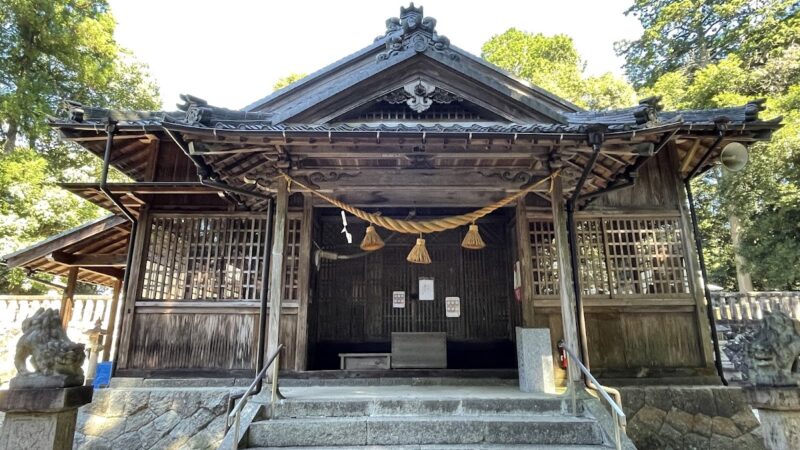
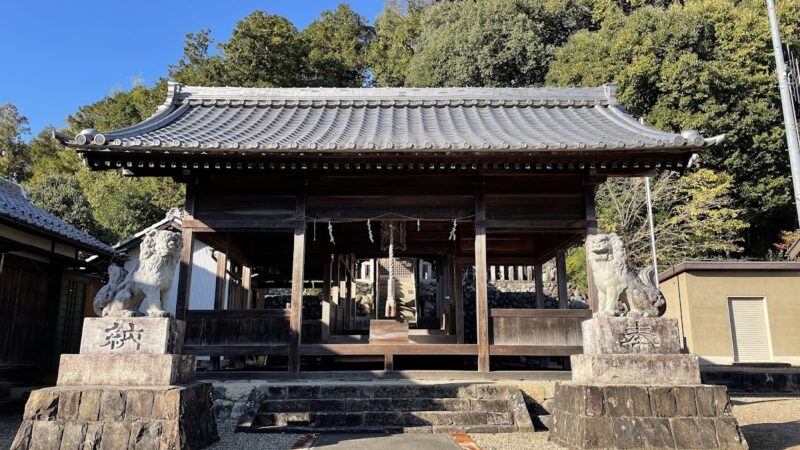
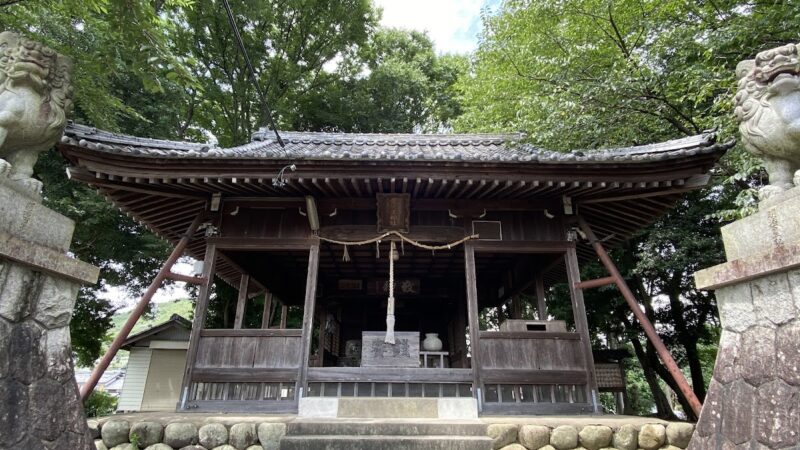
The main hall and worship hall are built on top of a burial mound. Climbing the stone steps to enter the grounds allows you to experience the unique layout of the shrine architecture, which takes advantage of the distinctive topography of the burial mound.
The worship hall is the building that welcomes visitors, and the main shrine is located behind it. Due to its location on top of a burial mound, it sits higher than the surrounding area, offering panoramic views of the surrounding landscape from the shrine grounds.
Traces of the Burial Mound
Walking through the grounds, one can sense the circular shape of the burial mound. While the remains of the moat that once surrounded it are now gone, the mound itself is well-preserved.
The space where the shrine and the burial mound are integrated is a valuable historical heritage that conveys the continuity of ancient beliefs.
Subsidiary Shrines
In addition to the main shrine dedicated to the principal deity, several subsidiary shrines are enshrined within the grounds. These reflect the local beliefs and history.
Sacred Atmosphere
The tranquil and sacred atmosphere unique to shrines located on burial mounds is a major attraction of Kataagata Shrine. Stepping onto the grounds, one feels as if time has stopped and can sense the weight of ancient history.
Annual Events and Festivals
At Kataagata Shrine, various festivals are held throughout the year.
Main Festivals
- Annual Grand Festival – The most important festival held in autumn
- New Year’s Day Festival – A New Year’s festival held on New Year’s Day
- Monthly Festival – Regular monthly festivals
During the Annual Grand Festival, many local residents visit the shrine, making it lively and bustling. Traditional Shinto rituals are solemnly performed, providing an opportunity to deepen community bonds.
Points to Note When Visiting a Shrine
Etiquette for Visiting a Shrine
Follow the general etiquette for visiting a shrine:
- Bow before passing through the torii gate
- Cleanse your hands and mouth at the temizuya (water basin)
- Bow twice, clap twice, and bow once in front of the main hall
- Walk quietly around the shrine grounds
- Bow once again at the torii gate when leaving
Goshuin (Shrine Seal)
Goshuin are available at Kataagata Shrine, but there may not always be a permanent shrine office. Those wishing to receive a goshuin are advised to check in advance.
Photography
Photography is generally permitted on the shrine grounds, but may be restricted during festivals or inside the main hall. Please visit with respect and be considerate of other visitors.
Nearby Attractions
Visiting Other Shrines
If you visit Kataagata-tsu Shrine, it’s also an interesting experience to visit other shrines considered to be the same historical site, such as Tsu Shrine (Sogaya) and Agata Shrine (Sano). Comparing the characteristics and history of each shrine will deepen your understanding of the ancient history of Kataagata District in Mino Province.
Around the Nagara River
Yashiro in Gifu City is close to the Nagara River and blessed with a beautiful natural environment. After visiting the shrine, it’s recommended to enjoy the scenery of the Nagara River or take a stroll around the area.
Historical Sites in Gifu City
Gifu City has many tourist attractions, such as Gifu Castle (Kinka Mountain) and Nagara River Cormorant Fishing. Incorporating a visit to Kataagata-tsu Shrine as part of your Gifu sightseeing will allow you to create a fulfilling itinerary.
Cultural Value of Kataagata-tsu Shrine
As a Subject of Historical Research
Kataagata-tsu Shrine is a valuable example demonstrating the continuity of faith from the Kofun period to the present day. The shrine offers numerous research topics, including the circumstances surrounding the construction of the shrine on top of the burial mound, the debate surrounding its status as a Shikinaisha (a shrine listed in the Engishiki), and the relationship between the Hikosato-no-Ō clan and Mino Province.
It is a subject of study from multiple perspectives, including archaeology, history, folklore, and religious studies, making it a shrine of high academic value.
Inheritance of Regional Culture
Kataagata-tsu Shrine forms the core of the cultural identity of the Yashiro district of Gifu City. It continues to play an important role in modern times, such as strengthening community bonds through festivals, preserving traditional events, and functioning as a place for historical education.
Coexistence of Burial Mounds and Shrines
While there are several examples of shrines built on top of burial mounds throughout Japan, Kataagata-tsu Shrine is one of the most representative. The space where the historical heritage of the burial mound and the living place of worship, the shrine, are integrated is a good example of balancing cultural property preservation and the continuation of faith.
Historical Background of Kataagata District, Mino Province
To understand Kataagata-tsu Shrine, it is important to know the historical background of Kataagata District, Mino Province. ### About Kataagata District
Kataagata District was an ancient district located in the area stretching from the northern part of present-day Gifu City to Yamagata City. It was one of the districts that made up Mino Province under the Ritsuryo system, and was an important region including the fertile plains of the Nagara River basin.
The Footprints of the Prince Hikosuma Family
Prince Hikosuma, the husband of the main deity Tanba-no-Kawakami-no-Masuro-no-Mikoto, is recorded in the Kojiki and Nihon Shoki as a son of Emperor Kaika. He is believed to have been dispatched to various regions to engage in local governance and development.
The activities of the Prince Hikosuma family in Kataagata District are thought to have been wide-ranging, including the dissemination of agricultural techniques, flood control projects, and regional development. The fact that the deity enshrined at Kataagata-tsu Shrine is his consort suggests that this family held a special position in this region.
Message to Visitors
Hatakatazu Shrine may not be flashy, but its charm lies in its deep history dating back to ancient times and the sacred atmosphere created by its unique location on a burial mound.
When visiting Gifu City, please consider visiting not only famous tourist spots but also historical shrines like this one, deeply rooted in the community. Spending time reflecting on ancient times in the quiet grounds will be a valuable experience, a welcome escape from the hustle and bustle of everyday life.
Another intriguing aspect of this shrine is the historical debate surrounding its status as a Shikinaisha (a shrine listed in the Engishiki, an ancient Japanese legal text). Visiting multiple candidate shrines and comparing their claims and characteristics will be an irresistible pleasure for history buffs.
Summary
Hatakatazu Shrine, located in Yashiro, Gifu City, Gifu Prefecture, is a shrine with a history of faith that has continued from ancient times to the present day, built on a 5th-century burial mound and considered a candidate shrine for a Shikinaisha of Mino Province.
It enshrines Tanba-no-Kawakami-no-Masuro-no-Mikoto and Amaterasu-Omikami, and is believed to bestow divine blessings for agriculture, flood control, and regional peace. Kataagata-tsu Shrine is considered one of the candidate shrines for the “Kataagata-tsu Shrine” listed in the Engishiki Jinmyocho (a list of shrines compiled in the Heian period), along with Tsu Shrine (Sogaya) and Agata Shrine (Sano).
With its unique location atop an ancient burial mound, the sacred atmosphere it creates, the historical relationship between the Hikosato-no-Ō family and Kataagata-gun in Mino Province, and the debate surrounding its status as a Shikinaisha (shrine listed in the Engishiki), Kataagata-tsu Shrine offers many points of interest and research themes, making it a must-visit shrine when visiting Gifu City.
Its convenient location, just a short walk from the Gifu Bus “Nagara Yashiro Park” bus stop, is also a major draw, offering a valuable opportunity to experience the region’s history and culture. Why not feel the timeless history at Kataagata-tsu Shrine, where ancient beliefs still thrive today?