Suwa Shrine (Higashi-Myoya, Misato-cho, Takasaki City, Gunma Prefecture) Complete Guide
Suwa Shrine, located in Higashi-Myoya, Misato-cho, Takasaki City, Gunma Prefecture, is a historic shrine with a history associated with Takeda Shingen, a warlord of the Sengoku period. This article comprehensively introduces useful information for visitors, including the historical background of Suwa Shrine, the enshrined deities, the highlights of the grounds, and detailed access information.
Basic Information on Suwa Shrine
Suwa Shrine is located at 512-2 Higashi-Myoya, Misato-cho, Takasaki City, Gunma Prefecture. Its grounds are situated at the southeastern foot of Mount Haruna, southeast of the historically significant Minowa Castle ruins.
Location and Contact Information
- Location: 512-2 Higashimyoya, Misato-cho, Takasaki City, Gunma Prefecture
- Postal Code: 〒370-3106
- Corporate Number: 2070005002917
Status as a Religious Corporation
Suwa Shrine is officially registered as a religious corporation and has been assigned the corporate number “2070005002917”. As one of the 1890 Suwa Shrines nationwide, it plays a central role in local faith.
History and Origins of Suwa Shrine
Circumstances of Founding and Relationship with Takeda Shingen
The exact founding date of Suwa Shrine is unclear, but it underwent a significant turning point in Eiroku 9 (1566). In this year, Takeda Shingen, a powerful daimyo of Kai Province (present-day Yamanashi Prefecture), captured and took Minowa Castle, a strategically important location in northern Kanto.
Minowa Castle was known as the residence of the Nagano clan and was an important military base in Kozuke Province (present-day Gunma Prefecture). After Takeda Shingen’s capture of Minowa Castle, the region came under the control of the Takeda clan. It is said that, having escaped war and to pray for the peace and security of the region, the Suwa Shrine, the guardian deity of the Takeda clan, was established there.
Geographical Relationship with Minowa Castle
The Suwa Shrine is located southeast of the Minowa Castle ruins, and the geographical relationship between the castle and the shrine is no coincidence. From the medieval to the early modern period, castles and shrines had a close relationship, playing a role in protecting the faith of the lord and the safety of the people.
Minowa Castle is a flatland castle built on a hill approximately 140 meters above sea level, and is currently preserved as a nationally designated historical site. When visiting Suwa Shrine, visiting the Minowa Castle ruins at the same time will allow you to gain a deeper understanding of the history of this region.
The Takeda Clan and Suwa Faith
The Takeda clan’s reverence for Suwa Shrine as their guardian deity has a deep historical background. The ancestors of the Takeda clan had deep ties to the Suwa region of Shinano Province (present-day Nagano Prefecture) and revered Suwa Grand Shrine as their tutelary deity. Takeda Shingen himself also formed marital ties with the Suwa clan and placed great importance on Suwa faith.
When the Takeda clan expanded their territory, the enshrinement of Suwa Shrines in various locations was not merely a religious act, but also had political significance in legitimizing their rule and winning the hearts of their people.
Deities and Beliefs
Main Deity: Takeminakata-no-kami
The main deity of Suwa Shrine is Takeminakata-no-kami. Takeminakata-no-kami is a deity appearing in Japanese mythology, known as the son of Okuninushi-no-kami. According to the Kojiki, he is depicted as a god who demonstrated military prowess during the transfer of the land, and thus possesses the characteristics of a god of war and military affairs.
Takeminakata-no-kami is the main deity enshrined at Suwa Grand Shrine in Shinano Province and is widely revered at Suwa Shrines throughout Japan. He also has aspects of a god of agriculture, hunting, and wind, and is believed to possess diverse divine virtues.
Characteristics of Suwa Faith
Suwa faith has unique characteristics within Japanese Shinto. It has a strong character as a god of war, and during the Sengoku period, it attracted the reverence of many warlords. Furthermore, it has deep ties to agriculture and hunting, and has developed as a faith closely intertwined with the lives of local people.
Highlights of the Main Hall and Grounds
Main Hall Built in 1822
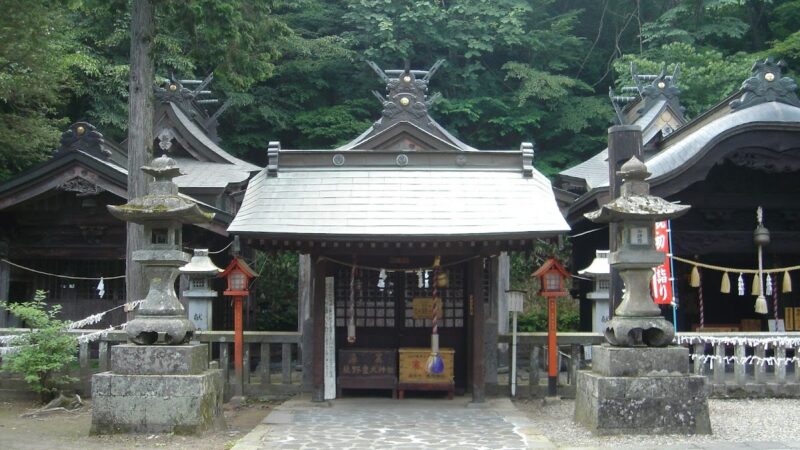
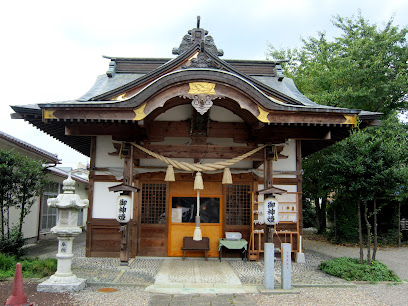
The main hall of Suwa Shrine is a historical building constructed in 1822 (Bunsei 5). As a valuable cultural asset that conveys the architectural style of the late Edo period, it preserves the history of the region.
Excellent Sculpture
The main hall is known for its excellent carvings. The late Edo period was the golden age of sculptural art in shrine and temple architecture, and the main hall of Suwa Shrine is no exception, adorned with exquisite carvings.
The carvings depict scenes from mythology, auspicious creatures, and flowers and birds, showcasing the high skill of the craftsmen of the time. When visiting, be sure to pay attention to these carvings.
Atmosphere of the Grounds
The grounds of Suwa Shrine are located in a naturally rich environment at the foot of Mount Haruna, enveloped in a tranquil atmosphere. Away from the hustle and bustle of the city, it provides an environment where one can worship in peace.
Access Information
Nearest Station and Rail Access
The starting point for rail access to Suwa Shrine is Takasaki Station on the JR Shin’etsu Main Line.
- Nearest Station: JR Takasaki Station (approximately 12km northwest)
- Travel Time: Approximately 25-30 minutes by bus or taxi from Takasaki Station
Takasaki Station is also a stop on the Joetsu Shinkansen and Hokuriku Shinkansen lines, making it easily accessible from Tokyo. The Shinkansen journey from Tokyo Station to Takasaki Station takes approximately 50 minutes to 1 hour.
Bus Access
You can use local buses from Takasaki Station.
- Bus Company: Gunma Bus
- Destination: Towards Misato/Ikaho
- Nearest Bus Stop: Higashimyo-ya Bus Stop or Misato Branch Office Bus Stop
- Travel Time: Approximately 25-30 minutes
The Suwa Shrine is a few minutes’ walk from the bus stop. Bus service varies depending on the time of day, so it is recommended to check the timetable in advance.
Access by Car
Access by car is the most convenient.
- Kan-Etsu Expressway: Approximately 20 minutes from Maebashi IC
- Kan-Etsu Expressway: Approximately 25 minutes from Takasaki IC
- National Highway: Via National Highway 17 and Prefectural Roads
Regarding parking, there may be parking spaces for visitors on the shrine grounds or nearby, but it is recommended to check details before visiting.
Map and Location
Suwa Shrine is located in the Higashi-Myoya district of Misato-cho. The following facilities are located nearby:
- Minowa Castle Ruins: Within walking distance (approx. 1-2 km)
- Misato Branch Office: Approx. 500 m
- Mt. Haruna: Approx. 10 km to the west
Searching for “512-2 Higashi-Myoya, Misato-cho, Takasaki City, Gunma Prefecture” or “Suwa Shrine Misato” in a map app or car navigation system will display the exact location.
Etiquette and Manners for Visiting a Shrine
Basic Way to Visit a Shrine
The basic etiquette for visiting a shrine is as follows:
- Bow before passing through the torii gate: This is a courtesy before entering the sacred area.
- Purify yourself at the water basin: Purify your left hand, right hand, and mouth in that order.
- Avoid walking in the center of the path: The center is considered the path of the gods.
- Etiquette in front of the main hall: Two bows, two claps, and one bow is the basic procedure.
Attire and Mindset When Visiting a Shrine
There are no specific dress code requirements, but it is desirable to wear modest attire that reflects the sacred nature of the place. Also, please pray quietly and remember to be considerate of other visitors.
About Goshuin (Shrine Seals)
Some shrines offer goshuin. It is recommended to check with Suwa Shrine regarding the availability of goshuin before your visit. Goshuin (temple/shrine stamps) are popular among many worshippers as proof of their visit and as a record of their connection with the shrine.
When receiving a goshuin, please observe the following etiquette:
- Always complete your prayers beforehand.
- Prepare your goshuincho (stamp book).
- Prepare the offering fee (approximately 300-500 yen).
- Request the stamp using polite language.
Nearby Attractions
Minowa Castle Ruins (National Historic Site)
If you visit Suwa Shrine, be sure to also visit the Minowa Castle Ruins. Minowa Castle is an important historical site in castle research, as it is a typical example of a mountain castle from the Sengoku period.
- Construction: Late 15th century (Nagano clan)
- Main Lords: Nagano clan, Takeda clan, Hojo clan, Ii Naomasa
- Highlights: Remains of baileys, moats, earthworks, etc.
- Estimated Time Required: Approximately 1-2 hours for sightseeing
Haruna Shrine and Mount Haruna
To the west are Mount Haruna and Haruna Shrine. Haruna Shrine is known as one of the most powerful spiritual spots in the Kanto region, and the scenery created by the majestic shrine buildings and strangely shaped rocks is breathtaking.
Takasaki City Center
Takasaki city center has many tourist attractions, including the Takasaki Byakue Daikannon and Shorinzan Daruma-ji Temple. You can enjoy sightseeing in Takasaki in conjunction with visiting Suwa Shrine.
Annual Events and Festivals
Many shrines hold various festivals and events throughout the year. It is possible that traditional local events are also being passed down at Suwa Shrine. General Annual Events at Suwa Shrines:
- New Year’s Day Festival: January 1st
- Spring Grand Festival: Spring
- Autumn Grand Festival: Autumn
- Onbashira Festival: A festival unique to Suwa Shrines (whether or not it is held varies by shrine)
It is recommended to check the specific dates and details before visiting.
Other Suwa Shrines in Gunma Prefecture
There are several Suwa Shrines in Gunma Prefecture. Care should be taken when planning a visit, as they can easily be confused.
Other Suwa Shrines in Takasaki City
- Suwa Shrine (Kaminakaii-cho): Located in Kaminakaii-cho, Takasaki City. Affectionately known as “Hiiragi-sama”
- Suwa Shrine (Mitsutera-cho): Located in Mitsutera-cho, Takasaki City. Within walking distance of Ino Station
Suwa Shrines in Other Municipalities
- Suwa Shrine (Shimonita Town): Located in Shimonita Town, Kanra District. It boasts a history of approximately 400 years and features a magnificent shrine building constructed during the Tenpo era.
When visiting, please confirm the exact location to ensure you arrive at your intended shrine.
Connections with the Community
History and Culture of the Misato Area
Misato Town was an independent town before being incorporated into Takasaki City, but became part of Takasaki City in 2006 through municipal mergers. It has a long history of development as an agricultural area at the foot of Mt. Haruna and also flourished as a castle town of Minowa Castle.
As the Center of the Local Community
Suwa Shrine serves as the local guardian deity and a spiritual pillar of the local community. It plays a role in deepening the bonds among residents through local festivals and events.
Important Notes for Visitors
Visiting Hours
While shrine grounds are generally open all day, the hours for the shrine office may be limited. If you wish to obtain a Goshuin (shrine stamp) or amulet, it is recommended to visit during daytime hours.
Seasonal Precautions
- Winter: Due to the possibility of snow and icy roads, winter tires or chains are necessary.
- Summer: Remember to stay hydrated to prevent heatstroke.
- Typhoon Season: Consider refraining from visiting during bad weather.
Regarding Photography
Photography is generally permitted on the shrine grounds, but please note the following:
- Please abide by any restrictions on photography, such as inside the main hall.
- Please be considerate of the privacy of other visitors.
- It is advisable to check in advance before using a tripod.
- When posting on social media, please be considerate so as not to damage the dignity of the shrine.
Summary
Suwa Shrine, located in Higashi-Myoya, Misato-cho, Takasaki City, Gunma Prefecture, is a historic shrine with a background in the historical event of Takeda Shingen’s siege of Minowa Castle during the Sengoku period. This temple boasts many attractions, including the exquisite carvings on the main hall built in 1822, the rich natural environment at the foot of Mount Haruna, and its geographical and historical connection to the Minowa Castle ruins.
Located approximately 12km from Takasaki Station, it’s ideal for a day trip, and a visit combining it with the Minowa Castle ruins and other nearby tourist spots will make for a more fulfilling experience. Why not reflect on the history of Takeda Shingen and the Suwa faith while quietly praying in the tranquil grounds?
When planning your visit, please refer to the information in this article to check access methods and nearby attractions, and enjoy a fulfilling visit and sightseeing experience.