What is the West Corridor?
The West Corridor (Nishikairo) is a vermilion-painted corridor extending westward from the main shrine building (a National Treasure) at Itsukushima Shrine in Hatsukaichi City, Hiroshima Prefecture. Together with the East Corridor, it forms part of the pilgrimage route to Itsukushima Shrine and is designated as an Important Cultural Property.
Basic Information on the West Corridor
- Total Length: Approximately 108 meters
- Width: Approximately 4 meters
- Number of Columns: 62
- Cultural Property Designation: Important Cultural Property
- Architectural Style: Shinden-zukuri style corridor
History of the West Corridor
Construction in the Heian Period
The West Corridor was constructed during the late Heian period, during the large-scale construction of Itsukushima Shrine by Taira no Kiyomori (1168). As an important pilgrimage route connecting the shrine buildings on the sea, it has been built in the same location as it is today since its inception.
A History of Repeated Restorations
Itsukushima Shrine has repeatedly suffered damage from typhoons and storm surges. The West Corridor also:
- 1325: Record of large-scale repairs
- 1571: Reconstruction by Mori Motonari
- 1875: Major Meiji-era repairs
- 1950s: Post-war dismantling and repairs
- 2004: Restoration after damage from Typhoon No. 18
The current building faithfully preserves the style of the Heian period despite these repairs.
Architectural Features of the West Corridor
Structure Unique to a Shrine Built on the Sea
Floorboard Gap Structure
The most distinctive feature of the West Corridor is the approximately 1 cm gap between the floorboards. This serves a scientific purpose:
- To release the pressure of seawater at high tide
- To disperse wave energy
- To adjust the buoyancy of the entire building
Looking down through the gaps, you can see the sea surface and sandy bottom as the tide ebbs and flows, giving you a real sense of Itsukushima Shrine “floating on the sea.”
Pillar Design
The 62 pillars are designed with the assumption that they will be submerged in seawater:
- Material: Made of highly durable camphor wood
- Foundation: Installed on piles driven into the seabed
- Preservative Treatment: Regular painting and protection
The Beauty of Vermilion
The vermilion of the west corridor is painted with a traditional pigment made from cinnabar (mercury sulfide). This vermilion has the following meanings and practical uses:
- Symbol of sanctity
- Protection against evil
- Wood preservative effect
The vermilion, contrasting beautifully with the blue sea and green Mount Misen, is a representative landscape of Itsukushima Shrine.
Points to Note During Your Visit
How to Walk the West Corridor
Visiting Route
- Starting from the Main Shrine: Visitors who entered from the East Corridor should proceed to the West Corridor after visiting the main shrine.
- Viewing the Noh Stage on Your Right: Partway along the corridor, you can see the National Treasure Noh Stage on your right.
- Towards the Arched Bridge: The Arched Bridge (Imperial Envoy Bridge) is located at the end of the West Corridor.
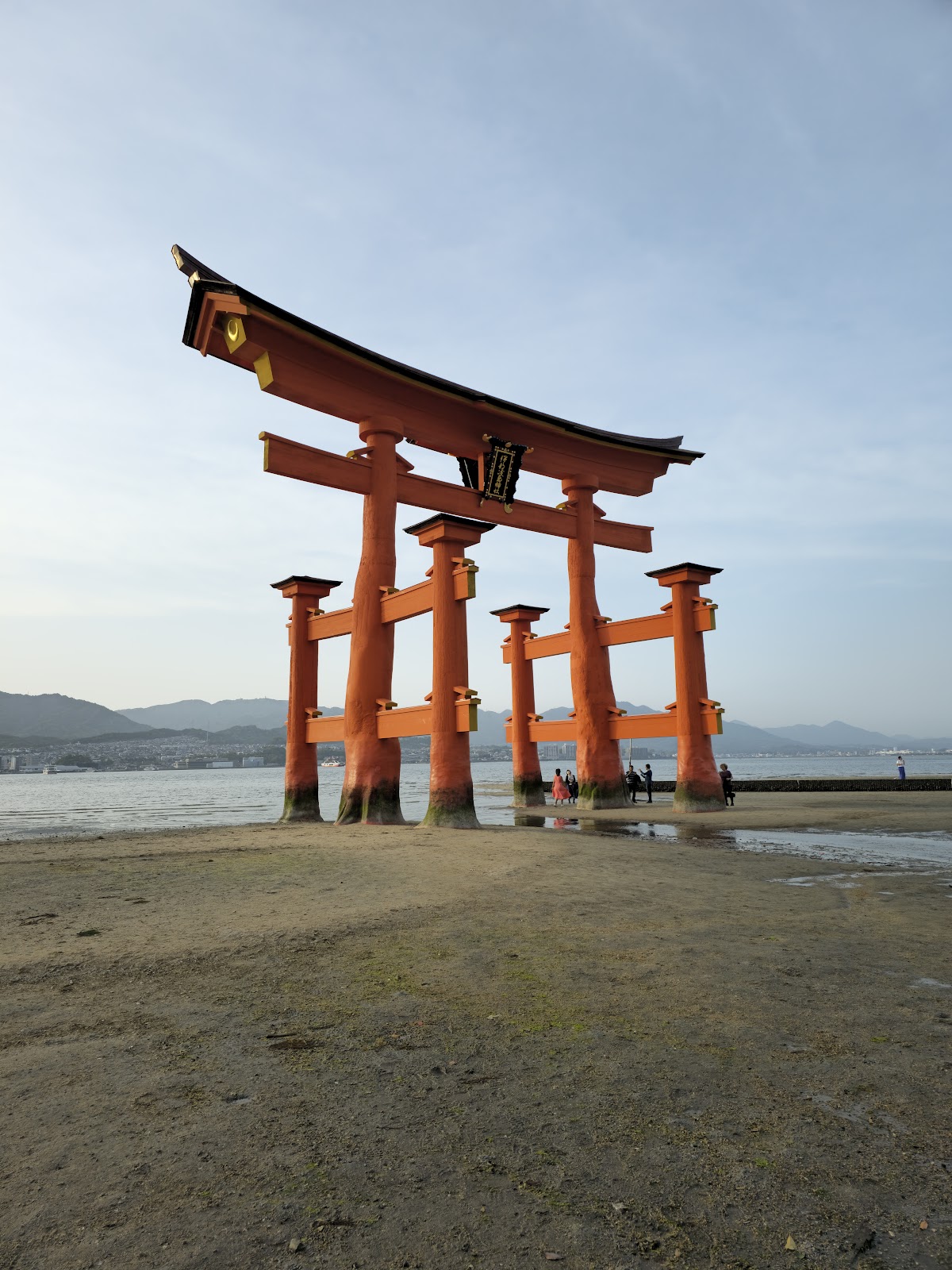
- View of the Great Torii Gate: From the West Corridor, there is a spectacular viewpoint where you can see the Great Torii Gate directly in front of you.
Experiencing the Gaps in the Floorboards
- Low Tide (Water Level Below 100cm): You can see the sandy ground and rocks through the gaps, giving you a good understanding of the shrine’s structure.
- High Tide (Water Level Above 250cm): Seawater fills the space beneath the floorboards, and you can hear the sound of waves.
- Neap Tide: The seawater approaches the floorboards, providing the most thrilling experience.
Shooting Spots
Recommended Angles
- Depth of the Corridor: A perspective photo utilizing the straight lines of the west corridor
- Contrast of Vermilion and the Sea: The blue sea seen through the pillars
- Gap in the Floor: The sea surface visible from below (please observe proper etiquette)
- Evening View: The west-facing corridor is especially beautiful when illuminated by the setting sun
Precautions When Shooting
- Tripods are prohibited
- Be considerate of other visitors
- Refrain from using flash photography
- When crowded, move with the flow of people without stopping
Seasonal Highlights
- Spring (March-May): The contrast of fresh greenery and vermilion, the calm Seto Inland Sea
- Summer (June-August): The vermilion is vivid in the strong sunlight, and the seawater beneath the floor looks refreshing
- Autumn (September-November): The most photogenic season with the autumn leaves of Mt. Misen as a backdrop:
- Winter (December-February): The clear air makes the Great Torii gate stand out clearly, and it’s quiet with fewer tourists.
Access Information
Access to Itsukushima Shrine
From Hiroshima City
- JR Sanyo Main Line: Hiroshima Station → Miyajimaguchi Station (approx. 25 minutes, 420 yen)
- Hiroshima Electric Railway: Hiroshima Station → Hiroden Miyajimaguchi (approx. 70 minutes, 270 yen)
- Ferry: Miyajimaguchi → Miyajima Pier (approx. 10 minutes, 180 yen)
- JR West Miyajima Ferry
- Miyajima Matsudai Kisen
- Walking: Miyajima Pier → Itsukushima Shrine (approx. 10 minutes)
Access by Car
- Sanyo Expressway: Hatsukaichi IC → Miyajimaguchi (approx. 10 minutes)
- Parking: Numerous paid parking lots are available around Miyajimaguchi (approximately 1,000 yen per day).
- Note: Cars are not allowed on Miyajima Island.
Itsukushima Shrine Visiting Information
- Visiting Hours:
- January-February: 6:30-17:30
- March-October: 6:30-18:00
- November-December: 6:30-17:30
- Admission Fee: Adults 300 yen, High school students 200 yen, Elementary and junior high school students 100 yen
- Estimated Time Required: Approximately 40-60 minutes for the entire Itsukushima Shrine, including the West Corridor.
How to Check the Tides
Checking the tides is important to see the seawater beneath the floor of the West Corridor:
- Itsukushima Shrine Official Website: Monthly tide tables are posted.
- Miyajima Tourism Association: Daily tide level information.
- Recommended Tide Levels:
- View the sea beneath the floor: Tide level 200cm or higher
- View the structure of the floorboards: Tide level 100cm or lower
Benefits and Faith
Deities of Itsukushima Shrine
The main shrine, connected by the west corridor, enshrines the three Munakata goddesses:
- Ichikishima-hime no Mikoto: Main deity
- Tagori-hime no Mikoto
- Tagitsu-hime no Mikoto
Main Benefits
Maritime Safety and Traffic Safety
Revered as a god of the sea since ancient times, especially:
- Safe voyages
- Prosperity in fishing
- In modern times, general traffic safety
is believed to bring these benefits.
Prayer for Business Prosperity and Victory
Due to its association with Taira no Kiyomori:
- Business prosperity
- Business success
- Improved luck in competitions
Many worshippers visit to pray for these things.
Improvement in Performing Arts
Ichikishimahime-no-Mikoto is syncretized with Benzaiten:
- Improvement in music and performing arts
- Enhancement of beauty and charm
- Academic success
It is also known for these benefits.
Proper Worship Etiquette
- Passing through the Torii Gate: Bow first.
- Purifying at the Water Basin: Left hand → Right hand → Mouth → Left hand
- Proceeding along the Corridor: Quietly, keeping to the right.
- Worshiping at the Main Shrine: Two bows, two claps, one bow.
- Exiting via the West Corridor: Turn around and bow.
Nearby Attractions
Structures Visible from the West Corridor
Noh Stage (National Treasure)
The Noh stage visible to the right of the West Corridor is the only existing Noh stage on the sea. Noh performances are actually held there every year during the Peach Blossom Festival in April.
Arched Bridge (Important Cultural Property)
A vermilion-lacquered arched bridge located at the end of the West Corridor. Only imperial envoys were permitted to cross this bridge, and it is currently inaccessible, but its elegant curves make it a popular photo spot.
The Great Torii Gate (Important Cultural Property)
The 16-meter-tall Great Torii Gate is visible directly from the West Corridor. It can be approached on foot at low tide.
Tourist Attractions on Miyajima Island
- Mt. Misen: A sacred mountain 535m high, accessible by ropeway.
- Daishoin Temple: Miyajima’s oldest temple.
- Momijidani Park: A famous spot for autumn foliage.
- Miyajima Aquarium: Exhibits marine life from the Seto Inland Sea.
Summary
The West Corridor is an important structure where you can experience the beauty and high level of architectural skill of Itsukushima Shrine. The landscape of vermilion-painted pillars, the sea visible through the gaps in the floorboards, and the changing appearance with the tides offer new discoveries with every visit.
When visiting, check the tides to decide on your visit time, and take a leisurely stroll along the corridor, reflecting on the history of faith that has continued since the Heian period. By walking through the West Corridor, you will be able to appreciate the charm of Itsukushima Shrine, a World Heritage Site, more deeply.