Daikyu-ji Temple (Asahikawa City, Hokkaido) Complete Guide | History, Highlights, Goshuin (Temple Seal), and Access Information
Located in the heart of Asahikawa City, Hokkaido, Daikyu-ji Temple is a Soto Zen Buddhist temple that has existed since the Meiji era. Despite being within walking distance of Asahikawa Station, this temple, with its unique architectural style and history, is an important spot for understanding Hokkaido’s temple culture. This article comprehensively introduces all the information you need to know before visiting Daikyu-ji Temple, including its history, highlights, goshuin information, and access methods.
Basic Information about Daikyu-ji Temple
Daikyu-ji Temple is a Soto Zen Buddhist temple located at 5-chome, Gojo-dori, Asahikawa City, Hokkaido. It is situated in the heart of Asahikawa city, surrounded by commercial facilities and residential areas.
Temple Name: Daikyuji Temple
Sect: Soto Zen
Principal Image: Three Buddhas
Chief Priest: Kenji Nagai
Location: 5-chome, Gojo-dori, Asahikawa City, Hokkaido
Phone Number: 0166-22-8496
The Soto Zen sect is a branch of Zen Buddhism and is known for its emphasis on seated meditation (zazen). Daikyuji Temple also conducts its activities based on its teachings and functions as a center of faith in the region.
History of Daikyuji Temple
From Founding to the Present
The history of Daikyuji Temple dates back to the Meiji era. It began in 1894 (Meiji 27) as a preaching hall, when Asahikawa was still in the process of development. Later, in 1902 (Meiji 35), it officially received its temple name and was recognized as Daikyuji Temple.
In 1906 (Meiji 39), it moved to its current location and has since supported the faith of the local people. Even now, more than 100 years after its relocation, it continues to play an important role in the heart of Asahikawa City.
The Role of Temples in Hokkaido’s Development
During the Meiji era’s development of Hokkaido, temples played a role far beyond mere religious institutions. They functioned as the center of the pioneers’ community and as centers of education and culture. Daikyu-ji Temple has grown alongside Asahikawa’s development, becoming deeply rooted in the local community.
From the pioneering era to the present day, Daikyu-ji Temple can be considered a valuable cultural heritage site that has watched over Asahikawa’s history.
Highlights of Daikyu-ji Temple
The Magnificent Main Gate (Karamon)
The first thing that catches the eye upon visiting Daikyu-ji Temple is the magnificent main gate at the front. This gate, in the Karamon style, features intricate carvings, conveying the beauty of wooden architecture to this day.
The carvings on the gate are made using traditional techniques, with meticulous attention to detail. Buddhist motifs such as dragons and flowers and birds can be seen throughout, inviting visitors into the world of the temple. This temple gate is an important structure symbolizing the history and tradition of Daikyu-ji Temple.
Unique Architectural Style
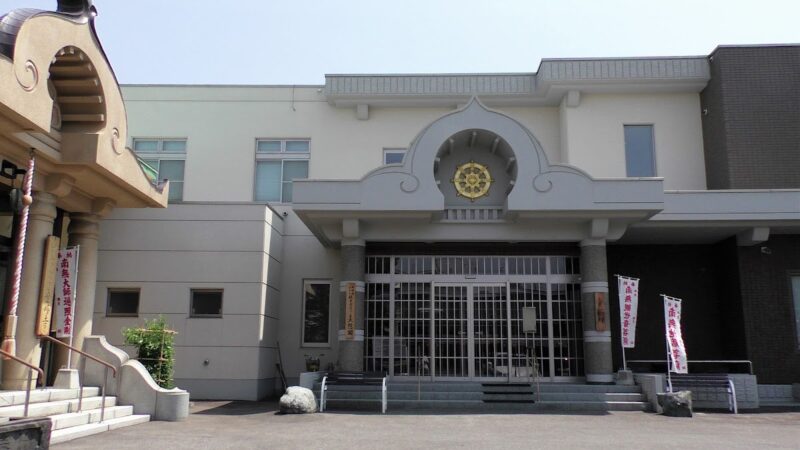
The most distinctive feature of Daikyu-ji Temple is its unique architectural style. Two massive reinforced concrete buildings stand within the temple grounds, giving it the appearance of a housing complex or apartment building. This structure is unique to temples in Hokkaido, creating a landscape significantly different from temples on Honshu.
The main hall is also made of cream-colored reinforced concrete, setting it apart from traditional wooden temples. This architectural style is thought to have originated from Hokkaido’s harsh climate and the process of modernization.
Columbarium and Modern Functions
The massive buildings within the temple grounds are presumed to function as a columbarium. As a modern urban temple, it meets the diverse needs of memorial services by providing not only a cemetery but also a columbarium.
A venue is also provided on the third floor, used for memorial services and various events. Daikyu-ji Temple is characterized by its ability to maintain the role of a traditional temple while providing facilities that meet the needs of modern society.
Buddhist Statues and Jizo Statues in the Temple Grounds
Many Jizo statues and Buddhist statues line the temple grounds. These statues soothe the hearts of visitors and create an atmosphere of prayer.
Jizo statues are worshipped as guardians of children and as roadside deities, reflecting the faith of the local people. By strolling through the temple grounds and offering prayers to these statues, you can find peace of mind.
Winter Scenery
Asahikawa is known as one of the coldest regions in Hokkaido. The area in front of the main hall is sometimes blocked by snow as early as the beginning of December, so caution is advised when visiting in winter.
On the other hand, the temple grounds covered in snow possess a unique tranquility and beauty. The snow-covered temple gate and Buddhist statues evoke a wintery atmosphere. When visiting in winter, be sure to dress warmly and pay attention to your footing.
Goshuin (Temple Stamp) Information
You can receive a Goshuin at Daikyu-ji Temple. Goshuin (temple stamps) are cherished by many visitors as proof of their visit and as a way to forge a connection with the temple.
Obtaining Goshuin
Goshuin are available at the temple office. After your visit, go to the temple office with your goshuincho (stamp book) and make your request. The offering fee (for the goshuin) is usually around 300 to 500 yen, but it is recommended to confirm beforehand.
Etiquette When Receiving a Goshuin
Goshuin are not merely stamps; they are proof of your visit. Please observe the following etiquette:
- Complete your visit to the main hall before receiving your goshuin.
- Prepare a goshuincho (avoid notebooks or colored paper).
- Treat the temple office staff with respect.
- Visit during reception hours.
If you do not have a goshuincho, you may be able to purchase one at the temple; please inquire at the temple office.
Access Methods
Access by Train and on Foot
Walking from JR Asahikawa Station: Approximately 13-20 minutes (approx. 1 km)
Daikyuji Temple is within walking distance from Asahikawa Station. Head southeast from the station, passing through the city center towards Gojo-dori. The route is flat, allowing you to enjoy the Asahikawa cityscape as you walk.
Access by Car
Located in the heart of Asahikawa city, it’s also easily accessible by car. However, it’s recommended to check with the temple in advance regarding parking availability and capacity.
From Asahikawa Kita IC on the Hokkaido Expressway: Approximately 15 minutes
From Asahikawa Airport: Approximately 30 minutes
Nearby Transportation
Asahikawa city buses are also available. The nearest bus stop is a few minutes’ walk away. Check the routes at the Asahikawa Station bus terminal and take a bus heading towards Gojo-dori.
Nearby Tourist Attractions
When visiting Daikyuji Temple, you can enhance your Asahikawa sightseeing experience by also visiting nearby tourist attractions.
Miura Ayako Memorial Literature Museum
This museum showcases the works and life of Miura Ayako, a writer from Asahikawa. You can experience the world of her masterpieces, including “Hyoten” (Freezing Point). It’s about a 15-minute drive from Daikyuji Temple.
Asahikawa City Museum
This museum allows you to learn about the history and culture of Asahikawa. It features extensive exhibits on Ainu culture and the pioneering era, which is helpful in understanding the historical background of Daikyuji Temple.
Heiwa-dori Shopping Park
This shopping street is known as Japan’s first permanent pedestrian zone. It’s within walking distance of Daikyuji Temple, allowing you to enjoy shopping and dining.
Asahikawa Ramen Village
This is a representative gourmet spot in Asahikawa. Many famous Asahikawa ramen restaurants are gathered here, making it a recommended meal after visiting the temple.
Manners for Visiting Daikyuji Temple
Basic Worship Etiquette
Worship at temples has different etiquette than at shrines. Please keep the following basics in mind:
- Bow at the Temple Gate: Bow before passing through the temple gate.
- Worship at the Main Hall: Place your offering in the offering box and pray quietly with your hands clasped together (do not clap).
- Silence on the Temple Grounds: Be quiet on the temple grounds and refrain from loud conversations.
- Photography: Refrain from taking photographs in areas where photography is prohibited, such as inside the main hall.
Regarding Clothing
There are no specific dress code requirements, but it is advisable to dress appropriately for a sacred place like a temple. Avoid overly revealing or flashy clothing.
If visiting in winter, wear warm clothing suitable for the harsh cold of Asahikawa.
Annual Events at Daikyu-ji Temple
As a Soto Zen temple, Daikyu-ji Temple holds various events throughout the year.
Main Annual Events
- Shushōe: New Year’s memorial service (January)
- Nehan-e: Memorial service commemorating the passing of Buddha (February)
- Spring Equinox Memorial Service: Spring equinox memorial service (March)
- Hanamatsuri: Memorial service celebrating the birth of Buddha (April)
- Urabon-e: Obon memorial service (August)
- Autumn Equinox Memorial Service: Autumn equinox memorial service (September)
- Daruma Memorial Service: Memorial service on the anniversary of Bodhidharma’s death (October)
- Jōdō-e: Memorial service commemorating the enlightenment of Buddha (December)
For specific dates and whether general participation is permitted, we recommend contacting the temple office. ## About Perpetual Memorial Services and Columbariums
Daikyuji Temple also offers perpetual memorial services and columbarium services. In modern society, the number of families facing difficulties in inheriting graves is increasing, leading to a growing need for perpetual memorial services.
What are Perpetual Memorial Services?
Perpetual memorial services are a system where the temple takes responsibility for continuing memorial services indefinitely. This method is often chosen when there are no successors to the grave or when one does not want to burden descendants.
Use of Columbariums
It is believed that a columbarium is located in the large building on the grounds of Daikyuji Temple. Columbariums are indoor facilities for storing remains, offering the advantage of being able to visit regardless of the weather.
For information on fees and usage conditions, please contact the temple office directly.
Temple Culture in Asahikawa and Daikyuji Temple
Characteristics of Temples in Hokkaido
Temples in Hokkaido have characteristics that differ from those of temples on Honshu. Many temples were built during the pioneering era, and while their history is relatively recent, they have developed unique architectural styles adapted to the harsh climatic conditions.
The reinforced concrete building of Daikyu-ji Temple is also an example of a design choice made to cope with Hokkaido’s cold and heavy snowfall. This hybrid temple, which retains the beauty of traditional wooden architecture in its main gate while incorporating practical modern architecture, is a characteristic unique to Hokkaido.
Other Temples in Asahikawa
Besides Daikyu-ji Temple, there are several other large temples in Asahikawa city. These temples also often possess large buildings, exhibiting the characteristics of urban temples in Hokkaido.
Those who enjoy temple hopping can gain a deeper understanding of Asahikawa’s religious culture by visiting other temples in addition to Daikyu-ji Temple.
Visitor Voices and Reputation
Surprise at the Architectural Style
Many visitors express surprise at Daikyu-ji Temple’s unique architectural style. Comments include, “It’s like a housing complex,” and “It’s a style rarely seen outside of Hokkaido.” This uniqueness is the individuality of Daikyu-ji Temple and a characteristic that symbolizes Hokkaido’s temple culture.
The Beauty of the Temple Gate
On the other hand, the intricate carvings of the wooden temple gate are highly praised. The gate, showcasing traditional techniques, creates a striking contrast with the modern buildings, leaving a strong impression on visitors.
The Atmosphere of the Temple Grounds
Many visitors express a sense of peace and tranquility regarding the Jizo and Buddhist statues lining the temple grounds. Despite being in an urban area, it is valued as a space where one can quietly offer prayers.
Best Season to Visit Daikyu-ji Temple
Spring to Autumn (April to October)
During the snow-free season, it is recommended to freely explore the temple grounds. The scenery is particularly beautiful during the fresh greenery of spring and the vibrant autumn foliage, making it ideal for worship.
Winter (November to March)
Winter in Asahikawa is extremely cold with heavy snowfall, so caution is advised when visiting. However, temples amidst a snowy landscape possess a unique beauty. If visiting in winter, be sure to dress warmly and take precautions against the cold.
As the area in front of the main hall may be blocked by snow as early as the beginning of December, it is recommended to check the situation with the temple in advance.
Contacting Daikyu-ji Temple
For pre-visit confirmations and inquiries about perpetual memorial services and the ossuary, please contact the following:
Phone Number: 0166-22-8496
Inquiries:
- Visiting Hours
- Goshuin (temple stamp) Reception Hours
- Annual Event Schedule
- Consultation about Perpetual Memorial Services and the Ossuary
- Parking Availability
- Winter Visit Availability
Summary
Daikyu-ji Temple is a historic Soto Zen temple that has supported the faith of people in Asahikawa since the Meiji era. Its magnificent main gate and unique modern architecture coexist, symbolizing Hokkaido’s temple culture.
With its convenient location within walking distance of Asahikawa Station, goshuin reception, and the Jizo statues lining the grounds, it has all the elements to attract visitors. When sightseeing in Asahikawa, be sure to visit Daikyu-ji Temple and experience its unique atmosphere and history.
While caution is needed when visiting in winter, Daikyu-ji Temple, which displays different expressions in each season, will offer new discoveries with every visit. As a place where the history of Hokkaido’s development and Buddhist culture intersect, Daikyu-ji Temple continues to be a valuable cultural heritage of Asahikawa.