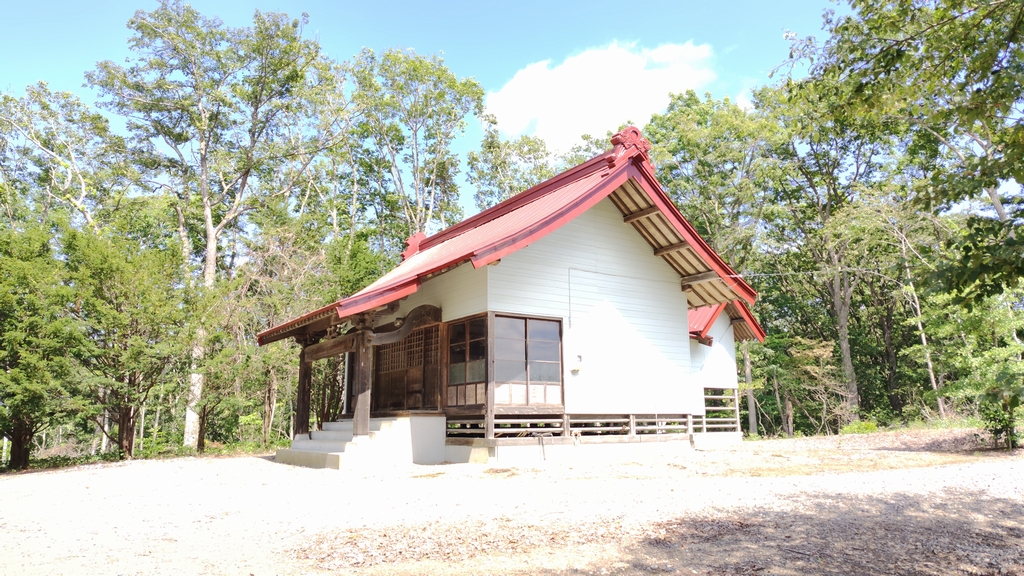
Rebunnai Shrine (Toyokoro Town, Hokkaido) Complete Guide | History, Deities, Access, and Tourist Information
What is Rebunnai Shrine?
Rebunnai Shrine is a Shinto shrine located in Toyokoro Town, Nakagawa District, Hokkaido. Situated in the Rebunnai district of Toyokoro Town, it has been cherished for many years as the center of faith for the local residents. Surrounded by the rich natural environment of the Tokachi region in eastern Hokkaido, this shrine is an important presence that conveys the history and culture of the region to the present day.
The place name Rebunnai is said to originate from the Ainu language, speaking to the ancient history of this region. The shrine plays a central role in the local community, and various festivals and events are held throughout the year.
Historical Background of Shrines in Hokkaido
Shrines in Hokkaido have a history of development alongside the settlement of the region since the Meiji era. Many shrines originated when settlers from Honshu invited the gods of their homeland and prayed for safety and prosperity in their new land. Rebunnai Shrine is another shrine that embodies the faith and hopes for regional development of the pioneers during the early stages of development.
Shrine architecture in Hokkaido sometimes differs from that of shrines on Honshu due to its adaptation to harsh climatic conditions. Considerations for snow accumulation and strong winds, among other unique features of the northern region, can be seen throughout.
History and Origins of Rebunnai Shrine
Circumstances of Founding
The founding of Rebunnai Shrine is closely linked to the history of the pioneering of Toyokoro Town. From the late Meiji era to the Taisho era, full-scale agricultural development progressed in the Tokachi region. Many settlers came to the Rebunnai area, clearing the wilderness and creating farmland.
The pioneers, in the midst of a harsh natural environment, longed for the construction of a shrine to serve as a spiritual anchor, praying for stability in their lives and a bountiful harvest. It is believed that the local residents cooperated to build the shrine and enshrine the deities they had invited from their hometowns, marking the beginning of Rebunnai Shrine.
History of Development
Rebunnai Shrine began as a small shrine, but gradually developed alongside the region’s growth. As agriculture prospered, the shrine buildings were renovated and the grounds expanded, leading to its current form.
During the Showa era, it became a popular local shrine, attracting many worshippers, and grand festivals and other events were held. Through the post-war period of rapid economic growth, it has continued to serve as a spiritual pillar for the region to this day.
Deities and Divine Virtues
Main Deities
The deities enshrined at Rebunnai Shrine are gods who protect the safety and prosperity of the region. In Hokkaido shrines, it is common to enshrine imperial ancestral gods such as Amaterasu Omikami, gods of land development such as Okuninushi-no-Mikoto, and local deities invited from the settlers’ hometowns.
Divine Virtues
The divine virtues of Rebunnai Shrine are wide-ranging, encompassing bountiful harvests, family safety, business prosperity, and protection from misfortune and good fortune. In particular, in Toyokoro Town, where agriculture is thriving, many people visit the shrine to pray for a good harvest and to give thanks for the harvest.
Furthermore, as a guardian deity of the region, various prayers related to the daily lives of residents are offered, such as for traffic safety, academic success, and safe childbirth. Prayers for life’s milestones, such as a baby’s first shrine visit, Shichi-Go-San (a traditional rite of passage for children), and exorcism, are also accepted.
Highlights of the Shrine Grounds
Shrine Buildings
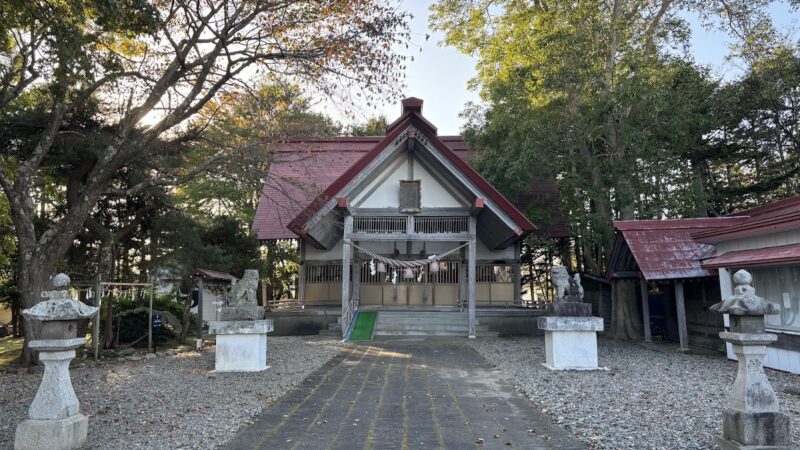
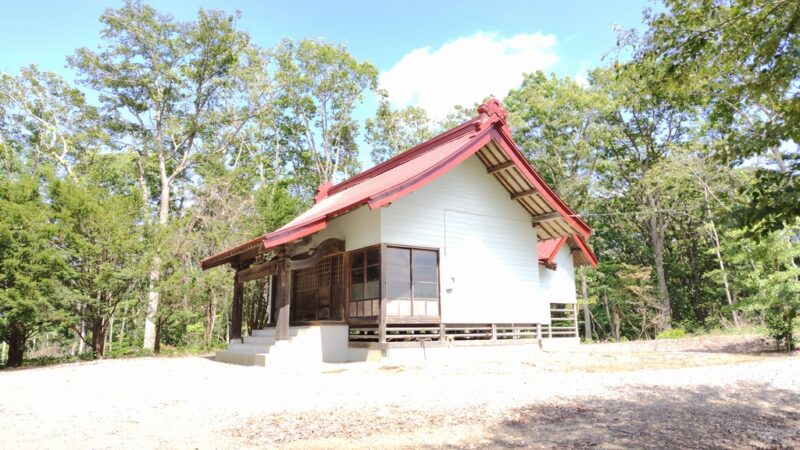
The shrine buildings of Rebunnai Shrine are constructed to suit the climate of Hokkaido. The wooden main hall exudes a simple yet solemn atmosphere, and worshippers can quietly offer their prayers in the worship hall.
The architectural style of the shrine buildings follows traditional shrine architecture while also incorporating the practicality unique to northern regions. The structure is robust enough to withstand heavy snowfall in winter, and designed to allow for proper snow removal.
Torii Gate and Approach
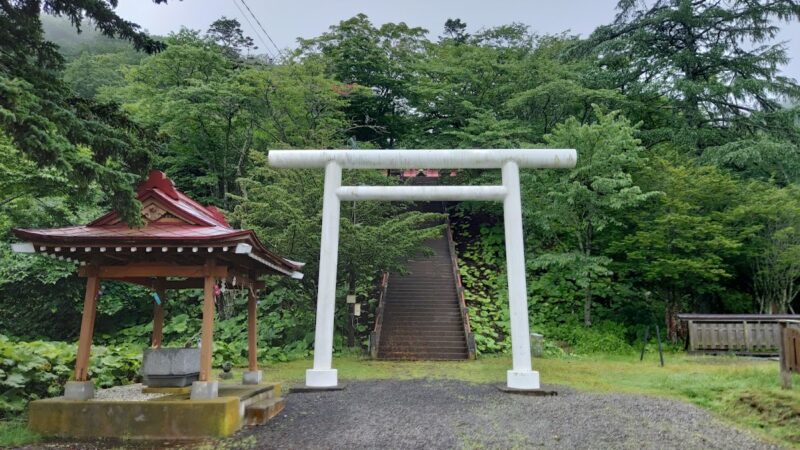
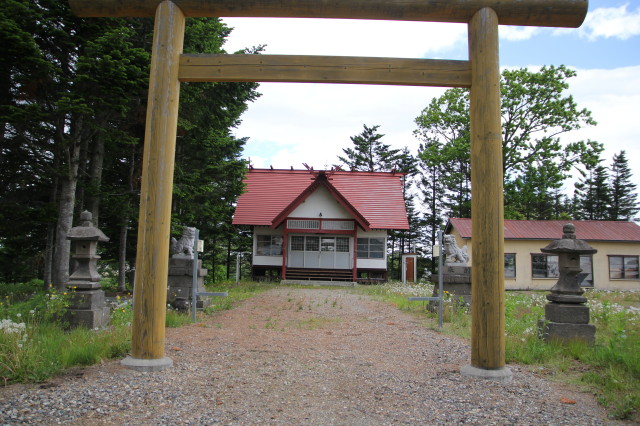
A torii gate stands at the entrance to the shrine, and an approach leads to the main hall. Walking along the approach allows you to escape the hustle and bustle of everyday life and calm your mind in a sacred space. Trees are planted throughout the grounds, allowing you to appreciate the beauty of nature in each of the four seasons.
Natural Environment of the Shrine Grounds
The grounds of Rebunnai Shrine are surrounded by the rich nature of Tokachi. In spring, new green leaves sprout; in summer, lush trees provide cool shade; in autumn, autumn leaves color the grounds; and in winter, the snowscape further enhances the sacred atmosphere.
The tranquility of the grounds provides peace of mind to visitors. By listening to the birdsong and the sound of the wind while praying, you can feel a sense of oneness with nature.
Annual Events and the Grand Festival
Grand Festival
At Rebunnai Shrine, the Grand Festival is held every year. The Grand Festival is the most important festival at the shrine, where local residents gather to offer thanks to the gods and pray for the prosperity of the community.
After the solemn Shinto rituals are performed, various offerings and ceremonies are sometimes held by local people. These include a procession of portable shrines by children and performances of traditional arts, making it an important opportunity to pass on local culture to the next generation.
Major Annual Events
In addition to the annual festival, Rebunnai Shrine holds various events throughout the year:
- New Year’s Day Festival: A first shrine visit to pray for happiness in the new year
- Setsubun Festival: Bean-throwing to ward off evil and invite good fortune
- Spring Festival: Prayers for safety in agricultural work and a bountiful harvest
- Summer Purification Ceremony: Purification of sins and impurities accumulated over the past six months
- Autumn Festival: Offering thanks for the harvest
- Year-End Purification Ceremony: Purification of sins and impurities accumulated over the year and preparation for the new year
These events are important opportunities to preserve local traditions and deepen the bonds among residents.
Access Information
Location
Address: Rebunnai, Toyokoro-cho, Nakagawa-gun, Hokkaido
Rebunnai Shrine is located in the Rebunnai district of Toyokoro-cho. Situated in the rich natural environment of the Tokachi region, it offers a quiet and peaceful atmosphere for worship.
Access by Car
From Obihiro City:
- Approximately 40km east on National Route 38, about 50 minutes by car
- Via prefectural road to Rebunnai area
From Kushiro City:
- Approximately 80km west on National Route 38, about 1 hour 30 minutes by car
Regarding parking, there may be parking spaces for visitors on the shrine grounds or nearby. During events such as the annual festival, congestion is expected, so it is recommended to visit with plenty of time to spare.
Access by Public Transportation
If using public transportation, route buses such as Tokachi Bus are available. However, the number of services may be limited, so it is recommended to check the timetable in advance.
The shrine is accessible on foot from the nearest bus stop, but the distance may be considerable, so it is recommended to wear comfortable shoes.
Precautions When Visiting
- During winter (November to March), there may be snow, and road conditions may deteriorate. Winter tires and sufficient caution are necessary. – Hokkaido’s climate is unpredictable, so we recommend preparing warm clothing and rain gear.
- Shrines are sacred places. Please observe proper etiquette and worship in silence.
Etiquette and Manners for Worship
Basic Worship Etiquette
Knowing the correct worship etiquette at a shrine will allow you to worship with more sincerity:
- Bow before passing through the torii gate: As a sign of respect before entering the sacred area, bow before the torii gate.
- Walking along the approach to the shrine: The center of the approach is considered the path of the gods, so it is preferable to walk along the sides.
- Purification at the water basin: If there is a water basin, purify your hands and mouth.
- Take the ladle with your right hand and purify your left hand.
- Switch the ladle to your left hand and purify your right hand.
- Switch the ladle back to your right hand, receive water in your left hand, and rinse your mouth.
- Finally, hold the ladle upright and purify the handle.
- Worship at the Main Hall:
- Quietly place your offering in the offering box.
- Ring the bell if there is one.
- Perform the two bows, two claps, and one bow ritual (bow deeply twice, clap twice, and then bow once).
- Departure: After exiting the torii gate, turn around and bow towards the shrine.
Attire and Manners for Visiting the Shrine
- Please dress neatly. Avoid clothing that exposes too much skin.
- It is considered good manners to remove hats and sunglasses in front of the main hall.
- Please be quiet on the shrine grounds and refrain from loud conversations.
- Photography is only permitted in designated areas. Do not take photos in areas where photography is prohibited, such as inside the main hall.
- Regarding bringing pets, regulations vary by shrine, so it is recommended to check in advance.
History and Culture of Toyokoro Town
Overview of Toyokoro Town
Toyokoro Town is located in Nakagawa District, under the jurisdiction of the Tokachi General Subprefectural Bureau of Hokkaido. Facing the Pacific Ocean and situated at the mouth of the Tokachi River, it is a naturally rich area. Agriculture and fishing are thriving, and Toyokoro’s agricultural products, in particular, are known for their high quality.
The town’s name, “Toyokoro,” is said to originate from the Ainu word “Toikoro” (place where the earth collapses). This place name also provides insight into the geographical features and history of the region.
History of Development
The development of Toyokoro Town began in earnest in the late Meiji era. Settlers came from various parts of Honshu, clearing the wilderness and creating farmland. Battling harsh natural conditions, the pioneers persevered with an indomitable spirit, laying the foundation for the rich agricultural area we see today.
The Rebunnai area is one of the regions that developed within this history of development. The hardships of the early days of settlement and the history of the region’s development are inscribed at Rebunnai Shrine.
Main Industries of Toyokoro Town
Agriculture: Agriculture is the core industry of Toyokoro Town. Wheat, sugar beets, beans, potatoes, and other crops are cultivated on the vast farmlands. Toyokoro’s agricultural products, in particular, are highly regarded for their quality, nurtured by the rich soil and climate of Tokachi.
Fishing: Fishing is also an important industry in Toyokoro Town, which faces the Pacific Ocean. Salmon and smelt are caught.
Tourism: Toyokoro Town is famous for its winter natural phenomenon called “Jewelry Ice.” The beautiful sight of transparent ice formations near the mouth of the Tokachi River, sparkling like jewels, has attracted many tourists in recent years.
Nearby Tourist Spots
Jewelry Ice (Otsu Coast)
Jewelry Ice, a representative tourist attraction of Toyokoro Town, is a natural phenomenon that can be seen on Otsu Coast during the winter months (around January to February). Ice flowing from the Tokachi River is eroded by the waves of the Pacific Ocean, forming crystal-clear ice chunks that are washed ashore.
Illuminated by the rising and setting sun, these “jewelry ice” sparkle like jewels, creating a fantastical spectacle. Many photographers and tourists visit in winter to witness this beautiful phenomenon.
Japanese Elm Tree
In Toyokoro Town, there is a large tree known as the “Japanese Elm Tree,” approximately 140 years old. Standing amidst a vast field, this tree has been used as a filming location for commercials and dramas, becoming a symbol of Toyokoro Town.
The Japanese Elm Tree, which displays different expressions in each season, is also a popular photography spot. You can enjoy its beauty in different seasons: the fresh green of spring, the lush green of summer, the autumn foliage, and the snowy landscape of winter.
Tokachi River Hot Springs
Nearby Toyokoro Town is the Tokachi River Hot Springs. Known as a plant-based “moor hot spring,” it is said to have high skin-beautifying effects. It is an ideal spot to relax and unwind after sightseeing. ### Sightseeing in Obihiro
Obihiro City, about a 50-minute drive from Toyokoro Town, boasts numerous tourist attractions, including the Rokkatei main store, Obihiro Zoo, and Ban’ei Horse Racing Stadium. Combining a visit to Toyokoro Town with sightseeing in Obihiro is highly recommended.
Rebunnai Shrine and the Local Community
As a Center of Local Faith
Rebunnai Shrine is not merely a religious facility; it functions as a central hub for the local community. The annual festival and various events provide valuable opportunities for local residents to gather and interact, strengthening community bonds.
Even in rural areas facing aging populations and declining birth rates, community connections centered around shrines remain crucial. Rebunnai Shrine plays a vital role as a base for passing on local traditions and culture to future generations.
Participation in Local Events
Rebunnai Shrine’s annual festival and various events attract not only local residents but also those originally from the area and related parties. These events offer valuable opportunities to experience the region’s history and culture.
Even tourists, if their timing is right, can gain a deeper understanding of the local culture by participating in these events. They will surely experience the warm hospitality of the local people.
Characteristics of Hokkaido’s Shrine Culture
Development and Shrines
Hokkaido’s shrines have a different historical background from the older shrines of Honshu. Many were founded during the development period after the Meiji era, embodying the settlers’ longing for their homeland and their hopes for success in their new land.
The settlers needed shrines as spiritual support in the harsh natural environment. They invited the gods of their homeland and prayed for safety and prosperity in their new land.
Beliefs Unique to the North
Hokkaido’s shrines exhibit unique forms of worship adapted to the harsh climatic conditions. These include measures to cope with the winter cold and snow, and festivals timed to coincide with the short agricultural season—ingenious solutions unique to the north.
Furthermore, the history of coexistence with Ainu culture is another characteristic of Hokkaido’s shrine culture. There are aspects where the Ainu people’s cherished spirit of nature worship and the spirit of Shinto are fused.
Seasonal Highlights for Visitors
Spring (April-June)
In spring, at Rebunnai Shrine, as the snow melts, new greenery sprouts, and the shrine grounds are enveloped in an atmosphere full of vitality. It is also the time when farming begins, and prayers for a bountiful harvest are offered.
Spring arrives late in Hokkaido; even in April, the days remain chilly, but the weather becomes pleasant from May to June. This is a beautiful season when the Tokachi landscape is covered in green.
Summer (July-August)
Summer in Hokkaido is characterized by a refreshing climate, unlike the humid heat of Honshu. The greenery on the shrine grounds becomes lush, and the cool shade of the trees is very pleasant.
Many annual festivals are held during the summer, making it the most lively time in the region. During the summer holidays, many people returning home for the holidays visit the shrine, fostering lively community interaction.
Autumn (September-November)
Autumn is harvest season. While farmers in Toyokoro Town are busy with harvesting, people can be seen visiting the shrine to express their gratitude for the harvest.
The trees in the shrine grounds change color, creating a beautiful scene with golden and red leaves. Visiting the shrine in the crisp autumn air offers a refreshing and cleansing experience.
Winter (December-March)
In winter, Rebunnai Shrine becomes a world of silence, covered in snow. Hokkaido winters are harsh, with heavy snowfall, but the shrine amidst the snowscape is enveloped in a solemn and mystical atmosphere.
Many visitors come for Hatsumode (first shrine visit of the year), praying for happiness in the new year. While proper cold-weather gear is necessary, visitors can enjoy the beautiful scenery unique to winter.
Recommended Itinerary for Visiting Rebunnai Shrine
Day Trip Plan
Morning:
- Depart from Obihiro City
- Visit Rebunnai Shrine (1 hour)
- Lunch using local ingredients in Toyokoro Town
Afternoon:
- Visit the Japanese Elm Tree (30 minutes)
- Stroll along Otsu Beach (View the jewelry ice in winter)
- Return to Obihiro City and purchase souvenirs at Rokkatei Main Store, etc.
Overnight Stay Plan
Day 1:
- Sightseeing in Obihiro City (Ban’ei Horse Racing, Obihiro Zoo, etc.)
- Stay at Tokachigawa Onsen
Day 2:
- Travel to Toyokoro Town
- Visit Rebunnai Shrine
- Sightseeing at the Japanese Elm Tree and Otsu Beach
- Purchase souvenirs at a Toyokoro Town agricultural product direct sales store
- Return home
Toyokoro Town’s Local Products and Gourmet Food
Agricultural Products
Toyokoro Town boasts high-quality agricultural products grown in the rich soil of the Tokachi Plain:
- Potatoes: Characterized by their fluffy texture
- Wheat: Highly regarded as an ingredient for bread and noodles
- Legumes: Many varieties are cultivated, including soybeans and adzuki beans
- Sugar Beet: A raw material for sugar
Seafood
Facing the Pacific Ocean, Toyokoro Town also offers fresh seafood:
- Salmon: Salmon that swim upstream in the autumn are exquisite
- Shishamo: Authentic shishamo caught off the coast of Tokachi
Local Cuisine
The following are recommended local delicacies from Toyokoro Town and the Tokachi region:
- Butadon (Pork Bowl): A specialty dish of Tokachi
- Tokachi Beef: Tokachi beef raised on high-quality pasture
- Dairy Products: Cheese and butter made with fresh Tokachi milk
- Sweets: Famous confections from Rokkatei, Ryūgetsu, and others
Guidelines for Visiting Rebunnai Shrine
The Significance of Shrine Visits
Visiting a shrine is not merely a place for sightseeing or making wishes. It is an opportunity to express gratitude to the gods, reflect on daily life, and purify the heart.
When visiting Rebunnai Shrine, a more meaningful experience will be achieved by showing respect to the pioneers who settled this land and gratitude for the blessings of nature.
Respect for the Community
Rebunnai Shrine is an important place of worship for the local residents. Even when visiting as a tourist, please be mindful of the faith of the local people and behave respectfully.
By taking an interest in and deepening your understanding of the local history and culture, you will be able to have a deeper travel experience that goes beyond simply visiting tourist spots.
Summary
Rebunnai Shrine is an important shrine that conveys the history and culture of Toyokoro Town, Hokkaido. Since the pioneering era, it has played an important role as the center of faith for the local people and as a hub for the local community.
In the tranquil setting surrounded by the rich natural beauty of Tokachi, a peaceful visit to Rebunnai Shrine will allow you to forget the hustle and bustle of everyday life and find inner peace. When visiting Toyokoro Town, be sure to visit Rebunnai Shrine along with other tourist attractions such as the Jewelry Ice and the Japanese Elm Tree.
Rebunnai Shrine, where you can feel the history of Hokkaido’s development, the faith of the local people, and the harmony with the abundant nature, can be called a hidden gem of Tokachi tourism. Why not spend some time to cleanse your soul at this shrine, which boasts beauty in every season?