Toyokoro Shrine (Hokkaido) | Complete Guide to History, Deities, Festivals, and Access
About Toyokoro Shrine
Toyokoro Shrine is a Shinto shrine located in Toyokoro-cho, Nakagawa-gun, Hokkaido. Founded in 1905 to commemorate the opening of the Nemuro Main Line, it is cherished by local residents as the guardian shrine of the Toyokoro town area. It enshrines Amaterasu Omikami as its main deity and, as a religious corporation belonging to the Hokkaido Shrine Association, plays a central role in the region’s faith and culture.
Toyokoro-cho is located in the southeastern part of the Tokachi region, a naturally rich area facing the Pacific Ocean. In this town where agriculture and fishing thrive, Toyokoro Shrine has received various prayers from local people, including prayers for abundant harvests, bountiful catches, and family safety.
History and Origin of Toyokoro Shrine
Founding History
The founding of Toyokoro Shrine is deeply intertwined with the history of Hokkaido’s development and railway construction during the Meiji era. It began in September 1905 (Meiji 38), when Amaterasu Omikami was enshrined in front of the station, the center of Toyokoro, to commemorate the opening of the Nemuro Main Line (the current JR Nemuro Main Line).
The opening of the railway was an extremely important event in the development of Hokkaido at that time. It dramatically improved the transportation of goods and the movement of people, becoming a catalyst for regional development. By establishing the shrine at this historical turning point, the pioneers celebrated the arrival of a new era and prayed for the peace and prosperity of the region.
Development during the Meiji Era
The first festival was held on September 12, 1905 (Meiji 38), and the shrine building was constructed. Initially, the shrine building was simple, but due to the deep faith of the pioneers, it began to play a role as a spiritual pillar of the region.
The late Meiji era in Toyokoro was a time when settlement was in full swing. For the people living in the harsh natural environment, the shrine served as a spiritual anchor and a place to strengthen community bonds. Through annual events and festivals, the settlers helped each other and formed a local community.
Development in the Showa Era
In October 1963 (Showa 38), the current shrine building was constructed. This was approximately 60 years after the shrine’s founding, and a more magnificent building was needed due to the development of the region and the increase in parishioners. Since the construction of the new shrine building, the shrine grounds have been improved year by year, and it has taken on the appearance of a guardian shrine for the entire Toyokoro town area.
In November 1981 (Showa 56), it was officially established as a religious corporation and became affiliated with the Association of Shinto Shrines. This established an organizational structure for the shrine, enabling more stable operation.
Deity and Divine Virtues
Amaterasu Omikami
The deity enshrined at Toyokoro Shrine is Amaterasu Omikami. Amaterasu Omikami is the supreme deity in Japanese mythology and is known as the personification of the sun. She is also the ancestral deity of the Imperial Family, enshrined at the Inner Shrine of Ise Grand Shrine, and is revered as the tutelary deity of all Japanese people.
Divine Virtues
The divine virtues of Amaterasu Omikami are wide-ranging:
- National Security and Prosperity: Protecting the peace and development of the entire nation
- Abundant Harvest: Bringing about agricultural development and abundant harvests
- Good Fortune and Prosperity: Opening up good fortune and inviting happiness
- Family Safety: Protecting the health of the family and peace in the home
- Exorcism: Driving away disasters and misfortunes
- Business Prosperity: Leading to business success and prosperity
In areas like Toyokoro Town, where agriculture and fishing are thriving, Amaterasu Omikami is especially revered as the god of abundant harvests and bountiful catches.
Annual Festival and Events
Annual Festival
The annual festival of Toyokoro Shrine is the most important festival for the shrine. On the festival day, parishioners and local residents gather to express their gratitude to the gods and pray for the prosperity of the region. Like many shrines in Hokkaido, Toyokoro Shrine solemnly performs traditional Shinto rituals.
Annual Events and Shrines in Hokkaido
Shrines in Hokkaido hold various Shinto rituals and annual events throughout the year. It is believed that Toyokoro Shrine also holds events tailored to the characteristics of the region:
- Saitansai (January 1st): A festival celebrating the beginning of the new year
- Setsubunsai (around February 3rd): A ritual to ward off evil spirits by scattering beans
- Kinensai (February 17th): A spring festival praying for a bountiful harvest
- Reisai (Annual Festival): The most important festival at the shrine
- Niinamesai (November 23rd): A festival of gratitude for the harvest
- Oharai (June and December): A Shinto ritual to purify oneself of sins and impurities accumulated over the past six months
Through these rituals, local people feel the changing seasons and renew their gratitude to the gods.
Shrine Grounds Guide
Shrine Building
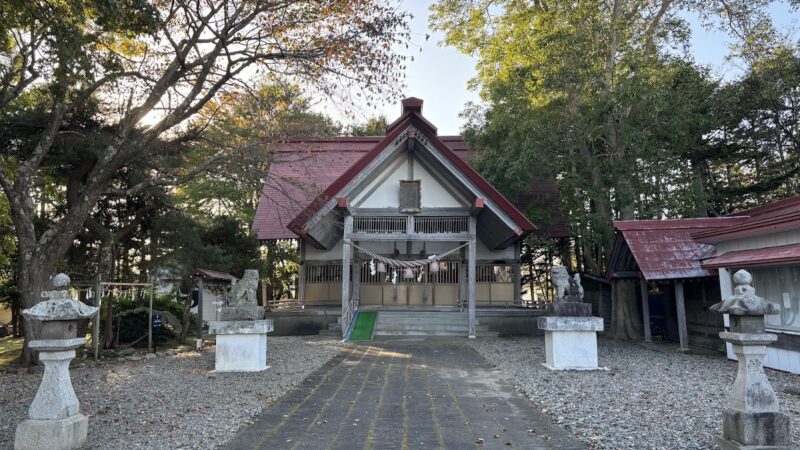
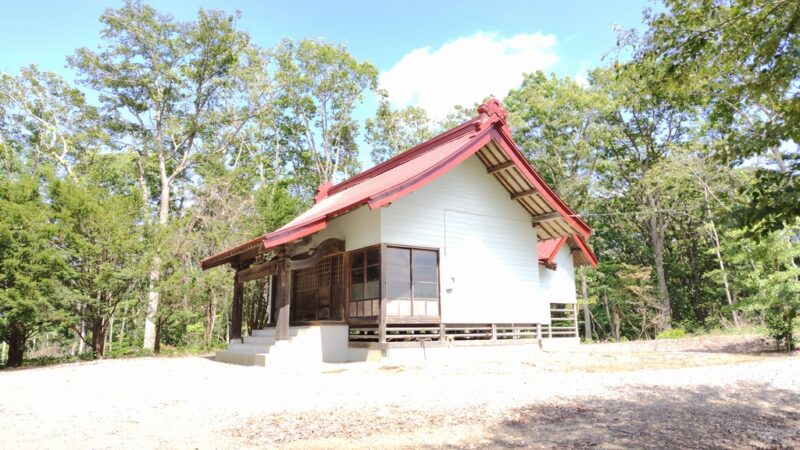
The current shrine building, constructed in 1963 (Showa 38), is designed to suit Hokkaido’s climate. A robust structure has been adopted to withstand the winters of the Tokachi region, a heavy snowfall area. The shrine’s area is appropriate for the size of the region, ensuring sufficient space for the number of parishioners.
Shrine Grounds
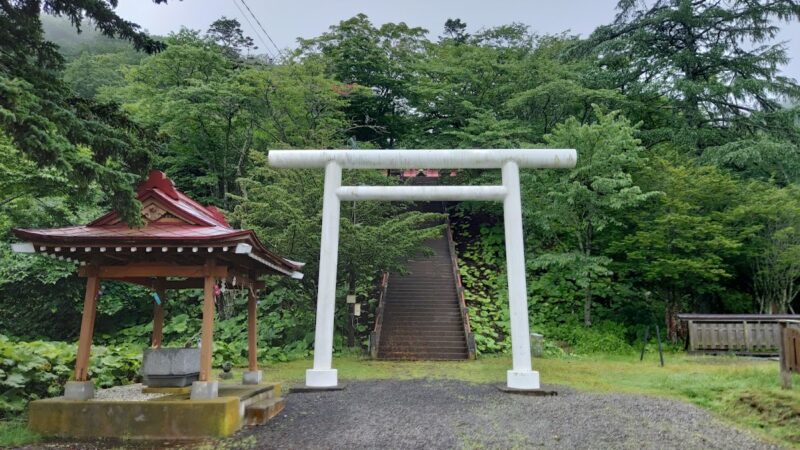
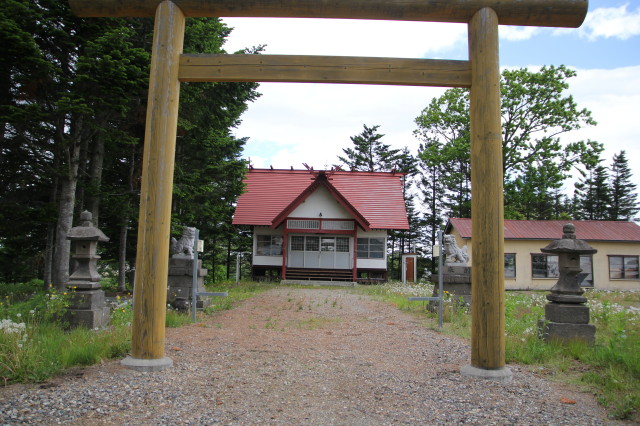
The shrine grounds are continuously being improved, creating an environment where worshippers can pray in peace. The grounds are appropriately sized for a local guardian shrine and display different appearances with each season.
In spring, new greenery sprouts; in summer, lush trees cover the grounds; in autumn, the autumn leaves are beautiful; and in winter, the snow-covered grounds create a solemn atmosphere. You can experience the unique seasonal changes of Hokkaido within the shrine grounds.
Worship Facilities
The shrine grounds are equipped with various facilities necessary for worship:
- Water Basin: A place to purify oneself before worship
- Shrine Office: Where goshuin (shrine stamps) and amulets are given out
- Offering Box: A place to offer gratitude to the gods
Location and Access
Location
Toyokoro Shrine is located in the heart of Toyokoro town, in front of the station. Since its founding, it has been located in front of the station, the center of Toyokoro, making it easily accessible for local residents.
Access by Public Transportation
Using the JR Nemuro Main Line
- Within walking distance of Toyokoro Station
- Extremely convenient access due to its station-front location
Toyokoro Shrine was founded in 1905 (Meiji 38), the same year the Nemuro Main Line opened. Given its history as a commemoration of the railway’s opening, its location near the station is natural.
By Car
- Approximately 40km from Obihiro city via National Route 38
- If using the Doto Expressway, take the local road from the nearest interchange.
Map and Landmarks
Located in the heart of Toyokoro town, you can use major local facilities as landmarks. JR Toyokoro Station is the easiest landmark to find.
The Basics of Shinto Rituals | Etiquette for Worship
Basic Worship Etiquette
There are traditional customs for visiting shrines. Knowing the correct etiquette will allow you to worship with more sincerity.
How to Pass Through a Torii Gate
- Bow before the torii gate.
- Walk along the edge of the path, as the center is the path for the gods.
- Enter the shrine grounds with humility.
How to Wash Your Hands
- Take the ladle with your right hand and wash your left hand.
- Switch the ladle to your left hand and wash your right hand.
- Switch the ladle back to your right hand, receive water in your left hand, and rinse your mouth.
- Wash your left hand once more.
- Hold the ladle upright, wash the handle, and return it to its original position.
Worship at the Main Hall
- Stand in front of the offering box.
- Gently place your offering in the box.
- If there is a bell, ring it.
- Bow twice, clap twice, and bow once (bowing deeply twice, clapping twice, bowing deeply once).
- When leaving, turn around and bow once after passing through the torii gate.
Life Rituals and Shrines
Shrines play an important role at milestones in life.
First Shrine Visit: Reporting the birth of a baby to the gods and praying for healthy growth.
Shichi-Go-San: Celebrating a child’s growth and praying for their future health.
Exorcism: Prayers to ward off misfortune during unlucky years.
Wedding Ceremony: The couple exchanges vows before the gods.
60th Birthday Celebration: Celebrating longevity and praying for continued health.
At Toyokoro Shrine, these life rituals are also performed, watching over the milestones in the lives of people in the community.
Family Worship and the Enshrinement of the Household Altar
The worship of gods in the home is also part of traditional Japanese belief.
Setting Up a Household Altar
- Placed in a clean place, where the family gathers.
- South-facing or east-facing is ideal.
- Higher than eye level.
Jingu Taima (Ise Grand Shrine Amulet)
Jingu Taima, the sacred amulet of Ise Grand Shrine, is enshrined in the household altar in many homes. They are distributed to each household through the Hokkaido Association of Shinto Shrines. Toyokoro Shrine also distributes Ise Grand Shrine amulets to its parishioners.
Daily Worship
- Morning and evening worship is ideal
- Offer sakaki branches, water, rice, salt, etc.
- Clasp your hands together with gratitude
Relationship with the Hokkaido Association of Shinto Shrines
What is the Association of Shinto Shrines?
The Hokkaido Association of Shinto Shrines is an organization that encompasses shrines throughout Hokkaido. It is located at 474-35 Miyagaoka, Chuo-ku, Sapporo City, Hokkaido, and oversees approximately 600 shrines in the prefecture.
Main roles of the Association of Shinto Shrines:
- Support and guidance for shrine management
- Training and education of Shinto priests
- Provision of information about shrines
- Promotion and enlightenment of Shinto culture
- Distribution of Ise Grand Shrine amulets
Toyokoro Shrine and the Association of Shinto Shrines
Toyokoro Shrine was established as a religious corporation in November 1981 and belongs to the Association of Shinto Shrines. The Association of Shinto Shrines (Jinja Honcho) is an organization that encompasses approximately 80,000 shrines nationwide, and reveres Ise Grand Shrine as its head shrine.
The Hokkaido Association of Shinto Shrines (Jinja Honcho) is a local branch of Jinja Honcho, supporting shrines within Hokkaido. Toyokoro Shrine is also connected to Jinja Honcho through the Hokkaido Association of Shinto Shrines and operates as a member of the nationwide shrine network.
Number of Parishioner Households and Connection to the Community
Parishioner System
Parishioners (ujiko) refer to people living in the area where a shrine is located. In the case of Toyokoro Shrine, residents throughout the Toyokoro town area are parishioners.
The number of parishioner households is an important indicator of the size of the shrine and its influence in the community. Since its founding, Toyokoro Shrine has increased its number of parishioner households along with the development of the region, and has now established a firm position as the guardian shrine of the entire Toyokoro town area.
Center of the Local Community
Shrines are not merely religious facilities; they also play a role as the center of the local community. Through annual festivals and other events, shrines serve as a place for local residents to gather and deepen their relationships.
Especially in the pioneering settlements of Hokkaido, shrines have played a crucial role in strengthening community bonds. Toyokoro Shrine, too, has continued to function as a spiritual pillar of the local community from the pioneering era of the Meiji period to the present day.
Introduction to Gagaku and Shrine Culture
What is Gagaku?
Gagaku is traditional Japanese classical music, sometimes performed at shrine festivals. With a history of over 1200 years, it is said to be the world’s oldest orchestral music.
Gagaku is mainly composed of three elements:
- Instrumental Music: Performance with instruments only
- Vocal Music: Performance accompanied by singing
- Dance Music: Performance accompanied by dance
Gagaku in Hokkaido
The Hokkaido Shrine Association strives to preserve and promote Gagaku. Major shrines in Hokkaido sometimes offer Gagaku at important festivals.
The sounds of Gagaku (Japanese court music) create a sacred atmosphere, making festivals more solemn. The music, woven together by wind instruments such as the sho (mouth organ), hichiriki (double-reed pipe), and ryuteki (bamboo flute), and percussion instruments such as taiko drums and gongs, has been passed down in an unchanged form for over a thousand years.
Leaflets and Public Relations Materials
Information Dissemination by the Hokkaido Shrine Association
The Hokkaido Shrine Association publishes various leaflets and public relations materials related to shrines and Shinto. These materials are created to deepen understanding of shrines and to pass on Japanese traditional culture to future generations.
Main Public Relations Materials:
- Leaflet explaining the etiquette of visiting shrines
- Guidebook to life cycle rituals
- Calendar of annual events
- Guide to enshrining a household altar
TV Spot Commercials and Awareness Activities
The Hokkaido Shrine Association conducts awareness activities for shrines and Shinto culture through television spot commercials and other means. We continue our efforts to encourage interest in shrines among many people by disseminating seasonal information, such as information about New Year’s visits and Shichi-Go-San (a traditional rite of passage for children).
The Imperial Rescript on Education and the History of Shrines
Spirituality in the Meiji Era
The Meiji era, when Toyokoro Shrine was founded, was a time when the foundations of modern Japan were laid. The Imperial Rescript on Education was issued in 1890 (Meiji 23), outlining the basic principles of education at the time.
Shrines played an important role in local moral education and the cultivation of spirituality. Meiji-era pioneers valued the spirit of mutual assistance and diligent work in the harsh natural environment. Shrines were places that supported this spirit.
The Role of Shrines in Modern Times
In modern times, shrines also have aspects as cultural facilities that convey history and tradition. The nearly 120-year history of Toyokoro Shrine is the history of Toyokoro Town’s development itself. By visiting the shrine, one can learn about the history of the region and reflect on the hardships and efforts of our ancestors.
Related Sites and Announcements
Hokkaido Shrine Association Official Website
The latest information regarding Toyokoro Shrine can be found on the official website of the Hokkaido Shrine Association. The website provides various information, including information on shrines throughout Hokkaido, annual events, and the basics of Shinto rituals.
This Month’s Events and Announcements
Shrines hold various events throughout the seasons. When planning a visit, we recommend checking the Hokkaido Shrine Association website and local information beforehand. During major events such as annual festivals, you can experience a special atmosphere different from the usual.
The Charms of Toyokoro Town and the Shrine
About Toyokoro Town
Toyokoro Town is located in the southeastern part of the Tokachi region, facing the Pacific Ocean. Agriculture is the main industry, with particularly thriving field crops and dairy farming. Fishing is also practiced due to its Pacific coastline, making it a rich region blessed by the bounty of both the sea and the land.
In winter, the phenomenon of “jewelry ice,” where ice flowing from the Tokachi River is washed ashore, can be seen and has been attracting attention in recent years. The highly transparent ice, sparkling like jewels in the sunlight, is truly a work of art created by nature.
The Future of the Shrine and the Region
Toyokoro Shrine will continue to serve as the guardian shrine of the region and a spiritual anchor for its residents. In rural areas facing challenges such as population decline and depopulation, shrines play a crucial role in maintaining regional identity.
Festivals and annual events foster intergenerational exchange and strengthen community bonds. It also serves as a tourist resource, playing a role in conveying the region’s history and culture to visitors to Toyokoro.
Summary
Toyokoro Shrine is a historic shrine founded in 1905 to commemorate the opening of the Nemuro Main Line. It enshrines Amaterasu Omikami as its main deity and has watched over the region for nearly 120 years as the guardian shrine of the Toyokoro town area.
The current shrine building, constructed in 1963, has been continuously improved over the years, warmly welcoming worshippers. Established as a religious corporation in 1981, Toyokoro Shrine became a formal shrine affiliated with the Association of Shinto Shrines, and is now a member of the Hokkaido Association of Shinto Shrines.
When you visit Toyokoro Town, be sure to stop by Toyokoro Shrine. Despite its convenient location near the train station, it offers a quiet and peaceful atmosphere where you can offer your prayers in tranquility. The time spent offering gratitude to the gods while reflecting on the region’s history will surely be a memorable experience.
The history of Hokkaido’s development, the advancement of the railway, and the formation of the local community—all these stories are etched into Toyokoro Shrine. Through the shrine, you will gain a deeper understanding of the charm and history of Toyokoro Town.