History and Origins of Hiroshima Shrine (68 Hiroshima, Hiroshima-cho, Sapporo-gun, Hokkaido)
Hiroshima Shrine, located in Kitahiroshima City, Hokkaido, is a historic shrine founded during the Meiji era’s Hokkaido pioneering period. Its former address, “68 Hiroshima, Hiroshima-cho, Sapporo-gun, Hokkaido,” corresponds to the current Chuo 6-chome in Kitahiroshima City, and it is revered as the guardian shrine of Kitahiroshima City. This article provides a comprehensive explanation of Hiroshima Shrine’s detailed history from its founding to the present day, its enshrined deities, and its important role in the history of Hokkaido’s pioneering.
History of Hiroshima Shrine’s Founding and Pioneering
Ikujiro Wada and the Beginning of Hokkaido’s Pioneering
The history of Hiroshima Shrine begins in April 1883 (Meiji 16), when Ikujiro Wada, the founder of Kitahiroshima, traveled from Hiroshima Prefecture to Hokkaido. Ikujiro Wada, on his way to Hokkaido, a then-undeveloped land, visited Ise Grand Shrine in Mie Prefecture to pray for the success of his pioneering project.
During this pilgrimage to Ise, Ikujiro Wada prayed for the success of his agricultural work and received a divided spirit from Ise Grand Shrine to serve as the guardian deity of the village he was about to establish. This divided spirit became the sacred object of Hiroshima Shrine and the spiritual pillar of the development of Kitahiroshima.
Construction of a Small Shrine in 1884
Upon arriving in Hokkaido, Ikujiro Wada chose a clean site in 1884 and erected a small shrine to enshrine the divided spirit. This small shrine marked the beginning of Hiroshima Shrine. The address at the time was recorded as “Hiroshima, Hiroshima Village, Sapporo District,” and was later established as “68 Hiroshima, Hiroshima Town, Sapporo District.”
In the harsh environment of the early pioneering days, this small shrine became a spiritual anchor for the settlers and attracted the faith of those praying for success in their farming endeavors.
Development of the Shrine and Addition of Deities
Construction of the Shrine in 1886
As the number of settlers from Hiroshima Prefecture increased, the temporary shrine became too small, and a full-fledged shrine was constructed in 1886. This shrine was significantly expanded from its original size of just over 3 feet square, and took on the appearance of a central religious facility in the region.
Expansion and Addition of Deities in 1890
In 1890, the shrine was expanded, and two more deities were added. With this addition, Hiroshima Shrine took its current form, with Amaterasu Omikami as the main deity, and Okuninushi Omikami and Sukunahikona Omikami as secondary deities.
This combination of three deities is highly significant as a form of faith in a pioneering settlement. Amaterasu Omikami is the ancestral deity of the Imperial Family and the supreme deity of Japan. Okuninushi Omikami is known as the god of land development and agriculture, and Sukunahikona Omikami is known as the god of medicine and hot springs. This ideal combination protects the success of pioneering projects and the health of settlers.
Transition from Hiroshima Town, Sapporo District to Kitahiroshima City
Changes in Administrative Boundaries
The location of Hiroshima Shrine has experienced changes in administrative boundaries over time.
- 1884-1902: Hiroshima, Hiroshima Village, Sapporo District
- 1902-1968: 68 Hiroshima, Hiroshima Town, Sapporo District
- 1968-1996: 6-chome, Chuo, Hiroshima Town, Sapporo District
- 1996-Present: 2-1, Chuo 6-chome, Kitahiroshima City
On September 1, 1996, Hiroshima Town became Kitahiroshima City. At this time, to distinguish it from Hiroshima City in Hiroshima Prefecture, the city name was adopted with the prefix “Kita” (north).
Meaning of the Old Address “Aza Hiroshima 68-banchi”
The address “Aza Hiroshima 68-banchi” was established during the land numbering system at the beginning of settlement. “Aza” (字) is also called a sub-area and indicates a finer regional division within a village. 68-banchi is located in the center of Hiroshima Village, indicating its importance from the beginning of settlement.
Deities and Divine Virtues of Hiroshima Shrine
Main Deity: Amaterasu Omikami
Amaterasu Omikami, invited from Ise Grand Shrine, is the supreme deity in Japanese mythology and the personification of the sun. She bestows divine virtues of national prosperity and family safety, and is enshrined as the central deity of Hiroshima Shrine.
Enshrined Deity: Okuninushi-no-Okami
Okuninushi-no-Okami, also the enshrined deity of Izumo Taisha Shrine, is known as the god of land development, agriculture, and business prosperity. During the Hokkaido pioneering project, he attracted the faith of settlers praying for agricultural success.
Enshrined Deity: Sukunahikona-no-Okami
Sukunahikona-no-Okami, who worked alongside Okuninushi-no-Okami in nation-building, is the god of medicine, hot springs, and health and longevity. In the harsh environment of the pioneering era, he played a crucial role as a protector of the health of settlers.
Annual Events and Festivals of Hiroshima Shrine
Grand Festival
The most important festival of Hiroshima Shrine is the Grand Festival, held every September. This festival features a portable shrine procession and devotional performances, and is a popular autumn event in Kitahiroshima City, attracting many worshippers.
Other Major Festivals
- New Year’s Day Festival: January 1st, a festival celebrating the New Year
- Setsubun Festival: Around February 3rd, a ritual to ward off evil spirits by scattering beans
- Spring Festival: May, a prayer for a bountiful harvest
- Summer Purification Ceremony: June 30th, a purification ceremony to cleanse away the sins and impurities accumulated over the past six months
- Shichi-Go-San Festival: November, a prayer for the healthy growth of children
- Year-End Purification Ceremony: December 31st, a purification ceremony to cleanse away the sins and impurities accumulated over the past year
Concurrent Shrines and Community Service
Hiroshima Shrine, as the general guardian shrine of Kitahiroshima City, concurrently serves the following five shrines:
Omagari Shrine
As the tutelary deity of the Omagari district in Kitahiroshima City, it protects the peace and security of the community.
Watsu Shrine
Located in the Watsu district of Kitahiroshima City, it is worshipped as the guardian deity of the agricultural area.
Nishinosato Shrine
This shrine was founded in conjunction with the development of the Nishinosato district of Kitahiroshima City.
Shimamatsu Shrine
Located in the Shimamatsu district of Kitahiroshima City, it is the guardian deity of a historic pioneering area.
Nopporo Shrine
Serving as the tutelary shrine of the Nopporo district of Ebetsu City, it is also managed by Hiroshima Shrine.
These jointly managed shrines are all historical shrines founded during the Hokkaido pioneering period, and the chief priest of Hiroshima Shrine regularly performs festivals, supporting the local faith.
Visiting and Accessing Hiroshima Shrine
Location
Current Address: 6-2-1 Chuo, Kitahiroshima City, Hokkaido
Former Address: 68 Hiroshima, Hiroshima-cho, Sapporo-gun, Hokkaido (Historical Address)
Transportation Access
Access by Train
- Approximately 15 minutes on foot from Kitahiroshima Station on the JR Chitose Line
- Approximately 5 minutes by taxi from the station
Access by Bus
- Approximately 3 minutes on foot from Kitahiroshima City Hall bus stop (Hokkaido Chuo Bus)
Access by Car
- Approximately 10 minutes from Kitahiroshima IC on the Hokkaido Expressway
- Approximately 30 minutes from central Sapporo via National Route 36
- Approximately 40 minutes from New Chitose Airport
Parking
A parking lot for visitors is available on the shrine grounds. Temporary parking is also provided during major festivals such as the annual grand festival.
Hiroshima Shrine’s Main Building and Grounds
Current Main Building
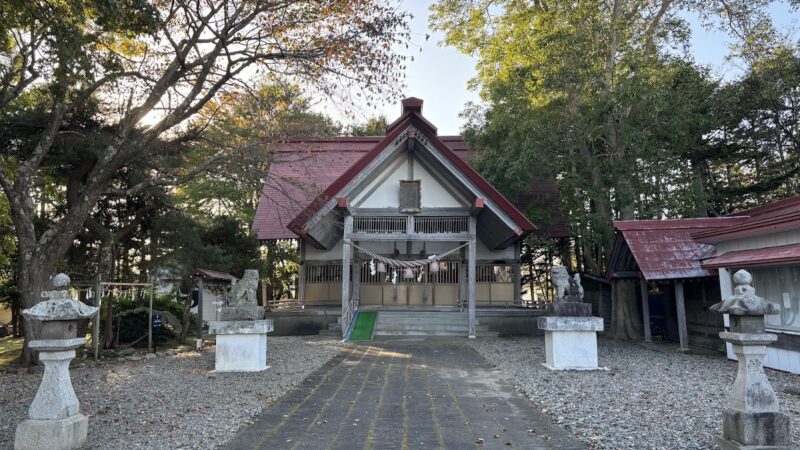
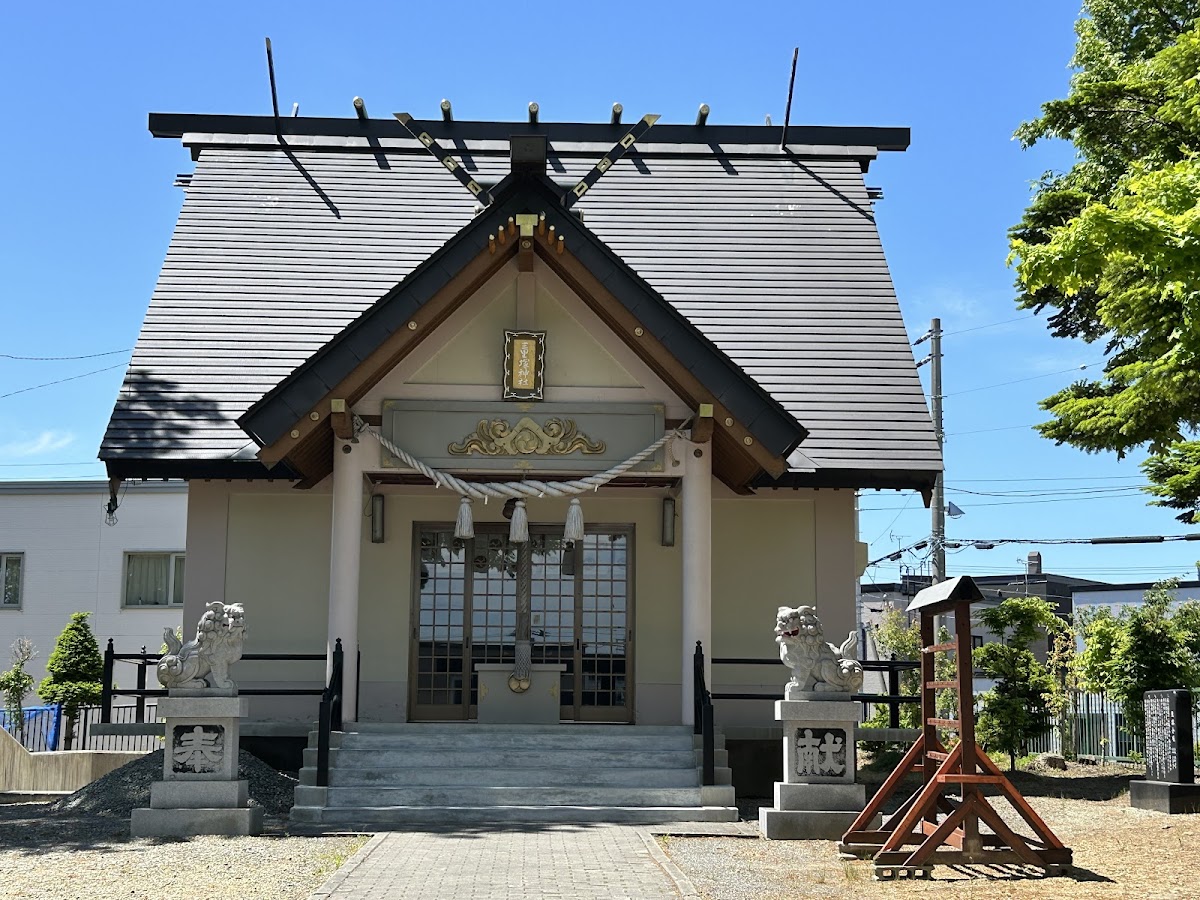
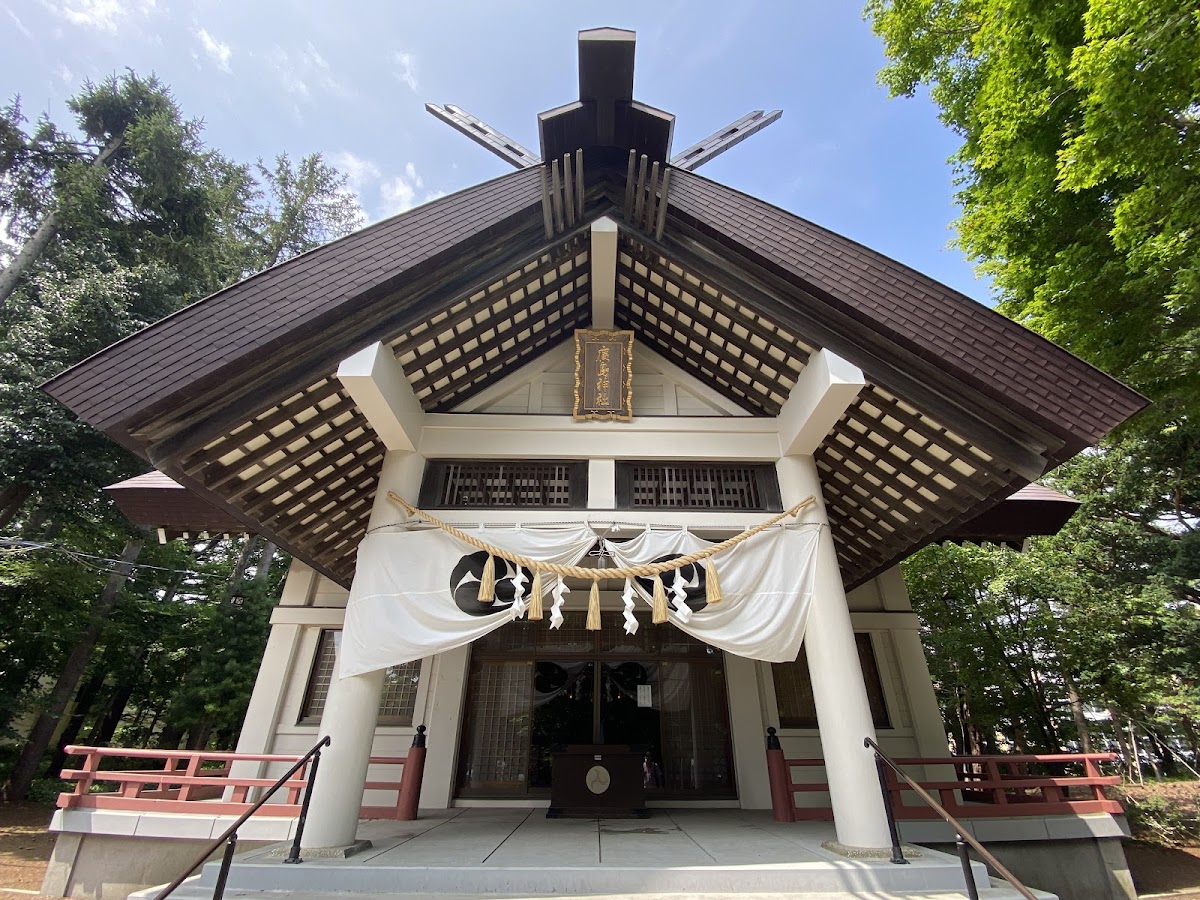
The current main building was rebuilt after the war and is a sturdy structure suited to Hokkaido’s climate. The worship hall has a hipped roof, while the main sanctuary is in the Shinmei-zukuri style.
Highlights of the Grounds
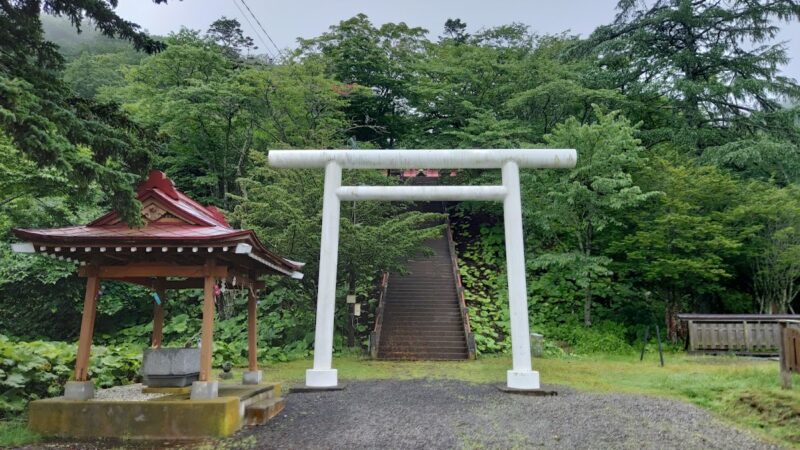
Water Basin: A place to purify oneself before worship, where pure water springs forth.
Shrine Office: Offers Goshuin (shrine stamps) and amulets, and is staffed by Shinto priests.
Guardian Dogs: Guardian dogs donated between the Meiji and Taisho periods protect the grounds.
Monument: A monument commemorating the history of the development of Kitahiroshima stands here, allowing visitors to reflect on the hardships of the pioneers.
Goshuin and Offerings
Goshuin
Hiroshima Shrine offers Goshuin as proof of worship. This is a traditional style, with “Hiroshima Shrine” written in ink and stamped with the shrine’s seal.
Main Items Offered
- Amulets: Various types for family safety, traffic safety, academic success, business prosperity, etc.
- Talismans: Talismans to be placed on the household altar
- Ema (Votive Tablets): Ema for praying for the fulfillment of wishes
- Hama-ya (Demon-Repelling Arrows): A lucky charm for the New Year
- Kumade (Rakes): A lucky charm for business prosperity
The Significance of Hiroshima Shrine in the History of Hokkaido’s Development
Spiritual Pillar for Settlement Immigrants
Hiroshima Shrine played a crucial role as a spiritual pillar for settlers from Hiroshima Prefecture during the Meiji era’s development of Hokkaido. For these settlers, who left their hometowns and worked diligently to cultivate land in a harsh natural environment, the shrine, which enshrines a divided spirit of Ise Grand Shrine, was a source of spiritual support and a place that strengthened community bonds.
Formation of Local Communities
The shrine served not only as a place of worship, but also as a social gathering place where settlers could meet, exchange information, and provide mutual assistance. Through festivals and religious ceremonies, the pioneers fostered a sense of solidarity and overcame the difficulties of pioneering.
Transmission of Agricultural Techniques
Prayers and festivals at Hiroshima Shrine were closely linked to the agricultural calendar, and it also functioned as a place for the transmission of agricultural techniques and knowledge, such as prayers before spring planting and thanksgiving for the autumn harvest.
The Role of Hiroshima Shrine in Modern Times
As the Guardian Shrine of the Region
Even today, Hiroshima Shrine remains the guardian shrine of Kitahiroshima City, attracting the faith of local residents. Visitors continue to come for important life events such as New Year’s visits, Shichi-Go-San (a traditional rite of passage for children), and exorcisms.
Value as a Cultural Asset
Hiroshima Shrine is recognized as a valuable cultural asset that conveys the history of Hokkaido’s pioneering. With a history of over 140 years since its founding, it occupies an important position in Kitahiroshima City’s history education.
Attractiveness as a Tourist Resource
In recent years, the number of tourists interested in the history of Hokkaido’s development has increased, making Hiroshima Shrine one of Kitahiroshima City’s important tourist resources. It is particularly popular among worshippers who enjoy collecting Goshuin (shrine stamps), due to its historical significance.
Divine Virtues and Blessings of Hiroshima Shrine
By visiting Hiroshima Shrine, it is believed that one can receive the following divine blessings:
National Prosperity and Family Safety
Through the divine virtues of Amaterasu Omikami, the prosperity of the nation and the peace of the family are protected.
Fulfillment of Wishes
Through sincere prayer, various wishes are believed to be fulfilled.
Business Prosperity
Through the divine virtues of Okuninushi Omikami, business development and prosperity are achieved.
Removal of Calamities
Various calamities and misfortunes are warded off, protecting peaceful days.
Health and Longevity
Through the divine blessings of Sukunahikona-no-Okami, you will be granted physical and mental health and longevity.
Good Fortune and Prosperity
This shrine brings various kinds of good fortune and blessings in life.
Contact Information
Hiroshima Shrine Office
- Address: 6-2-1 Chuo, Kitahiroshima City, Hokkaido 061-1121
- Phone: 011-372-3558
- Reception Hours: 9:00 AM – 5:00 PM (Hours may change on festival days)
The shrine is open year-round, and the grounds are always open. For special services such as prayers or Shinto wedding ceremonies, please contact the shrine office in advance.
Summary
Hiroshima Shrine (former address: 68 Hiroshima, Hiroshima-cho, Sapporo-gun, Hokkaido) has been the guardian shrine of Kitahiroshima City for over 140 years since its founding in 1883, attracting the faith of the local community. Hiroshima Shrine, which originated when Ikujiro Wada, the founder of Kitahiroshima, received a divided spirit from Ise Grand Shrine and enshrined it as the guardian deity of pioneering, is an important spiritual pillar in the history of Hokkaido’s development and remains a spiritual anchor for local residents today.
Hermitaging the three deities Amaterasu Omikami, Okuninushi Omikami, and Sukunahikona Omikami, Hiroshima Shrine bestows divine blessings for national prosperity, family safety, fulfillment of wishes, business success, protection from disaster, and health and longevity. It is a shrine that visitors to Kitahiroshima City should definitely visit. Inheriting the aspirations of our ancestors who prayed for the success of their pioneering agricultural endeavors, it continues to give hope and courage to many people today.