Complete Guide to Sanrizuka Shrine | Thorough Explanation of Goshuin (Shrine Seals), Access, History, and Annual Festival
Sanrizuka Shrine, located in Utsukushigaoka, Kiyota Ward, Sapporo City, is a shrine well-known to many for its large torii gate along National Route 36. Its name, “Sanrizuka,” comes from its proximity to the border with Kitahiroshima City and its distance of approximately three ri (about 12 km) from central Sapporo. This article comprehensively explains information useful for visiting Sanrizuka Shrine, including goshuin information, access methods, history, annual festival, and highlights.
Basic Information on Sanrizuka Shrine
Location and Access
Location: 2-1, Utsukushigaoka 1-jo 9-chome, Kiyota Ward, Sapporo City, Hokkaido
Sanrizuka Shrine is located in the Utsukushigaoka area of Kiyota Ward, in the southeastern part of Sapporo City. If you head towards Kitahiroshima from downtown Sapporo on National Route 36, you will see a large torii gate just before entering Kitahiroshima City. This torii gate is the first torii gate of Sanrizuka Shrine and is a beloved local landmark.
Access
Access by Car:
- Located along National Route 36, approximately 30 minutes from Sapporo city center
- Approximately 40 minutes from New Chitose Airport
- Approximately 5 minutes by car from Mitsui Outlet Park Sapporo Kitahiroshima and Costco Sapporo Warehouse
- Parking available (parking spaces for visitors are provided on the shrine grounds)
Access by Public Transportation:
- Approximately 3 minutes on foot from the Hokkaido Chuo Bus “Sanrizuka Elementary School” bus stop
- Convenient bus access from the Tozai Subway Line “Oyachi Station”
A path of several hundred meters leads from the large torii gate on National Route 36 to the shrine grounds, passing through a quiet residential area.
Deities Enshrined
The following deities are enshrined at Sanrizuka Shrine:
- Ōyamatsumi-no-kami: God of mountains, guardian deity of the land
- Ukanomitama-no-kami: God of rice cultivation, agriculture, and business prosperity
- Hachiman-Ōkami (Homudawake-no-mikoto): God of military fortune, victory, and protection from evil
These deities were enshrined by settlers during the pioneering era to pray for abundant harvests, regional development, and family safety, and they continue to be revered by local residents today.
History and Origins of Sanrizuka Shrine
Circumstances of Founding
The history of Sanrizuka Shrine dates back to 1890 (Meiji 23). It is said that in that year, Shigejiro Tanaka erected a small shrine at his home in Sanrizuka, marking the beginning of the shrine. At that time, this area was a point called “Sanrizuka,” indicating a distance of three ri (approximately 3.6 km) from the center of Sapporo, and there was a distance marker (mound) installed by the Hokkaido Development Commission. During the Meiji era, when the development of Hokkaido intensified, settlers gathered from various regions and began their lives in this new land. These settlers worshipped the gods of their homelands, praying for abundant harvests and the development of their region amidst the harsh natural environment. Sanrizuka Shrine was established as a center of faith during this pioneering period.
History of Development
From the latter half of the Meiji era to the Showa era, Sanrizuka Shrine was developed alongside the development of the region. As the number of settlers increased, faith spread, and the shrine came to play an important role as a guardian deity of the area.
During the Showa era, nearby small shrines and altars were merged into Sanrizuka Shrine, developing it into a larger shrine. This resulted in its current form, with three deities enshrined: Oyamatsumi-no-kami, Ukanomitama-no-kami, and Hachiman-no-kami.
Even in the Heisei era, the shrine buildings and grounds have been renovated and maintained through donations from local residents, preserving its current appearance.
Changes in Place Name
The area around the shrine was formerly called “Sanrizuka,” but has now been renamed “Satozuka.” While the “San” (three) character has been removed, the shrine’s name remains “Sanrizuka Shrine,” preserving its historical significance.
A local folk song, “Satozuka Kouta,” is also passed down, making it a valuable cultural asset that conveys the region’s history and culture.
Goshuin (Shrine Seal) Information
Location for Obtaining Goshuin
Sanrizuka Shrine does not have a resident priest, and there is no shrine office on the grounds. Therefore, Goshuin are issued at Toyohira Shrine.
Toyohira Shrine:
- Location: 1-18, Toyohira 4-jo 13-chome, Toyohira-ku, Sapporo
- Reception Hours: 9:00 AM – 5:00 PM (Hours may vary depending on the season)
- Toyohira Shrine is famous for its double-page goshuin (shrine stamp).
The general procedure is to visit Sanrizuka Shrine first, then move to Toyohira Shrine to receive a goshuin. Toyohira Shrine always offers the goshuin for Sanrizuka Shrine, which can be received as proof of your visit.
Points to Note When Receiving a Goshuin
- Goshuin are not issued within the grounds of Sanrizuka Shrine.
- You must visit Toyohira Shrine during its reception hours.
- The offering fee is generally around 300-500 yen (Please confirm at Toyohira Shrine).
- Bringing your goshuincho (stamp book) is recommended.
Toyohira Shrine is a popular shrine in Sapporo, especially known for its beautiful double-page goshuin. It would be a good idea to get the goshuin (seal) of Toyohira Shrine along with the goshuin of Sanrizuka Shrine.
Annual Festival and Events
Annual Festival
According to the records of the Hokkaido Shrine Association, the annual festival of Sanrizuka Shrine is held on a designated day each year. During the festival, a solemn ceremony is performed by Shinto priests, and prayers are offered for the development of the region and the peace and well-being of the parishioners.
New Year’s Visit
Sanrizuka Shrine attracts many visitors for the New Year’s visit, with over 2,000 visitors during the first three days of the year. The quiet and peaceful atmosphere of the shrine grounds makes it a popular and ideal place for New Year’s prayers among local residents.
Features of the New Year’s Visit:
- Relatively less crowded, allowing for a peaceful visit.
- Pets are welcome (carried on your person).
- The Dondo-yaki (bonfire ceremony) is held until the morning of January 15th (may vary depending on the year).
- The purification fountain is also available.
The shrine is also revered as a deity of matchmaking, and many visitors come to pray for good fortune in relationships in the new year.
Other Annual Events
In addition to the annual festival, various other Shinto rituals are held at Sanrizuka Shrine. Detailed schedules can be found on the websites of Toyohira Shrine (which is also managed by the shrine) and the Sapporo Branch of the Hokkaido Shrine Association.
Highlights of the Shrine Grounds
The Large Torii Gate on National Route 36
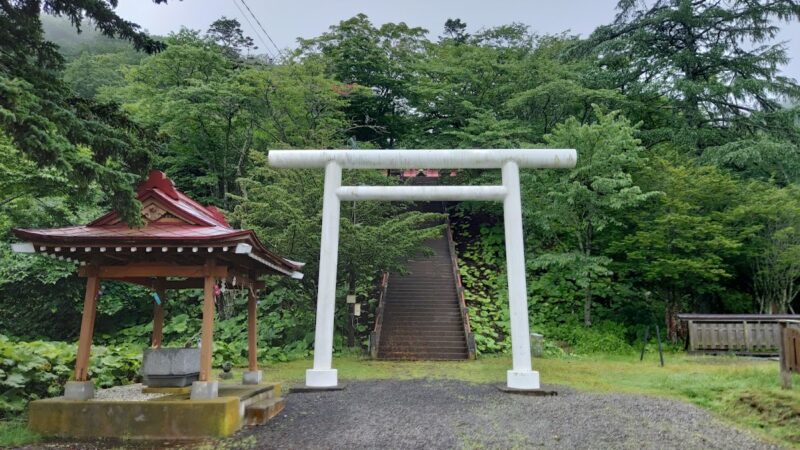
The most distinctive feature of Sanrizuka Shrine is the large torii gate standing along National Route 36. This gate is easily visible from afar, and many drivers have likely wondered, “Where is that shrine with the torii gate?”
After passing through the torii gate, it’s several hundred meters to the shrine grounds, with the approach path winding through a residential area. This distance evokes a sense of the boundary between everyday life and the sacred realm.
Shrine Building
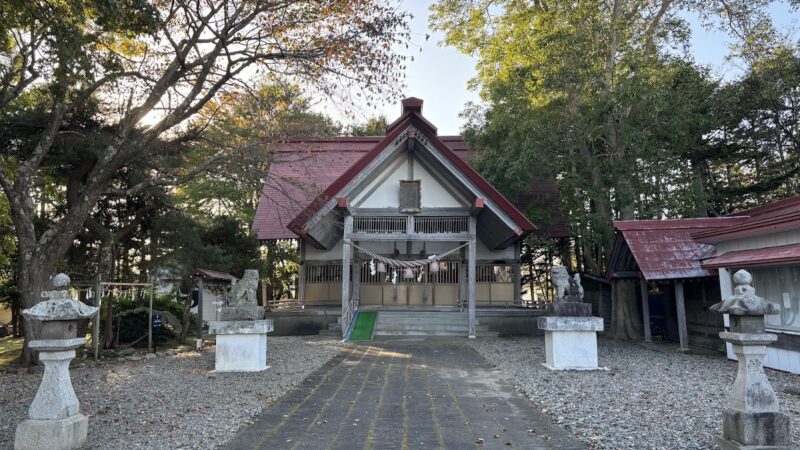
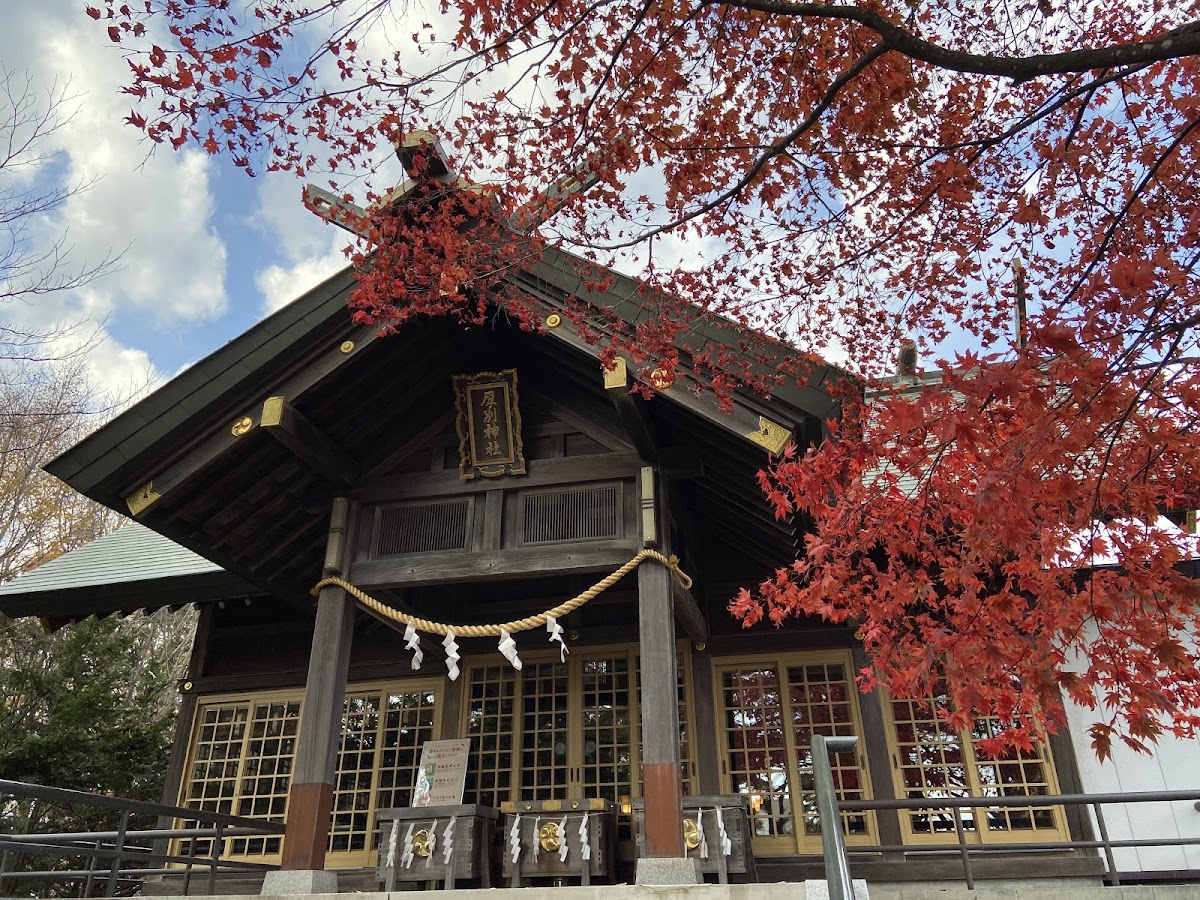
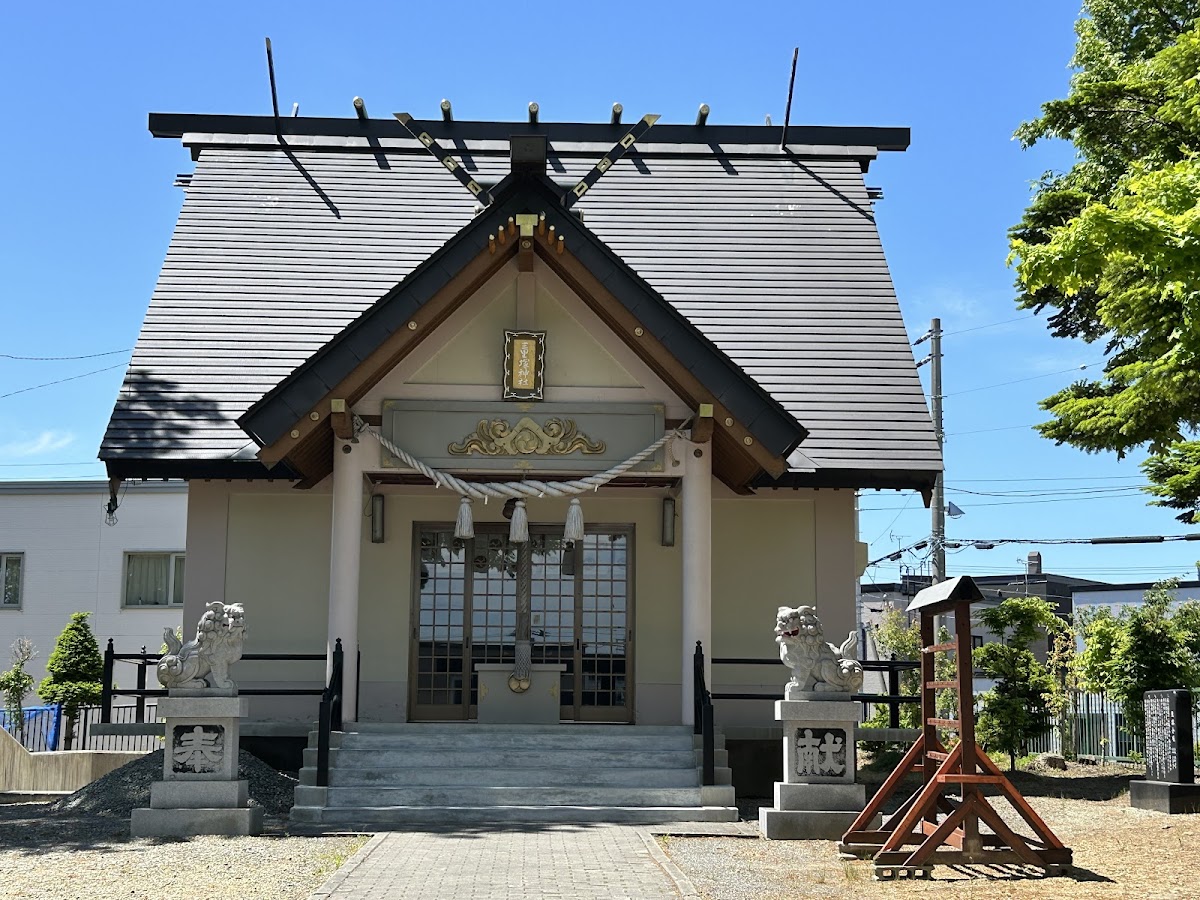
The shrine building, nestled at the back of the grounds, is a traditional wooden shrine structure. While not large, it is meticulously maintained, reflecting the deep faith of the local residents.
A shrine name marker stands in front of the building, inscribed with the words “Sanrizuka Shrine.” Even in the Heisei era, parishioners have continued to make donations, maintaining the shrine grounds.
Water Basin
There is a water basin on the grounds where visitors can purify themselves before praying. It is especially well-maintained during the New Year’s period and is used by many worshippers.
Quiet Atmosphere of the Shrine Grounds
One of the charms of Sanrizuka Shrine is its quiet and peaceful atmosphere. Despite being located in a residential area, stepping onto the grounds allows you to experience a tranquility far removed from the hustle and bustle of the city.
While it may not have the bustling atmosphere of a large shrine, it offers a peaceful and tranquil place of worship rooted in the local community.
Nearby Tourist Attractions
There are several tourist attractions near Sanrizuka Shrine that you might want to visit in conjunction with your pilgrimage.
Mitsui Outlet Park Sapporo Kitahiroshima
This large outlet mall is about a 5-minute drive away. It reopened after renovations in 2023 and is popular as one of Hokkaido’s largest shopping facilities. You can enjoy shopping before or after your visit to the shrine.
Costco Sapporo Warehouse
Located about a 5-minute drive from Sanrizuka Shrine, this large membership-based supermarket is popular with visitors who want to shop in addition to their pilgrimage.
Kitahiroshima City Tourist Attractions
Since Sanrizuka Shrine is close to the border between Sapporo and Kitahiroshima, it’s recommended to combine your visit with sightseeing in Kitahiroshima City. Hokkaido Ballpark F Village (Escon Field Hokkaido) is also about a 15-minute drive away.
Manners and Etiquette for Visiting a Shrine
Basic Etiquette for Visiting a Shrine
When visiting Sanrizuka Shrine, please observe the following basic etiquette:
- Bow before passing through the torii gate: This is a courtesy before entering the sacred area.
- Avoid walking in the center of the approach to the shrine: The center is considered the path of the gods.
- Purify your body and mind at the water basin: Purify your left hand, then your right hand, then your mouth.
- Etiquette in front of the main hall:
- Quietly place your offering in the offering box.
- Two bows, two claps, one bow (two bows, two claps, one bow).
- Pray with sincerity.
- Bow again when leaving the shrine grounds: With gratitude.
Regarding Photography
Photography is generally permitted on the shrine grounds, but please note the following points.
- Be considerate of other worshippers.
- Refrain from taking photos inside the shrine.
- Avoid using flash photography.
- When posting on social media, remember to show respect to the location and the shrine.
Regarding Pets
At Sanrizuka Shrine, during events such as New Year’s visits, you may be invited to bring your pet if you carry it. However, please note the following:
- Always carry your pet or put it in a carrier.
- Letting your pet roam freely is strictly prohibited.
- Take responsibility for cleaning up after your pet.
- Remember to be considerate of other worshippers.
Relationship with the Hokkaido Association of Shinto Shrines
Sanrizuka Shrine belongs to the Hokkaido Association of Shinto Shrines and its Sapporo Branch. The Hokkaido Association of Shinto Shrines is an organization that oversees shrines in Hokkaido, supporting the maintenance and management of shrines, the training of Shinto priests, and the execution of Shinto rituals.
Concurrent Priest System
Shrines like Sanrizuka Shrine, which do not have a resident Shinto priest, operate under the system of “concurrent priests,” where priests from nearby shrines serve concurrently. In the case of Sanrizuka Shrine, Toyohira Shrine also manages the shrine, and during important religious ceremonies such as the annual festival, the priests of Toyohira Shrine conduct the rituals.
This system allows even small shrines to properly perform and maintain religious ceremonies.
Planning a Visit to Sanrizuka Shrine
Recommended Time to Visit
Sanrizuka Shrine is open year-round, but the following times are particularly recommended:
Hatsumode (January 1st-3rd): Ideal for New Year’s prayers. It is relatively less crowded, allowing for a peaceful visit.
Annual Festival Day: The shrine’s most important festival. You can observe a formal ceremony conducted by the priests.
Spring to Autumn: The mild climate of Hokkaido. The greenery of the shrine grounds is beautiful, making it ideal for visiting.
Estimated Time Required
Please use the following as a guideline for the time required to visit Sanrizuka Shrine.
- Visiting the shrine only: Approximately 15-30 minutes
- Strolling leisurely around the grounds: Approximately 30-45 minutes
- If receiving a Goshuin (shrine stamp) at Toyohira Shrine: Additional travel time and reception time are required.
Clothing and Items to Bring
Clothing:
- No special clothing is required, but clean attire is preferred.
- Take sufficient precautions against the cold in winter (Hokkaido winters are very cold).
- It is recommended to wear comfortable walking shoes.
Items to Bring:
- Goshuincho (stamp book) (if receiving a Goshuin at Toyohira Shrine)
- Camera (for taking photos of the shrine grounds)
- Offering (bring small change)
Summary
Sanrizuka Shrine is a historical shrine located in Kiyota Ward, Sapporo City. Its large torii gate on National Route 36 is a familiar landmark in the area and is well-known to many people. Since its founding in 1890 (Meiji 23), Sanrizuka Shrine has grown alongside the development of the region and remains a cherished center of faith for local residents.
While there are no resident priests, Toyohira Shrine also manages the shrine, and Goshuin (shrine stamps) are issued at Toyohira Shrine. The quiet and peaceful grounds are perfect for escaping the hustle and bustle of the city and finding peace of mind.
It’s also conveniently located for those visiting nearby commercial facilities such as Mitsui Outlet Park and Costco, making it a great place to stop by while sightseeing or shopping. It’s easily accessible when visiting Kitahiroshima City.
At Sanrizuka Shrine, where three deities—Oyamatsumi-no-kami, Ukanomitama-no-kami, and Hachiman-no-kami—are enshrined, why not pray for a bountiful harvest, business prosperity, family safety, and matchmaking? It’s a shrine where you can pray in peace while feeling the history of Hokkaido’s development.
Sanrizuka Shrine warmly welcomes visitors at any time of year, whether for New Year’s, festivals, or daily visits. When visiting Kiyota Ward in Sapporo City, be sure to stop by.