Tokuyama Daijingu Complete Guide | History, Deities, and Visiting Information for Hokkaido’s Oldest Shrine
Tokuyama Daijingu, located in Matsumae-cho, Matsumae-gun, Hokkaido, is one of the oldest shrines in Hokkaido. Its history, dating back to the Middle Ages, began with the faith of fishermen from Honshu and developed under the patronage of the Matsumae Domain. This article provides a thorough explanation of Tokuyama Daijingu from every angle, including its detailed history, architectural value, and visiting information.
What is Tokuyama Daijingu?
Tokuyama Daijingu is a shrine that enshrines Amaterasu Omikami and Toyouke Omikami as its main deities, and its former shrine rank was Gosha (village shrine). It was known as Oshima Ichinomiya or Matsumae Ichinomiya, and during the Matsumae Domain era, it was the most revered shrine in the region, with the domain lord always visiting it during his sankin-kotai (alternate attendance) journeys. The current location is 66 Shinmei, Matsumae-cho, Matsumae-gun, Hokkaido, and it is easily accessible from historical tourist spots such as Matsumae Castle and the Matsumae Clan Residence.
Deities Enshrined and Enshrined Together
The main deities are Amaterasu Omikami and Toyouke Omikami, the same as those enshrined at the Inner and Outer Shrines of Ise Grand Shrine. However, Tokuyama Grand Shrine also enshrines 46 other deities. This is the result of integrating smaller shrines in the vicinity, and in some cases, the same deity is enshrined multiple times.
This large number of enshrined deities reflects the history of shrine consolidation policies during the Meiji era and the merger and abolition of shrines due to depopulation in the region.
History of Tokuyama Grand Shrine
Origin of Founding: The Era of Ise-do
The exact founding date of Tokuyama Grand Shrine is unknown, but its origins date back to the Middle Ages. At that time, fishermen from Akita and Tsugaru would cross the sea to the Matsumae region of Hokkaido every spring and summer to engage in fishing. They would return to Honshu in the autumn, repeating this seasonal migration.
To avoid danger in their relationship with the Ainu people who lived in the area at the time, these fishermen would visit Ise Grand Shrine, receive a sacred amulet (taima), and enshrine it in a small shrine. This was the first shrine building, known as “Ise-do,” and is believed to have been located in Karatsu Uchihama (present-day Karatsu).
This Ise-do is the prototype of Tokuyama Grand Shrine and served as a religious bridge connecting Honshu and Hokkaido.
Tensho Era: Renaming to Shinmei Shrine and Relocation
In 1582 (Tensho 10), Suehiro, the 4th lord of the Matsumae family, relocated the Ise-do shrine to Kuramachi (present-day Fukuyama) and was granted the shrine grounds. At this time, the shrine’s name was changed to “Shinmei-sha,” and it came to be revered by the Matsumae family.
This period was a time when the Matsumae clan was establishing their control over Ezo (Hokkaido), and the relocation and renaming of the shrine were religious measures to demonstrate the Matsumae family’s authority.
Shoo 1: Relocation to the Current Location and Establishment of Tokuyama Grand Shrine
In 1652 (Shoo 1), Takahiro, the 9th lord of the Matsumae family, constructed a new shrine building at the current location, Shinmei, and relocated the Shinmei Shrine. At this time, the shrine formally received the sacred seals from the Inner and Outer Shrines of Ise Grand Shrine, and was renovated to become a shrine of higher status.
There is also a theory that the shrine’s name was changed to “Tokuyama Daijingu” at this time, and thereafter, this shrine established its position as the highest-ranking shrine in the Matsumae Domain, namely, the “Ichinomiya” of Matsumae.
Tradition of Shikinen Zōei
Following the receipt of the sacred seals from Ise Grand Shrine, Tokuyama Daijingu began to perform Shikinen Zōei (rebuilding/relocation) every 21 years, following the example of Ise Grand Shrine. This tradition is an important ritual in Japanese Shinto belief, as it ensures the continuation of architectural techniques and the purity of the shrine buildings by regularly updating the shrine architecture.
Maintaining this tradition of Shikinen Zōei in the harsh climatic conditions of Hokkaido demonstrates the depth of faith of the Matsumae Domain and the local residents.
Relationship with the Matsumae Domain
Tokuyama Daijingu received strong patronage from the lord of the Matsumae Domain. It was customary for the feudal lord to visit this shrine when traveling to Edo for the sankin-kōtai (alternate attendance) system and upon his return to his domain. This was an important ceremony to pray for the lord’s safe journey and to express gratitude for his safe return.
As a shrine most revered not only by the samurai class of the Matsumae domain but also by the general public (samurai and commoners), it played a role as a spiritual center in the local community.
Changes after the Meiji Restoration
In the shrine ranking system established after the Meiji Restoration, Tokuyama Grand Shrine was ranked as a gōsha (village shrine). Gōsha was a rank above village shrines and below prefectural shrines, indicating its recognition as an important shrine in the region.
From the Meiji to the Showa period, numerous smaller shrines in the surrounding area were successively merged, resulting in the current form of shrine enshrining 46 deities.
Architectural Value: Main Hall Designated as a National Important Cultural Property
Characteristics of the Shinmei-zukuri Style
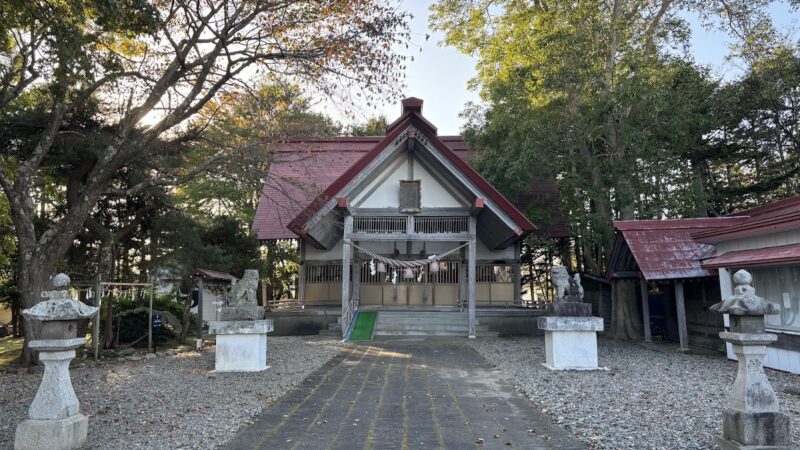
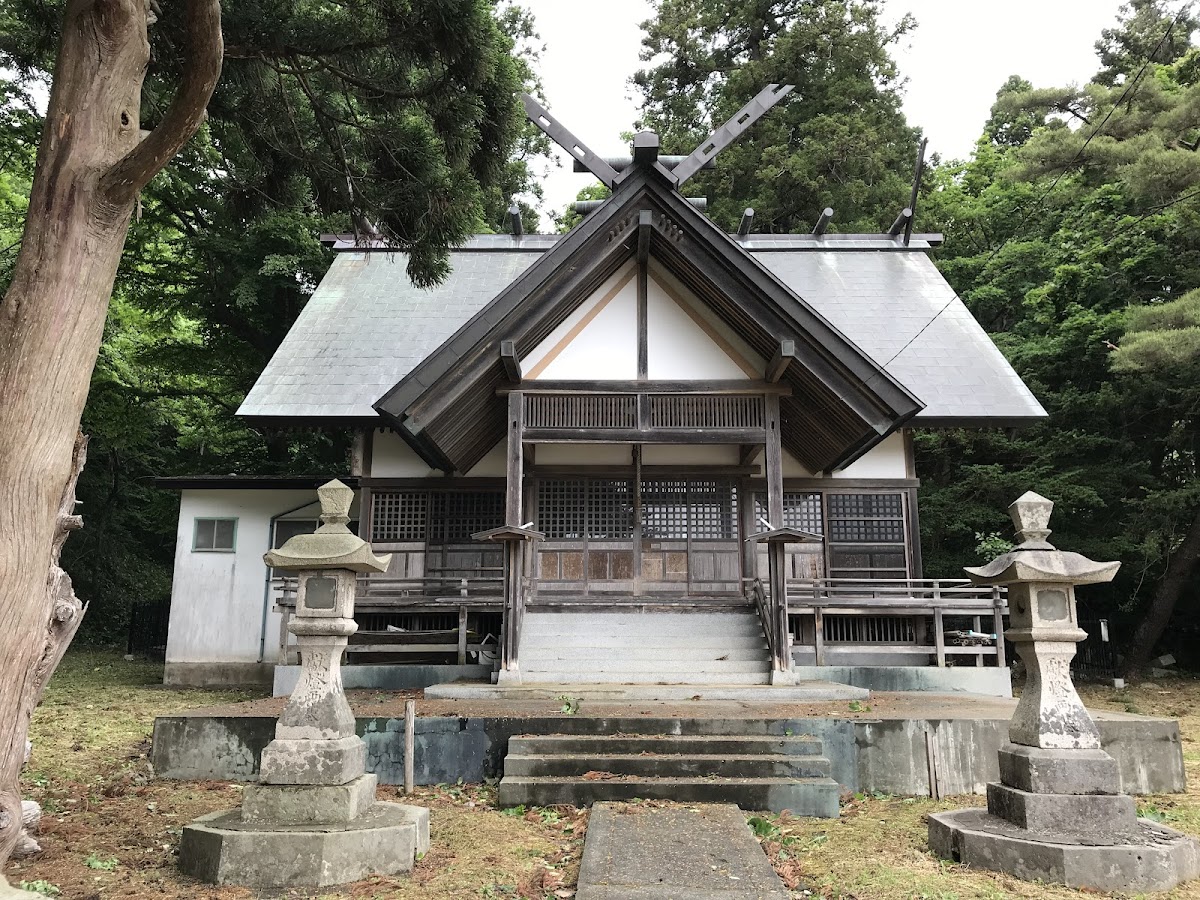
The main hall of Tokuyama Grand Shrine is built in the Ikkensha Shinmei-zukuri style. Shinmei-zukuri is one of the oldest styles of Japanese shrine architecture, exemplified by Ise Grand Shrine.
An Ikkensha refers to a small shrine style where the bay between the pillars at the front is one ken (approximately 1.8 meters). The following are some of the characteristics of the Shinmei-zukuri style:
- Hirairi: The entrance is on the flat side (long side) of the roof.
- Kirizuma-zukuri: The roof has a mountain-like shape, resembling an overturned book.
- Linear and Simple Structure: A pure beauty achieved by eliminating ornamentation.
- Chigi and Katsuogi: Chigi (decorative finials) intersecting at both ends of the roof, and katsuogi (decorative finials) lined up on the ridge.
A Valuable Building Conveying Medieval Style
The most distinctive feature of the Tokuyama Grand Shrine’s main hall is that the details of its construction differ slightly from modern Shinmei-zukuri, conveying a medieval style. This is thought to be due to its geographical location in Hokkaido, which allowed it to develop relatively independently from the changes in architectural styles of Honshu.
Recognizing this architectural historical value, the main hall was designated a National Important Cultural Property on March 5, 1971. It is an extremely valuable cultural property among shrine architecture in Hokkaido.
Preservation and Restoration
Since being designated an Important Cultural Property, regular preservation and repair work has been carried out, preserving its original appearance to this day. The fact that it has been maintained for hundreds of years under Hokkaido’s harsh climate is a testament to the efforts of the local people.
Highlights of the Shrine Grounds
Shrine Building Layout
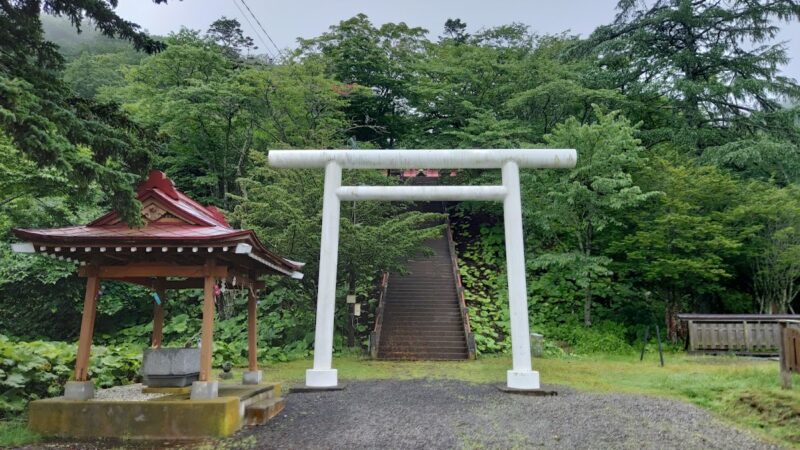
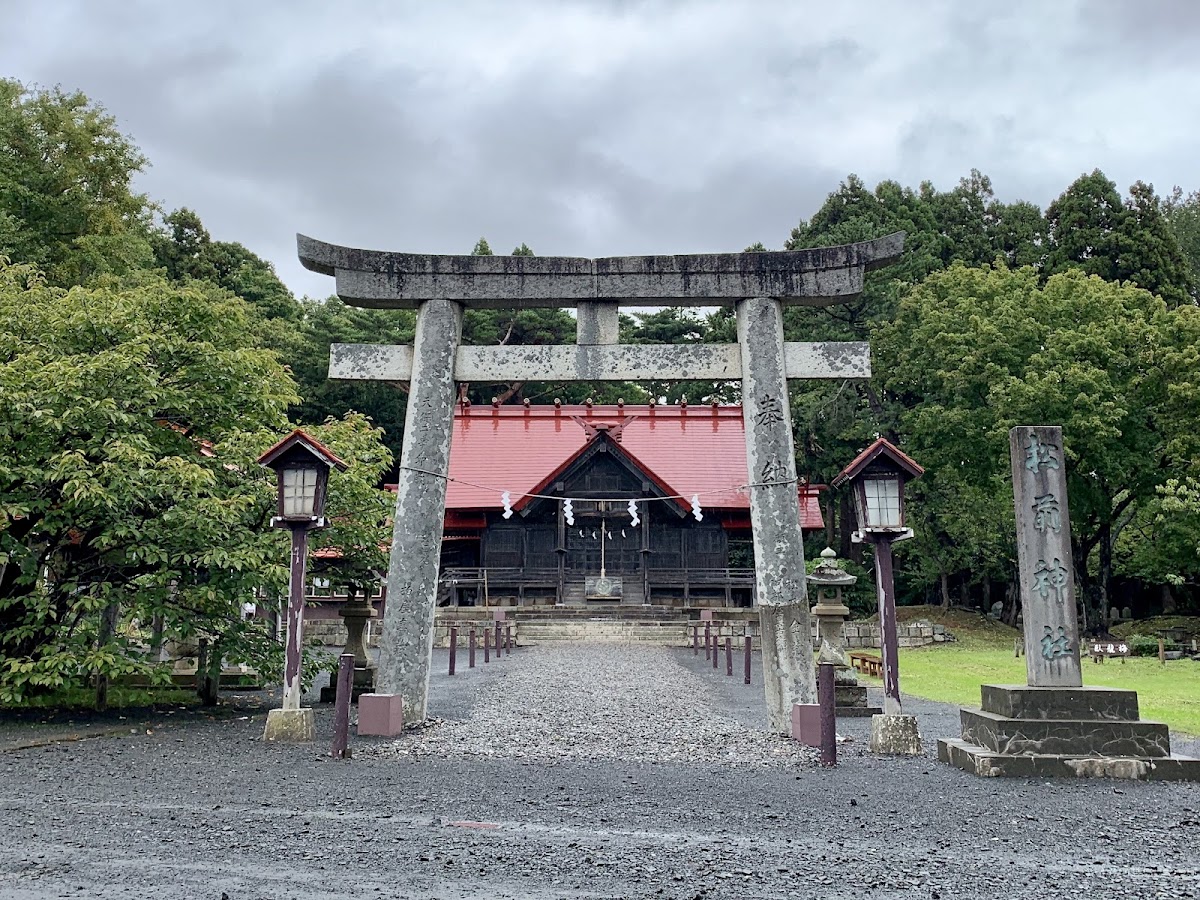
The grounds of Tokuyama Grand Shrine are arranged with the main hall at the center, along with the worship hall and Kagura hall. As you proceed along the approach, you first pass through the torii gate, purify yourself at the water basin, and then proceed to the worship hall.
The grounds are enveloped in a tranquil atmosphere, creating a solemn space that evokes the history of Matsumae.
Shrine Grove and Natural Environment
The shrine grove (shasō: the forest surrounding the shrine) is composed of trees adapted to Hokkaido’s climate. These trees serve as a “guardian forest” protecting the sacred area and also play a role in preserving the local ecosystem.
From spring to autumn, you can enjoy the changing seasons, and the scenery is particularly beautiful during the fresh green season and the autumn foliage season.
Annual Festival and Events
Annual Festival (September 17th)
The annual festival of Tokuyama Grand Shrine is held every year on September 17th. The annual festival is the most important festival at the shrine, where gratitude is offered to the enshrined deity and prayers are offered for the peace and prosperity of the region.
The Shinto rituals are conducted solemnly during the annual festival, and many local parishioners and devotees attend. It is one of the important annual events in Matsumae Town.
Other Festivals
In addition to the annual festival, various festivals are held throughout the year, including the New Year’s Day festival, the spring harvest festival, and the autumn harvest festival. These festivals are deeply rooted in the local community as traditional Japanese agricultural rituals and celebrations of seasonal milestones.
Visiting Information
Access
Location: 66 Shinmei, Matsumae-cho, Matsumae-gun, Hokkaido
Public Transportation:
- Approximately 12 minutes on foot from the Hakodate Bus “Matsushiro” bus stop
- Within walking distance of Matsumae Castle and the Matsumae Clan Residence
By Car:
- Approximately 2 hours from Hakodate city via National Route 228
- Parking available in Matsumae-cho
Matsumae-cho is a historical town located at the southernmost tip of Hokkaido, overlooking the Tsugaru Strait. Visiting Matsumae Castle, the Matsumae Clan Residence, and Matsumae Park (known for its cherry blossoms) in conjunction with a visit to Tokuyama Grand Shrine will allow you to more deeply experience the history and culture of Matsumae.
Visiting Hours and Precautions
While the shrine grounds are generally open for free visits, the shrine office’s operating hours may be limited. If you wish to obtain a Goshuin (shrine stamp) or amulet, it is recommended to check in advance.
During winter (November to March), snow cover makes the ground slippery, so it’s important to visit with appropriate equipment.
Nearby Tourist Attractions
Matsumae Castle (Fukuyama Castle) is known as the last Japanese-style castle and is within walking distance of Tokuyama Grand Shrine. Also, Matsumae Clan Residence features exhibits recreating samurai and merchant houses from the Edo period, allowing visitors to experience life at that time.
In spring, Matsumae Park boasts approximately 10,000 cherry trees of about 250 varieties, and has been selected as one of Japan’s “Top 100 Cherry Blossom Viewing Spots.” Visiting these tourist spots in conjunction with a visit to Tokuyama Grand Shrine will allow you to fully enjoy Matsumae’s rich history and culture.
Cultural Value of Tokuyama Grand Shrine
Position in the History of Shrines in Hokkaido
Hokkaido is a region where full-scale development progressed after the Meiji era, and many shrines were founded after the Meiji period. However, Tokuyama Grand Shrine has a history dating back to the Middle Ages and is considered to be the 12th oldest shrine in Hokkaido.
Such ancient shrines are invaluable for understanding Hokkaido’s history and serve as living evidence of how immigrants from Honshu brought and established their beliefs.
Northern Spread of Ise Faith
The history of Tokuyama Grand Shrine illustrates the process by which Ise faith spread from Honshu to Hokkaido. Beginning with fishermen enshrining a sacred amulet from Ise Grand Shrine, and eventually culminating in the formal enshrinement of the divine seal, this process illustrates the development of folk belief into official shrine worship.
While Ise faith spread throughout Japan from the Middle Ages to the early modern period, its influence even reached the remote region of Hokkaido, which is noteworthy.
Religious Policy of the Matsumae Domain
As the only daimyo in Ezo (Hokkaido), the Matsumae Domain established its own unique system of rule. The patronage of Tokuyama Grand Shrine also served to religiously legitimize the authority of the domain.
The fact that the feudal lord always visited the shrine during his sankin-kōtai (alternate attendance) journeys indicates that Tokuyama Grand Shrine functioned not merely as a religious institution, but as an integral part of the domain’s political and social order.
Connection to the Local Community
Role as a Guardian Deity
Tokuyama Grand Shrine has served as the guardian deity of the Shinmei district of Matsumae Town, acting as a spiritual pillar for the local residents. It is closely intertwined with the lives of the residents, serving as a place for life-changing rituals (birth, growth, marriage, and unlucky years) and as the center of local festivals.
Significance in Modern Times
In Matsumae Town, which is experiencing population decline and aging, historical shrines like Tokuyama Grand Shrine play a crucial role in maintaining the region’s identity. Annual events and festivals provide opportunities for residents to gather and reaffirm their community bonds.
Furthermore, its value as a cultural asset is attracting attention as a tourist resource, drawing in tourists interested in history.
The Significance of Visiting Tokuyama Grand Shrine
Visiting Tokuyama Grand Shrine offers multifaceted significance beyond simply visiting a shrine:
- Dialogue with History: Directly experiencing the history of Hokkaido, which dates back to the Middle Ages.
- Appreciation of Architectural Beauty: Seeing the medieval-style Shinto architecture, a nationally important cultural property, up close.
- Experience of Faith: Experiencing worship at a prestigious shrine dedicated to the deities of Ise Grand Shrine.
- Understanding Local Culture: Experiencing the history and culture of the Matsumae Domain.
- Harmony with Nature: Having time to calm one’s mind in the tranquil grounds.
Manners and Etiquette for Visiting a Shrine
Observing basic manners when visiting a shrine will make your visit more meaningful:
How to Pass Through the Torii Gate
The torii gate is the entrance to the sacred area. Bow before passing through the torii gate and walk avoiding the center of the path (considered the path of the gods). ### Proper Ritual of Watering Hands
Purify your body and mind at the water basin:
- Take the ladle with your right hand and purify your left hand.
- Switch the ladle to your left hand and purify your right hand.
- Switch the ladle back to your right hand, receive water in your left hand, and rinse your mouth.
- Finally, hold the ladle upright and purify the handle.
Worship at the Main Hall
The basic ritual is “two bows, two claps, one bow”:
- Place your offering in the offering box.
- Ring the bell (if present).
- Bow deeply twice.
- Clap your hands twice at chest height.
- Express your wishes and gratitude silently.
- Finally, bow deeply once.
Summary
Tokuyama Grand Shrine is an important shrine indispensable to understanding the history of Hokkaido. Beginning with the faith of medieval fishermen, it developed under the patronage of the Matsumae Domain and has continued to exist as a spiritual pillar of the region to this day.
The main shrine building, designated a National Important Cultural Property, is a valuable structure that preserves the medieval Shinto architectural style and holds great architectural and historical significance. As the Ichinomiya (first-ranked shrine) of Matsumae and Oshima, it has long been revered by many as one of the most prestigious shrines in southern Hokkaido.
When visiting Matsumae, be sure to pay your respects at Tokuyama Grand Shrine and experience its long history, cultural value, and tranquil atmosphere. Along with Matsumae Park in cherry blossom season and the historic Matsumae Castle, Tokuyama Grand Shrine is an important element that constitutes the charm of Matsumae.
To understand the history and culture of Hokkaido, and the profound depths of Japanese shrine worship, Tokuyama Grand Shrine is an essential spot to visit.