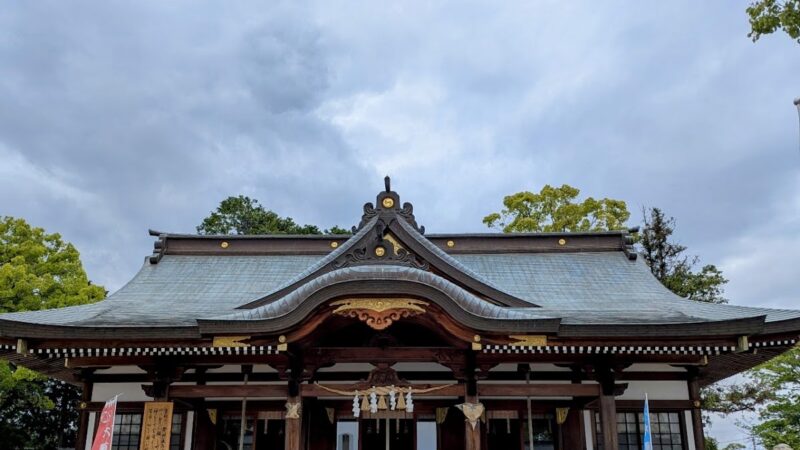
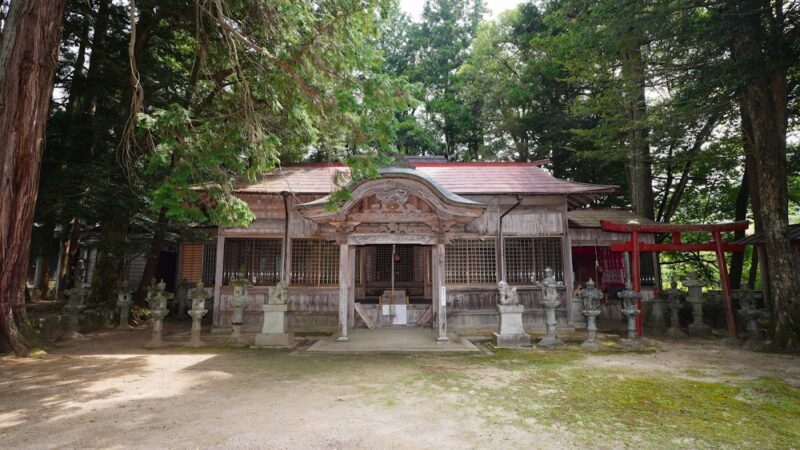
Ninomiya Shrine (Iwanobe, Chikusa-cho, Shiso City, Hyogo Prefecture) Complete Guide
Ninomiya Shrine, located at 1648 Iwanobe, Chikusa-cho, Shiso City, Hyogo Prefecture, is a shrine with a long history as a center of local faith. This article provides a comprehensive overview of Ninomiya Shrine, including detailed information, historical background, access methods, and its role in the community.
Basic Information about Ninomiya Shrine
Location and Contact Information
Ninomiya Shrine is located in the Iwanobe area of Chikusa-cho, Shiso City, Hyogo Prefecture.
- Official Name: Ninomiya Shrine
- Address: 1648 Iwanobe, Chikusa-cho, Shiso City, Hyogo Prefecture 671-3211
- Corporate Number: 4140005007106
- Affiliation: Under the jurisdiction of the Hyogo Prefectural Shrine Association
Shiso City is located in the central-western part of Hyogo Prefecture and is blessed with a rich natural environment. Chikusa-cho, in particular, is located in a mountainous area and has long been known as a region where forestry and agriculture have flourished.
Status as a Religious Corporation
Ninomiya Shrine is officially registered as a religious corporation and has been assigned corporate number 4140005007106. This corporate number is an official identification number that can be confirmed on the National Tax Agency’s corporate number publication site and indicates the legitimacy of the religious corporation.
As a shrine belonging to the Hyogo Prefectural Shrine Association, it is an official shrine under the umbrella of the Association of Shinto Shrines and functions as part of the regional shrine network.
The Meaning of the Shrine Name “Ninomiya Shrine”
Origin of Ninomiya Shrine
The name “Ninomiya” is found in shrines throughout Japan. There are 48 Ninomiya shrines nationwide, each deeply connected to the history of its region.
The origin of the name “Ninomiya” mainly stems from the following background:
- Connection to the Provincial Government System: In the ancient Ritsuryo system, each province had a hierarchy of shrines: Ichinomiya (the most prestigious shrine), Ninomiya, and Sanomiya. Ninomiya refers to the second most prestigious shrine in that region.
- Regional Hierarchy: It can also indicate the hierarchy of shrines within a specific region.
- Relationship with the Enshrined Deities: The name “Ninomiya” may also refer to the lineage or relationship of the enshrined deities.
There are several Ninomiya Shrines in Hyogo Prefecture. The most famous is the Ninomiya Shrine in Chuo-ku, Kobe City (one of the eight shrines descended from Ikuta Shrine), but the Ninomiya Shrine in Chikusa-cho, Shiso City, is a separate shrine with its own history and beliefs.
Relationship with Ninomiya Shrines Nationwide
The 48 Ninomiya Shrines scattered throughout Japan, each with its own independent history, are united by the common shrine name “Ninomiya.” Looking at them by prefecture, Hyogo Prefecture has several Ninomiya Shrines, each serving as a core of local faith.
Deities and Beliefs
Deities Enshrined
The deities enshrined at Ninomiya Shrines are based on local traditions and beliefs, but detailed information about the enshrined deities requires on-site verification and research of local documents. Generally, Ninomiya Shrines often enshrine the following deities:
- Deities of the Amaterasu-Omikami lineage
- Local tutelary deities
- Deities related to agriculture and daily life
Characteristics of the Faith
Ninomiya Shrine in the Iwanobe district of Chigusa Town attracts the following beliefs as the tutelary deity of the local residents:
- Abundant Harvest: A belief in praying for a bountiful harvest, given the region’s thriving agriculture
- Family Safety: A belief in praying for the peace and security of homes in the area
- Protection from Misfortune: A belief in protection from disasters
- Prosperity of Descendants: A belief in praying for the prosperity of the family lineage
History and Regional Characteristics of Chigusa Town, Shiso City
Overview of Chigusa Town
Chigusa Town existed as an independent town until it was incorporated into Shiso City in 2005 (Heisei 17). Located in the mountainous region of central-western Hyogo Prefecture, near the border with Okayama Prefecture, this area is blessed with abundant forest resources.
Characteristics of Chigusa Town:
- High altitude and cool climate
- Forestry is one of the main industries
- Clear streams and a rich natural environment
- Preservation of ancient rural culture
History of Iwanobe District
Iwanobe district is one of the oldest settlements in Chigusa Town. It is a settlement formed in a mountain valley, and has long relied on agriculture and forestry for its livelihood.
Ninomiya Shrine has played a central role in the local community, serving as a spiritual pillar of the Iwanobe district. The people of the settlement have deepened their community bonds by maintaining a connection with the shrine through various religious ceremonies and festivals throughout the year.
Annual Events and Festivals
Main Annual Events
As a local shrine, Ninomiya Shrine is believed to perform various religious ceremonies throughout the year. Typical annual events at Shinto shrines include the following:
Spring Events:
- Spring Grand Festival (Spring Festival)
- Toshigoi Festival (Prayer for a Bountiful Harvest)
Summer Events:
- Nagoshi no Harae (Summer Purification Ritual)
- Summer Grand Festival
Autumn Events:
- Autumn Grand Festival (Autumn Festival) – Festival of Thanksgiving for the Harvest
- Niiname-sai (Harvest Festival)
Winter Events:
- Oharai (Great Purification Ritual)
- New Year’s Day Festival
Regional Festival Culture
In the Harima region, including Shiso City, autumn festivals are traditionally celebrated with great fanfare. These festivals often feature processions of portable shrines, lion dances, and taiko drumming, with the entire community participating in supporting the celebrations.
Even in the mountainous areas of Chigusa Town, these traditional festival cultures are still preserved, and Ninomiya Shrine is believed to play a part in this.
Access Methods
Access by Public Transportation
Access to Iwanobe, Chigusa Town, Shiso City, Hyogo Prefecture, by public transportation is limited due to its mountainous location.
Nearest Station:
- The nearest train station is Chigusa Station on the JR Kishin Line.
- It’s approximately a 15-20 minute drive from Chigusa Station.
Bus:
- Shiso City Community Bus operates, but the number of buses is limited, so it’s necessary to check the timetable in advance.
Access by Car
Access by car is the most convenient.
Main Routes:
- From Osaka/Kobe:
- Approximately 40 minutes from Yamazaki IC on the Chugoku Expressway via National Route 29
- Similar route from Yamazaki IC on the Bantan Expressway
- From Okayama:
- Via National Route 179 and then National Route 29
- From Himeji:
- Head north on National Route 29, passing through Shiso city center towards Chigusa-cho
Car Navigation Settings:
- Address: 1648 Iwanobe, Chigusa-cho, Shiso City, Hyogo Prefecture
- Postal Code: 671-3211
Parking Information
As this is a local shrine, there is likely parking space for visitors within or around the shrine grounds. However, details should be confirmed on-site.
Nearby Attractions and Tourist Spots
Nature of Chigusa Town
Chigusa Town is blessed with a rich natural environment, offering many spots to enjoy in conjunction with a visit to Ninomiya Shrine.
Natural Spots:
- Chigusa River: Known for its clear waters, it’s also a great place for stream fishing.
- Forest Bathing Spots: The surrounding mountains offer opportunities for forest bathing and light hiking.
- Autumn Foliage Spots: Enjoy beautiful autumn leaves in the fall.
Tourism Resources of Shiso City
Shiso City as a whole has many tourism resources:
- Hara Fudo Falls: A famous waterfall selected as one of Japan’s Top 100 Waterfalls.
- Onzui Valley: A valley selected as one of Japan’s Top 100 Forests for Forest Bathing.
- Akanishi Valley: A famous spot for autumn leaves.
- Hot Spring Facilities: There are several hot spring facilities within the city.
Nearby Shrines and Temples
Many shrines and temples are scattered throughout Shiso City, making it possible to enjoy a shrine pilgrimage. Each shrine preserves the history and culture of its region.
Manners and Etiquette for Visiting a Shrine
Basic Shrine Visit Etiquette
Here’s a guide to the basic etiquette for visiting a shrine:
How to Pass Through the Torii Gate:
- Bow before the torii gate.
- Walk along the path, avoiding the center (the center is the path for the gods).
- Proceed quietly into the shrine grounds.
How to Wash Your Hands:
- Take the ladle with your right hand and wash your left hand.
- Switch the ladle to your left hand and wash your right hand.
- Switch the ladle back to your right hand, receive water in your left hand, and rinse your mouth.
- Wash your left hand again.
- Stand the ladle upright to wash the handle and return it to its original position.
Etiquette at the Main Hall:
- Quietly place your offering in the offering box.
- Ring the bell if there is one.
- Two bows, two claps, one bow.
- Bow deeply twice.
- Clap twice.
- Bow deeply once.
Guidelines for Visiting a Shrine
Shrines are sacred places. Please observe the following points:
- Visit with a pure heart
- Remain quiet within the shrine grounds
- Take photographs only in designated areas
- Take your trash with you
- Respect the natural environment
About Goshuin (Shrine Seals)
The Significance of Goshuin
Goshuin are given as proof of visiting a shrine. They are not merely stamps, but should be cherished as proof of a connection with the deities.
How to Receive a Goshuin (Shrine Stamp)
General way to receive a Goshuin:
- First, complete your prayers.
- Request a Goshuin at the shrine office.
- Open your Goshuincho (stamp book) and hand it over.
- Pay the offering fee (approximately 300-500 yen).
- Receive it respectfully.
Points to Note:
- Smaller shrines may not have a resident priest.
- It is recommended to contact the shrine in advance to confirm.
- Don’t forget to bring your Goshuincho.
The Role of Ninomiya Shrine in the Community
As the Center of the Community
Ninomiya Shrine plays an important role as the spiritual center of the Iwanobe district community.
Social Functions:
- A place for interaction among local residents.
- A place for the transmission of traditional culture.
- Intergenerational exchange through festivals.
- The core of regional identity.
Depopulation and the Challenges of Shrines
Like many mountainous regions, Chigusa Town faces the challenges of population decline and aging. In this context, maintaining local shrines is not easy.
Modern Challenges:
- Decreasing number of parishioners
- Shortage of people to carry out festivals
- Maintenance and management of facilities
- Preservation of traditional culture
However, thanks to the efforts of local residents, shrines continue to function as spiritual pillars of the community.
Shrine Culture in Hyogo Prefecture and Ninomiya Shrine
Characteristics of Shrines in Hyogo Prefecture
Hyogo Prefecture is a prefecture with a large number of shrines, ranking among the highest in Japan. Its rich shrine culture stems from its history as a transportation hub since ancient times and the intersection of diverse cultures.
Representative Shrines in Hyogo Prefecture:
- Izanagi Shrine (Awaji City)
- Hirota Shrine (Nishinomiya City)
- Ikuta Shrine (Kobe City)
- Harima Province Grand Shrine (Himeji City)
Shrine Culture in the Harima Region
Shiso City belonged to the former Harima Province and possesses a unique shrine culture specific to the Harima region. Harima Province has been an important region since ancient times, and many shrines and legends are recorded in the “Harima Province Fudoki” (a historical and geographical record of Harima Province).
Characteristics of Harima Shrines:
- Grand Autumn Festivals
- Development of Mikoshi (portable shrine) Culture
- Folk Performing Arts such as Lion Dances
- Worship of Agricultural Deities
Preservation and Future of Ninomiya Shrine
Value as a Cultural Asset
Local shrines are not merely religious facilities, but valuable cultural heritage sites that convey the history and culture of the region. They are a collection of diverse cultural elements, including architecture, festivals, and legends.
Sustainable Shrine Management
In the face of depopulation, various efforts are needed to maintain shrines:
Examples of Initiatives:
- Collaboration with neighboring shrines
- Utilization as a Tourism Resource
- Utilization of Digital Technology (Information Dissemination)
- Attracting Visitors from Urban Areas
- Collaboration with Supporters Outside the Region
Passing on to the Next Generation
Passing on local shrines to the next generation is also about protecting the region’s identity and culture. It is important to convey the value of shrines to younger generations and to get them interested in them.
Practical Advice for Visiting the Temple
Clothing and Items to Bring
Recommended Clothing:
- Clean and understated clothing
- Warm clothing appropriate for the season (due to the mountainous location)
- Comfortable walking shoes (in case there are stairs on the temple grounds)
Checklist of Items to Bring:
- Goshuincho (stamp book) (if you wish to receive a Goshuin stamp)
- Camera (check where photography is permitted)
- Drinking water (especially in summer)
- Map or navigation device
Best Time to Visit
Attractions of Each Season:
- Spring (March-May): Beautiful fresh greenery and pleasant weather
- Summer (June-August): Deep greenery and refreshing mountain air
- Autumn (September-November): Beautiful autumn foliage and autumn festival season
- Winter (December-February): Serene atmosphere of snowy landscapes
Due to the mountainous location, there is a possibility of snowfall in winter. We recommend checking road conditions before your visit.
Use of Nearby Facilities
The following facilities are located around Chigusa-cho:
- Roadside Station (rest, meals, souvenir shopping)
- Hot Spring Facility (refreshment after visiting the shrine)
- Agricultural Products Direct Sales Outlet (fresh local produce)
- Restaurants (cuisine using local ingredients)
Relationship with Other Shrines in Shiso City
Major Shrines in the City
Shiso City has many shrines scattered throughout, each attracting local faith. Visiting the shrines in the city will allow you to gain a deeper understanding of Shiso City’s history and culture.
Shrine Network
Shrines under the jurisdiction of the Hyogo Prefectural Shrine Association support the local religious culture through mutual cooperation. Cooperation between shrines is fostered through regular meetings and joint projects.
Shrine Information in the Digital Age
Online Information Gathering
In modern times, gathering information about shrines online has become easy:
- Hyogo Prefecture Shrine Association website
- Shrine search database
- Local information sites
- Information sharing on social media
Smartphone Utilization
Using a smartphone during your visit can enhance your experience:
- Navigation with map apps
- Photography (while respecting etiquette)
- Creating a visit record
- Information search
QR Code Utilization:
Some shrines also provide information using QR codes. By scanning the QR code with your smartphone, you can access detailed information.
Summary: The Value and Charm of Ninomiya Shrine
Ninomiya Shrine, located at 1648 Iwanobe, Chikusa-cho, Shiso City, Hyogo Prefecture, is a valuable presence that conveys the history and culture of the region to the present day.
Characteristics of Ninomiya Shrine:
- A local guardian shrine located in a tranquil mountainous area
- A formal religious corporation with corporate number 4140005007106
- A spiritual pillar of the local community
- A member of the shrine network under the jurisdiction of the Hyogo Prefectural Shrine Association
- One of the 48 Ninomiya Shrines nationwide
Significance of Visit:
- Experience traditional Japanese faith and culture
- Learn about local history
- Enjoy the rich natural environment
- Find peace of mind in a quiet environment
- Contribute to the preservation of local culture
Visiting Ninomiya Shrine is not merely sightseeing; it is a valuable opportunity to deepen your understanding of traditional Japanese culture and local communities. When visiting Shiso City, be sure to visit this historic shrine.
In the tranquil mountainous environment, you will be able to experience the essence of Japanese shrine culture. By visiting this place of worship, which has been carefully preserved by the local people, you can reaffirm the importance of the “connection between community and faith” that is being lost in modern society.
Ninomiya Shrine in Iwanobe, Chikusa-cho, Shiso City, Hyogo Prefecture, though small in scale, is an irreplaceable presence for the community and a place that provides visitors with a quiet sense of awe and peace of mind.