Complete Guide to Isobe Inamura Shrine (Ibaraki Prefecture) | A Thorough Explanation of the Charms of Goshuin (Shrine Seals), Cherry Blossom Viewing Spots, and the Kanameishi Stone
Isobe Inamura Shrine, located in Sakuragawa City, Ibaraki Prefecture, is a prestigious shrine with a long history dating back to ancient times, and is designated as a national scenic spot and natural monument, famous for its cherry blossoms. This article will fully convey the charm of Isobe Inamura Shrine, from information on goshuin (shrine seals) and highlights of the grounds to its history and access methods.
About Isobe Inamura Shrine
Isobe Inamura Shrine is located at 779 Isobe, Sakuragawa City, Ibaraki Prefecture, and its former name was “Isobe Inamura-gu.” It is a Shikinaisha (a minor shrine listed in the Engishiki) of Niihari District, Hitachi Province, and its former shrine rank was Gosha (village shrine). The shrine enshrines various deities, including Amaterasu Omikami, Konohanasakuya-hime no Mikoto, and Amenotajikarao no Mikoto.
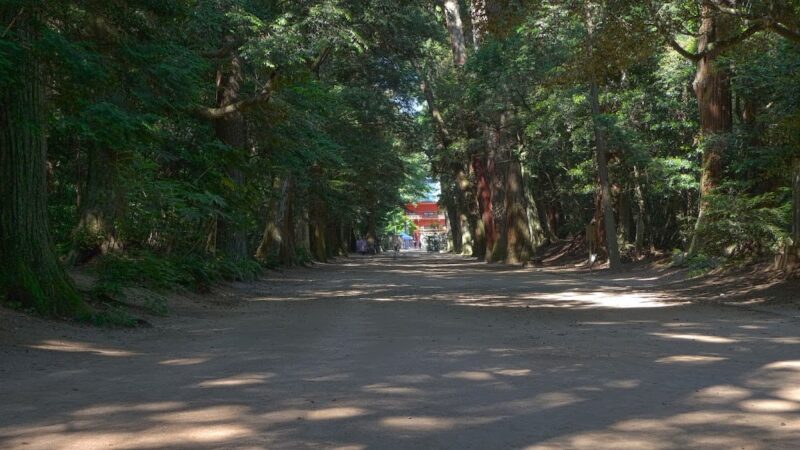
A portion of the shrine grounds, centered around the approach to the shrine, and a part of the adjacent Isobe Sakuragawa Park, were designated a National Place of Scenic Beauty in 1924 (Taisho 13) as “Sakuragawa,” and further designated a National Natural Monument in 1974 (Showa 49) as “Sakuragawa’s Cherry Blossoms.” This double designation speaks to the high cultural and natural value of Isobe Inamura Shrine.
History of Isobe Inamura Shrine
Founding and Ancient Legends
According to the Ibaraki Prefecture Shrine Records, the origins of Isobe Inamura Shrine date back to the 40th year of Emperor Keiko’s reign (around 110 AD). It is said that the shrine originated when Yamato Takeru no Mikoto, who pacified the eastern barbarians, enshrined divided spirits of the great deities of Ise and Kashima.
Later, it is believed that the shrine’s grounds were completed during the reign of Emperor Seimu, and rebuilt during the reign of Emperor Monmu. This legend indicates that Isobe Inamura Shrine was an important place of worship in eastern Japan from ancient times.
From the Medieval to the Early Modern Period
Construction took place in 1539 (Tenbun 8), and reconstruction was repeated several times thereafter. Records show that Tokugawa Mitsukuni (Mito Kōmon), the lord of the Mito domain, visited the shrine during the Edo period, indicating that it was deeply revered by influential figures and feudal lords in the region.
Changes in the Modern Period
In 1871 (Meiji 4), the shrine suffered a tragedy when the main hall was destroyed by arson, but it was subsequently rebuilt and stands to this day. This history of overcoming difficulties demonstrates the depth of faith and affection the local people have for the shrine.
Deities and Divine Virtues
The following deities are enshrined at Isobe Inamura Shrine:
Amaterasu Omikami
The supreme deity in Japanese mythology, a goddess who personifies the sun. Revered as the ancestral deity of the Imperial family, she bestows divine virtues of national peace and prosperity, and good fortune.
Konohanasakuya-hime no Mikoto
A goddess as beautiful as a cherry blossom, also known as the goddess of Mount Fuji. She bestows divine virtues of safe childbirth, child-rearing, and protection from fire, making her a fitting deity for Isobe Inamura Shrine, a famous cherry blossom viewing spot.
Amenotajikarao no Mikoto
A strong god who opened the rock cave where Amaterasu Omikami hid in the Amano-Iwato myth. This shrine is believed to bestow blessings for improvement in sports, enhancement of skills, and good fortune.
Due to these enshrined deities, Isobe Inamura Shrine attracts many worshippers as a place where they can receive various divine blessings.
Highlights of the Shrine Grounds
Charm as a Cherry Blossom Spot
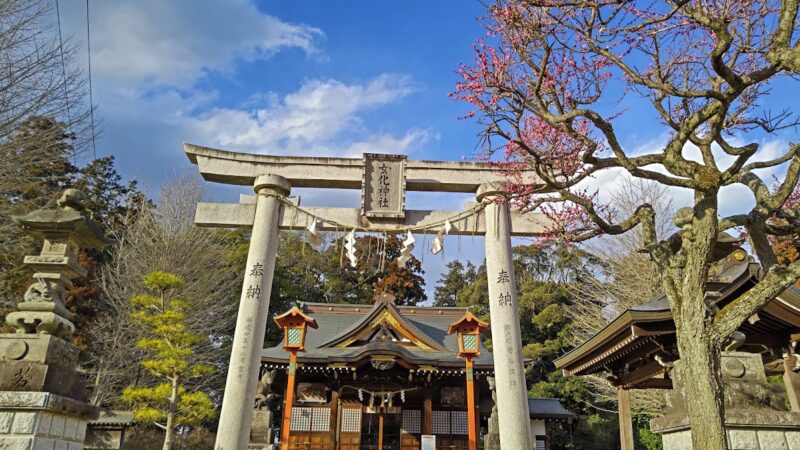
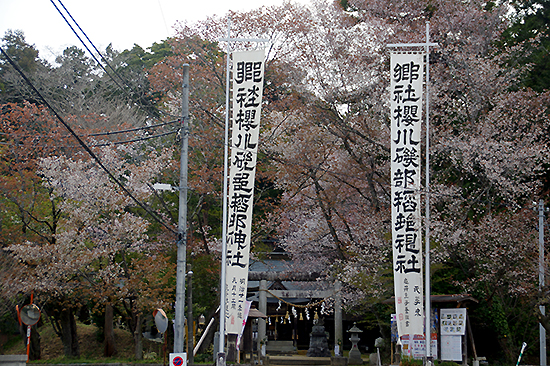
The greatest charm of Isobe Inamura Shrine is undoubtedly its cherry blossoms. Many mountain cherry trees line the approach to the shrine and the slope where it stands, creating a magnificent cherry blossom landscape in spring. The “Sakuragawa Cherry Blossoms,” designated as a national scenic spot and natural monument, have been celebrated in waka poetry since ancient times, and the Heian period poet Ki no Tsurayuki also praised the Sakuragawa cherry blossoms.
The shrine grounds boast over 1000 cherry trees of approximately 30 varieties, allowing visitors to enjoy the simple beauty of mountain cherry blossoms, distinct from Somei Yoshino. While the shrine is bustling with many cherry blossom viewers during the season, the atmosphere remains tranquil, providing an ideal environment for leisurely appreciating the blossoms.
Kanameishi (Keystone)
Located approximately 5 meters northwest of the main shrine building within the temple grounds, is the Kanameishi, a keystone that has been an object of worship for the local residents since the Jomon period. Its shape is convex, and it is said to have symbolized yin and yang since ancient times.
Interestingly, it has a connection to the Kanameishi of Kashima Shrine. The Kanameishi of Kashima Shrine is concave, and according to one theory, this area was once the sacred territory of Kashima Shrine. Legend says that the Kanameishi of Kashima Shrine holds down the head of a giant catfish, while the Kanameishi of Isobe Inamura Shrine holds down its tail, thus preventing earthquakes. This legend can be seen as an indication of the ancient people’s fear and prayers regarding earthquakes in the Kanto region.
Ki no Tsurayuki’s Poetry Monument
Within the temple grounds is a monument inscribed with a poem by Ki no Tsurayuki, designated as a cultural property of Ibaraki Prefecture. The inscription reads a poem by Ki no Tsurayuki, a poet of the Heian period, about the cherry blossoms of Sakuragawa, making it a valuable cultural asset that proves this area has long been known as a famous cherry blossom viewing spot.
Wooden Komainu (Guardian Lion-Dogs)
The wooden komainu, designated as a cultural property of Ibaraki Prefecture, are a must-see. Their warm expressions, different from stone komainu, and their historical presence are captivating.
Power Stones for Passing Exams
The shrine grounds also feature power stones for praying for success in exams, attracting many students and those preparing for qualification exams. It’s a special place for those seeking divine blessings for academic success and passing exams.
Goshuin (Shrine Seal) Information
Goshuin of Isobe Inamura Shrine
Isobe Inamura Shrine offers regular goshuin. They are available at the shrine office, and the chief priest, Ryo Isobe, carefully writes them. The goshuin features the calligraphy and red seal of “Isobe Inamura Shrine,” and is a popular memento for many visitors.
Goshuin (Shrine Seals) of Concurrent Shrines
At Isobe Inamura Shrine, you can also receive goshuin (shrine seals) for the concurrently managed shrines, Kamo Shrine and Shabiki Shrine. These goshuin are also available at the Isobe Inamura Shrine office, allowing you to receive goshuin from multiple shrines in a single visit.
Points to Note When Receiving Goshuin
Goshuin are proof of your visit, not a stamp rally. The correct etiquette is to first offer your heartfelt prayers at the main shrine, and then request your goshuin at the shrine office. Also, remember to bring your goshuincho (stamp book). Even without a goshuincho, you may be able to receive a pre-printed goshuin.
Access Information
Access by Train
Nearest Station: JR Mito Line, Haguro Station
- Approximately 20 minutes on foot from Haguro Station (approx. 1.5 km)
- Approximately 5 minutes by taxi from Haguro Station
Haguro Station is an unmanned station, but there are 1-2 trains per hour in both the Mito and Oyama directions. If walking, the path from the station to the shrine is flat, allowing you to enjoy the rural scenery.
Access by Car
Using the Kita-Kanto Expressway
- Approximately 10 minutes from Sakuragawa-Chikusei IC (approx. 6 km)
- Approximately 10 minutes from Kasama-Nishi IC (approx. 7 km)
Both ICs are easily accessible, and the shrine has a parking lot for visitors. During cherry blossom season, congestion is expected, so we recommend visiting earlier in the day.
Parking Information
Isobe Inamura Shrine has a free parking lot for visitors. While there is usually ample parking space, it becomes crowded with many cherry blossom viewers during the peak season (late March to early April). Temporary parking lots are also set up during this time, but if possible, consider using public transportation.
Basic Information
Shrine Name: Isobe Inamura Shrine
Address: 779 Isobe, Sakuragawa City, Ibaraki Prefecture 309-1211
Phone Number: 0296-75-2838
Visiting Hours: Grounds are freely accessible (Shrine office is usually open from 9:00 to 17:00)
Admission Fee: Free
Parking: Available (Free)
Official Website: Information can be found on the Ibaraki Prefecture Shrine Association website.
Nearby Tourist Attractions
Isobe Sakuragawa Park
This park is adjacent to Isobe Inamura Shrine and is also designated as a National Scenic Spot and Natural Monument. This is a spot you’ll want to visit along with the shrine during cherry blossom season. The spacious park has well-maintained walking paths, allowing you to enjoy a stroll while admiring the cherry blossoms.
A Place Associated with the Noh Play “Sakuragawa”
The area around Isobe Inamura Shrine is also the setting for the Noh play “Sakuragawa.” This story tells of a mother who travels to find her separated daughter, Sakura, and finally finds her at Sakuragawa, thus having a deep connection to the cherry blossoms of Sakuragawa. The chief priest, Ryo Isobe, plays a central role in the preservation of the Sakuragawa cherry blossoms, continuing to protect the local culture.
Other Shrines and Temples in Sakuragawa City
There are other historical shrines and temples scattered throughout Sakuragawa City. If you have time, it’s recommended to visit them along with Isobe Inamura Shrine.
Best Season for Visiting
Cherry Blossom Season (Late March to Early April)
If you’re visiting Isobe Inamura Shrine, cherry blossom season is definitely the best time. The sight of the cherry blossoms, designated as a national scenic spot and natural monument, in full bloom is breathtaking and will undoubtedly become a lifelong memory. However, crowds are expected during this time, so visiting on weekdays or early in the morning is recommended.
Season of Fresh Greenery (May-June)
The fresh greenery after the cherry blossom season is also beautiful, and the shrine grounds are enveloped in a refreshing atmosphere. The crowds subside, making it a time to visit at a leisurely pace.
Season of Autumn Leaves (November)
The autumn foliage is also spectacular. The cherry trees change color, offering a different kind of beauty than in spring.
Serene Winter (December-February)
In winter, Isobe Inamura Shrine has fewer visitors, allowing for a peaceful and calming visit. Visiting in the crisp air will refresh both mind and body.
Manners and Etiquette for Visiting
How to Pass Through the Torii Gate
The torii gate is the entrance to the sacred area. Before passing through the torii gate, bow once, and walk along the path, avoiding the center. The center of the path is called “seichu” and is considered the path where the gods pass.
How to Purify Yourself at the Water Basin
- Hold the ladle in your right hand and purify your left hand.
- Switch the ladle to your left hand and purify your right hand.
- Switch the ladle back to your right hand, receive water in your left hand, and rinse your mouth.
- Purify your left hand once more.
- Hold the ladle upright, let water flow over the handle, and return it to its original place.
How to Worship at the Main Hall
- Stand in front of the offering box and bow slightly.
- Gently place your offering in the box.
- If there is a bell, ring it.
- Perform the two bows, two claps, and one bow (two deep bows, two claps, one deep bow).
- After praying, take a few steps back before turning around.
To Fully Enjoy the Charms of Isobe Inamura Shrine
Preparations
Learning about the history of the shrine and the enshrined deities before your visit will allow for a deeper worship experience. Also, if you wish to receive a Goshuin (shrine stamp), be sure to bring your Goshuincho (stamp book).
Allow plenty of time
The shrine grounds are spacious and have many points of interest, so we recommend allocating at least an hour for your visit. During cherry blossom season, it’s even better to take your time and stroll around at a leisurely pace.
Bring a camera
Isobe Inamura Shrine has many photogenic spots. Cherry blossom season, in particular, offers excellent photo opportunities. However, please be mindful of other visitors and take photos responsibly.
Interact with locals
The chief priest and local residents possess extensive knowledge about Isobe Inamura Shrine and the cherry blossoms along the Sakuragawa River. If you have time, talking to them might lead to new discoveries.
The cherry blossom culture preserved by Isobe Inamura Shrine
Ryo Isobe, the chief priest of Isobe Inamura Shrine, plays a central role in the preservation of the cherry blossoms along the Sakuragawa River. He works tirelessly to pass on these cherry trees, designated as a national scenic spot and natural monument, to future generations.
The cherry blossoms along the Sakuragawa River are not merely a tourist attraction; they symbolize Japan’s cherry blossom culture, which has continued since ancient times. Continuing to protect the cherry blossoms of Sakuragawa, which were praised by Heian period poets and even featured in Noh plays, is also a way of preserving Japan’s cultural heritage.
As visitors, what we can do is to cherish this precious cultural asset and appreciate it while observing proper etiquette. Please take your trash with you and be careful not to break or damage the cherry branches.
Summary
Isobe Inamura Shrine is a treasure trove of history and nature that Sakuragawa City in Ibaraki Prefecture is proud of. It is a shrine full of attractions, including a venerable history dating back to ancient times, cherry blossoms designated as a national scenic spot and natural monument, a keystone, and other cultural properties.
It has charm in every season, from the cherry blossom season in spring to the fresh greenery, autumn leaves, and the tranquil winter. It is a shrine recommended for anyone, whether you collect Goshuin (shrine stamps), are a history buff, or a nature lover.
When you visit Ibaraki Prefecture, please be sure to visit Isobe Inamura Shrine. The atmosphere and ambiance of the temple grounds will soothe the hearts of visitors and provide them with renewed energy.
We hope that through your visit, you will rediscover the beauty of traditional Japanese culture and nature, and enjoy a truly enriching experience.