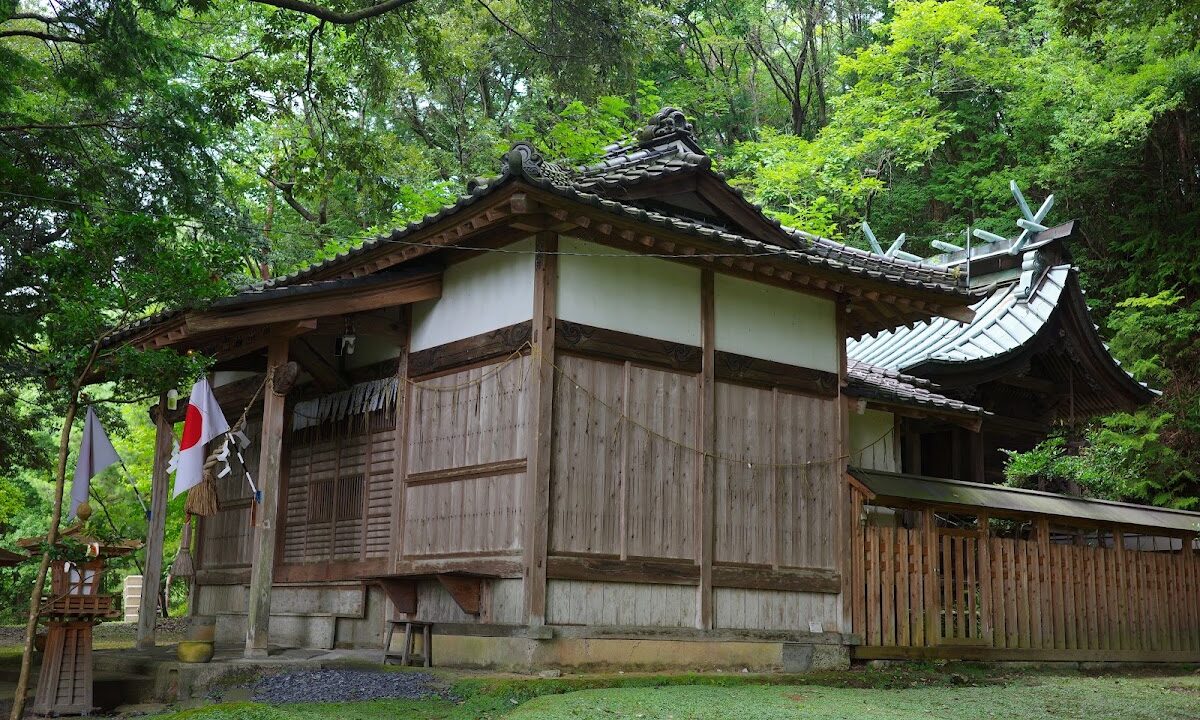
Amenoshiraha Shrine (Hitachiota City, Ibaraki Prefecture) Complete Guide: History, Goshuin (Shrine Seal), and Access Information
Amenoshiraha Shrine, located in Shiraha-cho, Hitachiota City, Ibaraki Prefecture, is a historically significant shrine listed in the Engishiki Jinmyocho (a list of shrines compiled during the Heian period). Situated deep within a plateau on the left bank of the Satogawa River, at the foot of the Tagayama mountain range, it stands in a tranquil space surrounded by abundant nature. This article provides a detailed overview of Amenoshiraha Shrine, including its history, enshrined deities, goshuin information, access methods, and highlights within the shrine grounds.
Basic Information on Amenoshiraha Shrine
Shrine Name: Amenoshiraha Shrine
Location: 1670 (or 1760) Shiraha-cho, Hitachiota City, Ibaraki Prefecture
Main Deity: Amenoshiraha-no-mikoto
Former Shrine Rank: Gosha (Village Shrine)
Shikinaisha (Shrine Listed in the Engishiki): Amenoshiraha Shrine, Kuji District, Hitachi Province
Annual Festival Date: April 10th
Chief Priest: Takako Kurosawa
Contact Information: 0294-72-7503
Amenoshiraha Shrine is located in Hitachiota City, in the northern part of Ibaraki Prefecture, approximately 6 km north of Hitachiota Station on the JR Suigun Line. The place name Shiraha-cho is thought to originate from Amenoshiraha-no-mikoto, the deity enshrined at this shrine, and it has been revered as a center of faith in this region since ancient times.
The Deity of Tenshiraha Shrine: Amenoshiraha-no-Mikoto
Amenoshiraha-no-Mikoto, the principal deity of Tenshiraha Shrine, is a god who played an important role in Japanese mythology. According to the *Kogo Shūi*, when Amaterasu-Ōmikami hid in the Heavenly Rock Cave, Amenoshiraha-no-Mikoto, along with Amenofutodama-no-Mikoto, is said to have made blue offerings (ao-nigite) from hemp.
Mythological Background of Amenoshiraha-no-Mikoto
Amenoshiraha-no-Mikoto’s father was Amenohiwashi-no-Mikoto, who made white offerings (shironigite) in the Heavenly Rock Cave myth. Because father and son made offerings (a-nigite) together, they are worshipped as gods of industries such as hemp, weaving, and papermaking.
The deity is considered the ancestral god of the Imbe clan, based in Awa Province (present-day Tokushima Prefecture), and has been revered as the god of a family that spread hemp cultivation and weaving techniques throughout the region. It is believed that a branch of the Imbe clan also migrated to Hitachi Province, and it is presumed that this faith culminated in the establishment of the Tenshiraha Shrine.
Connection to the Place Name Shiraha
There is a clear connection between “Shiraha” in Tenshiraha-no-Mikoto’s name and the place name Shiraha-cho, where the shrine is located. This suggests that hemp cultivation and weaving were thriving in this region in ancient times, and it is thought that the worship of Tenshiraha-no-Mikoto as a god of industry remained as a place name.
History and Origins of Tenshiraha Shrine
Legend of Founding
The exact founding date of Tenshiraha Shrine is unknown, but several legends remain. The most famous legend is that it was enshrined by the warrior Sakanoue no Tamuramaro during his eastern expedition in the early Heian period. Sakanoue no Tamuramaro was a figure who led a campaign against the Emishi during the Enryaku era (782-806). It is said that during his expedition, while passing through Hitachi Province, he enshrined Ama-no-Shiraha-no-Mikoto to pray for victory and regional stability.
If this legend is true, the shrine’s founding would date to the late 8th or early 9th century. However, it is highly possible that it was worshipped as a local tutelary deity even earlier.
Promotion of Divine Rank in the Heian Period
The most reliable record in the history of Tenshiraha Shrine is the promotion of its divine rank during the Heian period.
- 866 (Jōgan 8): Appointed to Junior Fifth Rank, Lower Grade
- 874 (Jōgan 16): Promoted to Junior Fifth Rank, Upper Grade
The fact that the shrine’s rank was promoted within just eight years indicates that it was a shrine highly valued by the imperial court at the time. This period was during the reign of Emperor Seiwa, and a policy of granting divine ranks to major shrines throughout the country was actively pursued.
Listing in the Engishiki Jinmyocho (Register of Shrines in the Engi Era)
The Engishiki Jinmyocho, completed in 927 AD, lists the shrine as “Tenshiraha Shrine, Kuji District, Hitachi Province“. Being listed as a Shikinaisha (shrine listed in the Engishiki) signifies that the shrine was officially recognized by the state, indicating the importance of Tenshiraha Shrine in ancient times.
While there are 28 Shikinaisha in Hitachi Province, only a few, including Tenshiraha Shrine, are listed in Kuji District, suggesting its central role in the region.
From the Medieval to the Early Modern Period
Although detailed records from the medieval period onward are scarce, the shrine continued to attract the faith of local residents as a local shrine. During the Edo period, it was under the jurisdiction of the Mito Domain and is thought to have functioned as a central hub for local religious ceremonies.
Modern Shrine Ranking System
In the modern shrine ranking system of the Meiji era, Tenshiraha Shrine was ranked as a Gōsha (village shrine). A Gosha (village shrine) was a shrine rank below a prefectural shrine and above a village shrine, bestowed upon shrines of considerable status within their region. This rank continued until 1946, and the former Gosha is still revered by the local people today.
Shrine Grounds and Highlights
Approach to the Shrine
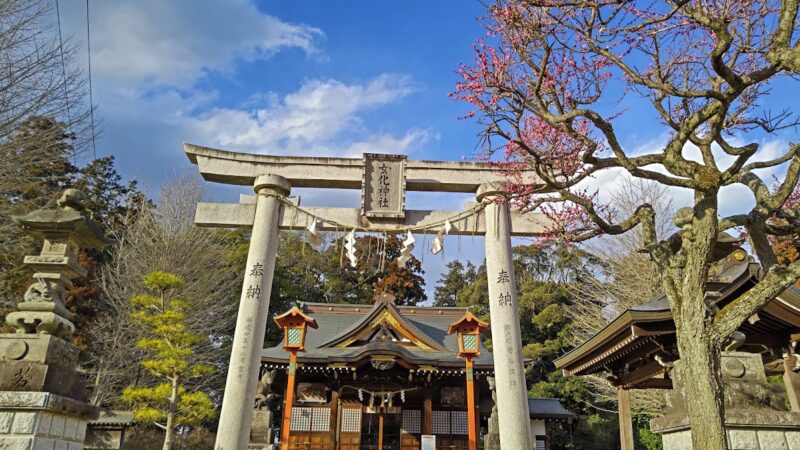
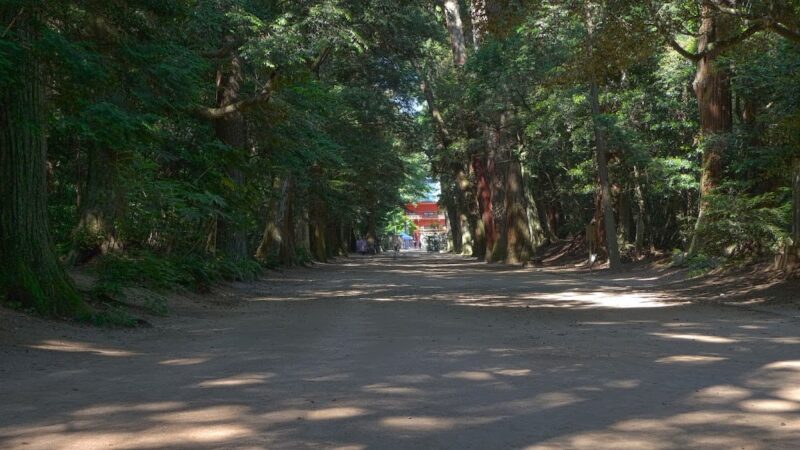
Tenshiraha Shrine is located deep in the plateau east of Satogawa, at the foot of the Tagayama mountain range. Surrounded by lush forest, the shrine’s name marker stands beyond a path winding through residential areas. The approach to the shrine is quiet, enveloped in a sacred atmosphere far removed from the hustle and bustle of the city.
Shrine Buildings and Grounds
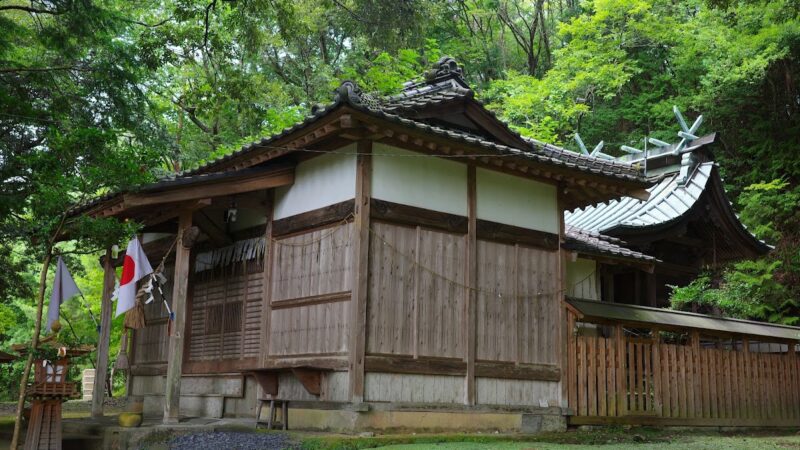
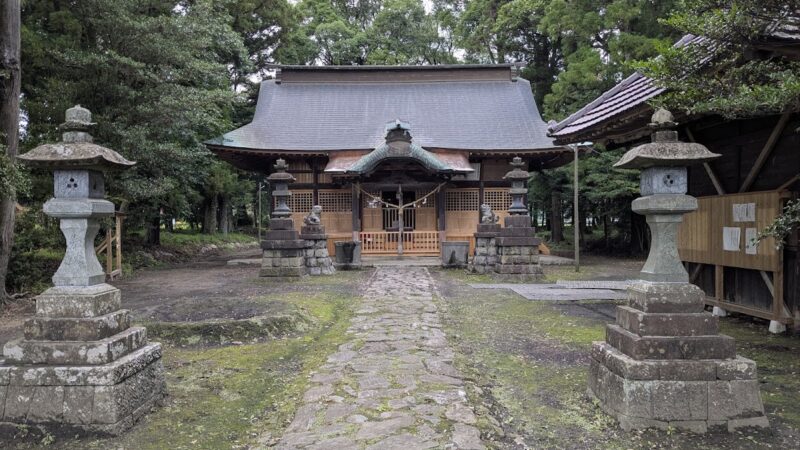
The shrine grounds are covered in lush greenery, particularly known for their beautiful moss carpet. The shrine buildings blend seamlessly into the natural surroundings, exhibiting a tranquil, ancient appearance.
The main hall is protected by a protective structure, preserving the traditional style of shrine architecture. The worship hall is designed to quietly welcome visitors, reflecting the history of local faith.
Shrine Precincts
Besides the main shrine, there are several small shrines within the grounds. Following the path to the right leads to these shrines, demonstrating the diversity of local beliefs. These shrines have also been carefully preserved by the local people.
Natural Environment
One of the greatest attractions of Tenshiraha Shrine is its rich natural environment. The grounds are surrounded by forest, displaying different expressions throughout the seasons. Especially during the seasons of fresh greenery and autumn leaves, the beauty of nature and the tranquility of the shrine combine to provide deep healing to visitors.
The carpet of green moss spreading across the grounds has been formed over many years, telling the story of the shrine’s deep history.
Goshuin (Shrine Seal) Information
Where to Obtain Goshuin
Goshuin (shrine seals) of Tenshiraha Shrine can be obtained at the priest’s residence adjacent to the shrine. If the priest is absent, pre-written goshuin are available at the reception area adjacent to the entrance.
Goshuin (Shrine Seals) of Shrines the Chief Priest Also Serves
At Tenshiraha Shrine, you can also receive goshuin (shrine seals) from the following shrines, which the chief priest also serves:
- Kawai Shrine (1 Kamikawai-cho, Hitachiota City, Ibaraki Prefecture)
- Inamura Shrine (3228 Tenjinbayashi-cho, Hitachiota City, Ibaraki Prefecture)
- Daishoin Temple
Those planning to visit multiple shrines can efficiently obtain goshuin.
Manners for Receiving a Goshuin (Temple/Shrine Stamp)
- Please receive your Goshuin after completing your prayers.
- Having your Goshuincho (stamp book) ready will make the process smoother.
- When visiting the priest’s residence, please be mindful that it is a residential area and visit quietly.
- If the priest is absent, please leave the offering for a pre-written Goshuin at the designated location.
Access Information
Access by Train and Bus
Nearest Station: JR Suigun Line, Hitachi-Ota Station
Distance: Approximately 6km north from the station
Bus Route:
- Ibaraki Kotsu Bus, Higashikan Line
- Get off at the “Satonomiya Shisho-mae” bus stop
- Within walking distance from the bus stop
When using trains and buses, the number of services is limited, so it is recommended to check the timetable in advance.
Access by Car
Route from Major Roads:
- Head north on National Route 349
- Head east on National Route 37
- Turn onto the road heading south at Shiraha-cho
- After about 1 km, you will see the shrine’s name marker between houses.
Parking: There is parking space on the shrine grounds or nearby, but it is limited, so please be considerate of local residents when visiting.
Travel Time from Major Cities:
- From Mito City: Approximately 40 minutes by car
- From Hitachi City: Approximately 30 minutes by car
- From central Tokyo: Approximately 2 hours via the Joban Expressway
Notes on Access
- The area around the shrine is a quiet residential area.
- Some roads are narrow, so please drive carefully.
- When searching with a car navigation system, please search for “Tenshiraha Shrine” or the address (1670 Shiraha-cho, Hitachiota City).
- Due to the limited number of public transportation options, visiting by private car is recommended.
Points and Manners for Visiting
Visiting Hours
Tenshiraha Shrine is open for worship at all times, but if you wish to receive a Goshuin (shrine stamp), daytime hours (around 9:00 AM to 5:00 PM) are appropriate. Please refrain from visiting the priest’s residence early in the morning or after sunset.
Proper Etiquette for Visiting the Shrine
- Bow before entering the shrine grounds after bowing at the torii gate.
- Walk on the path, avoiding the center.
- If there is a purification fountain, cleanse your hands and mouth.
- At the main hall, perform the ritual of two bows, two claps, and one bow.
- Don’t forget to visit the subsidiary shrines within the grounds.
- When leaving, turn around and bow after passing through the torii gate.
Photography
Photography is generally permitted within the shrine grounds, but please note the following:
- Avoid photographing sacred areas such as the interior of the main hall.
- Be considerate of other worshippers in your photos.
- Use a tripod only if it does not inconvenience others.
- Be careful with location information when posting on social media.
Nearby Attractions
Tourist Spots in Hitachiota City
When visiting Tenshiraha Shrine, consider exploring other tourist spots in Hitachiota City.
Nishiyama-so: A historical site known as the retirement residence of Tokugawa Mitsukuni (Mito Kōmon), the second lord of the Mito Domain. It’s about a 15-minute drive from Tenshiraha Shrine.
Ryūjin Ōtsuribashi: A pedestrian-only suspension bridge 375 meters long, offering breathtaking views of the gorge from a height of 100 meters. Bungee jumping is also available.
Satake-ji: The 22nd temple on the Bandō Thirty-Three Kannon Pilgrimage. An ancient temple founded in the Heian period, it houses a main hall designated as an Important Cultural Property.
Nearby Shikinaisha Shrines
Nearby Shikinaisha shrines are scattered throughout northern Ibaraki Prefecture:
- Shizu Shrine (Naka City): An ancient shrine known as the second-ranked shrine of Hitachi Province
- Yoshida Shrine (Mito City): One of the three-ranked shrines of Hitachi Province
Visiting Shikinaisha shrines is a recommended travel option for history buffs.
Annual Festival and Other Annual Events
Annual Festival (April 10th)
The annual festival of Tenshiraha Shrine is held every year on April 10th. Local parishioners and devotees gather to pray for the prosperity of the shrine and the peace of the community. Held during the mild spring season, the festival is an important event that strengthens the bonds of the local community.
Other Annual Events
- New Year’s Day Festival (January 1st): A festival celebrating the New Year
- Setsubun Festival (around February 3rd): A prayer for protection from evil and for good fortune
- Autumn Grand Festival: A festival expressing gratitude for a bountiful harvest
For specific event dates, please contact the shrine directly.
Divine Virtues of Tenshiraha Shrine
Tenshiraha Shrine, dedicated to Tenshiraha no Mikoto, is believed to offer the following divine blessings:
Industrial Development and Technological Improvement
As Tenshiraha no Mikoto is the god of hemp cultivation and weaving techniques, the shrine is revered by those seeking industrial development and technological improvement. Visitors, particularly those in manufacturing and technical fields, are frequently seen.
Abundant Harvests and Business Prosperity
As a deity of agriculture, the shrine is also believed to bestow blessings of abundant harvests and business prosperity.
Protection from Evil and Family Safety
As a guardian deity of the region, many visitors come to pray for protection from evil, family safety, and peace and security in the community.
What to Wear and What to Bring When Visiting Tenshiraha Shrine
Clothing
- Please wear clean clothing appropriate for visiting a shrine.
- Comfortable walking shoes are recommended as the shrine is located in a forest.
- Please consider insect repellent in summer.
- Please take thorough precautions against the cold in winter.
What to Bring
- Goshuincho: Essential if you wish to receive a Goshuin (shrine stamp).
- Hatsuhoryo: Necessary for Goshuin and prayers (please prepare small change).
- Camera: To record the beautiful shrine grounds.
- Drinks: Especially in summer, to prevent heatstroke.
- Map or Smartphone: In case you are unsure about access.
Cultural Assets and Academic Value of Tenshiraha Shrine
Value as a Shikinaisha (Shrine Listed in the Engishiki)
Tenshiraha Shrine is a Shikinaisha listed in the Engishiki Jinmyocho (a list of shrines compiled in the Heian period), making it a valuable example of ancient forms of worship that are still preserved today. The existence of records of the granting of divine ranks during the Heian period also holds significant academic importance.
Importance in the Study of the Imbe Clan
Shrines dedicated to Ama-no-Shiraha-no-Mikoto are rare nationwide, making this a important historical site for studying the Imbe clan’s expansion into eastern Japan and the spread of hemp culture. It may also indicate evidence of the Awa Imbe clan’s migration to Hitachi Province, attracting attention from ancient history researchers.
Resources for Place Name Research
The relationship between the place name Shiraha-cho and the shrine is an interesting case in place name origin research. As an example of a shrine’s deity becoming established as a place name, it is a subject of study in toponymy.
History of Hitachiota City and Ama-no-Shiraha Shrine
Overview of Hitachiota City
Hitachiota City is located in the northern part of Ibaraki Prefecture, a region where rich nature and historical culture coexist. In ancient times, it flourished as one of the centers of Hitachi Province, and in the Middle Ages, it became the base of the Satake clan.
Position in Ancient Hitachi Province
Kuji District, where Ama-no-Shiraha Shrine is located, was an important region in ancient Hitachi Province. The Kuji River basin boasts fertile land and thriving agricultural production, leading to the establishment of numerous shrines. Among them, Tenshiraha Shrine, as a Shikinaisha (a shrine listed in the Engishiki), is believed to have held a special status.
Summary: The Charm of Visiting Tenshiraha Shrine
Tenshiraha Shrine, located in Shiraha-cho, Hitachiota City, Ibaraki Prefecture, is a Shikinaisha with the following attractions:
- Ancient History: A venerable Shikinaisha with records dating back to the Heian period.
- Unique Deity: Dedicates the rare god, Tenshiraha-no-Mikoto.
- Rich Nature: A tranquil shrine grounds surrounded by forest.
- Academic Value: Important for research on the Imbe clan and ancient history.
- Local Belief: Still cherished by the local people.
Away from the hustle and bustle of the city, Tenshiraha Shrine offers a peaceful place to worship while reflecting on ancient beliefs. When visiting Ibaraki Prefecture, be sure to pay your respects. This will be a memorable pilgrimage experience, where you can feel the richness of nature and the weight of history.
Receiving a Goshuin (temple stamp), gazing at the moss carpet on the grounds, and touching upon the history of faith that has continued since ancient times—that is the true essence of visiting Tenshiraha Shrine.