Complete Guide to Ototachibana-hime Shrine (Kitaibaraki City, Ibaraki Prefecture): An Ancient Shrine of Maritime Protection Located on Mount Tenpi
Ototachibana-hime Shrine, located in Isohara-cho, Kitaibaraki City, Ibaraki Prefecture, is a historically significant shrine situated on the summit of Mount Tenpi overlooking the Pacific Ocean. It enshrines Tenpi-shin, a deity of Chinese origin invited by Tokugawa Mitsukuni, and Ototachibana-hime no Mikoto, the consort of Yamato Takeru. It has long been revered by the local community as a deity of maritime safety and protection of navigation.
This article comprehensively introduces all the information you need to know before visiting Ototachibana-hime Shrine, including its history, enshrined deities, highlights of the grounds, information on Goshuin (shrine stamps), and access methods.
Basic Information on Ototachibanahime Shrine
Shrine Name: Ototachibanahime Shrine
Location: 196-1 Isohara, Isohara-cho, Kitaibaraki City, Ibaraki Prefecture
Postal Code: 〒319-1541
Corporate Number: 2050005007298
Nearest Station: JR Joban Line, Isohara Station
Deities Enshrined: Ototachibanahime-no-Mikoto, Tenpishin
Divine Blessings: Maritime safety, protection of navigation, fire prevention, matchmaking
Ototachibanahime Shrine is located along National Route 6, but because it sits atop a low mountain called Tenpiyama, it is often overlooked. However, its historical value and unique form of worship are noteworthy even within Ibaraki Prefecture.
History of Ototachibana-hime Shrine
The Enshrinement of the Goddess of Heaven by Tokugawa Mitsukuni
The history of Ototachibana-hime Shrine dates back to the time of Tokugawa Mitsukuni, also known as Mito Kōmon. In 1677 (Enpō 5), a monk from Zhejiang Province, China, then 38 years old, came to Japan and enshrined the goddess of heaven, the guardian deity of seafaring, in this place. Tokugawa Mitsukuni was known for his deep understanding of Taoism and Chinese culture, and it is believed that he supported the enshrinement of the goddess of heaven.
The goddess of heaven is a sea goddess who is immensely revered in China and Taiwan as “Mazu.” She is believed to have the divine power to protect safe voyages, and in Isohara, a place where maritime trade flourished, she attracted the faith of fishermen and sailors. Because this goddess of heaven was enshrined here, this mountain came to be called “Tenpi-yama” (Heavenly Princess Mountain).
Renaming in 1831 and the Enshrinement of Ototachibana-hime
In 1831 (Tenpo 2), Tokugawa Nariaki, the lord of the Mito domain, enshrined Ototachibana-hime, the consort of Yamato Takeru, as a guardian deity of land and sea, and renamed the shrine “Ototachibana-hime Shrine.” Until then, it was known as “Otsuka Shrine” or “Tenpi Shrine,” but this renaming established the current name.
Ototachibana-hime is a tragic goddess in Japanese mythology who, during her husband Yamato Takeru’s eastern expedition, drowned herself in the sea of Hashirimizu (present-day Uraga Channel) to calm the raging sea. Due to her selfless act, she is worshipped throughout the Kanto region as a guardian deity of maritime safety, and is enshrined in several shrines within Ibaraki Prefecture.
Changes Since the Meiji Era
Even after the Meiji-era separation of Shinto and Buddhism, Ototachibana-hime Shrine continued to attract worshippers as a guardian deity of the region. The shrine’s nameplate, displayed in the main hall, reads “Tenpihime, Ototachibanahime, and Ototsugu Shrine,” reflecting a unique form of worship that combines multiple deities.
After the war, development in the surrounding area progressed, and the environment changed with the construction of the Isohara Industrial Park. However, its location on the summit of Mount Tenpi remains unchanged, and it continues to be preserved as a quiet place of worship.
Deities and Divine Virtues
Ototachibanahime-no-Mikoto
Ototachibanahime-no-Mikoto, known as the consort of Yamato Takeru, is a devoted goddess who sacrificed her own life to assist her husband in his eastern expedition. According to the Kojiki and Nihon Shoki, when Yamato Takeru encountered a storm at Hashirimizu during his pacification of the eastern provinces, Ototachibanahime-no-Mikoto said, “I will enter the sea and appease the wrath of the sea god,” and threw herself into the ocean. The sea then calmed, and Yamato Takeru was able to safely cross to the other side.
From this legend, Ototachibana-hime no Mikoto is believed to possess divine virtues of maritime safety, protection of voyages, matchmaking, and marital harmony.
Tianfei Shen (Tenpi-shin/Mazu)
Tianfei Shen is a deified version of a real woman named Lin Muniang from Fujian Province, China. She has been revered as “Mazu,” the guardian deity of the sea, since the Song Dynasty. Accompanied by two deities, Qianliyan and Shunfeng’er, she is said to foresee maritime disasters and save fishermen and sailors.
In Japan, her worship spread during the Edo period, centered in Nagasaki, and was enshrined in various locations by progressive daimyo such as Tokugawa Mitsukuni. In Ibaraki Prefecture, Tianfei Shen is enshrined at Gion-ji Temple in Mito, Ototachibana-hime Shrine in Kitaibaraki City, Tensho-ji Temple in Omitama City, and Ototachibana-hime Shrine in Oarai Town.
This shrine is believed to bestow blessings such as safe voyages, protection at sea, fire prevention, and business prosperity, and is particularly revered by those working in maritime-related industries.
Highlights of the Shrine Grounds and Cultural Properties
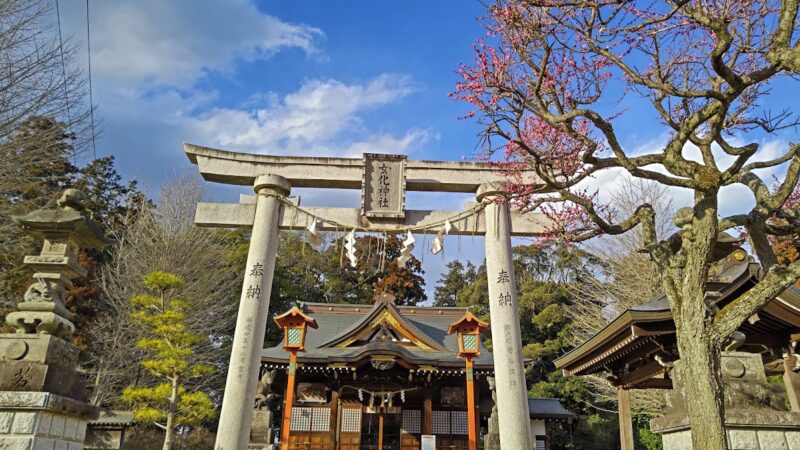
Shrine Name Marker and Approach
The shrine name marker, located along National Route 6, marks the entrance to Ototachibana-hime Shrine. From here, the approach to the summit of Mount Tenpi begins. Although it’s a relatively low mountain, the elevation difference means you’ll need to climb stairs to reach the shrine grounds.
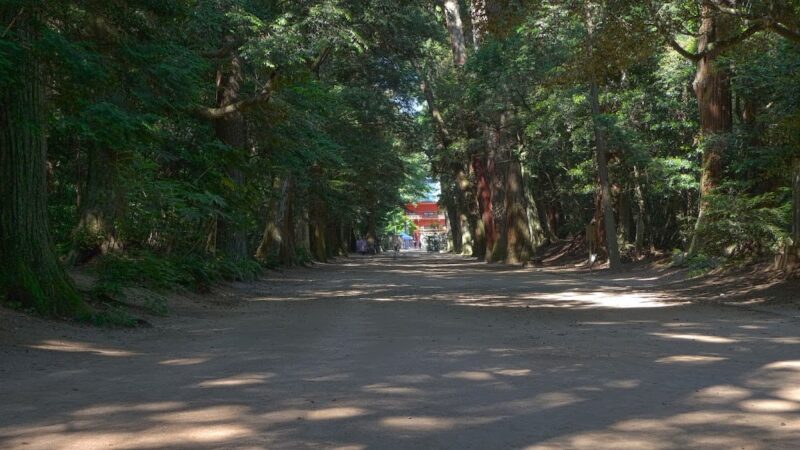
The steps of the approach are made of stone, and the surrounding area is quiet and surrounded by trees. It offers a peaceful environment for worship, far removed from the hustle and bustle of the city.
Worship Hall and Shrine Name Plaque
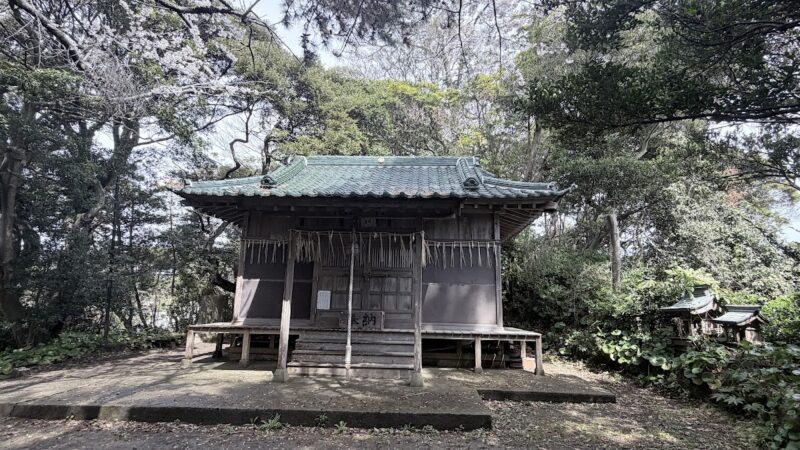
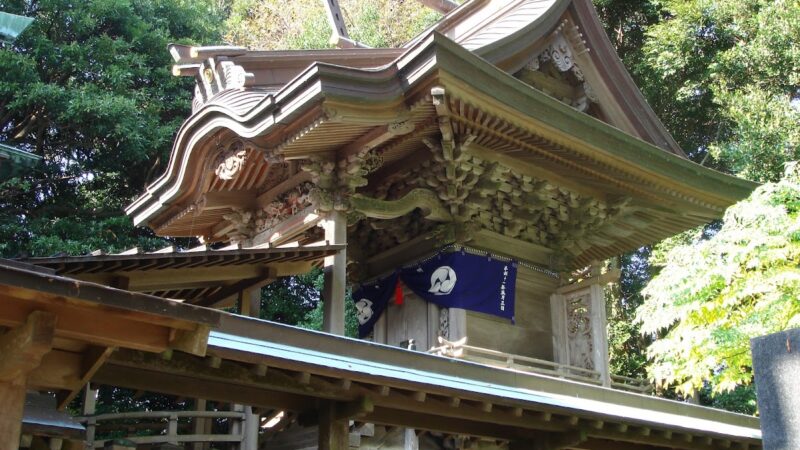
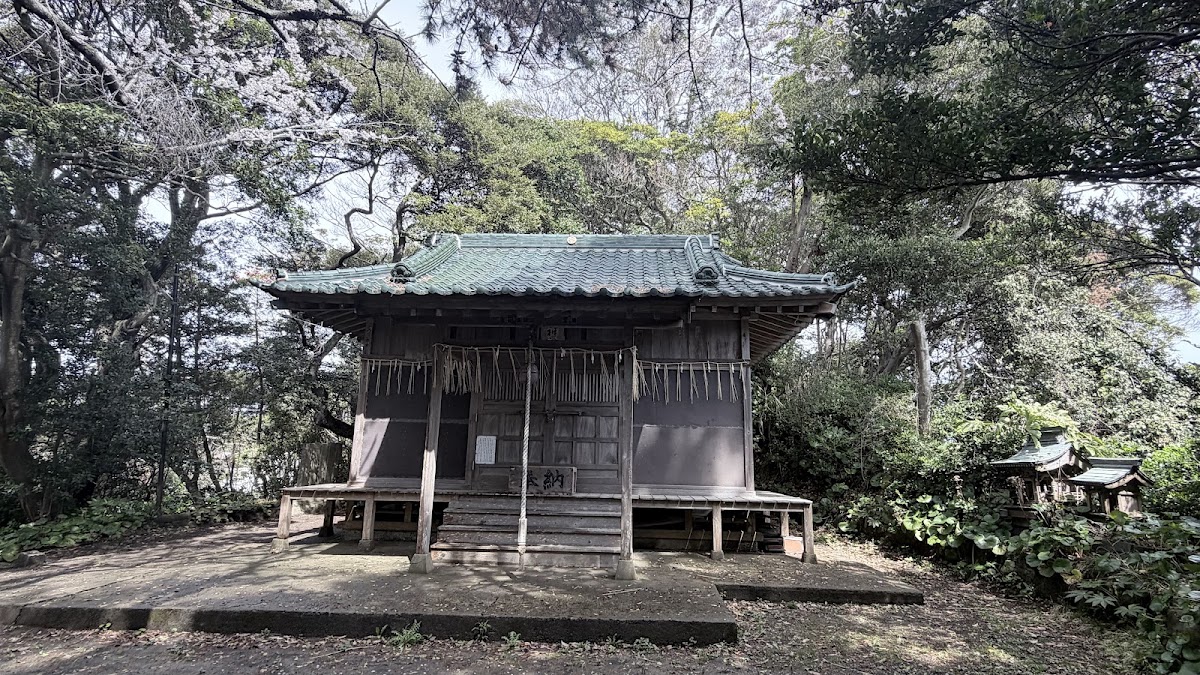
After climbing the stairs, the worship hall, situated on the summit of Mount Tenpi, comes into view. The worship hall is a traditional wooden shrine building, simple yet exuding a sense of dignity.
Of particular note is the shrine name plaque displayed in the worship hall. This plaque bears the inscription “Tenpihime, Ototachibanahime, and Otsuju Shrine,” making it a valuable cultural artifact that tells the story of the shrine’s historical transformations. It is rare to find multiple deities listed under a single shrine, demonstrating a unique form of worship that blends Tenpihime worship with gods from Japanese mythology.
View from the Shrine Grounds
Located on the summit of Mount Tenpi, the shrine grounds offer a panoramic view of the town of Isohara and the Pacific Ocean. On clear days, the horizon is visible, making it easy to understand why fishermen and sailors once prayed here for safe voyages.
The location overlooking the sea is fitting for a shrine dedicated to a god of maritime protection, and it is a place where one can truly feel the history of this shrine being worshipped as a “god watching over the sea” since ancient times.
Komainu and Stone Sculptures
The shrine grounds are dotted with ancient-looking komainu (guardian lion-dogs). Their weathered appearance conveys the weight of time, telling the story of their long history of protecting this land.
Furthermore, stone structures such as stone lanterns and votive monuments remain within the shrine grounds and along the approach, conveying the deep faith of the local people.
Goshuin (Shrine Seal) and Goshuincho (Shrine Seal Book) Information
Goshuin (shrine seals) can be obtained at Ototachibana-hime Shrine. However, since there may not always be a resident priest, it is recommended that those wishing to receive a goshuin check in advance.
The goshuin includes the shrine’s name and the date of visit, written in a simple yet dignified calligraphy style. For those visiting shrines throughout Ibaraki Prefecture, the goshuin of Ototachibana-hime Shrine, with its unique worship of the Tenpi-shin deity, will be a valuable keepsake.
Regarding the handling of goshuincho, it is recommended to check the latest information before visiting. If you are visiting other shrines in Kitaibaraki City, it would be a good idea to include it in your goshuin pilgrimage route.
Access and Parking Information
Access by Train
Nearest Station: JR Joban Line “Isohara Station”
Distance from Station: Approximately 1.5km
Estimated Time: Approximately 20 minutes on foot
From Isohara Station, head north along National Route 6 and follow the signs to reach Ototachibana-hime Shrine. It’s within walking distance from the station, making it accessible by train.
Access by Car
Joban Expressway:
- Approximately 10 minutes from Kitaibaraki IC
- Approximately 15 minutes from Iwaki Nakoso IC
Located along National Route 6, it’s easily accessible by car. For car navigation, enter “196-1 Isohara-cho, Kitaibaraki City, Ibaraki Prefecture” or “Ototachibana-hime Shrine.”
Parking
There is a dedicated parking space for the shrine, but spaces are limited. Please be mindful of the surrounding area when parking during peak seasons.
Nearby Attractions and Tourist Spots
Isohara Beach
Located just a few minutes’ drive from Ototachibana-hime Shrine, Isohara Beach is a beautiful beach with white sand and a clear blue sea. It’s bustling with beachgoers during the summer. After visiting Ototachibana-hime Shrine, which enshrines the god of maritime protection, it’s a great place to enjoy the view of the Pacific Ocean.
Noguchi Ujo Memorial Museum
Kitaibaraki City is the birthplace of Noguchi Ujo, the poet known for children’s songs such as “Soap Bubbles,” “Seven Children,” and “Red Shoes.” The Noguchi Ujo Memorial Museum showcases Ujo’s life and works, and is well worth visiting in conjunction with Ototachibana-hime Shrine.
Izura Coast and Hexagonal Pavilion
Izura Coast, a representative tourist spot in Kitaibaraki City, features a hexagonal pavilion designed by Okakura Tenshin. The vermilion-painted hexagonal pavilion, built on a cliff overlooking the rough waves of the Pacific Ocean, is one of Ibaraki Prefecture’s most representative scenic spots.
Hanazono Shrine
As another historical shrine in Kitaibaraki City, Hanazono Shrine is also highly recommended. It has long been a place of local worship, and many people visit it along with Ototachibana-hime Shrine.
Manners and Precautions for Visiting
Climbing and Descending Stairs
Since the shrine is located on the summit of Mt. Tenpi, there are stairs leading up to the shrine. Please be careful of your footing and ascend and descend slowly. Particular caution is needed during rainy weather and winter, as the stairs can become slippery.
Visiting Hours
Shrines are generally recommended to be visited during the daytime. Avoid visiting at night or in the early morning; visit during daylight hours.
Attire
Since you will be climbing stairs, comfortable clothing and walking shoes are recommended. Especially in summer, insect repellent is necessary, and in winter, warm clothing is essential.
Shrines Dedicated to Tenpi-shin in Ibaraki Prefecture
Several shrines dedicated to Tenpi-shin, like Ototachibana-hime Shrine, exist in Ibaraki Prefecture.
Ototachibana-hime Shrine in Oarai Town
Ototachibana-hime Shrine, located in Iwai-cho, Oarai Town, is also a shrine dedicated to the Tenpi deity, who was invited by Tokugawa Mitsukuni. Situated near Oarai Isomae Shrine, it is also believed to possess divine protection for maritime safety.
Gion-ji Temple in Mito
Gion-ji Temple in Mito City is also known as a temple dedicated to the Tenpi deity. It is one of the centers of Tenpi worship that has continued since the time of Tokugawa Mitsukuni.
Tensho-ji Temple in Omitama City
Tensho-ji Temple in Omitama City is also a temple dedicated to the Tenpi deity and plays a part in the Tenpi worship network within Ibaraki Prefecture.
By visiting these temples and shrines, you can experience firsthand the spread of Tenpi worship that Tokugawa Mitsukuni promoted.
Shrines in the Kanto Region Dedicated to Ototachibana-hime
Ototachibana-hime is widely worshipped throughout the Kanto region, and is enshrined in various locations as Azuma Shrines (Azuma-jinja) or Tachibana Shrines.
Azuma Shrines in Chiba Prefecture
Chiba Prefecture, near the sea of Hashirimizu, the setting of the legend of Ototachibana-hime, has a particularly large number of Azuma Shrines. Tachibana Shrine in Mobara City is a representative shrine that enshrines Ototachibana-hime as its main deity.
Tachibana Shrines in Kanagawa Prefecture
There are also several Tachibana Shrines in Kanagawa Prefecture, indicating the widespread belief in the legend of Ototachibana-hime.
Ototachibana-hime Shrine in Kitaibaraki City, Ibaraki Prefecture, is located near the northern limit of this Kanto-wide worship of Ototachibana-hime, and is a region where the worship of her as a goddess of maritime protection is particularly strong.
Summary: Two Goddesses Watching Over the Sea
Ototachibana-hime Shrine is a unique shrine dedicated to two goddesses: Ototachibana-hime no Mikoto, the tragic heroine of Japanese mythology, and Tenpi-shin, a sea goddess of Chinese origin. The form of worship established by two great lords, Tokugawa Mitsukuni and Tokugawa Nariaki, is an indispensable element in understanding the history and culture of Ibaraki Prefecture.
Located on the summit of Tenpi-yama Mountain overlooking the Pacific Ocean, it is a truly fitting place to enshrine the gods of maritime protection, and has watched over the safety of fishermen and sailors since ancient times. Even today, it stands quietly as a place of worship visited by people praying for safety at sea, as well as for matchmaking and marital harmony.
When you visit Kitaibaraki City, be sure to visit Ototachibana-hime Shrine and experience this special space where history and faith intersect.
Frequently Asked Questions (FAQ)
Q1: Can I get a Goshuin (shrine stamp) at Ototachibana-hime Shrine?
A1: Yes, you can get a Goshuin (temple/shrine stamp) at Ototachibana-hime Shrine. However, there may not always be a resident priest, so if you want to be sure to get a Goshuin, we recommend checking in advance. When visiting shrines in Kitaibaraki City, it’s a good idea to check information from multiple shrines together.
Q2: How do I get to Ototachibana-hime Shrine?
A2: It’s about a 20-minute walk from Isohara Station on the JR Joban Line, or about a 10-minute drive from the Kitaibaraki Interchange on the Joban Expressway. It’s located along National Route 6, but since it’s situated on the summit of Mt. Tenpi, you’ll need to climb the stairs to the approach. There is parking space, but it’s limited, so be careful during busy times.
Q3: What kind of deity is Tenpi-sama?
A3: Tenpi-sama is a sea goddess revered as “Mazu” in China and Taiwan. This shrine is believed to protect safe voyages, and was established in Isohara by Tokugawa Mitsukuni in 1677. It is said to be accompanied by two deities, Senrigan (Clairvoyance) and Junpu-mimi (Smooth Wind Ear), who foresee maritime disasters and save fishermen and sailors. Within Ibaraki Prefecture, it is also enshrined at Gionji Temple in Mito and Ototachibana-hime Shrine in Oarai Town.
Q4: What are the divine virtues of Ototachibana-hime Shrine?
A4: The main divine virtues of Ototachibana-hime Shrine are maritime safety, protection of voyages, fire prevention, matchmaking, and marital harmony. Because Ototachibana-hime no Mikoto sacrificed herself for her husband, Yamato Takeru, she is believed to have the divine virtues of matchmaking and marital harmony. Combined with the divine virtue of the celestial consort protecting the sea, it attracts the faith of people working in sea-related fields and those seeking good relationships.
Q5: How long does it take to visit Ototachibana-hime Shrine?
A5: While the actual visit to the shrine takes about 15-20 minutes, considering the climb up the stairs of Tenpiyama Mountain and the enjoyment of the view from the shrine grounds, we recommend allowing 30 minutes to an hour for your visit. If you plan to combine your visit with sightseeing at nearby Isohara Beach or the Noguchi Ujo Memorial Museum, it’s best to schedule a half-day.
Q6: Is there a relationship between Ototachibana-hime Shrine and Ototachibana-hime Shrine in Oarai?
A6: Yes, both shrines are deeply related in that they enshrine the Tenpi deity, who was invited by Tokugawa Mitsukuni. Ototachibana-hime Shrine in Kitaibaraki City and Ototachibana-hime Shrine in Oarai Town both possess the divine power of maritime protection and are important centers of the Tenpi faith network in Ibaraki Prefecture, which was established during the time of Mitsukuni. Visiting both shrines will allow you to gain a deeper understanding of the history and religious culture of the Mito Domain.
Q7: What are the historical highlights of Ototachibana-hime Shrine?
A7: The main highlight is the shrine name plaque displayed in the main hall, inscribed with “Tenpihime, Ototachibanahime, Ototsuju Shrine.” This plaque is a valuable cultural asset that shows the historical changes the shrine has undergone, and tells the story of a unique form of worship that fuses the worship of Tenpihime with the gods of Japanese mythology. Furthermore, the location itself, overlooking the Pacific Ocean from the summit of Mount Tenpi, makes you truly feel the historical significance of enshrining a god of maritime protection.
Q8: Are there any recommended tourist spots around Ototachibanahime Shrine?
A8: There are several tourist spots in the surrounding area, such as Isohara Beach, Noguchi Ujo Memorial Museum, and Izura Beach/Rokkakudo. In particular, Rokkakudo on Izura Beach is a representative scenic spot of Ibaraki Prefecture designed by Okakura Tenshin, and is worth visiting along with Ototachibanahime Shrine. Also, a temple and shrine pilgrimage course visiting other shrines and temples in Kitaibaraki City is recommended. Since it is also a region rich in seafood, it would be nice to enjoy local seafood dishes after visiting the shrine.