Complete Guide to Sairenji Temple | The Oldest Ginkgo Tree in Kanto and the 1200-Year-Old Koyasan of Hitachi
Near Sairenji Temple, located in Namegata City, Ibaraki Prefecture, is an ancient Tendai sect temple said to have been founded in 782 AD. Often referred to as the “Koyasan of Hitachi,” this temple attracts many worshippers and tourists as a special place steeped in history and culture, boasting the oldest ginkgo tree in Kanto (over 1000 years old), the Niomon Gate and its finial (both designated as important national cultural properties), and the annual Jogyo Sanmai-e ceremony held every autumn.
This article will introduce the charms of Sairenji Temple in their entirety, from its historical background and highlights to its seasonal scenery and access methods.
History and Origins of Seirenji Temple
An Ancient Temple with Over 1200 Years of History
Seirenji Temple is said to have been founded in 782 AD, during the early Heian period. Its mountain name is Shiradosan, its temple name is Manjuin, and its principal image is Yakushi Nyorai (Medicine Buddha). With a history of over 1200 years since its founding, this temple is known as one of the oldest temples in Ibaraki Prefecture.
While detailed records from its founding are limited, it has developed as a center of local faith over its long history as a Tendai sect temple. Especially from the Heian period to the Kamakura period, it is said to have flourished as a sacred site where many monks came for training.
Why it is called “Hitachi’s Koyasan”
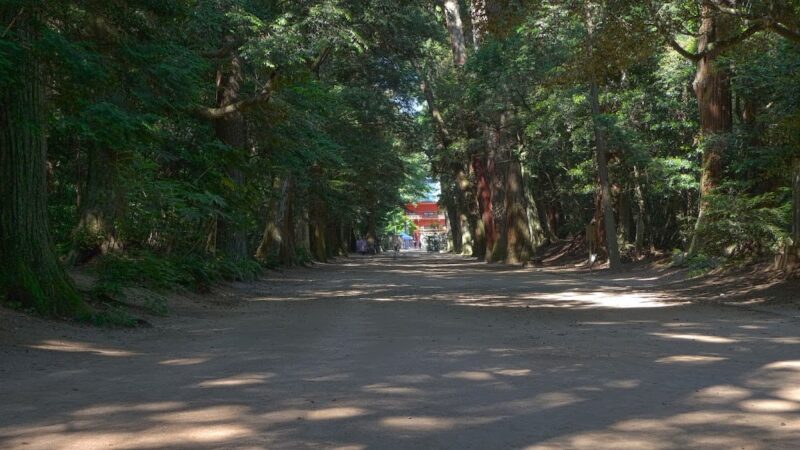
Seirenji Temple is also commonly known as “Hitachi’s Koyasan.” This stems from its character as a sacred site where mountain worship and Buddhism merged, similar to Mount Koya in Wakayama Prefecture. The tranquil environment surrounded by deep forests was ideal for ascetic training, and many monks dedicated themselves to Buddhist practice here.
The very name of the place, Seirenji in Namegata City, speaks to the significant presence of this temple. The temple’s name itself is deeply intertwined with the local identity, demonstrating its strong connection to the region.
Cultural Properties and Highlights of Seirenji
Nationally Designated Important Cultural Property: Niomon Gate
The Niomon Gate, standing at the entrance to Seirenji Temple, is a valuable structure designated as a Nationally Important Cultural Property. This gate is a precious relic that preserves the architectural style of the Muromachi period, and the Kongo Rikishi statues (Nio statues) placed on either side possess an overwhelming presence that captivates visitors.
The architectural techniques of the Niomon Gate demonstrate the advanced woodworking skills of the time, and the detailed carvings and decorations fascinate viewers. Although weathered by age, it has been preserved in its original form through regular restoration.
Nationally Designated Important Cultural Property: Sorinto (Pagoda)
The Sorinto is another nationally designated important cultural property of Seirenji Temple. A Sorinto is a type of Buddhist stupa, a religious monument particularly found in esoteric Buddhist temples. The Sorinto at Seirenji Temple has been designated a national important cultural property due to its excellent state of preservation and historical value.
This Sorinto is an important religious symbol within the temple grounds and is deeply connected to the doctrines of the Tendai sect. Its majestic appearance symbolizes the long history and high status of Seirenji Temple.
Wooden Seated Statue of Yakushi Nyorai (Medicine Buddha)
The wooden seated statue of Yakushi Nyorai, the principal image of the temple, is also an important cultural property. Yakushi Nyorai (the Medicine Buddha) is a deity revered by people praying for healing from illness and longevity. The Yakushi Nyorai statue at Seirenji Temple is known as a valuable example of Heian period architecture.
Its delicate carving techniques and serene expression bring peace to those who behold it. During regular public viewings, there are opportunities to see it up close, attracting many visitors.
Other Temple Treasures
Seirenji Temple also houses numerous other temple treasures, including Buddhist statues, ancient documents, and Buddhist implements. These cultural artifacts are valuable resources that tell the story of the religious and cultural role Seirenji Temple has played throughout history. During special public viewings, it is sometimes possible to see temple treasures that are not normally on display.
The Oldest Ginkgo Tree in the Kanto Region: A Symbol of Seirenji Temple
A Giant Tree Over 1000 Years Old
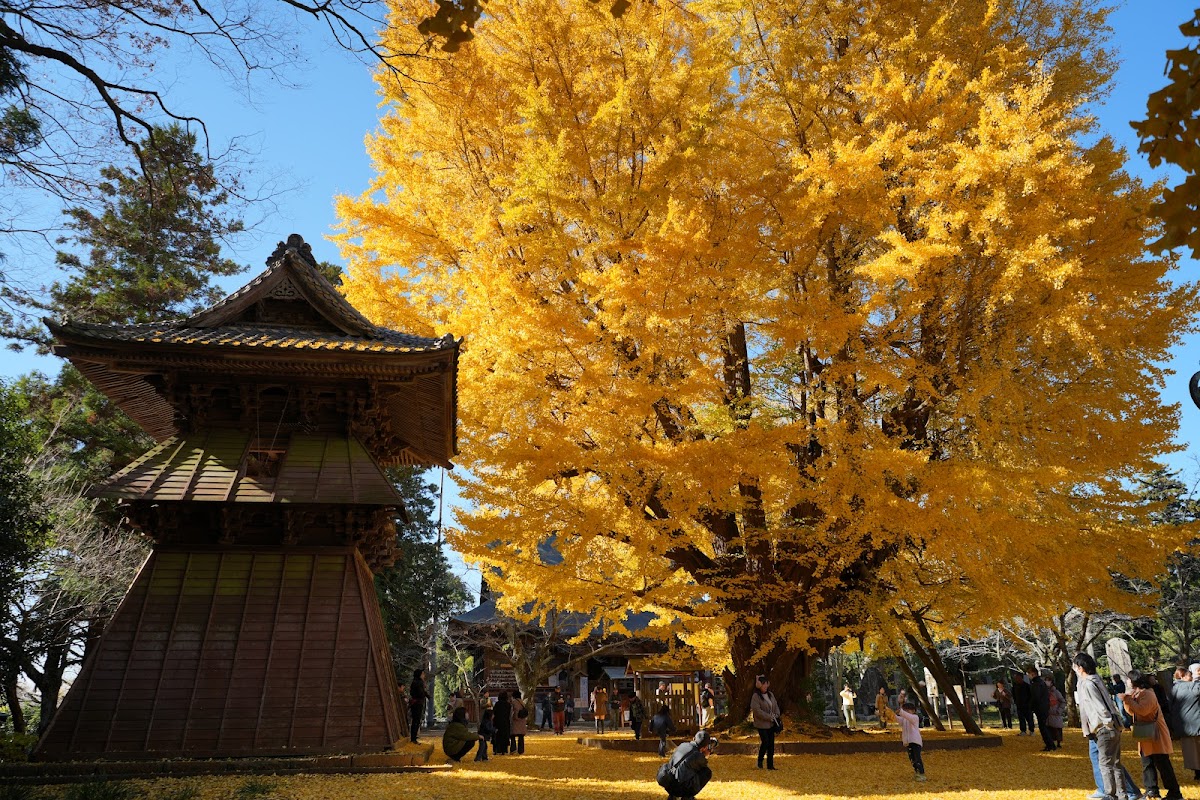
An indispensable part of discussing Seirenji Temple is the towering ginkgo tree within its grounds. This ginkgo tree is estimated to be over 1000 years old and is known as the oldest ginkgo tree in the Kanto region. With a trunk circumference of approximately 10 meters and a height of about 30 meters, its overwhelming presence captivates visitors.
This magnificent ginkgo tree, having grown over many years, can be said to be a living witness embodying the very history of Seirenji Temple. From its founding in the Heian period to the present day, this tree has watched over countless prayers and wishes of people.
Spectacular Scenery During the Autumn Foliage Season
The ginkgo tree displays its most beautiful form during the autumn foliage season, from mid- to late November. The sight of the green leaves gradually turning golden, eventually covering the entire temple grounds in a yellow carpet, is breathtaking.
On clear autumn days, the golden ginkgo leaves, shining against the blue sky, glisten in the sunlight, creating a fantastical scene as if a golden shower is raining down. During this time, many photography enthusiasts and tourists from within and outside the prefecture visit to capture its beauty in photographs.
Limited Edition Goshuin Stamp featuring the Giant Ginkgo Tree
At Seirenji Temple, a limited-edition autumn goshuin stamp featuring a paper cutout design is offered to coincide with the golden foliage season of the giant ginkgo tree. This special goshuin, featuring the giant ginkgo tree as its motif, is a popular item eagerly awaited by many goshuin enthusiasts every year.
Since the number of seasonal goshuin stamps is limited, early visits are recommended. The beautiful paper cutout design makes a wonderful memento of your visit to Seirenji Temple.
Jogyo Zanmai-e: A Traditional Event at Seirenji Temple
Held Annually from September 24th to 30th
Every year from September 24th to 30th, Seirenji Temple holds an important religious event called the Jogyo Zanmai-e. This ceremony is one of the traditional ascetic practices of the Tendai sect, a rigorous practice in which practitioners walk around the main hall day and night while chanting the Nembutsu (invocation of Amida Buddha) as the principal image.
The Jogyo Sanmai-e is a traditional Buddhist ceremony that has continued since the Heian period, and Seirenji Temple has preserved this ceremony throughout its long history. Even today, monks perform their practices according to strict rituals, and general visitors are welcome to observe.
The Solemnity of the Ceremony
During the Jogyo Sanmai-e, monks continuously chant the Nembutsu (invocation of Amida Buddha) while walking around the Amida Buddha in a specially constructed Jogyo-do hall. This practice continues day and night, representing a rigorous physical and mental ordeal for the participating monks.
Lamps are lit inside the hall, and the chanting and Nembutsu resonate without interruption. The solemn atmosphere deeply moves visitors with religious emotion.
Viewing by General Visitors
During the Jogyo Sanmai-e, general visitors are welcome to enter the temple grounds and observe the ceremony. However, they are requested to observe quietly so as not to disturb the monks during their practice.
Visiting Seirenji Temple during this time allows you to experience a solemn religious space unlike anything you encounter in everyday life, and to feel the traditions and spirituality of Buddhism firsthand.
Seirenji Temple in Every Season
Spring: The Season of Cherry Blossoms and Fresh Greenery
In spring, Seirenji Temple welcomes visitors with cherry blossoms in full bloom throughout the temple grounds. Primarily Somei Yoshino cherry trees, along with weeping cherry trees, bloom beautifully from late March to early April.
During the cherry blossom season, the contrast between the old Niomon Gate and the main hall and the blossoms is stunning, creating a special landscape woven from the historical temple architecture and spring flowers. After the cherry blossoms, the season of fresh greenery arrives, and the entire temple grounds are enveloped in vibrant green.
Summer: A Time of Deep Greenery and Tranquility
In summer, Seirenji Temple is enveloped in deep green, creating a cool and refreshing atmosphere. The trees on the grounds, including the large ginkgo tree, grow lush green leaves, creating shade.
In the temple grounds, where the sound of cicadas resonates, the quiet time spent praying is a precious moment that allows you to forget the hustle and bustle of everyday life. For summer visits, early mornings or evenings are recommended, as visiting during cooler times allows for a more comfortable stroll through the temple grounds.
Autumn: Spider Lilies and the Yellowing Leaves of the Giant Ginkgo
In autumn, Seirenji Temple offers two main attractions: the spider lilies (Lycoris radiata) that bloom in late September and the golden foliage of the giant ginkgo tree in November.
The spider lilies grow in clusters throughout the temple grounds, their vibrant red color standing out against the green. The blooming season of the spider lilies sometimes coincides with the Jogyo Sanmai-e (a Buddhist meditation service), making it a special time to experience both religious ceremonies and the beauty of nature simultaneously.
And in November, as mentioned above, the giant ginkgo tree displays its magnificent yellow foliage. This is the busiest time of year for Seirenji Temple, attracting the most worshippers and tourists.
Winter: A Serene Snowscape
Winter at Seirenji Temple is the quietest time of year. On snowy days, the entire temple grounds are enveloped in a world of white, creating a fantastical landscape.
The sight of snow accumulating on the branches of the large ginkgo tree, now bare of leaves, possesses a beauty different from that of summer or autumn. While winter visits require preparation for the cold, it offers a precious opportunity to pray in peace amidst the tranquil atmosphere of the temple grounds.
Access to Seirenji Temple
Location and Basic Information
Location: 504 Seirenji, Namegata City, Ibaraki Prefecture
Sect: Tendai Sect
Mountain Name: Shiradosan
Temple Name: Manjuin
Principal Image: Yakushi Nyorai (Medicine Buddha)
Access by Car
The following routes are convenient when visiting by car:
- From Tokyo:** Approximately 40 minutes from Tsuchiura-Kita IC on the Joban Expressway
- From Mito:** Approximately 50 minutes via National Route 355
- From Kashima:** Approximately 40 minutes via National Route 354
The temple grounds have a free parking lot for visitors. However, congestion is expected during the ginkgo tree’s autumn foliage season and during the Jogyo Sanmai-e (a Buddhist meditation) period, so early arrival is recommended.
Access by Public Transportation
If using public transportation:
- Take a taxi from JR Kashima Line, Itako Station or JR Joban Line, Ishioka Station (approximately 30-40 minutes).
- You can also use the Namegata City community bus, but the number of services is limited, so it is necessary to check the timetable in advance.
Access by public transportation is somewhat inconvenient, so you may want to consider renting a car.
Visiting Hours and Admission Fees
Opening Hours/Reception Hours
Normal Season: 9:00 AM – 4:00 PM
Subject to change depending on the season
During special events or memorial services, hours may change, so it is recommended to check the latest information on the official website or social media.
Admission Fees
Visiting the temple grounds is generally free, but separate admission fees may be required for special viewings or viewing of temple treasures. Please inquire at the site for details.
Regular Holidays
While generally open year-round, there may be days when the temple is closed for religious services or other temple events. It is recommended to check in advance, especially for important events.
Goshuin (Temple Seals) and Amulets of Seirenji Temple
Regular Goshuin
Seirenji Temple offers goshuin to visitors. The goshuin, centered around the principal image of Yakushi Nyorai (Medicine Buddha), features powerful calligraphy and a distinctive red seal. Bringing your goshuincho (stamp book) will ensure a careful and thorough writing.
Seasonal Goshuin
In addition to the aforementioned limited-edition autumn goshuin featuring the large ginkgo tree, special goshuin are sometimes offered seasonally. These limited-edition goshuin are available in limited quantities, so early visits are recommended if you wish to obtain one.
Amulets and Souvenirs
Seirenji Temple also offers various amulets for health, academic success, traffic safety, and more. Original amulets and souvenirs featuring the large ginkgo tree are also popular.
Seirenji Marche and Local Events
Seirenji Temple’s Oldest Ginkgo Tree Marche in the Kanto Region
During the autumn foliage season of the large ginkgo tree, the “Seirenji Marche” is sometimes held on the temple grounds and in the surrounding area. Local agricultural products, specialty goods, and handmade crafts are sold, attracting many visitors.
This event not only showcases the charm of Seirenji Temple but also contributes to the revitalization of the local community. This marche, created through the collaboration of the temple and the local community, is a popular event that can be enjoyed in conjunction with a visit to the temple.
Connections with the Community
Seirenji Temple is not merely a tourist spot; it functions as a center of faith for local residents and the core of the community. Various Buddhist services and events are held throughout the year, making it a gathering place for local people.
Tourist Attractions Around Seirenji Temple
Lake Kasumigaura
Located about 20 minutes by car from Seirenji Temple, Lake Kasumigaura is the second largest lake in Japan. It offers cycling paths along the lakeshore, pleasure boats, and an aquarium, allowing visitors to enjoy nature.
Tourist Facilities in Namegata City
Namegata City has facilities where you can enjoy local specialties, such as the Tamatsukuri Roadside Station and Namegata Farmers Village. Visiting these in conjunction with a visit to Seirenji Temple will allow you to experience the charm of Namegata City more deeply.
Kashima Shrine
Located about 40 minutes away by car, Kashima Shrine is one of Japan’s oldest shrines and enshrines Takemikazuchi-no-Okami, known as the god of martial arts. Many people visit it in conjunction with Seirenji Temple, making it a representative power spot pilgrimage course in Ibaraki Prefecture.
Photo Spots at Seirenji Temple
Niomon Gate and the Giant Ginkgo Tree
The most representative composition of Seirenji Temple is the angle of photographing the giant ginkgo tree through the Niomon Gate. Especially during the autumn foliage season, the contrast between the historical building and the golden ginkgo tree is beautiful.
Scenery from the Temple Grounds
The scenery viewed from various points within the temple grounds is also captivating. You can enjoy taking photos from various angles, such as the large ginkgo tree viewed from in front of the main hall, and the combination of the finial and other trees.
Photography Etiquette
Since Sairenji Temple is a religious facility, please observe the following etiquette when taking photos:
- Refrain from taking photos during religious services or training sessions.
- Be considerate of other visitors.
- Avoid using tripods during crowded times.
- Permission may be required to take photos inside the hall.
Official Information and Social Media of Sairenji Temple
Official Website
The official website of Sairenji Temple (https://sairen-ji.com/) contains the latest announcements, event schedules, opening hours, and other information. Checking before your visit will make your visit more fulfilling.
Official Instagram
The official Instagram account of Sairenji Temple (@sairenji.hitachikouya) posts photos of the temple grounds throughout the seasons, the condition of the large ginkgo tree, and event information. The real-time updates on the autumn foliage of the large ginkgo tree are particularly helpful when planning your visit.
Official X (formerly Twitter)
The official X account (@sairenji782) provides daily updates on the temple grounds and any sudden schedule changes. Following it will allow you to receive the latest information about Sairenji Temple quickly.
Guidelines and Manners for Visiting
Regarding Attire
As Sairenji Temple is a religious site, please dress appropriately for worship. Avoid overly revealing or flashy clothing. Also, since the temple grounds utilize the natural terrain, comfortable walking shoes are recommended.
Etiquette for Visiting the Temple
- When passing through the Niomon Gate, bow before entering.
- In the main hall, offer your donation and pray quietly with your hands clasped together.
- Avoid speaking loudly on the temple grounds and maintain silence.
- Always take your trash with you and keep the temple grounds clean.
Photography Etiquette
As mentioned above, photography is permitted, but consideration must be given to avoiding disturbing other visitors and monks. Especially during religious services and the Jogyo Sanmai-e (a Buddhist meditation service), photography should be refrained from or kept to a minimum.
Summary: The Charm of Seirenji Temple
Seirenji Temple in Namegata City, Ibaraki Prefecture, is a Tendai sect temple with a history of over 1200 years, a special place that combines many cultural assets with natural beauty. With its Niomon Gate and Sorinto (a nationally designated important cultural property), the oldest ginkgo tree in the Kanto region, and the traditional Jogyo Sanmai-e, it is a unique temple where history, culture, and nature harmonize. Seirenji Temple, with its ever-changing scenery throughout the seasons—cherry blossoms in spring, spider lilies and the golden leaves of the large ginkgo tree in autumn, and the tranquil grounds of winter—offers new discoveries and inspiration with every visit.
Having a long history as “Hitachi’s Koyasan,” Seirenji Temple has attracted the faith of many people, and even today, it remains an irreplaceable place for those seeking peace of mind and spiritual fulfillment.
When visiting Ibaraki Prefecture, be sure to visit Seirenji Temple and experience its solemn atmosphere and natural beauty. The seasons when the large ginkgo tree turns golden and the Jogyo Sanmai-e (a Buddhist meditation service) are particularly special times to deeply appreciate the charm of Seirenji Temple.
For access and the latest information, please check the official website and social media. By observing proper etiquette during your visit, you can have a more fulfilling experience at Seirenji Temple. Please see for yourself the world of Seirenji Temple, woven from history, nature, and faith.