Complete Guide to Sakuramatsu Shrine (Hachimantai City, Iwate Prefecture) | A Thorough Explanation of Fudo Falls and a Sacred Site for Matchmaking
Sakuramatsu Shrine, nestled in the quiet mountains of Hachimantai City, Iwate Prefecture, is a shrine surrounded by abundant nature, adjacent to Fudo Falls. Originally a sacred site dedicated to Fudo Myoo, it was established as a shrine in the early Meiji era and is now known for its blessings in matchmaking. This article comprehensively introduces information you should know before visiting Sakuramatsu Shrine, including its history, enshrined deities, highlights of the grounds, information on Goshuin (shrine stamps), and access methods.
About Sakuramatsu Shrine
Shrine Overview and Characteristics
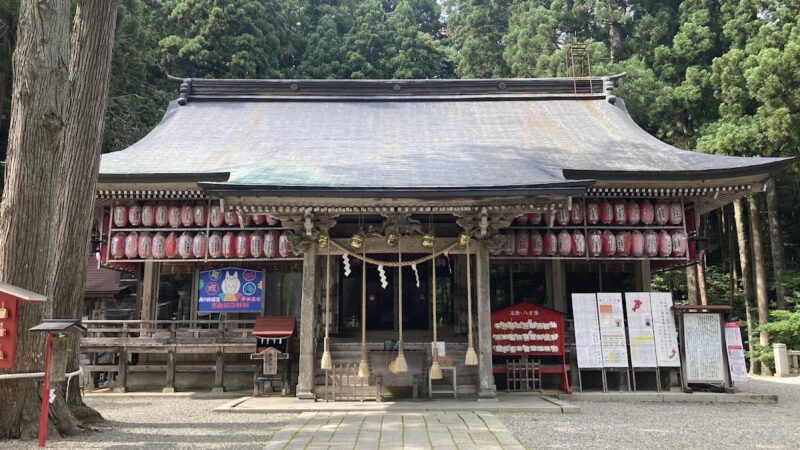
Sakuramatsu Shrine is located in Takahata, Hachimantai City, Iwate Prefecture, within Sakuramatsu Park. It is approximately 4km south-southeast of Arayashinmachi Station on the JR Hanawa Line, and is characterized by its tranquil environment in the mountains, far from human settlements. Within the shrine grounds flows the Fudo Waterfall, and a walking path is maintained along the stream, making it a nature-rich spot that can be explored in about 30 minutes.
The origin of the shrine’s name is an interesting legend. According to tradition, villagers were astonished to see cherry blossoms blooming on a pine tree in this area long ago, and they revered it as an auspicious sign. This mysterious phenomenon became the origin of the name “Sakuramatsu,” and it has been cherished by the local people to this day.
Deities and Divine Status
The deities enshrined at Sakuramatsu Shrine are the following two:
Takitsuhime-no-Mikoto
A goddess known as the god of water and purification. She is one of the three Munakata goddesses and presides over the flow of pure water. She has a deep connection to the natural environment of the shrine grounds, including the Fudo Waterfall.
Seoritsuhime-no-Mikoto
A goddess worshipped as the god who purifies and cleanses sins and impurities. This deity, who also appears in the Great Purification Prayer, is believed to possess the power of purification and regeneration.
Both of these enshrined deities are gods associated with water and purification, and their selection reflects a harmony with the clear stream flowing through the shrine grounds and the Fudo Waterfall.
History of Sakuramatsu Shrine
From Fudo Myoo Worship to the Founding of the Shrine
The history of Sakuramatsu Shrine dates back to the early Edo period. It is said to have begun in Genna 1 (1615) when the ancestors of the current chief priest, the Murakami family, enshrined Fudo Myoo in this place. This year marked the end of the Summer Siege of Osaka, a time when the foundations of the Edo Shogunate were solidified, and religious facilities were being developed throughout the country.
Until the early Meiji period, this place was revered by the local people as Sakuramatsu Fudo Myoo, and the Murakami family served there for generations. Fudo Myoo is an important deity in Esoteric Buddhism, believed to have the power to sever worldly desires and save people. Along with the Fudo Waterfall within the shrine grounds, it is believed to have functioned as a center for Shugendo (mountain asceticism) and mountain worship.
Meiji Restoration and Separation of Shinto and Buddhism
In the early Meiji period (1868), influenced by the Meiji government’s decree separating Shinto and Buddhism, the chief priest, Murakami Fujinoshin, founded the shrine and began serving as a Shinto priest. This was part of a nationwide policy of separating Shinto and Buddhism, and it was a time when religious facilities with strong Buddhist influences were being converted into shrines throughout the country.
Sakuramatsu Shrine also changed its form from a sacred site enshrining Fudo Myoo to a Shinto shrine within this trend, but the name Fudo Waterfall and the memory of local faith still retain strong Buddhist elements.
In 1871 (Meiji 4), it was designated a Gōsha (village shrine). A Gōsha is one of the ranks of shrines under the modern shrine ranking system, positioned as the guardian shrine of a county or several towns and villages. This designation indicates that Sakuramatsu Shrine was an important center of faith in the region.
The Murakami Family’s Successive Service
Sakuramatsu Shrine has a long history of service, with the Murakami family serving as chief priests for generations since its founding. Counting from the first year of the Genna era (1615), this history of service spans over 400 years, ensuring the continuation of a deeply rooted faith within the community. The Murakami family continues to manage the shrine today, cherishing tradition and its connection to the community.
Highlights and Cultural Assets within the Shrine Grounds
Fudo Waterfall
The most distinctive feature of Sakuramatsu Shrine is the Fudo Waterfall located within its grounds. This waterfall is considered the origin of the shrine’s faith and was the center of the sacred site when Fudo Myoo was enshrined in the first year of the Genna era (1615). The sight of the pure water cascading down the rock face creates a sacred landscape befitting the enshrinement of water deities such as Takitsuhime-no-Mikoto and Seorihime-no-Mikoto.
The area around Fudo Waterfall has been developed as Sakuramatsu Park, with a walking path along the stream. You can enjoy the beauty of nature throughout the four seasons, and especially during the seasons of fresh greenery and autumn leaves, many worshippers and tourists visit. A stroll while listening to the sound of the waterfall will be a precious experience that will purify your mind and body.
The Matchmaking Tree
Within the shrine grounds is a rare tree called the “Matchmaking Tree.” Named for its appearance of two trees growing together harmoniously, it is believed to bring good fortune in matchmaking.
Many worshippers pray for good relationships and take pictures in front of this tree. This Matchmaking Tree is one of the reasons why Sakuramatsu Shrine has become known as a shrine for matchmaking, and it is a popular spot for couples and those seeking good relationships.
The Old and Current Shrine Buildings
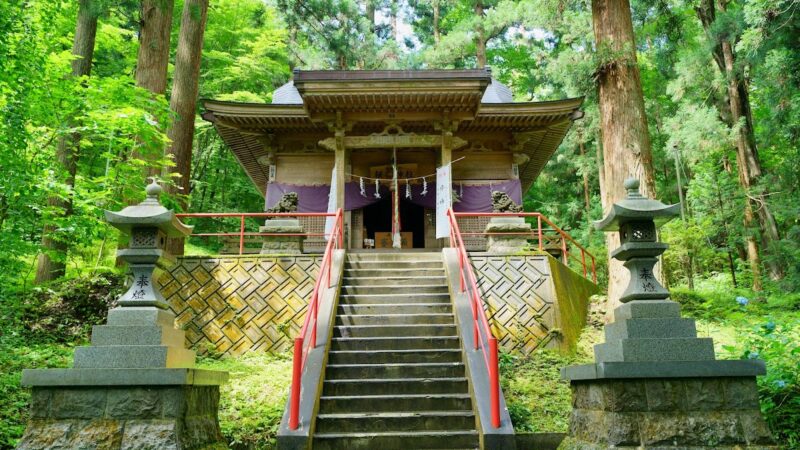
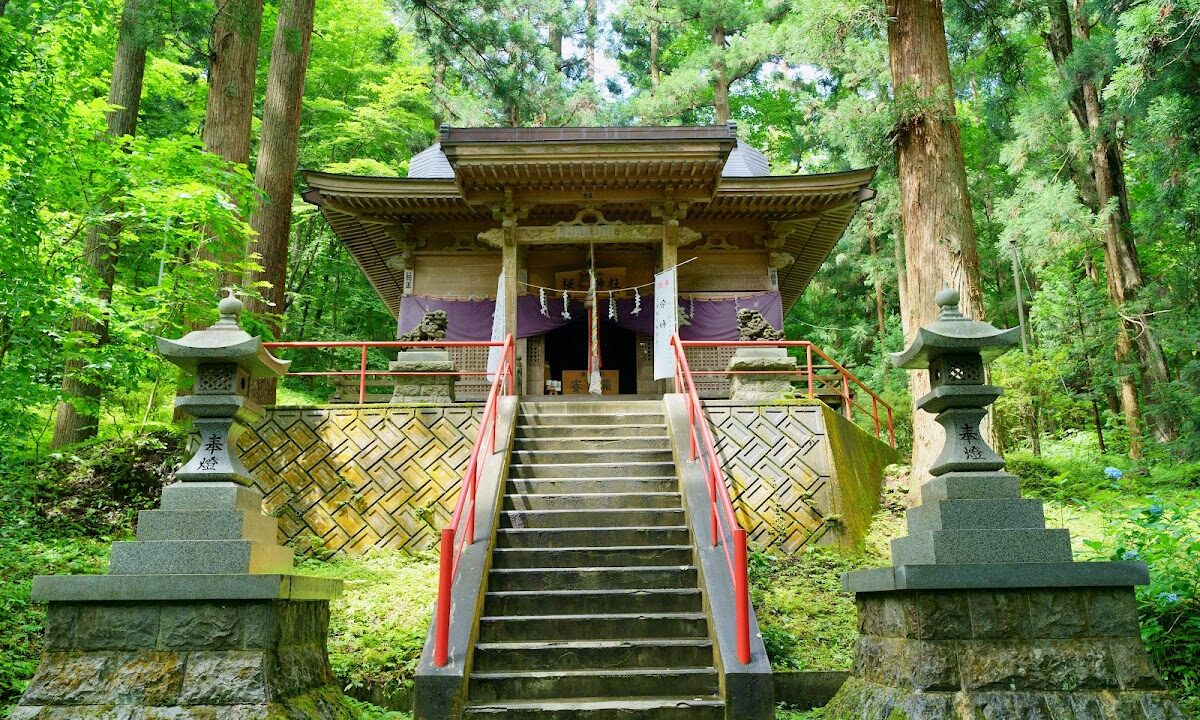
Below the cliff adjacent to Fudo Waterfall, the old shrine building of Sakuramatsu Shrine still remains. This old shrine building is a valuable structure that tells the story of the shrine’s long history and conveys the form of past faith. Visiting both the old and current shrine buildings allows you to feel the layered history of the shrine.
Watermill
Within Sakuramatsu Park, a watermill that was once used in the village has been relocated. This watermill is valuable as a folk artifact that conveys the local lifestyle and culture, and serves as an exhibit that allows visitors to imagine life in the past. The mechanism of the watermill, which uses the water of the mountain stream, demonstrates the wisdom of our ancestors who lived in harmony with nature.
Approach to the Shrine and Natural Environment
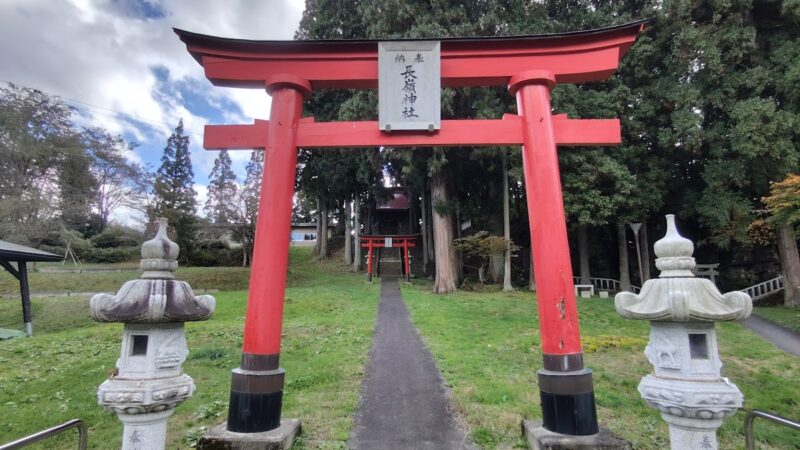
The approach to Sakuramatsu Shrine is a quiet path surrounded by natural forest. Walking along the path, bathed in dappled sunlight, is the perfect space to escape the hustle and bustle of everyday life and calm your mind. You can enjoy the changing scenery of each season: cherry blossoms in spring, fresh greenery in early summer, and autumn leaves in fall.
The walking path along the mountain stream is about a 30-minute loop, allowing you to enjoy nature at a leisurely pace. The refreshing environment, where you can feel the negative ions, is perfect for enjoying forest bathing along with your visit to the shrine.
Annual Festivals and Rituals
Sakuramatsu Shrine Grand Festival
The most important annual event at Sakuramatsu Shrine is the Sakuramatsu Shrine Grand Festival, held every year on May 3rd. This festival is an important event for the local community, attracting many parishioners and worshippers.
The date of May 3rd falls during Golden Week, making it easily accessible for those returning home for the holidays and tourists, making it the busiest day at the shrine. During the festival, solemn rituals are performed, praying for the peace and prosperity of the community, a bountiful harvest, and the wishes of the worshippers.
It is a beloved festival among the local community and a traditional event passed down through generations, making it an important cultural event in the Takahata district of Hachimantai City.
Other Rituals
In addition to the Grand Festival, various other rituals are performed throughout the year. For detailed information on annual events, please inquire directly with the shrine.
Goshuin (Shrine Seals) and Goshuincho (Shrine Seal Books)
About Goshuin
At Sakuramatsu Shrine, you can receive Goshuin. Goshuin are popular among many visitors as proof of their visit to the shrine and as a tangible record of their connection with the deities.
To receive a Goshuin, please request it at the shrine office after completing your prayers. However, the shrine office at Sakuramatsu Shrine may not be open all the time, so if you want to be sure to receive a Goshuin, it is recommended to call ahead to confirm.
Goshuincho (Shrine Seal Books)
It is recommended to check whether the shrine has its own Goshuincho when you visit. If you do not have a standard Goshuincho, it is a good idea to prepare one in advance.
Goshuin Manners
When receiving a Goshuin, please keep the following manners in mind.
- First, complete your prayers before receiving your Goshuin (temple/shrine stamp).
- Prepare your Goshuincho (stamp book) and show the open page.
- Prepare the Goshuin fee (generally around 300-500 yen).
- Request using polite language.
- Think of it as proof of your visit, not a stamp rally.
Benefits and Faith
Benefits for Matchmaking
Sakuramatsu Shrine is known for its matchmaking benefits. Due to the “matchmaking tree” on the grounds and the divine attributes of the enshrined deities, Takitsuhime-no-Mikoto and Seorihime-no-Mikoto, many visitors come seeking good relationships.
Matchmaking refers not only to romantic relationships and marriage, but to all good relationships between people. It is believed to bring benefits in various human relationships, such as good encounters at work, friendships, and family bonds.
Benefits for Purification and Protection from Evil
Seorihime-no-Mikoto, one of the enshrined deities, is a goddess who purifies and cleanses sins and impurities, and Takitsuhime-no-Mikoto is also a goddess with the power of purification through water. Therefore, visiting the shrine to purify the mind and body and to ward off evil is also effective.
The environment, especially with the pure water flow of Fudo Falls, is believed to further enhance its purifying power. Visiting at life’s turning points or when starting a new chapter may give you the strength to make a fresh start.
Gratitude for the Blessings of Water
As a shrine dedicated to the water god, the belief in gratitude for the blessings of water necessary for agriculture and daily life has continued since ancient times. It has also played a role as a guardian deity of the water source for the local people.
Basic Information on Sakuramatsu Shrine
Location and Contact Information
Address
89 Takahata, Hachimantai City, Iwate Prefecture 028-7542
Phone Number
0195-72-2835 (or 0195-72-2733)
*It is recommended to call in advance to inquire about visiting the shrine or obtaining Goshuin (shrine stamps).
Access Information
Access by Train
- Approximately 10 minutes by car (approx. 8km) from JR Hanawa Line “Arayashinmachi Station”
- The nearest station is JR Hanawa Line “Koyanohatake Station” (walking distance is a bit far, so using a car is recommended)
Access by Car
- Approximately 30 minutes from Tohoku Expressway “Nishine IC”
- Approximately 20 minutes from the center of Hachimantai City via National Route 282
- For car navigation, searching for “Sakuramatsu Park” or “Fudo Falls” is convenient.
Parking
Parking is available at Sakuramatsu Park. It is free to use, but spaces are limited, so caution is advised during busy periods such as the annual festival.
Visiting Hours and Admission Fee
Visiting Hours
The shrine grounds are generally open for free visits. However, the shrine office’s operating hours may be limited, so it is recommended to check in advance if you wish to receive a Goshuin (shrine stamp).
Admission Fee
Free
Estimated Time Required for Visit
If you only wish to visit the shrine, it will take about 15-20 minutes. However, if you plan to enjoy a stroll including Fudo Falls and the walking trails, it’s best to allow about an hour. For those who want to fully appreciate nature, we recommend allowing even more time.
Nearby Tourist Attractions
Major Tourist Attractions in Hachimantai City
When visiting Sakuramatsu Shrine, we recommend combining it with visits to other tourist attractions in Hachimantai City.
Hachimantai Aspite Line
A mountain road approximately 27km long connecting Iwate and Akita prefectures. Famous for its snow corridor, you can see snow walls several meters high when it opens in spring.
Hachimantai Summit
From the summit of Hachimantai (1,613m above sea level), you can enjoy a 360-degree panoramic view. It is also a treasure trove of alpine plants.
Appi Plateau
A resort area where you can enjoy skiing in winter and golf and trekking in summer.
Matsukawa Onsen & Fujishichi Onsen
The Hachimantai area boasts numerous high-quality hot springs, perfect for relaxing after a pilgrimage.
Nearby Shrines and Temples
Hachimantai City and the surrounding area are dotted with other historical shrines and temples. Those who enjoy visiting shrines may want to plan a visit to several.
Points to Note and Manners When Visiting
Clothing and Items to Bring
Sakuramatsu Shrine is located in a mountainous area with well-maintained walking trails, so please prepare accordingly, paying attention to the following points:
- Comfortable walking shoes: Especially important if walking on the trails.
- Seasonal clothing: Temperatures may be lower in this mountainous area than in urban areas.
- Insect repellent: Insect repellent spray is useful in summer.
- Rain gear: The weather can change quickly in this area, so a folding umbrella is recommended.
Shrine Visit Manners
Please observe basic shrine visit manners.
- Bow before passing through the torii gate.
- Walk along the edge of the path to the shrine. (The center is considered the path of the gods.)
- Purify yourself at the water basin. (Left hand → Right hand → Mouth → Handle of left hand in that order.)
- Etiquette at the main hall: Two bows, two claps, and one bow are the basics.
- Maintain silence: Do not speak loudly or run.
- Respect nature: Take your trash with you and do not harm the plants.
Regarding Photography
Photography is generally permitted on the shrine grounds, but please consider the following points.
- Please abide by any restrictions on photography, such as inside the main shrine.
- Be considerate of other visitors.
- When posting on social media, be mindful of location and personal information.
- Avoid using tripods during crowded times.
Seasonal Highlights and Precautions
Spring (April-June)
- A beautiful season with cherry blossoms and fresh greenery.
- The annual festival on May 3rd is bustling with many people.
- Watch your step as there may still be snow.
Summer (July-August)
- The lush greenery and cool environment make it ideal for escaping the heat.
- Don’t forget insect repellent.
- The Fudo Waterfall has abundant water and is impressive.
Autumn (September-November)
- One of the most beautiful seasons, with magnificent autumn foliage.
- Mid-to-late October is the best time to see the autumn leaves.
- Be aware of the cold mornings and evenings.
Winter (December-March)
- The shrine amidst the snowy landscape is magical.
- Be extremely careful of snow and ice.
- During winter, please check road conditions before visiting.
Summary of the Charms of Sakuramatsu Shrine
Sakuramatsu Shrine boasts a history of over 400 years, a unique history that evolved from a worship of Fudo Myoo (Acala) to a Shinto shrine. Surrounded by the natural blessings of Fudo Falls, the shrine grounds bring peace and purification to visitors.
It’s a spot that offers multifaceted enjoyment, including blessings for matchmaking, worship of the water deities Takitsuhime-no-Mikoto and Seorihime-no-Mikoto, and the charm of nature walks in Sakuramatsu Park. It’s a valuable place where you can experience history, faith, and the beauty of the four seasons amidst the rich natural environment of Hachimantai City.
Sakuramatsu Shrine, beloved by the local people, warmly welcomes visitors. When visiting Hachimantai City, Iwate Prefecture, be sure to visit Sakuramatsu Shrine and experience its history and natural charm.
Things to Check Before Visiting
Before visiting Sakuramatsu Shrine, we recommend checking the following points.
- Weather and Road Conditions: Check road conditions, especially during winter or in bad weather.
- Shrine Office Opening Hours: If you wish to receive a Goshuin (shrine stamp), please call in advance to confirm.
- Event Schedule (e.g., Grand Festival): If you wish to visit on a special day, please check the schedule.
- Operating Status of Surrounding Facilities: Check information on restaurants and rest facilities in advance.
- Your Physical Condition and Equipment: Prepare appropriately for visiting a shrine in a mountainous area.
We hope your visit to Sakuramatsu Shrine will be a memorable and wonderful experience. Enjoy a special time away from everyday life amidst the soothing sound of Fudo Falls and the tranquil forest.