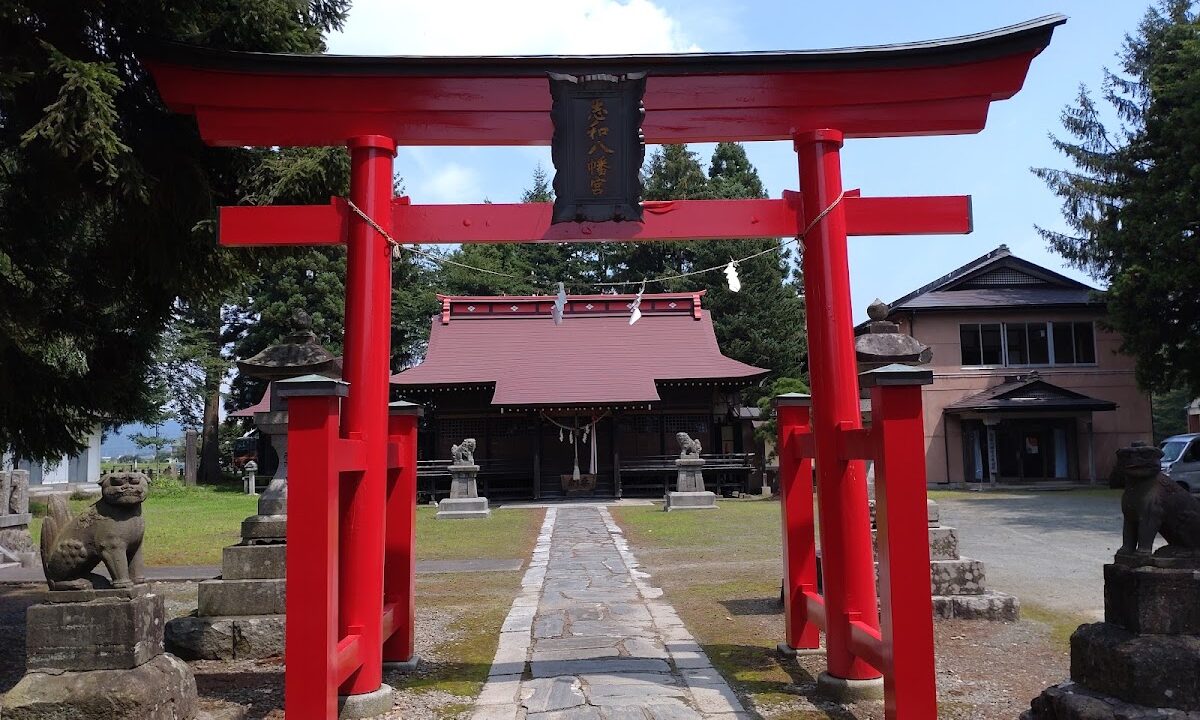
Complete Guide to Shiwa Hachimangu Shrine (Shiwa Town, Iwate Prefecture) | History, Deities, Access, and Shrine Highlights
Shiwa Hachimangu Shrine, located in Shiwa Town, Shiwa District, Iwate Prefecture, is a historic shrine founded in 862 during the Heian period. It has a history of being established through a branch shrine from Iwashimizu Hachimangu Shrine (Otokoyama Hachimangu Shrine in Yamashiro Province) in Kyoto, and has been cherished by people as a center of local faith for over a thousand years. This article comprehensively introduces information useful for visiting Shiwa Hachimangu Shrine, including its history, deities, shrine highlights, and access methods.
Basic Information on Shiwa Hachimangu Shrine
Location: 73 Hachiman, Kamihirasawa, Shiwa-cho, Shiwa-gun, Iwate Prefecture (Some sources list it as 83)
Deities Enshrined:
- Hondawake-no-mikoto: The divine name of Emperor Ojin, widely worshipped as Hachiman-sama
- Takemikazuchi-no-mikoto: A deity known as the god of war and thunder
Annual Festival Date: September 8th
Affiliation: Association of Shinto Shrines, Iwate Prefecture Shrine Association
Shiwa Hachimangu Shrine is located in the Kamihirasawa area of Shiwa-cho, a tranquil shrine nestled in a peaceful rural landscape. Admission is free, and it is a valuable cultural asset of Iwate Prefecture, visited not only by local residents but also by worshippers from afar.
History and Origins of Shiwa Hachimangu Shrine
Founded in the Heian Period
The founding of Shiwa Hachimangu Shrine dates back to August of the 4th year of the Jōgan era (862). During this period, by order of the imperial court, the Hachiman deity was invited from Iwashimizu Hachimangu Shrine (Otokoyama Hachimangu Shrine) in Yamashiro Province (present-day Kyoto Prefecture). The mid-Heian period was a crucial time for the expansion of the imperial court’s influence in the Tohoku region and for relations with the Emishi people. Hachiman shrines were invited to various locations to serve as guardian deities.
Although Iwashimizu Hachimangu Shrine was a relatively new shrine, founded in the 2nd year of the Jōgan era (860), the fact that it was quickly invited to the Tohoku region demonstrates the rapid spread of Hachiman worship at the time and the importance of the Hachiman deity in the imperial court’s administration of Tohoku.
Deep Connection with the Minamoto Clan
An indispensable aspect of the history of Shiwa Hachimangu Shrine is its connection with the Minamoto clan. During the late Heian period, in the Former Nine Years’ War (1051-1062), Minamoto no Yoriyoshi and his son Yoshiie, the Chinju-fu Shogun (Commander-in-Chief of the Northern Defense Headquarters), went to the Tohoku region to pacify Oshu.
The Minamoto clan deeply revered Hachiman, the god of war, as their tutelary deity, and it is said that Yoriyoshi and Yoshiie visited various Hachiman shrines to pray for victory. Shiwa Hachiman Shrine is considered one of these shrines, and it has etched its name in local history as a shrine where Minamoto warriors prayed for victory.
This memory later became the foundation of the samurai culture that took root in the Shiwa region and contributed to the elevation of the shrine’s status.
From the Edo Period to the Modern Era
During the Edo period, as part of the Morioka Domain, it attracted the faith of the residents as the local tutelary deity. Because agriculture was central to the region, prayers for abundant harvests, family safety, and protection from evil were frequently offered.
Even after the Meiji-era separation of Shinto and Buddhism, the shrine continued to exist and, through the Showa and Heisei eras, has continued to function as a spiritual pillar of the local community to this day.
About the Enshrined Deity
Hondawake-no-Mikoto
Homudawake-no-Mikoto, the principal deity of Shiwa Hachimangu Shrine, is the divine name of Emperor Ojin, the 15th emperor. He is enshrined as Hachiman-sama in Hachiman shrines throughout Japan and is believed to possess the following divine virtues:
- Long-lasting military fortune: Due to his nature as a god of war, he is believed to bring blessings for victory in competitions and overcoming difficulties.
- National protection: He is worshipped as a god who protects the country.
- Industrial development: He brings industrial development and business prosperity.
- Prosperity of descendants: He brings prosperity to the family line and fertility.
Emperor Ojin was a real historical figure, mentioned in the Kojiki and Nihon Shoki. Due to his significant cultural achievements, such as the introduction of continental culture and exchanges with Baekje, he is revered as a god of both military and literary arts.
Takemikazuchi-no-Mikoto
Takemikazuchi-no-Mikoto, a deity enshrined here, is one of the strongest warrior gods in Japanese mythology. He played a key role in the Izumo no Kuniyuzuri myth and is known for the following divine virtues:
- Improvement in Martial Arts: Enhancement of swordsmanship and martial arts
- Bringing Good Fortune: Victory in all kinds of competitions
- Protection from Evil and Disaster: Driving away evil spirits and preventing disasters
- Protection from Earthquakes: Faithful as a god who calms earthquakes (Legend of the Keystone)
He is also famous as the principal deity of Kashima Shrine in Ibaraki Prefecture and has been revered since ancient times as a guardian deity of eastern Japan.
Highlights of the Shrine Grounds
Shrine Architecture
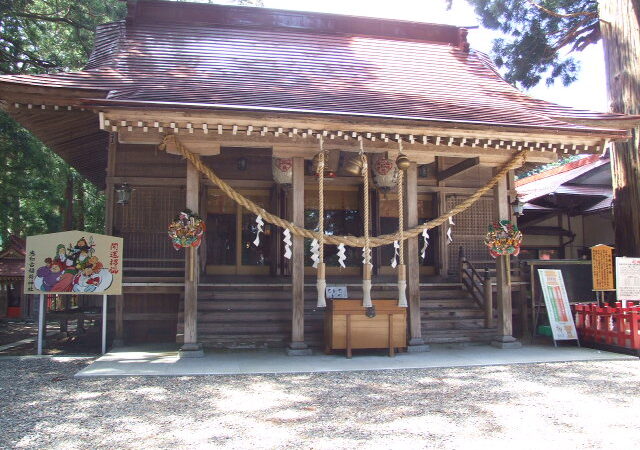
The main hall of Shiwa Hachimangu Shrine is a valuable structure that preserves traditional shrine architectural styles. Visitors praise the majestic presence and intricate decorations of the main hall.
The main hall is where daily prayers and Shinto rituals are performed during the annual festival, serving as a place of worship for the local residents. The intricate details of the architecture showcase the craftsmanship of artisans, giving it a dignified and historical feel.
Torii Gate and Approach
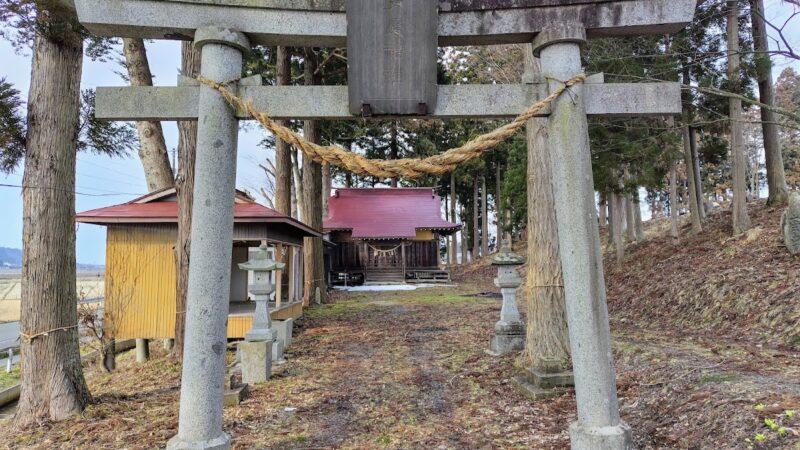
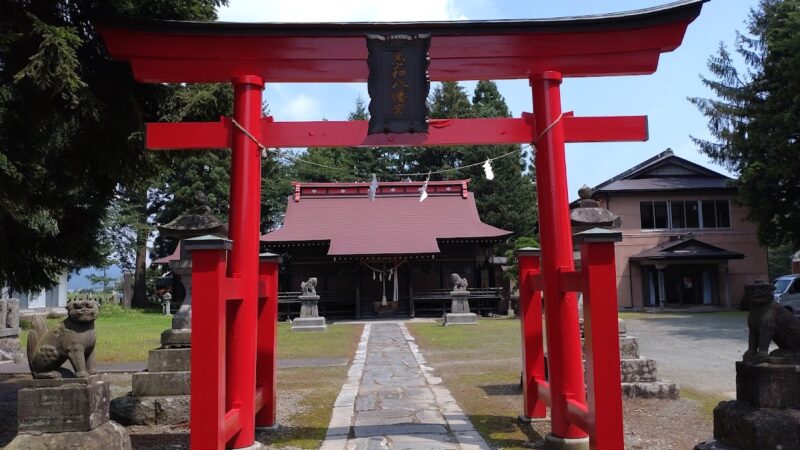
Passing through the torii gate at the entrance to the shrine, the approach leads to the main hall. Walking along the approach shifts one’s mind from the secular world to the sacred realm, allowing one to experience a tranquil atmosphere of worship.
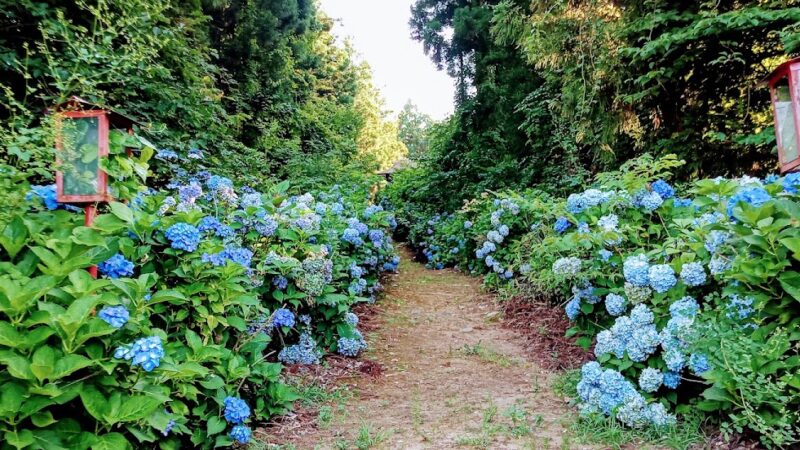
Along the approach, nature displays different expressions with each season, allowing visitors to enjoy the beauty of the four seasons: the fresh green of spring, the deep green of summer, the autumn foliage, and the snowy landscape of winter.
Komainu (Guardian Dogs)
Komainu are placed within the shrine grounds, welcoming visitors. Komainu have been placed since ancient times as sacred beasts protecting shrines, and their expressions and forms vary depending on the era and region. The komainu of Shiwa Hachimangu Shrine also possess cultural value, conveying the techniques of local stonemasons.
Shrines within the Precincts
Within the grounds of Shiwa Hachimangu Shrine, several subsidiary shrines are enshrined:
Yasaka Shrine: Dedicated to Susanoo-no-Mikoto, it is believed to offer protection against disease and misfortune. It was established by inviting a deity from Yasaka Shrine in Kyoto, and attracts particularly large crowds during the summer festival.
Tenmangu Shrine: A shrine within the grounds dedicated to Sugawara no Michizane, the god of learning, it is visited by worshippers praying for success in exams and academic achievement. The plaque bears the characters “Tenmangu.”
These subsidiary shrines demonstrate that Shiwa Hachimangu Shrine has become deeply rooted in the community, serving not only as a center for Hachiman worship but also as a haven for diverse beliefs.
Natural Environment
Shiwa Hachimangu Shrine is surrounded by abundant nature. The trees within the grounds have grown over many years, creating a solemn atmosphere befitting a sacred place. The tranquil environment, filled with the sounds of birdsong and rustling trees, is perfect for escaping the hustle and bustle of the city and finding peace of mind.
Access to Shiwa Hachimangu Shrine
By Public Transportation
Nearest Station: JR Tohoku Main Line, Shiwa-Chuo Station
Shiwa Hachimangu Shrine is approximately 4-5 km from Shiwa-Chuo Station. Since walking takes about 50 minutes to 1 hour, the following methods are recommended:
- Taxi: Approximately 10 minutes by taxi from Shiwa-Chuo Station
- Rent a car: Rent a car near Shiwa-Chuo Station and visit the shrine.
- Bus: Use Iwate Kotsu buses (approximately 40 minutes on foot from the nearest bus stop, “Sakaida”).
By Car
Tohoku Expressway:
- Approximately 10-15 minutes from Shiwa IC
- Approximately 25 minutes from Morioka IC
Parking: There are parking spaces for visitors around the shrine (be careful on crowded days such as during festivals).
Searching with Car Navigation/Map Apps
You can search using the address “73 Hachiman, Kamihirasawa, Shiwa-cho, Shiwa-gun, Iwate Prefecture” or “Shiwa Hachimangu Shrine”. You can check the accurate location and directions using map apps such as Yahoo! Maps and Google Maps.
Manners and Etiquette for Visiting Shrines
There are traditional manners for visiting shrines. When visiting Shiwa Hachimangu Shrine, please keep the following basic manners in mind:
How to pass through the torii gate
The torii gate is the entrance to the sacred area. Before passing through the torii gate, bow once. Since the center of the path (the main path) is considered the path of the gods, it is polite to walk along the sides.
Proper Hand-Washing Ritual
- Take the ladle with your right hand and wash your left hand.
- Switch the ladle to your left hand and wash your right hand.
- Switch the ladle back to your right hand, receive water in your left hand, and rinse your mouth.
- Wash your left hand once more.
- Stand the ladle upright, rinse the handle, and return it to its original position.
Proper Worship Ritual at the Main Hall
Perform the general shrine worship ritual: “Two bows, two claps, one bow.”
- Place your offering in the offering box.
- Ring the bell if there is one.
- Bow deeply twice (two bows).
- Bring both hands together in front of your chest and clap twice (two claps).
- Pray while keeping your hands together.
- Bow deeply once (one bow).
Annual Festival and Events
Annual Festival (September 8th)
The most important festival of Shiwa Hachimangu Shrine is the annual festival, held every year on September 8th. The annual festival is the central event of the year, commemorating the founding of the shrine and offering gratitude to the enshrined deity.
During the festival, Shinto priests solemnly perform rituals, and local parishioners and devotees attend. In some areas, a portable shrine procession or offering ceremony may take place, providing an opportunity to reaffirm the unity of the local community.
Other Annual Events
Besides the annual festival, the shrine likely holds the following annual events:
- New Year’s Day Festival (January 1st): Welcome the new year and pray for peace throughout the year
- Setsubun Festival (February): Drive away evil spirits with bean-throwing and other rituals
- Spring Festival (around the Vernal Equinox): Pray for a bountiful harvest
- Summer Purification Ceremony (end of June): Purify oneself of sins and impurities accumulated over the past six months
- Autumn Festival (around the Autumnal Equinox): Express gratitude for the harvest
- Year-End Purification Ceremony (end of December): Purify oneself of sins and impurities accumulated over the year
Specific event details and dates may vary from year to year, so it is recommended to check before visiting.
Nearby Tourist Attractions
When visiting Shiwa Hachimangu Shrine, combining your visit with a tour of the surrounding tourist attractions in Shiwa Town will make your trip even more fulfilling.
Shiwa Inari Shrine
Although its name is similar to Shiwa Hachimangu Shrine, Shiwa Inari Shrine is a separate shrine and also an important shrine in Shiwa Town.
Location: Within Shiwa Town
Deities Enshrined: Ukanomitama-no-Mikoto, Sarutahiko-no-Mikoto, Omiyanome-no-Mikoto
Features:
- Said to have been founded by Minamoto no Yoriyoshi and his son Yoshiie
- Guardian deity of abundant harvests, bountiful catches, and traffic safety
- A group of ancient cedar trees (designated town cultural property) said to be 1,000 years old are located within the shrine grounds
- Approximately 15 minutes by car from JR Shiwa Chuo Station, approximately 5 minutes by car from Tohoku Expressway Shiwa IC
The group of ancient cedar trees at Shiwa Inari Shrine is breathtaking, and it is a popular power spot where you can feel a thousand years of history firsthand.
Shiwa Koinari Shrine
In addition to Shiwa Inari Shrine, there is also Shiwa Koinari Shrine.
Features:
- The enshrined deity is Ukanomitama-no-Mikoto
- A rare Inari shrine nationwide, where a mummified white fox was discovered at the base of the sacred cedar tree in 1954
- A mystical legend remains
Tourist Facilities in Shiwa Town
Shiwa Town Ogawa Plaza:
- A complex facility housing a library, a direct-from-the-farm market, restaurants, etc.
- You can purchase fresh local agricultural products and specialty goods
- Within walking distance of Shiwa Chuo Station
Shiwa Fruit Park:
- A tourist facility with orchards and a winery
- You can enjoy grape picking and wine tasting
- You can experience the rich agriculture of Shiwa Town
Sightseeing in Morioka City
Morioka City, the capital of Iwate Prefecture, can be accessed in about 30 minutes by car from Shiwa Town:
- Morioka Castle Ruins Park (Iwate Park): The site of the castle of the Nanbu clan
- Morioka Hachimangu Shrine: The guardian shrine of Morioka, a shrine of the same Hachiman faith as Shiwa Hachimangu Shrine.
- A Stroll Along the Nakatsu River: Beautiful riverside scenery.
- Morioka’s Three Great Noodles: A gourmet tour of Wanko Soba, Morioka Reimen, and Jajamen.
How to Enjoy Visiting Shiwa Hachimangu Shrine
Spend a Quiet Time
Shiwa Hachimangu Shrine is not a shrine heavily advertised as a tourist destination, making it appealing for its quiet atmosphere. It’s the perfect place to escape the hustle and bustle and have time to reflect on yourself.
While strolling through the grounds, you can contemplate its history of over a thousand years and feel the history of the faith of our ancestors.
Photography
There is no shortage of subjects to photograph, from the architecture and guardian lions to the nature within the shrine grounds. The following types of photos are especially recommended:
- The shrine building viewed through the torii gate
- Close-up of the guardian lion-dogs
- The plaque of the subsidiary shrine
- Seasonal nature (cherry blossoms, fresh greenery, autumn leaves, snowscapes)
However, please be considerate of those worshipping and remember that this is a sacred place when taking photos.
Collecting Goshuin (Shrine Stamps)
One of the joys of visiting shrines is collecting goshuin. You may be able to obtain a goshuin at Shiwa Hachimangu Shrine (however, there may not always be a permanent shrine office, so prior confirmation is recommended).
Goshuin are not just stamps; they are precious items bestowed by the shrine as proof of worship. Bring your goshuin book and ask respectfully.
Seasonal Visits
Shiwa Hachimangu Shrine displays different expressions throughout the seasons:
Spring (March-May):
- The fresh greenery is beautiful, and the approach to the shrine is full of vitality.
- It is especially beautiful during the cherry blossom season (check availability of cherry blossoms beforehand).
Summer (June-August):
- Feel the coolness of the sacred grounds enveloped in deep green.
- The early autumn atmosphere is felt around the time of the annual festival in early September.
Autumn (September-November):
- The annual festival on September 8th is the highlight.
- The shrine grounds are a spectacular sight during the autumn foliage season.
- You can feel the bounty of autumn.
Winter (December-February):
- The tranquil sacred grounds are covered in snow.
- Visiting the shrine in the crisp, clear air is a solemn experience.
Hachiman Faith in Iwate Prefecture and the Position of Shiwa Hachimangu Shrine
Many Hachimangu shrines are located within Iwate Prefecture. Morioka City, the prefectural capital, is home to Morioka Hachimangu Shrine, widely known as the guardian shrine of Morioka.
Shiwa Hachimangu Shrine, though not large in scale, holds an important position in the history of Hachiman worship in Iwate Prefecture due to its ancient founding date and venerable history. Its founding in 862 (Jōgan 4) was only two years after the founding of Iwashimizu Hachimangu Shrine (860), making it a valuable example demonstrating the rapid spread of Hachiman worship throughout the Tohoku region.
For the local people, it has been a familiar presence, revered as their tutelary deity for over a thousand years, and is a place of worship closely intertwined with their daily lives.
Notes on Visiting
Attire
While there is no strict dress code for visiting shrines, it is desirable to dress appropriately, mindful that it is a sacred place. Avoid overly revealing clothing or sloppy attire.
Visiting Hours
Shrines are generally recommended to be visited during the daytime. For shrines without a permanently staffed office, early mornings and evenings are less crowded, making daytime visits safer.
Weather Considerations
Iwate Prefecture experiences snowfall in winter. If visiting during winter, be sure to bring warm clothing and non-slip shoes. Also, the approach to the shrine may be covered in snow, so be careful of your footing.
Contact Information
For detailed and up-to-date information regarding Shiwa Hachimangu Shrine, please contact the following:
- Iwate Prefecture Shrine Association: Provides information on shrines within the prefecture
- Shiwa Town Tourism Exchange Association: General tourism information for Shiwa Town
- Association of Shinto Shrines: Information on shrines nationwide
Summary: The Charm of Shiwa Hachimangu Shrine
Shiwa Hachimangu Shrine is a historic shrine in Shiwa Town, Iwate Prefecture, with a history spanning over a thousand years. Founded in 862 AD, this shrine’s appeal lies in its connection to Minamoto no Yoriyoshi and Yoshiie, its powerful enshrined deities, Homudawake no Mikoto and Takemikazuchi no Mikoto, and its rich history of faith rooted in the local community.
While not a large-scale tourist shrine, this allows for quiet worship, creating a precious space to calmly connect with the deities. When visiting Shiwa Town, be sure to visit Shiwa Hachimangu Shrine and purify your soul in this sacred place steeped in a thousand years of history.
It’s relatively easy to access from Shiwa Chuo Station, and there are other points of interest nearby, such as Shiwa Inari Shrine. Shiwa Hachimangu Shrine, where you can feel the rich nature and history of Iwate Prefecture, is a hidden gem worth visiting for shrine pilgrimages and Iwate sightseeing.
Shiwa Hachimangu Shrine is free to enter and easily searchable on map apps. Be sure to include this historic shrine in your itinerary when visiting Iwate Prefecture. It’s sure to be a memorable worship experience.