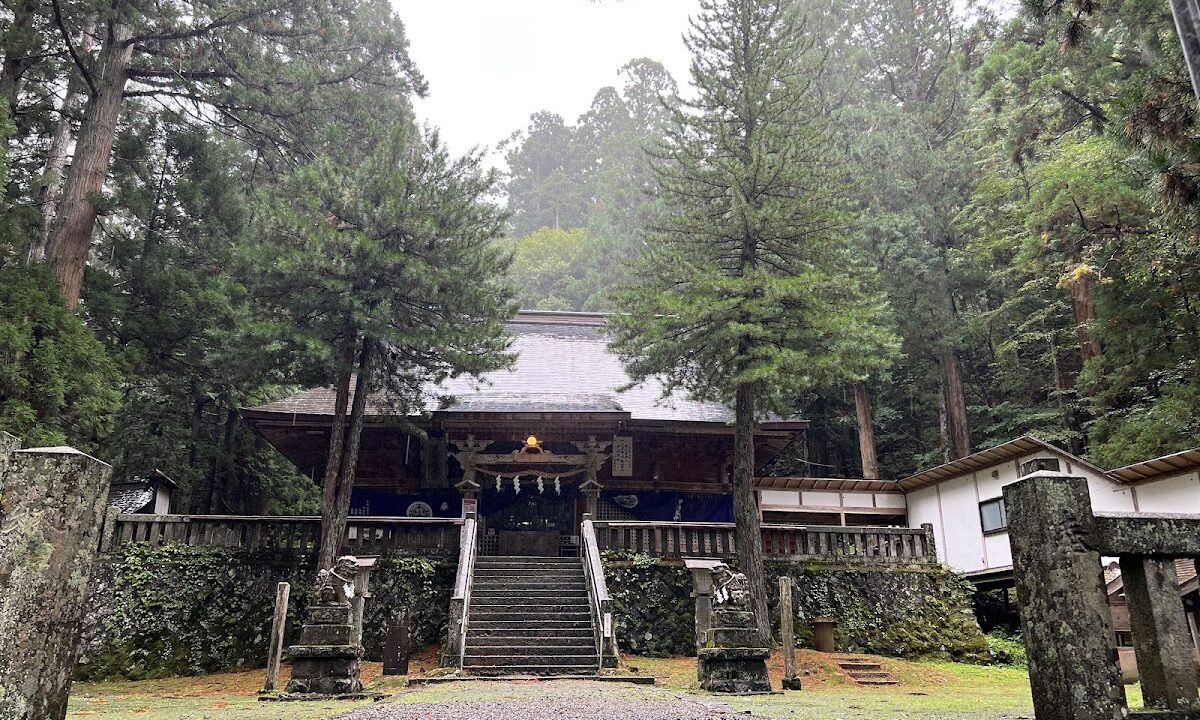
Hayachine Shrine (Iwate Prefecture) Complete Guide | History, Kagura, Access, and Four Sub-Shrines Explained in Detail
Hayachine Shrine, which enshrines Mount Hayachine (elevation 1,917m), a sacred mountain in Iwate Prefecture, is a representative sacred site of mountain worship in the Tohoku region. This article comprehensively explains the history, architecture, Kagura (sacred dance), and the multiple sub-shrines located at the four trailheads of Hayachine Shrine, providing useful information for sightseeing and worship.
What is Hayachine Shrine? | The Center of Mountain Worship, a Pride of Iwate
Hayachine Shrine is a shrine that enshrines Mount Hayachine, which rises in the Kitakami Mountains of Iwate Prefecture, as its sacred object. Mount Hayachine has long been revered as the “highest peak in the Kitakami Mountains,” and during the Morioka Domain era, it was revered by the Nanbu Domain as the “guardian mountain of the east.”
The main deity is Seoritsuhime-no-Mikoto, a goddess of purification and water, known as one of the four Harai-do deities. Connected to the pure water sources of Mount Hayachine, it has attracted many worshippers since ancient times.
Characteristics of Hayachine Mountain Faith
A major characteristic of Hayachine Mountain faith is that, centered around the inner shrine at the summit, there are lower shrines at each of the four trailheads in the east, west, north, and south directions. This reflects the concept of “four-direction worship” in mountain worship, creating a structure that allows worshippers to pay homage to the sacred mountain from any direction.
Four Hayachine Shrines | Characteristics of Each Lower Shrine
At each of the four trailheads of Mount Hayachine, there are Hayachine Shrines (lower shrines) with different histories and characteristics.
Western Lower Shrine: Hayachine Shrine (Osako-cho, Hanamaki City)
Location: 2, 1st Ward, Uchikawame, Osako-cho, Hanamaki City, Iwate Prefecture
Former Name: Gakumyosenji Temple (Motoikegami-in Myosenji Temple)
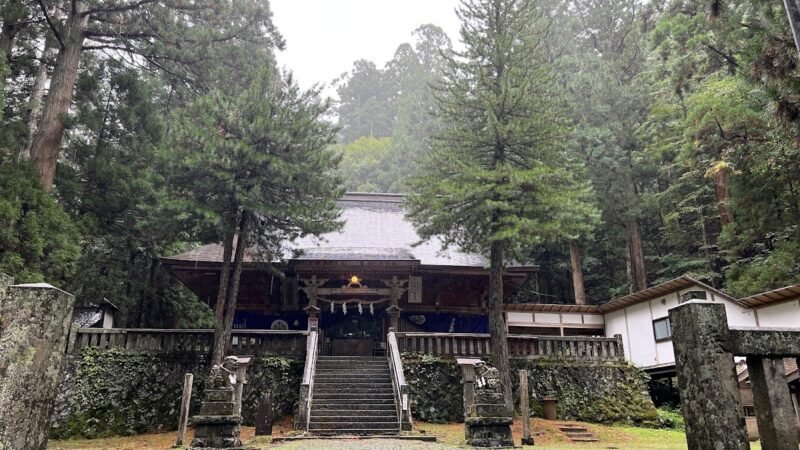
The Hayachine Shrine in Osako-cho, Hanamaki City, is the most visited and is also known as a tourist spot.
Founding and History
It is believed that the shrine’s origins date back to 807 AD (Daido 2), when Hyōbu-kyō Narifusa, a descendant of Fujiwara no Kamatari, erected a shrine on the summit of Mt. Hayachine. Later, under the patronage of Nanbu Toshinao, the lord of the Morioka domain, the Shinzan-dō (the current main hall of Hayachine Shrine) was constructed over three years starting in 1610 (Keichō 15) as the inner sanctuary of Gakumyōsen-ji Temple.
Due to the separation of Shinto and Buddhism during the Meiji era, the name was changed from Gakumyōsen-ji Temple to Hayachine Shrine, which it remains to this day.
Main Hall, a Prefecturally Designated Tangible Cultural Property
The existing main hall was built during the Keichō period (1610-1612) and is designated as a Iwate Prefecture Designated Tangible Cultural Property. The solid construction techniques of the Keichō period are strongly evident in the framework centered on the inner sanctuary pillars and the carvings and decorations around the eaves, making it a valuable historical site for understanding early Edo period shrine architecture.
Although it has been restored twice since the Keicho era, the original architectural style has been well preserved. The structure of the inner sanctuary shows the influence of esoteric Buddhist architecture, conveying the remnants of the era of syncretism of Shinto and Buddhism.
Access Information
- By Car: Approximately 50 minutes from the Tohoku Expressway “Hanamaki IC”
- By Public Transportation: Approximately 60 minutes by car from JR Hanamaki Station (bus service is seasonal, so please check)
- Parking: Available (Free)
Southern Village Shrine: Hayachine Shrine (Tsukimauchi-cho, Tono City)
Location: 19-81 Kami-Tsukimauchi, Tsukimauchi-cho, Tono City, Iwate Prefecture
Former Name: Jifukuin Myosenji Temple
Origin of Founding
It is said that on March 8, 806 (Daido 1), Shikaku Tozo of Kinai Village worshipped the divine spirit and built the shrine of Hayachine-san Daigongen. There is also a legend that Fugenbo later built a shrine on the mountaintop, making it one of the earliest sacred sites of Hayachine worship.
Features of the Shrine Grounds
The vast grounds are densely covered with ancient cedar and cypress trees, creating a solemn atmosphere. The deities of the three mountains of Tono (Hayachineyama, Rokkakugyuyama, and Ishigamiyama) are enshrined here, and it also plays a central role in mountain worship in the Tono region.
Mikoshi Washing Ritual
Every year on July 18th, during the annual festival, the mikoshi (portable shrine) is carried across the nearby Takigawa River and washed with river water in a ritual called “Mikoshi Washing.” This ritual is known as a unique event specific to this shrine, which enshrines Seoritsuhime, the goddess of water.
Eastern Village Shrine: Hayachine Shrine (Etsugi)
Former Name: Shinzando
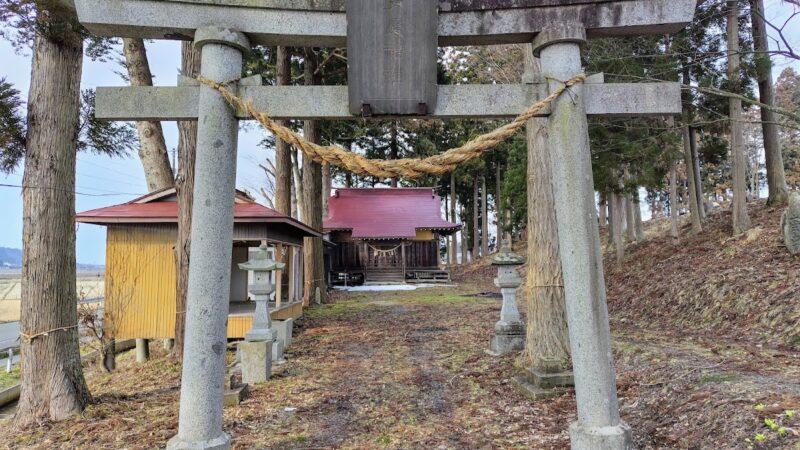
This village shrine, located at the trailhead of the Esagi district, was formerly called Shinzando. It functions as the starting point for the mountain trail from the east.
Northern Village Shrine: Hayachine Shrine (Monma)
Former Name: Shinzan Daigongen
Located in the Monma district on the north side, this village shrine was originally worshipped as Shinzan Daigongen. While relatively small compared to the other four village shrines, it preserves the local faith to this day.
Hayachine Kagura | A UNESCO Intangible Cultural Heritage Ritual and Performing Art
Hayachine Kagura is indispensable when discussing Hayachine Shrine.
National Important Intangible Folk Cultural Property and UNESCO Intangible Cultural Heritage
Hayachine Kagura is designated as a National Important Intangible Folk Cultural Property, and in 2009, it was also registered as a UNESCO Intangible Cultural Heritage (with an expanded registration in 2022 as part of “Furyu Odori,” which includes “Hayachine Kagura”).
Characteristics and Lineage of Kagura
Hayachine Kagura is broadly divided into two lineages: “Otsugunai Kagura” and “Take Kagura.” Both are rooted in Yamabushi Kagura (mountain asceticism) and retain a strong influence of Shugendo (mountain asceticism).
It is characterized by its vigorous and powerful dances, possessing a unique style distinct from Onikenbai (demon sword dance). The repertoire includes many pieces based on Japanese mythology and agricultural rituals, such as “Iwato-biraki” (opening of the rock cave), “Sanbaso” (three-beat dance), and “Torimai” (chicken dance).
Performance Schedule
Every year on January 3rd, a magnificent Kagura performance is dedicated at Hayachine Shrine (Osako-cho, Hanamaki City). In addition, Kagura may be performed at festivals and special events in various districts.
Performed in the winter cold, Kagura invites viewers into a sacred world. If you plan to see Kagura in conjunction with a visit to the shrine, it is recommended to check the performance schedule in advance.
Hiking Mount Hayachine and the Inner Shrine at the Summit
Characteristics of Mount Hayachine
Mount Hayachine, at an elevation of 1,917m, is the highest peak in the Kitakami Mountains. Known as a treasure trove of alpine plants, it is home to numerous endemic and rare species, including *Hayachine Usuyukisou* (Hayachine edelweiss).
Hiking Routes
The main hiking routes are as follows:
- Odagoshi Course (shortest and most popular): Approximately 3 hours (round trip)
- Kawara-no-bo Course (Osako-cho, Hanamaki City side): Approximately 4 hours (round trip)
The hiking season runs from early June to mid-October. Many hikers visit, especially during the flowering season of alpine plants in early to mid-July.
Inner Shrine at the Summit
The inner shrine of Hayachine Shrine is located at the summit. Although a small shrine, it is the most sacred place of Hayachine worship. From the summit, you can enjoy a spectacular view stretching from Mount Iwate and Hachimantai to the distant Pacific Ocean.
Visiting Information & Basic Data
Hayachine Shrine (Osako-cho, Hanamaki City)
Address: 2, 1st Ward, Uchikawame, Osako-cho, Hanamaki City, Iwate Prefecture 028-3201
Phone: 0198-48-5877
Visiting Hours: Grounds are freely accessible (Shrine office is open only during the day)
Admission Fee: Free
Closed: None (Open year-round)
Parking: Available (Free)
Hayachine Shrine (Tsukimauchi-cho, Tono City)
Address: 19-81, Kami-Tsukimauchi, Tsukimauchi-cho, Tono City, Iwate Prefecture 028-0661
Visiting Hours: Grounds are freely accessible
Admission Fee: Free
Parking: Available
Points to Note When Visiting
- During winter (December to March), there is snow cover, so caution is needed regarding road conditions.
- Due to the mountainous terrain, there are areas where cell phone signals are weak.
- If visiting the shrine involves hiking, appropriate equipment and prior weather checks are essential.
- Crowds are expected on special days such as Kagura performance days.
Tourist Spots Around Hayachine Shrine
Osako Town Area
- Hayachine Dam: A beautiful arch dam, the surrounding area is famous for its autumn foliage.
- Michi-no-Eki Hayachine: Enjoy local specialties and meals.
- Winery: Osako Town is a wine-producing area known for “Edel Wine”.
Tono Area
- Tono Furusato Village: A facility where you can experience the traditional lifestyle of Tono.
- Kappa-buchi: The site of the Kappa legend, famous from the Tono Monogatari (Tales of Tono).
- Tono City Museum: Learn about the history and culture of Tono.
Hotels and Accommodations near Hayachine Shrine
When visiting Hayachine Shrine or climbing Mount Hayachine, staying in the surrounding area is convenient.
Hotels in the Hanamaki/Kitakami Area
Hanamaki Onsenkyo is about a 40-50 minute drive from Hayachine Shrine, allowing you to enjoy both hot springs and the shrine. There are several hot spring areas, including Hanamaki Onsen, Dai Onsen, and Osawa Onsen, offering a wide range of options from traditional inns to business hotels.
Kitakami City is also a convenient accommodation option, with a good selection of business hotels. It also has good access from the Kitakami-Ezuri IC and Kitakami-Kanegasaki IC on the Tohoku Expressway.
Accommodations in the Tono Area
Tono City offers guesthouses, traditional inns, and business hotels, allowing you to visit Hayachine Shrine in conjunction with sightseeing around the setting of the Tono Monogatari (Tales of Tono). Accommodations are concentrated around Tono Station.
Accommodation for Hikers
If you wish to start your hike early in the morning, you can consider staying at guesthouses in Osako town or mountain huts near the Kawara-no-bo trailhead (accommodation is limited, so advance confirmation is necessary).
Relationship with Other Shrines in Iwate
Hayachine Shrine holds an important position within the network of shrines in Iwate Prefecture.
Relationship with Morioka Hachimangu Shrine
Hayachine Shrine has a historical connection with Morioka Hachimangu Shrine, the principal shrine of the Morioka Domain, through the Nanbu Domain. Lord Nanbu Toshinao supported the construction of Hayachine Shrine’s buildings, and it attracted the faith of the Morioka Domain.
Comparison with Komagata Shrine
Komagata Shrine (Oshu City), which also enshrines Mount Komagatake, a sacred mountain in Iwate, shares a commonality in mountain worship. Both shrines are important shrines that convey ancient mountain worship to the present day.
Annual Events at Hayachine Shrine
Main Festivals
- January 3rd: Hayachine Kagura Dedication (Osako-cho, Hanamaki City)
- July 18th: Annual Festival and Mikoshi Washing (Tsukimauchi-cho, Tono City)
- Other: Spring and Autumn Festivals are held in various districts.
Various Shinto rituals are performed throughout the year, allowing you to enjoy different aspects of the shrine depending on the time of your visit.
Best Season for Visiting Hayachine Shrine
Spring (April-June)
A beautiful season of fresh greenery as the snow melts. The climbing season begins in June.
Summer (July-August)
The peak season for alpine plants in full bloom. This is the time with the most climbers. The Tono Annual Festival on July 18th is also a highlight.
Autumn (September-November)
A season of beautiful autumn foliage and peaceful worship. The best time to see the autumn leaves is from late September to early October.
Winter (December to March)
The Kagura performance on January 3rd is a winter tradition. However, there is snow, so caution is needed when accessing the site.
Goshuin and Souvenirs at Hayachine Shrine
Goshuin (stamps) are available at Hayachine Shrine (during shrine office hours). Amulets and talismans are also available.
Popular items include the “Mountain Climbing Amulet” for praying for safety during mountain climbing, and the “Purification Amulet” associated with Seoritsuhime.
Summary | Experiencing Iwate’s Mountain Worship at Hayachine Shrine
Hayachine Shrine is not merely a tourist spot, but a sacred place that conveys a history of faith spanning over 1200 years. Each of the four surrounding shrines has its own unique character, and the main hall architecture (a prefectural designated cultural property), the Hayachine Kagura (a UNESCO Intangible Cultural Heritage), and the magnificent nature of the sacred Mt. Hayachine all come together to deeply move visitors. When visiting Iwate Prefecture, be sure to visit Hayachine Shrine and experience the spirit of Tohoku’s mountain worship. Combining it with sightseeing in the surrounding areas such as Hanamaki and Tono will make for a more fulfilling trip.
When visiting the shrine, please show respect for its history and traditions, be mindful of protecting the natural environment, and spend your time in the sacred grounds in peace.