Iwateyama Shinzan Shrine (Iwate Prefecture) Complete Guide | History, Deities, Access, and Goshuin Information
Iwateyama Shinzan Shrine is a historically significant shrine situated overlooking Mount Iwate, a sacred mountain in Iwate Prefecture. Also known as “Shinzando” and “Iwateyama Shinzan-gu,” it is affectionately called “O-Shinzan” by locals. This article comprehensively covers everything you need to know before visiting, from the history of Iwateyama Shinzan Shrine, its enshrined deities, highlights within the grounds, access methods, and goshuin information.
What is Iwateyama Shinzan Shrine?
Iwateyama Shinzan Shrine is part of a religious system that includes several related shrines within Iwate Prefecture. Mount Iwate, also known as “Ganrozan” and “Kiriyama-goku” since ancient times, is located approximately 24 kilometers northwest of Morioka City and spans Shizukuishi Town, Takizawa City, and Hachimantai City. Its elevation of 2,038 meters has made it an object of mountain worship.
The name “Shinzan” (新山) is given to shrines where a new deity is invited and enshrined, in contrast to the main shrine (the main shrine at the summit or foot of Mount Iwate). It refers to places of worship or branch shrines built in castle towns or villages. “Shinzan Shrine” or “Shinzan-do” were bases established to facilitate worship at the main Iwateyama Shrine, the center of Iwateyama worship.
The History and Origins of Iwateyama Shinzan Shrine
Origin of its Founding and the Legend of Sakanoue no Tamuramaro
The founding of Iwateyama Shinzan Shrine dates back to Enryaku 20 (801 AD). It is said that when the Shogun Sakanoue no Tamuramaro was campaigning against the Emishi people, he established a military camp in this area to subdue the bandits (legendarily known as “Akagashira no Takamaru”) who were holed up on Mount Iwate.
Tamuramaro prayed for the protection of the land and victory in battle, and performed rituals to enshrine three deities: Ukanomitama-no-kami, Ōnamuchi-no-mikoto, and Yamato Takeru-no-mikoto. This story is considered the origin of Iwateyama Shrine and Shinzan Shrine.
Establishment and Development of Shinzan-dō
In the Edo period, under the patronage of the Nanbu clan, the lords of Morioka Domain, the worship of Mount Iwate further developed. In particular, there was an area called “Shinzan-kōji” in the Morioka castle town, where a place of worship for Iwateyama Daigongen, called “Shinzan-dō,” was built.
In 1626 (Kanei 3), the 27th lord of the Nanbu clan, Nanbu Toshinao, built the Shinzando temple, and it is said that the 28th lord, Nanbu Shigenori, rebuilt it in 1648 (Keian 1). This Shinzando temple has been a familiar place of worship for the people of Morioka since the founding of the castle town.
Iwateyama Shrine Main Branch at the Foot of the Mountain
Meanwhile, the main branch of the shrine is located at the foot of Mount Iwate. Currently located at 305 Yanagisawa, Takizawa City, Iwate Prefecture, the Iwateyama Shrine was formerly a trailhead for Mount Iwate, and there are records indicating that Kenji Miyazawa rested at the shrine office during his climb of Mount Iwate.
Furthermore, there is another Iwateyama Shrine in Nagayamatoumuno, Shizukuishi Town, situated in a tranquil, secluded mountain area overlooking Mount Iwate. These shrines have all developed in conjunction with each other as centers of Iwateyama worship.
Deities and Divine Virtues
The following three deities are enshrined at Iwateyama Shinzan Shrine:
Ukanomitama-no-kami
Known as Inari-sama, this is the god of grain and food. Believed to bestow blessings of abundant harvests, business prosperity, and industrial development, this deity protects the stability and prosperity of people’s lives.
Ōnamuchi-no-mikoto
Another name for Ōkuninushi-no-mikoto, this deity is revered as the god of nation-building. This god possesses a wide range of divine virtues, including matchmaking, family safety, healing from illness, and industrial development.
Yamato Takeru-no-mikoto
A prince of the 12th Emperor Keikō, this god is a god of martial prowess who led the eastern expedition. This shrine is believed to bestow blessings such as lasting military fortune, good luck and protection from evil, and safe travel, granting the strength to overcome difficulties.
The combination of these three deities encompasses the elements most valued by rulers from ancient to medieval times: national stability, abundant harvests, and lasting military fortune, clearly reflecting the intentions of Sakanoue no Tamuramaro in his enshrinement.
Iwateyama Shrine Remote Worship Site (Chuo-dori, Morioka City)
Overview of the Remote Worship Site
The Iwateyama Shrine Remote Worship Site still stands on Chuo-dori in Morioka City. This site is a descendant of the “Shinzan-do” built in the area formerly known as “Shinzan-koji.”
A remote worship site is a facility established at a distance from the main shrine, allowing worshippers to face the direction of the main shrine. The Iwateyama Shrine Remote Worship Site was established for the people of the castle town who found it difficult to directly visit the main shrine at the foot of Mount Iwate.
History as indicated on the shrine’s notice board
The following history is recorded on the notice board within the shrine grounds:
On the old Shinzan-koji street, there was a place of worship for Iwateyama Daigongen called “Shinzan-do.” The name “Shinzan” was given to a shrine where a new deity was invited and enshrined in relation to the main shrine. The place of worship built in the castle town, in contrast to the main Iwateyama Shrine at the foot of Mount Iwate, was called Shinzan-do.
It was built in 1626 by Lord Nanbu Toshinao and rebuilt in 1648 by Lord Nanbu Shigenori. It was a familiar and beloved shrine that grew up alongside the development of Morioka’s castle town.
Information from the “Iwate Prefecture Shrine Directory”
The “Iwate Prefecture Shrine Directory,” compiled by the Iwate Prefecture Shrine Association, contains detailed records of Iwateyama Shrine and Shinzan-do, including information on the enshrined deities, history, and annual festival dates. These documents are valuable historical materials for studying the history of the Iwateyama faith.
Festivals and Annual Events
Annual Festival
The annual festival of Iwateyama Shinzan Shrine has traditionally been held on the 27th day of the 5th month of the lunar calendar. In the current Gregorian calendar, this falls around late June to early July. During the festival, Shinto rituals are performed to pray for a bountiful harvest and peace in the region.
Other Annual Events
- New Year’s Day Festival: Prayers for happiness and peace in the new year
- Setsubun Festival: Prayers for protection from evil and good fortune
- Autumn Grand Festival: Thanksgiving for the harvest and prayers for a bountiful harvest in the following year
Specific festival dates may vary from year to year, so it is recommended to check the latest information before visiting.
Highlights of the Shrine Grounds
Shrine Building
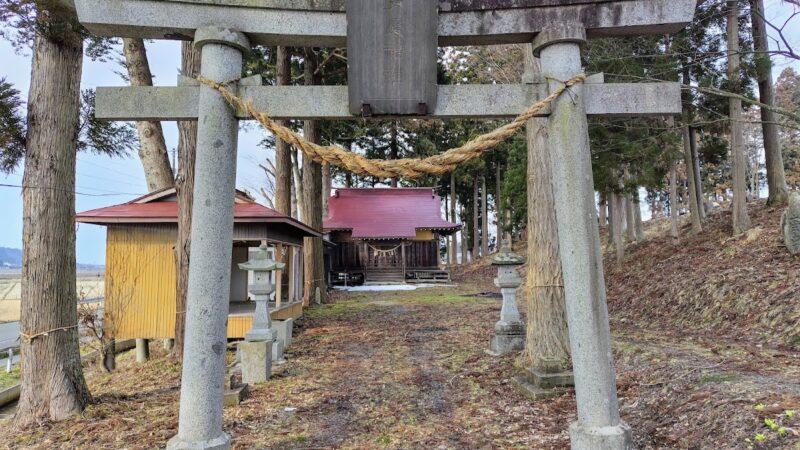
The shrine building of Iwateyama Shinzan Shrine is characterized by its simple yet robust construction. In particular, the main shrine of Iwateyama Shrine in Takizawa City, located at the trailhead of Mount Iwate, has long served as a place for climbers and worshippers to pray for safety.
Natural Environment
Iwateyama Shrine in Shizukuishi Town is situated in a tranquil environment deep in the mountains, far from human settlements, and surrounded by abundant nature. The view of Mount Iwate up close is breathtaking, and the appearance of the sacred mountain, which shows different expressions in each season, deeply moves visitors.
Connection to Kenji Miyazawa
Iwateyama Shrine in Takizawa City also has a connection to Kenji Miyazawa, a literary giant born in Iwate. It is said that Miyazawa rested at the shrine’s office when climbing Mount Iwate, and he left behind many works that feature Mount Iwate as a theme.
Goshuin (Shrine Seal) Information
Issuance of Goshuin
Goshuin are available at Iwateyama Shinzan Shrine. Goshuin (temple/shrine stamps) are cherished by many visitors as proof of their visit and as a memento of their journey.
Issuance Time and Location
Goshuin are issued during the shrine office’s opening hours. However, they may not be available if the priest is absent or due to festivals or other circumstances. Therefore, if you wish to obtain a goshuin, it is recommended to inquire in advance.
Goshuincho (Goshuin Stamp Book)
Some shrines may have their own original goshuincho; please check details at the shrine.
Goshuincho ## Access Information
Access to Iwateyama Shrine (Takizawa City)
Location: 305 Yanagisawa, Takizawa City, Iwate Prefecture 020-0612
Access by Car:
- Approximately 30 minutes from Morioka IC on the Tohoku Expressway
- Via Prefectural Road from National Route 4
Public Transportation:
- Take a bus or taxi from JR Morioka Station
- Access by car is convenient as it is a distance from the nearest station
Access to Iwateyama Shrine (Shizukuishi Town)
Location: 60 Nagayama Toumuno, Shizukuishi Town, Iwate Prefecture
Access by Car:
- Approximately 30 minutes from Morioka IC on the Tohoku Expressway
- Approximately 30 minutes by car from JR Shizukuishi Station
Public Transportation:
- Take a bus or taxi from JR Shizukuishi Station (approximately 30 minutes)
Access to the Iwateyama Shrine Remote Worship Site (Morioka City)
Location: Chuo-dori, Morioka City, Iwate Prefecture
Walking Access:
- Within walking distance of JR Morioka Station
- Convenient access by public transport due to its central location in Morioka City
Bus Access:
- Morioka City Loop Bus available
Parking
While each shrine has parking for visitors, the capacity is limited. Especially during events such as annual festivals, congestion is expected, so it is recommended to visit with ample time.
Manners and Precautions for Visiting a Shrine
Basic Shrine Etiquette
- Bow before passing through the torii gate: This is a courtesy when entering the sacred area.
- Purify your body and mind at the water basin: Purify your left hand, right hand, and mouth in that order.
- Worship at the main hall: Two bows, two claps, and one bow is the basic procedure.
- Maintain silence: Remember that this is a sacred place.
Clothing and Belongings
When visiting shrines at the foot of mountains or in the mountains, please note the following:
- Comfortable walking shoes: The shrine grounds and paths may be unpaved.
- Seasonal clothing: Temperatures in mountainous areas may be lower than in urban areas.
- Insect repellent: Insect repellent spray is useful in summer.
Photography
Photography is generally permitted on the shrine grounds, but please consider the following:
- Refrain from taking photos during Shinto rituals.
- Be considerate of other worshippers.
- Photography in restricted areas is strictly prohibited.
Nearby Tourist Attractions
Mount Iwate
Mount Iwate (2,038m), the highest peak in Iwate Prefecture, boasts a beautiful mountain shape, also known as “Southern Mount Fuji.” The climbing season runs from late June to early October, with multiple climbing routes available.
Koiwai Farm
A vast tourist farm spread across the southern foothills of Mount Iwate. Enjoy the changing seasons and interact with animals. The idyllic scenery with Mount Iwate in the background makes for an excellent photo spot.
Shizukuishi Ski Resort & Hot Springs
Shizukuishi Town has several ski resorts and hot springs, offering winter sports in winter and year-round hot springs.
Morioka City Center
Morioka City Center is dotted with historical and cultural sites such as Morioka Castle Ruins Park (Iwate Park), Morioka History and Culture Museum, and Morioka Hachimangu Shrine.
Related Shrines
Within Iwate Prefecture, there are the following shrines related to the worship of Mount Iwate:
- Morioka Hachimangu Shrine: The guardian shrine of Morioka City
- Sakurayama Shrine: A shrine associated with the Nanbu family, located within Morioka Castle
- Komagata Shrine: An ancient shrine located in Mizusawa, Oshu City
Visiting these shrines together will allow you to gain a deeper understanding of the history and the depth of faith in Iwate Prefecture.
The Charm of Iwateyama Shinzan Shrine
The greatest charm of Iwateyama Shinzan Shrine lies in its deep tradition of faith with a history of over 1200 years and its sense of unity with the magnificent nature of Mount Iwate. Its history, dating back to the time of Sakanoue no Tamuramaro, the patronage of the Nanbu clan lords, and the fervent faith of the local people have been passed down continuously to this day.
The worship site in Morioka city offers a place for casual worship in daily life, while the main shrine at the foot of the mountain offers a place to directly feel the spiritual energy of Mount Iwate, each possessing its own unique charm.
When you visit Iwate Prefecture, be sure to visit Iwateyama Shinzan Shrine and experience its long history and sacred atmosphere. Praying while gazing upon the majestic Mount Iwate will allow you to forget the hustle and bustle of everyday life and bring deep peace to your heart.
Summary
Iwateyama Shinzan Shrine is a historical shrine said to have been founded in 801 AD by Sakanoue no Tamuramaro. It enshrines three deities: Ukanomitama-no-kami, Ōanamuchi-no-mikoto, and Yamato Takeru, and is believed to bestow blessings of abundant harvests, national peace and security, and lasting military fortune.
The shrine has two locations: the main shrine at the foot of the mountain in Takizawa City and Shizukuishi Town, and a remote worship site on Chuo-dori in Morioka City, each with its own distinct character. With the sacred Mount Iwate as its backdrop, the shrine, steeped in ancient mountain worship and history, is cherished not only by locals but also by many visitors.
While access by car is convenient, the worship sites within Morioka City are also easily accessible by public transportation. Why not visit Iwateyama Shinzan Shrine, where you can experience the history and nature of Iwate?