Complete Guide to Hongaku-ji Temple (Kamakura) | History and Highlights of the Nichiren Sect Head Temple, Known as Higashi-Minobu
About Hongaku-ji Temple
Hongaku-ji Temple is a head temple (historical temple) of the Nichiren sect located in Komachi, Kamakura City, Kanagawa Prefecture. Its mountain name is Myogonzan. Because it houses a portion of the remains of Nichiren Shonin, originally enshrined at Minobu-san Kuon-ji Temple, it is also known as “Higashi-Minobu” (Eastern Minobu), and attracts many worshippers as an important sacred site of the Nichiren sect in the Kanto region.
Despite its convenient location just a 5-minute walk from Kamakura Station’s East Exit, the temple grounds are enveloped in a tranquil atmosphere, making it a popular and classic Kamakura tourist spot. It is also known as a temple that enshrines Ebisu, one of the Seven Lucky Gods of Kamakura and Enoshima, and is bustling with worshippers during the New Year’s pilgrimage season.
History of Honkaku-ji Temple
Founding of Ebisu-do by Minamoto no Yoritomo
The history of Honkaku-ji Temple dates back to the time of Minamoto no Yoritomo, the first shogun of the Kamakura Shogunate. Minamoto no Yoritomo founded Ebisu-do (Ebisu Hall) in this location as a guardian deity of the Kamakura Shogunate. Built where Komachi-oji Street crosses the Namekawa River, Ebisu-do played a role in protecting the commerce and prosperity of Kamakura. Even today, the name “Ebisu-do Bridge” remains nearby, conveying the atmosphere of that time.
Deep Connection with Nichiren Shonin
In 1271, Nichiren Shonin stayed at this Ebisu-do during his exile to Sado Island. Later, in 1274, after returning from Sado, Nichiren Shonin is said to have taken refuge here again, spending about a month here before departing for Mount Minobu. During this stay, Nichiren Shonin is said to have interacted with many followers and given street sermons, and Komachi-oji Street came to be known as “Street Sermon Street.”
Founding of Honkaku-ji Temple
Although the Ebisu-do Hall was destroyed by fire during the fall of the Kamakura Shogunate, a temple was built on its site. In 1436, Ashikaga Mochiuji, the Kamakura Shogun of the Muromachi Shogunate, founded and donated Honkaku-ji Temple, with Nichishutsu Shonin as its founding priest.
Nichishutsu Shonin was a disciple of Nichicho Shonin, the 4th head priest of Minobu-san, and with the cooperation of his teacher, Nichicho Shonin, he succeeded in transferring a portion of Nichiren Shonin’s remains, which had been enshrined at Minobu-san, to Honkaku-ji Temple. This transfer of remains gave Honkaku-ji Temple the nickname “Higashi Minobu” (Eastern Minobu), and it established its position as a central sacred site of the Nichiren sect in the Kanto region.
From the Edo Period to the Present
Throughout the Edo period, Honkaku-ji Temple, as the head temple of the Nichiren sect, boasted numerous branch temples and flourished as a center for missionary work in the Kanto region. However, in the Showa period, the buildings deteriorated, and many of the main halls, including the main hall, were rebuilt. The current main hall was rebuilt in 1981 (Showa 56), incorporating modern technology while maintaining traditional styles.
Highlights of the Temple Grounds
Main Hall (Founder’s Hall)
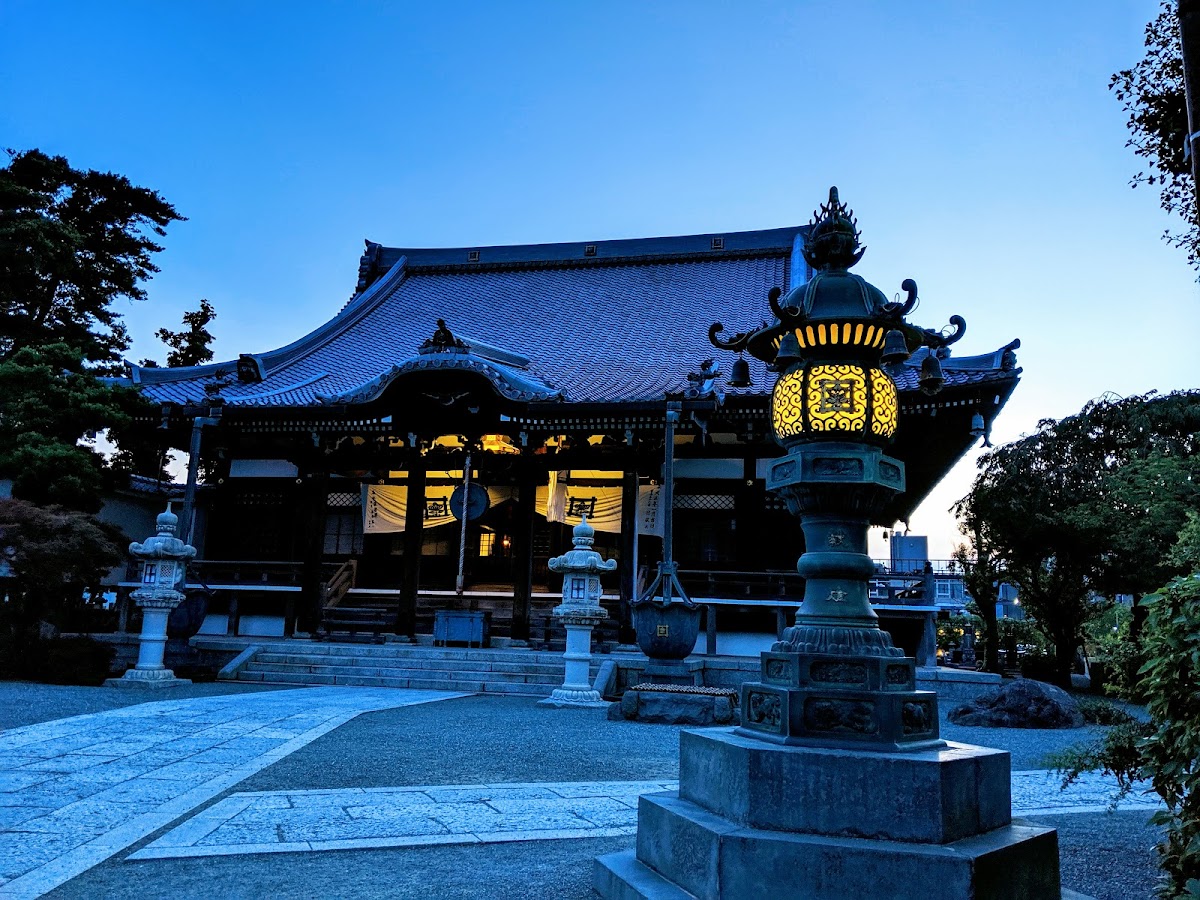
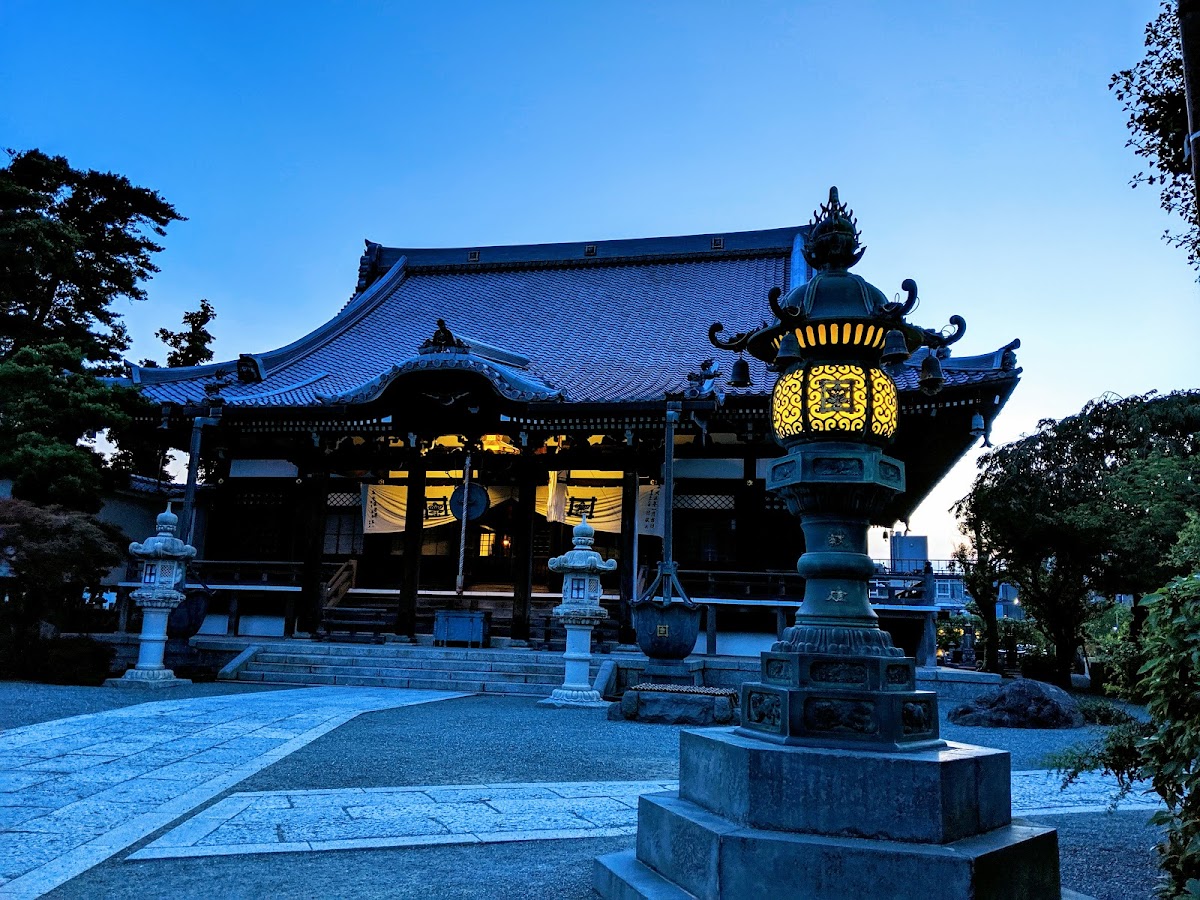
The main hall, the heart of Honkaku-ji Temple, houses the principal image of Shakyamuni Buddha and a statue of Nichiren Shonin. Rebuilt in 1981, the hall features a dignified hip-and-gable roof, exuding a solemn atmosphere characteristic of Nichiren Buddhist temples. Inside, visitors can venerate the reliquary containing the remains of Nichiren Shonin, and many believers visit to pay their respects.
Ebisu-do Hall
This building inherits the legacy of the Ebisu-do Hall founded by Minamoto no Yoritomo, and enshrines Ebisu, one of the Seven Lucky Gods of Kamakura and Enoshima. It is revered as the god of business prosperity and abundant harvests, and is especially crowded with worshippers during the New Year’s Seven Lucky Gods pilgrimage.
Ebisu, affectionately known as “Ebisu-sama,” is depicted holding a fishing rod in his right hand and a sea bream under his left arm. This faith, which has continued since the Edo period, is still practiced today, and many business people visit the hall.
Monju-do Hall
In a corner of the temple grounds is the Monju-do Hall, dedicated to Monju Bodhisattva. Monju Bodhisattva is known as the Buddha of wisdom, and many students and those preparing for exams visit to pray for academic success and passing their exams. Though small, it is a charming hall, providing a quiet space for worship.
Bell Tower and Bell
Within the temple grounds stands a magnificent bell tower, from which a temple bell hangs. This bell is rung during morning and evening services, filling the streets of Kamakura with its pure sound. Seasonal flowers are planted around the bell tower, allowing visitors to enjoy the scenery of each season.
Cemetery and Nichiren Shonin’s Relic Hall
Behind the main hall is a cemetery, and in one corner of it is a hall containing a portion of Nichiren Shonin’s remains. The remains of the saint, brought from Mount Minobu, are carefully enshrined in this hall, giving rise to the name “Higashi Minobu” (East Minobu). It is one of the most important places of worship for believers.
Nature and Seasonal Flowers on the Temple Grounds
The grounds of Honkaku-ji Temple are planted with seasonal plants such as plum blossoms, cherry blossoms, hydrangeas, and autumn foliage. The plum blossoms in early spring are particularly magnificent, and from February to March, the temple grounds are filled with the fragrance of plum blossoms. Furthermore, despite its proximity to Kamakura Station, the temple maintains a tranquil atmosphere, making it a charming place to stroll through the grounds while appreciating the changing seasons.
Cultural Properties and Temple Treasures
Relics Related to Nichiren Shonin
Hongaku-ji Temple houses numerous valuable relics related to Nichiren Shonin. Items believed to have been used by the saint, as well as handwritten letters, are carefully preserved as temple treasures and are occasionally displayed on special occasions.
Historical Buddhist Statues
The temple houses Buddhist statues from various periods, including the principal image of Shakyamuni Buddha, statues of Nichiren Shonin, Ebisu deities, and Manjushri Bodhisattva. These statues are valuable cultural assets that convey the beliefs and artistic styles of their respective eras.
Ancient Documents and Records
Numerous ancient documents and records that tell the history of the temple are also preserved. These include donation documents from Ashikaga Mochiuji and Edo period temple registers, which are important historical materials for studying the history of Nichiren Buddhism and the history of Kamakura.
Annual Events
New Year’s Day (First Shrine Visit of the Year / Pilgrimage to the Seven Lucky Gods)
The most lively annual event at Honkaku-ji Temple is New Year’s Day. Many people visit to pay their respects to Ebisu-no-kami as part of the Kamakura-Enoshima Seven Lucky Gods pilgrimage. From January 1st to the 3rd, the temple grounds are specially decorated, and prayers for the new year are accepted. It’s not uncommon to see long lines of worshippers seeking the Seven Lucky Gods’ Goshuin (temple stamps).
Setsubun Festival (February 3rd)
On February 3rd, the Setsubun Festival is held, featuring a bean-throwing ceremony. With the chant of “Fortune in, demons out!”, beans are scattered throughout the temple grounds, praying for good health and protection from illness throughout the year. This is one of Honkaku-ji Temple’s traditional events, with many local residents participating.
Flower Festival (April 8th)
The Flower Festival (Kanbutsu-e), celebrating the birth of Buddha, is held on April 8th. A flower-decorated shrine is erected, and a ceremony is held in which sweet tea is poured over a statue of the infant Buddha. Children can also participate in this event, and sweet tea is served.
Oeshiki (October 12th & 13th)
The Oeshiki, commemorating the death anniversary of Nichiren Shonin, is the most important event for Nichiren Buddhist temples. At Honkaku-ji Temple, it is held grandly on October 12th and 13th, with a lantern procession and memorial services. Many believers gather to remember the virtues of the saint.
Other Memorial Services
Traditional Buddhist memorial services, such as the spring and autumn equinox services and the Obon festival, are held regularly. Special memorial services are also sometimes held on the temple’s monthly festival days.
Kamakura Enoshima Seven Lucky Gods Pilgrimage
Honkaku-ji Temple is one of the temples on the “Kamakura Enoshima Seven Lucky Gods Pilgrimage,” and enshrines Ebisu (the god of commerce). The Seven Lucky Gods pilgrimage is a popular event in Kamakura that can be enjoyed throughout the year, especially around New Year’s.
Route of the Seven Lucky Gods Pilgrimage
The Kamakura-Enoshima Seven Lucky Gods consist of the following temples and shrines:
- Hongaku-ji Temple (Ebisu-no-kami) – Business Prosperity
- Myoryu-ji Temple (Jurojin) – Longevity
- Hokai-ji Temple (Bishamonten) – Victory and Protection
- Myoryu-ji Temple (Jurojin) – Longevity
- Hase-dera Temple (Daikokuten) – Good Fortune and Prosperity
- Goryo Shrine (Fukurokuju) – Wealth and Prosperity
- Enoshima Shrine (Benzaiten) – Improvement in Performing Arts
Hongaku-ji Temple is one of the Seven Lucky Gods closest to Kamakura Station and is often chosen as the starting or ending point of the pilgrimage.
Goshuin and Shikishi
You can receive Goshuin (temple/shrine stamps) at each temple and shrine during the Seven Lucky Gods pilgrimage. Special commemorative paper is available, and it is believed that collecting all seven goshuin (temple stamps) brings good fortune and prosperity. The goshuin of the Ebisu deity at Honkaku-ji Temple is particularly popular among those praying for business success.
Access and Visiting Information
Location
1-12-12 Komachi, Kamakura City, Kanagawa Prefecture 248-0006
Access Methods
Access by Train
- Approximately 5 minutes on foot from the East Exit of Kamakura Station on the JR Yokosuka Line and Shonan Shinjuku Line
- Approximately 5 minutes on foot from Kamakura Station on the Enoshima Electric Railway
After exiting the East Exit of Kamakura Station, proceed along the Namekawa River in the opposite direction from Komachi Street, and you will soon see the entrance to Honkaku-ji Temple. It is very easily accessible and ideally located for visiting at the beginning or end of your Kamakura sightseeing.
Access by Car
- Approximately 20 minutes from the Asahina IC on the Yokohama-Yokosuka Expressway
*There is no dedicated parking lot, so please use nearby coin parking. The area around Kamakura Station is especially crowded on weekends, so we recommend using public transportation.
Visiting Hours and Admission Fee
Visiting Hours
Grounds are freely accessible (no particular restrictions)
Temple Office: 9:00 AM – 4:00 PM
Admission Fee
Free
While you can freely visit the grounds, there may be an additional fee for special viewings of the building’s interior.
Visiting Etiquette
- Bow before entering through the main gate.
- Maintain silence on the grounds and be considerate of other visitors.
- Photography is permitted, but please refrain from photographing inside the halls or other visitors.
- Please take your trash with you.
Nearby Tourist Attractions
Hongaku-ji Temple is located in the Kamakura Station East Exit area, and there are many tourist attractions within walking distance.
Myohon-ji Temple (5-minute walk)
Walking along the Namekawa River from Hongaku-ji Temple, you will find Myohon-ji Temple, an ancient temple of the Nichiren sect. This temple, associated with the Hiki clan, boasts vast grounds and beautiful natural surroundings.
Tsurugaoka Hachimangu Shrine (10-minute walk)
A representative shrine of Kamakura, it is a central sacred site developed by Minamoto no Yoritomo. It’s about a 10-minute walk north from Honkaku-ji Temple along Komachi-oji Street.
Komachi-dori Street (3-minute walk)
A bustling shopping street leading from Kamakura Station to Tsurugaoka Hachimangu Shrine. Lined with restaurants and souvenir shops, it’s a popular spot for Kamakura sightseeing.
Daikoji Temple (3-minute walk)
A small temple known for prayers for safe childbirth. It’s affectionately known as “Onme-sama.”
The Charm of Honkaku-ji Temple and Reasons to Visit
Layers of History
From the founding of the Ebisu Hall by Minamoto no Yoritomo, to the stay of Nichiren Shonin, the construction of the temple by Ashikaga Mochiuji, and its development as Higashi Minobu, Honkaku-ji Temple is intertwined with many layers of Kamakura history. One of the unique charms of Honkaku-ji Temple is that you can feel the flow of history from the Kamakura period to the Muromachi period and up to the present day, all in one place.
Center of Nichiren Buddhism
As “Higashi Minobu,” where a portion of the remains from Mount Minobu were interred, it is an important center of Nichiren Buddhism in the Kanto region. It is a sacred place of special significance for Nichiren Buddhist followers, and visitors come from all over Japan.
Easy Access
Its excellent location, just a 5-minute walk from Kamakura Station, is a major attraction for tourists. It’s an easily accessible temple for those who want to enjoy Kamakura sightseeing in a limited amount of time.
Seven Lucky Gods Worship
As part of the Kamakura-Enoshima Seven Lucky Gods pilgrimage, it is bustling with many visitors, especially during the New Year. The worship of Ebisu-no-kami, who is believed to bring prosperity in business, remains popular even today.
Serene Atmosphere
Despite its proximity to the station, the temple grounds are enveloped in a quiet and peaceful atmosphere. It is loved by locals as a place to escape the hustle and bustle and find peace of mind. ## Honkaku-ji Temple and the Teachings of the Nichiren Sect
Honkaku-ji Temple, as the head temple of the Nichiren sect, continues to transmit the teachings of Nichiren Shonin. The Nichiren sect considers the Lotus Sutra to be the supreme scripture and teaches that one can attain Buddhahood in this lifetime by chanting the title “Namu Myoho Renge Kyo.”
Nichiren Shonin was a monk during the Kamakura period who launched a scathing critique of the Buddhist world of his time, asserting that the Lotus Sutra was the true teaching. This stance led to persecution from those in power, but he continued his missionary work without compromising his beliefs. His stay at Ebisu-do, the predecessor of Honkaku-ji Temple, after overcoming the hardship of exile to Sado Island and before entering Mount Minobu, holds significant meaning in Nichiren Shonin’s life.
Honkaku-ji Temple continues its activities to transmit the teachings of the Lotus Sutra to the present day, inheriting the spirit of Nichiren Shonin.
Former Branch Temples and Temple Rank
During the Edo period, Honkaku-ji Temple, as the head temple of the Nichiren sect, had many branch temples. The extensive network of branch temples throughout the Kanto region attests to the significant religious influence of Honkaku-ji Temple.
Although the relationship between the head temple and branch temples changed considerably due to religious reforms during the Meiji era, Honkaku-ji Temple still holds an important position within the Nichiren sect as a historically significant temple (head temple).
Points to Note and Recommended Time to Visit
Recommended Time to Visit
Early Spring (February-March)
The plum blossoms are in full bloom, and the temple grounds are enveloped in the fragrance of spring. It’s a relatively uncrowded time, allowing for a peaceful visit.
New Year’s (January 1st-7th)
This is a busy time for the Seven Lucky Gods pilgrimage. Recommended for those who want to enjoy a lively atmosphere. However, be prepared for crowds.
Autumn (October-November)
This is the time for the Oeshiki festival, and the autumn leaves are beautiful. It’s a valuable opportunity to experience traditional Nichiren Buddhist events.
Tips for Avoiding Crowds
- Weekday mornings are relatively less crowded.
- The temple is especially crowded during the New Year period and long holidays.
- Early mornings (around 8 AM) and evenings (after 3 PM) offer a peaceful visit.
Clothing and Items to Bring
- Comfortable walking shoes (the temple grounds have cobblestone and gravel paths).
- Parasol or hat in summer, warm clothing in winter.
- Goshuincho (stamp book) (for those who wish to receive a stamp).
- Camera (photography is permitted on the temple grounds).
Summary
Hongaku-ji Temple is the head temple of the Nichiren sect, boasting a multi-layered history, beginning with the founding of the Ebisu Hall by Minamoto no Yoritomo, followed by the stay of Nichiren Shonin, and its development as Higashi Minobu. Its excellent accessibility (a 5-minute walk from Kamakura Station), its popularity as one of the seven lucky gods of Kamakura and Enoshima, and the tranquil atmosphere of its grounds combine to make it an essential spot for Kamakura sightseeing.
Honkaku-ji Temple, known as “Higashi Minobu” (East Minobu), houses the remains of Nichiren Shonin, which were divided from Mount Minobu. It is a center of Nichiren Buddhism in the Kanto region and holds significant religious and historical importance. It enshrines various objects of worship, including the Ebisu deity for business prosperity and the Manjushri Bodhisattva for academic success, welcoming visitors with diverse wishes.
When visiting Kamakura, be sure to visit Honkaku-ji Temple and experience its history and the depth of its faith. You will be able to spend a peaceful time in its tranquil grounds, far removed from the hustle and bustle.