Complete Guide to Koseiji Temple (Kamigyo Ward, Kyoto Prefecture) | History, Access, and Highlights Explained in Detail
Koseiji Temple, located in Kamigyo Ward, Kyoto Prefecture, is a historic temple belonging to the Jodo Shinshu Honganji sect. While there are many temples in Kyoto City, Koseiji Temple has long been a place of faith for local residents, deeply rooted in the community. This article provides detailed information you should know before visiting, including the history of Koseiji Temple, highlights within the temple grounds, access methods, and annual events.
Basic Information about Koseiji Temple
Koseiji Temple is a Jodo Shinshu Honganji sect temple located in Kamigyo Ward, Kyoto City. Kamigyo Ward is an area with many historical buildings such as the Kyoto Imperial Palace and Kitano Tenmangu Shrine, and has flourished as the center of Kyoto since ancient times.
Location and Access
Using public transportation is the most convenient way to access Koseiji Temple. When visiting temples and shrines in Kyoto City, using city buses and subways allows for efficient travel.
Address: Kamigyo-ku, Kyoto City, Kyoto Prefecture
Access from Nearest Station:
- Within walking distance from Imadegawa Station on the Kyoto Municipal Subway Karasuma Line
- Accessible on foot from the nearest bus stops on various Kyoto City Bus routes
When visiting temples in Kyoto City, purchasing a one-day pass is recommended. Especially if you plan to visit multiple temples and shrines, we recommend using a one-day pass for city buses and subways.
Visiting Information
Koseiji Temple is a temple deeply rooted in the community and primarily functions as a religious facility for its parishioners and followers. Unlike typical tourist temples, it is recommended to check visiting hours and admission fees in advance.
When visiting the temple, please note the following:
- Maintain silence on the temple grounds and be considerate of other visitors.
- Photography is only permitted in designated areas.
- General visits may be restricted during religious services or events.
- Check parking availability in advance.
About the Jodo Shinshu Honganji School
The Jodo Shinshu Honganji School, to which Koseiji Temple belongs, is a branch of Japanese Buddhism founded by Shinran Shonin. Understanding the teachings of Jodo Shinshu and the characteristics of the Honganji School will deepen your understanding of Koseiji Temple.
Teachings of Jodo Shinshu
Jodo Shinshu centers on the teaching of salvation through the power of Amida Buddha’s original vow, which states that all people will be saved by the power of Amida Buddha’s original vow. This sect, founded by Shinran Shonin (1173-1263), teaches that one can receive salvation from Amida Buddha by chanting “Namu Amida Butsu.”
Characteristics of Jodo Shinshu Buddhism:
- Reliance on Other Power: Salvation through the power of Amida Buddha’s vow, not through self-effort.
- Salvation for the Wicked: Ordinary people burdened with worldly desires are the ones who are saved.
- Nembutsu: The central practice is the chanting of “Namu Amida Butsu.”
- Pure Land Rebirth Over Worldly Benefits: Emphasis is placed on rebirth in the Pure Land over worldly gains.
History of the Honganji School
The Honganji school is a branch of Jodo Shinshu Buddhism with its head temple, Nishi Honganji (Ryukokuzan Honganji), located in Shimogyo-ku, Kyoto. Before the division into East and West during the Edo period, it was a single organization called Honganji, but it was split into Higashi Honganji (Shinshu Otani School) and Nishi Honganji (Honganji School) due to the policies of Tokugawa Ieyasu.
Nishi Honganji Temple, the head temple of the Honganji sect, is registered as one of the constituent assets of the World Heritage Site “Historic Monuments of Ancient Kyoto” and houses numerous national treasures and important cultural properties.
History of Koseiji Temple
Koseiji Temple has a long history of preserving faith as a local temple. Kamigyo Ward in Kyoto City has developed as the center of Kyoto since the Heian period, and many temples and shrines were built there.
Historical Background of Kamigyo Ward
Kamigyo Ward is located north of the Kyoto Imperial Palace and was an area where the residences of court nobles and samurai lined the streets. During the Onin War (1467-1477), it became a battlefield and many buildings were burned down, but it developed again after subsequent reconstruction.
During the Edo period, it flourished as a production center for Nishijin weaving and thrived as a town of merchants and artisans. Many temples were built during this period and came to play a central role in the local community.
Kamigyo Ward is located north of the Kyoto Imperial Palace and was an area where the residences of court nobles and samurai lined the streets. ### The Role of Temples
Local temples like Koseiji Temple have played a vital role in the community, not merely as religious institutions:
- Place of Worship: A center of faith for parishioners and local residents
- Place of Education: Serving as a temple school, providing education for children
- Community Center: Functioning as a venue for local events and gatherings
- Cultural Transmission: Passing on Buddhist culture and local traditions to future generations
Highlights of the Temple Grounds
The grounds of Koseiji Temple feature characteristic architecture and facilities typical of Jodo Shinshu Buddhist temples.
Main Hall
The main hall is the central building of the temple, housing the principal image, Amida Buddha. Jodo Shinshu main halls are typically adorned with golden decorations, centered around the Amida Buddha.
The following activities take place in the main hall:
- Daily religious services
- Buddhist ceremonies and memorial services
- Buddhist lectures and Dharma talks
- Annual events
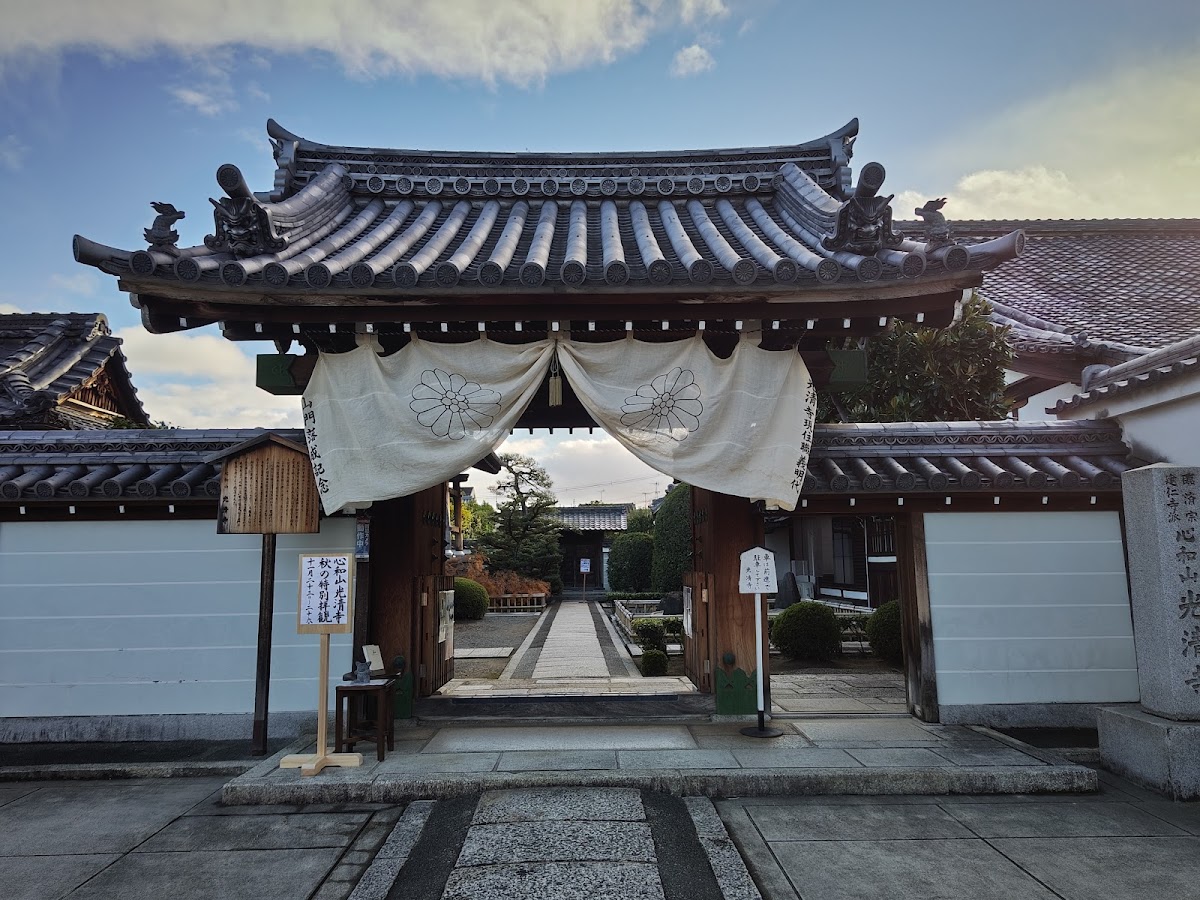
Temple Gate
The temple gate, which serves as the entrance to the temple, is a symbolic structure that separates the secular world from the sacred realm. Passing through the gate signifies leaving behind the worldly desires of everyday life and entering the world of Buddha.
Bell Tower
Many temples have a bell tower where a temple bell hangs. The sound of the bell is believed to dispel worldly desires and spread the teachings of Buddha widely. On New Year’s Eve, it is customary to ring the bell 108 times to dispel the 108 worldly desires.
Priest’s Quarters (Kuri)
The priest’s quarters (Kuri) are where the head priest and his family live and also function as the temple’s office. Meetings with parishioners and administrative tasks related to the temple’s management are conducted here.
Annual Events
At temples of the Jodo Shinshu Honganji sect, various memorial services and events are held throughout the year. At Koseiji Temple, the following events may also be held:
Spring Events
Spring Equinox Service (Shunki Higan-e): A memorial service held for one week centered around the spring equinox. It is an opportunity to honor ancestors and learn about Buddhist teachings.
Flower Festival (Kanbutsu-e): An event celebrating the birthday of Buddha on April 8th. A flower-decorated shrine is erected, and sweet tea is poured over the statue of the newborn Buddha.
Shinran Shonin’s Birthday Celebration: A memorial service commemorating the birthday of Shinran Shonin on May 21st.
Summer Events
Obon (Urabon-e): An ancestral memorial service held from August 13th to 16th. In Jodo Shinshu Buddhism, Obon is viewed not so much as a time for ancestors to return, but rather as a period to express gratitude for the Buddha’s blessings.
Autumn Events
Autumn Equinox Service: A Buddhist service held for one week centered around the autumnal equinox.
Ho-on-ko (Memorial Service): The most important Buddhist service in Jodo Shinshu Buddhism, held around the anniversary of Shinran Shonin’s death (November 28th). It expresses gratitude and appreciation to Shinran Shonin, the founder of the sect.
Winter Events
New Year’s Eve Bell Ringing: On December 31st, New Year’s Eve, the bell is rung to dispel the 108 worldly desires.
Shushō-e (New Year’s Service): A Buddhist service to welcome the new year and pray for peace throughout the year.
Other Attractions in Kamigyo Ward
When visiting Kōseiji Temple, we recommend also visiting other tourist spots in Kamigyo Ward.
Kyoto Imperial Palace
The Kyoto Imperial Palace was the residence of the Emperor until the Meiji Restoration. It is now open to the public, allowing visitors to admire its beautiful gardens and historical buildings. No prior reservation is required for visits.
Kitano Tenmangu Shrine
This shrine is dedicated to Sugawara no Michizane, known as the god of learning. Many worshippers visit during exam season. An antique market called Tenjin-ichi is held on the 25th of every month, featuring numerous stalls.
Seimei Shrine
This shrine is dedicated to Abe no Seimei, an Onmyoji (diviner) from the Heian period. Its popularity has increased in recent years due to the influence of movies and novels. It is famous for its pentagram (Seimei Kikyo) amulet.
Shokokuji Temple
This is the head temple of the Shokokuji branch of the Rinzai school of Zen Buddhism, and also the head temple of Kinkakuji (Golden Pavilion) and Ginkakuji (Silver Pavilion). At the Shotenkaku Museum, visitors can admire valuable cultural artifacts, including national treasures and important cultural properties.
Kyoto Gyoen National Garden
This vast national park surrounds the Kyoto Imperial Palace. Enjoy the changing seasons and it’s perfect for walks and picnics. It’s also known as a famous spot for plum and cherry blossoms.
Tips for Visiting Kyoto Temples
Kyoto has approximately 1,700 temples, making it difficult to visit them all. Here are some tips for efficiently visiting temples.
Narrow Your Area
Kyoto City is large, so it’s important to narrow down the area you can visit in one day. Plan your trip with a theme in mind, such as focusing on Kamigyo Ward or the Higashiyama area.
Optimize Your Transportation
- One-Day City Bus/Subway Pass: Economical if you plan to visit multiple locations in one day.
- Rental Bicycle: Cycling is an efficient way to get around.
- Walking: Enjoy the city scenery by walking short distances.
Check Opening Hours
Many temples close around 5 PM. Check opening hours in advance and plan your trip with plenty of time to spare.
Avoid Crowds
The temple gets crowded during cherry blossom and autumn foliage seasons, as well as on weekends and holidays. Visiting on weekday mornings or during the off-season allows for a more relaxed visit.
Observe Manners
- Maintain silence
- Do not take photographs in areas where photography is prohibited
- Do not touch buildings or cultural artifacts
- Do not enter areas other than designated areas
Characteristics of Jodo Shinshu Temples
Jodo Shinshu temples like Koseiji have characteristics that differ from other sects.
Principal Image
The principal image of Jodo Shinshu is Amida Buddha. Amida Buddha is said to possess immeasurable life (eternal life) and immeasurable light (infinite light), and is believed to save all sentient beings.
No Use of Memorial Tablets
In Jodo Shinshu, it is believed that the deceased are reborn in the Pure Land through the salvation of Amida Buddha, therefore, memorial tablets are not traditionally used. Instead, a family register or a Buddhist name scroll is used.
Buddhist Name, Not a Posthumous Name
In Jodo Shinshu Buddhism, the term used is “Buddhist name” (法名) rather than “posthumous name” (戒名). This is because Jodo Shinshu does not emphasize precepts. The character “釋 (shaku)” is commonly included in the Buddhist name.
How to Offer Incense
In Jodo Shinshu Buddhism, incense sticks are offered horizontally, not upright. This is a custom unique to this sect.
Number of Incense Offerings
In the Honganji sect, incense is offered only once. However, customs may vary depending on the region and temple.
History and Culture of Kamigyo Ward, Kyoto
Kamigyo Ward, where Koseiji Temple is located, is an area that strongly retains the history and culture of Kyoto.
Center of Heian-kyo
From the time of Heian-kyo (the capital was moved in 794), Kamigyo Ward flourished as the center of the capital. It was lined with aristocratic residences and temples and shrines, and was the center of politics and culture.
The Ōnin War and Reconstruction
The Ōnin War (1467-1477) destroyed much of Kyoto, but the subsequent reconstruction allowed the townspeople (merchants and artisans) to gain power. Kyoto was divided into Kamigyo and Shimogyo districts, each operating autonomously.
Nishijin Textile Production Area
The Nishijin district in Kamigyo Ward is known as the production area of Nishijin textiles, a high-quality silk fabric. It came to be called “Nishijin” after the Ōnin War because it was the site of the Western Army’s encampment.
Traditional Townhouse Streetscapes
Kamigyo Ward retains many traditional Kyoto townhouses. These townhouses, built on long, narrow plots of land, are called “eel’s beds” and preserve the traditional Kyoto residential style.
Manners and Etiquette for Visiting Temples
When visiting temples, it is important to observe basic manners and etiquette.
Upon Entering the Temple
- Bow at the temple gate before entering the grounds.
- Avoid walking in the center of the path (the center is considered the path of Buddha).
- Maintain silence and refrain from speaking loudly.
Proper Ritual for Washing Hands
Some temples may have a water basin for washing hands:
- Hold the ladle in your right hand and wash your left hand.
- Switch the ladle to your left hand and wash your right hand.
- Switch the ladle back to your right hand, receive water in your left hand, and rinse your mouth.
- Wash your left hand again.
- Hold the ladle upright, wash the handle, and return it to its original position.
Worship at the Main Hall
- Bow slightly in front of the main hall.
- If there is an offering box, quietly place your offering in it.
- Join your hands in prayer and sincerely recite the Nembutsu (in Jodo Shinshu Buddhism, “Namu Amida Butsu”).
- Bow and leave.
Photography
- Do not take photographs in areas where photography is prohibited.
- Photography is generally prohibited inside the main hall.
- Please be considerate and avoid including other worshippers in your photos.
- Please refrain from using flash photography as it may damage cultural properties.
Gourmet and Shopping Around Koseiji Temple
After visiting the temple, we recommend enjoying the surrounding gourmet food and shopping.
Kyoto Cuisine
Kamigyo Ward is dotted with long-established Kyoto restaurants. You can enjoy vegetarian cuisine using Kyoto vegetables and kaiseki cuisine that makes use of seasonal ingredients.
Japanese Sweets
Kyoto is the home of Japanese sweets. Kamigyo Ward has long-established Japanese confectionery shops that have been in business for hundreds of years, where you can purchase seasonal wagashi (traditional Japanese sweets) and traditional Kyoto sweets.
Nishijin Textile Products
At Nishijin textile workshops and shops, you can purchase high-quality obi (sashes), kimonos, and accessories. There are also facilities where you can observe the techniques of traditional crafts up close.
Cafes and Coffee Shops
You can relax in a Kyoto-like atmosphere at cafes renovated from old townhouses or traditional coffee shops. You can enjoy matcha sweets and Kyoto-specific menu items.
Summary
Koseiji Temple is a Jodo Shinshu Honganji-ha temple located in Kamigyo-ku, Kyoto Prefecture, and has been cherished for many years as a place of faith rooted in the community. While there are many famous temples in Kyoto City, local temples like Koseiji are also important in supporting Kyoto’s religious culture.
Kamigyo-ku is an area rich in historical sights, including the Kyoto Imperial Palace and Kitano Tenmangu Shrine. When visiting Koseiji Temple, combining it with visits to surrounding tourist spots will allow you to gain a deeper understanding of Kyoto’s history and culture.
When visiting a temple, please be mindful of proper manners and etiquette, and pray quietly. You can experience the teachings of Jodo Shinshu and spend a peaceful time.
Kyoto has over 1,700 temples, each with its own unique history and charm. By visiting not only famous temples but also local temples, you can experience the diverse religious culture of Kyoto. A visit to Koseiji Temple will be a valuable opportunity to experience the teachings of Jodo Shinshu Buddhism and the history of Kyoto.