Complete Guide to Kakoji Temple (Kamigyo Ward, Kyoto Prefecture): History and Cultural Assets of Izumi’s Bishamonten
Kekoji Temple, located on Izumi-dori in Kamigyo Ward, Kyoto City, is a Nichiren Buddhist temple affectionately known to locals as “Izumi’s Bishamonten.” Founded under the patronage of Toyotomi Hideyoshi, it preserves valuable cultural assets and historical heritage. This article provides a detailed overview of Kakoji Temple, including its history, highlights within the grounds, cultural assets, and access information.
Overview of Kakoji Temple
Kekoji Temple is a Nichiren Buddhist temple located at 331 Nanabancho, Nishi-iri, Rokkencho, Izumi-dori, Kamigyo Ward, Kyoto City. Its mountain name is Renkinzan, and its principal image is the Ten Realms Mandala. It attracts many followers as “Bishamonten,” the deity of good fortune, protection from evil, and family prosperity, and is counted as one of Kyoto’s most well-known temples.
Basic Information
- Official Name: Renkinzan Kakoji Temple
- Sect: Nichiren Buddhism
- Principal Image: Ten Realms Mandala
- Founded: Tensho 11 (1583)
- Founder: Nichigyo Shonin (12th head priest of Myokenji Temple)
- Address: 331, Nanabancho, Nishi-iri, Rokkencho, Izumidori, Kamigyo-ku, Kyoto City, Kyoto Prefecture 602-8359
- Phone Number: 075-841-5807
History of Kakoji Temple
Circumstances of Founding
Kakoji Temple was founded on December 7, Tensho 11 (1583), by Kenshoin Nichigyo Shonin, the 12th head priest of Myokenji Temple. Nichigyo Shonin, with the patronage and support of Toyotomi Hideyoshi, who held the position of Regent at the time, established this temple as his retirement residence.
Myokenji Temple was one of the central temples of the Nichiren sect in Kyoto, and Nichigyo Shonin was a high-ranking priest who played an important role as its 12th head priest. Even after his retirement, in order to continue preserving the Dharma, he founded Kakoji Temple with Hideyoshi’s support.
Relationship with Toyotomi Hideyoshi
The relationship between Kakoji Temple and Toyotomi Hideyoshi was deep from its founding. Hideyoshi not only assisted in its construction, but it is said that he also donated a statue of Bishamonten, which he worshipped at Fushimi Castle, to Kakoji Temple. This Bishamonten statue is believed to be from the late Heian period and is traditionally said to be made from the same wood and by the same artist as the Bishamonten statue at Kurama-dera Temple.
Furthermore, the current temple gate is also said to have been relocated from Fushimi Castle, making it a valuable historical structure that conveys the architectural style of Hideyoshi’s era. The “Shigure no Matsu” (Autumn Rain Pine), said to have been planted by Hideyoshi, also stood on the temple grounds and was known as one of the Seven Wonders of Izumi. However, it has now withered, and only the old stump remains.
History Since the Edo Period
Throughout the Edo period, Kakoji Temple continued to attract local faith as a Nichiren Buddhist temple. The worship of Bishamonten (Vaisravana) became widespread among the common people, and pilgrims seeking blessings for good fortune, protection from evil, and business prosperity constantly visited the temple.
Having survived the anti-Buddhist movement after the Meiji Restoration, it continues to maintain its roots as “Izumi’s Bishamonten” to this day. The current head priest is Reverend Asano Yohei.
Highlights of the Temple Grounds
Temple Gate
The temple gate of Kakoji Temple is a historical building said to have been relocated from Fushimi Castle. This gate, which retains the architectural style of the Momoyama period, welcomes visitors as a valuable relic that evokes the era of Toyotomi Hideyoshi.
Passing through the temple gate, a tranquil temple grounds unfolds, offering a peaceful space that makes you forget the hustle and bustle of the city.
Main Hall
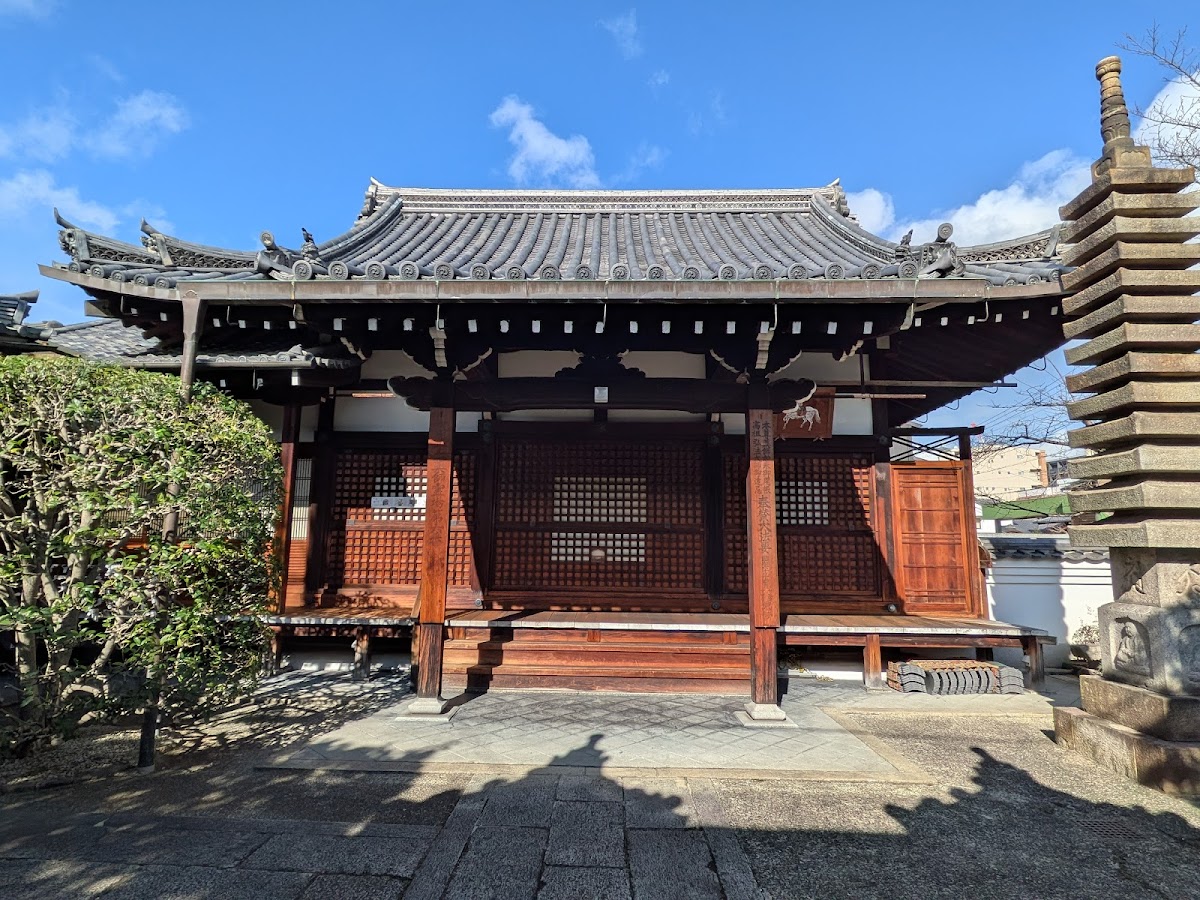
The main hall houses the Ten Realms Mandala, the principal image of worship. In Nichiren Buddhism, the mandala is a visual representation of the worldview of the Lotus Sutra and is a crucial element at the heart of faith.
Inside the main hall is also enshrined a statue of Bishamonten, said to have been worshipped by Toyotomi Hideyoshi at Fushimi Castle. This Bishamonten statue is believed to be from the late Heian period and is said to be from the same wood and by the same artist as the Bishamonten statue at Kurama-dera Temple, making it a highly valuable Buddhist statue.
Shigure no Matsu (Ancient Stump)
The ancient stump of the “Shigure no Matsu” (Autumn Rain Pine), known as one of the Seven Wonders of Izumi, remains on the temple grounds. This pine tree is said to have been planted by Toyotomi Hideyoshi and once adorned the grounds as a magnificent tree, but it has now withered, and only the ancient stump remains as a testament to its history. The Seven Wonders of Izumi refer to seven mysterious legends and historical sites passed down in the Izumi region. The Shigure Pine is one of them, and is an important element in conveying the region’s history and culture.
Cultural Property
Temple Bell (Kyoto Prefecture Designated Tangible Cultural Property)
The temple bell owned by Kakoji Temple is a valuable cultural property designated as a Kyoto Prefecture Designated Tangible Cultural Property. This bronze bell was made in the first year of Shoo (1288) and is highly regarded as a representative work of the late Kamakura period.
Details of the Temple Bell:
- Year of Production: Shoo 1 (1288)
- Period: Late Kamakura Period
- Height: 102cm
- Diameter: 57cm
- Designation: Kyoto Prefecture Designated Tangible Cultural Property
This temple bell is a masterpiece that embodies the pinnacle of Kamakura period casting technology and is a valuable cultural heritage with a history of over 700 years. Known for its beautiful tone and elegant form, it has received high praise from experts.
Bishamonten Statue
As mentioned above, the Bishamonten statue at Kakoji Temple is believed to be a work from the late Heian period, and is said to be made from the same wood and by the same artist as the Bishamonten statue at Kurama-dera Temple. The historical background of Toyotomi Hideyoshi donating this statue, which he worshipped at Fushimi Castle, to Kakoji Temple further enhances the value of this Buddhist statue.
Bishamonten is another name for Tamonten, one of the Four Heavenly Kings, and is worshipped as the god who presides over wealth and good fortune. The Bishamonten statue at Kakoji Temple is believed to bring good fortune, protection from evil, and prosperity to the family, attracting many worshippers.
Other Cultural Properties
The temple gate, said to have been relocated from Fushimi Castle, also possesses cultural value as a valuable relic that conveys the architectural style of the Momoyama period. Furthermore, the ancient stump of the Shigure Pine is also important as historical material indicating its connection to Toyotomi Hideyoshi.
Faith as Bishamonten of Izumi
Kakoji Temple is affectionately known as “Bishamonten of Izumi” and is counted as one of Kyoto’s commonly known temples. A commonly known temple is one that is more commonly referred to by its nickname than its official name and is familiar to the local people.
Benefits
The Bishamonten of Kakoji Temple is believed to offer the following benefits:
- Good Fortune and Prosperity: Opening up good fortune and inviting blessings
- Protection from Evil: Warding off disasters and protecting oneself
- Family Prosperity: Prosperity and peace for the family
- Business Success: Success and development of business
- Luck in Competition: Success in competitive situations
In particular, many people who run businesses or those facing turning points in their lives visit the temple, and believers come not only from the local area but also from far away.
Annual Events
Kakoji Temple, as a Nichiren Buddhist temple, holds various Buddhist services and events. It is particularly lively with many visitors on the Bishamonten festival day.
Access
Access by Public Transportation
Using City Buses:
- Get off at the “Senbon Izumi” bus stop (Kyoto City Bus), walk west for approximately 3 minutes.
- Major routes: Routes 6, 46, 55, 201, 206, etc.
From the Nearest Station:
- Approximately 20 minutes on foot from Imadegawa Station (Kyoto Municipal Subway Karasuma Line), or transfer to a bus.
- Approximately 25 minutes by city bus from Kyoto Station (JR, Kintetsu, Subway)
Access by Car
Kakoji Temple does not have its own parking lot, so you will need to use nearby coin-operated parking. Izumi-dori is a relatively narrow road, so using public transportation is recommended.
Address and Map
331, Nanabancho, Rokkencho Nishi-iri, Izumidori, Kamigyo-ku, Kyoto City, Kyoto Prefecture 602-8359
Located east of Shichihonmatsu-dori on Izumidori, this is a quiet temple nestled in a residential area.
Nearby Attractions
Many other historical temples and sites are scattered around Kakoji Temple.
Nearby Temples
- Koseiji Temple: A temple located in the Izumi area, like Kakoji Temple.
- Jigenji Temple: A historical temple within Kamigyo-ku.
- Myokenji Temple: The head temple of the Nichiren sect, where Nichigyo Shonin, the founder of Kakoji Temple, served as the 12th head priest.
History of the Izumi Area
The Izumi area has a long history, dating back to the Heian period. Many legends and historical sites remain, including the “Seven Wonders of Izumi,” making it an ideal area for historical walks.
Visiting Information
Visiting Hours and Admission Fee
While the grounds of Kakoji Temple are generally open to the public, it is recommended to check with the temple in advance regarding viewing the interior of the main hall and cultural artifacts.
- Visiting Hours: Daytime (Please contact the temple for details)
- Admission Fee: Generally free (Separate fees apply for special viewings)
- Inquiries: 075-841-5807
Visiting Etiquette
As a Nichiren Buddhist temple, please observe the following etiquette when visiting:
- Bow at the temple gate before entering the grounds
- Clasp your hands together in prayer in front of the main hall
- Visit quietly and avoid disturbing other visitors
- Take photographs only in designated areas
- Maintain cleanliness of the temple grounds
About Goshuin (Temple Seals)
Goshuin are available at Kakoji Temple. Goshuin are popular among many visitors as proof of their visit and as a record of their faith. When receiving a Goshuin (temple stamp), be sure to complete your prayers first and then politely request it. Bringing your own Goshuincho (stamp book) is generally recommended, but sometimes pre-printed Goshuin are available.
The Charms and Points to Note When Visiting Kakoji Temple
Charms for History Fans
Kakoji Temple, with its deep connection to Toyotomi Hideyoshi, is extremely appealing to those interested in the history of the Sengoku and Azuchi-Momoyama periods. You can trace Hideyoshi’s footsteps through the temple gate relocated from Fushimi Castle, the Bishamonten statue donated by Hideyoshi, and the Shigure Pine tree said to have been planted by Hideyoshi himself.
Charms for Cultural Heritage Enthusiasts
The temple’s possession of valuable cultural artifacts, such as a Kamakura-period temple bell (a Kyoto Prefecture designated tangible cultural property) and a late Heian-period Bishamonten statue, is another major attraction. In particular, the temple bell from the first year of the Shoō era (1288) is a valuable historical artifact that conveys the casting techniques of the Kamakura period, making it important from the perspective of cultural property research.
Charm as a Place of Worship
Kakōji Temple, which has maintained a deeply rooted faith in the region as “Izumi’s Bishamonten,” is a spiritual haven for many people praying for good fortune, protection from evil, and prosperity for their families. The quiet grounds, away from the hustle and bustle of the city, provide a peaceful environment for worship, which is one of its charms.
Seasonal Ways to Enjoy
Spring
During cherry blossom season, the entire Izumi area is adorned in spring colors, allowing visitors to enjoy historical walks and cherry blossom viewing simultaneously.
Summer
The lush green grounds offer relief from the summer heat. It’s a pleasure to relax in the quiet grounds and reflect on history.
Autumn
During the autumn foliage season, you can experience the quintessential Kyoto atmosphere. Unlike famous temples crowded with tourists, one of the charms of Kakoji Temple is that you can quietly enjoy autumn there.
Winter
Kakoji Temple is especially picturesque on snowy days. The temple grounds, enveloped in white snow, evoke images of Kyoto during the Heian and Sengoku periods.
Summary
Kakoji Temple is a hidden gem in Kyoto’s Kamigyo Ward, possessing three aspects: a history associated with Toyotomi Hideyoshi, valuable cultural assets, and a deeply rooted local faith. While affectionately known as “Izumi’s Bishamonten,” it rarely gets crowded with tourists, maintaining an environment where visitors can worship at their own pace.
There are many points of interest, including cultural assets such as a Kamakura-period temple bell and a Heian-period statue of Bishamonten, as well as the temple gate relocated from Fushimi Castle and an ancient pine tree planted by Hideyoshi. It is a temple worth visiting for various purposes, whether you are interested in Kyoto’s history and culture, seeking peace of mind in a quiet temple, or seeking blessings for good fortune and protection from evil.
When sightseeing in Kyoto, you’ll discover a deeper side of the city’s charm by visiting not only famous temples but also local temples like Kakoji Temple. Why not experience the history, culture, and spirit of faith of Kyoto at Kakoji Temple, nestled in the quiet residential area of Izumi-dori?