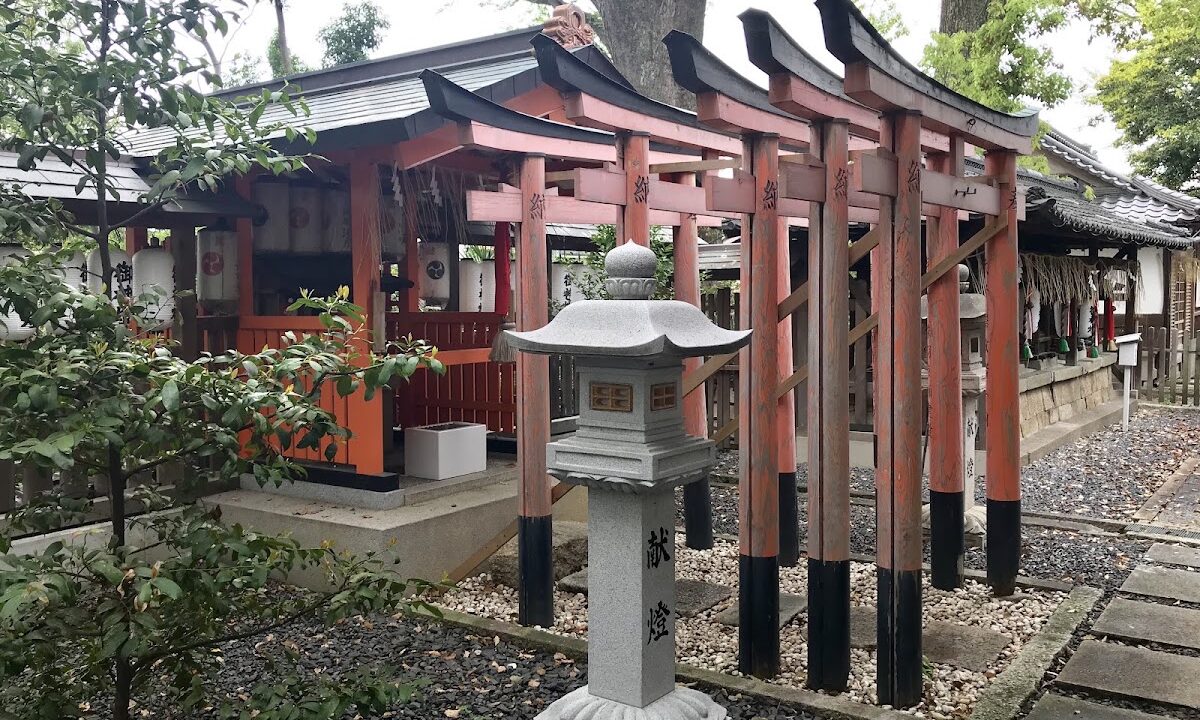
Complete Guide to Hazukashi-ni-imasu Takamimusubi Shrine (Kyoto Prefecture) | History and Divine Virtues of Kyoto’s Oldest Shikinaisha Shrine
Hazukashi-ni-imasu Takamimusubi Shrine, located in Hazukashi-shimizu-cho, Fushimi-ku, Kyoto City, is one of Kyoto’s oldest shrines, said to have been founded in 477 (the 21st year of Emperor Yuryaku’s reign). As a Shikinaisha shrine enshrining two of the three creation deities, it has attracted deep reverence since ancient times. This article provides a detailed introduction to the history, divine virtues, highlights of the grounds, and visiting information of this historic shrine.
What is Hazukashi-ni-imasu Takamimusubi Shrine?
Hazukashi-ni-imasu Takamimusubi Shrine is an ancient shrine located on the right bank of the Katsura River in the former Hazukashi Village, Otokuni District, Fushimi-ku, Kyoto City, Kyoto Prefecture. It is commonly known as “Hazukashi Shrine.” This shrine is listed in the Engishiki Jinmyocho (a list of shrines compiled in the Heian period) as a Shikinaisha (a major shrine), and its former rank was that of a Gosha (village shrine).
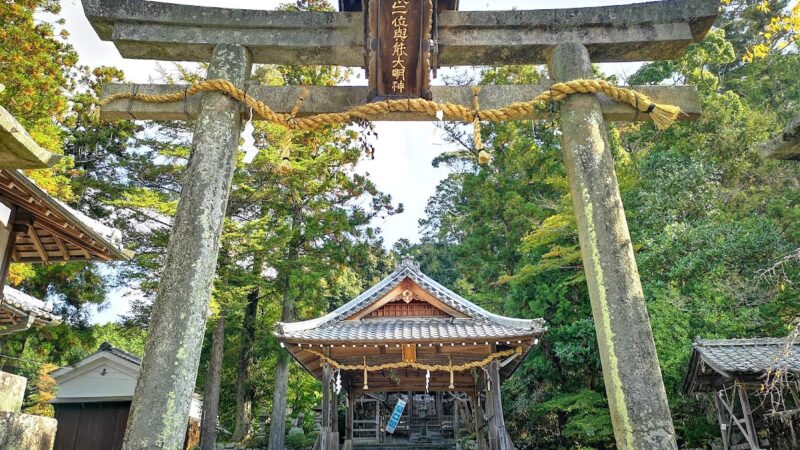
The shrine grounds are enveloped in a deep forest called “Hazukashi no Mori,” and it is designated as a Kyoto City Historic Site, a valuable place that conveys the historical environment of the Katsura River basin to the present day. Its location, situated on a slightly elevated island-like area within the plains, is also a distinctive feature that retains the topography from ancient times.
Origin and Pronunciation of the Shrine Name
The shrine name, “Hazukashi-ni-imasu Takamimusubi Jinja,” means “a shrine dedicated to Takamimusubi-no-kami, who resides in the land of Hazukashi.” The place name “Hazukashi” has been written as “Hatsugashi” and “Hazukashi” since ancient times, and its name also appears in the Shoku Nihongi (a historical text).
The official reading is “Hazukashi ni Masu Takamimusubi Jinja,” but due to its length, it is commonly referred to locally as “Hazukashi-san” or “Hazukashi Shrine.”
Deities and Divine Virtues
The main deities enshrined at Hazukashi ni Masu Takamimusubi Shrine are two of the three creation gods who appeared in Takamagahara during the creation of heaven and earth in Japanese mythology.
Main Deities
Takamimusubi-no-Kami (Takamimusubi-no-Kami)
One of the three creation gods who appeared in Takamagahara along with Amenominakanushi-no-Kami and Kamimusubi-no-Kami during the creation of heaven and earth. Possessing the spiritual power of “musubi” (connection/bonding), this deity is revered as the god who generates and nurtures all things. Also known as a god who led the descent of the heavenly grandchild along with Amaterasu-Omikami, this deity is considered one of the ancestral gods of the Imperial family.
Kami-Musubi-no-Kami (神皇産霊神/Kami-Musubi-no-Kami)
A deity of “connection” alongside Takami-Musubi-no-Kami. He presides over life force, productivity, and the power of bonds, and is believed to bestow divine blessings for the development of agriculture and industry, and for matchmaking. He is also said to possess the power of regeneration and resurrection, having been involved in the resurrection of Ōkuninushi-no-Mikoto.
Divine Blessings (Benefits)
The divine blessings of Hatsukashi-za-Takami-Musubi Shrine are diverse and stem from the spiritual power of “connection.”
- Abundant Harvest and Agricultural Prosperity: A belief in the god of creation and growth, praying for abundant harvests.
- Industrial Development and Business Prosperity: Success in business through the power to create all things.
- Matchmaking and Successful Relationships: Prayers for good relationships through the power to connect people and things.
- Safe Childbirth and Fertility: Prayers for conception and safe childbirth through the power to create life.
- Good Fortune and Prosperity: Improvement of luck through the power of creation and development.
- Protection from Evil and Disaster: Exorcism of evil spirits through sacred spiritual power.
History of Hatsukashi-za-Takamimusubi Shrine
Founding and Ancient Beliefs
According to shrine tradition, Hatsukashi-za-Takamimusubi Shrine was founded in 477 (the 21st year of Emperor Yuryaku’s reign). This is one of the oldest founding dates in Kyoto City, corresponding to the late Kofun period. This period was a time when the Yamato court was expanding its power throughout the country and strengthening its ties with local powerful families. The origin of the shrine is believed to be that a local powerful family who controlled the fertile land of the Katsura River basin worshipped the god of creation as the guardian deity of agricultural production. The god of “Musubi” (connection/marriage) strongly possessed the characteristics of an agricultural god who brought abundant harvests, and was an important object of worship in the ancient agricultural society centered on rice cultivation.
Relationship between the Shoku Nihongi and the Imperial Court
The Shoku Nihongi, dated April 3, 701 (Taihō 1), contains the entry, “By imperial decree, the sacred rice of the gods of Hatsugashi in Yamashiro Province shall from now on be given to the Nakatomi clan.” This indicates that the imperial court ordered the Nakatomi clan, who were in charge of religious ceremonies, to manage the sacred rice (rice offered to the gods) dedicated to the gods of Hatsugashi.
This record shows that the shrine was already highly regarded by the imperial court in the early 8th century, and that it had a deep connection with the Nakatomi clan (later the Fujiwara clan). Being entrusted with the management of sacred rice is evidence that the shrine was considered nationally important.
Engishiki Jinmyocho and Shikinai Taisha
The Engishiki Jinmyocho, compiled in 927 (Engi 5), lists “Hatsukashi-ni-imasu Takamimusubi Shrine in Otokuni District, Yamashiro Province” as a Taisha (Grand Shrine). Of the 2,861 Shikinaisha listed nationwide, only 492 were Taisha, and Hatsukashi-ni-imasu Takamimusubi Shrine was recognized as one of them, indicating its high status.
Its status as a Shikinai Taisha demonstrates the shrine’s importance during the Heian period. It is believed to have been the object of offerings and prayers from the imperial court and functioned as a center of local faith.
From the Medieval to the Early Modern Period
While detailed records from the medieval period onward are limited, the shrine continued to be worshipped as the local tutelary deity even during times of war. During the Edo period, it was revered as a Gosha (village shrine) and the tutelary deity of Hatsukashi Village and the surrounding areas.
Under the Meiji era’s shrine ranking system, it was ranked as a Gosha, maintaining its position as a central shrine in the local community. Even after the enactment of the Religious Corporations Act following World War II, the shrine continues to preserve the traditional beliefs of the region.
Preservation and Faith in the Modern Age
The “Hatsukashi no Mori” area surrounding the shrine grounds is designated as a historical site by Kyoto City, preserving the valuable natural environment that conveys the historical environment of the Katsura River basin. In the increasingly urbanized southern part of Kyoto City, efforts continue to preserve this ancient forest and place of worship.
Highlights of the Shrine Grounds
Shrine Buildings
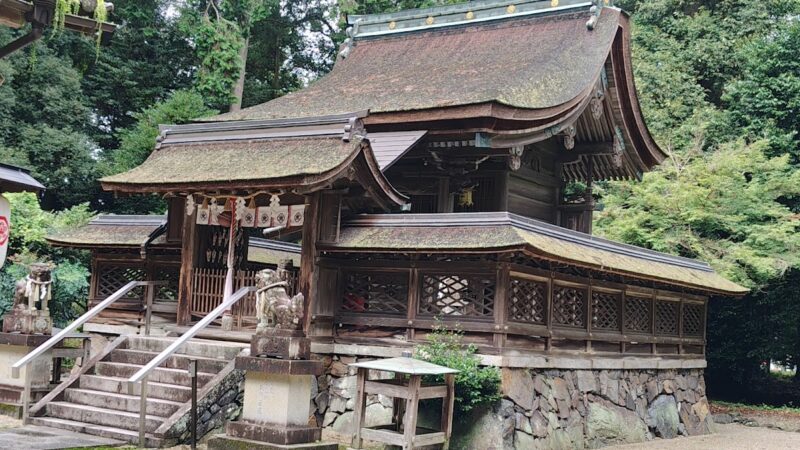
Main Hall
The main hall, which enshrines the principal deities Takamimusubi-no-kami and Kamimusubi-no-kami, is built in the traditional shrine architectural style. The area surrounding the main hall is enveloped in a solemn atmosphere befitting a sacred space, evoking the history of ancient faith.
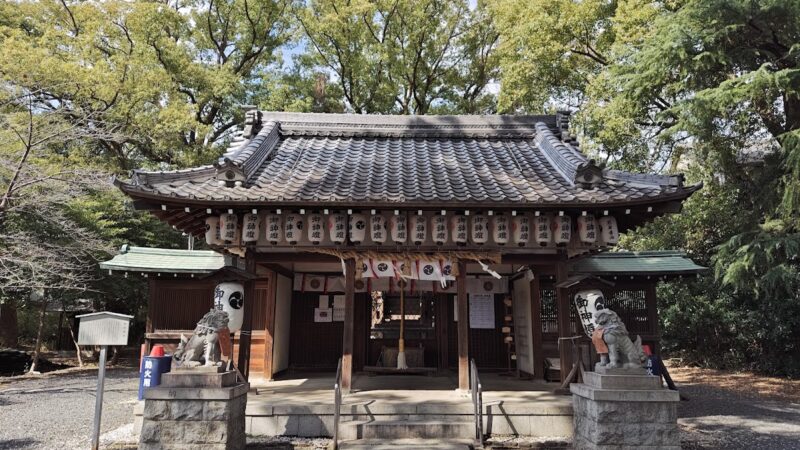
Worship Hall
The worship hall, where worshippers offer their prayers, is located in front of the main hall. Worship is performed from the worship hall, with worshippers paying their respects to the main hall from afar, and many worshippers visit daily.
Hatsukashi Forest
The Hatsukashi Forest surrounding the shrine grounds is said to have once been a vast forest. Even today, lush trees cover the grounds, creating a tranquil space despite its urban location.
This forest is not merely a natural environment; it is a sacred forest that has been protected as a divine area since ancient times. Formed on a unique topography of a slightly elevated area in the Katsura River basin, this forest is designated a Kyoto City Historic Site as an important cultural landscape that tells the story of the region’s history and faith.
Atmosphere of the Shrine Grounds
Despite its location surrounded by residential areas in the plains, stepping onto the shrine grounds reveals a different world enveloped in a deep forest. As you proceed along the path lined with ancient trees, a serene space where time seems to stand still welcomes visitors.
In the increasingly urbanized southern part of Kyoto City, shrines that retain such ancient traces are precious. The changing expressions of nature with each season are also one of the pleasures of visiting.
Annual Festivals and Events
Hatsukashi Festival (May)
The most important festival of Hatsukashi-za-Takamimusubi Shrine is the Hatsukashi Festival, held every May. This festival is a traditional event celebrating the founding of the shrine and has been carefully preserved by the local people since ancient times.
During the festival, a portable shrine procession and Shinto rituals are performed, and the local residents come together to make the festival a success. It is a traditional festival praying for a bountiful harvest and peace in the community, and it continues to be celebrated today.
Niiname-sai Festival (November 23rd)
The Niiname-sai Festival, which expresses gratitude to the gods for the autumn harvest, is an important festival for our shrine, which has the characteristics of an agricultural deity. The year’s new grain is offered to the gods, and prayers are offered for a bountiful harvest in the coming year.
Other Annual Events
- New Year’s Festival (January 1st): Celebrating the New Year and praying for peace throughout the year.
- Setsubun Festival (February): Praying for protection from evil and for good fortune.
- Annual Festival (Autumn): One of the most important annual festivals to express gratitude for divine blessings.
Goshuin (Shrine Seal) and Goshuincho (Shrine Seal Book) Information
Hatsukashi-za-Takamimusubi Shrine offers Goshuin as proof of worship.
About Goshuin
The Goshuin features the name of the shrine, “Hatsukashi-za-Takamimusubi Shrine,” written in ink, and stamped with the shrine’s seal. It may also include a seal indicating its status as a Shikinai-Taisha (a shrine listed in the Engishiki, an ancient Japanese legal code), making it a valuable item for those who visit shrines or collect Goshuin.
For information on Goshuin issuance times and other details, we recommend contacting the shrine directly before your visit. The chief priest may be absent, so prior confirmation is recommended.
Goshuincho (Stamp Book)
Please check directly with the shrine regarding the availability of original goshuincho. As an ancient shrine in Kyoto, it’s possible they have goshuincho with a unique design.
Access and Visiting Information
Basic Information
Location
219-1, Hazukashi Shimizu-cho, Fushimi-ku, Kyoto City, Kyoto Prefecture 612-8485
Phone Number
Please check the latest information before visiting.
Visiting Hours
The shrine grounds are generally open for free visits. However, the opening hours of the shrine office may vary depending on the day, so it is recommended to check in advance if you wish to receive a goshuin or make a prayer.
Admission Fee
Free
Access by Train and Bus
If using Keihan Railway
- Get off at “Chushojima Station” on the Keihan Main Line
- Take Kyoto City Bus Route 20 or 22
- Get off at “Hishikawa-cho” bus stop, approximately 1 minute walk (approx. 50m)
If using JR
- Get off at “Nagaokakyo Station” on the JR Kyoto Line
- Take a bus or taxi from the station
- Due to the distance, taking the Keihan Railway is more convenient.
Access by Car
From Meishin Expressway
- Approximately 15 minutes from Kyoto Minami IC
Parking
There may be parking spaces for visitors on the shrine grounds, but the number may be limited. On days when congestion is expected, such as during festivals, we recommend using public transportation.
Nearby Attractions
Around the Katsura River
Hatsukashi-za-Takami-Musubi Shrine is located on the right bank of the Katsura River, and you can enjoy a stroll along the river. You can feel the history of this region, which has flourished as a key point for water transport since ancient times.
Shrines and Temples in the Fushimi Area
Fushimi Ward is home to many historical shrines and temples, including Fushimi Inari Taisha. Visiting them together with Hatsukashi-za-Takamimusubi Shrine will give you a deeper understanding of the history of faith in southern Kyoto.
Points and Manners for Visiting
Etiquette for Visiting
- Bow before passing through the torii gate: Show respect when entering the sacred area.
- Avoid walking in the center of the approach: The center is considered the path of the gods.
- Purify yourself at the water basin: Purify your left hand, right hand, and mouth in that order.
- Worship at the main hall: The basic procedure is two bows, two claps, and one bow.
Regarding Photography
Photography is generally permitted on the shrine grounds, but consideration is needed when photographing sacred areas such as the main hall or during festivals. Please observe proper etiquette and avoid disturbing other worshippers.
Attire
While there are no specific dress code requirements, shrines are sacred places. Clean and subdued attire is recommended for worship.
The Charm of Hatsukashi-za-Takamimusubi Shrine
One of Kyoto’s Oldest Histories
Founded in 477 AD, this shrine boasts one of the oldest histories in Kyoto City. The fact that a shrine existed in this location more than 300 years before the relocation of the capital to Heian-kyo (794 AD) speaks volumes about the region’s deep history.
Status as a Shikinaisha (Great Shrine)
Its high status as a Great Shrine listed in the Engishiki Jinmyocho (a list of shrines compiled in the Heian period) demonstrates its importance in ancient times. Being listed as a Shikinaisha among the countless shrines nationwide holds special significance.
A Rare Shrine Dedicating the Three Creation Gods
Shrines that enshrine two of the three creation gods who appeared at the time of the creation of heaven and earth are rare throughout Japan. As a shrine that enshrines the fundamental gods of Japanese mythology, its religious importance is immeasurable.
A Sacred Forest Remaining in an Urban Area
Despite being located in the increasingly urbanized southern part of Kyoto City, the preservation of the ancient forest known as “Hatsukashi no Mori” is culturally and environmentally valuable. Protected as a Kyoto City designated historical site, this forest is the core of the region’s historical identity.
A Faith Rooted in the Community
The history of being protected and revered by the local people for over 1500 years demonstrates the deep connection between the shrine and the local community. Traditional events such as the Hatsukashi Festival are still passed down as important community events.
Points to Note When Visiting
Possibility of the Priest’s Absence
As this is not a large shrine, the priest may not always be present. If you wish to receive a Goshuin (shrine stamp) or prayers, it is recommended to confirm by phone in advance.
Transportation Access
While it is close to the nearest bus stop, bus service may be limited. Please check the bus timetable before visiting and plan your trip with ample time.
Seasons and Climate
The shrine grounds are surrounded by forest, so there may be many insects such as mosquitoes in the summer. Bringing insect repellent will make your visit more comfortable. Also, the ground may become slippery in rainy weather, so caution is advised.
Summary
Hatsukashi-ni-imasu Takamimusubi Shrine boasts one of the oldest histories in Kyoto, founded in 477 AD. As a Shikinai-Taisha shrine (a major shrine listed in the Engishiki) that enshrines two of the three creation deities, it has attracted deep reverence since ancient times. It is a venerable shrine whose name is recorded in the Shoku Nihongi and Engishiki Jinmyocho (a list of shrines compiled in the Heian period), and is known for its divine blessings of abundant harvests, matchmaking, and good fortune through the spiritual power of “musubi” (connection/bond).
Despite being located in the urban area of Fushimi Ward, Kyoto City, the shrine grounds, enveloped in the deep forest known as “Hatsukashi no Mori,” are a valuable historical environment protected as a Kyoto City designated historical site. This shrine, which preserves the ancient beliefs and natural beauty of the Katsura River basin, is a hidden gem in Kyoto and a must-visit for history buffs and shrine enthusiasts alike.
It’s accessible by bus from Keihan Railway’s Chushojima Station, and visits are generally free. Annual events such as the Hatsukashi Festival (May) and the Niiname-sai Festival (November) are held here, demonstrating the continued vitality of traditional beliefs rooted in the local community.
When visiting southern Kyoto, be sure to visit Hatsukashi-za-Takamimusubi Shrine and experience its over 1500-year history and the divine blessings of the gods of “musubi” (connection/bond).