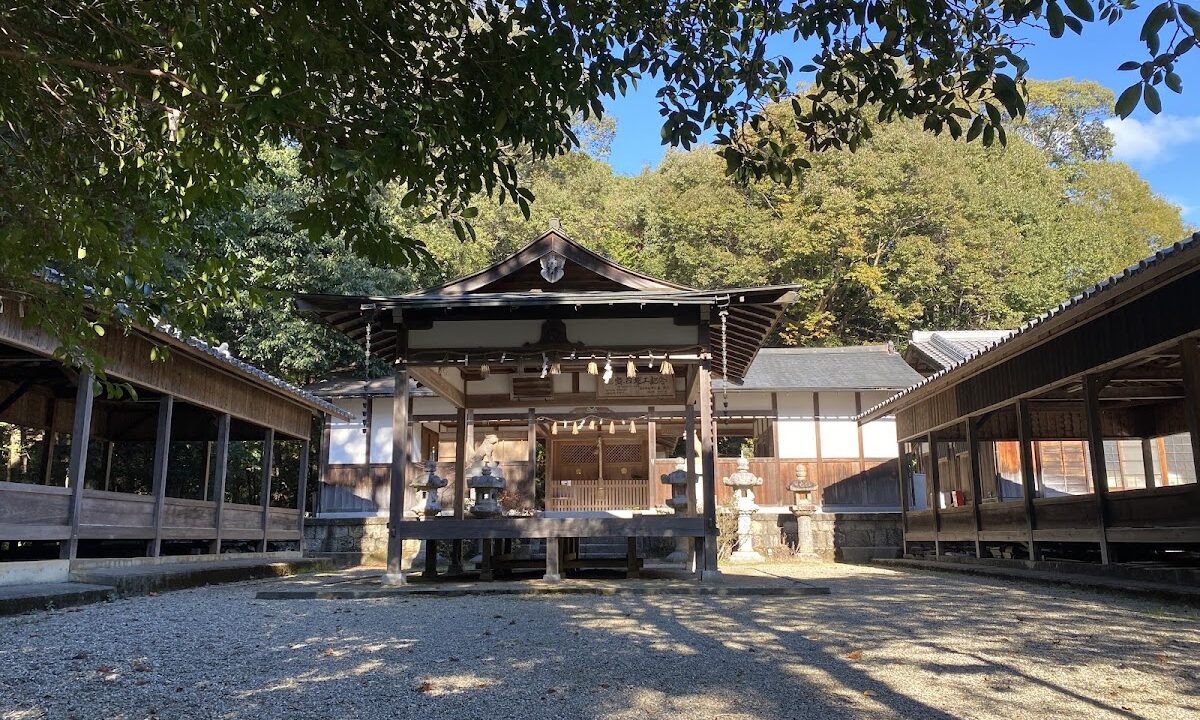
Complete Guide to Kuni Shrine (Kizugawa City, Kyoto Prefecture) | History, Deities, Access, and Surrounding Historical Sites
Kuni Shrine, located in Kamo-cho, Kizugawa City, Kyoto Prefecture, is a shrine deeply connected to the history of Kuni-kyo, the capital of the Nara period. It enshrines Sugawara no Michizane as its deity and is situated in a historically significant location adjacent to the special historical site “Kuni Palace Ruins (Yamashiro Kokubunji Temple Ruins).” This article comprehensively introduces information you should know before visiting Kuni Shrine, including its detailed history, enshrined deities, highlights within the grounds, access methods, and surrounding tourist spots.
What is Kuni Shrine? | Basic Information and Overview
Kuni Shrine is located in Nishimiyanohigashi, Kamo-cho, Kizugawa City, Kyoto Prefecture, and is situated east of the site of the Daigokuden (Great Hall of State) of Kuni-kyo, the capital to which Emperor Shomu moved the capital during the Nara period. The current name was adopted in 1965; before that, it was known as Tenmangu Shrine and attracted local devotion. ### Basic Information
- Name: Kuni Shrine
- Address: 35 Nishimiyanohigashi, Kamo-cho, Kizugawa City, Kyoto Prefecture
- Deity Enshrined: Sugawara no Michizane
- Former Shrine Rank: Village Shrine
- Founding: Details unknown (It has a long history as a Tenmangu shrine)
- Name Change: August 1965
- Visiting Hours: Grounds are freely accessible
- Parking: Available (Kuni Palace Ruins Parking Lot can be used)
- Area: Southern Kyoto (Uji, Nagaokakyo, Yamazaki), Kizugawa City
- Genre: Shrines and Temples
History and Origins of Kuni Shrine
To understand the history of Kuni Shrine, it is important to know the historical background of this region.
Relationship with Kuni-kyo
In 740 AD (Tenpyo 12), Emperor Shomu moved the capital from Heijo-kyo to Kuni Palace. This relocation of the capital is thought to have been a result of political instability, such as the Fujiwara Hirotsugu Rebellion. Kuni-kyo was built in an area called Mikanohara, and palace buildings, including the Daigokuden (Great Hall of State), were constructed.
However, in 744 (Tenpyo 16), Kuni-kyo was abandoned after only a little over four years, and the capital returned to Heijo-kyo via Naniwa Palace. After the abandonment of the capital, the Daigokuden of Kuni-kyo was repurposed as the main hall of Yamashiro Kokubun-ji Temple, and temple buildings such as a seven-story pagoda were constructed.
From Tenmangu Shrine to Kuni Shrine
The predecessor of Kuni Shrine was the Tenmangu Shrine located in this area. It enshrined Sugawara no Michizane as its deity and was worshipped as the guardian deity of learning and culture in the region.
In 1908 (Meiji 41), it was merged with the Goryo Shrine, which was located east of the Kuni-kyo Daigokuden. Subsequently, in August 1965, the shrine was renamed “Kuni Shrine,” and it remains so to this day. This renaming reflects the historical importance of Kuni-kyo and the regional identity.
Historical Value of the Main Hall
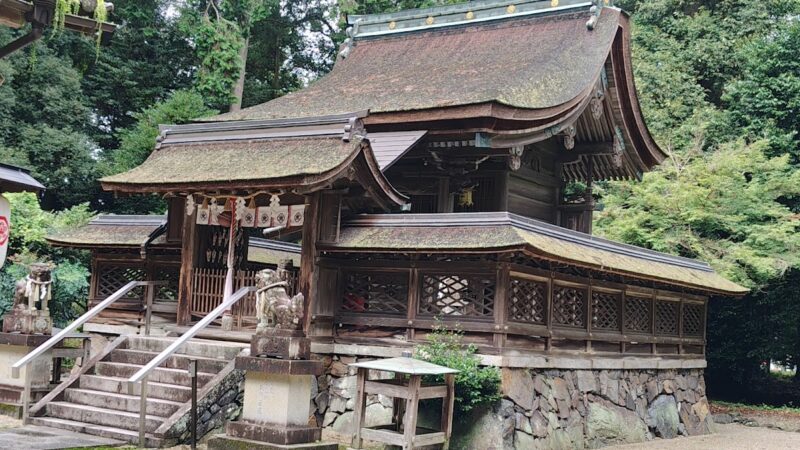
The current main hall of Kuni Shrine is said to have been relocated from the Kasuga Wakamiya shrine in Nara in 1863. Inheriting the architectural style of Kasuga Wakamiya, a subsidiary shrine of Kasuga Taisha, this main hall is historically and architecturally valuable.
Deity and Divine Virtues
Sugawara no Michizane
The deity enshrined at Kuni Shrine is Sugawara no Michizane, widely known throughout Japan as the god of learning.
Brief Biography of Sugawara no Michizane:
- Born in 845 (Jōwa 12)
- Scholar, politician, and Chinese poet of the Heian period
- Rising to the position of Minister of the Right, but exiled to Dazaifu due to political infighting
- Died in Dazaifu in 903 (Engi 3)
- Deified as Tenjin after his death
Divine Virtues:
- Academic success and passing exams
- Improvement in writing and performing arts
- Sincerity and honesty
- Relief of wrongful convictions and protection from evil
Deities of Goryō Shrine
It is believed that the deities of Goryō Shrine, which were merged in 1908 (Meiji 41), are also enshrined here. Goryō Shrines are generally shrines that comfort the spirits of those who died tragically and appease their vengeful spirits. Considering the historical context of the abandonment of Kuni-kyō, the existence of a Goryō Shrine in this location likely held deep significance.
Highlights of the Shrine Grounds
Main Hall
The main hall, said to have been relocated from Kasuga Wakamiya in 1863, is the central structure of Kuni Shrine. It is believed to inherit the Kasuga-zukuri style and preserves the characteristics of late Edo period shrine architecture.
In recent years, damage to the roof has been reported, and it was covered with a blue tarp for protection at one point. As a historical asset of the region, appropriate preservation and restoration are desired.
Komainu (Guardian Dogs)
Kuni Shrine has distinctive guardian dogs (komainu). Some visitors mention the impressive silver and red coloring of these dogs. These were created by students of Kobe Municipal Science and Technology High School, and are an interesting example of the fusion of modern design and traditional shrine architecture.
Atmosphere of the Shrine Grounds
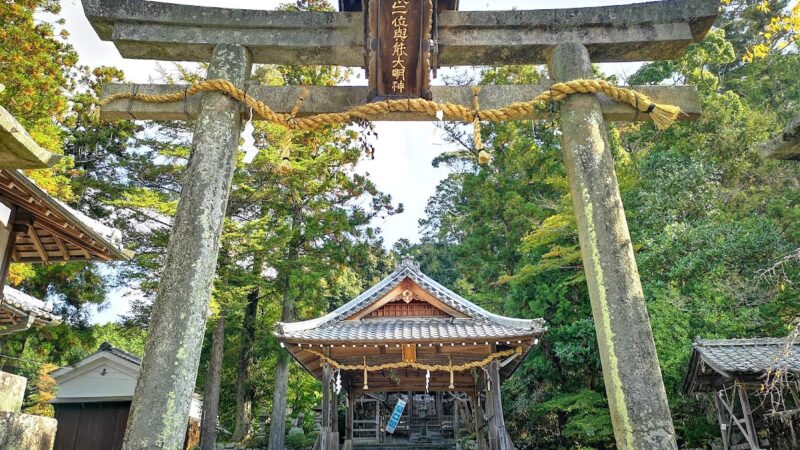
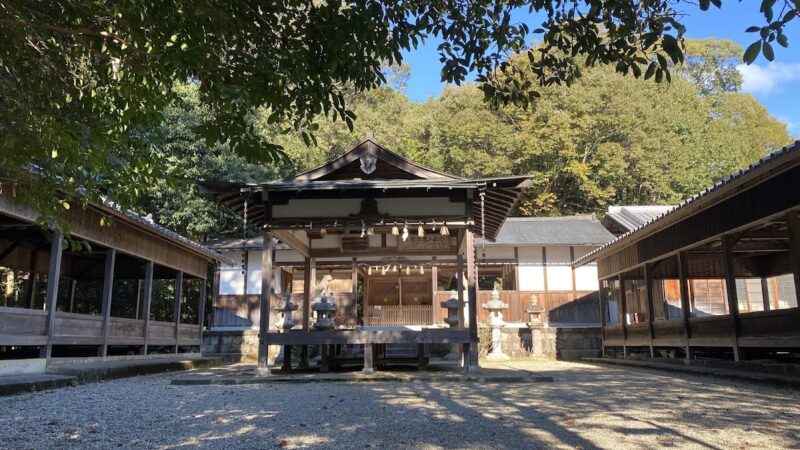
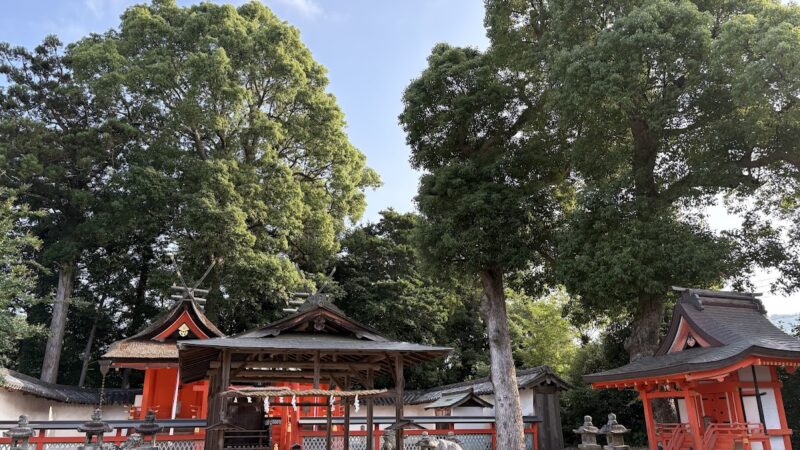
Kuni Shrine is a small, community-based village shrine, but its integration with the adjacent Kuni Palace Ruins, a special historical site, creates a unique historical atmosphere. The tranquil temple grounds offer a precious space where visitors can feel the remnants of the ancient capital while offering their prayers.
Access Information
Access by Public Transportation
Using the JR Yamatoji Line (Kansai Main Line):
- Get off at JR “Kamo Station” and walk for approximately 15 minutes.
- Head northeast from the station towards the Kuni Palace Ruins.
Travel Time from Kyoto Station:
- Approximately 45-60 minutes on the JR Nara Line and Yamatoji Line (including transfers).
- Kyoto Station → Kizu Station (JR Nara Line) → Kamo Station (JR Yamatoji Line)
Access by Car
From Kyoto City:
- Approximately 45 minutes from Kyoto Station.
- Route: Kyoto → Hanshin Expressway Route 8 → Daini Keihan Expressway → Shin-Meishin Expressway → Keina-Wa Expressway → Kizugawa City
From Osaka:
- Approximately 20 minutes from the Daini Keihan Expressway “Yawata-Kyotanabe IC”.
From Nara:
- Approximately 30 minutes via National Route 24.
Car Navigation Settings:
- Address: 35 Nishimiyanohigashi, Kamo-cho, Kizugawa City, Kyoto Prefecture
- Landmark: Kuni Palace Site (Historical Park)
Parking Information
Parking is available at the Kuni Palace Site. There is free parking available, which is convenient when visiting both Kuni Shrine and the Kuni Palace Site.
Relationship with the Special Historic Site “Kuni Palace Site (Yamashiro Kokubunji Temple Site)”
When visiting Kuni Shrine, the adjacent Special Historic Site “Kuni Palace Site (Yamashiro Kokubunji Temple Site)” is also a must-see.
Overview of the Kuni Palace Site
The Kuni Palace Site is the remains of the capital built by Emperor Shomu during the Nara period. For approximately four years, from 740 AD to 744 AD, the capital of Japan was located here.
Main Remains:
- Daigokuden Site: Scattered foundation stones from that time allow visitors to appreciate the scale of the building.
- Seven-Storied Pagoda Site: A massive group of foundation stones remains, conveying its grandeur to this day.
- Chodoin Site: Remains of the buildings that served as the political center.
Designated as a National Special Historic Site
In 2007, the site was designated as a National Historic Site as “Kuni Palace Site (Yamashiro Kokubunji Temple Site),” and in 2026, it was upgraded to a “Special Historic Site.” This recognition is due to its importance as a rare complex of a capital city site and a provincial temple site.
Complex of Two Sites
A distinctive feature of the Kuni Palace Site is the overlap of capital city and temple sites. After the abandonment of the capital, the Daigokuden was repurposed as the main hall of Yamashiro Kokubunji Temple, resulting in the extremely rare example nationwide of buildings from different eras and with different uses existing in the same location.
Currently, the site of the Daigokuden (Great Hall of State) is dotted with foundation stones from that time, and adjacent to it lies a massive group of foundation stones from the tower site. These remains are valuable historical documents that illustrate the advanced architectural techniques and urban planning of the Nara period.
Tourist Attractions Around Kuni Shrine
When visiting Kuni Shrine, combining your visit with a tour of the tourist attractions in Kizugawa City and the surrounding area will make for a more fulfilling trip.
Historical Sites in Kizugawa City
Jōruri-ji Temple:
- Houses the National Treasure Nine Amida Buddha Statues
- Features a beautiful Heian period Pure Land style garden
- Approximately 20 minutes by car from Kuni Shrine
Iwafune-ji Temple:
- Famous for its Important Cultural Property Three-Storied Pagoda
- A famous spot for hydrangeas and autumn leaves
- Approximately 25 minutes by car from Kuni Shrine
Kaijūzan-ji Temple:
- An ancient temple with a National Treasure Five-Storied Pagoda
- Located on a mountain overlooking the Kuni Palace ruins
- Approximately 10 minutes by car from Kuni Shrine
Kyoto Tea Area
Kizugawa City is included in the “Kyoto Tea” area and is known as a production area for Uji tea.
Roadside Station “Ocha no Kyoto Minamiyamashiro Village”:
- Purchase local specialties and Uji tea.
- Approximately 15 minutes by car from Kuni Shrine.
Wazuka Town Tea Plantations:
- Beautiful tea plantation scenery.
- Tea picking experiences and tea factory tours are available.
- Approximately 30 minutes by car from Kuni Shrine.
Nearby Spots in Nara and Kyoto
Heijo Palace Site (Nara City):
- The capital before Emperor Shomu moved the capital to Kuni-kyo.
- Visit the reconstructed Daigokuden and Suzaku Gate.
- Approximately 30 minutes by car from Kuni Shrine.
Nara National Museum:
- Exhibits Buddhist art and archaeological materials from the Nara period.
- Sometimes there are exhibits related to Kuni-kyo.
- Approximately 35 minutes by car from Kuni Shrine.
Uji (Uji City, Kyoto Prefecture):
- Byodo-in Phoenix Hall (World Heritage Site)
- Ujigami Shrine (World Heritage Site)
- The home of Uji tea
- Approximately 30 minutes by car from Kuni Shrine
Points to note and how to enjoy your visit
Etiquette for visiting
When visiting Kuni Shrine, follow the general etiquette for visiting a shrine.
- Bow before passing through the torii gate.
- Walk along the approach to the shrine, avoiding the center.
- Purify your body and mind at the water basin.
- Bow twice, clap twice, and bow once in front of the main shrine.
- Quietly observe the shrine grounds.
- Bow again at the torii gate when leaving.
Recommended time to visit
Spring (March-May):
- Beautiful fresh greenery, perfect for a stroll.
- Enjoy cherry blossoms and young leaves in the plaza of the Kuni Palace ruins.
Autumn (October-November):
- A beautiful season for autumn leaves.
- Many surrounding temples are also famous for their autumn foliage.
- Pleasant weather, ideal for visiting historical sites.
Summer/Winter:
- Fewer tourists, allowing for peaceful worship.
- Remember to take precautions against the heat in summer and warm clothing in winter.
Estimated time required
- Kuni Shrine only: 15-30 minutes
- Kuni Shrine + Kuni Palace ruins: 1-2 hours
- Walking Tour Including Surrounding Historical Sites: Half a Day to a Full Day
Recommended Points for History Enthusiasts
- Pre-learning at the Kuni Palace Site Museum (located within the Kamo Cultural Center)
- Seeing the foundation stones of the Daigokuden (Great Hall of State) firsthand and experiencing the scale of the building
- Experiencing the high level of architectural technology of the time from the huge foundation stones of the seven-story pagoda
- Viewing the entire Kuni Palace site from Kaijusan-ji Temple
- Comparing it with the Heijo Palace Site to consider the differences in the structure of the capital
Cultural Significance of Kuni Shrine
Center of Local Faith
Kuni Shrine has long been the center of faith for the residents of Kamo-cho, Kizugawa City. As a Tenmangu shrine dedicated to Sugawara no Michizane, it has functioned as a place to pray for academic success and the peace of the community.
Place for Historical Education
Kuni Shrine, adjacent to the Kuni Palace site, is also a valuable place for learning about the history of the Nara period. This site is used for school education and lifelong learning, offering a practical learning experience on important themes in Japanese history, such as Emperor Shomu’s capital relocation policy, ancient urban planning, and the Kokubunji system.
Challenges in Cultural Property Preservation
Challenges in cultural property preservation faced by small shrines, such as the damage to the roof of the main hall of Kuni Shrine, are becoming apparent. How to preserve and pass on historical buildings amidst shrinking local communities and financial constraints is a common challenge faced by many shrines throughout Japan.
Research and Archaeological Excavations
Surveys by the Kyoto Prefectural Board of Education
The Cultural Properties Protection Division of the Kyoto Prefectural Board of Education is continuously conducting archaeological excavations at the Kuni Palace site. These surveys are gradually revealing the layout of the palace, the structure of the buildings, and details of the urban planning.
Latest Research Findings
Recent archaeological excavations have yielded new insights into the precise size and structure of the Daigokuden (Great Hall of State) and the layout of surrounding buildings. Furthermore, research is progressing on the lifestyle and culture of the time based on excavated artifacts such as roof tiles and pottery.
Future Prospects
Following its designation as a Special Historic Site in 2026, further research, preservation, and maintenance are expected. A complete picture of the Kuni Palace Site will become clearer, leading to a deeper understanding of the reality of the Nara period capital and the intentions behind Emperor Shomu’s capital relocation policy.
Summary: The Charm of Kuni Shrine
Kuni Shrine is not merely a shrine, but a valuable place where one can experience ancient Japanese history. It is a place of worship dedicated to Sugawara no Michizane, and at the same time, an important historical site that conveys the history of Kuni-kyo, the capital of the Nara period.
Its location adjacent to the Special Historic Site “Kuni Palace Site (Yamashiro Kokubunji Temple Site)” creates a unique charm, allowing visitors to feel the atmosphere of the capital at that time while worshipping. The shrine grounds offer a fascinating blend of tradition and modernity, featuring a main hall said to have been relocated from Kasuga Wakamiya Shrine and modern guardian lion-dogs crafted by local high school students.
Located in Kizugawa City in southern Kyoto Prefecture, its convenient location midway between Kyoto, Nara, and Osaka is another attractive feature. Numerous famous temples such as Jōruri-ji, Iwashifune-ji, and Kaijūzan-ji are scattered throughout the area, making it an ideal base for historical exploration.
For those interested in the history of the Nara period, seeking tranquility in a peaceful shrine, or wanting to walk through the ruins of an ancient capital, Kuni Shrine and its surroundings are well worth a visit. Why not visit this historical site and experience the atmosphere of the capital from 1300 years ago?