Complete Guide to Wakiza Ame no Fukime Shrine (Wakide-no-miya) | A Rain-Praying Shrine and a Unique Festival in Kizugawa City, Kyoto Prefecture
Wakiza Ame no Fukime Shrine, located in Hirao, Yamashiro-cho, Kizugawa City, Kyoto Prefecture, is a historical shrine affectionately known as Wakide-no-miya. Since its founding in 766 AD (Tenpyo-Jingo 2), it has been deeply revered by the imperial court as a god that brings rain, and it remains a valuable place of worship, continuing the Miyaza rituals designated as an Important Intangible Folk Cultural Property of Japan.
History and Origins of Wakiza Ame no Fukime Shrine
Circumstances of Founding and Invitation from Ise
According to shrine tradition, the founding of Wakiza Ame no Fukime Shrine dates back to 766 AD (Tenpyo-Jingo 2). The shrine’s origins are traced back to the enshrinement of Amenofukime-no-Mikoto from Funagahara on the Isuzu River in Watari District, Ise Province (present-day Ise City, Mie Prefecture).
Enshrinement refers to the act of transferring a divided spirit of a deity or Buddha to another location for worship. The background to the arrival of the divine spirit from Ise to this location in Soraku District, Yamashiro Province, is thought to be related to the nationwide Shinto policies of the imperial court at the time and the need for rain-making beliefs in the region’s agriculture.
Status as a Shikinaisha (Great Shrine)
Wakiza Amenofukime Shrine is a Shikinaisha (shrine listed in the Engishiki Jinmyocho), and among them, it holds the high status of a “Great Shrine.” The Engishiki Jinmyocho is a list of major shrines throughout Japan compiled in 927 AD. While several Shikinaisha are listed in Soraku District, Yamashiro Province, only a limited number hold the status of a Great Shrine.
This high status is evidence of its importance to the imperial court since ancient times, and particularly indicates its recognized miraculous power as a rain-bringing deity.
One of the Eleven Rain-Bringing Shrines of Yamashiro Province
Wakiza Amanofukime Shrine held a particularly important position as one of the Eleven Rain-Bringing Shrines of Yamashiro Province. The Eleven Rain-Bringing Shrines are a collective term for the major shrines in Yamashiro Province to which the imperial court requested rain-making prayers during droughts.
Historical records from the Heian period show that Emperor Seiwa (reigned 858-876) and Emperor Uda (reigned 887-897) sent messengers to perform rain-making prayers during droughts. This illustrates how important the belief in rain-bringing deities was in the agricultural society of that time.
Deities and Divine Virtues
Main Deity: Amenofukime-no-Mikoto
The main deity, Amenofukime-no-Mikoto, has been worshipped as the goddess form of Amenohohino-Mikoto, a child deity of Amaterasu Omikami in Japanese mythology, or as a related deity. The name “Fukime” is also interpreted as symbolizing “sprouting,” that is, the power to make life sprout through wind or breath.
Since ancient times, she has been worshipped as a goddess who brings rain and water, and has been considered one of the most important deities for agricultural communities. Especially in ancient Japan, where rice cultivation was central, faith in a god who brought the right amount of rain at the right time was a crucial matter directly linked to the survival of the community.
Enshrined Deities: Tagorihime-no-Mikoto and Ichikishimahime-no-Mikoto
Along with Amenofukime-no-Mikoto, Tagorihime-no-Mikoto and Ichikishimahime-no-Mikoto are also enshrined. Tagorihime-no-Mikoto is one of the three Munakata goddesses and is known as the goddess of safe voyages and traffic safety. Ichikishimahime-no-Mikoto is also one of the three Munakata goddesses and, syncretized with Benzaiten, is worshipped as the goddess of performing arts and wealth.
By enshrining these goddesses, the shrine has developed into one possessing a complex divine virtue encompassing the blessings of water, fertility, and prosperity.
Highlights of the Shrine Grounds and Shrine Architecture
Style of the Main Hall and Worship Hall
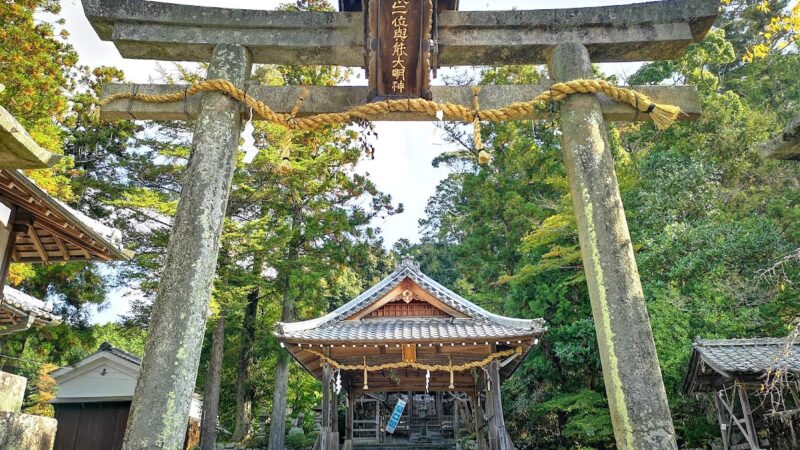
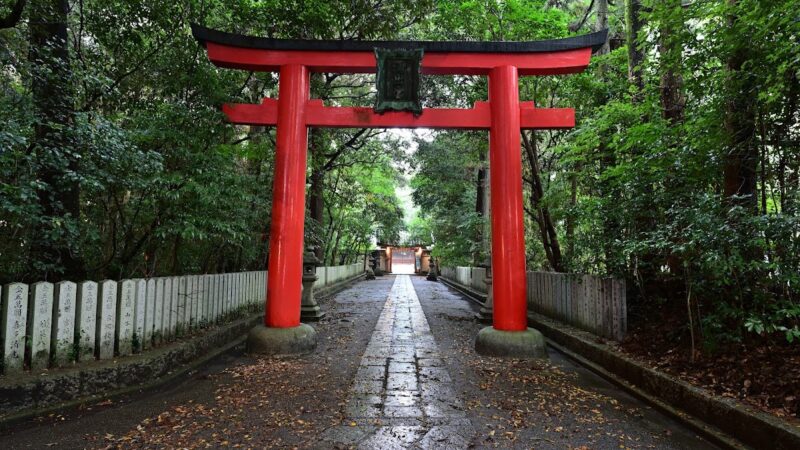
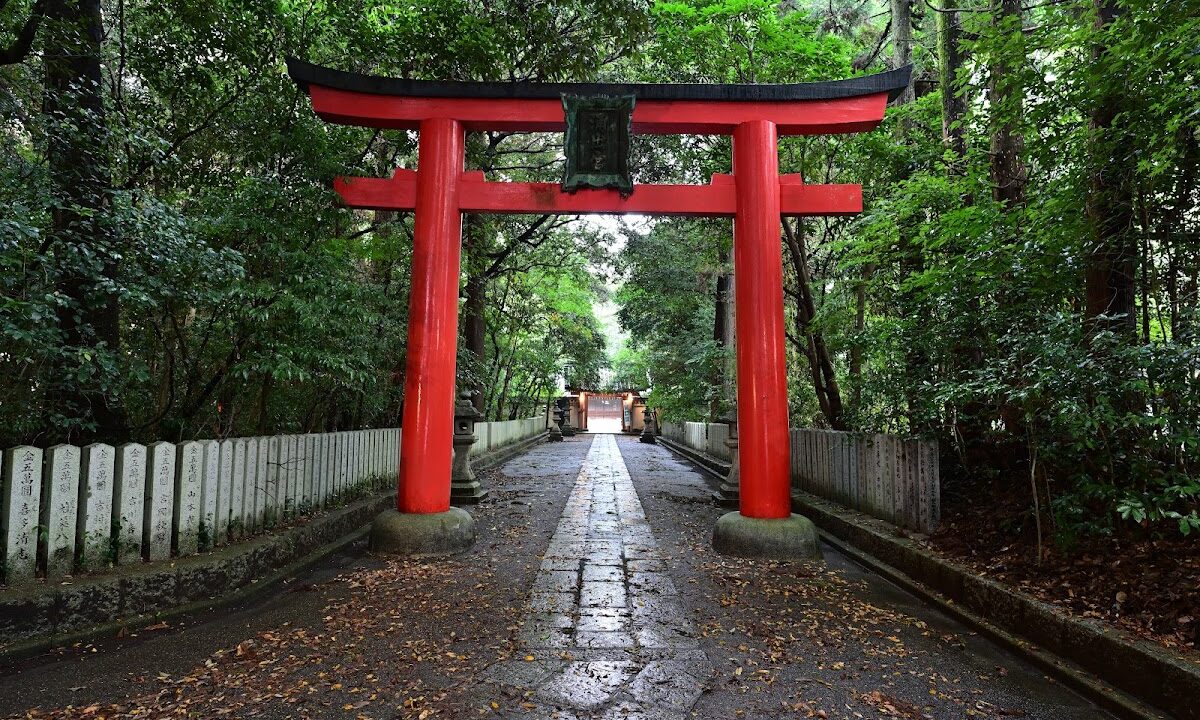
The grounds of Wakiza Amanofukime Shrine are located in the quiet village of Hirao, Yamashiro-cho, Kizugawa City, and possess a solemn atmosphere surrounded by a lush shrine forest.
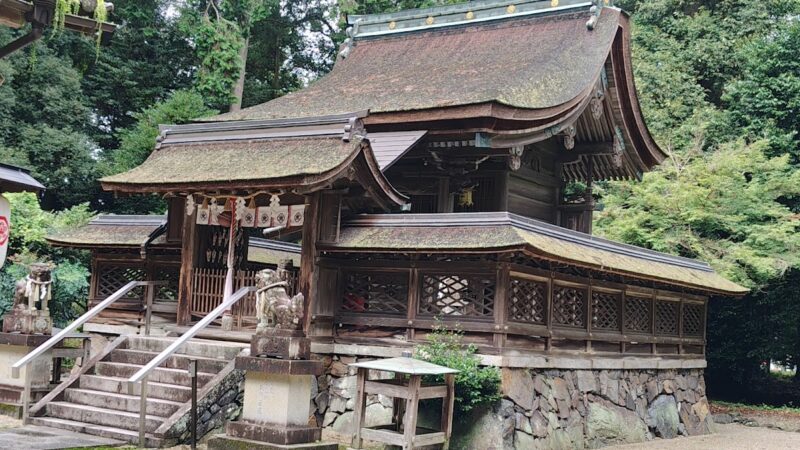
The main hall is built in the Ikkensha Nagare-zukuri style, preserving the architectural style of the mid-Edo period. The worship hall is built in the Irimoya-zukuri style, with an open structure welcoming worshippers. The entire shrine grounds are surrounded by ancient trees, and the giant cedar and camphor trees, estimated to be several hundred years old, particularly accentuate the sacredness of the area.
Subsidiary Shrines and Shrines within the Grounds
Several subsidiary shrines are located around the main shrine, preserving the diverse beliefs of the region. These subsidiary shrines are also evidence of how they have received various wishes from local residents throughout their long history.
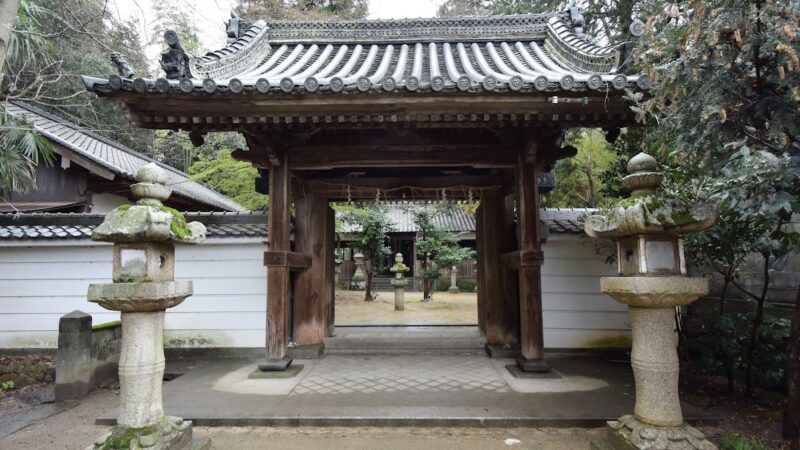
The stone structures within the grounds are also noteworthy. Many of the old stone lanterns and guardian lion-dogs were donated during the Edo and Meiji periods, testifying to the deep faith of the local people.
Shrine Grove and Natural Environment
The shrine grove surrounding the grounds is protected as a valuable natural forest in the Kizugawa City area. Evergreen and deciduous broad-leaved trees coexist, displaying different expressions throughout the seasons. Especially during the fresh green of spring and the vibrant autumn foliage, the grounds are enveloped in natural beauty.
This rich natural environment preserves the appearance of the sacred area unchanged since ancient times and plays an important role in the conservation of the local ecosystem.
Igomori Festival – A Unique Festival of Japan
Nationally Designated Important Intangible Folk Cultural Property
What makes Wakiza Amanofukime Shrine famous throughout Japan is the “Igomori Festival,” held every February. This festival was designated a Nationally Important Intangible Folk Cultural Property in 1985 and is known as a “unique festival of Japan.”
The Igomori Festival is a Miyaza (shrine association) event that has continued since the Middle Ages, and is highly regarded for its extremely well-preserved ancient rituals. Miyaza is an organization of local residents responsible for the rituals of the shrine, and is a traditional social organization with a hereditary and age-based structure.
Festival Structure and Characteristics
The Igomori Festival is held over two days. The festival’s name, “Ikomori,” originates from the fact that participants seclude themselves in the shrine to perform religious rites.
The first day, known as “Yoimiya,” is dedicated to preparations and a pre-festival celebration. On the second day, the main festival day, various religious rites are performed continuously from early morning until late at night. A distinctive feature is that the “Zashu,” members of the Miyaza (shrine guild), conduct the rites according to strict rituals.
During the festival, ancient rituals such as the preparation of offerings, the dedication of sacred food, and the recitation of prayers are performed one after another. Unique Kagura (sacred music and dance) are also offered, with each movement imbued with ancient traditions.
Inheritance of the Miyaza System
The Miyaza system, which supports the Ikomori Festival, is extremely important from a folkloric perspective as a typical example of a religious organization in a Japanese village community. The Miyaza is hierarchical, based on age and family lineage, starting with the young men’s group and progressing to higher ranks with age.
This system ensures that knowledge and techniques of rituals are reliably passed down from generation to generation, preserving the shrine’s traditions for over 1200 years. Even today, this valuable cultural heritage is maintained through the cooperation of local residents.
Significance and Modern Value of the Festival
The Ikomori Festival is not merely a traditional event; it is an important opportunity to reaffirm the unity of the local community and strengthen intergenerational bonds. In today’s urbanized and depopulated society, continuing such traditional rituals is not easy, but it is preserved through the strong pride and sense of responsibility of the local residents.
Furthermore, the festival welcomes visitors from outside the region, offering a valuable opportunity to experience and learn about traditional Japanese culture. However, it is important to note that there are certain restrictions on photography and viewing in order to respect the sacredness of the Shinto rituals.
Access and Visiting Information
Access by Public Transportation
The nearest station to Wakiza Amanofukime Shrine is Tanakura Station on the JR Nara Line. The shrine is approximately a 15-minute walk from Tanakura Station.
The shrine is relatively easy to access from both Kyoto and Nara cities, approximately 40 minutes from Kyoto Station on the JR Nara Line and about 20 minutes from Nara Station. The walk from the station to the shrine offers a pleasant stroll through the rural landscape of Yamashiro Town, creating a tranquil atmosphere.
Access by Car and Parking
If traveling by car, it’s approximately 10 minutes from the Kizu Interchange on the Keina-Wa Expressway, or via National Route 24 from the Daini-Hanna Expressway. While there is parking available for visitors, spaces are limited, so using public transportation is recommended during long holidays and festivals.
When using a car navigation system, searching for “Wakude-gu” or the shrine’s official name will provide smoother directions. As the surrounding area is residential, please drive quietly.
Notes for Visitors
The shrine grounds are always open, and worship is permitted at any time, but the shrine office has limited opening hours. If you wish to receive a Goshuin (temple/shrine stamp) or other items, it is recommended to check in advance.
The temple grounds are a sacred place, so please be mindful of appropriate attire and behavior when visiting. Especially during festivals such as the Ikomori Festival, you are required to follow instructions and not disrupt the proceedings of the Shinto rituals.
Kizugawa City Area Sightseeing and Nearby Spots
Historical Background of Kizugawa City
Kizugawa City, where Wakiza Amanofukime Shrine is located, is a historically rich area in southern Kyoto Prefecture, bordering Nara Prefecture. In ancient times, Kuni-kyo (Kuni Capital) was established here, and it flourished as a capital city for a time.
Kizugawa City is dotted with many temples, shrines, and historical sites, and is also known as the “Tea of Kyoto” area. It is a production area for Uji tea, and the scenery of tea plantations is beautiful.
Major Nearby Tourist Spots
Jōruri-ji Temple: A Shingon Ritsu sect temple that houses the national treasure, nine Amida Buddha statues. This tranquil ancient temple, located on the border of Kyoto and Nara prefectures, boasts a beautiful Heian period Jodo-style garden.
Iwafune-ji Temple: A Shingon Ritsu sect temple known for its hydrangeas. Highlights include the three-story pagoda (an Important Cultural Property) and the group of stone Buddha statues.
Kaijusan-ji Temple: A Shingon sect temple with a five-story pagoda (a National Treasure). Situated on a mountaintop overlooking the Kizu River, it offers magnificent views.
Kuni Palace Site: The remains of Kuni-kyo, the capital city where Emperor Shomu temporarily established his capital. Now a historical park, it allows visitors to imagine the scale of the ancient capital.
The Charms of Southern Kyoto Prefecture (Yamashiro Region)
The Yamashiro region in southern Kyoto Prefecture, including Wakiza Amanofukime Shrine, possesses a quiet charm distinct from that of Kyoto city. This area, including Uji City, Kyotanabe City, and Kizugawa City, has recently attracted attention as “Kyoto of Tea,” and is developing as a tourist destination where tea culture, historical heritage, and natural scenery are in harmony.
Kizugawa City, in particular, has deep cultural ties with Nara, and forms a unique cultural sphere where temples heavily influenced by Buddhist culture and ancient Shinto shrines coexist.
Annual Events and Festivals
Major Annual Events
At Wakiza Amanofukime Shrine, various festivals and Shinto rituals are held throughout the year, in addition to the Ikomori Festival.
New Year’s Day Festival (January 1st): As the first Shinto ritual to welcome the new year, it attracts many parishioners and worshippers.
Ikomori Festival (February): As mentioned above, this is the most important annual event.
Spring Grand Festival (Spring): A festival to pray for a bountiful harvest.
Summer Purification Ceremony (end of June): A Shinto ritual to purify oneself of the impurities accumulated over the past six months, including the passing through a ring of reeds.
Autumn Grand Festival (Autumn): A festival to give thanks for the harvest, featuring the dedication of Kagura (sacred dance and music).
How to Check the Festival Calendar
Specific festival dates may vary from year to year. When planning a visit, it is recommended to check the latest information on the Kizugawa City Tourism Association or the Kyoto Prefecture tourism information website. Especially if you wish to see the Ikomori Festival, it is advisable to check the dates and accessible areas in advance.
Faith and Divine Virtues
God of Rain and Rain-Stopping
The most prominent divine virtue of Wakiza Amanofukime Shrine is its power to bring or stop rain. From ancient times to the present day, it has attracted the faith of people involved in agriculture and water management.
Prayers for rain during droughts and for clear skies during prolonged rains—such prayers related to weather are still offered today by farmers, construction workers, and others.
Abundant Harvests and Industrial Prosperity
Due to its role as a god that brings rain, the shrine is also revered as a god of abundant harvests. Appropriate rainfall is a fundamental condition for a bountiful harvest, and the shrine has been cherished by local people as a guardian deity of agriculture.
In modern times, the number of worshippers praying for prosperity not only in agriculture but also in all industries is increasing.
Family Safety and Community Protection
As a shrine deeply connected to local communities through the Miyaza system, it also enjoys strong faith as a god that protects family safety and community peace. In the homes of parishioners, shrine amulets are enshrined, and daily peace is prayed for.
Value as a Cultural Property
Significance of Important Intangible Folk Cultural Property
The significance of the Miyaza rituals of Wakiza Amanofukime Shrine being designated as a National Important Intangible Folk Cultural Property lies not simply in the fact that an old festival has been preserved.
The fact that the Miyaza system, a traditional Japanese social organization, is still functioning today, and that ancient rituals are being passed down within it, is extremely important from a folkloric and historical perspective. Even nationwide, there are few examples of Miyaza rituals preserved in such a complete form, making it a valuable resource for the study of Japanese culture.
Historical Value as a Shikinaisha Shrine
The status of this shrine as a Shikinaisha Shrine, as listed in the Engishiki Jinmyocho (a list of shrines compiled in the Heian period), indicates that it was considered nationally important from ancient times. Its special position as a rain-making deity in Yamashiro Province, the central region of the Kinai area, is an important element in understanding ancient Japanese history.
Center for the Transmission of Regional Culture
Wakiza Amanofukime Shrine functions not merely as a religious facility, but also as a center for the transmission of regional culture. Festivals foster intergenerational exchange and serve as a platform for the transmission of traditional values and techniques.
In rural areas facing depopulation and an aging population, the maintenance of such cultural transmission mechanisms is attracting attention as a model case for other regions.
Etiquette and Manners for Worship
Basic Worship Etiquette
Worship at Wakiza Amanofukime Shrine follows general shrine worship etiquette.
- Bow before passing through the torii gate
- Cleanse your hands and mouth at the water basin
- Offer your donation in front of the main hall
- Bow using the two bows, two claps, and one bow method
- Bow again at the torii gate upon leaving
Please maintain silence within the shrine grounds and be considerate of other worshippers.
Photography
General landscape photography within the shrine grounds is permitted, but there may be restrictions on photography inside the main hall or during religious ceremonies. Especially during Shinto rituals such as the Ikomori Festival, there may be designated areas and times when photography is prohibited, so please be sure to follow the instructions.
Goshuin (Shrine Seals) and Souvenirs
Goshuin can be obtained at the shrine office, but staff may not always be present, so prior confirmation is recommended. Souvenirs such as amulets and talismans are available.
Summary: The Charm of Wakiza Amanofukime Shrine
Wakiza Amanofukime Shrine (Wakude-gu) is a venerable shrine with a history of over 1200 years since its founding in 766 AD. Its main deity is Amanofukime-no-Mikoto, who was invited from Ise Province, and has been revered by the imperial court since ancient times as a goddess who brings rain.
Its most distinctive feature is the Ikomori Festival, which is designated as a National Important Intangible Folk Cultural Property. This shrine ritual, which has continued since the Middle Ages, preserves ancient ceremonies in remarkably good condition and is known nationwide as a “unique and extraordinary festival.” Through this festival, the bonds of the local community are maintained, and traditional culture is passed down to the next generation.
Located in Kizugawa City, Kyoto Prefecture, a quiet mountainous region distinct from central Kyoto, the shrine is surrounded by many historical sites such as Jōruri-ji Temple and Iwashin-ji Temple. It’s easily accessible, about a 15-minute walk from Tanakura Station on the JR Nara Line, making it a convenient stop in conjunction with sightseeing in the “Tea of Kyoto” area.
With its status as a Shikinaisha (a shrine listed in the Engishiki, an ancient Japanese legal code), its miraculous power as a rain-making deity, and its harmonious preservation of living folk culture, Wakiza Amanofukime Shrine is a precious place where you can experience traditional Japanese culture and feel the weight of history. It’s one shrine you should definitely visit when you’re in southern Kyoto Prefecture.