Complete Guide to Shuchi Shrine (Kyotanabe City, Kyoto Prefecture) | History and Highlights of the Ancient Shrine Considered the Origin of Yasaka Shrine
Shuchi Shrine, located in Tenno-Takagamine, Kyotanabe City, Kyoto Prefecture, is an ancient shrine considered to be the origin of Yasaka Shrine, known as the guardian deity of Heian-kyo (Kyoto). Situated in the mountains at an altitude of approximately 300 meters, the shrine grounds, enveloped in deep groves of trees, exude a sacred and serene atmosphere. This article comprehensively introduces information you should know before visiting Shuchi Shrine, including its history, cultural assets, access methods, and surrounding tourist spots.
What is Shuchi Shrine? | A Shikinaisha (Shrine Listed in the Engishiki) Known as the Original Shrine of Yasaka Shrine
Shuchi Shrine is a Shikinaisha (minor shrine) listed in the Engishiki Jinmyocho (Register of Shrines in the Engi Era), and is an ancient shrine belonging to Tsuzuki District, Yamashiro Province. Under the modern shrine ranking system, it was ranked as a Gosha (village shrine). Located on the outskirts of the small settlement of Tenno-Takagamine in present-day Kyotanabe City, the shrine sits atop Mount Takagamine at an altitude of approximately 300 meters, near the point where the three provinces of Yamashiro, Kawachi, and Yamato meet.
As the place name “Tenno” suggests, this entire region has long been named after the deity enshrined at this shrine, such as “Tenno-Takagamine” and “Tenno,” reflecting its history as a center of local religious worship.
Deities and Divine Status
The deities enshrined at Shuchi Shrine are as follows:
- Main Deity: Kanimeikazuchi-ō no Mikoto
- Enshrined Deity: Takehayasusano-no-Mikoto
- Enshrined Deity: Amateru Kuniteruhiko Hoakari no Mikoto
- Enshrined Deity: Ōtsutsuki no Mawaka no Mikoto
Kanimeikazuchi-ō no Mikoto is a deity identified with Gozu Tennō and has been worshipped as a god who wards off disease and misfortune. A wooden standing statue of Gozu Tennō, a Kyoto Prefecture designated cultural property, believed to have been created in the late Heian period, is preserved, making it certain that Gozu Tennō has been worshipped here since ancient times.
This standing statue of Gozu Tennō is a distinctive single-piece wooden sculpture with a bull’s head, three angry faces, and Tang-style attire, making it a rare and valuable cultural property with few similar examples.
The History of Shuchi Shrine | A Long-Lasting Story Dating Back to the Reign of Emperor Nintoku
Founding and Early History
Shuchi Shrine is believed to have been founded during the reign of Emperor Nintoku (313-399). According to shrine tradition, it was founded in the 69th year of Emperor Nintoku’s reign on the summit of Nishimineyama, about 300 meters west of its current location, and was initially called “Shuchi Tenno.” While the exact location of the former shrine is unknown, it is presumed to have been a place called “Tenno-mine,” about 300 meters southwest, based on the distance and place name.
Later, it is said to have been moved to its current location in the first year of Emperor Senka’s reign (535). This move marked a history of nearly 1500 years.
Changes During the Enryaku Period
A significant change occurred in the 12th year of the Enryaku era (793). In this year, Daiho Tenno and Shuchi Tenno were enshrined together in the same hall. This occurred just before the relocation of the capital to Heian-kyo (794 AD) and is thought to be related to the development of the religious system in Kyoto.
Transfer of the Divine Spirit to Yasaka Shrine
The most important event in the history of Shuchi Shrine occurred in 869 AD (Jōgan 11). In this year, Kanimikazuchi-no-Mikoto (Gozu Tennō), the deity enshrined at Shuchi Shrine, was transferred to Yasaka-gō Kanshin-in in Gion (the predecessor of Yasaka Shrine).
Through this ritual, known as “Sakaki-usashi,” Shuchi Shrine came to be positioned as the original shrine of Yasaka Shrine, that is, the “origin of Yasaka Shrine.” However, this history is based on shrine traditions using the Tsubai documents, and Yasaka Shrine does not officially transmit such a history. Furthermore, since there is no record of “Sakaki-usashi,” careful historical verification is necessary.
Nevertheless, it is certain that the worship of Gozu Tenno has been deeply rooted in Shuchi Shrine since ancient times, and that a statue of Gozu Tenno from the late Heian period still exists. Therefore, it is undoubtedly a shrine that occupies an important position in the history of Gion worship.
From the Medieval to the Early Modern Period
Although detailed records from the medieval period are scarce, it continued to exist as a center of local faith. The current main hall was rebuilt in the early Edo period, in Keicho 17 (1612), and is a building with a history of over 400 years.
The Meiji Restoration and the Modern Era
When the Shinto-Buddhist Separation Order was issued during the Meiji Restoration, this shrine, which had previously been called “Tenno-sha” or “Gozu Tenno-sha,” reverted to its old name, “Shuchi Shrine.” In Meiji 6 (1873), it was ranked as a village shrine, establishing its position in the modern shrine ranking system.
Cultural Properties of Shuchi Shrine | Valuable Buildings Conveying the Momoyama Style
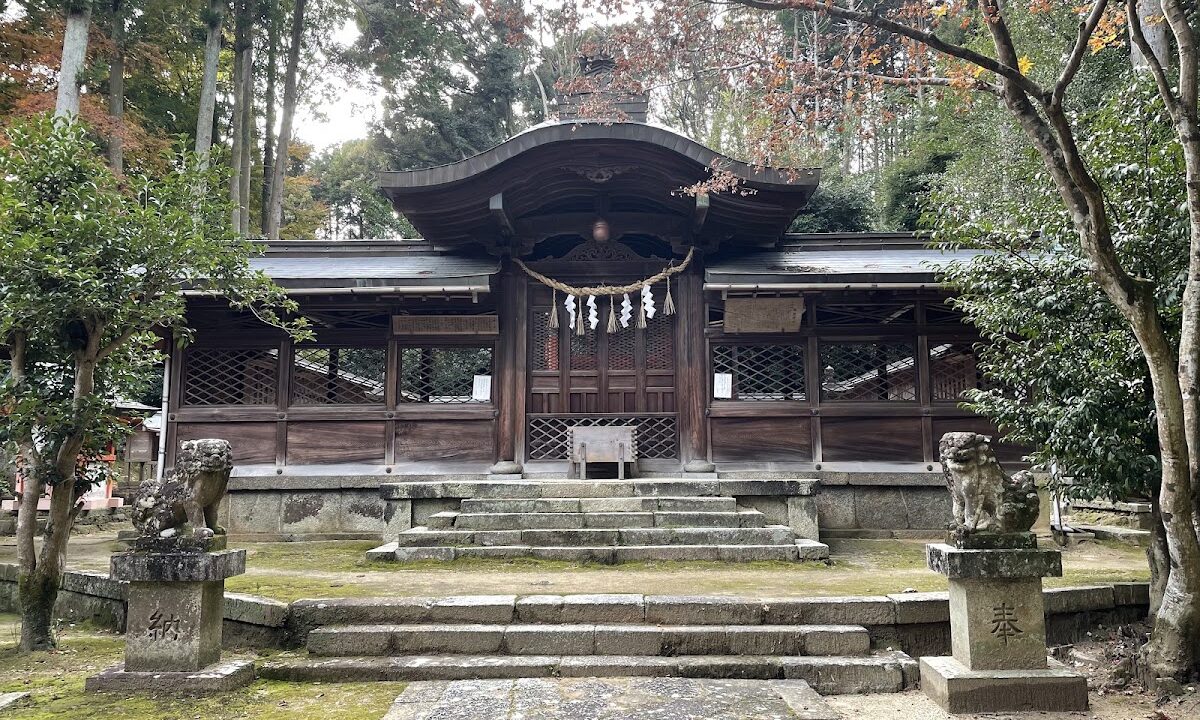
Main Hall (Kyoto Prefecture Registered Cultural Property)
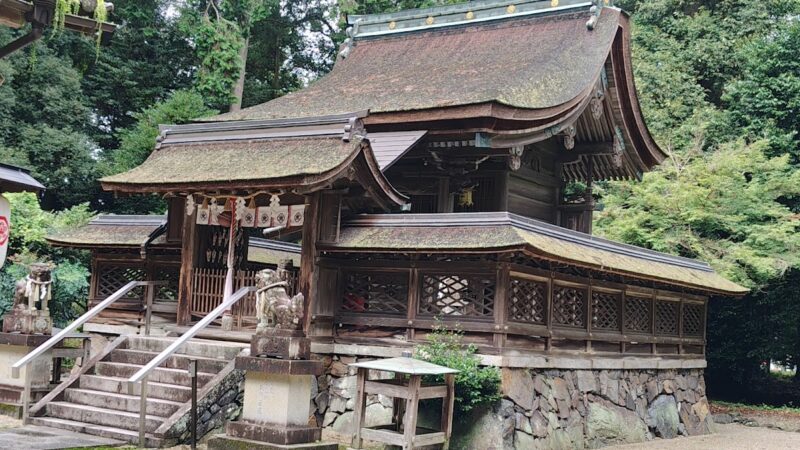
The main hall of Shuchi Shrine was built in 1612 (Keicho 17) and is designated as a Kyoto Prefecture Registered Cultural Property.
Architectural Style Characteristics:
- Form: One-bay nagare-zukuri style
- Roof: Cypress bark roofing
- Decoration: Numerous ornate decorations characteristic of the Momoyama period, such as karajishi (Chinese lions) and peonies on the frog-leg brackets, are applied.
Although built in the early Edo period, it is a valuable building that strongly retains the style of the Momoyama period. The high skill of the craftsmen of the time can be seen in the details of the decoration, making it a cultural property of high architectural historical value.
Wooden Standing Statue of Gozu Tenno (Kyoto Prefecture Designated Cultural Property)
The wooden standing statue of Gozu Tenno, believed to be a work from the late Heian period (late Fujiwara period), is a Kyoto Prefecture Designated Cultural Property.
Statue Characteristics:
- Structure: Carved from a single piece of wood
- Appearance: Three faces with a wrathful expression, topped with a bull’s head
- Attire: Chinese-style attire
- Rarity: Few similar examples exist, making it a valuable artifact that conveys the belief in Gozu Tenno (Bull-Headed Heavenly King).
This statue is an extremely important cultural property for understanding the reality of Gozu Tenno worship, and provides concrete evidence that Shuchi Shrine has worshipped Gozu Tenno since ancient times.
Guide to Shuchi Shrine Grounds | A Sacred Area Surrounded by Deep Groves of Trees
Atmosphere of the Shrine Grounds
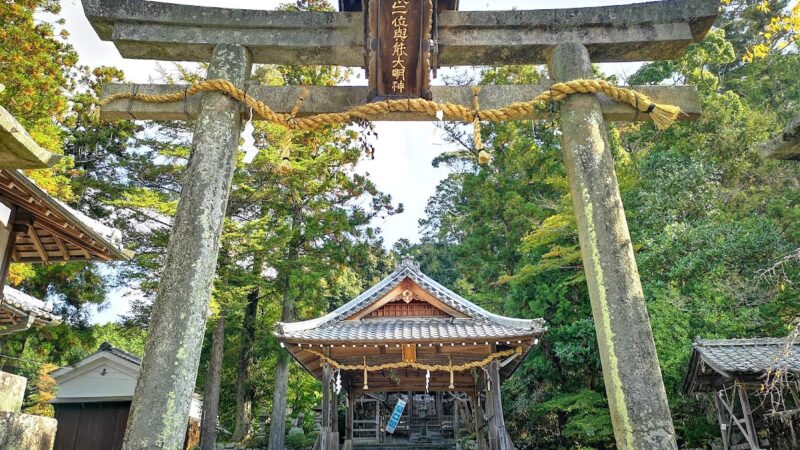
The grounds of Shuchi Shrine are covered with deep groves of trees, creating a very sacred and tranquil atmosphere. Combined with its location in the mountains at an altitude of approximately 300 meters, it offers a peaceful space far removed from the secular world.
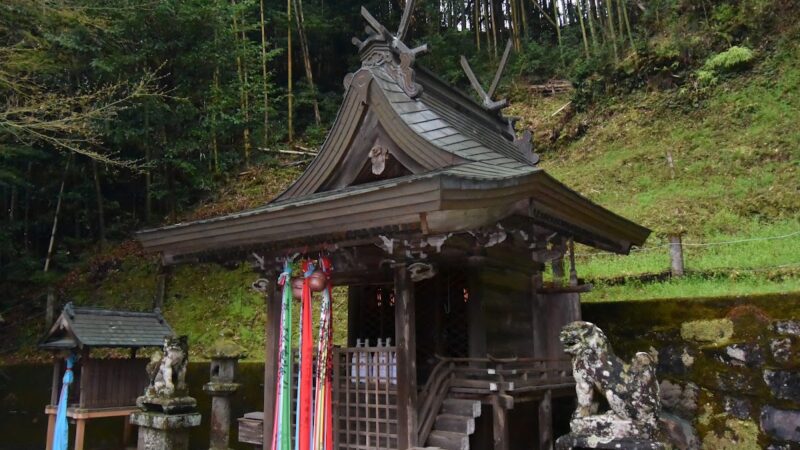
As you proceed along the approach to the shrine, the shrine building, surrounded by ancient trees, comes into view. Its appearance, harmonizing with the surrounding natural environment, conveys the solemnity of a place of worship that has continued since ancient times. ### Main Facilities
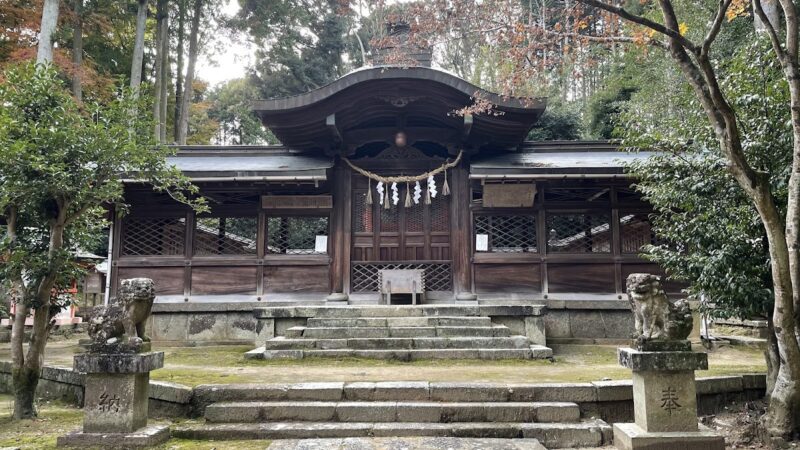
- Main Hall: A Kyoto Prefecture Registered Cultural Property, built in 1612 (Keicho 17).
- Worship Hall: A place where worshippers offer prayers.
- Shrine Office: Offers Goshuin (temple/shrine seals), etc. (However, staff may not always be present, so please check beforehand.)
Festivals and Annual Events of Shuchi Shrine
Shuchi Shrine holds the following major festivals throughout the year:
July: Gion Festival
As a shrine dedicated to Gozu Tenno, the Gion Festival is held to pray for the eradication of disease. While the scale differs from the Gion Festival of Yasaka Shrine in Kyoto, it is an important local festival that has been passed down through generations.
October: Annual Festival
The autumn annual festival is the most important annual event at Shuchi Shrine. A festival is held to pray for a bountiful harvest and peace in the region.
Access to Shuchi Shrine | The Path to the Mountain Shrine
Location
Address: Tenno-Takagamine, Kyotanabe City, Kyoto Prefecture
Access by Public Transportation
Nearest Station: Kintetsu Kyoto Line, “Shin-Tanabe Station”
- Approximately 6 kilometers southwest of Shin-Tanabe Station
- Taking a taxi from the station is convenient (approximately 15 minutes)
- Bus services are limited, so please check in advance.
Access by Car and Parking
Access to Shuchi Shrine by car is convenient, but caution is advised.
Parking:
- Parking is available at the shrine (however, the number of spaces is limited).
- The Tenno Community Center parking lot is also available.
Notes on Access:
- The road to the shrine is very narrow (judging from the size of a light truck).
- There is a dead end at a private house after passing the signpost, requiring you to back up.
- Visiting in a large vehicle is difficult.
- If you are not confident in your driving skills, we recommend accessing the shrine on foot from the Tenno Community Center parking lot.
The road is narrow, and there are places where it is difficult to pass oncoming vehicles, so please drive with caution. First-time visitors are advised to check road conditions in advance using a map app.
Tourist Spots Around Shuchi Shrine | Highlights of Kyotanabe City
When visiting Shuchi Shrine, visiting the surrounding tourist spots will make your trip more fulfilling.
Ikkyu-ji Temple (Shuon-an)
A temple associated with Zen Master Ikkyu, and a representative tourist spot in Kyotanabe City. Its beautiful gardens and historical buildings are highlights.
Kannonji Temple (Fugenji Temple)
An ancient temple housing the National Treasure, the Eleven-Headed Kannon Standing Statue. Known as a masterpiece of Heian period Buddhist sculpture.
Gyokuro no Sato (Gyokuro Village)
Kyotanabe City is also known as a production area for Uji tea, allowing visitors to experience tea plantations and tea culture.
Tsutsuki Palace Ruins (Traditional Site)
A historical site believed to be the site of Emperor Keitai’s palace, recommended for those interested in ancient history.
Points and Ways to Enjoy Visiting Shuchi Shrine
Etiquette for Visiting
As this is a quiet shrine nestled in the mountains, please visit with a solemn heart. The shrine grounds are surrounded by deep trees, offering a serene and natural experience.
About Goshuin (Shrine Seals)
At Shuchi Shrine, you can receive goshuin inscribed with names such as “Gozu Tenno” (Ox-Headed Heavenly King). However, since the shrine office is not always open, it is recommended to contact them in advance if you want to be sure to receive a goshuin.
Photography Tips
- Momoyama-style decorations on the main hall (such as the carvings on the brackets)
- The atmosphere of the shrine grounds, enveloped in deep groves of trees
- Ancient trees along the approach to the shrine
When photographing cultural properties, please be considerate of their preservation, such as refraining from using flash photography.
Best Time to Visit
- Spring: The fresh greenery is beautiful, making for a refreshing visit.
- Summer: The Gion Festival in July creates a special atmosphere.
- Autumn: The autumn leaves color the shrine grounds, creating a beautiful landscape.
- Winter: The tranquil atmosphere deepens even further.
As the shrine is located in the mountains, there is a possibility of snow and ice in winter. Please check the weather before visiting.
The Status of Shuchi Shrine as a Shikinaisha
Shuchi Shrine is a Shikinaisha (minor shrine) listed in the Engishiki Jinmyocho (a list of shrines compiled in the Heian period). It is also considered a candidate for the “Tenjin Shrine.”
A Shikinaisha is a shrine listed in the Engishiki, a compilation of laws and regulations compiled in 927 AD. These shrines were officially recognized by the imperial court at the time and held a high status. Several Shikinaisha are listed in Tsuzuki District, Yamashiro Province, and Shuchi Shrine is one of them, indicating its importance from ancient times.
Summary | The Charm of Shuchi Shrine, Where History and Nature Harmonize
Shuchi Shrine is a venerable ancient shrine said to have been founded during the reign of Emperor Nintoku, and is considered the origin of Yasaka Shrine. Located in the mountains at an altitude of approximately 300 meters, the shrine grounds, enveloped in deep groves of trees, exude a sacred and serene atmosphere.
The main hall, built in 1612, is designated as a Kyoto Prefecture Registered Cultural Property, and its ornate decorations characteristic of the Momoyama period are a highlight. Furthermore, the wooden standing statue of Gozu Tenno from the late Heian period is also a Kyoto Prefecture Designated Cultural Property, a valuable relic of the Gozu Tenno faith.
While access requires some caution, it offers a tranquil and serene experience of worship, far removed from the mundane world. This historically significant shrine is a must-visit when in Kyotanabe City.
Nearby, other tourist attractions such as Ikkyu-ji Temple and Kannon-ji Temple are scattered, allowing you to explore Kyotanabe City’s history and culture more deeply by visiting them together. Why not visit Shuchi Shrine with a different theme in mind, such as tracing the roots of Gion faith, visiting Shikinaisha shrines, or exploring ancient history?