Funai Shrine (Nantan City, Kyoto Prefecture) Complete Guide | History, Deities, and Access Information
Funai Shrine (officially known as Funai Jinja), located in Funaeda, Yagi-cho, Nantan City, Kyoto Prefecture, is a venerable shrine with over a thousand years of history, listed in the Engishiki Jinmyocho (a list of shrines compiled during the Heian period). Formerly a village shrine, it remains a center of local faith, welcoming many worshippers.
This article comprehensively explains everything you need to know before visiting Funai Shrine, including its history, enshrined deities, highlights within the grounds, major festivals, and access information.
Basic Information about Funai Shrine
Location: 51 Sainoue, Funaeda, Yagi-cho, Nantan City, Kyoto Prefecture
Shrine Rank: Shikinaisha (Funai District, Tanba Province), Former Village Shrine
Divine Emblem: Tachibana (mandarin orange)
Main Deities: Sumiyoshi Three Gods (Sokotsutsuo-no-Mikoto, Nakatsutsuo-no-Mikoto, Omotsutsuo-no-Mikoto)
Funai Shrine is located approximately 5 km north of JR Yagi Station. The area where it is situated is called “Sainoue.” The shrine stands in a quiet environment on the banks of the Oi River and is affectionately known as “Funae’s tutelary shrine” by local residents.
History of Funai Shrine
Founding and Ancient History
While there are no clear records of the founding date of Funai Shrine, it is listed as “Funai Shrine, Funai District, Tanba Province” in the *Engishiki Jinmyocho*, compiled in the 5th year of the Engi era (927 AD) during the mid-Heian period. Therefore, it is believed to have existed at least as early as the beginning of the Heian period.
A Shikinaisha is a shrine listed in the *Engishiki* Jinmyocho, signifying a high-ranking shrine officially recognized by the imperial court at the time. Several Shikinaisha existed in Funai District of Tanba Province, but Funai Shrine was positioned as an important shrine bearing the district’s name.
Relationship with Funai District
Funai District was a district formerly belonging to Tanba Province, encompassing parts of present-day Nantan City and Kyotanba Town. There are various theories regarding the origin of the district’s name, but the most likely explanation is that it was named after “boat” due to the thriving water transport on the Oi River (Katsura River).
Funai Shrine, bearing the name of Funai County, is presumed to have played a central role as the guardian shrine of the county in ancient times. From ancient to medieval times, it attracted the faith of local residents as a place to pray for regional development, agriculture, and the safety of water transport.
Transition from Medieval to Early Modern Period
During the Sengoku period of the medieval era, the Tanba region was repeatedly embroiled in warfare, but Funai Shrine survived as the local tutelary shrine. During the Edo period, it was the tutelary deity of Funaeda Village, attracting the faith of the villagers and playing a central role in the village’s festivals.
With the Meiji Restoration’s separation of Shinto and Buddhism, shrines throughout Japan were reorganized under a shrine ranking system. Funai Shrine was ranked as a Gosha (village shrine) in 1873 (Meiji 6), establishing its position as a major local shrine.
Progress Since the Modern Era
After the end of World War II in 1945 (Showa 20), the shrine ranking system was abolished, but Funai Shrine continues to attract unwavering faith as the local tutelary shrine. In 2006, Yagi Town merged to become Nantan City, but Funai Shrine continues to serve as the guardian shrine of Funaeda, Yagi Town, Nantan City, and has played a vital role as a spiritual pillar of the community to this day.
Deities and Divine Virtues
About the Sumiyoshi Three Gods
The main deities enshrined at Funai Shrine are the Sumiyoshi Three Gods. The Sumiyoshi Three Gods refer to the following three deities:
Sokotsutsu-no-Mikoto
Nakatsutsu-no-Mikoto
Uwatsutsu-no-Mikoto
These gods are said to have been born from the sea when Izanagi-no-Mikoto performed a purification ritual, according to the myths of the Kojiki and Nihon Shoki. “Tsutsu” means “star,” and they are also interpreted as the deification of stars that serve as navigational guides.
The Relationship Between Sumiyoshi-jin and Funai Shrine
Sumiyoshi-jin is generally known as the god of the sea and navigation, but it is interesting to consider why Funai Shrine, located inland, enshrines the three Sumiyoshi deities.
One interpretation is that in ancient times, when water transport on the Oi River (Katsura River) was thriving, Sumiyoshi-jin was invited to pray for the safety of river transportation. The Oi River was an important waterway connecting Kyoto and Tanba, and the safe navigation of ships was a crucial issue for the regional economy.
Furthermore, since Sumiyoshi-jin also has aspects as the god of waka poetry and agriculture, it is possible that they were also revered as an object of cultural and agricultural faith.
Divine Virtues
The divine virtues of Funai Shrine include the following:
- Safe Navigation and Traffic Safety: The inherent divine virtue of Sumiyoshi-sama
- Abundant Harvest and Business Prosperity: Protection of local industrial development
- Exorcism and Good Fortune: Power to ward off and purify from calamities
- Improvement in Waka Poetry and Academic Achievement: The cultural aspect of Sumiyoshi-sama
Highlights of the Shrine Grounds
Main Hall and Worship Hall
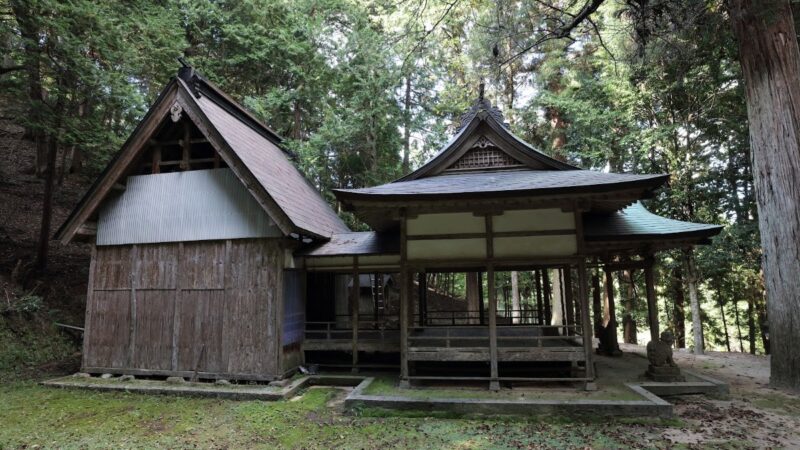
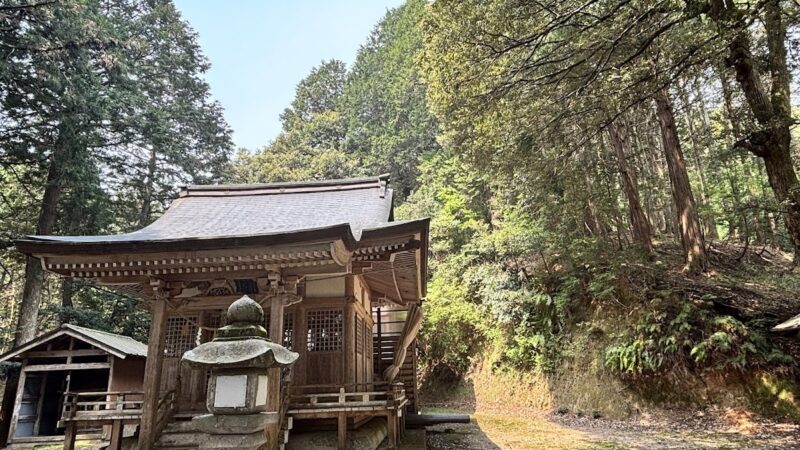
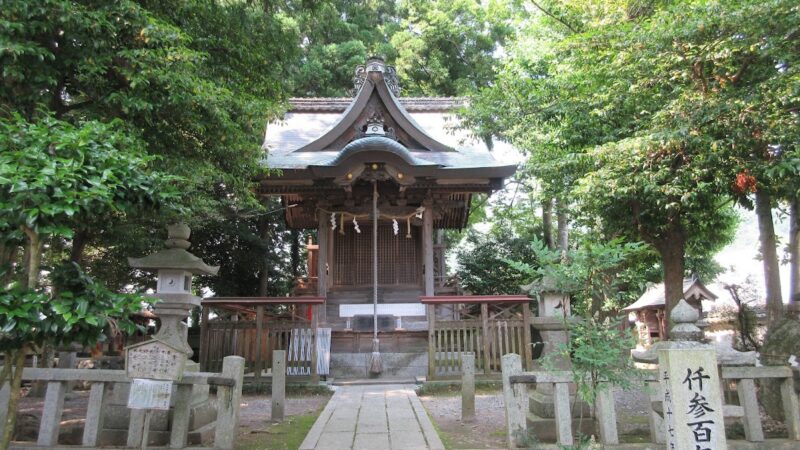
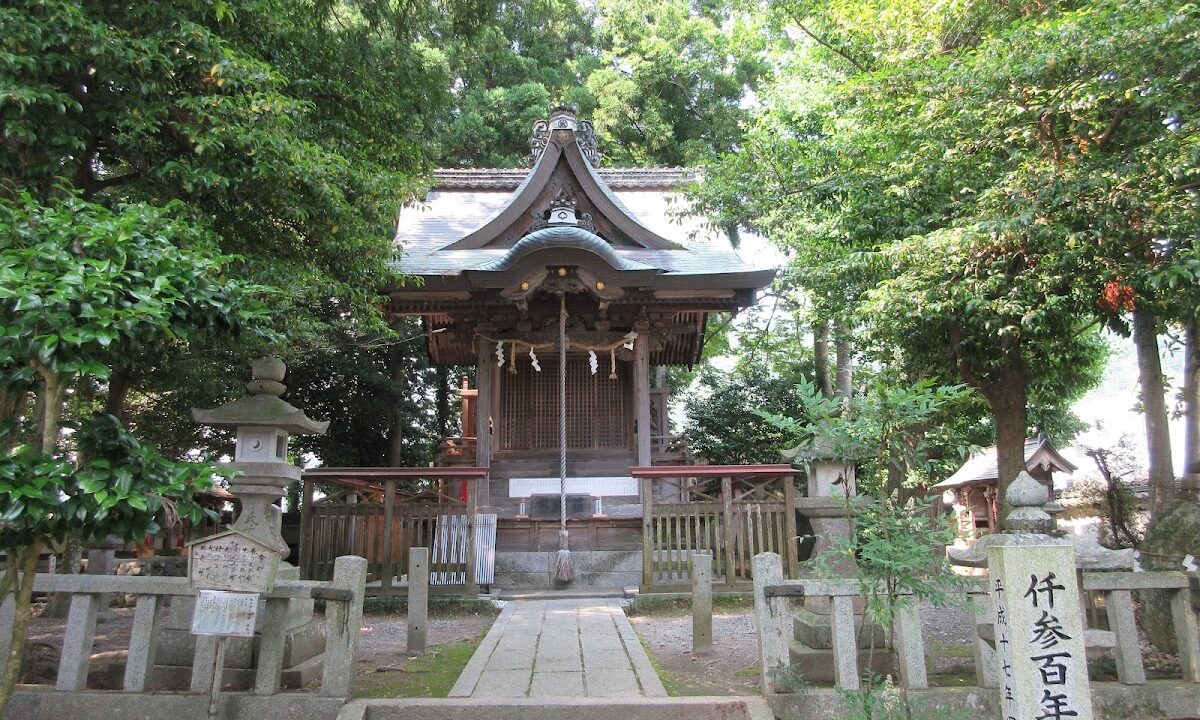
The main hall of Funai Shrine maintains the traditional style of shrine architecture. The layout, from the worship hall to the main hall, allows worshippers to gradually approach the sacred space.
The shrine’s crest, the “Tachibana” (mandarin orange), is a plant that has been considered sacred since ancient times and is a symbol of immortality. The Tachibana crest can be seen throughout the shrine buildings, indicating the status of Funai Shrine.
Shrine Grove and Natural Environment
The shrine grounds are surrounded by a lush shrine grove, and ancient trees create a solemn atmosphere befitting a sacred area. Especially during the seasons of fresh greenery in spring and vibrant autumn foliage, you can enjoy a landscape where the beauty of nature and the tranquility of the shrine harmonize.
As the place name Sainoue suggests, Funai Shrine is located on a small hill, and from the shrine grounds you can enjoy views of the surrounding rural landscape.
Stone Sculptures and Cultural Assets
Within the shrine grounds are stone sculptures such as stone lanterns and guardian lion-dogs, donated from the Edo period to the modern era. These are valuable cultural assets that tell the story of the region’s religious history.
Main Festivals and Annual Events
Funai Shrine holds various festivals throughout the year.
Annual Festival (Autumn Grand Festival)
The annual festival, held every autumn, is the most important festival at Funai Shrine. Local residents participate in a procession of the portable shrine and offerings. It is a traditional festival that continues to be celebrated today, expressing gratitude for a bountiful harvest and praying for the prosperity of the region.
Spring Festival
In spring, a spring festival is held to pray for a bountiful harvest. In agricultural regions, the spring festival is an important event to report the start of the year’s farming work to the gods and pray for a good harvest.
Monthly Festival
At the monthly festival, prayers are offered for the safety and prosperity of parishioners and worshippers. It is an opportunity for local residents to visit the shrine regularly and deepen their connection with it.
Access to Funai Shrine
Access by Public Transportation
Nearest Station: JR San’in Main Line (Sagano Line) “Yagi Station”
Funai Shrine is approximately 5km from Yagi Station.
Access Methods:
- Walk east from Yagi Station.
- Cross the Ozeki Bridge and the Ozeki River.
- Turn left onto National Route 26 (Kyoto Prefectural Route 26) and head north.
- Proceed to Sainoue in the Funaeda area.
Walking takes approximately 60-70 minutes. Consider taking a taxi.
Access by Car
If using the Kyoto Jukan Expressway:
- Approximately 10 minutes from “Yagi Higashi IC” or “Yagi Nishi IC”
From National Route 9:
- Via Yagi town center to National Route 26
Regarding parking, there is a space for visitors near the shrine grounds, but it can get crowded during festivals, so it is recommended to visit with plenty of time to spare.
Nearby Tourist Attractions
When visiting Funai Shrine, you can also visit other tourist attractions around Nantan City.
Miyama Thatched Village: A village preserving the original landscape of Japan with traditional thatched-roof houses (approximately 40 minutes by car from Funai Shrine)
Rurikei Gorge: A spot where you can enjoy the beauty of a gorge designated as a Kyoto Prefectural Natural Park
Yagi Castle Ruins: The ruins of a mountain castle from the Sengoku period, recommended for history buffs
Manners and Etiquette for Visiting Shrines
Etiquette for Visiting Shrines
The basic etiquette for visiting a shrine is as follows:
- When passing through the torii gate: Bow before entering the shrine grounds
- Purifying at the water basin: Purify your left hand, right hand, and mouth in that order
- Worship at the main hall: Two bows, two claps, one bow (two bows, two claps, one bow)
Attire for Visiting Shrines
There are no specific dress code requirements, but please be mindful that it is a sacred place and dress in clean and respectful attire.
Regarding Photography
Photography is generally permitted within the shrine grounds, but there are areas where photography is restricted, such as inside the main hall. If unsure, please check with the shrine office.
Funai Shrine’s Connection to the Community
Role as a Local Guardian Deity
Funai Shrine serves as the local guardian deity for the Funaeda district and surrounding areas, acting as a spiritual pillar for the community. Through festivals, intergenerational exchanges are fostered, strengthening community bonds.
Cultural Value
In addition to its historical value as a Shikinaisha (a shrine listed in the Engishiki), Funai Shrine is also important as a local cultural asset. The stone structures remaining on the grounds and the traditions of the festivals are preserved and passed down as valuable cultural heritage that tells the history of Nantan City.
Significance in the Modern Era
In rural areas facing population decline and depopulation, shrines are becoming increasingly important as the core of regional identity. Funai Shrine, while preserving tradition, is also seeking new roles as an entity that resonates with the modern community.
Shrines Listed in the Engishiki and Historical Background of Funai District
List of Shrines Listed in the Engishiki in Funai District
The Engishiki Jinmyocho (Register of Shrines in the Engi Era) lists several shrines in Funai District, including Funai Shrine. These shrines played important roles in their respective regions as centers of faith in ancient Tanba Province.
Tanba Province and Funai District
Tanba Province refers to the area from central Kyoto Prefecture to eastern Hyogo Prefecture, and played an important role as a supply center for goods to Kyoto from ancient times. Funai District, in particular, developed as a transportation hub utilizing the water transport of the Oi River.
Ancient Faith and Shrines
In ancient times, shrines were not merely religious facilities, but also centers of local politics, economy, and culture. Being listed as a Engishiki shrine indicates that the region had a relationship with the imperial court and had achieved a certain level of social development.
Ancient Faith and Shrines
Current Status and Challenges of Funai Shrine Research
Limitations of Historical Sources
The number of ancient documents and historical sources concerning Funai Shrine is limited, leaving many questions unanswered regarding its founding and detailed medieval history. Further research may reveal new facts.
The Need for Archaeological Investigation
Archaeological investigations within and around the shrine grounds have not been sufficiently conducted. Excavation could uncover ancient ritual sites and artifacts, potentially leading to a more detailed understanding of Funai Shrine’s history.
Positioning in Regional History Research
Research on Funai Shrine holds significant importance in the study of Nantan City’s regional history, and furthermore, in the study of the ancient history of Tanba Province. Unraveling the history of a shrine with the status of a Shikinaisha (a shrine listed in the Engishiki) provides valuable clues to understanding the realities of ancient local society.
Summary: The Charm and Value of Visiting Funai Shrine
Funai Shrine, a Shikinaisha with over a thousand years of history, is a valuable cultural heritage site in Nantan City, Kyoto Prefecture. As a historically significant shrine dedicated to the three Sumiyoshi deities, Funai Shrine has continuously attracted the faith of the local community from ancient times to the present day.
Nestled in a quiet rural area, Funai Shrine is a place worth visiting, offering a peaceful escape from the hustle and bustle of the city and a place to feel its ancient history. When visiting Nantan City, be sure to stop by.
Through shrine visits, you can experience traditional Japanese culture and the history of the region. The faith and traditions that Funai Shrine has preserved are a valuable spiritual asset for us living in the modern age.
References
- “Engishiki Jinmyocho” (List of Shrines in the Engi Era)
- “Kyoto Prefecture Place Names” (Heibonsha)
- “Shikinaisha Research Report”
- “Cultural Properties of Nantan City” (Nantan City Board of Education, ed.)
- “Kyoto Prefecture Shrine Records” (Kyoto Prefecture Shrine Association, ed.)
*The information in this article is current as of the time of writing. Please check the latest information before visiting. It is recommended to check the dates of festivals and visiting hours in advance.