Izushiya Shrine (Kyoto Prefecture) Complete Guide | History, Deities, Benefits, and Access Information
Izushiya Shrine, located in Kameoka City, Kyoto Prefecture, is a shrine boasting a long history as an ancient shrine in the Tanba region. It is a Shikinaisha (a shrine listed in the Engishiki Jinmyocho, a historical record of shrines) and has been deeply revered by the local people. This article provides a detailed introduction to Izushiya Shrine, including its history, deities, benefits, highlights of the grounds, annual festivals, and access information.
What is Izushiya Shrine?
Izushiya Shrine is a shrine located in Sogabe-cho, Kameoka City, Kyoto Prefecture. It is a historically significant shrine listed in the Engishiki Jinmyocho as a Shikinaisha of Kuwata District, Tanba Province. It is affectionately known as “Shimi-san” by locals, and is sometimes called “Izushiya” or “Izushiya.”
The exact founding date of the shrine is unclear, but historical documents confirm its existence before the Heian period. As one of the centers of ancient religious belief in the Tanba region, it has been revered as a guardian deity of agriculture and the local area.
Origin of the Shrine Name
There are several theories regarding the origin of the shrine name “Izushiya,” but the most likely theory is that it derives from an ancient place name or clan name. “Izu” is said to mean “origin,” and “shiya” is said to represent a sacred place or a place where gods reside. Some researchers also point to a connection with ancient powerful clans who pioneered this region.
Deities and Benefits
Main Deity
The main deity of Izushiya Shrine is Izushiya-no-kami. This deity has been worshipped since ancient times as a guardian deity of the region and is considered to have characteristics of an agricultural god and a land god.
Some texts point to a connection with Ōkuninushi-no-Mikoto and Kotoshironushi-no-Mikoto, but Izushimi-no-Kami is considered to have a strong character as a regional deity unique to the Tanba region.
Benefits
The main benefits that can be received at Izushimi Shrine are as follows:
- Abundant Harvest and Agricultural Prosperity: Worshipped as an agricultural deity since ancient times, many worshippers visit to pray for a bountiful harvest.
- Family Safety: As a guardian deity of the region, it watches over the safety and prosperity of families.
- Protection from Evil and Disaster: Believed to ward off evil spirits and protect from disaster.
- Business Prosperity: Attracts worship from business owners praying for the development of local industries.
- Regional Peace and Tranquility: Revered as a deity that protects the peace and development of the entire settlement.
History of Izushimi Shrine
From Ancient Times to the Heian Period
The origins of Izushimi Shrine date back to ancient times. The fact that it is listed as “Izushimi Shrine, Kuwata District, Tanba Province” in the *Engishiki Jinmyocho* (completed in 927) indicates that it was already recognized as an important shrine at least by the early Heian period.
Shrines listed in the *Engishiki Jinmyocho* are called “Shikinaisha,” and are high-ranking shrines that received special treatment from the imperial court. While there were many Shikinaisha in Tanba Province, Izushimi Shrine was one of the central shrines in the region.
Changes in the Medieval Period
In the medieval period, the rise of the samurai class and warfare changed the situation of shrines. The Kameoka region, being close to Kyoto, was often caught in the crossfire, but the shrine was protected by the fervent faith of the local residents.
During the Sengoku period, Akechi Mitsuhide pacified Tanba and built a castle in Kameoka (then known as Kameyama). Detailed records of the shrine during this period are not available, but it is believed that it received protection from influential local figures and feudal lords.
From Early Modern to Modern Period
During the Edo period, the area enjoyed a period of stability as part of the Tanba-Kameyama Domain. Along with the development of the regional economy centered on agriculture, the shrine continued to attract the faith of local residents as a place to pray for abundant harvests.
Despite being affected by the Meiji-era separation of Shinto and Buddhism and the policy of consolidating shrines, it survived as the local tutelary shrine and continues to this day. Even in the modern era, it remains a central hub of the local community, deeply connected to residents through festivals and annual events.
Highlights of the Shrine Grounds
Main Hall and Worship Hall
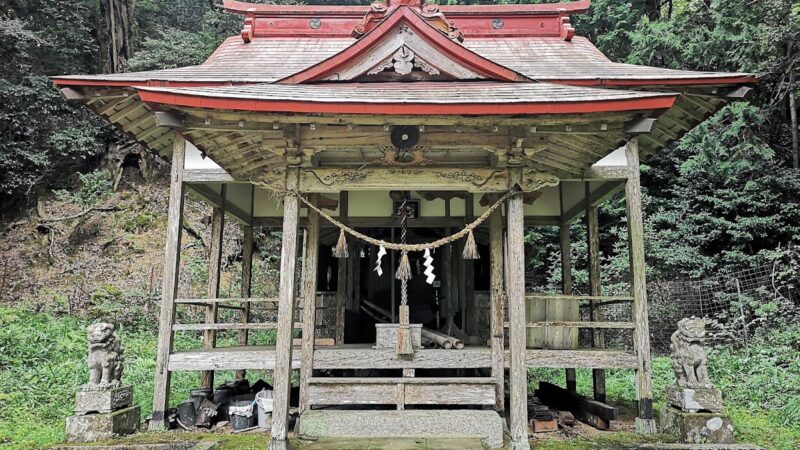
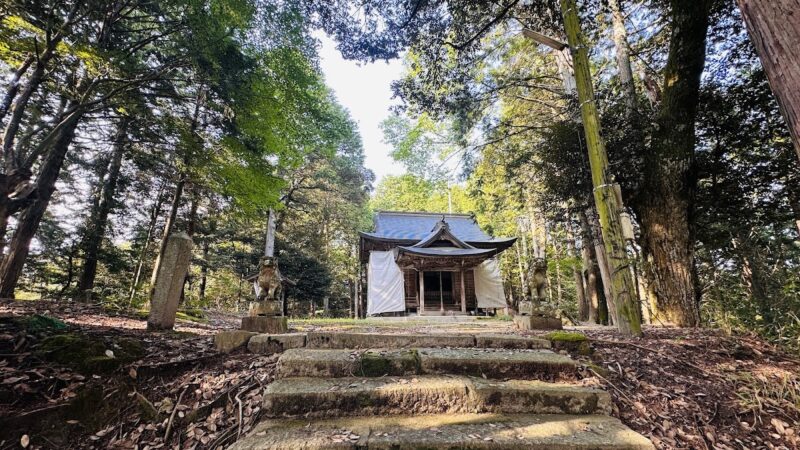
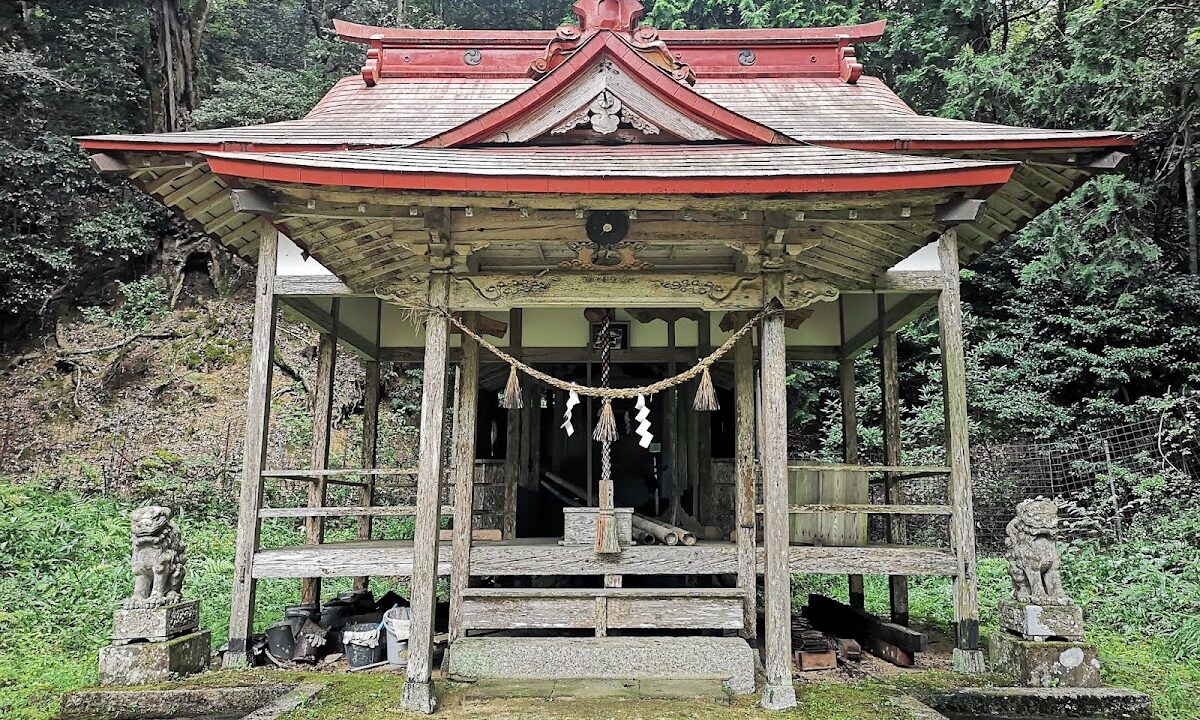
The main hall of Izushimi Shrine is a building that preserves the traditional style of shrine architecture. Although not large in scale, it is meticulously maintained, reflecting the deep faith of the local people. The worship hall is a place where worshippers offer prayers, and many people visit daily.
Nature of the Shrine Grounds
The shrine grounds are lush with ancient trees and shrubs, creating a tranquil atmosphere. Especially during the fresh greenery of spring and the vibrant autumn foliage, you can enjoy a landscape where the beauty of nature and a sacred atmosphere harmonize.
Komainu (Guardian Dogs) and Stone Sculptures
The shrine grounds are dotted with stone sculptures that evoke a sense of history. The guardian dogs and stone lanterns are valuable cultural assets that convey the faith of past donors.
Shrine Office and Amulet Shop
This is where you can receive Goshuin (shrine stamps) and amulets. However, staff may not always be present, so it is recommended to check in advance if you wish to receive a Goshuin.
Annual Festivals and Annual Festivals
Izu-Shimi Shrine holds various festivals throughout the year.
Annual Festival (Autumn Festival)
The annual festival, held every autumn, is the most important festival at the shrine. It is a time to give thanks for a bountiful harvest and pray for a good harvest in the coming year. Local residents participate in large numbers, and sometimes portable shrines and Shinto rituals are performed. Specific dates may vary from year to year, so it is recommended to check before visiting. ### New Year’s Festival and First Shrine Visit of the Year
A New Year’s festival is held to welcome the new year. Local residents visit the shrine for their first shrine visit of the year, praying for safety and well-being for their families throughout the year.
Monthly Festival
This is a regular monthly festival where daily gratitude and prayers are offered.
Etiquette and Manners for Visiting a Shrine
Basic Etiquette for Visiting a Shrine
- Bow before passing through the torii gate: Bow as a sign of respect before entering the sacred area.
- Walk along the edge of the path: The center is considered the path for the gods.
- Purify yourself at the water basin: Cleanse your hands and mouth before praying.
- Etiquette in front of the main hall: The basic etiquette is “two bows, two claps, one bow.”
- Bow deeply twice.
- Clap your hands twice.
- Pray sincerely.
- Finally, bow deeply once.
Mindset When Visiting a Shrine
A shrine is a sacred place. Please observe the following points when visiting the shrine:
- Visit quietly
- Keep the shrine grounds clean
- Take photographs only in designated areas
- Refrain from talking
- Be considerate of other visitors
Access Information
Location
Address: Sogabe-cho, Kameoka City, Kyoto Prefecture (Please confirm the exact address in advance)
Access by Public Transportation
By JR:
- Get off at Kameoka Station on the JR Sanin Main Line (Sagano Line)
- Approximately 15-20 minutes by bus or taxi from the station
- Approximately 20 minutes by rapid train from Kyoto Station to Kameoka Station
By Bus:
- Take a Keihan Kyoto Kotsu bus towards Sogabe from Kameoka Station
- A few minutes’ walk from the nearest bus stop
Access by Car
From Kyoto City:
- Take National Route 9 towards Kameoka
- Travel Time: Approximately 40-50 minutes (depending on traffic conditions)
From Osaka:
- Via Meishin Expressway and Kyoto Jukan Expressway
- Approximately 15 minutes from Kameoka IC
Parking:
There may be parking spaces on the shrine grounds or nearby, but the number is limited. On days when congestion is expected, such as during festivals, we recommend using public transportation.
Notes on Access
- The area around the shrine is a residential and agricultural area. Please be mindful of noise and illegal parking.
- If using a car navigation system, please confirm the exact address and phone number in advance.
- In winter, roads may be icy, so please drive with caution.
Nearby Tourist Attractions
When visiting Izusumi Shrine, you can also visit other tourist attractions in Kameoka City.
Izumo Grand Shrine
A representative ancient shrine of Kameoka City, famous as a god of matchmaking. It is approximately 15 minutes by car from Izusumi Shrine.
Hozugawa River Boat Trip
This is a sightseeing activity where you can travel down the approximately 16km Hozugawa River from Kameoka to Arashiyama by boat. You can enjoy the beautiful scenery of each season.
Kameoka Castle Ruins
These are the ruins of Kameoka Castle, built by Akechi Mitsuhide. Currently, some of the stone walls remain, allowing you to feel the history.
Torokko Train (Sagano Scenic Railway)
This is a sightseeing train that runs along the Hozugawa River. Kameoka Station and Torokko Kameoka Station are adjacent to each other.
About Goshuin (Shrine Seals)
Goshuin may be available at Izu-shimi Shrine. However, as it is a small shrine, the office may not always be open.
Points to Note When Receiving a Goshuin (Shrine Stamp)
- We recommend checking the available dates and times in advance.
- Bring your Goshuincho (stamp book).
- Prepare a donation (usually around 300-500 yen).
- It is considered good manners to receive the stamp after praying.
- Be mindful of polite language and demeanor.
Connection with the Community
Izushimi Shrine is not merely a tourist destination; it plays a vital role as the center of the local community.
Role as a Guardian Deity
For local residents, Izushimi Shrine is an integral part of their lives as their guardian deity. It is a place they visit at significant life events, such as their first shrine visit to pray for their child’s healthy growth, Shichi-Go-San (a traditional rite of passage for children), and exorcisms for those in unlucky years.
Center of Local Events
Annual events such as the Autumn Festival are valuable opportunities for local residents to gather together. These events foster intergenerational interaction and deepen community bonds.
Preserving Traditional Culture
Shrine festivals and rituals play an important role in passing on local traditional culture to the next generation. Children naturally learn about local history and culture by participating in festivals.
Attire and Items to Bring When Visiting
Attire
No special attire is required, but please consider the following:
- Dress neatly and cleanly
- Avoid revealing clothing
- Choose comfortable shoes (there may be gravel paths on the shrine grounds)
- Dress appropriately for the season (cold or hot)
Items to Bring
- Goshuincho (stamp book) (if you wish to receive a Goshuin stamp)
- Hatsuhoryo (offering money, Goshuin stamp fee, etc.)
- Camera (only in areas where photography is permitted)
- Drinks (especially in summer)
- Rain gear (depending on the weather)
The Charm of Izu Shimi Shrine
A Tranquil Atmosphere
Because it is a simple shrine that has not been commercialized for tourism, you can visit in a quiet and peaceful atmosphere. It’s the perfect place to escape the hustle and bustle and find peace of mind.
Faith Rooted in Local Life
This shrine is supported by the fervent faith of the local people, and its appearance evokes a sense of traditional Japanese faith.
The Weight of History
With a long history as a Shikinaisha (a shrine listed in the Engishiki, an ancient Japanese legal text), it has been a place of worship since the Heian period, offering a sense of historical romance.
Nature in Every Season
The nature within the shrine grounds is beautiful in each of the four seasons, showing different expressions depending on when you visit.
Best Time to Visit
Izushiya Shrine is open for worship throughout the year, but each season has its own unique characteristics.
Spring (March-May)
The fresh greenery is beautiful, and the weather is pleasant. Many worshippers visit to pray for a new beginning at the start of the new fiscal year.
Summer (June-August)
The greenery becomes denser, and you can forget the heat in the cool grounds. However, heat and insect repellent measures are necessary.
Autumn (September – November)
This is the season for the annual festival and the busiest time of year. The autumn foliage is beautiful, making it the perfect season for visiting the shrine.
Winter (December – February)
This is the time for Hatsumode (first shrine visit of the year) and New Year’s festivals. You can offer thanks for the past year and prayers for the new year in a quiet and solemn atmosphere. Don’t forget to dress warmly.
Frequently Asked Questions
Q: Are there set visiting hours for Izu-Shimi Shrine?
A: While you can generally visit the shrine freely, the shrine office may have limited opening hours. If you wish to receive a Goshuin (shrine stamp) or other items, we recommend checking in advance.
Q: Is there parking available?
A: There may be parking spaces on the shrine grounds or nearby, but the number of spaces is limited. On days when crowds are expected, such as during festivals, we recommend using public transportation.
Q: Can I get a Goshuin? **
A: You may be able to receive a Goshuin (temple/shrine stamp), but since staff may not always be present, we recommend checking in advance.
Q: Is photography allowed?
A: Generally, photography is permitted on the shrine grounds, but please observe proper etiquette, such as refraining from taking photos inside the main hall or during Shinto rituals. If you are unsure, please check with shrine staff.
Q: Are amulets and talismans available?
A: The availability of these items is limited to the hours the shrine office is open. We recommend checking in advance.
Q: Is it accessible for wheelchair users?
A: This depends on the condition of the shrine grounds, so we recommend checking in advance. Please inquire individually regarding accessibility.
Summary
Izushiya Shrine is a historical Shikinaisha (shrine listed in the Engishiki) located in Kameoka City, Kyoto Prefecture. It has a long history dating back to the Heian period and has been deeply revered by the local people as their guardian deity.
This shrine is believed to offer blessings for a bountiful harvest, family safety, and protection from evil, allowing visitors to pray in a tranquil setting. Its charm lies in its unspoiled atmosphere, unspoiled by tourism, making it a valuable place to experience traditional Japanese faith.
When visiting Kameoka City, be sure to stop by Izushimi Shrine. It will be a memorable experience, allowing you to feel the weight of history and the warmth of the community.
Access is possible by public transport or car, but as it is a small shrine, it is recommended to check in advance if you wish to obtain a goshuin (shrine stamp) or other items. Please remember to be considerate of the local residents and observe proper etiquette during your visit.