Complete Guide to Issai Shrine (Kyoto Prefecture) | History, Deities, Access, and Goshuin Information
Issai Shrine, quietly nestled in Shimotoba, Fushimi Ward, Kyoto City, is a local guardian shrine hidden in the shadow of famous shrines like Fushimi Inari Taisha and Jonan-gu. Located in a residential area slightly removed from the bustling tourist center of Kyoto, this shrine has a long history and has been carefully preserved by the local people.
This article comprehensively introduces all the information you need to know before visiting Issai Shrine, including its history, enshrined deities, highlights of the grounds, access methods, and goshuin information.
Basic Information on Issai Shrine
Issai Shrine is located in Rokutanda-cho, Shimotoba, Fushimi Ward, Kyoto City, Kyoto Prefecture. Its official pronunciation is “Issai Jinja,” and it has long been revered as the local guardian shrine.
Location and Contact Information
Address: 5 Rokutanda-cho, Shimotoba, Fushimi-ku, Kyoto City, Kyoto Prefecture 612-8206
Nearest Stations:
- Approximately 15 minutes on foot from Fushimi-Momoyama Station on the Keihan Main Line
- Approximately 15 minutes on foot from Fushimi Station on the Kintetsu Kyoto Line
- Approximately 20 minutes on foot from Takeda Station on the Kintetsu Kyoto Line
The shrine grounds are located in a residential area and, despite their small size, serve as a center of faith for local residents.
Deities and Divine Virtues
The deities enshrined at Issai Shrine are the local guardian deities, but the specific names of the deities are preserved according to the local beliefs. Generally, as the guardian deities of the Shimotoba area, they are believed to bestow blessings such as peace and prosperity of the region, abundant harvests, and family safety.
The Shimotoba area of Fushimi-ku was once an agricultural area sandwiched between the Kamo River and the Katsura River, and a belief in gratitude for the blessings of water and land was deeply rooted there. Issai Shrine is deeply intertwined with the history of this region.
History and Origins of Issai Shrine
Historical Background of the Shimotoba Area
The name Shimotoba is a historical area that appears in documents dating back to the Heian period. It is believed to have been named “Shimotoba” because it is located in the lower reaches of the Kamo River. This area is located in southern Kyoto and flourished as a key point for water transport.
Fushimi has long been a crucial point for both land and water transportation, and after Toyotomi Hideyoshi built Fushimi Castle, it developed as a castle town. The Shimotoba area, as part of Fushimi, has a history of prosperity through agriculture and water transport.
Founding and Changes of Issai Shrine
Unfortunately, detailed records of the exact founding date of Issai Shrine do not exist. However, it is certain that it has been worshipped as the local guardian deity since ancient times, and it is thought to have already functioned as a center of local faith during the Edo period.
There are several theories about the origin of the unusual shrine name “Issai,” but one theory suggests it means “to grant all wishes” or “to ward off all calamities.” Another theory suggests it comes from the Buddhist term “Issai” (all, everything), reflecting a remnant of the syncretism of Shinto and Buddhism.
Even after the Meiji-era separation of Shinto and Buddhism, the shrine has been carefully preserved by the local community and continues to this day.
Highlights of the Shrine Grounds
Main Hall and Worship Hall
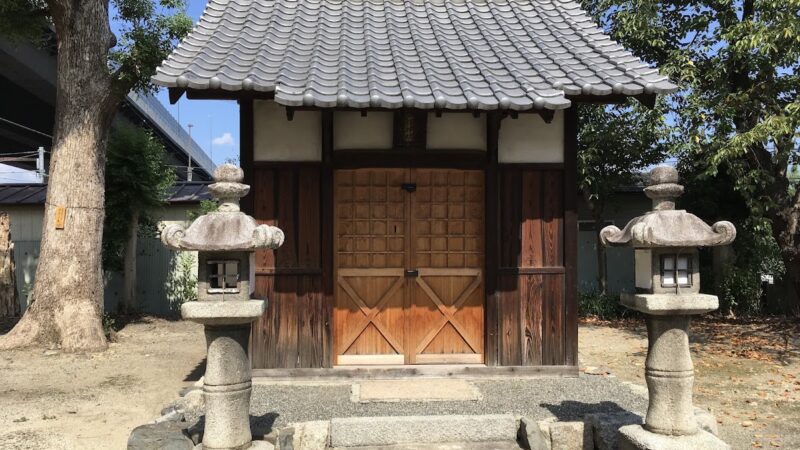
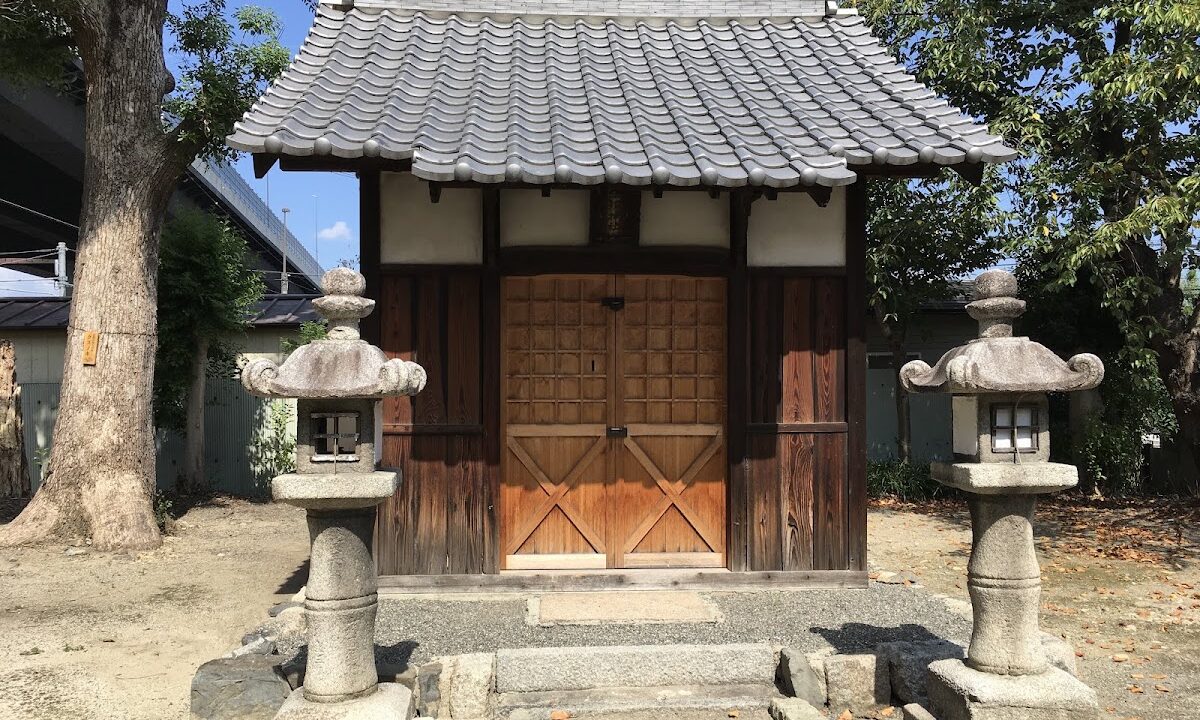
The grounds of Issai Shrine are small and located in a residential area, but are kept clean. The main hall is built in the traditional shrine architectural style and is carefully maintained by the local community.
A donation box is placed in front of the worship hall, allowing worshippers to quietly offer their prayers. Unlike large shrines, it is characterized by a calm atmosphere for worship.
Torii Gate and Approach
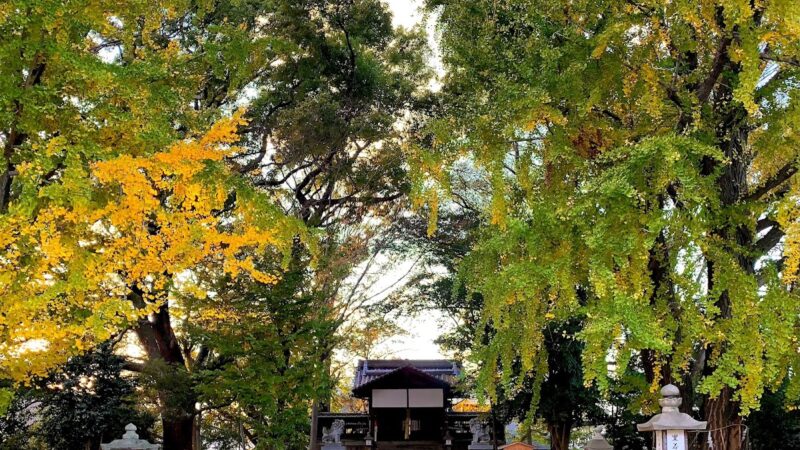
A torii gate stands at the entrance to the shrine grounds, and a short approach leads from there to the main hall. Despite being located in a residential area, passing through the torii gate evokes a serene atmosphere befitting a sacred place.
Shrine Grounds and Stone Monuments
Besides the main shrine building, the grounds contain stone monuments that tell the story of local faith. These are valuable historical materials that convey the history of the region and the faith of the parishioners.
How to Access Issai Shrine
Access by Train
There are several train stations near Issai Shrine, but all require walking.
Access from Keihan Main Line “Fushimi-Momoyama Station”
- Exit Fushimi-Momoyama Station and head southwest.
- Head south along National Route 24.
- Enter the Shimotoba area and proceed through the residential area.
- Arrive in approximately 15 minutes on foot.
Access from Kintetsu Kyoto Line “Fushimi Station”
- Exit Fushimi Station and head south.
- Pass through Otesuji Shopping Street and continue south.
- Proceed towards Shimotoba.
- Arrive in approximately 15 minutes on foot.
Access from Kintetsu Kyoto Line “Takeda Station”
- Exit Takeda Station and head west.
- Proceed towards the Shimotoba area.
- Arrive in approximately 20 minutes on foot.
Access by Bus
If using Kyoto City Buses, take a bus bound for Shimotoba, get off at the nearest bus stop, and arrive in a few minutes on foot. Since bus services are limited, it is recommended to check the timetable in advance. ### Access by Car and Parking
Issai Shrine is located in a residential area, so there is no dedicated parking lot. If you are visiting by car, we recommend using nearby coin-operated parking lots or public transportation.
Access from Major Roads
- Enter the Shimotoba area from National Route 24
- Approximately 15 minutes from the Meishin Expressway “Kyoto Minami IC”
Please be careful when driving, as some roads within the residential area are narrow.
Goshuin (Shrine Seal) Information
Regarding the Issai Shrine’s Issai Shrine is a small, local shrine, so it is unclear whether they always offer Goshuin. If you wish to receive a Goshuin, we recommend checking in advance.
Fushimi Ward in Kyoto City has many shrines famous for their Goshuin, such as Fushimi Inari Taisha, Jonan-gu, and Gokogu Shrine. Visiting these shrines along with your Fushimi stroll would be a good idea.
Nearby Goshuin Stamp Spots
Main shrines near Issai Shrine where you can obtain Goshuin stamps:
Fushimi Inari Taisha (approx. 10 minutes on foot or by car)
- The head shrine of approximately 30,000 Inari shrines nationwide
- A representative Kyoto shrine famous for its Senbon Torii (thousand torii gates)
- Multiple Goshuin stamps are available
Jonan-gu (approx. 15 minutes on foot or by car)
- Famous as a deity of protection against evil
- The beautiful garden “Rakusui-en” is also a highlight
- Seasonal limited-edition Goshuin stamps are also available
Gokogu Shrine (approx. 10 minutes on foot or by car)
- The tutelary deity of Fushimi
- Faithful as a deity of safe childbirth
- Popular for its beautiful Goshuin stamps
Annual Events and Festivals
Local Festivals
It is believed that various festivals are held throughout the year at Issai Shrine as the local guardian shrine. Due to its small size, large-scale festivals may not be held, but the faith of local residents continues.
Typical annual events at local shrines include:
New Year’s Day Festival (January 1st)
- A festival celebrating the New Year
Spring Festival (Spring)
- Prayers for a bountiful harvest
Summer Festival (Summer)
- Prayers for peace and tranquility in the community
Autumn Festival (Autumn)
- A festival expressing gratitude for the harvest
These may also be held.
First Shrine Visit of the Year and Shichi-Go-San
As a local shrine, some people visit for life-changing ceremonies such as the first shrine visit of the year and Shichi-Go-San. Its charm lies in the quiet atmosphere, without the crowds of large shrines.
Attractions in the Shimotoba Area
Misukomon Lock
A short walk south from Issai Shrine will take you to the Misukomon Lock, a nationally designated historical site. Built during the Meiji era, it is one of Japan’s oldest lock-type canals and a valuable legacy that speaks to the advanced civil engineering technology of the time. ### Fushimi’s Sake Breweries
Fushimi, also known as “Fushimizu,” is blessed with high-quality groundwater and is known as one of Japan’s leading sake-producing regions. Major sake breweries such as Gekkeikan, Kizakura, and Takara Shuzo have their headquarters and factories here, and visitors can enjoy brewery tours and tastings.
Fushimi Port Park
This park, stretching along the Uji River, retains the atmosphere of a former port town. It’s beautiful with cherry blossoms in spring and fresh greenery in summer, making it ideal for a stroll.
Manners and Points for Visiting Shrines
Basic Shrine Visit Etiquette
Even when visiting a shrine, please observe general shrine visit manners.
- Bow before the Torii Gate
- The Torii gate is the entrance to the sacred area. Bow before passing through the gate.
- Walk along the edge of the approach to the shrine.
- The center of the approach is considered the path for the gods.
- Purify yourself at the water basin.
- If there is a water basin, purify your hands and mouth.
- Worship at the main hall.
- Two bows, two claps, and one bow is the basic form.
- Gently place your offering in the offering box.
- Ring the bell if there is one.
- Bow deeply twice.
- Clap your hands twice.
- Offer your wishes and gratitude.
- Bow once at the end.
- Bow when leaving the shrine grounds.
- Turn around and bow before leaving the torii gate.
Regarding photography
Please be considerate of other worshippers when taking photographs on the shrine grounds. It is considered good manners to refrain from taking photographs inside the main hall. Since the shrine is adjacent to a residential area, please also be mindful of the privacy of nearby residents.
Suitable Time for Visiting
Issai Shrine is a small shrine, so there are no specific restrictions on visiting hours. However, early mornings and evenings are recommended for quieter visits. Since it is located in a residential area, please refrain from visiting at night.
Nearby Shrines and Temples
Fushimi Inari Taisha
Located approximately 2km northeast of Issai Shrine, it is the head shrine of the approximately 30,000 Inari shrines nationwide. It is world-famous for its thousands of torii gates and is a popular spot for foreign tourists. The entire Inari Mountain is considered sacred ground, and climbing to the summit offers panoramic views of Kyoto city.
Jonan-gu Shrine
Located approximately 2km southwest of Issai Shrine, it is a shrine revered as a deity of protection against evil. It was founded as a guardian deity of the south of the capital during the Heian period. It features a beautiful garden called “Rakusui-en,” where you can enjoy flowers throughout the seasons. The plum blossoms and camellias in spring and the autumn foliage are particularly magnificent.
Gokogu Shrine
Located approximately 1.5 km north of Issai Shrine, this shrine has long been revered as the tutelary deity of Fushimi. The “Gokosui” spring water flowing from the shrine grounds is known as pristine water and has been selected as one of the Ministry of the Environment’s “100 Famous Waters.” It is also famous as a deity of safe childbirth, attracting many pregnant women.
Fujimori Shrine
Located approximately 2 km east of Issai Shrine, this shrine is known as the deity of victory and horses. It is frequently visited by people involved in horse racing and horse racing fans, and becomes very crowded before major horse races. It is also famous as a spot for hydrangeas, with approximately 3500 hydrangea bushes blooming in June.
Fushimi Walking Model Course
We suggest a walking course in the Fushimi area, including Issai Shrine.
Half-Day Course (Approx. 3-4 hours)
Morning Start
- Fushimi Inari Taisha Shrine (60 minutes)
- Stroll through the Senbon Torii (thousand torii gates)
- If time permits, hike Mount Inari
- Lunch near Fushimi Momoyama Station (60 minutes)
- Enjoy local Fushimi sake and cuisine
- Issai Shrine (20 minutes)
- Visit the tranquil local shrine
- Jonan-gu Shrine (60 minutes)
- Pray for protection against evil
- Stroll through the Rakusui-en garden
Full-Day Course (Approx. 6-7 hours)
Morning
- Fushimi Inari Taisha Shrine (90 minutes)
- Thorough worship and a stroll through Mount Inari
- Gokogu Shrine (40 minutes)
- Receive the sacred water
- Admire the beautiful shrine buildings
Lunch
- Lunch on Fushimi’s Sake Brewery Street (90 minutes)
- Sake brewery tour
- Local Sake and Fushimi Cuisine
Afternoon
- Issai Shrine (20 mins)
- Visit the local guardian deity
- Jonan-gu Shrine (60 mins)
- Pray for protection against evil
- Stroll through Rakusui-en Garden
- Fushimi Port Park (40 mins)
- Stroll along the Uji River
- Visit the Misumi Lock Gate
Shrine Culture of Kyoto Prefecture
Characteristics of Kyoto Shrines
Kyoto Prefecture has approximately 1,800 shrines, making it one of the centers of Japanese shrine culture. Since the relocation of the capital to Heian-kyo, a diverse range of shrines exist, from prestigious shrines that attracted the faith of the imperial family and nobility to local guardian deities like Issai Shrine.
The Importance of Guardian Deity Worship
While attention tends to focus on famous shrines like Fushimi Inari Taisha and Kamigamo Shrine, local guardian deities like Issai Shrine are also important in supporting Kyoto’s shrine culture. Guardian deities are closely intertwined with the lives of local residents and have functioned as the center of the local community.
Even today, the custom of visiting local shrines for important life events such as New Year’s visits, Shichi-Go-San (a traditional rite of passage for children), and exorcisms remains, playing a role in maintaining community ties.
Remnants of Shinto-Buddhist Syncretism
As seen in the name “Issai” (meaning “all”) of Issai Shrine, Kyoto’s shrines retain strong traces of Shinto-Buddhist syncretism. Until the Meiji-era separation of Shinto and Buddhism, shrines and temples were closely intertwined.
Visitor Voices and Experiences
A Quiet Place of Worship
Visitors to Issai Shrine often comment, “Unlike famous shrines crowded with tourists, you can worship in peace,” and “You can feel the atmosphere of a place cherished by the local people.”
A Hidden Gem in Fushimi
Some people extend their trip a little to visit Issai Shrine when visiting Fushimi Inari Taisha or Jonan-gu Shrine. Comments include, “There’s the enjoyment of exploring hidden shrines in Fushimi,” and “There’s the joy of finding a shrine only known to locals.”
Summary: The Charm of Issai Shrine
Issai Shrine is a small local shrine located in Shimotoba, Fushimi Ward, Kyoto City. While it lacks the grandeur of Fushimi Inari Taisha, it is a valuable place that preserves a simple, community-based form of faith.
Points of Charm of Issai Shrine
- A Quiet Worship Environment
- A calm atmosphere away from the hustle and bustle of tourists
- Experiencing Local History
- A chance to connect with the history and culture of the Shimotoba area
- New Discoveries During a Stroll Through Fushimi
- Discover the charm of Fushimi beyond its famous shrines
- Understanding Local Deity Worship
- Gain an understanding of the foundations of Japanese shrine culture
- Combining with Surrounding Shrines
- Enjoy the fun of visiting the diverse shrines of Fushimi
When visiting Kyoto, why not visit local shrines like Issai Shrine, in addition to famous tourist spots? There, you’ll find the true face of Kyoto that you won’t find in tourist guidebooks.
In the historic Fushimi area, Issai Shrine quietly watches over the community. In its unpretentious presence, you can see the essence of Japanese shrine worship.