Iwato Ochiba Shrine (Kyoto Prefecture) Complete Guide | A Hidden Gem of Golden Carpets and Tales of Genji Legends
Iwato Ochiba Shrine is located in a quiet mountainous area of Kita Ward, Kyoto City, where the Kiyotaki River and Iwatani River merge. In autumn, the entire shrine grounds are covered with golden ginkgo leaves, creating a fantastical scene like a golden carpet. While it is a historical shrine with legends from The Tale of Genji, it has recently gained attention as a hidden gem that is not often crowded with tourists.
This article provides a detailed explanation of everything you need to know before visiting Iwato Ochiba Shrine, including its history, enshrined deities, highlights of the grounds, access methods, and information on Goshuin (shrine stamps).
What is Iwato Ochiba Shrine? | A Rare Shrine with Two Shrines in One Grounds
As its name suggests, Iwato Ochiba Shrine is a rare shrine with two shrines, “Iwato Shrine” and “Ochiba Shrine,” located within the same grounds. While the torii gate and worship hall are a single structure, the main shrine complex consists of two separate shrines, the Iwato Shrine and the Ochiba Shrine, each enshrining a different deity.
Located in Ono-Shimonochō, Kita-ku, Kyoto City, it has been revered by the local people as the tutelary deity of the former Ono-gō region. It is also known as a candidate for the Shikinaisha (shrines listed in the Engishiki) “Dagagawa Shrine” in Kadono-gun, Yamashiro Province, and the Shikinaisha “Ōshiba Shrine” in Atago-gun, making it a venerable shrine with a long history dating back to ancient times.
Shrine Location and Basic Information
Location: 170 Ono-Shimonochō, Kita-ku, Kyoto City, Kyoto Prefecture 601-0132
Founded: Early Heian period (details unknown)
Shrine Rank: Shikinaisha (Dakawa Shrine/Ōshiba Shrine)
Visiting Hours: Grounds open 24 hours
Admission Fee: Free
Parking: Available (free, several spaces)
Deities and Divine Virtues | Gods of Water and Weaving
Iwato Ochiba Shrine enshrines different deities in its Iwato Shrine and Ochiba Shrine.
Deities of Iwato Shrine
Ame-no-Mikoromo-Orime-Wakahime-no-Kami
Known as the goddess who weaves the garments of Amaterasu Ōmikami, she is considered the guardian deity of weaving and sewing. Visitors come to pray for improvement in weaving and clothing-related skills, as well as for advancement in handicrafts and sewing.
Deities enshrined at Ochiba Shrine
Mitsuhanome-no-kami
Known as the goddess of water, she presides over irrigation and domestic water. She is believed to grant blessings for bountiful harvests and protection against water-related disasters.
Seoritsuhime-no-kami
Known as the goddess of purification, she cleanses sins and impurities with the flow of the river. This deity is fitting for our shrine, located at the confluence of the Kiyotaki River and the Iwatani River.
Divine Blessings
- Improvement in weaving and sewing skills
- Improvement in handicrafts and arts skills
- Abundant agricultural harvests
- Protection from water-related disasters
- Protection from evil and purification
- Matchmaking (from the legend of The Tale of Genji)
History and Origins | From the tutelary deity of Ono-go to the present day
The founding date of Iwato Ochiba Shrine is unclear, but it is believed to have existed since the early Heian period.
History of Iwato Shrine
Iwato Shrine was originally enshrined as the tutelary deity of Ono-kami Village. It is believed to have been moved to its current location in the early modern period (Edo period), and has since been revered by residents as the local tutelary deity. Because it is located in a water-rich area where the Kiyotaki River and Iwatani River merge, it is thought that the worship of a water deity has been deeply rooted there since ancient times.
The History of Ochiba Shrine and Legends from The Tale of Genji
Ochiba Shrine has legends related to “Ochiba no Miya,” a character from “The Tale of Genji.” Legend says that Ochiba no Miya (daughter of Lady Ichijo), who appears in the “Yugiri” chapter of “The Tale of Genji,” lived in seclusion in this area, and this is said to be the origin of the shrine’s name.
Ochiba no Miya is known for her love story with Yugiri, and this legend has led to the shrine being associated with matchmaking. It holds special significance for literature fans and those visiting sites related to “The Tale of Genji.”
Positioning as a Shikinaisha (Shrine Listed in the Engishiki)
Iwato Ochiba Shrine is considered a candidate for a Shikinaisha (shrine listed in the Engishiki Jinmyocho), a compilation of shrines from the Heian period. Specifically, it is academically debated as one of the possible locations for “Dakawa Shrine” in Kadono District, Yamashiro Province, and “Oshiba Shrine” in Atago District.
Located on the banks of the Kiyotaki River (formerly known as the Dagawa River), the shrine is said to be connected to the Dagawa Shrine. Furthermore, its connection to the Ooshiba Shrine is discussed due to the surrounding topography and the nature of its enshrined deity.
Highlights of the Shrine Grounds | Golden Carpet and Clear Stream Scenery
The grounds of Iwato Ochiba Shrine are situated in a naturally rich mountainous area, offering beautiful scenery throughout the seasons.
Golden Ginkgo Carpet (Autumn Stunning View)
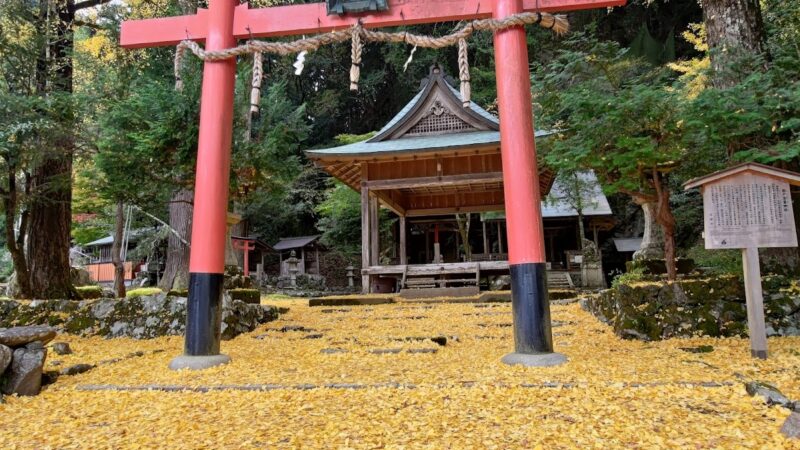
Iwato Ochiba Shrine attracts the most attention during the autumn foliage season. A large ginkgo tree stands on the grounds, displaying magnificent yellow leaves from mid- to late November.
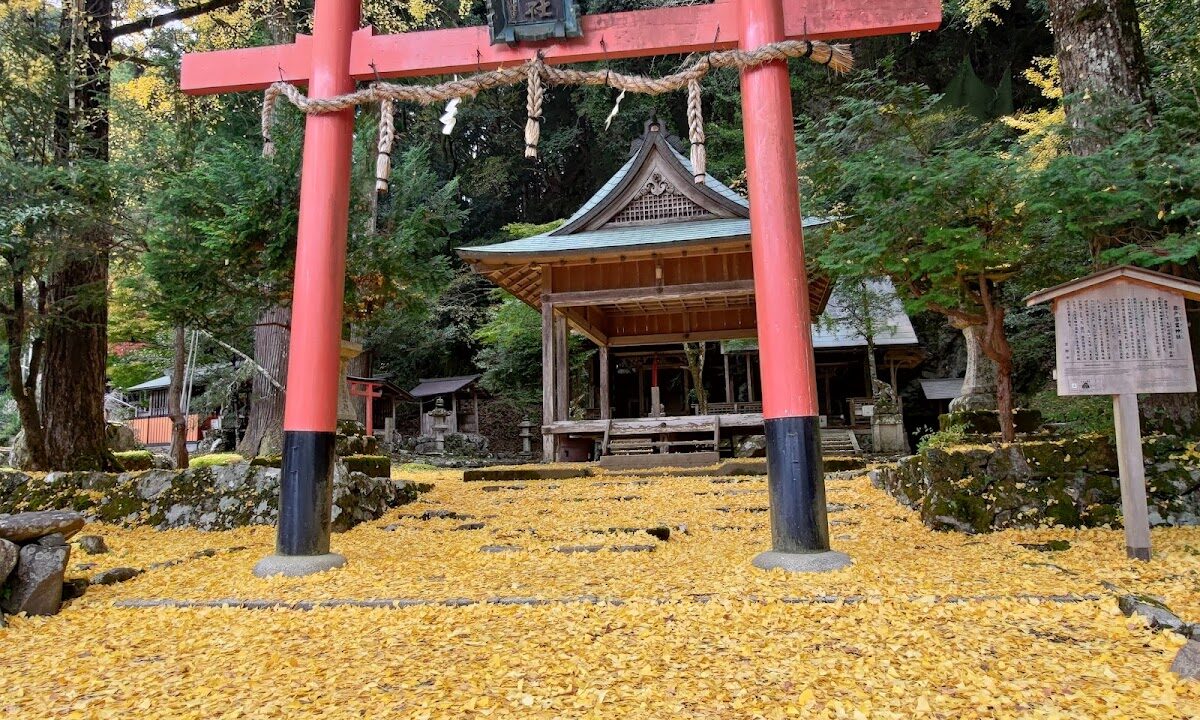
As the ginkgo leaves begin to fall, the stone pavement and approach to the shrine are covered in golden leaves, creating a fantastical scene resembling a golden carpet. This scenery is highly photogenic and has become a popular topic on social media, establishing it as a hidden gem for autumn foliage viewing.
Best Viewing Period: Mid-November to Late November
Recommended Photography Time: The soft morning light
Main Shrines (Iwato Shrine & Ochiba Shrine)
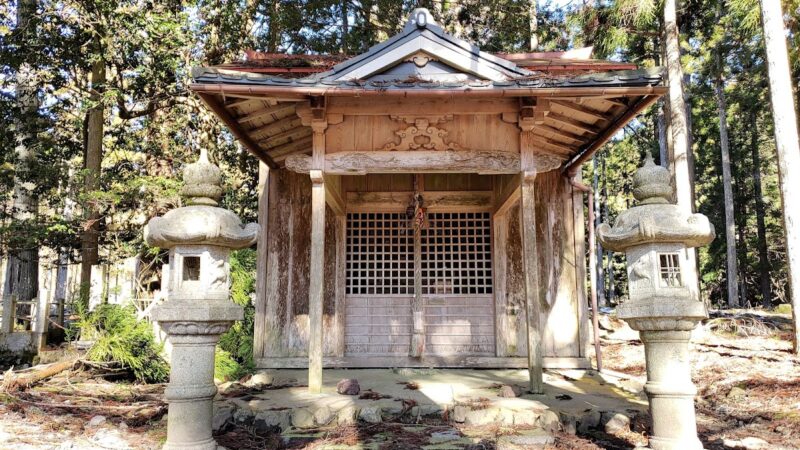
Behind the worship hall, two main shrines, Iwato Shrine and Ochiba Shrine, stand side by side. Each shrine, though small, is meticulously maintained, reflecting the deep faith of the local people.
This unusual form of two shrines combined tells a history of the fusion of different beliefs, making it a fascinating structure for those interested in shrine architecture.
Confluence of the Kiyotaki River and Iwatani River
The shrine is located at the confluence of the Kiyotaki River and Iwatani River, and from the grounds, you can enjoy a view of the clear river flow. The soothing sound of water creates a tranquil space that makes you forget the hustle and bustle of the city.
Especially in summer, it is cool, and visiting while listening to the murmur of the river is a special experience. A refreshing atmosphere befitting a shrine dedicated to the water god permeates the area.
Stone Steps and Torii Gate
The approach to the shrine features charming stone steps leading to a torii gate. The moss-covered steps and the nature-surrounded approach evoke the dignified atmosphere of an ancient shrine.
Access | How to get to Iwato Ochiba Shrine from Kyoto City
Iwato Ochiba Shrine is located in a mountainous area of Kita Ward, Kyoto City, so access by public transport takes some time. Below are detailed access instructions.
Access by Public Transport
Using JR Bus (Most Recommended)
From Kyoto Station:
- Take the JR Bus “Takao/Keihoku Line” from the Kyoto Station Bus Terminal.
- Get off at the “Onogo” bus stop (approximately 50 minutes).
- Approximately 1-5 minutes walk from the bus stop.
The shrine is very close to the Onogo bus stop, just a few minutes’ walk. After getting off the bus, follow the road and you will see the shrine’s torii gate.
Fare: Approximately 600 yen one way (from Kyoto Station)
Frequency: Approximately 1-2 trains per hour (varies depending on the season)
Using the Eizan Electric Railway
From Demachiyanagi Station:
- Take the Eizan Electric Railway and get off at “Kibuneguchi Station” (approximately 30 minutes)
- Approximately 40 minutes on foot from Kibuneguchi Station, or take a taxi (approximately 10 minutes)
Since it is a distance from Kibuneguchi Station, it is recommended to plan with plenty of time if walking.
Access by Car
From central Kyoto:
- Head north on National Route 162 (Shuzan Kaido)
- Travel time: Approximately 40-50 minutes
- Set your car navigation system to: “170 Ono Shimonochō, Kita-ku, Kyoto City” or “Iwato Ochiba Shrine”
Parking Information:
There is free parking near the shrine (a few spaces). During peak seasons like autumn foliage season, the parking lot may be full, so visiting earlier in the day is recommended.
Access Notes
- Located in a mountainous area, roads may be icy in winter.
- Bus service is limited, so check the return bus schedule in advance.
- Cell phone reception may be weak in some areas, so downloading a map app beforehand is recommended.
Goshuin (Shrine Seal) Information | Location and Method of Receiving
Goshuin can be obtained at Iwato Ochiba Shrine, but since there is no permanent shrine office, the method of obtaining them is unique.
How to Obtain a Goshuin
As Iwato Ochiba Shrine is an unmanned shrine, you cannot directly obtain a goshuin at a shrine office like at a typical shrine. The following methods are used:
Pre-printed Goshuin:
Pre-printed goshuin may be available at the designated area on the shrine grounds where amulets and goshuin are sold. The offering fee is placed in the offering box.
Offering Fee: Approximately 300-500 yen (Please pay the amount indicated)
Goshuin Design
The goshuin features the calligraphy and red seal of “Iwato Ochiba Shrine.” It’s a simple yet tasteful design, reflecting the elegant atmosphere of a shrine associated with The Tale of Genji.
Points to Note When Receiving a Goshuin
- Pre-printed goshuin may be out of stock.
- Please prepare exact change to avoid needing change.
- Direct writing in goshuin notebooks is generally not available.
- Please be sure to pay the offering fee for the management and maintenance of the shrine.
Manners and Precautions for Visiting
Here are some basic manners and precautions to keep in mind when visiting Iwato Ochiba Shrine.
Basic Worship Etiquette
- Bow before the Torii Gate: Bow before entering the sacred area, at the torii gate.
- Purify at the Water Basin: If there is a water basin, purify your hands and mouth.
- Walk along the Edge of the Path: The center of the path is considered the path of the gods.
- Two Bows, Two Claps, One Bow: Bow twice, clap twice, and bow once in front of the main hall.
- Bow Again When Leaving: Turn around and bow before leaving the torii gate.
Photography Etiquette
Photography is generally permitted on the shrine grounds, but please note the following points.
- Please refrain from taking photos inside the main shrine.
- Please be considerate so as not to include other worshippers in your photos.
- Please be careful when using a tripod so as not to disturb others.
- When posting on social media, please be considerate and avoid specifying the location.
Precautions within the Shrine Grounds
- Please take all your trash with you: Let’s protect the rich natural environment.
- Do not damage the plants: Do not break ginkgo branches or take large quantities of fallen leaves.
- Please worship quietly: As the shrine is close to a residential area, please refrain from loud conversations.
- No open flames: Smoking and the use of fire are strictly prohibited within the shrine grounds.
Nearby Tourist Spots | Places to Visit Together
Around Iwato Ochiba Shrine, there are many tourist spots where you can experience Kyoto’s nature and history.
Kifune Shrine (approximately 15 minutes by car)
This ancient shrine enshrines the god of water and is also famous as a power spot for matchmaking. Summer riverside dining and winter snowscapes are also popular.
Kurama-dera Temple (approx. 20 minutes by car)
A mountain temple associated with Ushiwakamaru (Minamoto no Yoshitsune). Known as a power spot, you can stroll through the temple grounds rich in nature.
Kozan-ji Temple (approx. 10 minutes by car)
An ancient temple registered as a World Heritage Site. Known for the national treasure “Choju Jinbutsu Giga” (Scrolls of Frolicking Animals and Humans), it is also a famous spot for autumn foliage.
Jingoji Temple (approx. 15 minutes by car)
An ancient Shingon Buddhist temple famous for its autumn foliage in Takao. A temple associated with Kukai, it houses numerous national treasures and important cultural properties.
Kiyotaki (within walking distance)
A village along the Kiyotaki River, popular as a base for river activities and hiking in the summer. Enjoy the rich natural scenery.
Annual Events and Best Time to Visit
Iwato Ochiba Shrine is a small shrine, so large-scale festivals are not held, but it has different charms in each season.
Spring (March-May)
The season of fresh greenery. The gentle murmur of the Kiyotaki River and the vibrant green of the young leaves create a beautiful and refreshing atmosphere for worship.
Summer (June-August)
A season when worshippers come seeking coolness. The gentle murmur of the river creates a pleasant, summery atmosphere.
Autumn (September-November)
The most recommended season. From mid- to late November, the grounds are adorned with a golden carpet of ginkgo leaves. The autumn foliage season is less crowded than other tourist destinations, allowing you to enjoy the scenery at your leisure.
Winter (December-February)
A season of beautiful snowscapes. When there is snow, the atmosphere is magical, but caution is needed regarding icy roads.
Q&A for Visiting Iwato Ochiba Shrine
Q: How long does it take to visit the shrine?
A: Because the shrine grounds are small, the visit itself takes about 15-30 minutes. If you plan to take photos or enjoy the scenery at a leisurely pace, it’s a good idea to allow about an hour.
Q: Are there restrooms?
A: There may not be restrooms on the temple grounds. It’s recommended to use the facilities at the nearest bus stop or roadside station beforehand.
Q: Is it possible to visit in a wheelchair?
A: There are stone steps on the temple grounds, and it is not barrier-free. Visiting in a wheelchair is difficult.
Q: Are pets allowed?
A: While there are no explicit signs prohibiting pets, as a general courtesy when visiting shrines, it’s best to carry your pet or keep it in a carrier.
Q: Can I visit in the rain?
A: Visiting is possible, but be careful as the ground may be slippery. The beauty of the ginkgo leaves can also be diminished when wet from rain.
Summary | A Peaceful Visit to a Hidden Gem in Kyoto
Iwato Ochiba Shrine is a hidden gem, nestled in the mountains away from the hustle and bustle of Kyoto city. The golden carpet of ginkgo leaves in autumn is well worth seeing, and it’s also an interesting historical site with connections to The Tale of Genji.
The unusual combination of two shrines, Iwato Shrine and Ochiba Shrine, its location at the confluence of the Kiyotaki River and Iwatani River, and the tranquil atmosphere of the grounds offer visitors a sense of peace.
While access takes some time, this allows you to appreciate the charm of a simple shrine that hasn’t been commercialized. This shrine is especially recommended for those who want to quietly experience Kyoto’s nature and history, enjoy photography, or visit places associated with The Tale of Genji.
While the golden carpet of leaves in autumn is a must-see, the shrine is also beautiful in the fresh green season and snowscapes, making it worth visiting throughout the year. I highly recommend visiting Iwato Ochiba Shrine at least once to experience its tranquil charm.