Tamayori Shrine (Kameoka City, Kyoto Prefecture) – A Complete Guide to the History, Deities, and Visitors of the Shikinaisha Kanno Shrine
What is Tamayori Shrine? – An Ancient Shikinaisha Shrine Located in Kameoka City, Kyoto Prefecture
Tamayori Shrine is a shrine located at 78 Yutani-dakeyama, Higashi-Betsuin-cho, Kameoka City, Kyoto Prefecture. It is known as a candidate for the Shikinaisha “Kanno Shrine in Kuwata District, Tanba Province” listed in the Engishiki Jinmyocho (a list of shrines compiled in the Heian period). It is revered as the tutelary shrine of the Yutani settlement, located on the southeastern foot of Yutani-ga-take (elevation 622.4 meters) at an altitude of approximately 400 meters.
Located about 14-15 kilometers southwest of Kameoka Station, in a mountainous area near the border with Osaka Prefecture, it has long been revered by local people as the guardian deity of hot springs. Visitors can enjoy the changing seasons from the shrine grounds, and the tranquil approach to the shrine offers a deep sense of peace.
Deities Enshrined – Tamayorihime-no-Mikoto and Hikonagisatakeugayafukiaezu-no-Mikoto
Main Deity: Tamayorihime-no-Mikoto
The main deity enshrined at Tamayori Shrine is Tamayorihime-no-Mikoto. Tamayorihime-no-Mikoto is a goddess who plays an important role in Japanese mythology and is known as the daughter of the sea god (Watatsumi). The name “Tamayori” means “a miko (shrine maiden) possessed by a divine spirit,” and she has been revered as a mediumistic being who connects gods and humans.
There are several lineages of Tamayorihime-no-Mikoto. In Hyuga mythology, Tamayorihime-no-Mikoto is the younger sister of Toyotamahime-no-Mikoto, became the consort of Hikonagisatakeugayafukiaezu-no-Mikoto, and the mother of Emperor Jimmu. On the other hand, Tamayorihime-no-Mikoto who appears in the Yamashiro Province Fudoki is the daughter of Kamo Taketsunomi-no-Mikoto and is enshrined at Shimogamo Shrine (Kamo Mioya Shrine) as the mother of Kamo Wakeikazuchi-no-Mikoto.
Our deity, Tamayorihime-no-Mikoto, is considered a goddess from the Hyuga mythology lineage and is said to have been enshrined as the guardian deity of hot springs. Hot springs have been considered sacred places since ancient times, believed to possess the power to heal illnesses and purify defilement. It is thought that Tamayorihime-no-Mikoto was invited to the Yutani area as a goddess protecting these sacred hot springs.
Enshrined Deity: Hikonagisatakeugayafukiaezu-no-Mikoto
Hikonagisatakeugayafukiaezu-no-Mikoto is the husband of Tamayorihime-no-Mikoto and the father of Emperor Jimmu. Born as the son of Yamasachihiko (Hoori-no-Mikoto) and Toyotamahime-no-Mikoto, he took his mother’s sister, Tamayorihime-no-Mikoto, as his consort and fathered four princes. The youngest of these was Emperor Jimmu (Kamuyamato Iwarehiko-no-Mikoto).
The part of the deity’s name, “Ugayafukiaezu,” originates from the fact that when Toyotama-hime, the mother goddess, gave birth, she had not finished thatching the roof of the birthing hut with cormorant feathers. This myth is set in Hyuga Province (present-day Miyazaki Prefecture) and the deity holds an important position as an ancestral god of the Imperial family.
At Tamayori Shrine, it is believed that by enshrining this married couple of deities together, one can receive divine blessings for marital harmony, safe childbirth, child-rearing, and family safety.
History and Founding of Tamayori Shrine
Founding Legend of 874 AD
Tamayori Shrine is said to have been founded in 874 AD. During the early Heian period, under the reign of Emperor Seiwa, the Japanese shrine system was being established, and shrines were being founded and restored throughout the country.
Hot springs have flowed in the Yutani area since ancient times, and it is thought that many people visited the shrine due to its miraculous powers. Our shrine’s origins lie in the enshrinement of Tamayorihime-no-Mikoto as the guardian deity of the hot springs, and it has developed as a center of local faith.
Relationship with the Engishiki-listed shrine “Kamino Shrine”
The Engishiki Jinmyocho, compiled in 927 AD, lists one shrine as “Kamino Shrine, Kuwata District, Tanba Province.” Tamayori Shrine is considered one of the candidates for this Kamino Shrine, but there are various theories regarding its identification as an Engishiki-listed shrine.
The “Tokusen Jinmyocho” (completed in 1876) contains the description, “According to the village elders, it is a branch shrine of Yamashiro Kamo Myojin,” suggesting a connection to Shimogamo Shrine. Since Tamayorihime-no-Mikoto is also the principal deity of Shimogamo Shrine, there is a view that the Kamo faith of Yamashiro Province spread to Tanba Province and was invited to this location.
There are also various theories regarding the meaning of “Kamino” in the shrine’s name. There are various theories about the origin of the name, including that it means “field of the gods” or “sacred field,” or that it derives from a place name. It is an interesting subject of research for exploring ancient forms of belief.
Transition from the Medieval to the Early Modern Period
During the Sengoku period (Warring States period) of the medieval era, Tanba Province was under the control of Akechi Mitsuhide, a time of intense political upheaval. Although there are few records of Tamayori Shrine during this period, it is believed that worship continued as the local tutelary deity.
During the Edo period, it was revered by the local residents as the tutelary deity of the Yutani settlement, and regular festivals were held. Due to Yutani’s reputation as a hot spring resort, the shrine was maintained as a place visited by worshippers.
After the Meiji Restoration’s separation of Shinto and Buddhism, it was ranked as a village shrine under the modern shrine ranking system and continues to be a local shrine to this day.
Highlights of the Shrine Grounds
Approach and Torii Gate
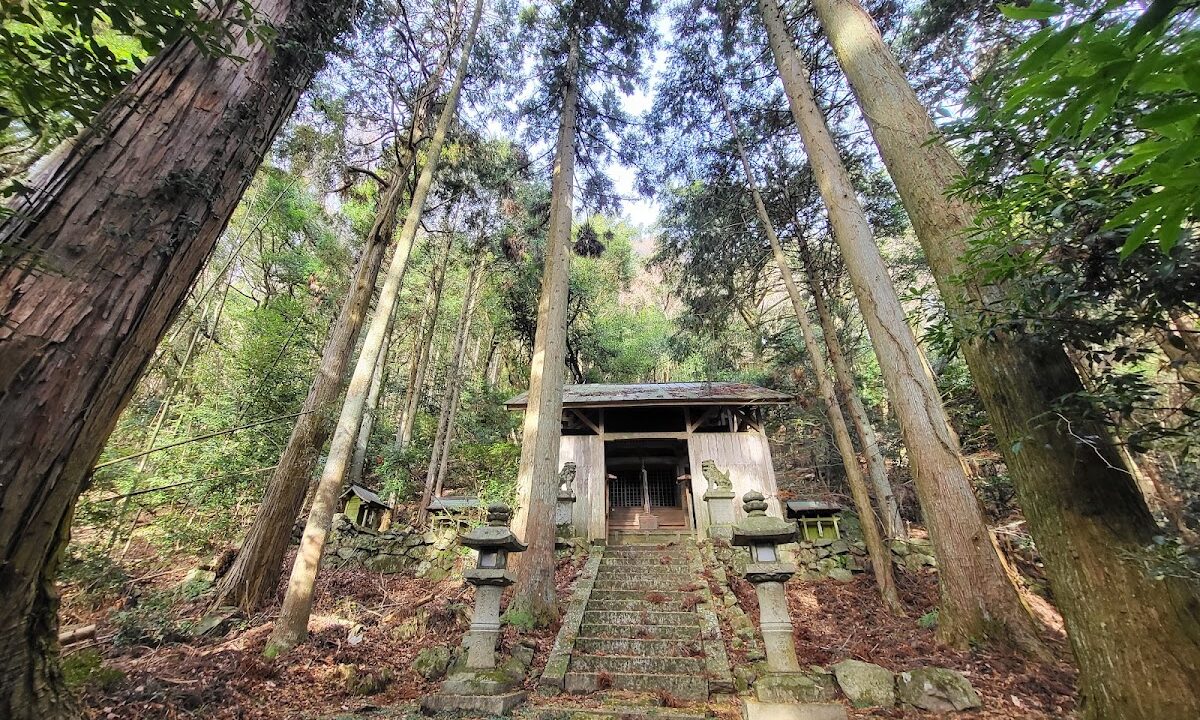
The approach to Tamayori Shrine is a quiet path that passes through the Yutani settlement. Further into the settlement, a torii gate stands at the entrance to the shrine. Surrounded by a deep forest, the area exudes a tranquil atmosphere, far removed from the hustle and bustle of the city.
The approach to the shrine consists of stone steps, lined on both sides with coniferous trees such as cedar and cypress. Especially in the early morning and at dusk, the sunlight filtering through the trees is beautiful, creating a sacred atmosphere.
Worship Hall and Main Shrine
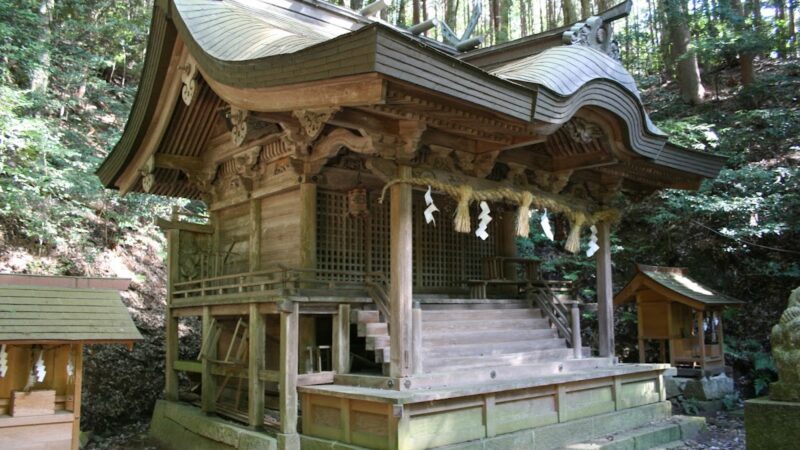
Upon climbing the stone steps, the worship hall appears directly ahead. The worship hall, though simple, possesses a dignified structure and has served as the center of local faith.
Behind the worship hall sits the main shrine. While records of the architectural style and details of the main shrine are limited, it exhibits a simple yet robust construction typical of shrines in mountainous areas. The main shrine is protected by a protective structure, preserving the ancient faith to this day.
Subsidiary Shrines and Auxiliary Shrines
In addition to the main shrine, several subsidiary shrines are enshrined within the grounds. These include deities deeply connected to local beliefs, such as the Water Shrine, demonstrating diverse forms of worship.
These subsidiary shrines are dedicated to deities closely associated with agriculture and daily life, and have been objects of daily prayer for the local residents.
Natural Environment of the Shrine Grounds
Tamayori Shrine’s grounds are located at an altitude of approximately 400 meters, blessed with abundant nature. In spring, the fresh greenery is beautiful; in summer, a cool breeze blows through; in autumn, the autumn leaves color the grounds; and in winter, the snowscape further enhances the sacred atmosphere.
From the grounds, one can see the majestic form of Yutanigatake Mountain, suggesting that this has been a sacred place associated with mountain worship since ancient times.
Divine Virtues and Faith of Tamayori Shrine
Protection of Hot Springs and Healing of Illness
The oldest belief associated with Tamayori Shrine is that it is the guardian deity of hot springs. Hot springs have flowed in the Yutani area since ancient times, and it is said that many illnesses were healed through their miraculous powers.
Hot springs have been revered as “the waters of the gods” since ancient times and have been believed to be effective in healing illnesses and purifying the body. Tamayorihime-no-Mikoto was worshipped as the goddess who presided over the spiritual power of these hot springs, and worshippers visited to pray for healing from illness and good health.
Safe Childbirth, Child-Rearing, and Matchmaking
As Tamayorihime-no-Mikoto is the mother goddess of Emperor Jimmu, she is also worshipped as the goddess of safe childbirth and child-rearing. Furthermore, as she enshrines the married couple Hikonagisatakeugayafukiaezu-no-Mikoto, she is also believed to have divine powers for marital harmony and matchmaking.
In particular, female worshippers offer prayers for safe childbirth, conception, and successful relationships, and she has long been revered as a guardian deity for women.
Family Safety and Local Deity Worship
As the local deity of the Yutani settlement, Tamayori Shrine has protected the daily lives of the local residents. It is believed to have divine powers related to all aspects of life, including family safety, abundant harvests, and business prosperity, and various prayers are offered throughout the year.
It functions as a central hub for local annual events, such as the New Year’s visit and the autumn grand festival, serving as a place to deepen community bonds.
Annual Events and Festivals
Grand Festival
At Tamayori Shrine, the annual grand festival is held every autumn. Local residents gather for traditional festival rituals, including a portable shrine procession and the dedication of sacred dances.
The grand festival is one of the most important events in the region, providing an opportunity to pray for a bountiful harvest and the safety of the community. Although affected by depopulation in recent years, it continues to be held to preserve local traditions.
New Year’s Events
In the New Year, worshippers visit for their first shrine visit of the year. The New Year’s Day Festival and the New Year’s Day Ceremony are held, praying for peace and prosperity in the new year. Although it is a quiet shrine nestled in the mountains, it is an indispensable place for local people to visit for their first shrine visit of the year.
Access and Visiting Information
Location
Address: 78 Yutani-dakeyama, Higashi-Betsuin-cho, Kameoka City, Kyoto Prefecture
Transportation Access
Access by Train/Bus:
- Approximately 14-15 kilometers southwest from JR San’in Main Line “Kameoka Station”
- Public transportation is limited; taxi or private car use is recommended.
Access by Car:
- Approximately 30 minutes from Kyoto Jukan Expressway “Kameoka IC”
- Take National Route 423 towards Higashi-Betsuin
- Drive carefully as the roads are narrow in the mountainous area.
- Parking: Limited space available on the grounds or nearby (checking on-site is recommended).
Visiting Hours
The grounds are generally open for free visits. However, the shrine office’s operating hours may be limited. Prior confirmation is recommended.
Points to Note When Visiting
- As it is located in a mountainous area, there is a possibility of snow and icy roads in winter.
- Cell phone signals may be weak in some areas, so please prepare maps in advance.
- As it is located in a quiet village, please be considerate of the neighbors regarding noise, etc.
- Facilities such as toilets and shops are limited.
Nearby Attractions
Yutanigatake Mountain
Yutanigatake Mountain (elevation 622.4 meters), which rises behind Tamayori Shrine, is known as a spot for mountain climbing and hiking. From the summit, you can enjoy views of the Kameoka Basin and the Osaka Prefecture area.
Nature of Higashibetsuin Town
Higashibetsuin Town is blessed with abundant nature, and you can enjoy the scenery of each season. It is a valuable area where the original landscape of Japan remains, with terraced rice fields and clear streams.
Other Shrines and Temples in Kameoka City
Kameoka City has many historical shrines and temples, including Izumo Daijingu Shrine (a Shikinaisha shrine), Anao-ji Temple, and Kuwayama Shrine. Visiting Tamayori Shrine along with other shrines will allow you to gain a deeper understanding of the religious culture of the Tanba region.
Other Shrines Dedicated to Tamayorihime-no-Mikoto
Kamo Mioya Shrine (Shimogamo Shrine)
At Shimogamo Shrine, a World Heritage Site located in Sakyo-ku, Kyoto City, Tamayorihime-no-Mikoto is enshrined in the East Main Hall. This is the Tamayorihime-no-Mikoto from the Yamashiro Province Fudoki (ancient provincial gazetteer) system, worshipped as the mother goddess of Kamo Wakeikazuchi-no-Mikoto. The subsidiary Kawai Shrine also enshrines Tamayorihime-no-Mikoto and is popular among women as a shrine for praying for beauty.
Yoshino Mizuwake Shrine
Yoshino Mizuwake Shrine, located in Yoshino-cho, Yoshino-gun, Nara Prefecture, is also an ancient shrine dedicated to Tamayorihime-no-Mikoto. It is worshipped as a god of fertility and is known for the legend that Toyotomi Hideyoshi was blessed with Hideyori here.
Other Shrines Dedicated to Tamayorihime-no-Mikoto
There are numerous shrines dedicated to Tamayorihime-no-Mikoto throughout Japan, each developing its own unique form of worship in its respective region. Examples include Kai Shrine (Wakayama Prefecture) and Hashirida Shrine (Kameoka City, Kyoto Prefecture).
Regarding the candidate shrines for the Shikinaisha “Kamino Shrine”
Regarding the “Kamino Shrine in Kuwata District, Tanba Province” listed in the Engishiki Jinmyocho (Register of Shrines in the Engi Era), there are several candidate shrines. Besides Tamayori Shrine, there are other shrines in Kameoka City and the surrounding area that bear the name of Kamino Shrine, or are considered to be it.
Identifying Shikinaisha shrines involves determining the location and deities of ancient shrines, and is judged comprehensively based on historical documents, geographical conditions, and the characteristics of the deities. However, over more than a thousand years, shrines have been consolidated, relocated, and their deities have changed, making definitive identification often difficult.
The basis for Tamayori Shrine being considered a candidate for Kamino Shrine lies in its geographical location, the characteristics of its deities, and local traditions, but there is no conclusive evidence. Such historical mysteries can be said to be one of the attractions of visiting ancient shrines.
The Position of Tamayori Shrine Among the Shikinaisha Shrines of Tanba Province
Tanba Province has 71 Shikinaisha shrines (5 major shrines and 66 minor shrines) listed in the Engishiki Jinmyocho (a list of shrines compiled in the Heian period). Kuwata District has several Shikinaisha shrines, including Kanno Shrine, indicating that it was a region with a strong tradition of religious faith since ancient times.
Tamayori Shrine, as one of these Shikinaisha shrines in Tanba Province, is a valuable presence that preserves the ancient tradition of faith. Although a small shrine in a mountainous area, its historical value is high, and it is carefully preserved as a regional cultural heritage.
Tamayori Shrine in Modern Times
Depopulation and the Maintenance of the Shrine
The Yutani settlement, like many mountainous areas in Japan, is experiencing depopulation. Once a bustling settlement with many residents, it now faces an aging population and declining birthrate.
Even in these circumstances, Tamayori Shrine is carefully preserved by local residents as a symbol of regional identity and a place of worship inherited from their ancestors. While maintaining the festival and preserving the shrine grounds presents many challenges, it continues to function as a place that strengthens community bonds.
The Charm of a Sacred Place of Tranquility
On the other hand, its location in a quiet mountainous area, far from the hustle and bustle of the city, is a major attraction in modern times. Although few people visit, this allows for a deep silence and a chance to experience a sacred space integrated with nature.
Records show that even after staying for over two hours on the third day of the New Year without encountering anyone, Tamayori Shrine conveys the true essence of a shrine, something that cannot be found in urban shrines.
Visits from History Enthusiasts and Shrine Pilgrimage Enthusiasts
In recent years, the number of people who enjoy visiting Shikinaisha (shrines listed in ancient records) and ancient shrines has increased, and Tamayori Shrine is now attracting history enthusiasts and shrine pilgrimage lovers. Information is shared through the internet and social media, and it is gaining attention as a shrine known to those in the know.
These visitors understand the historical value of the shrine and worship with respect, making them a welcome presence in the community.
Summary – The Charm and Significance of Visiting Tamayori Shrine
Tamayori Shrine, located on Yutani-dakeyama in Higashi-Betsuin-cho, Kameoka City, Kyoto Prefecture, is a candidate for a Shikinaisha (a shrine listed in the Engishiki, an ancient Japanese legal code) with a history of over a thousand years. It enshrines Tamayorihime-no-Mikoto and Hikonagisatake-Ugayafukiaezu-no-Mikoto, important deities from Japanese mythology, and has been worshipped as the guardian deity of hot springs and the god of safe childbirth and child-rearing.
Located in a quiet mountain village, access is not easy, but this makes it a precious shrine where you can experience deep tranquility and a sacred atmosphere. For those who want to escape the hustle and bustle of the city and calm their minds in an ancient place of worship, those who enjoy visiting Shikinaisha and other shrines, and those seeking the original landscape of Japan, it is a shrine well worth visiting.
Despite facing the challenge of depopulation, Tamayori Shrine is carefully preserved by the local people. We hope that many people will experience its history, tradition, and the beauty of its tranquility. When visiting, please remember to show respect to the community and pray quietly and with heartfelt devotion.
Tamayori Shrine is an irreplaceable cultural heritage that conveys the diversity of Japanese shrine culture and the importance of community-based faith to the present day.