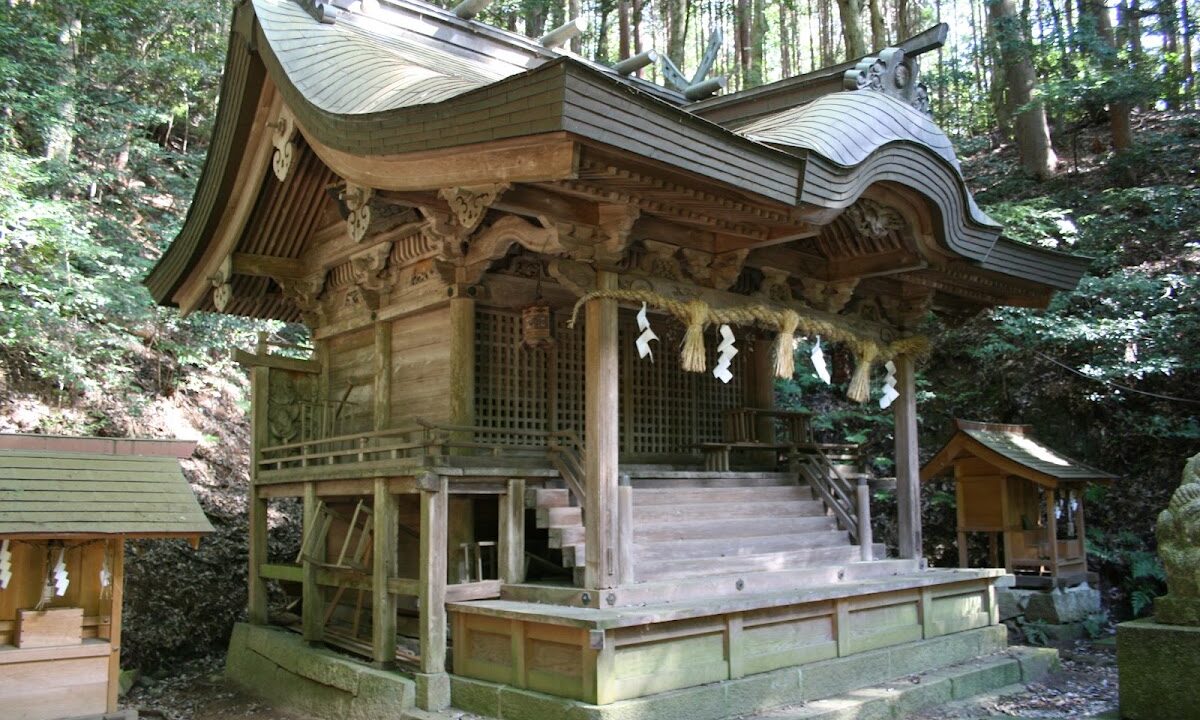
Complete Guide to Taki Shrine (Kameoka City, Kyoto Prefecture) | A Thorough Explanation of the History, Deities, Access, and Highlights of this Shikinaisha Shrine
Taki Shrine, located in Yuzuhara, Nishibetsuin-cho, Kameoka City, Kyoto Prefecture, is a venerable ancient shrine listed in the Engishiki Jinmyocho (a historical record of shrines) as a Shikinaisha shrine of Kuwata District, Tanba Province. Formerly known as “Taki Daimyojin,” and historically situated beside a waterfall, this shrine is known for its tranquil atmosphere surrounded by abundant nature and its unique ritual, the “Otaki Festival.” This article comprehensively explains everything you need to know before visiting Taki Shrine, from its history and deities to its highlights and access methods.
About Takichi Shrine | A Shikinaisha Shrine in Kuwata District, Tanba Province
Takichi Shrine is a shrine located in Yuzuhara, Nishibetsuin-cho, Kameoka City, Kyoto Prefecture. It is a Shikinaisha shrine listed in the Engishiki Jinmyocho, a compilation of shrines from the Heian period, as “Takichi Shrine, Kuwata District, Tanba Province.” It is located approximately 12 km southwest of Kameoka Station, near the intersection of National Route 423 (Settsu-Tanba Highway) and Prefectural Route 733, at the foot of the mountain next to Joraku-ji Temple.
A Shikinaisha is a shrine listed in the Engishiki Jinmyocho, completed in 927 AD, and refers to a shrine that was considered important by the imperial court at the time. The fact that Takichi Shrine is listed as a Shikinaisha indicates that it has been an important object of worship in this region since ancient times.
Origin of the Shrine Name and “Taki Daimyojin”
The name “Takichi” of Takichi Shrine is said to originate from the fact that the shrine was originally located beside a waterfall. Formerly known as “Takidai Myojin,” this shrine was worshipped as a sacred place where a deity descended near a waterfall.
Waterfalls have been considered sacred places since ancient times, and the sound of flowing water and the spray were thought to be manifestations of divine spirits. It is believed that at the time of the founding of Takichi Shrine, there was a beautiful waterfall in this area, and its mystical scenery attracted the faith of the people. The kanji characters for “Takichi” in the shrine’s name became established later, and originally represented the meaning of “waterfall.”
Deities and Beliefs | Deities of Takamimusubi-no-kami and Kamimusubi-no-kami
The deities enshrined at Takichi Shrine are Takamimusubi-no-kami and Kamimusubi-no-kami. These deities are important gods that form part of the three creation gods who appeared at the time of the creation of heaven and earth in Japanese mythology.
About Takamimusubi-no-Kami
Takamimusubi-no-Kami is one of the creation gods appearing in the Kojiki and Nihon Shoki, and is considered the god who governs “Musubi,” that is, the spiritual power that creates all things. Known for playing a crucial role in the descent of Ninigi-no-Mikoto, the grandson of Amaterasu-Omikami, to earth, this god is also revered as the ancestral deity of the Imperial family.
Takamimusubi-no-Kami is believed to possess divine virtues such as creation and development, matchmaking, and abundant harvests, and has been worshipped as a god who protects all aspects of people’s lives.
About Kamimusubi-no-Kami
Like Takamimusubi-no-Kami, Kamimusubi-no-Kami is one of the three creation gods and possesses the divine power to create all things. In particular, this god is known for assisting Okuninushi-no-Mikoto in nation-building, and is believed to possess divine virtues such as agricultural and industrial development and healing from illness.
Kamimusubi-no-Kami is also one of the three creation gods, similar to Takamimusubi-no-Kami, and is a god with the divine power to create all things. By enshrining these two deities, Takichi Shrine has protected all aspects of the lives of the local people and has attracted diverse faiths, including prayers for abundant harvests, family safety, and matchmaking.
History of Takichi Shrine | From Founding to the Present
Founding and Ancient Beliefs
The exact founding date of Takichi Shrine is unknown, but since it is listed in the “Engishiki Jinmyocho” (a list of shrines compiled in the Heian period), it is understood that it already existed at least in the early Heian period (around the 9th century) and was an important shrine recognized by the imperial court.
At the time of its founding, as mentioned above, it was located beside a waterfall, and it is thought that it had strong elements of water deity worship and nature worship. The Tanba region was an important transportation route to Kyoto from ancient times, and the shrines in this region had deep ties with the imperial court and functioned as centers of regional control.
From the Medieval to the Early Modern Period
During the medieval period, Tanba Province became the stage for repeated wars. Particularly around 1584 (Tensho 12), many shrines and temples were affected by the turmoil of Akechi Mitsuhide’s conquest of Tanba and the era of Toyotomi Hideyoshi. It is presumed that Takichi Shrine also underwent some changes during this period, but detailed records do not remain.
During the Edo period, it was revered by villagers as the local tutelary deity, and rituals were performed to pray for abundant harvests and family safety. It is believed that the foundation of the current shrine building was laid during this time.
Changes since the Modern Era
Following the Meiji-era separation of Shinto and Buddhism, Takichi Shrine was elevated to the rank of a village shrine. During this period, the shrine grounds were improved, taking on a form similar to its current appearance. Furthermore, surrounding small shrines were merged, and subsidiary shrines such as Goryo Shrine were also enshrined within the grounds.
After World War II, it was maintained and managed by a local residents’ parishioner organization, and it continues to be carefully preserved as a central place of faith in the region.
Highlights of the Shrine Grounds | From the Torii Gate to the Main Hall
Approach and Torii Gate
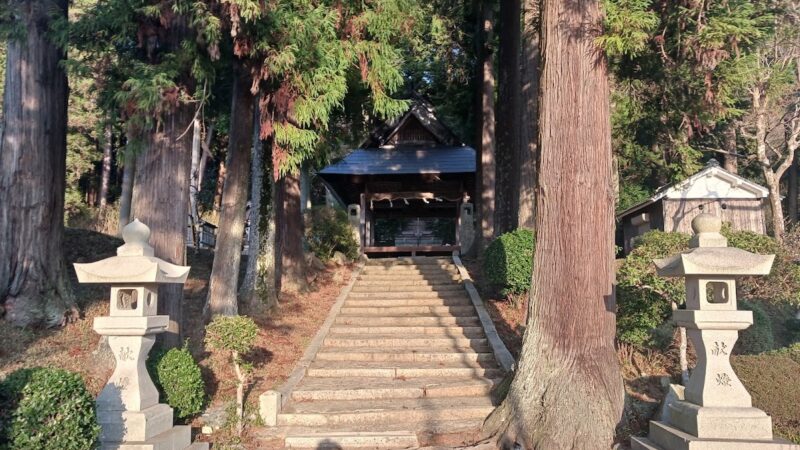
The grounds of Takichi Shrine are located at the foot of the mountain, reached by following the approach that continues from beside Joraku-ji Temple. Passing through the torii gate, a quiet approach surrounded by trees unfolds, creating a sacred space far removed from the hustle and bustle of the city.
The torii gate bears a plaque inscribed with “Takichi Shrine,” welcoming visitors. The characters on the plaque are powerful, conveying a sense of long history.
Water Basin
Further along the approach is the water basin. This is a place to purify one’s hands and mouth before worship, preserving the ancient custom. The water in the water basin is pure, likely sourced from a mountain spring.
Worship Hall and Main Hall
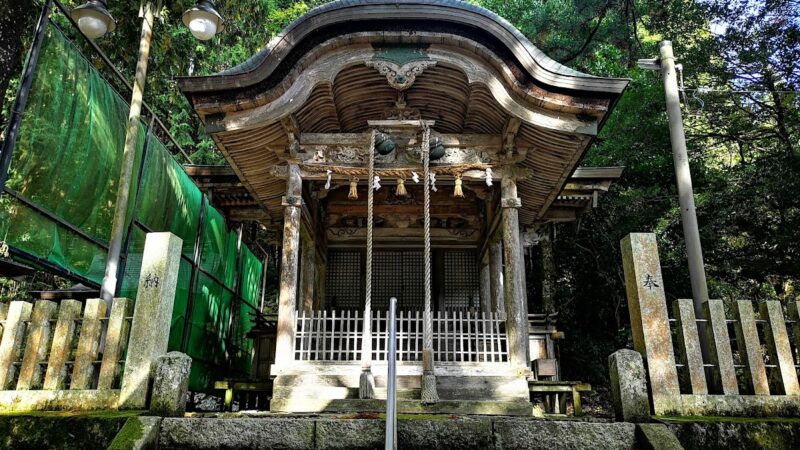
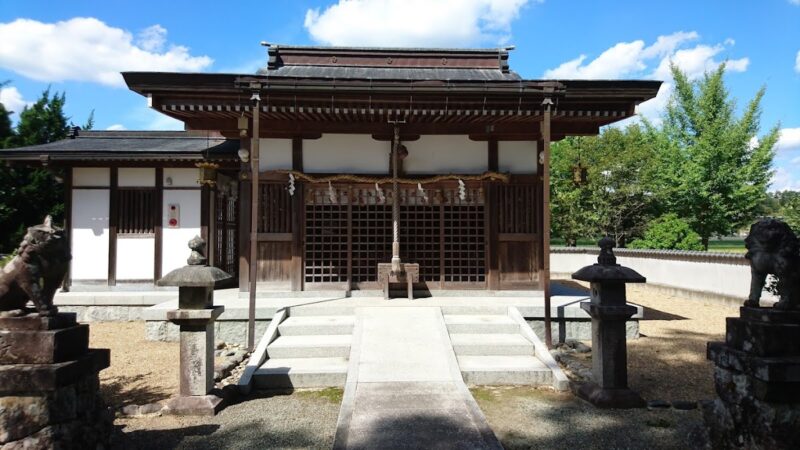
At the center of the grounds is the worship hall, with the main hall situated behind it. The worship hall is where worshippers offer their prayers, possessing a simple yet solemn atmosphere.
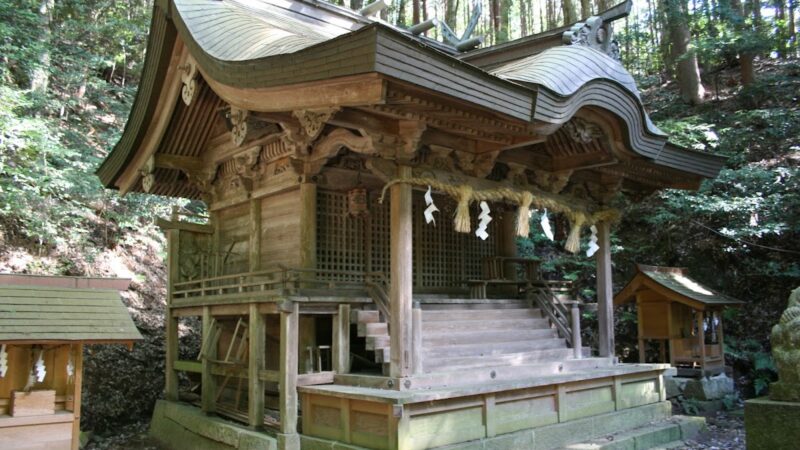
The main shrine is believed to be a one-bay nagare-zukuri style building, preserving the traditional shrine architecture of the Tanba region. The enshrined deity is located within the main shrine, and while the doors are usually closed, they are opened during festivals.
Rock and Natural Landscape
Within the shrine grounds is a massive rock called Gantō, a remnant of ancient rock worship. Gantō is revered as a vessel for the gods, conveying the spirit of ancient Shinto that sanctifies natural objects themselves.
The surrounding area is rich in nature, and the grounds are particularly beautiful during the autumn foliage season. Known for its magnificent autumn leaves, it captivates visitors.
Subsidiary Shrines
Within the shrine grounds are several subsidiary shrines, including the Goryō Shrine. These are thought to be the result of the Meiji-era shrine consolidation policy, where small shrines in the surrounding area were merged into the Takichi Shrine. They are still carefully worshipped today, embodying the diverse beliefs of the region.
Otaki Festival | Unique Rituals and Beliefs
Takichi Shrine has a unique ritual called the “Otaki Festival.” This ritual involves a special ceremony using a cauldron, and because the shrine’s name, “Takichi,” is similar to “taki” (burning), it preserves the ancient tradition of fire-based rituals.
The details of the Otaki Festival are preserved as local traditions, and it is believed to be an important annual event praying for a bountiful harvest and good health. Fire has been considered sacred and purifying since ancient times. The ritual using a cauldron may be related to other rituals such as Yudate Kagura (hot water ritual), making it a valuable example for studying the folk beliefs of the Tanba region.
Relationship with Surrounding Shrines and Temples
Location with Joraku-ji Temple
Takichi Shrine is located next to Joraku-ji Temple, a layout that reflects the syncretism of Shinto and Buddhism. Before the Edo period, Shinto shrines and Buddhist temples were often closely related, and it is presumed that Takichi Shrine and Joraku-ji Temple also had some kind of relationship in the past.
Shikinaisha Shrines of Kuwata District
In addition to Takichi Shrine, there are several other Shikinaisha shrines in Kuwata District of Tanba Province. These include Kuwata Shrine (Yamamoto, Shino-cho; Mabori, Shino-cho), Kuwayama Shrine (Kamiyada, Kameoka City), Obata Shrine (Kameoka City), and Unatari-ni-imasu Takamitama Shrine. These formed a religious network in ancient Kuwata District.
Visiting these shrines will allow you to gain a deeper understanding of the ancient history and religious history of the Tanba region.
Access | How to Get to Takichi Shrine
Access by Public Transportation
Nearest Station: JR San’in Main Line, Namikawa Station
Takichi Shrine is approximately 12km from Namikawa Station, making access by public transportation alone difficult. We recommend taking a taxi from the station or renting a car.
Access by Car
Address: Yuzuhara, Nishibetsuin-cho, Kameoka City, Kyoto Prefecture
- From Kyoto City: Head west on National Route 9, then south on National Route 423 (Settan Kaido) from Kameoka City. Approximately 1 hour.
- From Osaka: Take the Meishin Expressway and Kyoto Jukan Expressway, then south on National Route 423 from Kameoka IC. Approximately 1 hour 30 minutes.
The intersection of National Route 423 and Prefectural Route 733 is a landmark. Looking for the Jorakuji Temple sign will make it easier to find.
Parking
It is recommended to check in advance whether there is a dedicated parking lot on the temple grounds. Since the surrounding area is mountainous, please avoid street parking and observe proper etiquette when visiting.
Points and Precautions for Visiting the Shrine
Proper Worship Etiquette
- Bow before passing through the torii gate.
- Cleanse your hands and mouth at the water basin.
- Bow twice, clap twice, and bow once in front of the main hall.
- Visit the subsidiary shrines within the grounds.
- Bow once again at the torii gate when leaving.
Best Time to Visit
Takichi Shrine boasts beauty in every season, but it is particularly renowned for its stunning autumn foliage. From early to mid-November, the grounds are adorned with vibrant autumn leaves, further enhancing the sacred atmosphere.
Furthermore, the shrine displays different expressions in each season: the fresh green of spring, the deep green of summer, and the tranquility of winter.
Clothing and Items to Bring
As the shrine is located at the foot of a mountain, comfortable walking shoes are recommended. Insect repellent is recommended in summer, and warm clothing is essential in winter.
About Goshuin (Shrine Seals)
Regarding the issuance of Goshuin at Takichi Shrine, it is recommended to check in advance, as there may not be a permanently staffed shrine office. As it is a shrine of high historical value as a Shikinaisha (a shrine listed in the Engishiki), those wishing to obtain a Goshuin should inquire with the Kameoka City Tourism Association beforehand.
The Charm of Takichi Shrine | Reasons to Visit
Tranquil Environment and Natural Beauty
The greatest charm of Takichi Shrine is its tranquil environment, far removed from the hustle and bustle of the city. The shrine grounds, surrounded by abundant nature, provide a space where one can calm their mind and worship with a sacred feeling. The autumn foliage season is particularly exceptional, offering a beautiful landscape where nature and faith are intertwined.
Historical Value as a Shikinaisha
As a Shikinaisha listed in the Engishiki Jinmyocho (a list of shrines compiled in the Heian period), Takichi Shrine boasts a history of over a thousand years, making it a valuable place to experience ancient Japanese history firsthand. The continued worship to this day is a testament to the deep faith of the local people.
The Legend and Mystery of Takidai Myojin
The legend that the shrine was once enshrined beside a waterfall conveys ancient Japanese forms of worship, such as water deity worship and nature worship. Elements of rock worship, including rock formations, also remain, offering a glimpse into the primal form of Shinto.
The Unique Otaki Festival
The unique Otaki Festival, a ritual using a cauldron, is a tradition unique to Takichi Shrine and not seen at other shrines. It is a valuable example for studying local folk beliefs and is well worth a visit.
Nearby Tourist Attractions
Joraku-ji Temple
We recommend visiting Joraku-ji Temple, located right next to Takichi Shrine. It’s a rare opportunity to visit both a shrine and a temple at the same time.
Tourist Attractions in Kameoka City
Kameoka City also boasts numerous other attractive tourist spots, including the Hozugawa River boat ride, the starting point of the Sagano Scenic Railway, Izumo Grand Shrine, and Kuwayama Shrine. In conjunction with a visit to Takichi Shrine, you can also enjoy sightseeing in the Tanba and Kameoka area.
Yunohana Onsen
Kameoka City boasts Yunohana Onsen, perfect for relaxing after a visit to the shrine. This historic hot spring resort offers high-quality baths.
Summary | Experiencing Ancient Faith at Takichi Shrine
Takichi Shrine, located in Nishibetsuin-cho, Kameoka City, Kyoto Prefecture, is a Shikinaisha (a shrine listed in the Engishiki, an ancient Japanese legal code) of Kuwata District, Tanba Province, and has attracted the faith of local people for over a thousand years. Enshrining the creation deities Takamimusubi-no-kami and Kamimusubi-no-kami, and having historically been enshrined beside a waterfall as Takidai Myojin, this shrine conveys the spirit of ancient Japanese nature worship and Shintoism.
The shrine grounds, surrounded by abundant nature, the beautiful autumn foliage, the unique Otaki Festival, and the tranquil atmosphere offer visitors peace of mind and a sacred experience. With its high historical value as a Shikinaisha (a shrine listed in the Engishiki, an ancient Japanese legal code), this is a must-see spot for anyone interested in ancient Japanese history or Shinto culture.
While access is somewhat inconvenient, this is precisely what has preserved its tranquility and sacredness. When visiting the Kyoto/Kameoka area, be sure to stop by Takichi Shrine and experience the spirit of faith that has continued since ancient times. The beauty of nature in every season and the sacred space woven from a thousand years of history await you.