Moriya Shrine (Okaya City, Nagano Prefecture) Complete Guide | The Suwa Land Transfer Myth, Goshuin (Shrine Seal), and Access Information
Moriya Shrine, located in Kawagishi Higashi, Okaya City, Nagano Prefecture, is a historic shrine dedicated to Moriya-no-kami, a deity featured in the ancient Suwa region myth of “The Transfer of the Land of Suwa.” Situated in a quiet residential area on the south bank of the Tenryu River, the shrine grounds, surrounded by ancient trees, exude a mystical atmosphere. In recent years, it has attracted attention from fans of games such as Touhou Project, becoming a pilgrimage site visited by many worshippers.
This article comprehensively introduces information you should know before visiting Moriya Shrine, including its history, enshrined deities, goshuin (shrine seal) information, access methods, and annual events.
Overview and Basic Information of Moriya Shrine
Official Name: Moriya Shrine (also known as Moriya Jinja or Moreya Jinja)
Location: 1-12 Kawagishi Higashi, Okaya City, Nagano Prefecture (Hashihara Ward)
Former Shrine Rank: Village Shrine
Founding Date: Unknown (Estimated to have been a place of worship since ancient times)
Deity: Moriya no Okami
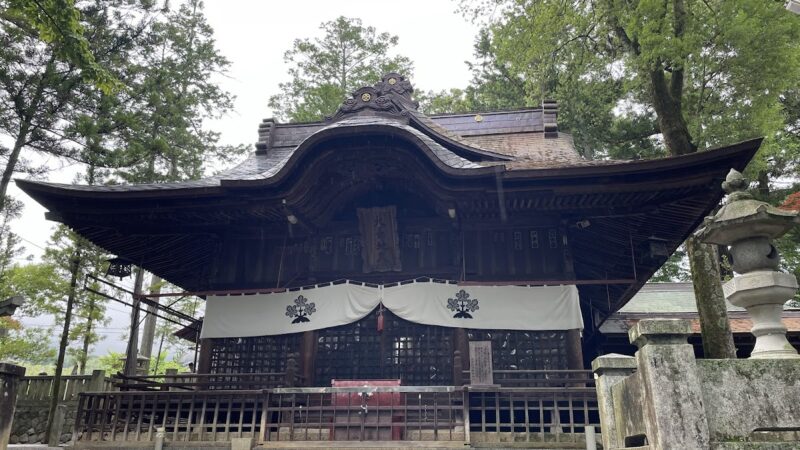
Moriya Shrine is located approximately 200 meters from the Tenryu River, but it is said to have originally stood on the riverbank. Currently, it sits in a quiet environment between residential areas and the foot of the mountains, with old stone lanterns and ancient trees in the shrine’s grove transporting visitors to ancient times.
As the tutelary deity of the former Hashihara Village, it has garnered deep-rooted faith in the region and held an important position in the history of the Suwa region, receiving reverence from the Suwa Takashima Domain during the Edo period.
Deity: Moriya-no-Okami
Divine Status and Origin of Moriya-no-Kami
Moriya-no-Okami (Moriya-no-Kami) is the chieftain deity of the indigenous people who have lived in the Suwa region since ancient times, and has been revered as a Kunitsukami (earthly deity) of Suwa. The Moriya clan is believed to have built a unique culture in this land while engaging in hunting and primitive agriculture.
Moriya-no-Kami is considered the distant ancestor of the Moriya family (Moriya clan), who have served as the chief priests of the Suwa Grand Shrine’s Upper Shrine for generations. The Moriya family is a lineage that continues to this day as descendants of Moriya-no-Kami. The Moriya family has a history of performing unique rituals as important priests at the Suwa Grand Shrine.
Divine Virtues and Blessings
The divine virtues of Moriya Shrine are said to be as follows:
- Protection of the Land: Divine power as the tutelary deity protecting the land of Suwa
- Abundant Harvest: Aspect as a god of agriculture
- Protection of Hunting: Character as a guardian deity of hunting tribes
- Good Fortune in Competition: From the legend of the battle with Takeminakata-no-kami
- Protection from Misfortune and Good Luck: Protection from disaster through spiritual power from ancient times
History: The Suwa Land Transfer Myth and the History of Moriya Shrine
The Suwa Land Transfer Legend
The “Suwa Land Transfer” myth is indispensable when discussing the history of Moriya Shrine. This legend is a unique story of the Suwa region, differing from the land transfer myths in the Kojiki and Nihon Shoki.
In the age of the gods, when Takeminakata-no-kami, who had fled from Izumo, attempted to invade the Suwa region, Moriya-no-kami, who ruled the area, resisted. It is said that the two gods engaged in a fierce battle, with Takeminakata-no-kami wielding an iron ring and Moriya-no-kami a wisteria branch.
Ultimately, Moriya-no-kami surrendered to Takeminakata-no-kami, but afterward, Moriya-no-kami attained the position of chief priest serving Suwa Myojin (Takeminakata-no-kami). This was not simply a conquest, but rather a unique form of Suwa faith where indigenous gods and newly arrived gods merged.
Unique Traditions Remaining in Shrine Records
The shrine records of Moriya Shrine preserve a detailed tradition that differs from the Kojiki and Nihon Shoki myths. Moriya-no-kami confronted Takeminakata-no-kami as he attempted to enter Suwa, asserting his legitimacy as the local tutelary deity. After the battle, the two deities reconciled, and the Moriya clan, descendants of Moriya-no-kami, are said to have served as chief priests of Suwa Grand Shrine for generations.
This story is thought to reflect the historical facts of power shifts and cultural fusion in ancient Suwa, and is a fascinating subject of archaeological research.
History from the Edo Period Onward
During the Edo period, it received the reverence of the lord of the Suwa Takashima domain and became the guardian shrine of Hashihara village, attracting local faith. In the Meiji era, it was ranked as a village shrine, positioning it as an important shrine in the region.
While the current shrine buildings and grounds were renovated in modern times, the old stone lanterns and giant trees in the shrine grove tell of its long history. It is believed that the shrine was relocated to its current location due to changes in the course of the Tenryu River, but the exact date is unknown.
Highlights of the Shrine Grounds
Shrine Buildings and Architectural Style
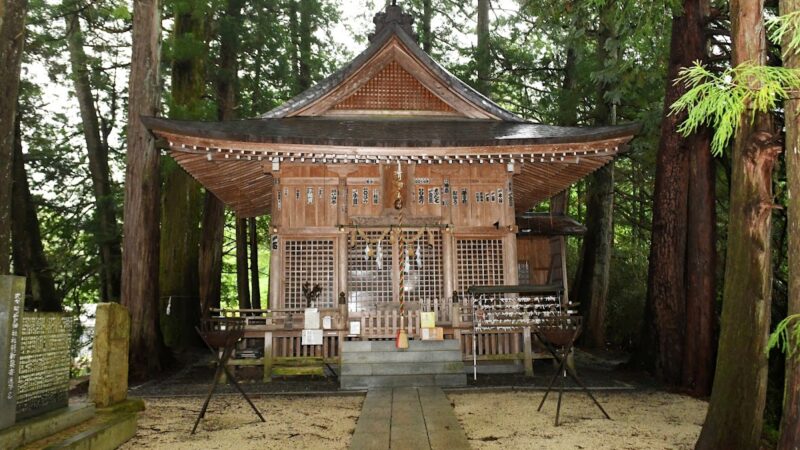
The main hall of Moriya Shrine is a simple yet charming wooden structure, exhibiting characteristics of traditional shrine architecture in the Suwa region. The main hall has an open design that warmly welcomes visitors, creating a friendly atmosphere rooted in the local community.
Ancient Grove of Trees
The ancient grove of trees covering the shrine grounds is one of the great attractions of Moriya Shrine. Giant trees, estimated to be hundreds of years old, stand guard over the sacred area, and the grounds, bathed in dappled sunlight, are enveloped in a mystical atmosphere. Especially in summer, a cool breeze blows through, providing a pleasant environment for worship.
Stone Lanterns and Stone Sculptures
Ancient stone lanterns are placed throughout the grounds, conveying the history of faith dating back to the Edo period. These stone sculptures possess a dignified, aged appearance, playing a role in transporting visitors to a bygone era.
Onbashira (Sacred Pillars)
Onbashira, a type of sacred pillar characteristic of shrines in the Suwa region, are also erected on the shrine grounds. In conjunction with the Onbashira Festival of Suwa Grand Shrine, Moriya Shrine also dedicates a small Onbashira, playing a part in the Suwa faith.
Goshuin Information
About the Issuance of Goshuin
Moriya Shrine offers goshuin (temple/shrine stamps). Goshuin are popular among many visitors as proof of their visit and as a memento of their worship.
Location of Issuance: Shrine Office (Prior confirmation is recommended as staff may be absent)
Offering Fee: Generally in line with market rates (approximately 300-500 yen)
Reception Hours: Daytime (Please check official information for details)
Goshuin Design
Moriya Shrine’s goshuin features the shrine’s name, “Moriya Shrine,” written in ink, and stamped with the shrine’s seal. It is characterized by a simple yet powerful brushstroke, reflecting the dignified style of an ancient shrine in Suwa.
Touhou Project Fans and Goshuin
In recent years, Moriya Shrine has gained attention as the model for Moriya Suwako, a character in the Touhou Project series, and the number of game fans visiting as “pilgrimage sites” has increased. Therefore, many young people seeking Goshuin (temple/shrine stamps) can be seen visiting the shrine.
The shrine warmly welcomes visitors, and they are welcomed as long as they observe proper etiquette. However, it is important to remember that the shrine is a place of worship and to visit with respect.
Annual Events and Festivals
Moriya Shrine holds various festivals throughout the year. These traditions are preserved and passed down to the present day, together with the local parishioners.
Main Annual Events
Genshisai (January)
A festival celebrating the beginning of the new year. Prayers are offered for the peace and security of the nation and the prosperity of the parishioners and worshippers.
Setsubunsai (February)
A festival to ward off evil and invite good fortune through traditional events such as bean-throwing.
Spring Grand Festival (Spring)
An important festival celebrating the arrival of spring and praying for a bountiful harvest.
Summer Purification Ceremony (June)
A Shinto ritual to cleanse away the impurities accumulated over the past six months. Sometimes, a ritual involving passing through a ring of reeds is performed.
Autumn Grand Festival (Autumn)
A festival to express gratitude for the harvest and repay divine blessings. One of the important annual events in the region.
Onbashira Festival (Once every 7 years)
A Shinto ritual held in conjunction with the Onbashira Festival of Suwa Grand Shrine. It is celebrated grandly throughout the Suwa region.
Year-End Purification Ceremony and New Year’s Day Pilgrimage (December-January)
A Shinto ritual to cleanse away the impurities of the past year and prepare for the New Year. A New Year’s Day pilgrimage is also held from New Year’s Eve to New Year’s Day.
Participation in Festivals
Even those who are not local parishioners may be able to participate in major festivals such as the Grand Festival. For detailed dates and participation methods, we recommend checking the Moriya Shrine official website or contacting the shrine office.
Access and Transportation Information
Access by Train
Nearest Station: JR Chuo Main Line “Okaya Station”
Distance from Station: Approximately 2.5 km
Estimated Time: Approximately 30-35 minutes on foot
While it is possible to access the location on foot from Okaya Station, it is a bit of a distance, so consider using a taxi or bus.
Access by Bus
It is also possible to use local buses operating within Okaya City. Take a bus bound for “Kawagishi” and walk from the nearest bus stop. For bus timetables and routes, please check the Okaya City public transportation information.
Access by Car
From Okaya IC on the Chuo Expressway: Approximately 10 minutes
From National Route 20: Proceed towards Kawagishi and follow the signs.
Parking: Parking spaces are available on the shrine grounds or nearby (limited spaces, so be aware of congestion).
Parking Fee: Free
While access by car is the most convenient, the shrine is located in a residential area, and some roads are narrow. Please drive carefully and be considerate of the local residents.
Address and Navigation
Address: 1-12 Kawagishi Higashi, Okaya City, Nagano Prefecture 394-0004
Car Navigation Settings: Search for the above address or “Moriya Shrine”.
Searching for “Moriya Shrine” on your smartphone’s map app will also display the accurate location.
Nearby Tourist Attractions
Suwa Grand Shrine Kamisha Honmiya & Maemiya
If you visit Moriya Shrine, be sure to also visit Suwa Grand Shrine Kamisha Honmiya & Maemiya. This is the head shrine of the Suwa faith, dedicated to Takeminakata-no-kami, who has a deep connection to Moriya-no-kami, and allows visitors to experience the setting of the Suwa land transfer myth.
Moriya Shrine Museum
This museum exhibits valuable historical materials passed down through the Moriya family, descendants of Moriya-no-kami. Visitors can learn in detail about ancient Suwa rituals and the role of the chief priest, deepening their understanding of Moriya Shrine.
Lake Suwa
Lake Suwa, one of Japan’s leading highland lakes, is a popular tourist destination easily accessible from Okaya City. Visitors can enjoy various activities such as lakeside walks, boat tours, and hot springs.
Okaya Silk Museum
Okaya City has a history of prosperity in the silk industry and is known as “Silk Okaya.” The Silk Museum allows visitors to learn about its history and technology.
Manners and Precautions for Visiting a Shrine
Basic Worship Etiquette
- Bow before passing through the torii gate: This is a courtesy when entering the sacred area.
- Purify yourself at the water basin: Purify your left hand, right hand, and mouth in that order.
- Worship Method: Two bows, two claps, and one bow is the basic method.
- Behavior within the Shrine: Act quietly and respectfully.
Photography
Photography is generally permitted within the shrine grounds, but please note the following:
- Do not take photos in areas where photography is prohibited, such as inside the main hall.
- Be considerate of other worshippers.
- When posting on social media, be careful not to identify locations or personal information.
Consideration in Residential Areas
Moriya Shrine is adjacent to a residential area, so please pay particular attention to the following:
- Do not make loud noises.
- Do not park on the street.
- Always take your trash with you.
- Do not trespass on the private property of nearby residents.
Moriya Shrine and Touhou Project
Background of Pilgrimage
The character “Moriya Suwako,” who appears in the Touhou Project series, is known as a character modeled after the god Moriya. Therefore, the number of game fans visiting Moriya Shrine as a “pilgrimage site” is increasing.
Coexistence of Fans and the Community
Moriya Shrine and the local community warmly welcome visitors who observe proper etiquette. While fan visits contribute to the revitalization of the region, it is important to remember that the shrine is fundamentally a place of worship, and respectful worship is required.
A good relationship has been built between fans and the shrine through ema (votive tablets) and amulets, fostering coexistence based on mutual understanding.
Frequently Asked Questions (FAQ)
Q1: When can I get a Goshuin (shrine stamp) at Moriya Shrine?
A: Goshuin are given out at the shrine office during daytime visiting hours, but there may be times when the priests are absent. If you want to be sure to get a Goshuin, it is recommended to check in advance by phone or other means. Please note that the shrine is likely to be closed, especially on weekdays.
Q2: Is there parking available?
A: There is free parking available on the shrine grounds or nearby. However, spaces are limited, so we recommend arriving early during busy times or festivals. Also, as the shrine is located in a residential area, please absolutely avoid street parking and be considerate of the local residents.
Q3: What is the relationship with Suwa Grand Shrine?
A: Moriya-no-kami, the deity enshrined at Moriya Shrine, is traditionally said to have fought against Takeminakata-no-kami of Suwa Grand Shrine in the “Transfer of the Land of Suwa.” After the battle, the Moriya family, descendants of Moriya-no-kami, served as the chief priests of Suwa Grand Shrine’s Upper Shrine for generations, indicating a deep connection. It is an important shrine for understanding Suwa faith.
Q4: Is it okay for Touhou Project fans to visit?
A: As long as you observe proper etiquette during your visit, everyone is welcome. However, please remember that shrines are places of worship, and refrain from making noise or engaging in behavior that disturbs other worshippers. Please take photographs with moderation and be considerate when posting on social media. Please strive for a respectful visit.
Q5: Is it accessible on foot from the nearest station?
A: It is accessible on foot from JR Okaya Station in approximately 30-35 minutes. The distance is about 2.5 km, which some may find a bit far. Those who are not confident in their physical stamina or wish to save time may want to consider taking a taxi (approximately 10 minutes) or a bus.
Q6: When is the Onbashira Festival held?
A: The Onbashira Festival is held once every seven years (every seven years in the traditional Japanese age counting system) in conjunction with the Suwa Grand Shrine’s grand festival. Please check the official information of Suwa Grand Shrine for the next festival year. A small-scale Onbashira (sacred pillar) is also dedicated at Moriya Shrine, and the entire Suwa region is enveloped in the festival’s atmosphere.
Q7: What is appropriate attire for visiting the shrine?
A: There are no specific dress code requirements, but clean and modest attire appropriate for visiting a shrine is preferred. Since there are stone steps and uneven ground within the shrine grounds, comfortable walking shoes are recommended. Remember to take precautions against insects in the summer and warm clothing in the winter.
Q8: Are amulets and votive tablets available?
A: The shrine office handles amulets, votive tablets, and other items. However, as it is a small shrine, it does not always have a wide variety of items available like larger shrines. Similar to goshuin (shrine stamps), they may not be available if a Shinto priest is absent, so it is recommended to check in advance if you wish to be sure to receive them.
Summary
Located in Okaya City, Nagano Prefecture, Moriya Shrine is a historically significant shrine dedicated to Moriya-no-kami, who appears in the Suwa Kuniyuzuri myth. As a place of worship that has continued since ancient times, and as an important sacred site for understanding Suwa faith, it continues to attract many visitors.
Located in a quiet residential area on the south bank of the Tenryu River, the shrine grounds, surrounded by ancient trees, are filled with a mystical atmosphere. As the ancestral deity of the Moriya clan, it has a deep connection with Suwa Grand Shrine and has a long history as the tutelary deity of the region.
In recent years, it has also attracted attention as a pilgrimage site for fans of the Touhou Project, welcoming a new group of visitors. As a place where tradition and modernity intersect, Moriya Shrine will undoubtedly continue to be loved by many people.
When visiting the Suwa region, be sure to visit Moriya Shrine and feel the breath of ancient myths and faith. Visiting it along with Suwa Grand Shrine and the Moriya Shrine Museum will allow you to more fully appreciate the depth of Suwa faith.