Yahiko Shrine (Nagano Prefecture) Complete Guide | History, Onbashira Festival, and Goshuin Information for Shinano Province’s Second-Ranked Shrine
Yahiko Shrine, located in Tatsuno-cho, Kamiina-gun, Nagano Prefecture, is a venerable shrine that has long been revered as the second-ranked shrine of Shinano Province. Along with the neighboring Ono Shrine, it possesses a unique form of worship and is also known for the Onbashira Festival, “Ono Onbashira,” held once every seven years. This article comprehensively explains everything you need to know before visiting Yahiko Shrine, from its history and enshrined deities to its architecture, the Onbashira Festival, and access methods.
What is Yahiko Shrine? | The Status of Shinano Province’s Second-Ranked Shrine
Yahiko Shrine is a shrine located in Ono, Tatsuno-cho, Kamiina-gun, Nagano Prefecture, and has long been positioned as the second-ranked shrine of Shinano Province, second only to Suwa Grand Shrine. Currently, Ono Shrine (Shiojiri City) and Yahiko Shrine (Tatsuno Town) are separate shrines, but they are said to have once been a single shrine, situated adjacent to each other within the same sacred grove.
The shrine grounds are also known as “Tanomori no Mori” and “Tanomi no Sato,” and have been revered as a spiritual pillar of the region. Located approximately 800 meters north of Ono Station on the Chuo Main Line, it is a tranquil space surrounded by abundant nature.
Relationship with Ono Shrine
Yahiko Shrine and Ono Shrine share the unusual characteristic of being situated side-by-side within the same grounds. While the boundaries between the two shrines are clearly defined and they operate independently, they maintain a close relationship, such as jointly holding the Onbashira Festival.
Interestingly, the grounds of Yahiko Shrine are an exclave of Tatsuno Town, surrounded by Shiojiri City. This geographical characteristic is another element that speaks to the historical unity of the two shrines.
Deities and Beliefs of Yahiko Shrine
Yahiko Shrine enshrines multiple deities, with different gods residing in each of its shrine buildings.
Deities of the Main Hall
The Main Hall enshrines Ōnamuchi-no-Mikoto and Kotoshironushi-no-Mikoto, both deities of the Izumo lineage. Ōnamuchi-no-Mikoto is another name for Ōkuninushi-no-Mikoto and is known as the god of nation-building. Kotoshironushi-no-Mikoto is his son and has been worshipped as the god of oracles.
Deities of the Subsidiary, South Hall, and North Hall
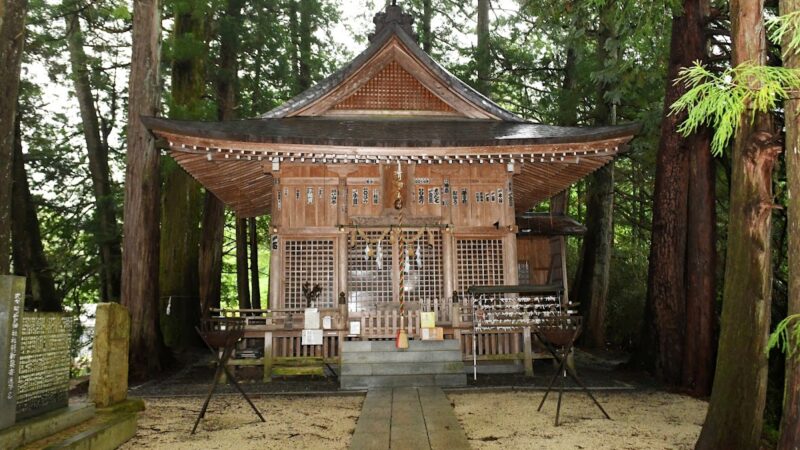
The Subsidiary Hall enshrines Takeminakata-no-Mikoto, who is also a deity of Suwa Grand Shrine. Takeminakata-no-Mikoto is a son of Ōnamuchi-no-Mikoto and is revered as a god of war and wind.
The South Hall enshrines Ame-no-Kagoyama-no-Mikoto and Umashihoya-hime-no-Mikoto. Ame-no-Kagoyama-no-Mikoto is known as the god of metal refining and blacksmithing, and is thought to have had a deep connection to the industries of this region.
The North Hall enshrines Kamuyamato Iwarehiko-no-Sumeramikoto, the first emperor, also known as Emperor Jimmu.
Meiji Palace
Within the shrine grounds is the Meiji Palace, where Emperor Meiji is enshrined. This shrine was established within the shrine system established after the Meiji era.
In this way, Yahiko Shrine, which enshrines a diverse range of deities, can be said to be a shrine with a unique form of worship that fuses Izumo, Suwa, and Imperial family beliefs.
History and Founding of Yahiko Shrine
Ancient Beliefs
The founding date of Yahiko Shrine is not clear, but it has been positioned as an important shrine in Shinano Province since ancient times. The status of Shinano Province’s Second-Ranked Shrine indicates its position second only to Suwa Grand Shrine (Shinano Province’s First-Ranked Shrine), demonstrating its central role in religious worship in the region.
According to shrine tradition, Ono Shrine and Yahiko Shrine were originally one shrine, separated for some reason, but the exact circumstances remain unclear, with various theories existing.
History as a Shrine Rebuilt with Imperially Granted Timber
A noteworthy aspect of Yahiko Shrine’s history is its designation as a “Shrine Rebuilt with Imperially Granted Timber”. This signifies an extremely high status, as timber necessary for the reconstruction (rebuilding of the shrine buildings) was bestowed upon it by the Imperial Court.
This bestowal continued until 1932 (Showa 7), indicating that Yahiko Shrine was recognized as a nationally important shrine.
Promotion of Shrine Rank in the Modern Era
In 1900 (Meiji 33), Yahiko Shrine was promoted to Prefectural Shrine. Under the modern shrine ranking system of the Meiji era, the rank of Prefectural Shrine was given to important shrines among the prefectural shrines. This promotion signified the official recognition of Yahiko Shrine’s historical and religious importance.
Even after the Meiji era, it continued to attract many worshippers as a center of local faith, and this tradition has been passed down to the present day.
Shrine Buildings Designated as Prefectural Treasures
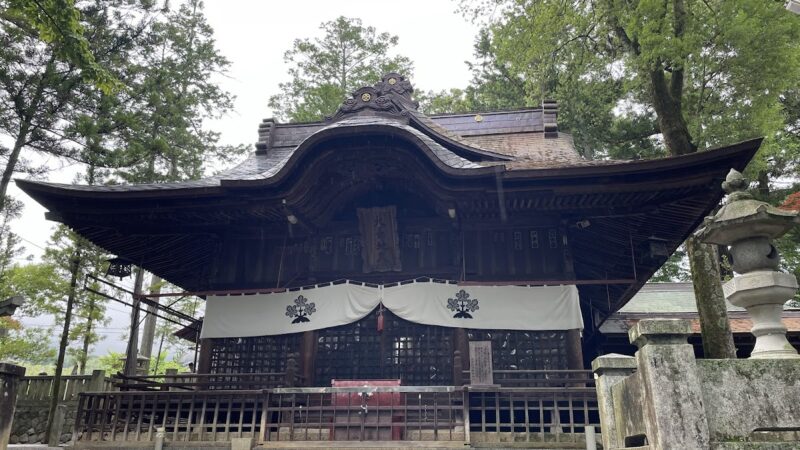
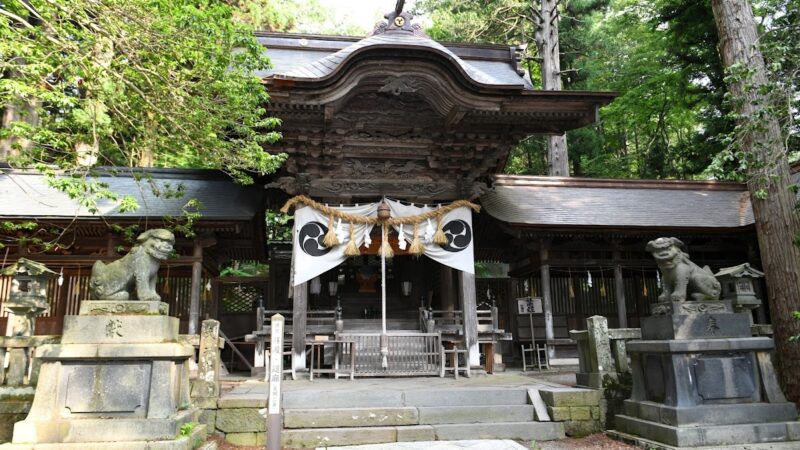
One of the major attractions of Yahiko Shrine is its historically valuable shrine buildings. Five buildings within the shrine grounds are designated as Nagano Prefectural Treasures, allowing visitors to see the evolution of shrine architecture from the Edo period to the modern era.
Main Hall, Sub-Hall, South Hall, and North Hall
The main shrine buildings—Main Hall, Sub-Hall, South Hall, and North Hall—are all designated as Prefectural Treasures. These shrine buildings, with their intricate carvings and dignified architectural style, clearly demonstrate the characteristics of Shinano region shrine architecture.
The shrine buildings have been maintained through periodic reconstruction, and the tradition of using timber bestowed by the gods is reflected in the high quality of the building materials.
Imperial Envoy Hall and Kagura Hall
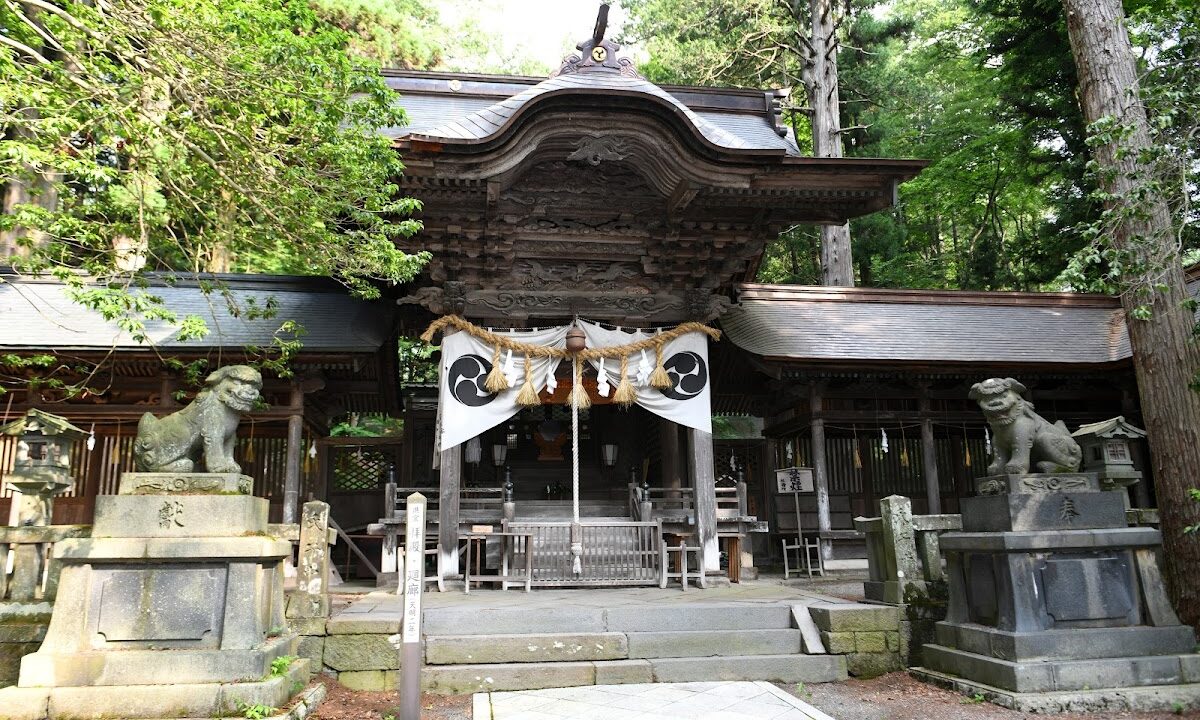
The Imperial Envoy Hall is a building used to receive imperial envoys from the imperial court and is an important structure demonstrating the high status of Yahiko Shrine. Furthermore, Kagura Hall is where Kagura (sacred dance and music) are performed during Shinto rituals, functioning as a place for the transmission of traditional performing arts.
These five prefectural treasure buildings are important points of interest when visiting Yahiko Shrine.
Designated Prefectural Natural Monument: Shrine Grove
The shrine grove surrounding Yahiko Shrine and Ono Shrine is designated as a Nagano Prefecture Natural Monument. A shrine grove is a forest surrounding a shrine, and because it has been protected as a sacred area since ancient times, a valuable natural environment has been preserved.
Abundant Natural Environment
The sacred grove of Yahiko Shrine is home to numerous ancient trees, including cedar, zelkova, and oak, many of which are hundreds of years old. These trees are affectionately known as “Tanamo no Mori” (Yanamo Forest) and exude a sacred atmosphere.
The shrine grove is not only aesthetically pleasing but also important from the perspective of biodiversity conservation, serving as a habitat for many plants and animals. When visiting, please take note of this rich natural environment.
Ono Onbashira | The Onbashira Festival Held Once Every 7 Years
The Onbashira Festival, jointly held by Yahiko Shrine and Ono Shrine, is known as Ono Onbashira and is an important festival held once every seven years, in the Year of the Rabbit and Year of the Rooster.
What is the Onbashira Festival?
While the Onbashira Festival of Suwa Grand Shrine is the most famous, it is a traditional event held at many shrines in the Shinano region. The practice of erecting giant trees at the four corners of a shrine symbolizes the renewal of the sacred area and the renewing of divine power.
At the Ono Onbashira Festival, a series of rituals take place in which giant trees (Onbashira) cut from the mountains are pulled by human power and erected within the shrine grounds. This festival involves the participation of all local residents and serves as an important opportunity to strengthen community bonds.
Next Festival Date
The Onbashira Festival is held once every seven years, in the Year of the Rabbit and the Year of the Rooster. Knowing the next festival date allows you to plan your experience of this precious event. The most recent festival was held in 2023 (Year of the Rabbit), and the next one will be in 2029 (Year of the Rooster).
During the Onbashira Festival, many tourists and worshippers visit, so it is recommended to secure accommodation and transportation early.
Yahiko Shrine’s Goshuin Information
You can receive a Goshuin (shrine stamp) at Yahiko Shrine. Goshuin (temple/shrine stamps) are popular among many worshippers as proof of their visit and as a memento of their connection with the shrine.
Features of Goshuin
The goshuin of Yahiko Shrine features the calligraphy of “Yahiko Shrine” and the shrine’s seal. It is characterized by a dignified design that reflects its status as the second-ranked shrine of Shinano Province.
To receive a goshuin, please inquire at the shrine office. However, availability is not always guaranteed, so if you want to be sure to receive a goshuin, it is recommended to contact them in advance.
About Goshuincho (Goshuin notebooks)
Some shrines may have original goshuincho available, so those interested should inquire at the shrine office. Furthermore, receiving goshuin from both Ono Shrine and Yahiko Shrine allows you to commemorate the unique form of worship in this region.
Access and Visiting Information
Access by Train
Approximately 10 minutes on foot (about 800 meters) from JR Chuo Main Line, Ono Station. Ono Station is a small station where only local trains stop, but it’s conveniently located as the closest station to Yahiko Shrine.
From the station to the shrine, follow the signs and head north. After passing through a residential area, you’ll see the greenery of the shrine’s grove.
Access by Car
Located along National Route 153, it’s easily accessible by car. If traveling south from Shiojiri City, you’ll see the entrance to Yahiko Shrine and the purification fountain about 500 meters after entering Shiojiri City.
It’s approximately 20 minutes from the Chuo Expressway – Iikita Interchange or Shiojiri Interchange.
Parking
There is a parking lot for visitors on the shrine grounds. Except during major festivals such as the Onbashira Festival, there is usually ample parking space.
Visiting Hours and Admission Fee
The shrine grounds are generally free to visit. There is no admission fee, but if there are special viewings of the shrine’s interior, separate confirmation is necessary.
Visiting the shrine is recommended during daylight hours. Especially in winter, sunset is early, so it’s advisable to allow ample time for your visit.
Nearby Tourist Attractions
When visiting Yahiko Shrine, exploring the surrounding tourist attractions will make your trip even more fulfilling.
Ono Shrine
Ono Shrine, adjacent to Yahiko Shrine, is also revered as the second-ranked shrine of Shinano Province. Visiting both shrines allows you to experience the unique form of worship in this region.
Nature and Culture of Tatsuno Town
Tatsuno Town is also known as the “Village of Fireflies,” and in early summer, you can witness the magical dance of fireflies along the Tenryu River and Matsuo Gorge. There are also hot spring facilities and direct-sale agricultural product markets nearby, allowing you to fully enjoy the charm of the region.
Tourist Resources of Shiojiri City
The neighboring city of Shiojiri has tourist attractions such as wineries and Narai-juku. Narai-juku, in particular, preserves the historical townscape that flourished as a post town on the Nakasendo road, allowing you to enjoy an atmosphere that feels like stepping back in time. ## Points to Note When Visiting Yahiko Shrine
Cleansing the Soul in the Tranquil Grounds
The greatest charm of Yahiko Shrine is its tranquil atmosphere. Surrounded by a lush forest, the grounds offer a sacred space that allows you to forget the hustle and bustle of everyday life. We recommend taking your time to visit and calm your mind.
Appreciating Architectural Beauty
The shrine buildings, designated as a prefectural treasure, are meticulously crafted down to the smallest detail, showcasing the pinnacle of architectural techniques from the Edo period to the modern era. Pay attention to the carvings and decorations as well.
Seasonal Expressions
Yahiko Shrine is a place where you can enjoy the changing seasons. The fresh greenery of spring, the deep green of summer, the autumn leaves, and the snowy landscape of winter all offer different expressions depending on the season you visit.
Visiting Both Yahiko Shrine and Ono Shrine
When visiting Yahiko Shrine, we recommend also visiting the adjacent Ono Shrine. Experiencing the differences and similarities between the two shrines will give you a deeper understanding of the history of faith in this region.
Summary
Yahiko Shrine is a fascinating shrine with many attractions, including its status as the second-ranked shrine of Shinano Province, its shrine buildings designated as a prefectural treasure, its sacred grove designated as a prefectural natural monument, and the Ono Onbashira Festival held once every seven years.
Its history of faith dating back to ancient times, its special status as a shrine built using heavenly bestowed timber and constructed every seven years, and the traditional events that have been passed down to the present day demonstrate the richness of Japanese shrine culture.
When visiting Nagano Prefecture, be sure to visit not only famous shrines such as Suwa Grand Shrine, but also shrines with history and tradition like Yahiko Shrine. Spending time in the tranquil grounds will surely be a memorable experience.
Access is relatively convenient, easily reachable by both train and car. Combining a visit to both Ono Shrine and Yahiko Shrine, along with exploring the surrounding tourist spots, will allow you to create a fulfilling itinerary.
The next Onbashira Festival (Ono Onbashira) is scheduled for 2029. Why not start planning now to experience this precious traditional event?