Minowa Nangū Shrine (Nagano Prefecture) Complete Guide | A Thorough Explanation of its History, Deities, Deer Head Procession, and Float Decorations
Located in Minowa-machi, Kamiina-gun, Nagano Prefecture, Minowa Nangū Shrine is a historic shrine that conveys the history and culture of the Ina Valley to the present day. Despite its convenient location just a 2-minute walk from Kinoshita Station on the JR Iida Line, the shrine grounds are enveloped in a tranquil atmosphere, where valuable architecture from the mid-Edo period and traditional events deeply rooted in the region thrive. This article will introduce the charm of Minowa Nangū Shrine in its entirety, including its history, deities, unique Spring Shrine/Autumn Shrine system, and the deer head procession and float decorations that have continued since the first year of Eiroku (1558).
History and Origins of Minowa Nangū Shrine
As the Principal Shrine of the Thirty-Three Villages of Minowa Village
Minowa Nangū Shrine has a history of being worshipped as the principal shrine of the thirty-three villages of Minowa Village. A Sōsha is a central shrine of regional faith, encompassing multiple shrines in a given area. This particular shrine, also known as “Harumiya,” shares a unique form of worship similar to that of Suwa Grand Shrine, with an “Akimiya” (Autumn Shrine) located on the opposite bank of the Tenryū River in Mikka-machi.
This Harumiya/Akimiya system is thought to be strongly influenced by Suwa faith. The Ina Valley is within the sphere of influence of Suwa Grand Shrine, and many shrines enshrine Takeminakata-no-Mikoto as their principal deity. Minowa Nangū Shrine is one such example, functioning as a spiritual pillar of the region.
A Place Associated with Kanayamahiko-no-Mikoto
The area around Minowa Nangū Shrine has a long history dating back to ancient times. On the opposite side of the shrine are the Kanayamahime Shrine and the Kofun (ancient burial mound) of Amawakahiko-no-Mikoto, and it is said that the family of Kanayamahiko-no-Mikoto once lived there. Kanayamahiko-no-Mikoto is known as the god of mining and blacksmithing, suggesting that this region has long been rich in mineral resources.
This historical background indicates that Minowa Nangū Shrine was not merely a place of worship, but a place deeply intertwined with the local industry and way of life.
Characteristics of the Deities and Faith
Main Deities: Takeminakata-no-Mikoto and Yasakatome-no-Mikoto
The main hall of Minowa Nangū Shrine enshrines Takeminakata-no-Mikoto and Yasakatome-no-Mikoto. Takeminakata-no-Mikoto is a god of martial prowess, also known as the main deity of Suwa Grand Shrine, and Yasakatome-no-Mikoto is his consort.
In Suwa faith, Takeminakata-no-Mikoto has been widely worshipped as a god who demonstrated martial prowess in the myth of the transfer of the land, and as a guardian deity of agriculture, hunting, and fishing. He also possesses the characteristics of a water god who supports agriculture in the Ina Valley, and was closely involved in the lives of the local people.
Unique Relocation System
The most distinctive feature of Minowa Nangū Shrine is the system in which only Takeminakata-no-Mikoto is relocated between the Spring Shrine and the Autumn Shrine every six months. This relocation is thought to be a form of worship inherited from the Onbashira Festival of the Upper and Lower Shrines of Suwa Grand Shrine.
The idea of the deity moving in two phases throughout the year is deeply connected to seasonal changes and agricultural cycles. Prayers for a bountiful harvest are offered at the Spring Shrine in spring, and thanksgiving for the harvest are given at the Autumn Shrine in autumn—a form of worship rooted in Japan’s rice-farming culture that is still preserved today.
Cultural Property Designated Main Hall Architecture
Valuable Architecture Built in 1797
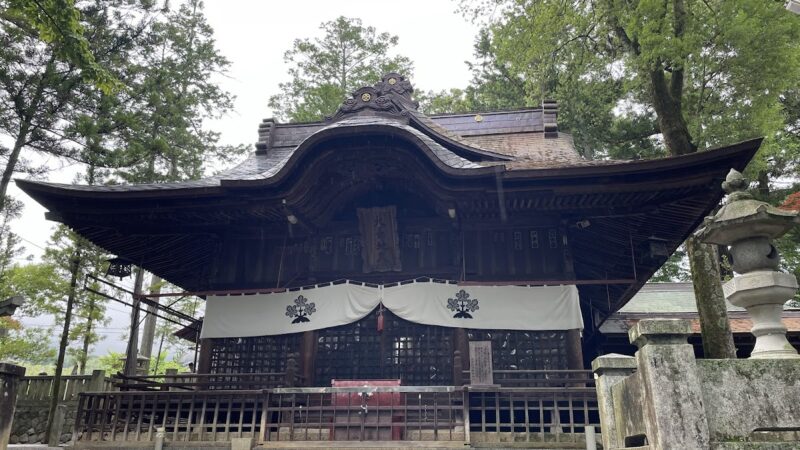
The current main hall of Minowa Nangū Shrine is a one-bay nagare-zukuri style building constructed in 1797 (Kansei 9). It retains many characteristics of shrine architecture from the mid-Edo period and was designated a Minowa Town Designated Tangible Cultural Property in 1989 (Heisei 1).
The Ikkensha Nagare-zukuri style is a type of shrine architecture where the front pillars span one bay (approximately 1.8 meters), and the roof extends forward in a flowing manner. This architectural style, simple yet possessing elegant curves, was widely used in shrine architecture during the Edo period.
Works of Suwa’s Master Craftsman, Ito Chozaemon
The master builder for the main hall of Minowa Nangū Shrine was Ito Chozaemon, who also worked on the main hall of Suwa Taisha Shimosha Harumiya. Ito Chozaemon was one of the leading shrine carpenters in the Suwa region, and his skills extended not only within the Suwa area but also throughout the Ina Valley.
The main hall of Suwa Taisha Shimosha Harumiya is also an Ikkensha Nagare-zukuri style, characterized by its exquisite carvings and well-proportioned structure. Similar techniques are evident in the main hall of Minowa Nangū Shrine, allowing visitors to appreciate the meticulously crafted carvings and structural beauty down to the smallest detail.
A Magnificent Zelkova Grove
The grounds of Minowa Nangū Shrine are surrounded by a magnificent zelkova grove. A grove is a shrine forest, a natural forest that has been protected as a sacred area since ancient times.
Many zelkova trees in Nagano Prefecture are hundreds of years old, and the grove at Minowa Nangū Shrine is no exception. The towering zelkova trees give the shrine a solemn atmosphere and play an important role in protecting the local ecosystem. The beauty of the grove, which changes its appearance with each season, soothes the hearts of visitors.
Traditional Events: Deer Head Procession and Float Decorations
A Deer Head Procession Continuing from Eiroku 1 (1558)
The most famous traditional event at Minowa Nangū Shrine is the “Deer Head Procession,” held during the annual festival in July. This event originated in Eiroku 1 (1558), when a deer head was offered as a prayer for rain.
In the Shikagashira procession, local children parade through the town wearing lion masks adorned with beautiful cloth. The sight of the adorable children and their traditional costumes warms the hearts of onlookers. This event, with a history of over 460 years, has been carefully preserved and passed down by the local people.
Its origins as a prayer for rain demonstrate that water was a lifeline for the people of that time, whose main industry was agriculture. Even today, this traditional event allows us to remember the wishes and hardships of our ancestors.
Float Decorations, a Town Intangible Folk Cultural Property
At the Kinensai festival in January, the “float decorations,” designated as a Minowa Town Intangible Folk Cultural Property, are displayed. These float decorations recreate scenes from historical events and folktales on a stage, requiring high levels of artistry and skill.
The creation of the float decorations is handled by the “Kinoshita Float Decoration Preservation Society,” composed of residents of the Kinoshita district. For the first festival of the year, held on January 11th and 12th, members of the preservation society begin preparations several weeks in advance. The elaborately crafted floats, depicting historical warlords and characters from stories, and adorned with vibrant decorations, captivate all who see them.
In recent years, various themes have been featured, such as a float themed on the Sengoku period warlord Date Masamune. This flexibility in incorporating new expressions that suit the times, while preserving tradition, is a key factor in the continued preservation of this cultural heritage to this day.
The Lively Atmosphere of the First Festival
The first festival, held on January 11th and 12th, is one of the most lively events of the year at Minowa Nangū Shrine. Beyond the display of the floats, local people gather to pray for good health and a bountiful harvest in the new year.
The festival, held in the crisp winter air amidst the shrine grounds surrounded by zelkova trees, is enveloped in a solemn yet warm atmosphere. This first festival of the year also plays an important role as a place to reaffirm the bonds of the local community.
Guide to the Grounds of Minowa Nangū Shrine
Torii Gate and Approach
Minowa Nangū Shrine has small Myōjin torii gates on the south and west sides of the shrine grounds. Myōjin torii gates are the most common type of torii gate, with straight pillars and a curved lintel.
Passing through the southern torii gate, you’ll find an approach lined with zelkova trees. Walking along this quiet approach, bathed in dappled sunlight, you can feel your mind calming away from the hustle and bustle of everyday life.
Worship Hall and Main Sanctuary
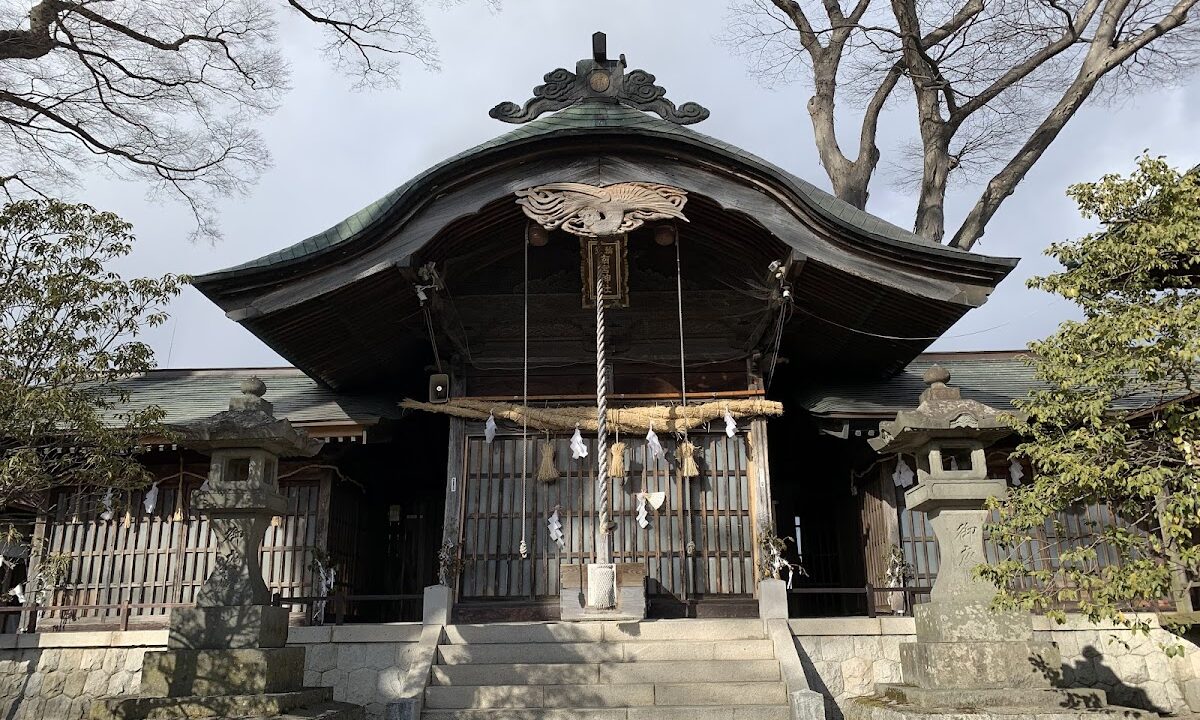
As you proceed along the approach, you’ll first see the worship hall. The worship hall is where worshippers offer their prayers, and the main sanctuary is located behind it.
As mentioned earlier, the main sanctuary is a culturally designated building constructed in 1797 (Kansei 9). Generally, the main shrine is located behind the worship hall, and access is restricted to Shinto priests only. However, its exquisite construction can be appreciated even from the outside. Enjoy the Edo period craftsmanship in the details of the carvings and the beautiful curves of the roof.
Shrines and Stone Monuments
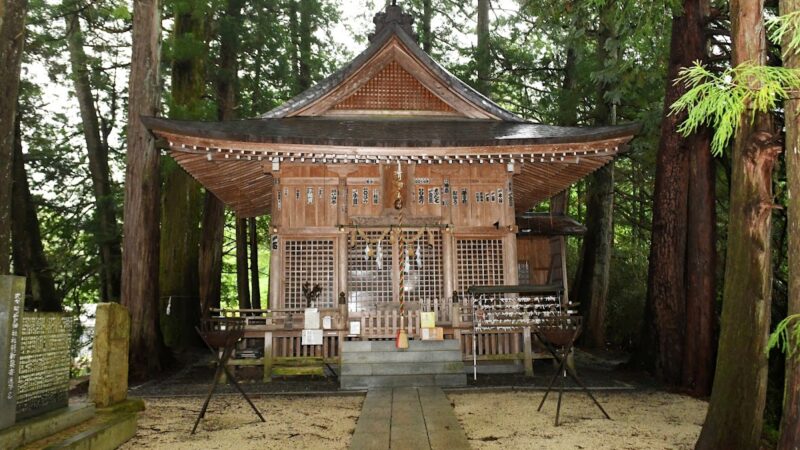
Besides the main shrine, several smaller shrines and stone monuments are scattered throughout the grounds. These tell the story of the region’s history and the diversity of its beliefs, and are well worth exploring.
Some of the older stone monuments bear inscriptions from the Edo and Meiji periods, demonstrating how this shrine has been cherished by the local people for many years.
Access and Basic Information
Location and Transportation Access
Location: 12500 Nakaminowa, Minowa-machi, Kamiina-gun, Nagano Prefecture 399-4601
Access by Train:
- Approximately 2 minutes on foot (approx. 164m) from Kinoshita Station on the JR Iida Line
Since the Iida Line has limited service, it is recommended to check the timetable in advance. Kinoshita Station is an unmanned station, but it’s very close to the shrine, and you can arrive without getting lost.
Access by Car:
- Approximately 10 minutes from the Iikita Interchange on the Chuo Expressway
- Parking: There is parking space for visitors on the shrine grounds (space is limited, so using public transportation is recommended during festivals).
Visiting Hours and Admission Fee
Visiting Hours: Grounds are freely accessible (please check the shrine office’s operating hours)
Admission Fee: Free
While the shrine is generally open 24 hours a day, please refrain from visiting at night and be considerate of nearby residents. If you wish to obtain a Goshuin (shrine stamp) or amulet, it is recommended to check the shrine office’s operating hours in advance.
Major Annual Events
- January 11th & 12th: First Festival (Kinensai) & Float Decoration Exhibition
- July: Annual Festival & Deer Head Procession
- Other: Spring & Autumn Relocation Festivals, etc.
Detailed festival dates may vary from year to year, so it is recommended to check with the Minowa Town Tourism Association or local sources before visiting.
Attractions Around Minowa Nangū Shrine
History and Culture of Minowa Town
Minowa Town is located in Kamiina District, Nagano Prefecture, in the heart of the Ina Valley, surrounded by the Central and Southern Alps. It has flourished as a transportation hub since ancient times, and was also the point where the Nakasendo and Sanshu Kaido roads intersected.
In addition to Minowa Nangū Shrine, there are many other historical temples, shrines, and historical sites scattered throughout the town. Minowa Castle Ruins (Fukuyo Castle Ruins) is a mountain castle from the Sengoku period and was the site of Takeda Shingen’s invasion of Shinano Province. For history buffs, visiting these historical sites is highly recommended.
Nature and Scenery of the Ina Valley
The area around Minowa Town boasts magnificent natural scenery, nestled between the Central Alps (Kiso Mountains) and the Southern Alps (Akaishi Mountains), two of Japan’s most representative mountain ranges.
You can enjoy the beauty of each season: cherry blossoms in spring, fresh greenery in summer, autumn leaves in fall, and snowscapes in winter. Especially during the autumn foliage season, the Alps mountains change color, creating a breathtaking spectacle.
Nearby Tourist Spots
Minowa Tenryu Park:
This park stretches along the Tenryu River, and cherry blossoms bloom beautifully in spring. Enjoy a stroll while listening to the gentle murmur of the river.
Nagata Nature Park:
A park where you can fully enjoy the nature of Minowa Town, ideal for hiking and birdwatching.
Momiji Lake (Minowa Dam):
A dam lake known as a famous spot for autumn foliage, the reflection of the autumn leaves on the lake surface is a spectacular sight.
Akasoba no Sato (Red Buckwheat Village):
From late September to early October, red buckwheat flowers bloom across the area, making it a representative tourist spot in Minowa Town.
Local Cuisine
The Ina Valley is known for its unique B-grade gourmet food, such as “Ramen” and “Sauce Katsudon.” Many restaurants around Minowa Town serve dishes using local ingredients.
Shinshu soba is especially a must-try. Grown in pure water and a cool climate, the buckwheat is characterized by its fragrant aroma and smooth texture. Many famous handmade soba restaurants are scattered around Minowa Town.
Furthermore, fruit cultivation, such as apples and grapes, is thriving, and you can purchase fresh fruit at the direct sales store. Please enjoy the seasonal flavors.
Points to Note When Visiting Minowa Nangū Shrine
Etiquette for Visiting a Shrine
By observing the basic etiquette for visiting a shrine, you can offer a more heartfelt prayer.
- Bow before passing through the torii gate: As a sign of respect before entering the sacred area, bow before the torii gate.
- Walk along the edge of the path: The center of the path is considered the path of the gods, so walk along the edge.
- Purify yourself at the water basin: If there is a water basin, purify your left hand, right hand, and mouth in that order.
- Pray at the main hall: The basic etiquette is two bows, two claps, and one bow. If there is a bell, ring it before praying.
- Don’t forget to express gratitude: It is important to express gratitude for everyday blessings, not just to make requests. ### Regarding Photography
Photography is generally permitted on the shrine grounds, but please observe the following points:
- Refrain from taking photos in areas where photography is prohibited, such as inside the main hall.
- Be considerate of attendees during religious ceremonies.
- Be mindful of other worshippers if they are included in your photos.
- Use flash sparingly.
While the beautiful zelkova forest and the historic main hall architecture are attractive photo spots, remember that worship is the primary purpose of your visit.
Suitable Seasons for Visiting
Minowa Nangū Shrine can be visited throughout the year, but each season offers its own unique charm.
Spring (March-May):
The fresh green zelkova trees are beautiful, and you can worship in refreshing air. You can also enjoy the cherry blossoms in the surrounding area during cherry blossom season.
Summer (June-August):
You can witness the July festival and the deer head procession. The lush green forest provides a cool and refreshing atmosphere.
Autumn (September-November):
The zelkova trees turn a beautiful golden color, painting the shrine grounds golden. The autumn foliage of the surrounding mountains is also a spectacular sight.
Winter (December-February):
You can see the first festival of January and the decorated floats. The shrine is enveloped in a solemn atmosphere amidst the snowy landscape.
Summary of the Charms of Minowa Nangū Shrine
Minowa Nangū Shrine is located in Minowa Town, Kamiina District, Nagano Prefecture, in the heart of the Ina Valley, and has long been cherished as a center of local faith. Enshrining Takeminakata-no-Mikoto and Yasakatome-no-Mikoto, and possessing a unique system of relocation between the Spring Shrine and Autumn Shrine, this shrine retains a strong influence of Suwa faith.
The main hall, built in 1797 (Kansei 9), is a valuable cultural asset created by the renowned Suwa craftsman, Ito Chōzaemon, and conveys the beauty of shrine architecture from the mid-Edo period. Surrounded by a magnificent grove of zelkova trees, the shrine grounds offer a delightful display of natural beauty throughout the seasons.
Traditional events deeply rooted in the community, such as the deer-headed procession dating back to 1558 and the float decorations designated as a town intangible folk cultural property, are also a major attraction. These events are carefully preserved and passed down by the local people, teaching us the importance of history and culture in the modern age.
Its excellent accessibility, just a two-minute walk from Kinoshita Station on the JR Iida Line, is another notable feature of this shrine. When sightseeing in the Ina Valley, be sure to visit Minowa Nangū Shrine and experience its history, tradition, and tranquil atmosphere.
Learning about local history, experiencing traditional culture, and appreciating the beauty of nature—Minowa Nangū Shrine offers all of these, truly a treasure of the Ina Valley.
Frequently Asked Questions
Q1: Can I get a Goshuin (shrine stamp) at Minowa Nangū Shrine?
A1: You may be able to receive a Goshuin (temple/shrine stamp) at Minowa Nangū Shrine, but there may not always be a permanent shrine office, so we recommend checking with the Minowa Town Tourism Association or local information beforehand. They are more likely to be able to accommodate you on festival days.
Q2: Is there parking?
A2: There is parking space for visitors on the shrine grounds, but the number of spaces is limited. During festivals such as the first festival and the annual festival, congestion is expected, so we recommend using public transportation (2-minute walk from Kinoshita Station on the JR Iida Line).
Q3: When can I see the deer head procession?
A3: The deer head procession takes place every year during the annual festival in July. The exact date may vary from year to year, so please check with the Minowa Town Tourism Association or the official Minowa Town website before visiting. The traditional procession by local children is a must-see.
Q4: When can I see the float decorations? **
A4: The float decorations are displayed annually at the first festival on January 11th and 12th. This is a valuable traditional cultural practice designated as a town intangible folk cultural property, and it features elaborate reproductions of historical events and scenes from folktales. Please be sure to time your visit to coincide with this period if you are visiting in winter.
Q5: What do the Spring Shrine and Autumn Shrine of Minowa Nangū Shrine mean?
A5: Minowa Nangū Shrine is called “Spring Shrine,” and the “Autumn Shrine” is located in Mikka-machi on the opposite bank of the Tenryū River. This is a unique system where only Takeminakata-no-Mikoto is moved between the two shrines every six months, a form of worship similar to the Upper and Lower Shrines of Suwa Grand Shrine. The movement of the deity in spring and autumn expresses a belief system that corresponds to the changing seasons and agricultural cycles.
Q6: Are there any recommended tourist spots in the surrounding area? **
A6: Around Minowa Town, you can find Akasoba no Sato (best time to see the buckwheat from late September to early October), Momiji Lake (Minowa Dam, a famous spot for autumn leaves), Minowa Tenryu Park (a famous spot for cherry blossoms), and Minowa Castle Ruins (Fukuyo Castle Ruins). You can also enjoy the magnificent scenery of the Central and Southern Alps.
Q7: How long does it take to visit the shrine?
A7: A normal visit takes about 15-30 minutes. If you want to stroll around the grounds or carefully appreciate the architecture of the main hall, it’s a good idea to allow about an hour. If you are visiting on a festival day, please also consider the duration of the event.