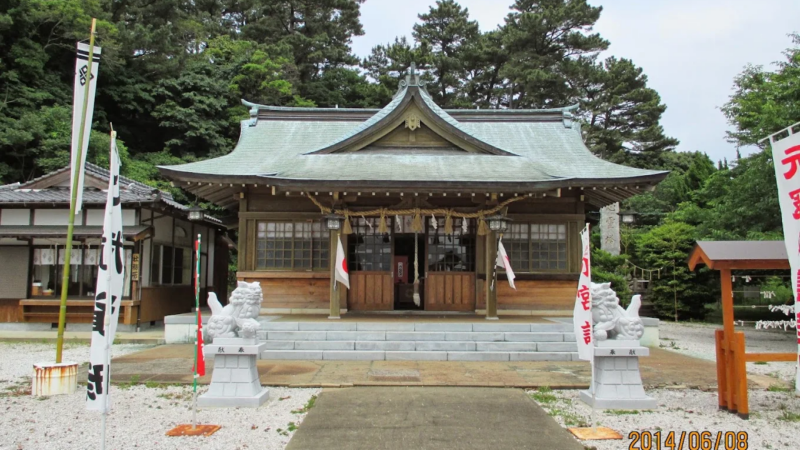
Hayakigu Shrine (Sasebo City, Nagasaki Prefecture) Complete Guide | History, Goshuin (Shrine Seal), and Deep Connection to the Haiki Tea Market
Located in Haiki, Sasebo City, Nagasaki Prefecture, Hayakigu Shrine is an ancient shrine affectionately known locally as “Hayaki Jinja.” Said to have been founded in the 12th year of Emperor Keiko’s reign (82 AD), this shrine, though not officially recognized as a Shikinaisha (a shrine listed in the Engishiki), holds a status comparable to that of a Shikinaisha. Situated on a hill overlooking the turbulent Haiki Strait, it has a long history as a place of worship, revered as a guardian deity of safe voyages and deeply connected to the Haiki Tea Market, which has a history spanning over 450 years.
This article will introduce the charms of Hayakigu Shrine in detail, from its historical background and enshrined deities to its unique goshuin (shrine seal), its relationship with the Haiki Tea Market, and access information.
The History and Origins of Hayaki Shrine
The Land of Hayaki with an Ancient History
The place name “Hayaki,” where Hayaki Shrine is located, has a long history, as evidenced by its mention as “Hayaki-no-to” in the *Hizen no Kuni Fudoki* (a historical and geographical record of Hizen Province). This place name is said to originate from the strong currents of the Hayaki Strait, and it is known as a particularly historically significant area within Sasebo City.
Hayaki Shrine is said to have been founded in the twelfth year of Emperor Keiko’s reign (82 AD), boasting a history of over 1,900 years. While not a Shikinaisha (a shrine listed in the Engishiki Jinmyocho), it is considered an ancient shrine of comparable importance to Shikinaisha, even though it is an unlisted shrine.
Faith as a Guardian Deity of Navigation
The Hayaki Strait is a narrow strait connecting Omura Bay and Sasebo Bay, known for its strong currents caused by the ebb and flow of the tides. This turbulent current, known as “Shionome,” has long been considered a dangerous stretch of water for navigation.
Hayakimiya Shrine has long been revered by sailors and merchants as a deity praying for the safe passage of ships navigating the Haiki Strait. In particular, for merchants who gathered at the Haiki Tea Market (described later), visiting Hayakimiya Shrine was an important custom for praying for business prosperity and safe voyages.
Deities and Divine Virtues
Hayakimiya Shrine enshrines the following five deities:
Main Deities
Susanoo-no-Mikoto
A heroic deity in Japanese mythology, widely worshipped as a god of protection against misfortune, disease, and matchmaking.
Izanami-no-Mikoto
The goddess of creation, revered as the mother goddess who gives birth to all things.
Kotosaka-no-Mikoto
A god born when Izanami-no-Mikoto and Izanagi-no-Mikoto separated in the underworld, he is considered a god who dispels calamities.
Hayatama-no-Mikoto
Like Kotosaka-no-Mikoto, a god born at the time of their separation in the underworld, he is worshipped as a god who swiftly grants wishes.
Ukemochi-no-Kami
Known as the god of abundant harvests and food, she is believed to bestow divine blessings for business prosperity.
Divine Blessings
Due to these enshrined deities, Hayakumiya Shrine is believed to possess the following divine blessings:
- Safe voyages and traffic safety
- Business prosperity
- Protection from evil and disaster
- Matchmaking
- Abundant harvests
- Family safety
The divine blessings for safe voyages and business prosperity are particularly deeply intertwined with the local character of Hayaki, and continue to attract fervent devotion from local people and businesses.
Deep connection with the Hayaki Tea Market
A traditional market with over 450 years of history
An essential part of discussing Hayaki Shrine is the “Hayaki Tea Market,” held every April. This tea market boasts a history of over 450 years and is one of Nagasaki Prefecture’s representative traditional events, passed down through generations.
The Hayaki Tea Market originally began as a market centered on tea trading, but has now developed into a large-scale market offering a variety of goods including plants, gardening supplies, daily necessities, and food. Many people visit every year, and it has become a deeply rooted spring tradition in the community.
A Place of Faith for Merchants
Merchants who gather at the Haiki Tea Market have long had the custom of visiting Hayakigu Shrine to pray for business prosperity and safe voyages. Many merchants crossed the Haiki Strait by boat to participate in the market, and they offered prayers to the gods of Hayakigu Shrine for safe passage through the strong currents.
This tradition continues to this day, and many worshippers visit Hayakigu Shrine during the tea market. The history of the shrine and the market working together to form the local culture is one of Hayakigu Shrine’s most distinctive features.
Hayakigu Shrine’s Goshuin (Shrine Seal)
Colorful and Unique Designs
Hayakigu Shrine’s goshuin (shrine seal) is highly popular among worshippers due to its colorful designs. Particularly noteworthy are the goshuin featuring unique illustrations that reflect the local characteristics of Haiki.
The goshuin depict the following motifs:
- Kanchobashi (Tidal Observation Bridge): A bridge spanning the Haiki Strait, known as a spot for observing the strong currents.
- Shionome (Tidal Current): A design representing the fierce currents of the Haiki Strait.
- Canoe: An illustration of a canoe riding the waves of the strong currents of the Haiki Strait, representing a fusion of modern sport and traditional scenery.
Types and Distribution Methods of Goshuin (Shrine Seals)
At Hayakuri Shrine, in addition to the regular ink-written goshuin, colorful illustrated goshuin are also available. Goshuin are available at the shrine office, and many goshuin enthusiasts visit to collect them as a memento of their visit.
When receiving a goshuin, please speak to the shrine office after completing your prayers. In addition to direct writing into your goshuin book, pre-printed goshuin may also be available.
Highlights of the Shrine Grounds
Views from the Hilltop
Hayakigu Shrine is situated on a hilltop in the town of Haiki, offering views of the Haiki Strait from its grounds. On clear days, you can admire the unique expressions of the sea created by the strong currents, giving you a real sense of why this place is called “Hayaki” (meaning “quickly arriving”).
Shrine Buildings and Grounds Facilities
The shrine buildings of Hayakigu Shrine have a tranquil appearance that reflects its long history. The grounds are meticulously maintained, enveloped in a quiet and sacred atmosphere.
The following facilities are located within the grounds:
- Main Hall: A sacred space where the enshrined deity is worshipped
- Worship Hall: A place where worshippers offer prayers
- Shrine Office: Where goshuin (shrine stamps) are available and amulets are sold
- Water Basin: A place to purify oneself before worship
Seasonal Scenery
The grounds of Hayakigu Shrine offer beautiful scenery throughout the four seasons. In spring, the Hayaki Tea Market is bustling with activity, and the fresh greenery is beautiful. In summer, the lush trees provide a cool respite, and in autumn, the vibrant autumn leaves adorn the grounds. The tranquil atmosphere of winter is also exceptional.
Access and Visiting Information
Basic Information
Official Name: Hayaki-gu
Common Name: Hayaki Shrine
Location: 2-33-2 Hayaki, Sasebo City, Nagasaki Prefecture
Parking: Free parking available
Visiting Hours: Grounds are freely accessible (please check the shrine office hours)
Access by Train
The shrine is within walking distance from Hayaki Station on the JR Sasebo Line and Omura Line. It’s about a 10-minute walk from the station to the shrine, allowing you to stroll through the townscape of Hayaki on your way.
Haiki Station is about 10 minutes from Sasebo Station, and about 1 hour and 30 minutes from Nagasaki Station by express train.
Access by Car
From Nagasaki: Approximately 15 minutes from the Sasebo Chuo Interchange on the West Kyushu Expressway.
From Fukuoka: Approximately 20 minutes from the Sasebo Minato Interchange on the West Kyushu Expressway.
The shrine has a free parking lot, making it convenient to visit by car. However, during the Haiki Tea Market, surrounding roads become congested, so using public transportation is recommended.
Etiquette for Visiting the Shrine
When visiting the shrine, please observe the following basic etiquette:
- Bow before the Torii Gate: Bow before entering the shrine grounds.
- Purify yourself at the Water Basin: Purify your left hand, right hand, and mouth in that order.
- Avoid the Center of the Path: Walk away from the center, which is considered the path of the gods.
- Two Bows, Two Claps, One Bow: This is the basic etiquette when offering prayers at the main hall.
- Pray Quietly: Be mindful that this is a sacred place and pray quietly.
Nearby Tourist Attractions
Kanchobashi Bridge and Shionome
Kanchobashi Bridge, located near Hayakigu Shrine, is an excellent spot to observe the powerful currents of the Hayaki Strait, known as “Shionome.” The fierce currents created by the ebb and flow of the tide offer a rare and powerful spectacle that allows you to truly feel the force of nature.
Shionome is most intense during high and low tides in spring tides. You can safely observe the powerful currents from Kanchobashi Bridge, and the impressive sight is well worth seeing.
Canoe Experience in the Hayaki Strait
In recent years, canoe experiences utilizing the strong currents of the Hayaki Strait have become popular. This thrilling experience of riding the currents has attracted attention from outdoor enthusiasts, and an illustration of it has even been featured on the Goshuin (shrine stamp) of Hayakigu Shrine.
Haiki Tea Market (Held in April)
The Haiki Tea Market, held every April, is an event you should definitely experience when visiting Hayaki Shrine. With a history of over 450 years, this market offers a wide variety of goods, including plants and gardening supplies, and is bustling with many people.
During the tea market, Hayaki Shrine is also crowded with worshippers, creating a special atmosphere.
Sightseeing in Sasebo City
Sasebo City, where Hayaki Shrine is located, has many other tourist attractions.
- Kameyama Hachimangu Shrine: A representative shrine of Sasebo City and one of the “Nagasaki Three Shrines Pilgrimage.”
- Kujukushima Islands: A representative scenic spot of Sasebo, with a beautiful landscape created by 208 islands.
- Huis Ten Bosch: A theme park recreating the streetscape of the Netherlands.
- Sasebo Burger: A nationally famous local delicacy of Sasebo.
Annual Events at Hayaki Shrine
Hayaki Shrine holds various Shinto rituals and festivals throughout the year.
Main Annual Events
January: First Shrine Visit of the Year, New Year’s Festival
The shrine is bustling with worshippers praying for happiness and peace in the new year.
February: Setsubun Festival
A festival to pray for protection from evil and for good fortune.
April: Spring Grand Festival
An important festival held in conjunction with the Hayaki Tea Market.
October: Autumn Grand Festival
A festival to give thanks for a bountiful harvest and the prosperity of the region.
November: Shichi-Go-San Festival
Celebrating children’s growth and praying for their healthy development.
December: Year-End Grand Purification Ceremony
A Shinto ritual to purify and cleanse away the sins and impurities of the year.
For detailed dates and times of these events, it is recommended to check with the shrine in advance.
Prayers Available at Hayakumiya Shrine
Hayakumiya Shrine offers a variety of prayers.
Main Types of Prayers
- Safe Navigation and Traffic Safety: Prayers for the safety of ships and vehicles
- Business Prosperity: Prayers for the development and prosperity of businesses
- Family Safety: Prayers for the health and peace of the family
- Exorcism: Prayers for protection from misfortune during unlucky years
- Safe Childbirth: Prayers for the health of mother and child and for a safe delivery
- First Shrine Visit: Prayers for the healthy growth of the baby
- Shichi-Go-San: Prayers to celebrate the growth of children
- Prayer for Success in Exams: Prayers for success in exams and tests
If you wish to receive a prayer, it is recommended to contact the shrine office in advance to make a reservation. Checking the prayer fees and reception hours beforehand will also ensure a smooth process.
Items Offered at Hayakumiya Shrine
Hayakumiya Shrine offers a variety of items (amulets, etc.).
Main Items Offered
- Traffic Safety Amulet: An amulet to protect the safety of cars and ships.
- Business Prosperity Amulet: An amulet to pray for the development of your business.
- Exorcism Amulet: An amulet to ward off misfortune.
- Health Amulet: An amulet to pray for health and longevity.
- Academic Success Amulet: An amulet to pray for academic improvement.
- Matchmaking Amulet: An amulet to pray for a good match.
- Divine Talisman: A talisman to be enshrined on the household altar.
- Amulet: Various types of amulets.
These items can be obtained at the shrine office. Please inquire directly with the shrine regarding the types of items and the offering fees.
Points to Note When Visiting Hayakumiya Shrine
Recommended Time to Visit
Hayakumiya Shrine can be visited throughout the year, but here are some particularly recommended times.
April (Haiki Tea Market Season): This is a special time to visit the shrine in conjunction with the traditional market, which has been held for over 450 years. You can experience the local history and culture firsthand amidst the lively atmosphere.
New Year’s Visit Season: The shrine is bustling with worshippers praying for happiness in the new year. It’s a time to truly feel the deep faith of the local people.
Autumn Grand Festival Season: A festival is held to give thanks for a bountiful harvest, allowing you to see the shrine in its original state.
Regarding Photography
Photography is generally permitted on the shrine grounds, but please note the following:
- Refrain from taking photos in areas where photography is prohibited, such as inside the main shrine.
- Be considerate of other worshippers.
- Be mindful that this is a sacred place and strive for respectful photography.
- When posting on social media, be careful not to include other worshippers in your photos.
Regarding Attire
While casual attire is acceptable for worship, the following attire is recommended if you are receiving prayers:
- Men: Suit or jacket required
- Women: Suit, dress, or collared attire
- Clothing to avoid: Sandals, shorts, or revealing clothing
Hayaki Shrine and the Local Community
The Center of the Local Community
Hayaki Shrine, with its history of approximately 1,900 years, has played a central role in the community of the Hayaki region. Through annual events and festivals, it serves as a place to deepen the bonds among local residents.
In particular, its connection with the Hayaki Tea Market illustrates the shrine’s history of contributing to the development of the local economy and culture, beyond being merely a place of worship.
Modern Significance as a Guardian Deity of Maritime Safety
Even today, Hayakuri Shrine continues to be revered as a deity of maritime safety. It is a place of deep faith for local people and businesses, not only for prayers for the safety of ships navigating the Haiki Strait, but also for prayers for general traffic safety.
Many people, from those involved in fishing and shipping to ordinary drivers, visit Hayakuri Shrine to pray for traffic safety.
Value as a Cultural Asset
Hayakuri Shrine is a historically valuable shrine linked to the ancient place name “Hayakuri-mon,” which is recorded in the “Hizen no Kuni Fudoki” (a historical and geographical record of Hizen Province). Although not a Shikinaisha (a shrine not officially recognized in the Engishiki), it is considered to have a status comparable to Shikinaisha (shrines listed in the Engishiki), and occupies an important position in the study of local history.
With its founding history dating back to the reign of Emperor Keiko, its more than 450-year-long connection to the Haiki Tea Market, and its faith linked to the geographical characteristics of the Haiki Strait, it is a shrine with multi-layered historical value, and its preservation and transmission are expected to continue in the future.
Hayakuri Shrine is a historically valuable shrine with traditions dating back to the reign of Emperor Keiko, a connection to the Haiki Tea Market for over 450 years, and faith linked to the geographical characteristics of the Haiki Strait. ## Summary: The Charm of Hayaki Shrine
Hayaki Shrine (Hayaki Jinja) is an ancient shrine with a history of approximately 1,900 years, located in Haiki, Sasebo City, Nagasaki Prefecture. Situated on a hill overlooking the strong currents of the Haiki Strait, it serves as a guardian deity for safe voyages and has deep ties to the Haiki Tea Market, which has been held for over 450 years, preserving the history and culture of the region.
Hayaki Shrine has many facets to its charm, including its colorful and unique goshuin (shrine stamps), the nearby attractions such as the strong currents of the Haiki Strait and the Kanchobashi Bridge, and its role as a center of the local community.
When visiting Sasebo City, be sure to visit Hayaki Shrine and experience the atmosphere of this place of worship nurtured by a long history. Especially during the Haiki Tea Market in April, you can experience the unique lively atmosphere where the shrine and market become one.
Hayaki Shrine is easily accessible by public transport and has free parking available, making it a convenient place to visit. This shrine is a hidden historical spot in Nagasaki Prefecture that I hope many people will come to know about.