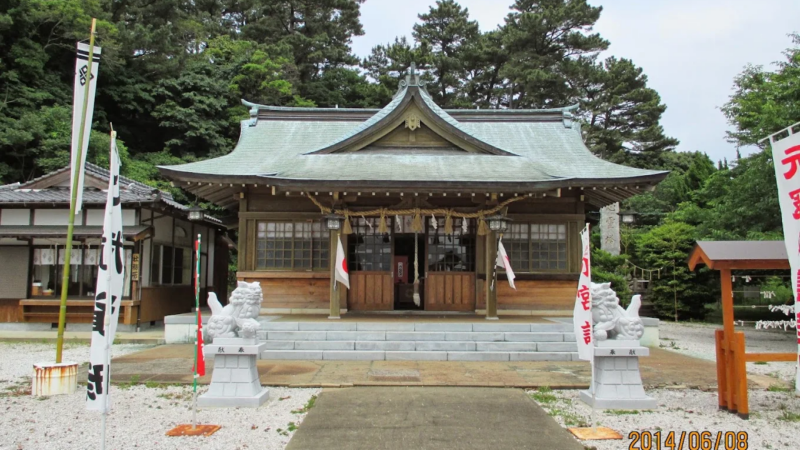
Complete Guide to Tomie Shrine (Nagasaki Prefecture) | The History of the Main Shrine of the Goto Tomie Domain and the Charm of its Grand Festival
Located in Tomie-cho, Goto City, Nagasaki Prefecture, Tomie Shrine is an important shrine that conveys the history and culture of the Goto Islands to the present day. As the main shrine of the Goto Tomie Domain, it received the protection of the domain from the Edo period to the Meiji era, and for over 300 years it has been a spiritual pillar of the region, attracting the faith of the people of the Tomie area.
History and Origins of Tomie Shrine
Establishment as the Main Shrine of the Goto Tomie Domain
The history of Tomie Shrine is closely linked to the establishment of the Goto Tomie Domain. In 1660 (Manji 3), when the Tomie Domain was established as a branch domain of the Goto Domain, Tomie Shrine was positioned as the domain’s main shrine. A main shrine is a shrine that enshrines the major deities of a region, allowing the lord and people to worship together. Tomie Shrine truly functioned as the spiritual center of the Tomie Domain.
Throughout the Edo period, Tomie Shrine received the reverence of the feudal lord and was maintained and developed under the protection of the domain. During the feudal era, important rituals and ceremonies of the domain were held at this shrine, playing a vital role as a place to pray for the peace and prosperity of the people and for abundant harvests. Even after the Meiji Restoration and the abolition of the feudal domains, it continues to be revered as the local guardian deity by the people of the Tomie district.
A Large, Ancient Shrine in the Tomie District
Tomie Shrine is known as the oldest and largest shrine in the Tomie district. Located in Matsuo, Tomie-cho, it is a beloved local landmark, and its grounds serve as a place of relaxation for local residents.
While there are various theories regarding the shrine’s founding date, it is believed that some kind of religious site existed in this area even before the establishment of the Goto Tomie Domain. With the establishment of the domain, it was developed as the main shrine and evolved into its current form.
Deities and Sacred Object
Enshrinement of Bishamonten as the Sacred Object
One of the most distinctive features of Tomie Shrine is that it enshrines Bishamonten as its sacred object. Bishamonten is another name for Tamonten, one of the Four Heavenly Kings in Buddhism, and is worshipped as a god of war and wealth. The fact that a shrine enshrines a Buddhist deity is a valuable example that tells the history of Shinto-Buddhist syncretism.
Until the Edo period, Shinto-Buddhist syncretism was common in Japan, and shrines and temples were worshipped together. While many shrines eliminated Buddhist elements due to the Meiji-era separation of Shinto and Buddhism, Tomie Shrine continues to enshrine Bishamonten as its sacred object, preserving the tradition of Shinto-Buddhist syncretism in this region.
Bishamonten is also known as a god of military fortune, so it is natural that the Goto Tomie Domain, which was a samurai government, revered this deity. Furthermore, its aspect as a god of wealth aligns with the regional characteristics of Tomie, which prospered through maritime transport and trade.
Subsidiary Shrines and Minor Shrines within the Precincts
Besides the main shrine, Tomie Shrine’s precincts house several subsidiary shrines, representing a diverse range of worship.
Grand Shrine
The Grand Shrine within the precincts is believed to enshrine Amaterasu Omikami, the deity of Ise Grand Shrine. During the Edo period, Ise worship spread throughout Japan, and Grand Shrines dedicated to the gods of Ise were built at various shrines. Tomie Shrine’s Grand Shrine is an example of this widespread faith.
Sarutahiko Shrine
Sarutahiko Shrine is a subsidiary shrine dedicated to Sarutahiko Okami, known as the god of opening paths. Sarutahiko Okami is recorded in the Kojiki and Nihon Shoki as the god who guided the descent of the heavenly grandchild, and is worshipped as a god of traffic safety and protection against misfortune. In the Goto Islands, surrounded by the sea and where safe navigation was crucial, the belief in the god of opening paths likely held particular significance.
Ukemochi Shrine
Ukemochi Shrine is a subsidiary shrine dedicated to Ukemochi-no-kami, the god of food. Ukemochi-no-kami is revered as a god who brings abundant harvests and the blessings of food, and has attracted the faith of people engaged in agriculture and fishing. It plays an important role as a place to pray for the prosperity of agriculture and fishing, the main industries of the Tomie district.
These subsidiary shrines demonstrate that Tomie Shrine functioned not merely as the main shrine of the domain, but also as a place of worship that embraced the diverse wishes of the local people.
Tomie Shrine Grand Festival | A Traditional Festival with Over 300 Years of History
History and Overview of the Grand Festival
The Tomie Shrine Grand Festival is a traditional festival that has continued in the Tomie district for over 300 years. This festival, held grandly over four days from October 14th to 17th each year, is the most important event of the year for the people of Tomie and serves as a place to reaffirm their regional identity.
The festival’s origins date back to the time of the Goto Tomie Domain, where it was celebrated as a domain-wide festival during the feudal period. It has been passed down as a local festival since the Meiji era and continues uninterrupted to this day.
Schedule of the Grand Festival
The Grand Festival consists of various Shinto rituals and events held over four days.
October 14th (Day 1)
A Shinto ritual marking the start of the festival is held, building excitement for the festivities.
October 15th (Day 2)
The main festival of the Grand Festival is solemnly held from 10:00 AM. From 3:00 PM, the climax of the festival, the procession of the portable shrine, begins. Accompanied by the sounds of flutes and drums, the portable shrine parades through the town in a unique style, proceeding to the temporary shrine. At night, Tomie Kagura is performed in front of the shrine, creating a mystical atmosphere.
October 16th-17th
Various Shinto rituals and dedication ceremonies continue, and the festival continues until the final day.
Unique Portable Shrine Procession
The highlight of the Tomie Shrine Grand Festival is the procession of the portable shrine. The procession, which parades through Tomie town for 4-5 hours, is said to be “the slowest portable shrine procession in Japan.” This is not due to laziness, but rather to a unique style of parading and careful movements.
The portable shrine moves slowly, swaying greatly from side to side and back and forth. This unique carrying style is also called “Tomie-ryu” and is a technique that has been passed down through generations of tradition. The bearers, in unison with the sounds of flutes and drums, carry the portable shrine.
Dedication of Tomie Kagura
At night, Tomie Kagura is performed in front of the portable shrine, which is enshrined in the temporary shrine. Tomie Kagura is a traditional performing art passed down in this region, offering to the gods and praying for a bountiful harvest and peace in the community. The sounds of gagaku (ancient Japanese court music) played on instruments such as flutes, drums, and bells, along with the graceful dances of the performers, create a sacred atmosphere.
Tomie Kagura retains many of the characteristics of Kagura from the Goto Islands and is attracting attention as a valuable cultural asset from an ethnological perspective.
Access and Basic Information to Tomie Shrine
Location and Access
Address
707-I Matsuo, Tomie-cho, Goto City, Nagasaki Prefecture 853-0201
Access by Public Transportation
- Approximately 3 minutes on foot (197m) from the Goto Bus “Miyashita” bus stop
- Available routes: Tomie – Nihonkusu – Kishuku – Tomie Line, Fukue – Ohama – Kodomari – Komaki – Tomie – Fukue Line (via Goto Hospital)
Access by Car
- Approximately 30 minutes by car from Fukue Port
- Approximately 40 minutes by car from Goto Tsubaki Airport
Visiting Information
Visiting Hours
Grounds are freely accessible (please check the opening hours of the shrine office)
Admission Fee
Free
Parking
Available (Limited number of spaces; use of public transportation is recommended during the annual festival)
Phone Number Inquiries can be made through the Goto City Tourism Association, etc.
Tourist Spots Around Tomie Shrine
When visiting Tomie Shrine, exploring the surrounding tourist spots will allow you to experience the charm of the Tomie area more deeply.
Tomie Onsen Center Tashaka Land
This hot spring facility is located a few minutes’ drive from Tomie Shrine. “Tashaka” means “energetic” in the Goto dialect. It’s a popular hot spring among locals and perfect for relaxing after a long day of travel. You can enjoy beautiful sunsets from the open-air bath overlooking the sea.
Goto Coral Museum
This facility exhibits materials related to coral harvested in the waters around Goto. Goto has long been known as a coral producing area, and you can learn about the history and techniques of coral craftsmanship. The beautiful coral products on display are also worth seeing.
Tomie Jinya Stone Warehouse
This is a stone warehouse remaining at the site of the Goto Tomie Domain’s Jinya (fortified residence). This is a valuable historical site that preserves the architectural techniques of the feudal era, and is an important spot for understanding the history of Tomie Shrine.
Tadakariyama Observatory
This observatory offers a panoramic view of Tomie Bay. Although not at a high elevation, it offers a 360-degree panoramic view, and on a clear day, you can enjoy the beautiful sea scenery and the islands of the Goto Islands.
Tarojima Beach
This beach boasts clear waters and beautiful white sand. It’s bustling with swimmers in the summer, and you can enjoy marine activities such as snorkeling.
Sansan Tomie Camp Village
This seaside campsite has bungalows and tent sites. Camping under a sky full of stars will be a special experience.
Tomie Blue Line Course (Cycling)
This cycling course runs along the coastline of Tomie. Cycling while enjoying the beautiful sea scenery is exhilarating, and you can fully enjoy the nature of the Goto Islands.
Kanjigajo Castle Ruins
These are the ruins of a medieval mountain castle, one of the residences of the Goto clan. Remains such as stone walls are still present, making it an interesting spot for history buffs.
Kojuko Beach
A quiet and peaceful beach. Popular with families, it boasts gentle waves and beautiful sand.
Yamauchi Basin Observation Deck
An observation deck offering panoramic views of the basin in the inland area of Tomie. The expansive rural landscape allows you to truly appreciate the beauty of Goto’s rural villages.
Nanatsudake Mountain
The highest peak in Tomie, perfect for mountain climbing and hiking. From the summit, you can enjoy a magnificent view and a sense of accomplishment.
Points to Note When Visiting Tomie Shrine
Etiquette for Visiting Shrine
When visiting Tomie Shrine, follow the general etiquette for visiting a shrine.
- Bow before passing through the torii gate.
- Purify your body and mind at the water basin.
- Walk along the approach to the shrine, avoiding the center.
- Bow twice, clap twice, and bow once in front of the main hall.
- Visit the subsidiary shrines as well.
- Bow once again at the torii gate when leaving.
Visiting during the Grand Festival
Visiting during the Grand Festival (October 14th-17th) allows you to see Tomie Shrine at its most magnificent. The portable shrine procession on the 15th is a must-see. However, it gets extremely crowded during this period, so early arrival and use of public transportation are recommended.
Enjoying the festival with the locals will allow you to experience Tomie’s culture and traditions more deeply.
Photography
Photography is generally permitted on the shrine grounds, but consideration should be given to avoiding disturbing other worshippers or during religious ceremonies. Especially during the Grand Festival, sacred rituals are taking place, so please observe proper photography etiquette.
History and Culture of Tomie Town, Goto City
History of the Goto Tomie Domain
The Goto Tomie Domain was established in 1660 (Manji 3) as a branch domain of the Goto Domain. Moritsugu, the younger brother of Goto Moritoshi, the lord of the Goto Domain, became the first lord, ruling over 10,000 koku. The Tomie Domain existed until the Meiji Restoration and developed as the political, economic, and cultural center of the region.
During the domain’s rule, Tomie flourished as a key point for maritime transport, and agriculture also thrived. Tomie Shrine played an important role as a spiritual pillar supporting the prosperity of the Tomie Domain.
Culture and Traditions of Tomie
In addition to the Tomie Shrine Grand Festival, various traditional cultures are preserved in the Tomie area. Kagura (Shinto music and dance), folk performing arts, and traditional crafts—cultures cultivated over a long history—still thrive today.
Furthermore, the Goto Islands are known for their Christian history, and churches are scattered around Tomie. The unique religious culture of Goto, where Shinto shrines and churches coexist, is a distinctive feature of the island.
Tomie Shrine and the Faith of Goto
The Tradition of Shinto-Buddhist Syncretism
The fact that Tomie Shrine enshrines Bishamonten (Vaisravana) as its deity strongly reflects the tradition of Shinto-Buddhist syncretism. In the Goto Islands, a unique form of faith, a fusion of Shinto and Buddhism, has developed since ancient times.
While the Meiji-era separation of Shinto and Buddhism led to the separation of shrines and temples in many regions, traces of this can still be seen in Goto. Tomie Shrine is a prime example and a valuable entity for understanding the history of Japanese religion.
As the Center of the Local Community
Tomie Shrine has functioned not only as a religious facility but also as the center of the local community. Through various events, including the annual festival, it serves as a place where local people gather and deepen their bonds.
Even amidst depopulation and an aging population, Tomie Shrine and its annual festival continue to be passed down to younger generations as the core of the region’s identity. The festival also serves to maintain ties with one’s hometown, as people from Tomie who have moved to urban areas return home during the time of the annual festival.
Summary | The Charm of Tomie Shrine
Located in Tomie-cho, Goto City, Nagasaki Prefecture, Tomie Shrine has been the center of local faith for over 360 years since the establishment of the Goto Tomie Domain in 1660. Its unique form of worship, with Bishamonten as its principal deity, the subsidiary shrines within the grounds such as the Omiya Shrine, Sarutahiko Shrine, and Ukemochi Shrine, and the Tomie Shrine Annual Festival, which has continued for over 300 years, all speak to the rich history and culture of this shrine.
In particular, the annual festival, held from October 14th to 17th each year, is known for its unique portable shrine procession and the dedication of Tomie Kagura (sacred dance), offering a valuable opportunity to experience the traditional culture of Goto. The procession of the portable shrine, said to be the slowest in Japan, reflects the deep faith of the people of this region through its unhurried and careful movements.
Visiting Tomie Shrine is more than just paying respects at a shrine; it’s an experience that allows you to connect with the history of the Goto Tomie Domain, the tradition of syncretism between Shinto and Buddhism, and the strong community bonds that continue to this day. Combining your visit with a trip to the nearby hot springs, beaches, and observation points will allow you to fully enjoy both the nature and culture of the Tomie area.
When visiting the Goto Islands, be sure to stop by Tomie Shrine and experience the faith and culture cultivated over its long history. A visit during the annual festival will be an unforgettable experience.