Complete Guide to Watatsumi Shrine | History, Deities, Blessings, and Visiting Information for Tsushima Province’s Ichinomiya
What is Watatsumi Shrine?
Watatsumi Shrine (海神神社) is a shrine located in Kisaka, Mine-cho, Tsushima City, Nagasaki Prefecture. It is a historically significant shrine that has long been revered as the Ichinomiya (first-ranked shrine) of Tsushima Province. It is also affectionately known as “Kaijin Jinja” by locals.
It is a candidate for a Shikinaisha (a shrine listed in the Engishiki, an ancient Japanese legal code) and its former rank was Kokuhei Chusha (a national shrine of the second rank). Currently designated as a Beppyo Jinja (a special shrine) by the Association of Shinto Shrines, it is an important shrine representing Tsushima, attracting many worshippers not only from the local area but also from all over Japan.
The tranquil grounds, surrounded by a deep forest, are filled with a mystical atmosphere, creating a special space where Tsushima’s rich nature and history merge. As a shrine dedicated to the god of the sea, many people visit to pray for maritime safety and a bountiful catch, making it a valuable place of worship that conveys Tsushima’s maritime culture to the present day.
Deities of Kaijin Shrine
Main Deity
The main deity of Kaijin Shrine is Toyotama-hime no Mikoto. In Japanese mythology, Toyotama-hime no Mikoto is considered the daughter of Watatsumi no Kami, the god of the sea, and the consort of Yamasachihiko (Hikohodemi no Mikoto).
Toyotama-hime no Mikoto possesses the characteristics of a sea goddess and is believed to bestow divine blessings of maritime safety, abundant fishing, and safe childbirth. In mythology, she is also considered the model for Otohime of Ryugu-jo (the Dragon Palace), and has been worshipped as a deity deeply connected to the sea.
Enshrined Deities
Along with the main deity, Ugayafukiaezu no Mikoto is also enshrined. Ugayafukiaezu no Mikoto is the son of Toyotama-hime no Mikoto and Yamasachihiko, and is an important deity as the father of Emperor Jimmu, the first emperor of Japan.
By enshrining this parent-child deity, Kaijin Shrine has deep ties to the Imperial Family and is positioned as a highly prestigious shrine.
Divine Virtues
The main divine virtues of Kaijin Shrine are as follows:
- Maritime Safety: Protection of safe voyages
- Prayer for Abundant Fishing: Prosperity of fishing and abundant catches
- Protection from Safe Childbirth: Protection of safe childbirth and child-rearing
- Matchmaking: Success in finding a good partner
- Family Safety: Peace and well-being of the family
Tsushima, in particular, has long been a key point for maritime trade, and the shrine has been deeply revered as a god of maritime safety.
History of Kaijin Shrine
Founding and Origin
The founding of Kaijin Shrine is deeply connected to the legend of Empress Jingu. According to shrine tradition, the origin is that Empress Jingu, on her return from the conquest of the Three Kingdoms of Korea, deposited eight banners in this place. Because of this legend, it was formerly called “Hachiman Honmiya.”
Empress Jingū was the empress of Emperor Chūai and is known for the legend of her conquest of the Three Kingdoms of Korea. Tsushima is a border island located between the Korean Peninsula and the Japanese archipelago, and has been an important hub for exchange with the continent since ancient times. The legend that Empress Jingū deposited her flag in this place speaks to Tsushima’s geopolitical importance.
Until the Edo Period
Until the Edo period, the Kaijin Shrine was known as “Hachiman Honmiya” and “Tsushima Honmiya,” and was revered as the Ichinomiya (first-ranked shrine) of Tsushima Province. It was also called Kamitsu Hachiman-gū in contrast to Shimotsu Hachiman-gū (present-day Izuhara Hachiman-gū Shrine) in Izuhara.
During this period, under the protection of the Tsushima Domain, it played an important role as the center of faith for the people of Tsushima. It appears that a unique form of worship was formed, a complex combination of Hachiman worship and Kaijin worship.
Changes Since the Meiji Era
In 1871 (Meiji 4), following the separation of Shinto and Buddhism and the establishment of the shrine ranking system, the shrine was renamed Kaijin Shrine. This name originates from the fact that the enshrined deity, Toyotama-hime no Mikoto, is the daughter of the sea god (Watatsumi).
During the Meiji era, it was ranked as a National Shrine of the Second Rank, recognizing it as an important shrine by the state. This rank indicates that Kaijin Shrine is not merely a local shrine, but a nationally important one.
After the war, the shrine ranking system was abolished, but it continues to uphold its status and traditions as a special shrine of the Association of Shinto Shrines.
Position as a Shikinaisha (Shrine Listed in the Engishiki)
Kaijin Shrine is a Shikinaisha listed in the Engishiki Jinmyocho (Register of Shrines in the Engi Era), and is specifically ranked as a Myojin Taisha (Great Shrine of Myojin). Myojin Taisha are shrines considered to have particularly remarkable spiritual power among Shikinaisha, and there are only a limited number of them throughout Japan.
However, there are several Kaijin Shrines within Tsushima, and there are various theories as to which one corresponds to the Kaijin Shrine listed in the Engishiki (ancient Japanese legal code). However, the Kaijin Shrine in Kisaka, Mine-cho, is considered the most likely candidate, and its status as the Ichinomiya (first-ranked shrine) of Tsushima Province is well-established.
Highlights of the Shrine Grounds
Shrine Buildings and Architecture
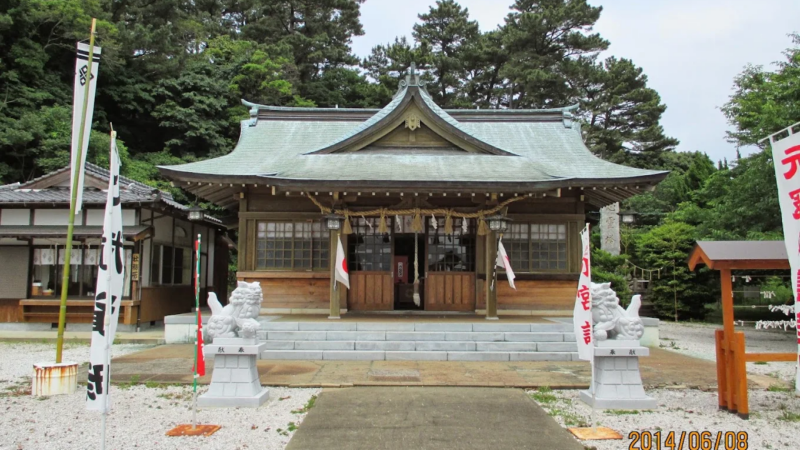
The grounds of Kaijin Shrine are located at the foot of Mt. Kisaka, in a sacred space surrounded by a deep forest. As you proceed along the approach, the main shrine stands amidst a solemn atmosphere.
The shrine buildings reflect the traditional style of Tsushima shrine architecture, simple yet dignified in their construction. The arrangement, harmonious with the surrounding natural environment, conveys the ancient way of shrines to the present day.
Nature of the Sacred Grounds
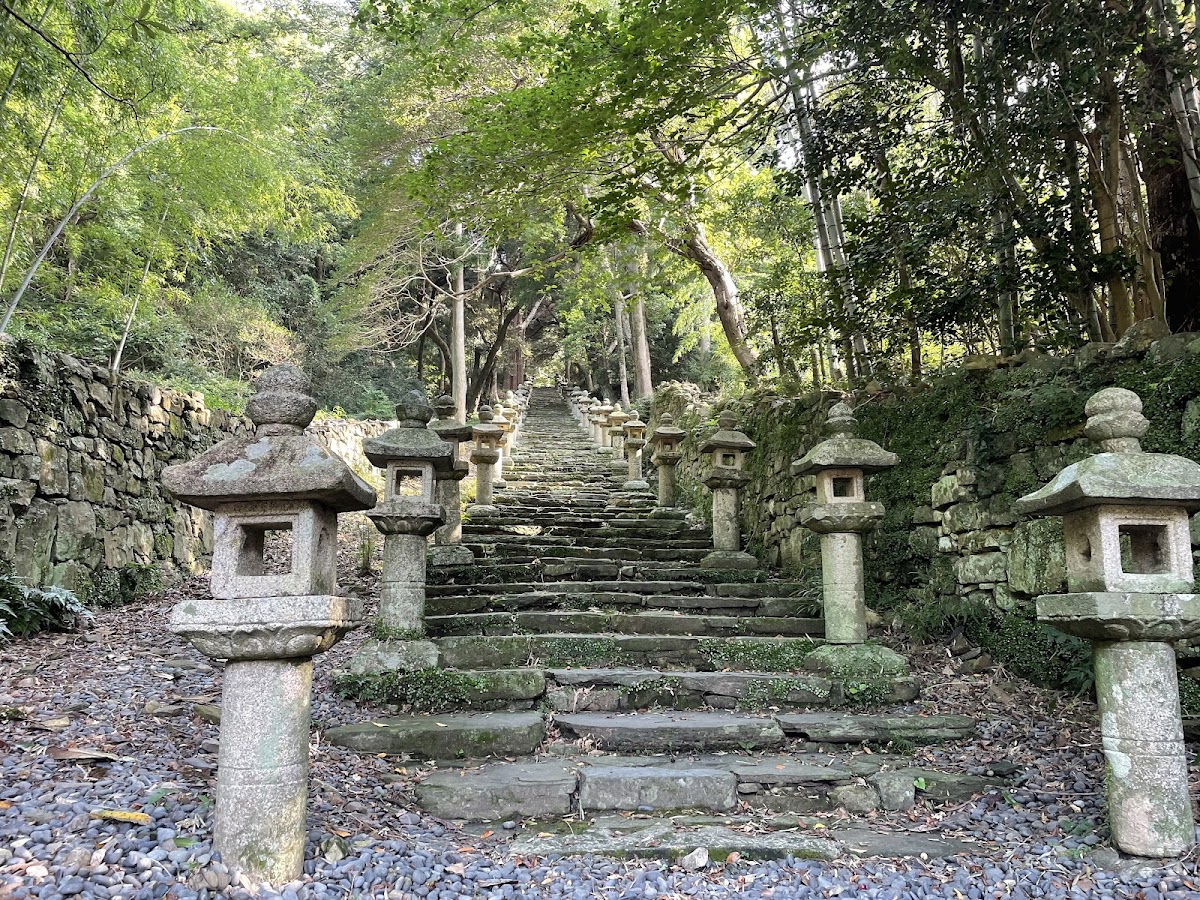
The forest surrounding the shrine grounds symbolizes the rich natural environment of Tsushima. The evergreen broadleaf forest thrives densely, creating a mystical atmosphere.
Tsushima has long been known as an “island where gods reside,” and many old-growth forests remain on the island. The forest of Kaijin Shrine is one such example, allowing visitors to feel the sacredness of nature.
The nature within the shrine grounds, which changes its appearance with each season, is a major attraction for visitors. The scenery is especially beautiful during the seasons of fresh greenery and autumn leaves.
Approach and Torii Gate
The approach to Kaijin Shrine continues beyond the village of Kisaka. The path, gradually leading from the quiet village landscape into a deep forest, marks the boundary between the secular world and the sacred realm.
Passing through the torii gate, one enters a sacred space. An environment awaits where one can leave the hustle and bustle of everyday life and worship in peace.
Cultural Properties of Kaijin Shrine
Tangible Cultural Properties
Kaijin Shrine houses valuable cultural properties that have been passed down through its long history. These are important resources for understanding the history and evolution of beliefs in Tsushima.
Many of the ancient documents and offerings preserved at the shrine attest to the deep faith of the Tsushima domain and the local people.
Intangible Traditions
At Kaijin Shrine, ancient festivals and rituals are still performed today. These traditional events are valuable intangible cultural assets that convey Tsushima’s folk culture to the present day.
The festivals held throughout the year also play a role in strengthening the bonds of the local community and are deeply intertwined with the lives of the people of Tsushima.
Tsushima’s Folklore and Sea God Worship
Tsushima as a Maritime People
Tsushima has long been known as an island of maritime people, a region with very deep ties to the sea. For people who made their living from fishing and maritime trade, faith in the sea god was directly linked to their very lives.
Kaijin Shrine is a place of worship where the reverence and gratitude of the people of Tsushima towards the sea have culminated. Prayers for abundant catches and safe voyages continue to this day.
Beliefs on a Border Island
Tsushima is a border island located between Japan and the Korean Peninsula, and has been a place of cultural exchange between the two regions since ancient times. The beliefs at the Kaijin Shrine reflect this geographical and historical background.
In Tsushima, which functioned as a gateway for trade and diplomacy with the continent, the belief in the sea god is thought to have held meaning not only as a god of fishing, but also as a prayer for national security and diplomatic success.
The Meaning of the Empress Jingu Legend
The legend of Empress Jingu’s conquest of the Three Kingdoms of Korea is a story that symbolizes Tsushima’s geopolitical importance. The fact that this legend has been passed down as the origin of the Kaijin Shrine indicates that Tsushima was on the front lines of national defense from ancient times.
The legend of the eight banners being offered can be understood as an act of gratitude and respect to the sea god, along with its military and political importance.
Visiting Information and Access
Basic Information
Location: 247 Kisaka, Mine-machi, Tsushima City, Nagasaki Prefecture 817-1303
Shrine Rank:
- Candidate for Shikinaisha (Myojin Taisha)
- Ichinomiya of Tsushima Province
- Former National Shrine of the Second Rank
- Special Shrine
Main Deities: Toyotama-hime no Mikoto, Ugayafukiaezu no Mikoto
Access Methods
Access by Plane:
- Approximately 35 minutes from Fukuoka Airport to Tsushima Yamaneko Airport
- Approximately 35 minutes from Nagasaki Airport to Tsushima Yamaneko Airport
Access by Boat:
- Approximately 2 hours 10 minutes by high-speed boat or 4 hours 30 minutes by ferry from Hakata Port to Izuhara Port
Access within the Island:
- Approximately 40 minutes by car from Tsushima Yamaneko Airport
- Approximately 50 minutes by car from Izuhara Port
- Within walking distance of the Kisaka settlement in Mine-cho, Kisaka district.
Public transportation is limited, so renting a car is recommended. If visiting in conjunction with sightseeing in Tsushima, it is important to check transportation options in advance.
Points to Note When Visiting
- The shrine grounds are a sacred place, so please visit with respect.
- As it is located in a deep forest, insect repellent is recommended.
- Tsushima’s weather is unpredictable, so rain gear is recommended.
- It is recommended to check the opening hours of the shrine office in advance.
Nearby Tourist Attractions
Other Shrines and Temples in Tsushima
Izuhara Hachimangu Shrine: Known as “Shimotsu Hachimangu,” a counterpart to Kaijin Shrine. Located in the town of Izuhara, it is easily accessible.
Watatsumi Shrine: A representative sea shrine of Tsushima. Known for its mystical scenery with a torii gate standing in the sea, it has a deep connection with Kaijin Shrine as a shrine dedicated to Toyotamahime-no-Mikoto.
Kaneda Castle Ruins: An ancient mountain castle site designated as a National Special Historic Site. An important spot for understanding Tsushima’s history.
Natural Scenery
Asaji Bay: A beautiful bay with a complex, indented ria coastline. A representative scenic spot of Tsushima.
Korean Observatory: An observation deck where you can see Busan, South Korea on a clear day. Enjoy the unique scenery of this border island.
Cultural Facilities of Tsushima
Tsushima Museum: A facility that opened in 2022, comprehensively introducing the history and culture of Tsushima. Helps to deeply understand the historical background of Kaijin Shrine.
Annual Events at Kaijin Shrine
Main Festivals
Kaijin Shrine holds various festivals throughout the year. These festivals are deeply connected to the lives of the people of Tsushima and are important events for the local community.
During the Spring and Autumn Grand Festivals, local people gather to pray for a bountiful harvest and safety at sea. Many people involved in the fishing industry attend, making it a valuable opportunity to witness Tsushima’s maritime culture.
New Year’s Visit and Special Days
For the New Year’s visit, the shrine, as the Ichinomiya (first-ranked shrine) of Tsushima Province, attracts many worshippers. It is bustling with people praying for safety and prosperity throughout the year.
Furthermore, on Marine Day and other significant fishing occasions, special visits are sometimes held to pray for safety at sea and a bountiful catch.
Kaijin Shrine and Japanese Mythology
The Myth of Umisachihiko and Yamasachihiko
Toyotama-hime no Mikoto, the deity enshrined at Kaijin Shrine, is an important goddess who appears in the famous “Umisachihiko and Yamasachihiko” myth. This myth is recorded in the Kojiki and Nihon Shoki and forms part of Japan’s founding myth.
When Yamasachihiko (Hikohodemi-no-Mikoto) visited the Sea Palace (Watatsumi-no-Miya) to search for his brother Umisachihiko’s fishing hook, he met and married Toyotama-hime-no-Mikoto, the daughter of the sea god. This myth symbolically depicts the blessings of the sea and the mountains, and the relationship between humans and gods.
Connection to the Ryugu Legend
The story of Toyotama-hime-no-Mikoto is considered the prototype for later legends of the Ryugu Palace and the story of Urashima Taro. By visiting the Kaijin Shrine, one can experience this ancient layer of Japanese mythology.
The significance of worshipping the sea god on Tsushima, an island surrounded by the sea, goes beyond mere faith and offers important insights into understanding the Japanese view of the ocean and nature.
Significance as the Ichinomiya of Tsushima Province
What is the Ichinomiya System?
An Ichinomiya is the shrine with the highest rank in each province under the Ritsuryo system. From ancient to medieval times, it was designated as the shrine that the provincial governors of each province would first visit.
Kaijin Shrine, as the Ichinomiya (first-ranked shrine) of Tsushima Province, was a central figure in Tsushima’s religious traditions. This indicates its significant position not only religiously but also politically and socially.
Pilgrimage to Ichinomiya Shrines in Modern Times
In recent years, “Ichinomiya pilgrimages,” visiting Ichinomiya shrines throughout Japan, have become popular. Kaijin Shrine, as the Ichinomiya of Tsushima Province, is a popular destination for many pilgrims.
The Ichinomiya Pilgrimage Association offers opportunities to experience Japanese history and culture by visiting Ichinomiya shrines throughout the country. A visit to Kaijin Shrine provides an excellent opportunity to gain a deeper understanding of Tsushima’s history and culture.
Guidelines for Visiting Kaijin Shrine
Etiquette for Visiting Shrines
The basic etiquette for visiting a shrine is as follows:
- Bow before passing through the torii gate: This shows respect for entering the sacred area.
- Walk along the edge of the path: The center is considered the path of the gods.
- Purify yourself at the water basin: Purify your left hand, then your right hand, then your mouth.
- Worship at the main hall: The basic procedure is two bows, two claps, and one bow.
About Goshuin (Shrine Seals)
You can also receive a Goshuin at Kaijin Shrine. The Goshuin of Tsushima Province’s Ichinomiya (first-ranked shrine) is a valuable memento for those visiting Ichinomiya shrines.
The Goshuin is proof of your visit, not a stamp rally. Please receive it after offering your prayers with sincerity.
Photography Etiquette
Photography is generally permitted on the shrine grounds, but please note the following:
- Do not take photos in areas where photography is prohibited, such as inside the main hall.
- Be considerate of other worshippers.
- Be especially careful when taking photos during religious ceremonies.
- When posting on social media, please use respectful language.
Tsushima Tourism and Kaijin Shrine
Model Itineraries for Your Stay in Tsushima
1-Night, 2-Day Course:
- Day 1: Sightseeing in the Izuhara area (Izuhara Hachimangu Shrine, Kaneda Castle Ruins) → Visit to Kaijin Shrine → Stroll around Mine-machi
- Day 2: Watatsumi Shrine → Sightseeing in Asaji Bay → Korean Observatory
2-Night, 3-Day Course:
- A course that allows you to enjoy Tsushima’s history and nature in more detail.
- You can also incorporate learning at the Tsushima Museum and observing Tsushima’s unique nature.
Tsushima Cuisine
When visiting Tsushima, be sure to enjoy the local food culture:
- Taishu Soba: Tsushima’s specialty soba noodles
- Stone-grilled: A local dish featuring fresh seafood grilled on a hot stone.
- Rokubee: A noodle dish made with sweet potatoes.
- Tsushima’s Seafood: Abundant fresh seafood.
Accommodation
Tsushima offers a variety of accommodations, mainly in the Izuhara area. There are also guesthouses and other accommodations around Mine-machi, near Kaijin Shrine, allowing you to enjoy interacting with locals.
Summary: The Charm of Kaijin Shrine
Kaijin Shrine is a venerable shrine with over a thousand years of history, serving as the Ichinomiya (first-ranked shrine) of Tsushima Province. It enshrines Toyotama-hime no Mikoto and is believed to bestow divine blessings for maritime safety, abundant catches, and safe childbirth, attracting the faith of many people even today.
Beginning with the legend of Empress Jingu, this shrine, with its unique history blending Hachiman worship and sea god worship, strongly reflects the geographical and historical characteristics of Tsushima. The mystical grounds, surrounded by deep forests, offer visitors a special experience.
When visiting Tsushima, a border island, be sure to include a visit to the Kaijin Shrine in your plans. It will be a valuable opportunity to experience the world of Japanese mythology, feel the faith in the sea god, and gain a deep understanding of Tsushima’s rich history and culture.
Spending time quietly praying amidst the unique atmosphere created by Tsushima’s magnificent nature and ancient history will surely become an unforgettable memory.