Daifuku-ji Temple (Ikoma City, Nara Prefecture) Complete Guide: The Charm of a Zen Temple of the Obaku School and its Valuable Stone Artifacts
Daifuku-ji Temple, located in Daimon-cho, Ikoma City, Nara Prefecture, is a Zen temple of the Obaku school with a long history deeply rooted in the local community. Situated at the southern foot of Mount Ikoma, surrounded by tranquil terraced rice fields, it preserves valuable stone artifacts dating from the Muromachi to Edo periods. This article provides a detailed introduction to Daifuku-ji Temple, including its history, highlights, and access information.
Basic Information and Location of Daifuku-ji Temple
Daifuku-ji Temple is an Obaku school temple located at 267 Daimon-cho, Ikoma City, Nara Prefecture. Daimon-cho, in the southern part of Ikoma City, was formerly part of Heguri District in Yamato Province, and was a shogunate territory in the early Edo period, becoming part of the Koriyama Domain from 1615 (Genna 1).
Location and Surrounding Environment
Daimon-cho is located in the southern part of Ikoma City, bordering Oguraji-cho to the north, Onitori-cho to the west, Fujio-cho to the south, and Ari-cho to the east. The area around Daifuku-ji Temple still retains a rural landscape, and the beautiful terraced rice fields, in particular, offer a sense of peace to visitors. In the increasingly urbanized city of Ikoma, the preservation of such a rich natural environment is invaluable.
A road to Kuragari-toge Pass also runs nearby, allowing one to feel the remnants of a region that flourished as a transportation hub connecting Osaka and Nara since ancient times.
About the Obaku School: About Daifuku-ji Temple’s Sect
Daifuku-ji Temple is a Zen temple of the Obaku school. The Ōbaku school is one of the three major Zen Buddhist schools in Japan (Rinzai, Sōtō, and Ōbaku), founded in 1654 during the early Edo period by Zen Master Ingen Ryūki, who came from China.
Characteristics of the Ōbaku School
The Ōbaku school retains strong influences from the Zen style of the Ming Dynasty in China, incorporating many Chinese elements into its chanting pronunciation and ritual practices. Its architectural style also exhibits Chinese characteristics, with a unique beauty in its temple layout and decoration. Furthermore, Fucha cuisine, known as vegetarian Buddhist cuisine, was introduced to Japan by the Ōbaku school.
Daifuku-ji Temple, though not large in scale, is a temple of the Ōbaku school that attracts local faith and continues to pass on the teachings of Zen to this day.
History and Origins of Daifuku-ji Temple
While there are no clear records regarding the detailed founding date or founder of Daifuku-ji Temple, it has existed as a temple deeply intertwined with the history of the region.
Connection to the History of Daimon Village
Daimon Village was under the control of the Koriyama Domain throughout the Edo period and developed as an agricultural village. It is believed that Daifuku-ji Temple functioned as a center of faith and spiritual support for the people of this region.
Since the Obaku sect was introduced to Japan in the early Edo period, it is presumed that Daifuku-ji Temple was established as an Obaku sect temple sometime after this period. However, it is also possible that a temple existed in some form before that, and that it may have undergone a conversion to the Obaku sect.
Stone Artifacts of Daifuku-ji Temple: A Treasure Trove of Sights
The greatest attraction of Daifuku-ji Temple is the valuable stone artifacts remaining on its grounds. These are important cultural assets that convey the forms of faith from the Muromachi period to the Edo period.
Thirteen Buddha Stone Stele (Muromachi Period)
The most noteworthy stone artifact at Daifuku-ji Temple is the Thirteen Buddha Stone Stele, believed to have been created during the Muromachi period. This stone monument can be seen over the temple wall, displaying a dignified appearance that reflects its long history.
What is the Thirteen Buddhas Belief?
The Thirteen Buddhas Belief is a belief system that designates a Buddha or Bodhisattva for each of the 13 memorial services for the deceased, from the seventh day after death to the 33rd anniversary. The 13 deities are: Fudo Myoo, Shakyamuni Buddha, Manjushri Bodhisattva, Samantabhadra Bodhisattva, Jizo Bodhisattva, Maitreya Bodhisattva, Bhaisajyaguru Buddha, Avalokiteshvara Bodhisattva, Mahasthamaprapta Bodhisattva, Amitabha Buddha, Akshobhya Buddha, Vairocana Buddha, and Akasagarbha Bodhisattva.
During the Muromachi period, the Thirteen Buddhas Belief became widespread among the common people, and stone monuments inscribed with the Thirteen Buddhas were erected throughout the country. The Thirteen Buddhas stone monument at Daifuku-ji Temple is a valuable relic that demonstrates the rise of this belief during this period.
Hōkyōintō Pagoda (Edo Period, Bunsei 10)
To the east of the temple gate is a Hōkyōintō pagoda erected in Bunsei 10 (1827). This pagoda is an excellent example of stonework that clearly represents the characteristics of the late Edo period.
Characteristics of the Hōkyōintō Pagoda
The Hōkyōintō pagoda is a type of Buddhist pagoda that developed as a tower for enshrining the Hōkyōin Dharani Sutra. It consists of a base, foundation, tower body, roof, and finial, and is particularly characterized by the ornaments protruding from the four corners of the roof.
The Hōkyōintō pagoda at Daifuku-ji Temple exhibits the style of the late Edo period, and has a beautifully balanced form. The Bunsei period corresponds to the late Edo period, a time when stonework techniques were mature, resulting in intricate carvings.
Other Stone Buddha Statues
Along with the Hōkyōintō pagoda, several stone Buddha statues are lined up and enshrined around the temple gate. These are believed to have been donated in various eras, reflecting the deep faith of the local people.
Some are weathered, but each possesses a unique character, conveying a sense of history as they have received people’s prayers over many years.
Daifuku-ji Temple Grounds and Architecture
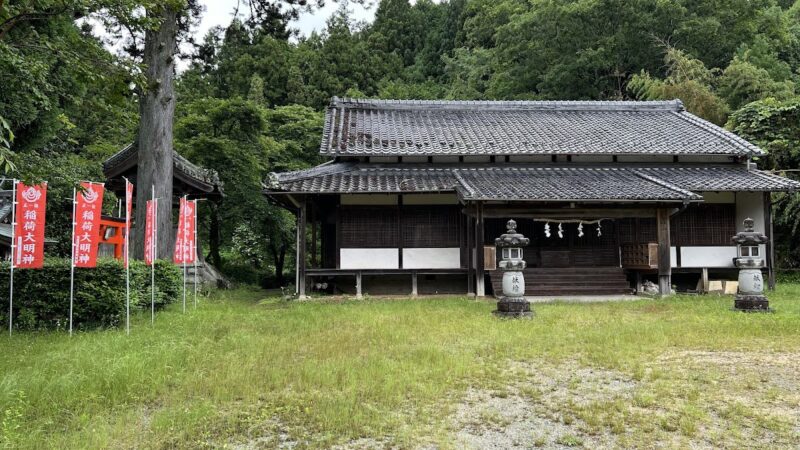
Daifuku-ji Temple is a small temple in scale, but it has a simple and pure atmosphere characteristic of a Zen temple.
Temple Gate and Wall
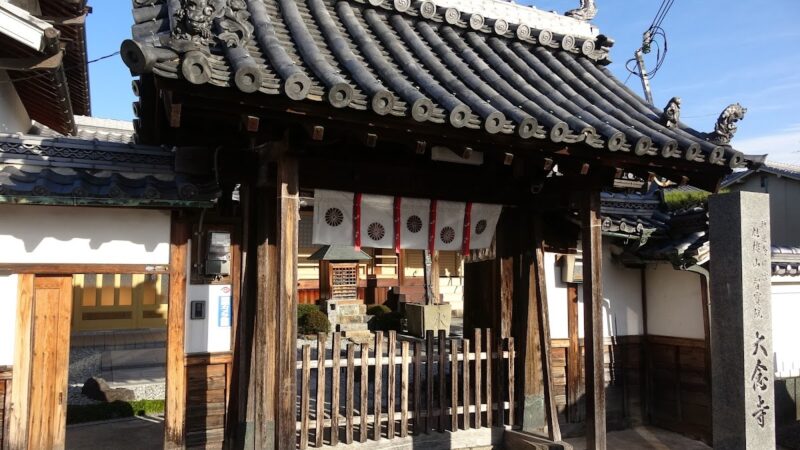
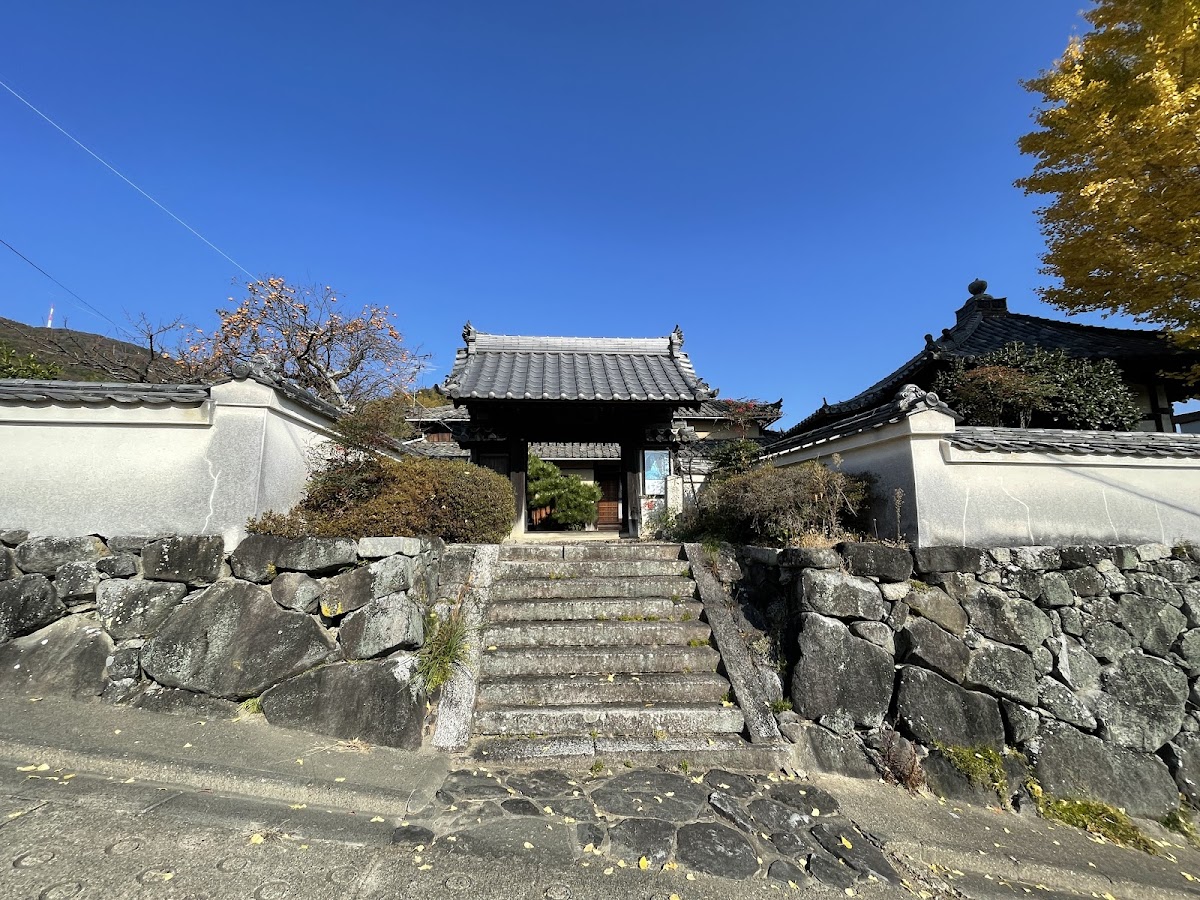
At the entrance to the temple is a temple gate, surrounded by a wall. The Thirteen Buddhas stone monument can be seen over this wall. The temple gate, though simple, exhibits the dignified appearance of a Zen temple, quietly welcoming visitors.
Main Hall
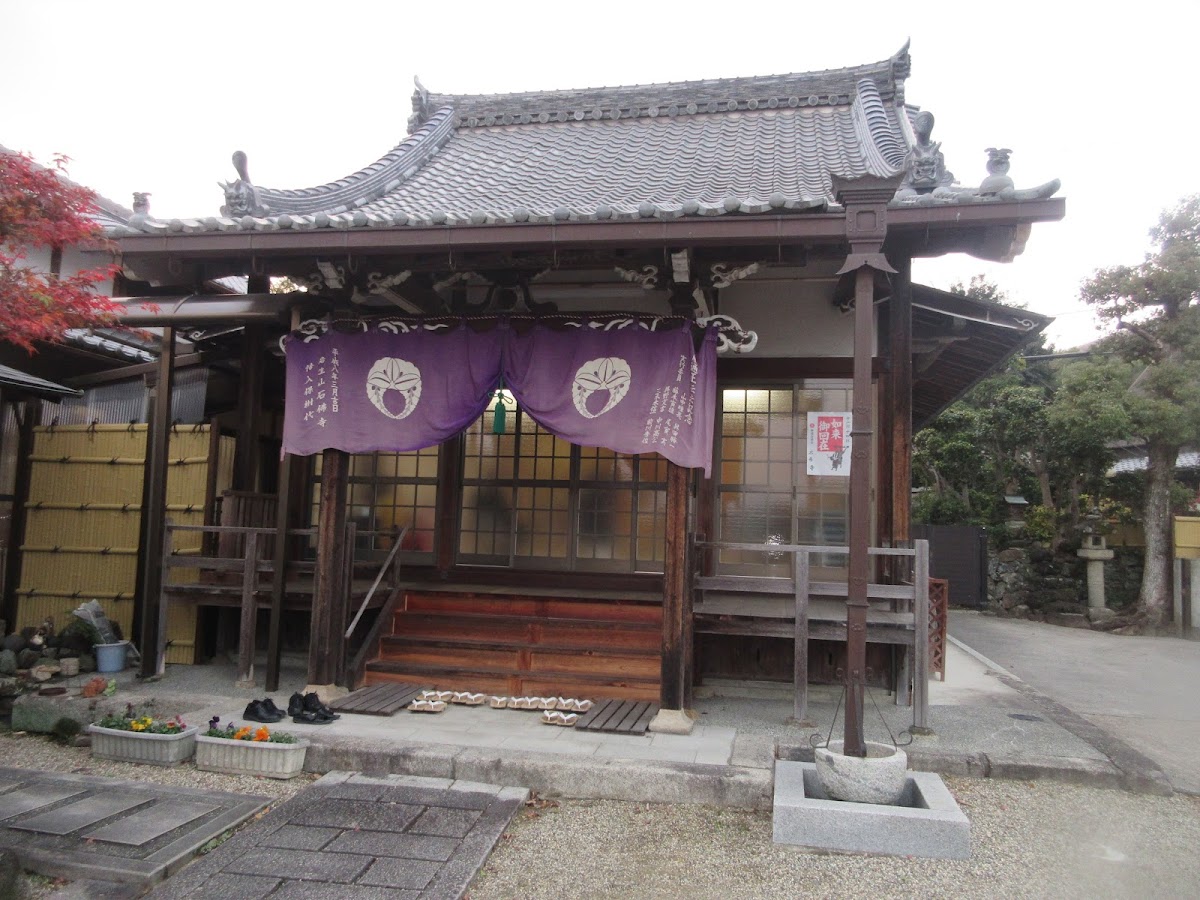
The main hall, while possessing characteristics of an Obaku Zen temple, has a friendly architecture typical of a local temple. The principal image is enshrined inside, and daily religious services are held there.
Terraced Rice Fields Surrounding Daifuku-ji Temple
One of the major attractions of visiting Daifuku-ji Temple is the tranquil terraced rice field scenery that spreads out around it. Ikoma City has developed as a commuter town for Osaka, but rural landscapes still remain around Daimon-cho.
Seasonal Scenery
In spring, preparations for rice planting begin, and the water-filled rice paddies reflect the sky like a mirror. In early summer, the lush green rice sways in the wind, and in autumn, the golden rice ears ripen. In winter, the quiet landscape of the earth unfolds, allowing you to enjoy the beauty of each season.
Nestled in this natural environment, Daifuku-ji Temple, despite being close to the city, offers a precious space where you can find peace of mind.
Relationship with Other Temples in Ikoma City
Besides Daifuku-ji Temple, Ikoma City has many other historical temples. Visiting these temples together will allow you to gain a deeper understanding of the Buddhist culture of the Ikoma region.
Chofuku-ji Temple (Tawaguchi-cho)
Located in Tawaguchi-cho, Ikoma City, Chofuku-ji Temple is a Shingon Ritsu sect temple, said to have been founded in the Nara period by the monk Gyoki at the behest of Emperor Shomu. The principal image, a seated statue of Amida Buddha, is an important cultural property, and in recent years, it has attracted attention for a color restoration project that depicts the Pure Land of Amida Buddha.
Chikurinji Temple (Ari-cho)
Located in Ari-cho, Ikoma City, Chikurinji Temple is a Ritsu sect temple known for housing the tomb of Gyoki, a monk from the Nara period. Gyoki was a representative monk of the Nara period, known for establishing temples and social projects throughout the country.
Hozanji Temple (Monzen-cho)
Located on the slopes of Mount Ikoma, Hozanji Temple is the head temple of the Shingon Ritsu sect, affectionately known as “Ikoma’s Shoten-san.” It is widely revered as a god of business prosperity, attracting many worshippers, especially from the Kansai region.
These temples, along with Daifukuji Temple, belong to different sects, yet they are important elements in shaping the Buddhist culture of the Ikoma region.
How to Access Daifuku-ji Temple
Daifuku-ji Temple is located in the mountainous area of southern Ikoma City, making public transportation somewhat inconvenient. However, it’s an ideal location for those seeking a quiet environment.
Access by Train
The nearest station is Minami-Ikoma Station on the Kintetsu Ikoma Line. Daifuku-ji Temple is approximately a 25-minute walk from the station exit. The path from the station to the temple is uphill, but you can enjoy the natural scenery and residential areas of Ikoma along the way.
Those with good stamina might enjoy a walk to the temple. However, be mindful of the time of day, as the sun is strong in summer and the days are short in winter.
Access by Car
If traveling by car, take National Route 308 (Kuragari-toge Road) towards Daimon-cho. It’s approximately 10-15 minutes from Ikoma city center. However, some roads around the temple are narrow, so careful driving is necessary.
Regarding parking, we recommend checking directly with the temple. Since the surrounding area consists of residential and agricultural land, please avoid street parking and be considerate of the neighbors.
Access by Bus
While the Ikoma City Community Bus may operate, routes and operating times are limited. We recommend checking the latest information on the Ikoma City official website or transportation guide.
Points to Note When Visiting Daifuku-ji Temple
By paying attention to a few points when visiting Daifuku-ji Temple, you can have a better experience.
Visiting Manners
Daifuku-ji Temple is a Zen temple of the Obaku sect, a space that values tranquility. Please refrain from loud conversations and noisy behavior, and pray quietly. When taking photographs, please avoid entering the main hall or private property without permission, and behave respectfully.
Viewing Stone Artifacts
The Thirteen Buddha Stone Steles can be viewed over the wall, but please avoid entering the temple grounds without permission. Stone artifacts are valuable cultural assets, and touching or climbing on them is strictly prohibited.
Consideration for the Surrounding Environment
The area around Daifuku-ji Temple consists of quiet residential areas and farmland. When visiting, please be considerate of the lives of the local residents and avoid trespassing on private property or touching crops. Also, please be sure to take your trash with you and cooperate in the preservation of the natural environment.
Cultural Background of Daifuku-ji Temple and Ikoma
Ikoma City, where Daifuku-ji Temple is located, has long developed as a transportation hub connecting Osaka and Nara. The road crossing Kuragari Pass, in particular, has played an important role since ancient times.
Kuragari Pass and the Faith of Mount Ikoma
Kuragari Pass is a mountain pass through which National Route 308 passes, located on the border between Osaka and Nara prefectures. Known for its steep slopes, this pass has long been a route used by many travelers and was also associated with the faith of Mount Ikoma.
Mount Ikoma has been revered as a sacred mountain since ancient times and has also served as a training ground for Shugendo practitioners. As mountain temples such as Hozanji Temple flourished, faith spread to the villages at the foot of the mountain. Daifukuji Temple, as part of this Ikoma Mountain faith sphere, is thought to have supported the local faith.
Connection to Gyoki
Several temples in Ikoma City are said to have been founded by Gyoki. Gyoki was a prominent monk of the Nara period, who not only built temples throughout the region but also dedicated himself to social projects such as bridges, roads, and reservoirs.
While Daifukuji Temple itself does not have a clear direct connection to Gyoki, considering that the entire Ikoma region was within Gyoki’s sphere of activity, it is quite possible that it was influenced in some way.
Reasons to Visit Daifukuji Temple
Although Daifukuji Temple is not large in scale, it possesses many attractions that make it well worth a visit.
Historically Valuable Stone Artifacts
You can see valuable stone artifacts up close, such as the Thirteen Buddhas stone monument from the Muromachi period and the Hōkyōintō pagoda from the Edo period. These are important cultural assets that tell the history of the region’s faith, and are especially recommended for those interested in stone art. ### Tranquility and the Healing Power of Nature
Located near the city, yet surrounded by tranquil terraced rice fields, this quiet environment is perfect for escaping the hustle and bustle of everyday life and calming the mind. You can spend time slowly in the simple and pure atmosphere characteristic of a Zen temple.
Discovering Ikoma’s Hidden Charms
While not as well-known as famous temples like Hozanji Temple, it is therefore less crowded with tourists, allowing for a peaceful visit. You can enjoy the pleasure of discovering Ikoma’s hidden cultural charms.
Combining with Nearby Tourist Attractions
When visiting Daifukuji Temple, combining it with nearby tourist attractions will allow you to enjoy a more fulfilling Ikoma sightseeing experience.
Hiking to Kuragari Pass
For those confident in their physical fitness, combining it with a hike to Kuragari Pass is recommended. From the pass, you can enjoy a panoramic view of the Osaka Plain, and on a clear day, the view is magnificent.
Ikoma Sanjo Amusement Park
For families, Ikoma Sanjo Amusement Park is another possible destination. You can access the mountaintop by cable car and enjoy a retro-style amusement park and spectacular views.
Visiting Chikurinji and Chofukuji Temples
For those interested in temple pilgrimages, visiting Chikurinji and Chofukuji Temples in combination will allow you to gain a deeper understanding of Ikoma’s Buddhist culture. Comparing temples with different sects and histories will likely lead to new discoveries.
Summary: Rediscovering the Charm of Daifukuji Temple
Daifukuji Temple, located in Daimon-cho, Ikoma City, Nara Prefecture, is a historic Zen temple of the Obaku sect that has supported the faith of the region. It retains valuable stone artifacts such as the Thirteen Buddhas stone monument from the Muromachi period and the Hōkyōintō pagoda from the Edo period, and its tranquil environment, surrounded by peaceful terraced rice fields, is its charm.
While not a large-scale tourist temple, the tranquility it maintains and the simple, locally rooted faith leave a deep impression on visitors. Why not spend some quiet time away from everyday life in this place where the rich nature and historical culture of the Ikoma mountain foothills blend together?
When you visit Ikoma City, I recommend visiting not only famous temples like Hozanji Temple, but also hidden gems like Daifukuji Temple. You’re sure to make new discoveries and find peace of mind.