Chikurinji Temple (Ikoma City, Nara Prefecture) Complete Guide: A Ritsu Sect Temple Adorned with Gyoki’s Tomb and Seasonal Flowers
Chikurinji Temple, located in Ari-cho, Ikoma City, Nara Prefecture, is a Ritsu sect temple known as the burial place of Gyoki, a renowned monk of the Nara period. With Ikoma-san as its mountain name, and a statue of Monju Bosatsu riding a lion as its principal image, this ancient temple centers around Gyoki’s tomb, a nationally designated historical site, and also features the tomb of Ninsho, a famous monk of the Kamakura period, and other valuable stone artifacts.
The small but beautiful main hall is adorned with seasonal flowers such as weeping cherry blossoms, hydrangeas, and lotus flowers, offering visitors tranquility and peace. This article provides a detailed introduction to Chikurinji Temple, including its history, cultural assets, highlights, and access information.
Table of Contents
- Overview of Chikurinji Temple
- History of Chikurinji Temple
- The Deep Relationship Between Gyoki and Chikurinji Temple
- Highlights of the Temple Grounds
- Cultural Properties and Important Stone Structures
- The Charm of Flowers in Every Season
- About Goshuin (Temple Seals)
- Visiting Information
- Access Methods
- Nearby Tourist Spots
Overview of Chikurinji Temple
Basic Information
- Official Name: Ikoma-san Chikurinji Temple
- Sect: Ritsu Sect
- Principal Image: Statue of Manjushri Bodhisattva Riding a Lion
- Mountain Name: Ikoma-san
- Location: 211-1 Ari-cho, Ikoma City, Nara Prefecture
- Founding: Nara Period (Tradition)
- Founder: Gyoki (Tradition)
- Cultural Properties: Gyōki’s Tomb (National Historic Site), Ninshō’s Tomb, and Various Stone Sculptures
Chikurinji Temple is said to stand on the site where Gyōki, a renowned monk who carried out numerous social projects during the Nara period and contributed greatly to the construction of the Great Buddha of Tōdai-ji Temple, established his small hermitage, “Ikoma Senbō,” in his prime. It is counted as one of the 49 temples said to have been established by Gyōki and has a long history as a center of Gyōki worship.
History of Chikurinji Temple
Nara Period: Founding of Ikoma Senbō
The origins of Chikurinji Temple are said to date back to “Ikoma Senbō,” which Gyōki opened at the foot of Mount Ikoma in his prime. Gyōki was a leading monk of the Nara period, and in addition to spreading Buddhism among the common people, he carried out numerous social projects, such as the construction of irrigation facilities, bridges, and road improvements.
Gyōki, sometimes called an incarnation of Manjushri Bodhisattva, established a small hermitage in Ikoma, making it a base for ascetic practice and the relief of the people. This Ikoma Senbō is believed to be the predecessor of the later Chikurin-ji Temple.
Gyōki’s Death and the Establishment of His Burial Site
In 749 (Tenpyō 21), Gyōki passed away at the age of 81 at Kikō-ji Temple (Nara City). His body was cremated at Ōjō-in Temple in Ikoma City, and his remains were interred at Chikurin-ji Temple. A pagoda was erected at his burial site, and since then, this place has become a sacred site for Gyōki worship.
Gyōki’s tomb has been carefully preserved by his disciples and believers, and is now designated as a national historical site.
Kamakura Period: The Revival of Gyōki Worship by Ninshō
In 1235 (Bunryaku 2), a reliquary was unearthed from Gyōki’s burial site near the Manjushri Hall by a monk of Chikurin-ji Temple. This discovery led to a resurgence of Gyōki worship.
Ninshō (1217-1303), a renowned monk of the Kamakura period, inherited Gyōki’s spirit and dedicated himself to leprosy relief and social welfare activities. Ninshō also had a deep connection to Chikurinji Temple, and his grave is located within the temple grounds. As a Ritsu sect monk, Ninshō admired Gyōki’s legacy and dedicated his life to the relief of the poor and sick.
Changes from the Early Modern Period Onward
From the medieval to the early modern period, Chikurinji Temple experienced several periods of prosperity and decline. While detailed records are limited, it was maintained as a Ritsu sect temple during the Edo period, and the management of Gyōki’s grave continued.
Despite the impact of the anti-Buddhist movement of the Meiji era, the temple survived due to the importance of Gyōki’s grave, and its historical value was officially recognized, including designation as a national historical site during the Showa period.
The Deep Connection Between Gyōki and Chikurinji Temple
Who Was Gyōki?
Gyōki (668-749) was a prominent Buddhist monk and social activist of the Nara period. Born in Izumi Province (present-day Osaka Prefecture), he became a monk at the age of 15. While studying the Hossō sect, he also engaged in direct missionary work among the common people.
Initially, he was persecuted by the imperial court for misleading the people, but his achievements in social contribution were recognized, and he was later appointed by Emperor Shōmu to raise funds for the construction of the Great Buddha of Tōdai-ji Temple. In 745 (Tenpyō 17), he was appointed Japan’s first Grand Archbishop.
Gyōki’s Forty-Nine Temples and Ikoma Senbō
Gyōki is said to have established forty-nine temples (Gyōki’s Forty-Nine Temples) during his lifetime. Ikoma Senbō, the predecessor of Chikurinji Temple, is one of them.
The foot of Mount Ikoma was a crucial transportation hub connecting Yamato and Kawachi, and Gyoki was able to expand his activities by establishing a base in this area. Ikoma Senbo is thought to have been not only a place of ascetic training but also a base for missionary work and social welfare activities.
Why was he buried at Chikurinji Temple?
The reason Gyoki was buried at Chikurinji Temple (Ikoma Senbo) is thought to be because this place held special significance for him. It was a memorable place where he built a hermitage in his youth, trained many disciples, and carried out activities to help the common people. It’s possible that Gyoki himself wished to be buried here during his lifetime.
His disciples respected their master’s wishes, placed his cremated remains in this location, and erected a pagoda to serve as his tomb. Since then, Chikurinji Temple has become a center of Gyoki worship, attracting many worshippers.
Highlights of the Temple Grounds
Gyoki’s Tomb (National Historic Site)
The biggest highlight of Chikurinji Temple is undoubtedly Gyoki’s Tomb. This burial site, designated a national historical site, stands quietly in the center of the temple grounds.
The burial site features a stone five-tiered pagoda at its center, surrounded by a stone fence. A prayer area for visitors is provided in front of the tomb, and many people still visit to remember the virtues of Gyōki.
The 2nd of each month marks the anniversary of Gyōki’s death, and a memorial service is held. On this day, the main hall is open to visitors from around 10:00 AM to 12:00 PM, making it a special occasion that attracts many worshippers.
Tomb of Ninshō
Within the temple grounds is also the tomb of Ninshō, a renowned monk of the Kamakura period. Ninshō inherited Gyōki’s spirit and was a Ritsu sect monk who dedicated himself to leprosy relief and poverty alleviation.
Ninshō was active at Gokuraku-ji Temple (Kamakura) and Gakuan-ji Temple (Nara), and is known as a pioneer of social welfare, having established the “Kitayama Jūhachikendo” relief facility for leprosy patients. The presence of the tomb of Ninshō, who deeply respected Gyōki, at Chikurinji Temple demonstrates the spiritual connection between the two.
Main Hall
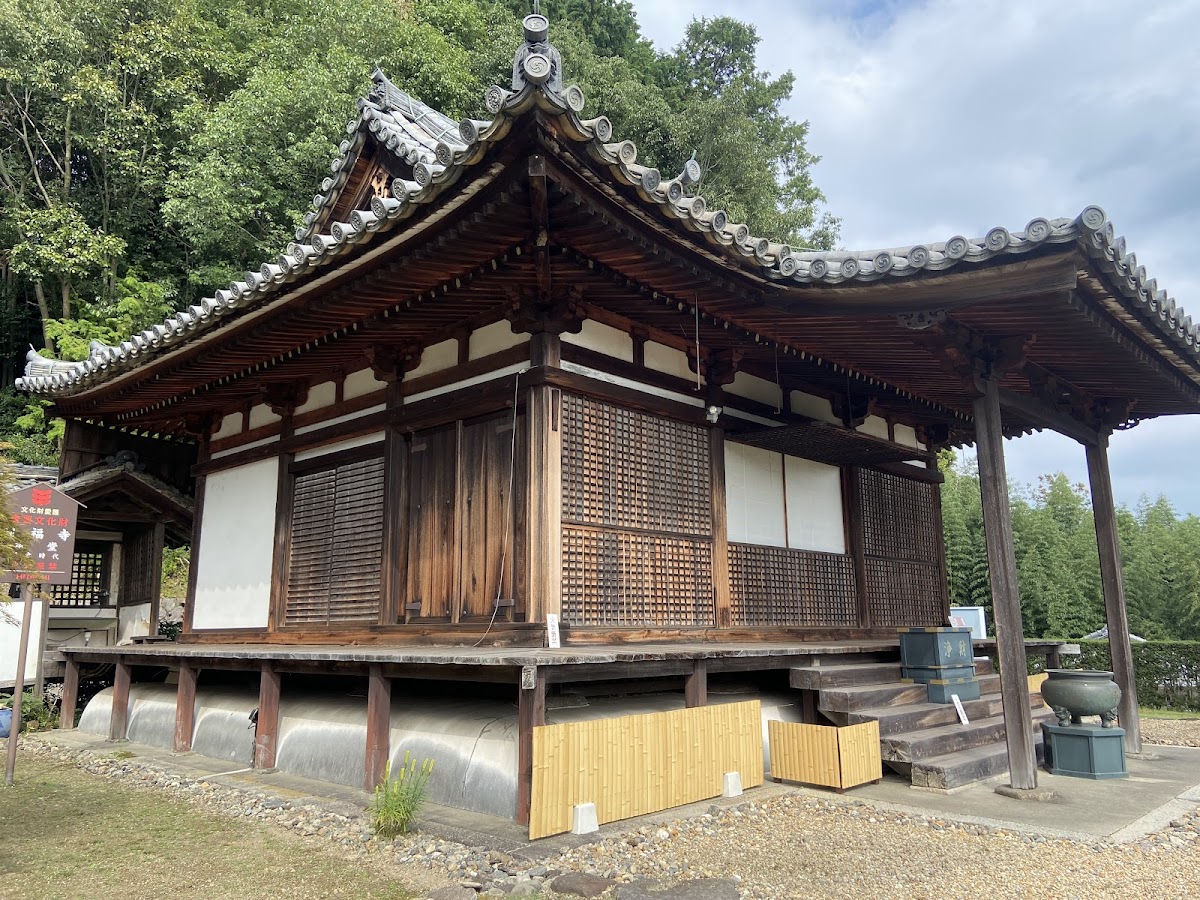
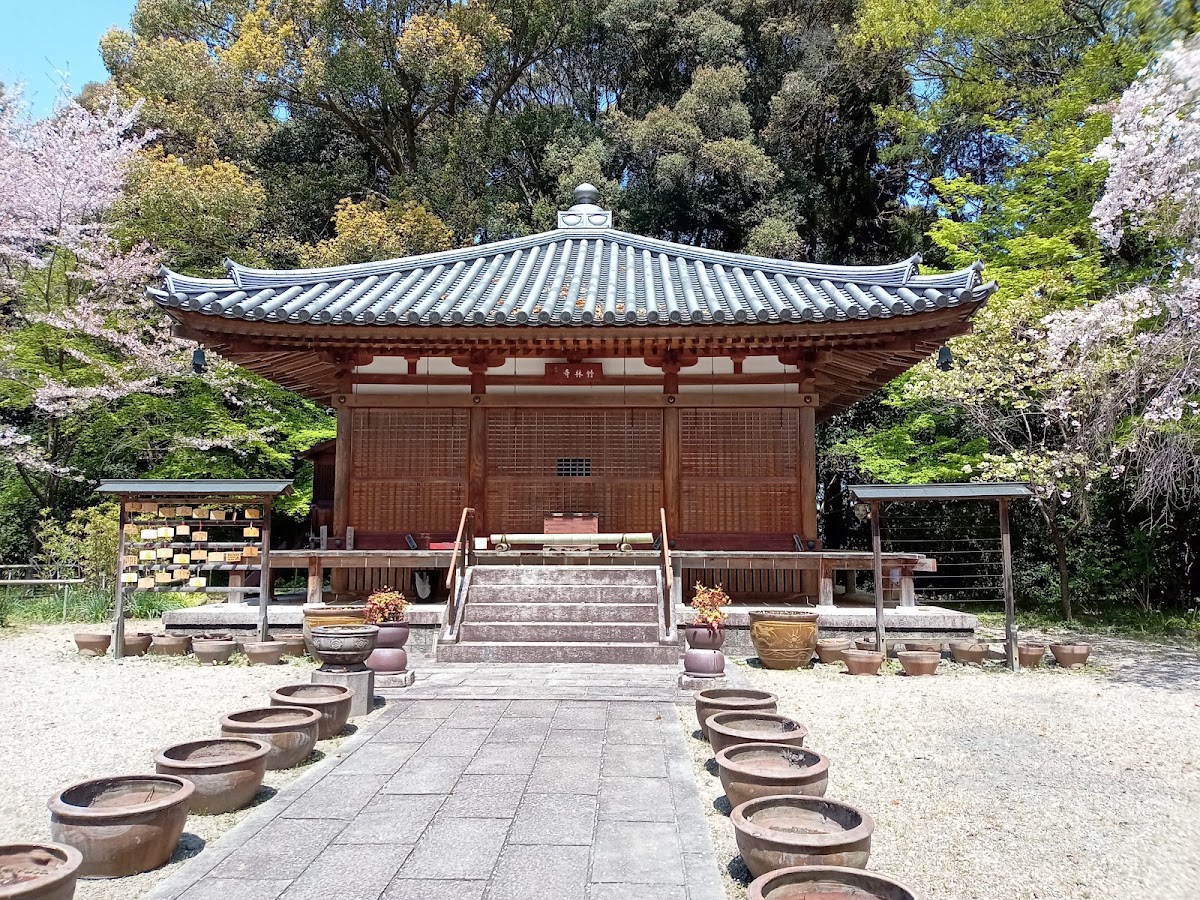
The small yet beautiful Main Hall is the central building of Chikurinji Temple. It houses the principal image, a statue of Manjushri Bodhisattva riding a lion. While usually closed to the public, it is open for viewing during the monthly memorial service on the 2nd.
Manjushri Bodhisattva is worshipped as the Bodhisattva of wisdom, and because Gyōki was considered an incarnation of Manjushri Bodhisattva, he is enshrined as the principal image of this temple.
The area surrounding the Main Hall is adorned with flowers of all seasons, especially the weeping cherry blossoms in spring, the hydrangeas in early summer, and the lotus flowers in summer, delighting visitors.
Stone Sculptures
The temple grounds contain numerous valuable stone sculptures dating from the Kamakura period to the Edo period. These include stone Buddha statues, stone pagodas, and lanterns, each bearing traces of history and faith.
These stone structures are valuable cultural assets that tell the story of the faith of those who have visited Chikurinji Temple throughout its long history. Carefully observing these stone structures while strolling through the temple grounds will allow for a deeper understanding of the temple’s history.
Cultural Assets and Important Stone Structures
National Historic Site: Gyoki’s Tomb
The most important cultural asset of Chikurinji Temple is Gyoki’s Tomb, a nationally designated historic site. It was officially designated as a national historic site during the Showa period and is protected under the Cultural Properties Protection Law.
Gyoki is one of the most important figures in the history of Japanese Buddhism, and his tomb holds extremely high historical and religious value. The form and structure of the tomb are also important resources for the study of burial practices from the Nara period to the medieval period.
Statue of Manjushri Riding a Lion (Principal Image)
The Statue of Manjushri Riding a Lion enshrined in the main hall is the principal image of Chikurinji Temple. Manjushri, depicted riding a lion, is worshipped as a symbol of wisdom.
Because Gyōki was considered an incarnation of Manjushri Bodhisattva, the worship of Manjushri Bodhisattva holds special significance at this temple. While usually closed to the public, there is an opportunity to view it during the monthly memorial service on the 2nd.
Cultural Properties Related to Ninshō
Along with Ninshō’s tomb, cultural properties related to Ninshō are also important assets of Chikurinji Temple. Ninshō, alongside Gyōki, is regarded as a pioneer of social welfare, and the materials that show his footsteps are invaluable for historical research.
Other Stone Sculptures
Among the stone Buddhas and stone pagodas scattered throughout the temple grounds, some date back to the Kamakura and Muromachi periods. These demonstrate the level of stone art at the time and are valuable resources that convey the reality of popular belief.
In particular, the forms of Gorintō (five-ring pagodas) and Hōkyōintō (treasure chest-shaped pagodas) provide important clues to understanding the aspects of medieval funeral rituals and memorial services.
The Charm of Seasonal Flowers
One of the great charms of Chikurinji Temple is the beauty of its grounds, adorned with flowers of the four seasons. Despite its small size, this temple displays a different face with each season, captivating visitors.
Spring: Weeping Cherry Blossoms
The most representative feature of Chikurinji Temple in spring is the weeping cherry blossoms. The weeping cherry trees surrounding the main hall are at their best from late March to early April.
The way the drooping branches gently envelop the main hall seems to symbolize the compassion of Gyoki. The sight of cherry blossoms in full bloom in the tranquil temple grounds deeply moves visitors.
While the number of visitors increases relatively during cherry blossom season, the temple grounds are not large, allowing for quiet appreciation of the flowers.
Early Summer: Hydrangeas
From June to July, hydrangeas adorn the temple grounds. Hydrangeas of various colors bloom, creating a unique atmosphere during the rainy season.
Hydrangeas are especially beautiful when wet with rain, and the serene atmosphere makes for a charming place to visit. The combination of stone structures and hydrangeas evokes a beauty unique to Japanese gardens.
Summer: Lotus
In summer, the lotus flowers are in full bloom. Deeply connected to Buddhism, the lotus flower symbolizes purity and enlightenment, making it a fitting flower for a temple.
Visiting in the early morning during the summer is recommended to see the lotus flowers blooming. The combination of lotus flowers and the main hall possesses a beauty that embodies the world of Buddhist art in reality.
Autumn and Winter Serenity
In autumn, the temple grounds are adorned with colorful autumn leaves, while in winter, the grounds, enveloped in silence, exhibit a unique charm. Although not as vibrant as the flowering season, the calm atmosphere allows for a peaceful and leisurely visit.
Chikurinji Temple, which shows different expressions throughout the four seasons, is a temple where you can discover something new every time you visit.
About Goshuin (Temple Seals)
You can receive a Goshuin (temple seal) at Chikurinji Temple. Goshuin (temple stamps) are cherished by many visitors as proof of their visit and as a tangible representation of their connection with the temple.
Characteristics of Goshuin
Chikurinji Temple’s goshuin features the temple’s name and calligraphy related to the principal deity, Manjushri Bodhisattva. Its simple yet powerful brushwork evokes a solemn atmosphere befitting a sacred site of Gyoki worship.
Goshuin Reception
Goshuin are generally available at the temple office on the temple grounds. However, as it is a small temple, they may not always be able to accommodate requests. To ensure you receive a goshuin, it is recommended to contact them in advance or visit on the 2nd of each month, the day of the memorial service.
About Goshuincho (Goshuin notebooks)
It is recommended to check upon your visit whether Chikurinji Temple offers its own original goshuincho. Bringing your own goshuincho will guarantee you receive a goshuin.
Receiving a goshuin is not merely a stamp rally; it’s important to cherish the spiritual connection with the temple.
Visiting Information
Visiting Hours
- Temple Grounds: Free (Always open)
- Main Hall Interior: During the monthly memorial service on the 2nd (approximately 10:00 AM to 12:00 PM)
While you can generally visit the temple grounds freely, access to the interior of the main hall is limited. A memorial service is held on the 2nd of each month, the anniversary of Gyoki’s death, and the main hall is open to visitors during this time.
Admission Fee
- Free
Visiting the grounds of Chikurinji Temple is free. However, donations such as offerings and contributions for temple stamps are welcome to help maintain the temple.
Notes
- The temple grounds are a place of tranquility. Please refrain from loud conversations and noise.
- Photography is permitted, but please be considerate of other visitors.
- Please do not touch stone structures or cultural artifacts.
- Please take all your trash with you.
- Parking is limited, so using public transportation is recommended.
Events and Memorial Services
- 2nd of every month: Gyoki Monthly Memorial Service (approx. 10:00 AM – 12:00 PM)
The memorial service on the 2nd of every month is an important event commemorating Gyoki. Visiting on this day allows you to view the main hall and have a deeper worship experience.
Access
Access by Train
The Kintetsu Railway is the most convenient way to get to Chikurinji Temple.
From Kintetsu Ichibu Station
- Get off at Kintetsu Nara Line “Ichibu Station”
- Approximately 15-20 minute walk southwest from the station (approx. 1.2 km)
From Kintetsu Minami-Ikoma Station
- Get off at Kintetsu Ikoma Line “Minami-Ikoma Station”
- Approximately 12-15 minute walk northwest from the station (approx. 1.0 km)
While both stations are within walking distance, the distance is somewhat long, so we recommend wearing comfortable shoes. Since the route passes through residential areas, it’s a good idea to check a map beforehand to avoid getting lost.
Access by Car
From Osaka
- Take the Hanna Expressway towards Ikoma city center
- Take National Route 168 towards Ari-cho
From Nara City
- Take National Route 308 or a prefectural road to Ikoma city
- Take Ari-cho
Parking
Chikurinji Temple has limited dedicated parking. There are a few parking spaces available, but if the parking lot is full, we recommend using a nearby coin-operated parking lot or visiting by public transport.
Especially on the 2nd of each month (the day of the memorial service) and during the cherry blossom and hydrangea seasons, congestion is expected, so accessing by train is the safest option.
Address and Contact Information
- Address: 211-1 Arimachi, Ikoma City, Nara Prefecture 630-0223
- Phone: We recommend checking with the Ikoma City Tourism Association or other relevant organizations before your visit.
Nearby Tourist Attractions
When visiting Chikurinji Temple, combining your visit with a tour of other tourist attractions around Ikoma City will make your trip even more fulfilling.
Hozanji Temple (Ikoma Shoten)
Located on the slopes of Mt. Ikoma, Hozanji Temple is a Shingon Ritsu sect temple affectionately known as “Ikoma no Shoten-san.” It is famous for prayers for business prosperity and good relationships, attracting many visitors. It can be accessed by the Ikoma Cable Car, and the temple grounds offer a spectacular view of the Osaka Plain. ### Ikoma Sanjo Amusement Park
Located at the summit of Mount Ikoma, this amusement park is a popular spot for families. Its retro-style playground equipment and panoramic views of Osaka and Nara are its main attractions.
Ojo-in Temple
This temple is said to be the place where Gyoki was cremated. Visiting it together with Chikurin-ji Temple allows you to trace Gyoki’s footsteps more deeply.
Kuragari Pass
A historic mountain pass connecting Nara and Osaka, it has been selected as one of Japan’s 100 Best Roads. The picturesque path with its steep, cobblestone slopes is also a popular hiking course.
Chokyu-ji Temple
Located in Kamimachi, Ikoma City, this Shingon Ritsu sect temple boasts a National Treasure main hall. Its tranquil grounds and beautiful architecture are its main draw.
The Significance of Visiting Chikurin-ji Temple
Chikurin-ji Temple, as the burial place of Gyoki, one of the most important figures in the history of Japanese Buddhism, holds a deeper meaning than a mere tourist attraction.
Experiencing the Spirit of Gyōki
Gyōki not only spread Buddhist teachings to the common people, but also improved people’s lives through concrete social projects such as the construction of irrigation facilities and bridges. His spirit of “altruistic action” remains valuable even today.
Visiting Chikurinji Temple is a precious opportunity to remember Gyōki’s legacy and connect with his spirit.
Introspection in Tranquility and Nature
The small but beautifully maintained temple grounds are ideal for escaping the hustle and bustle of the city and confronting oneself. Surrounded by seasonal flowers, quiet worship will bring inner peace.
Dialogue with History
Chikurinji Temple holds traces of a long history, including Gyōki’s tomb (a nationally designated historical site), Ninshō’s tomb from the Kamakura period, and stone structures from various eras. Through these cultural artifacts, one can engage in dialogue with Japanese history from the Nara period to the present day.
Summary
Chikurinji Temple in Ikoma City, Nara Prefecture, is a historically significant temple centered around the tomb of Gyoki, and a hidden gem boasting beautiful grounds adorned with seasonal flowers.
As a sacred site where the renowned Nara period monk Gyoki established his hermitage in his youth and was ultimately buried, it has attracted the faith of many throughout its long history. The temple also preserves the tomb of Ninsho from the Kamakura period and other valuable stone structures, making it a temple of high cultural value.
Despite its small size, its charm lies in the beautiful seasonal flowers such as weeping cherry blossoms, hydrangeas, and lotus flowers, allowing for a peaceful and tranquil visit. During the monthly memorial service for Gyoki on the 2nd of each month, visitors can also view the inside of the main hall, offering a deeper pilgrimage experience.
Within walking distance of Kintetsu Ichibu Station or Minami-Ikoma Station, it is easily accessible, and combining a visit with other tourist spots around Mount Ikoma will make for a fulfilling trip.
Chikurinji Temple is a temple with multiple layers of appeal, where you can connect with the spirit of Gyoki, feel the weight of history, and find solace in the beauty of nature. When you visit Nara, be sure to stop by.